-
-
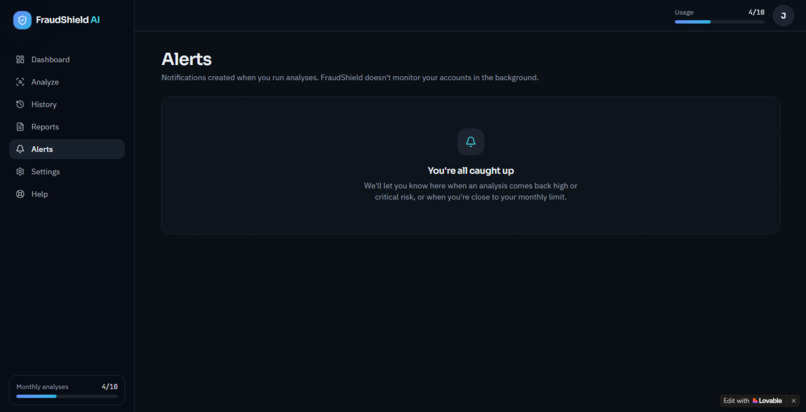
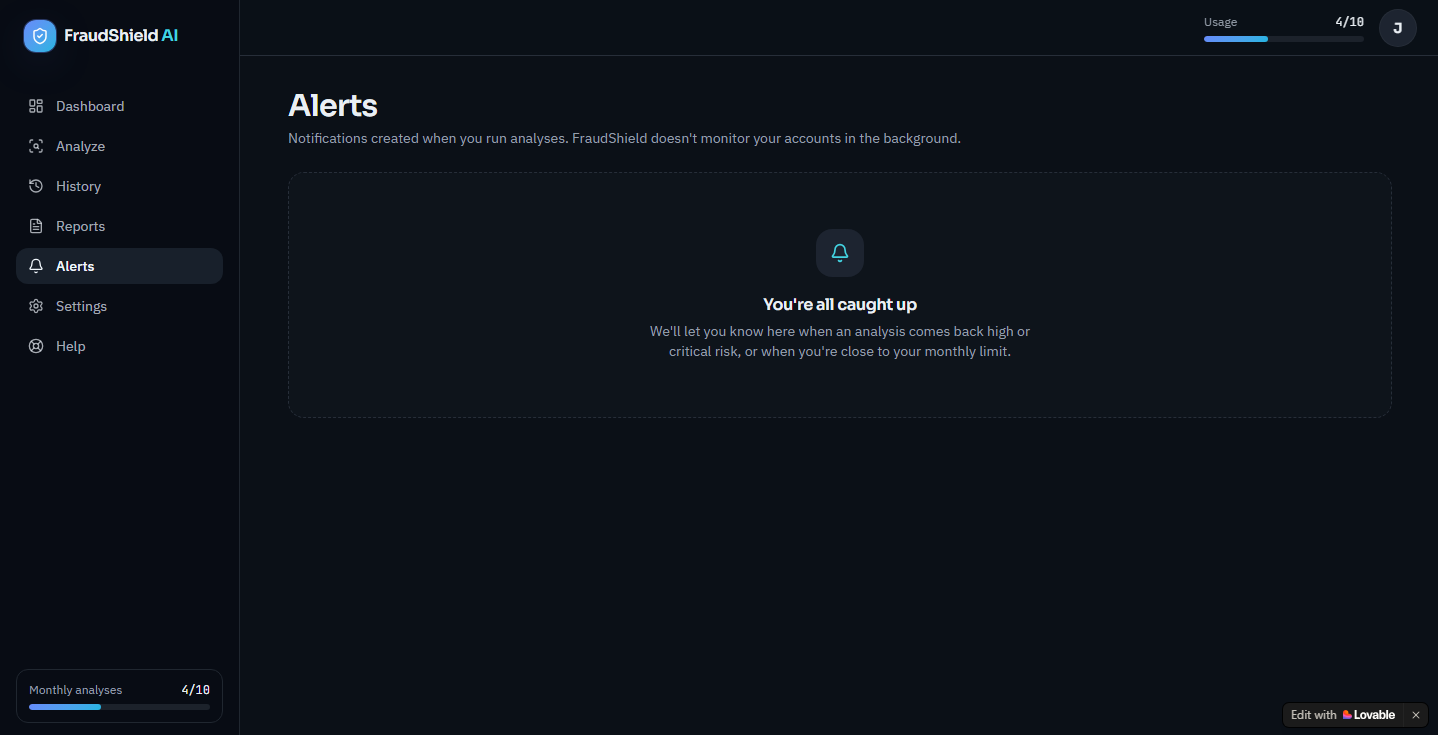
User Dashboard - Alerts
-
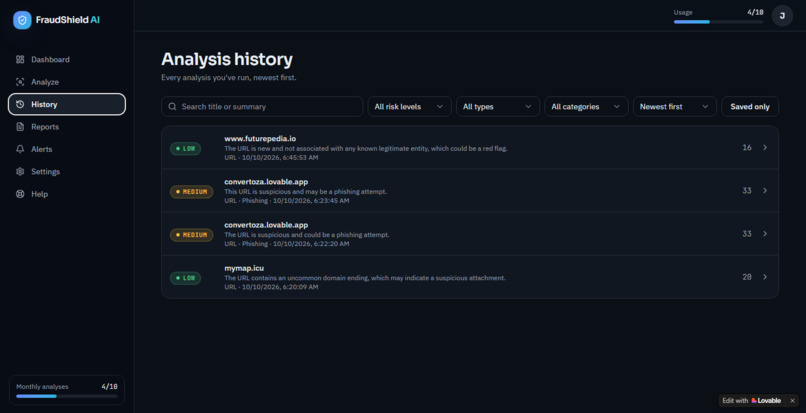
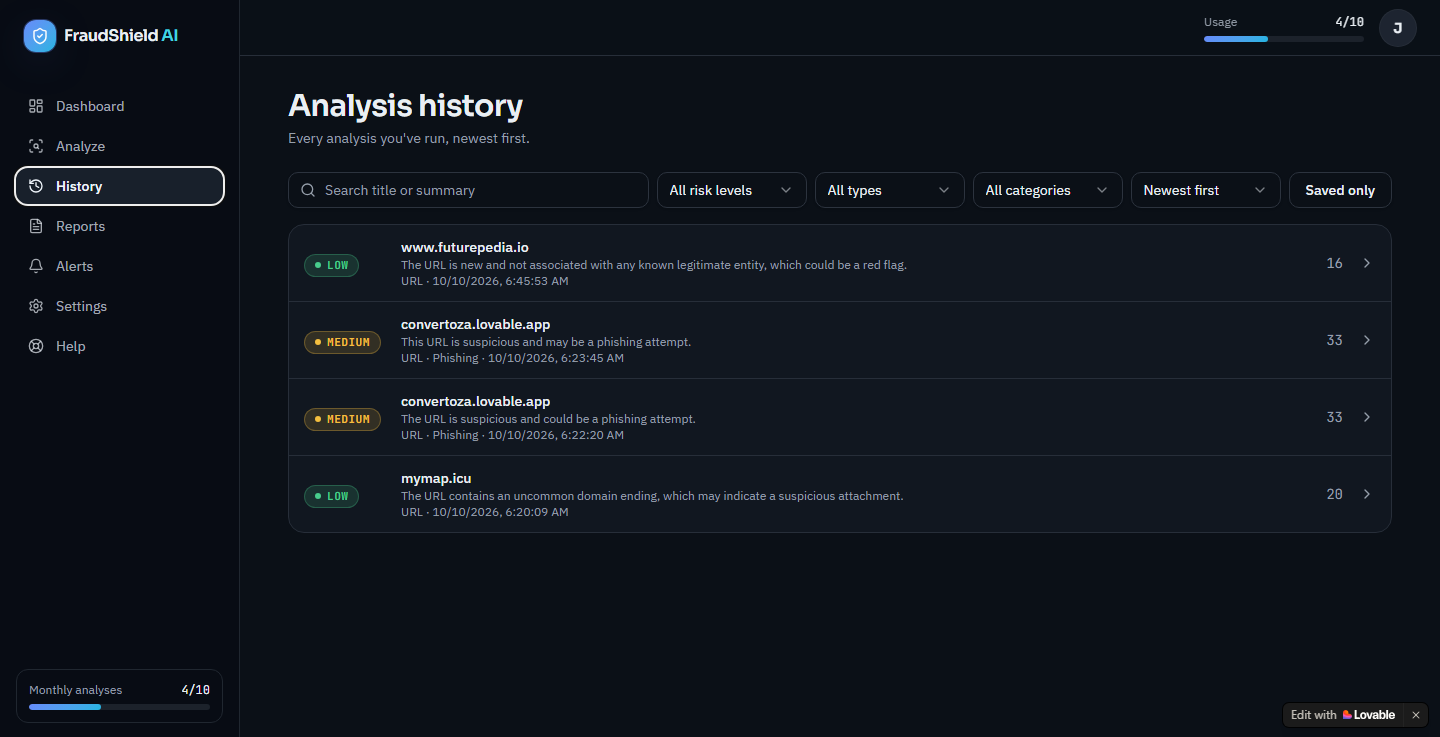
User Dashboard - History
-
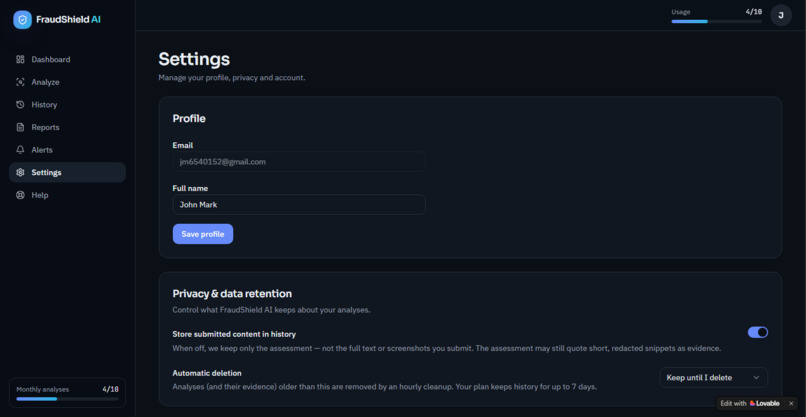
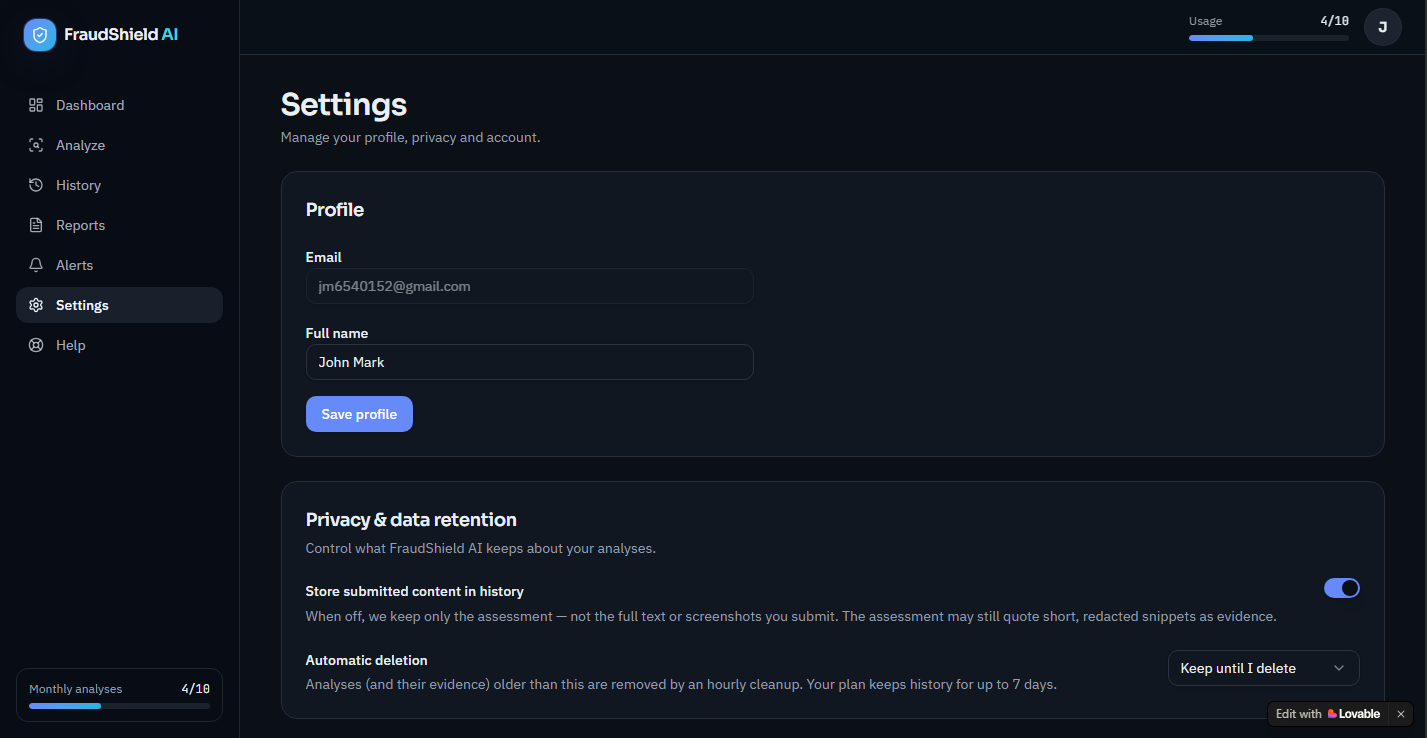
Setting - Profile, Privacy and Data Retention
-
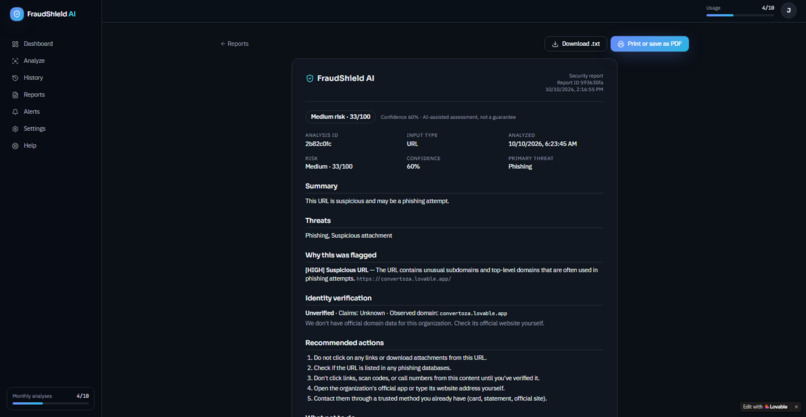
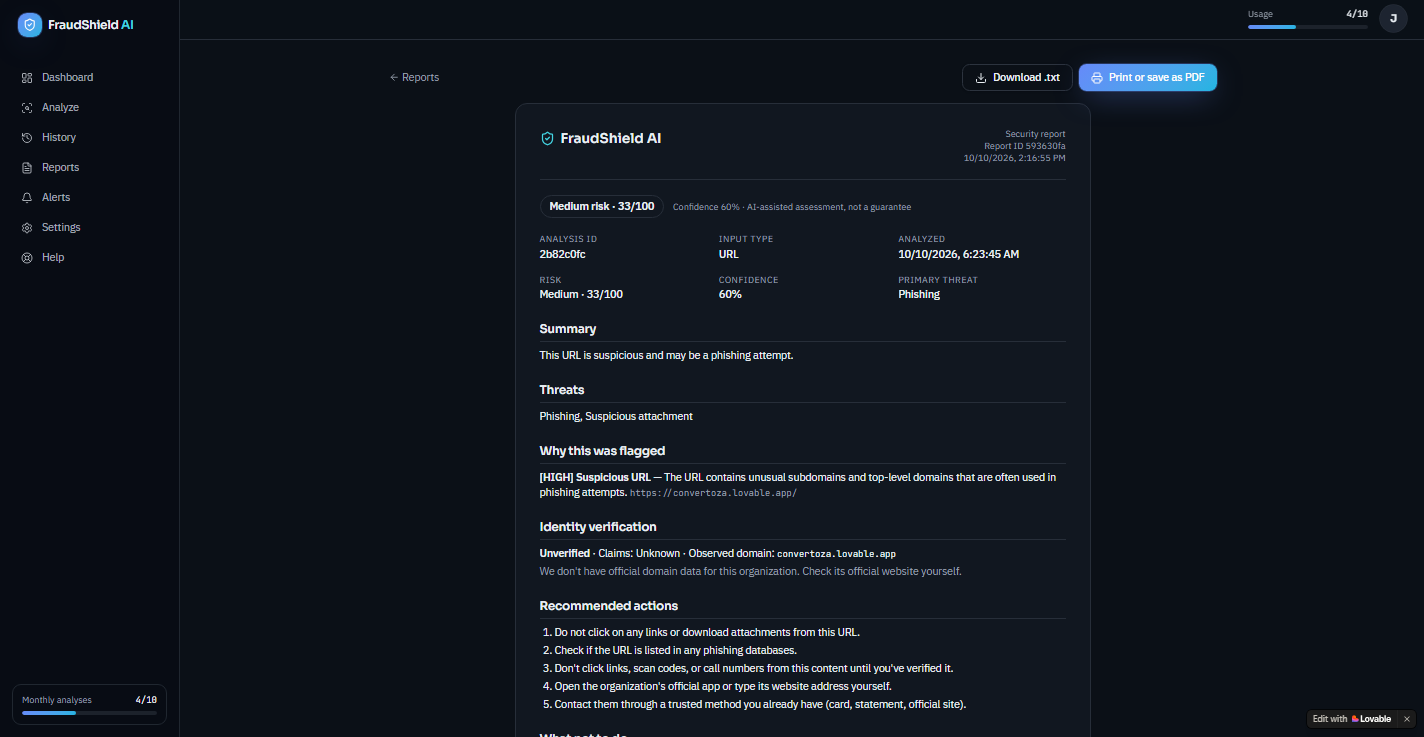
Report Export
-
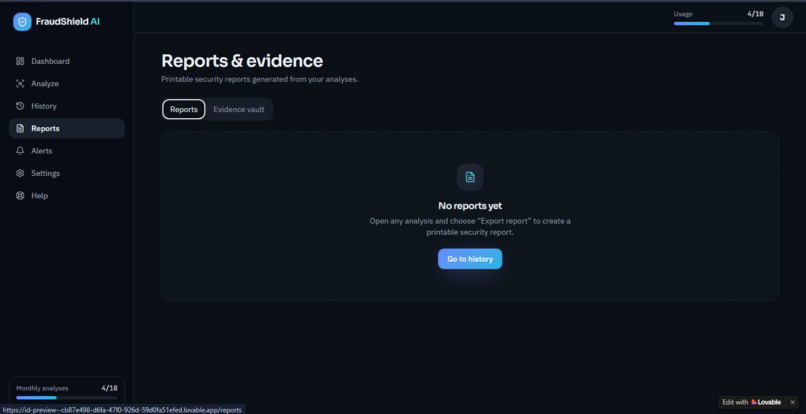
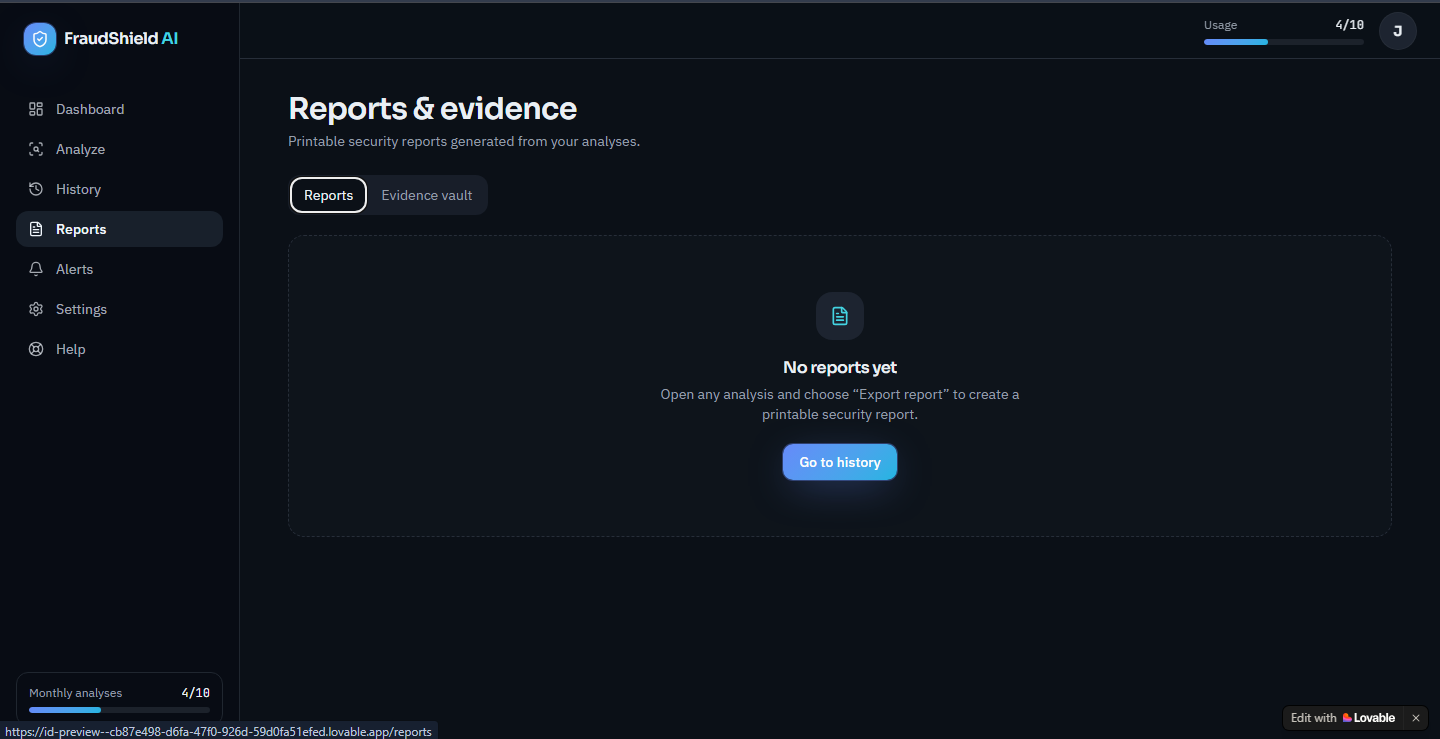
User Dashboard - Reports & Evidence - Reports
-
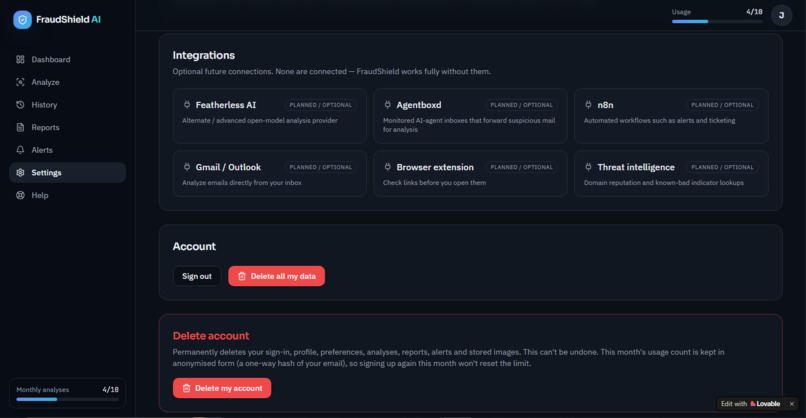
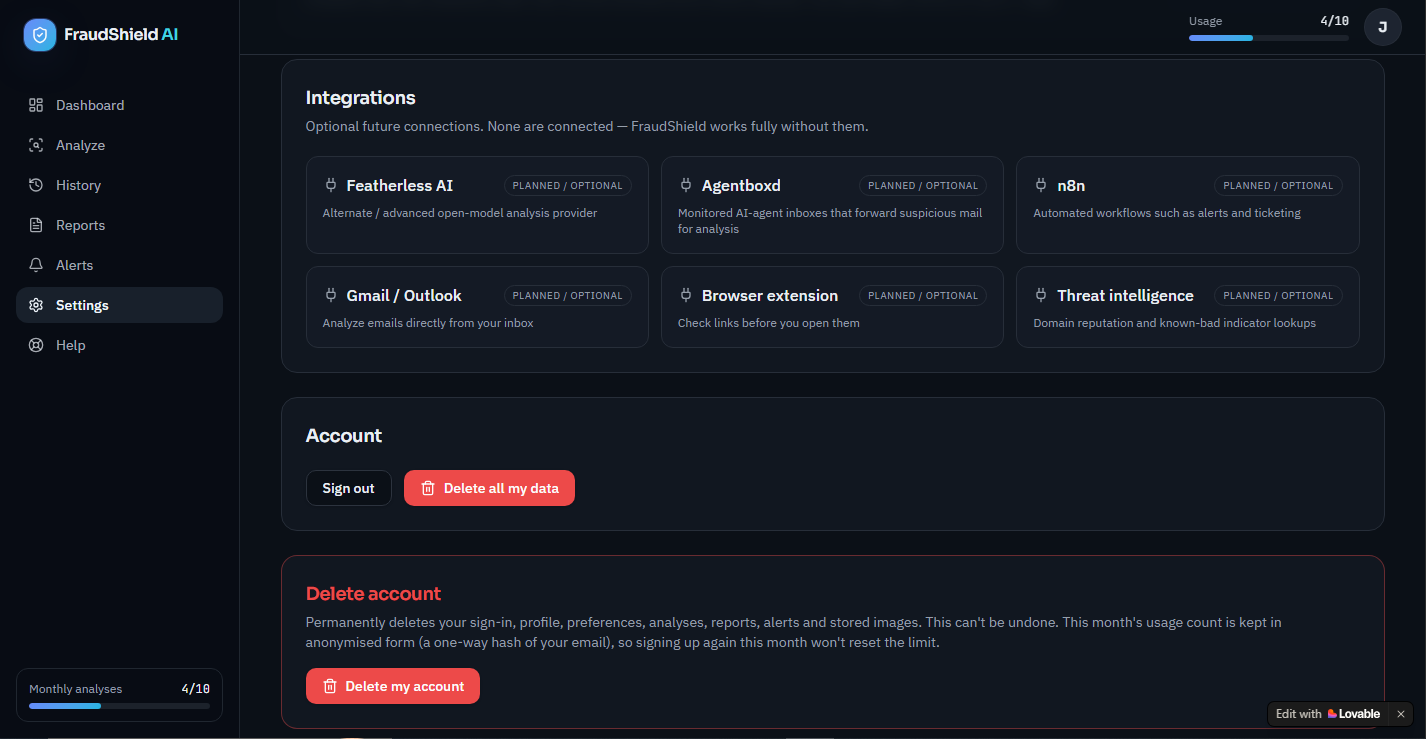
Setting - Integreation, Account, Delete
-
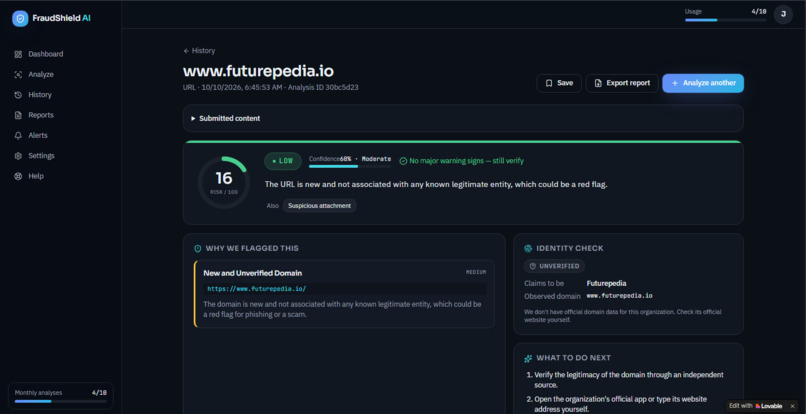
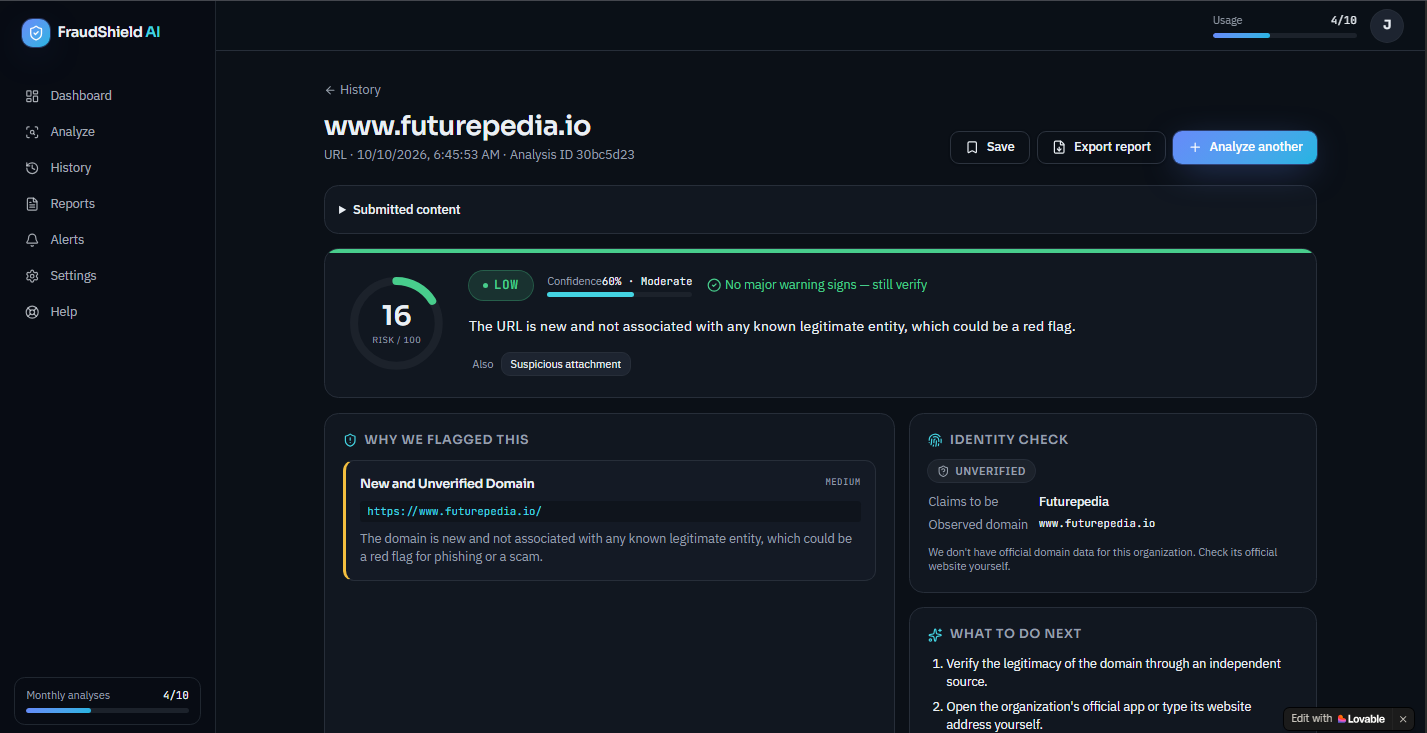
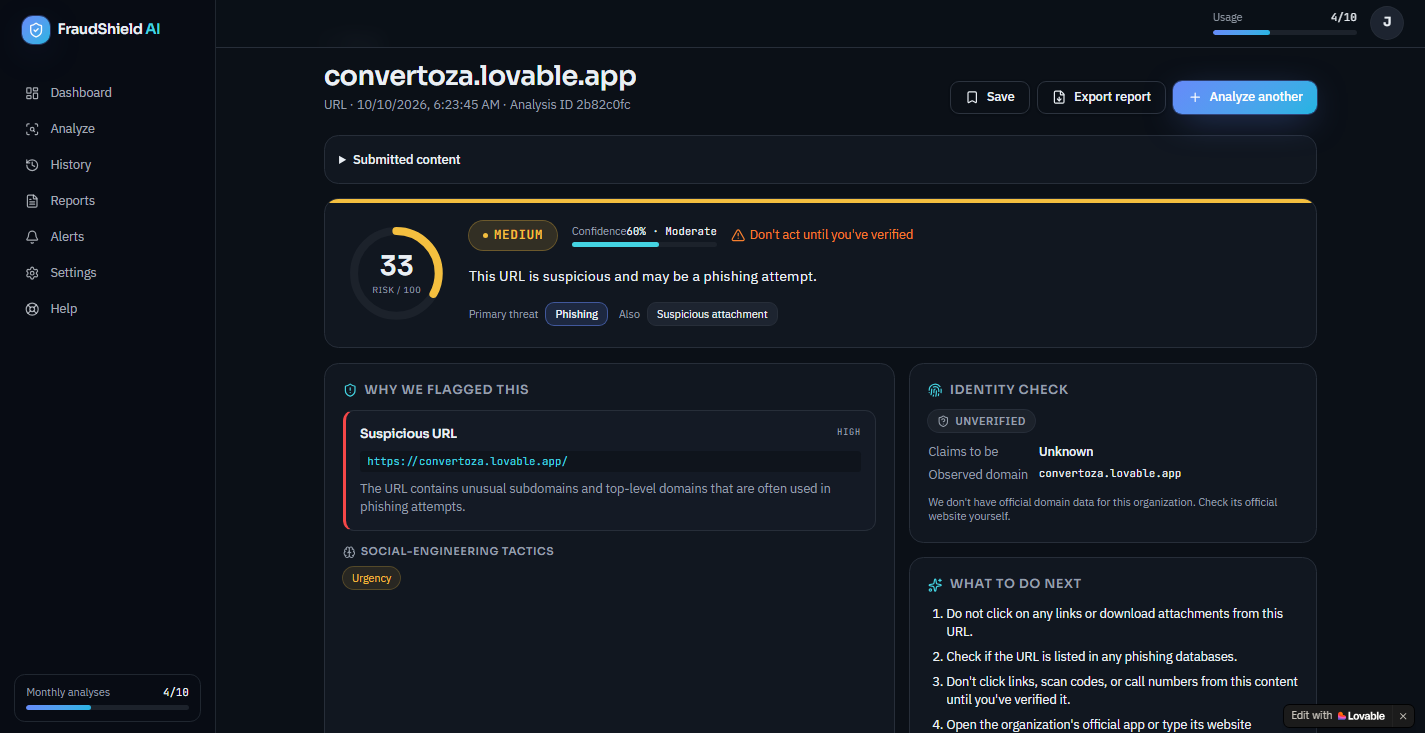
URL Analyze Report 2
-
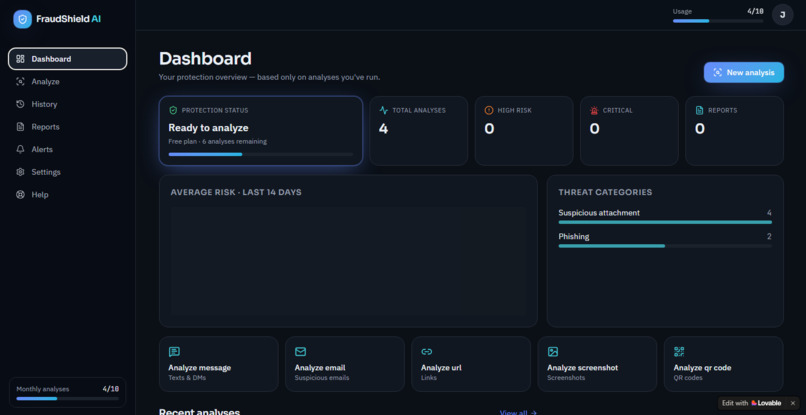
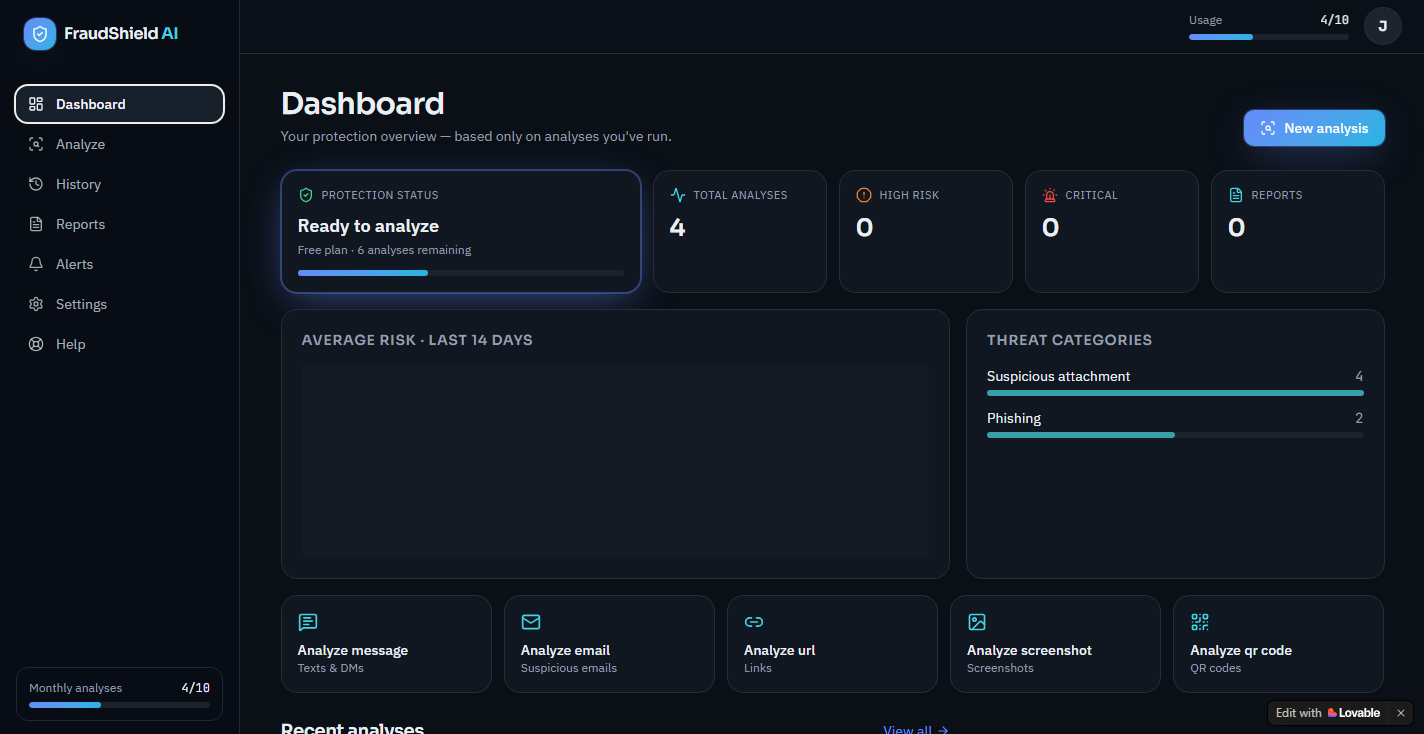
User Dashboard
-
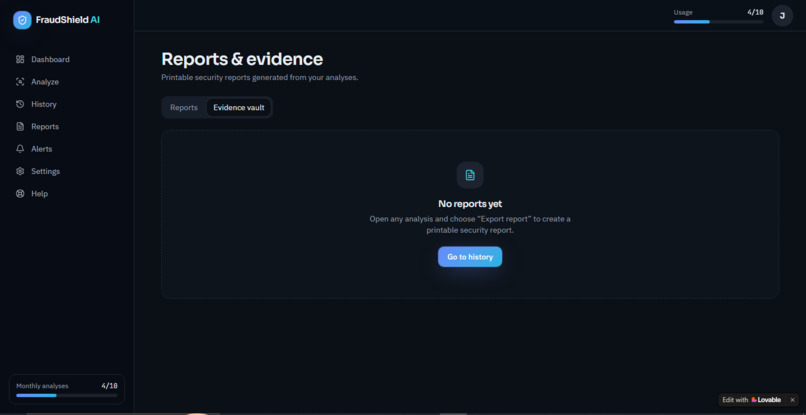
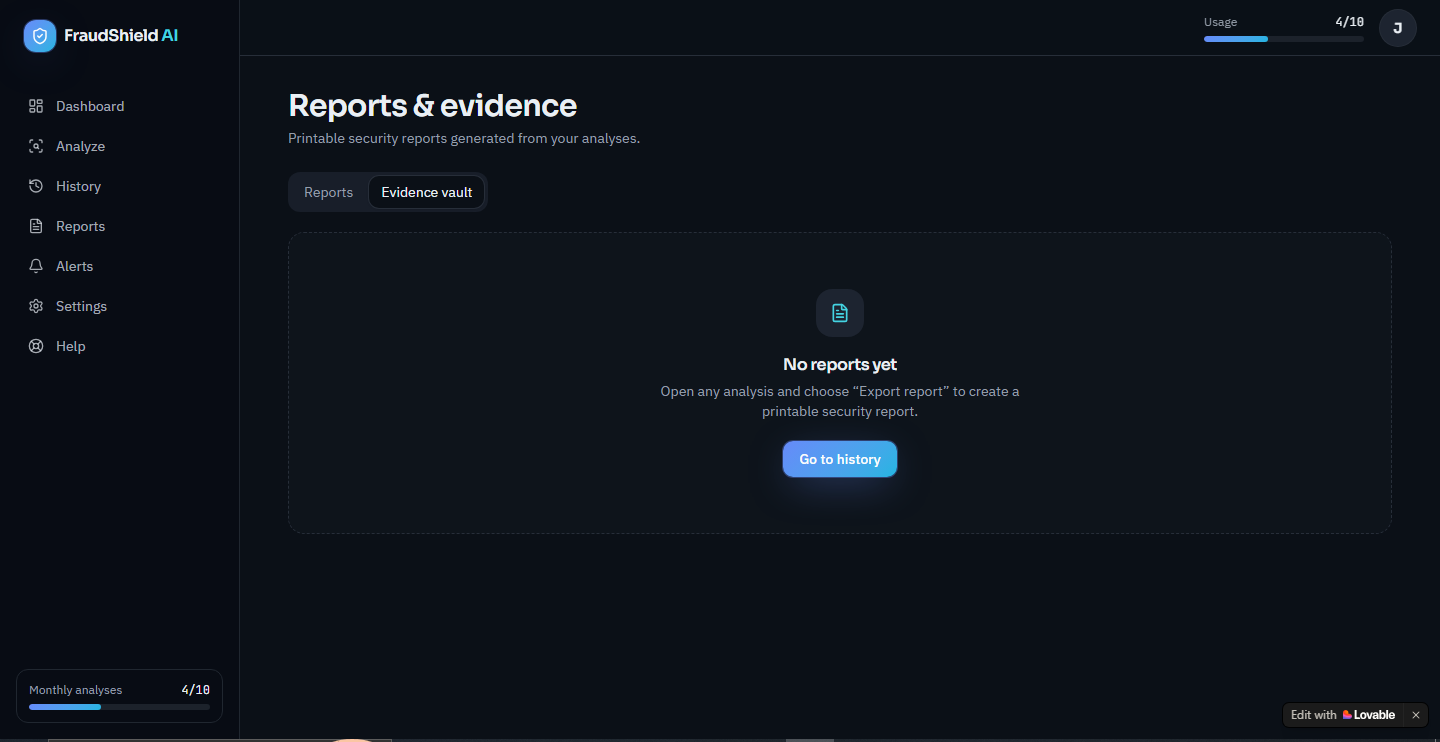
User Dashboard - Reports & Evidence - Evidence
-
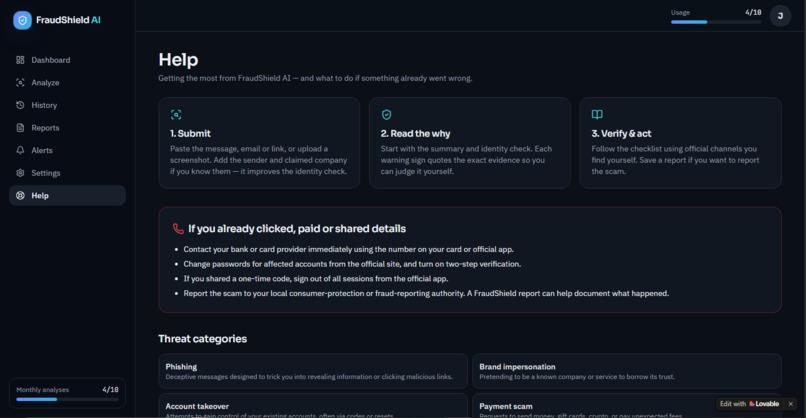
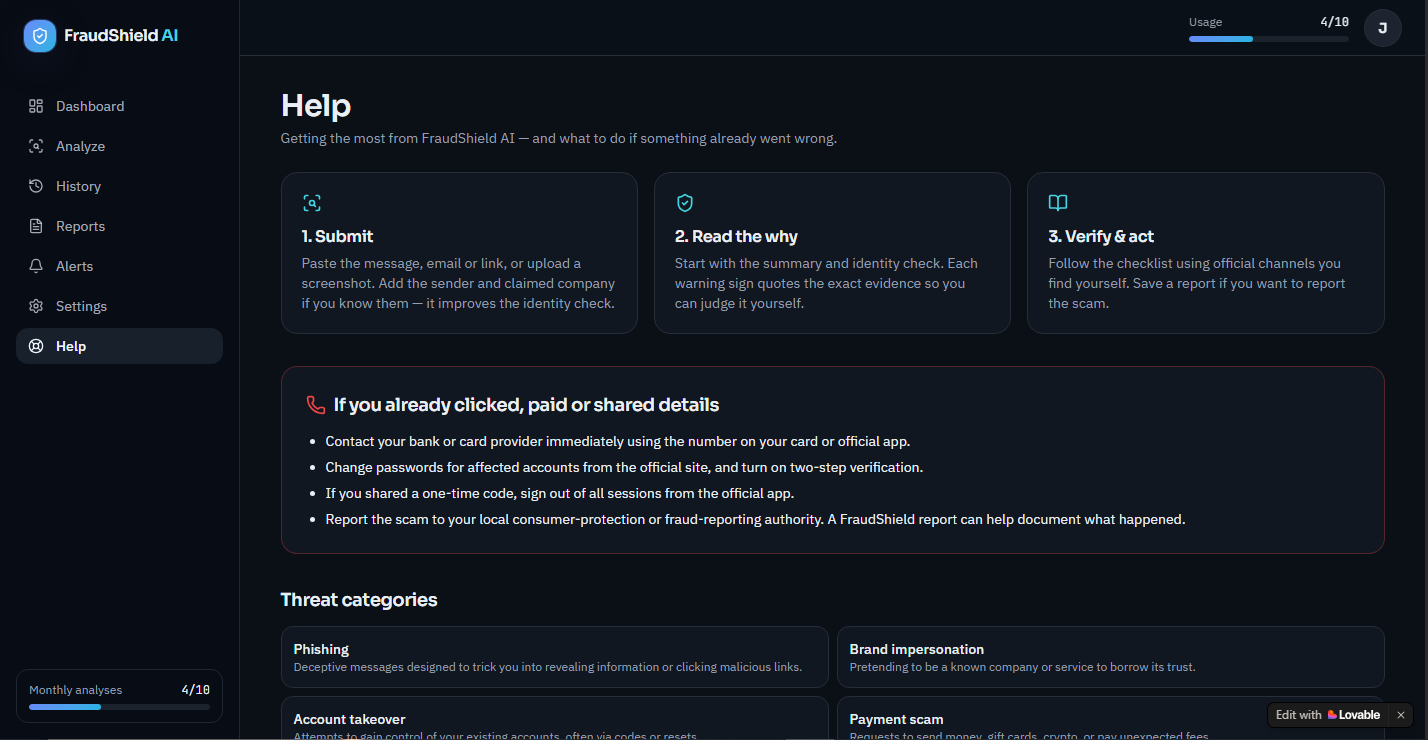
Help page
-
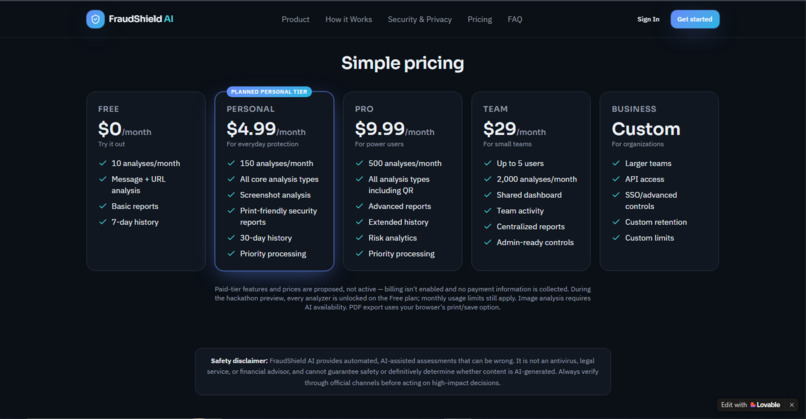
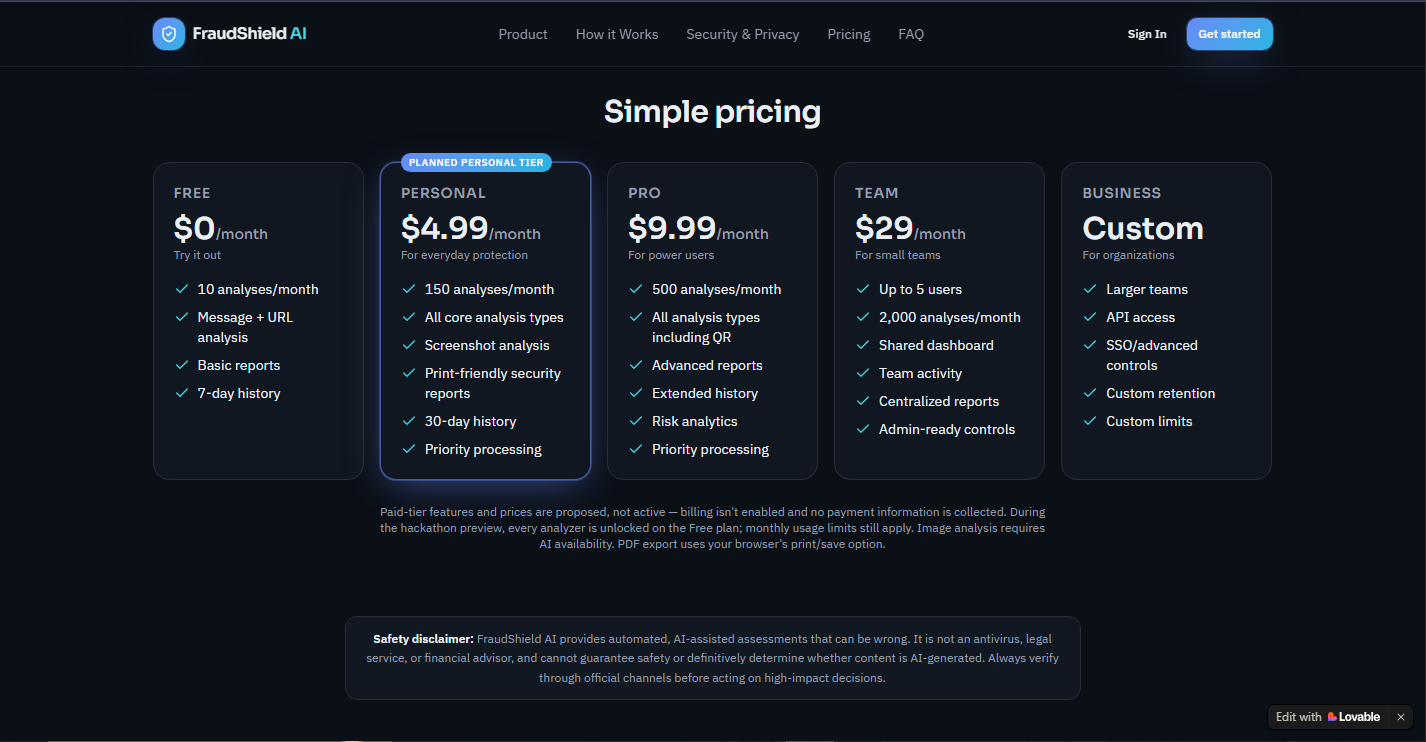
Price Page
-
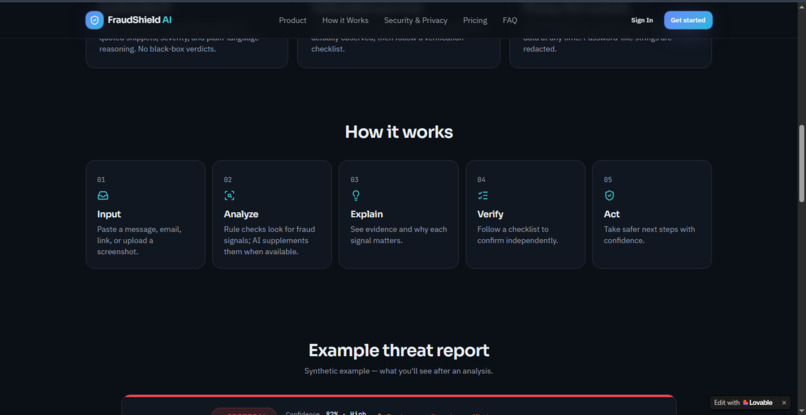
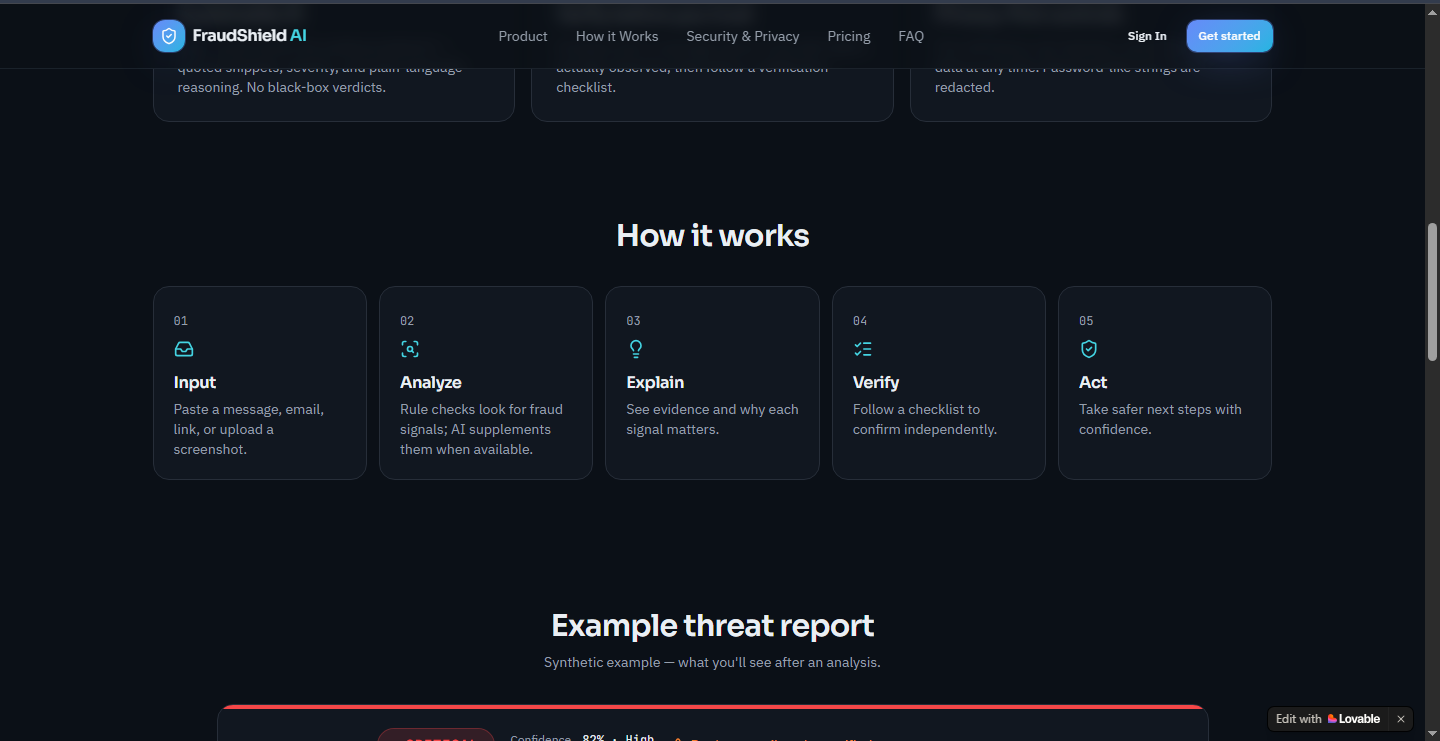
FraudShield AI - How Its Work
-
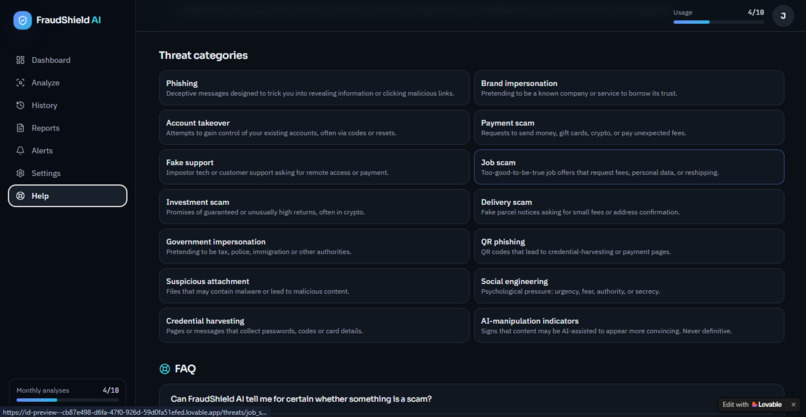
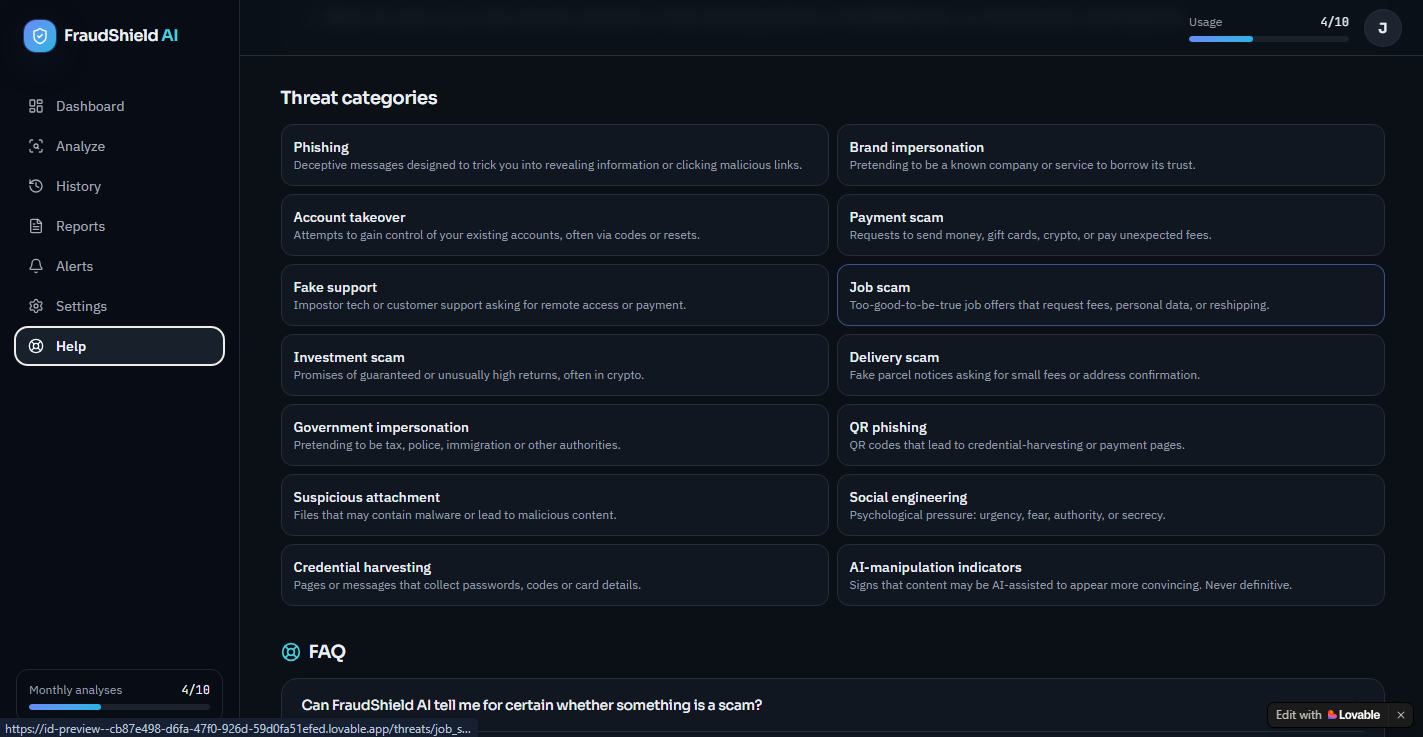
Threats Categories
-
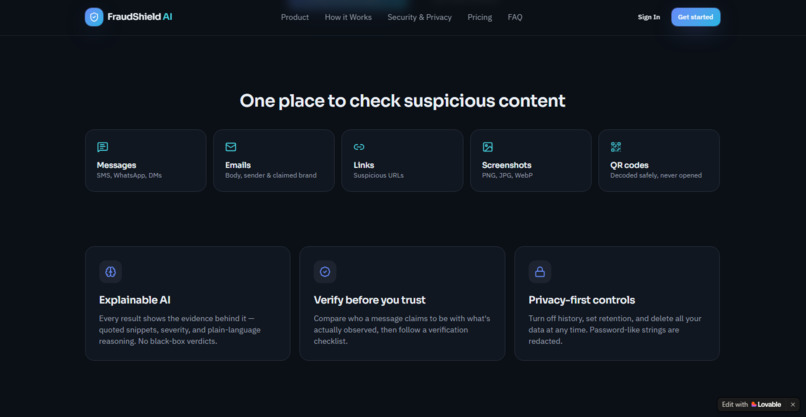
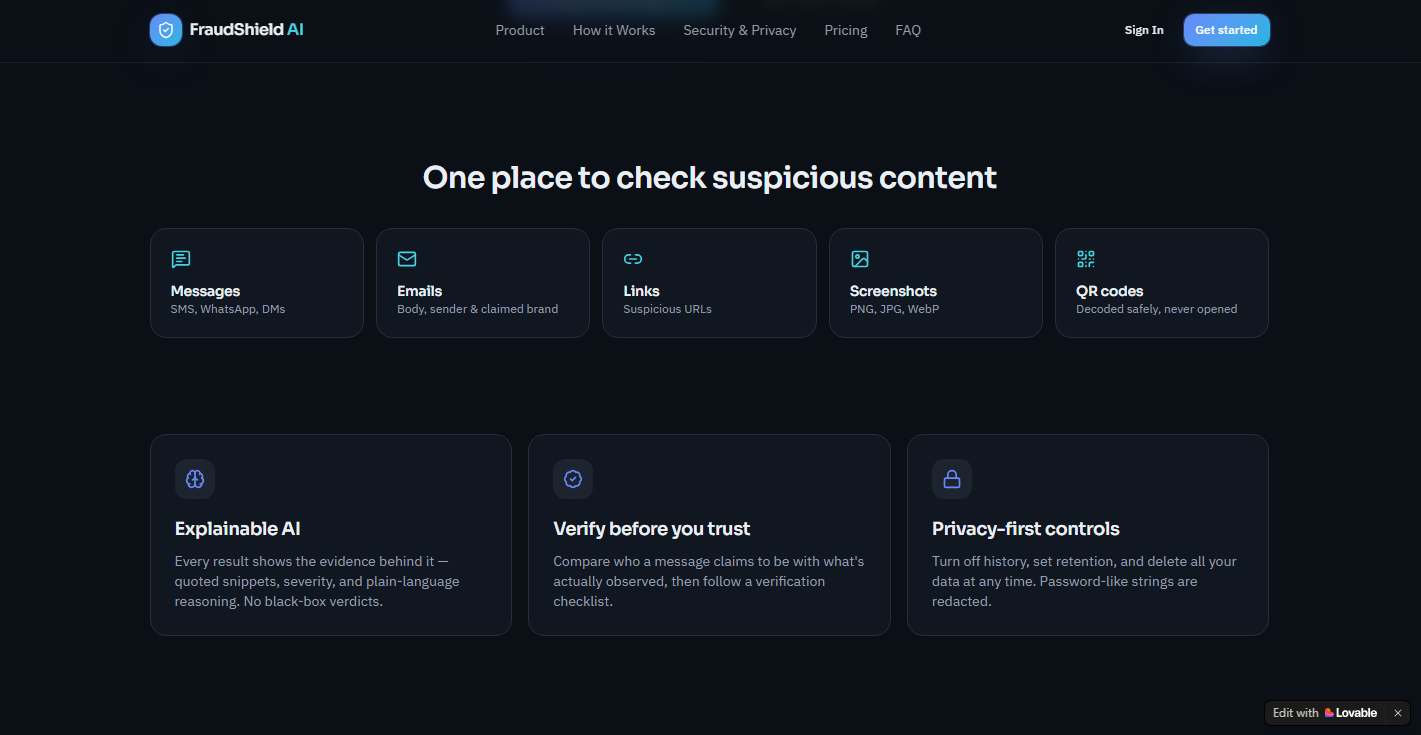
FraudShield AI - Home Details
-
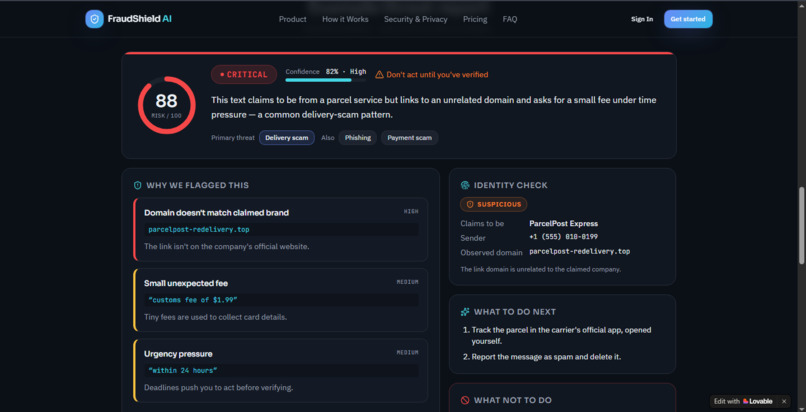
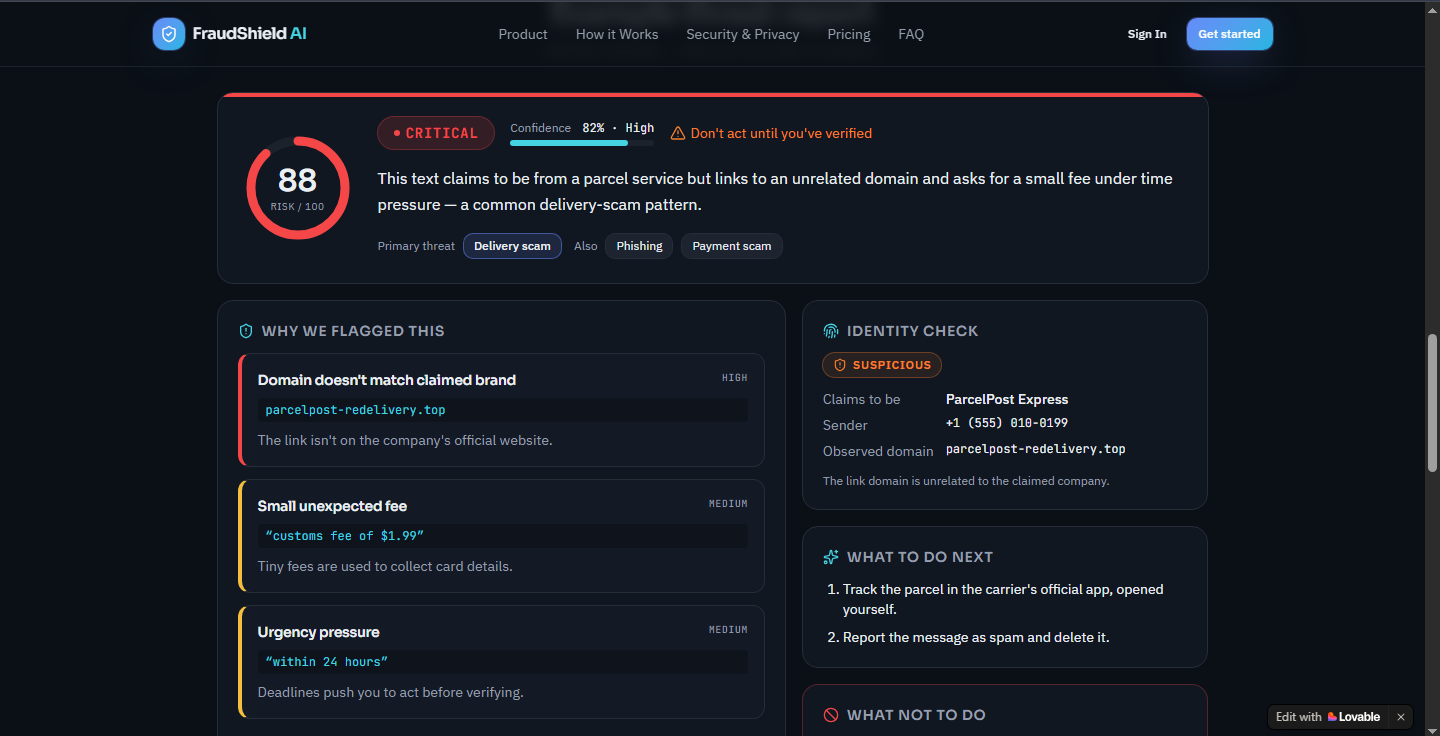
FraudShield AI - Report Sample Page
-
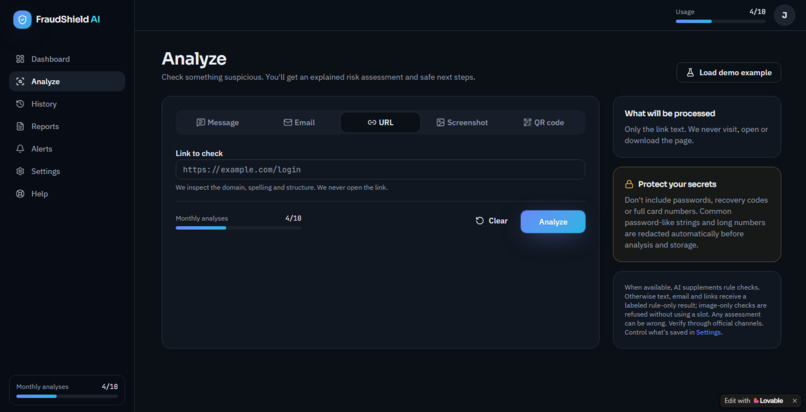
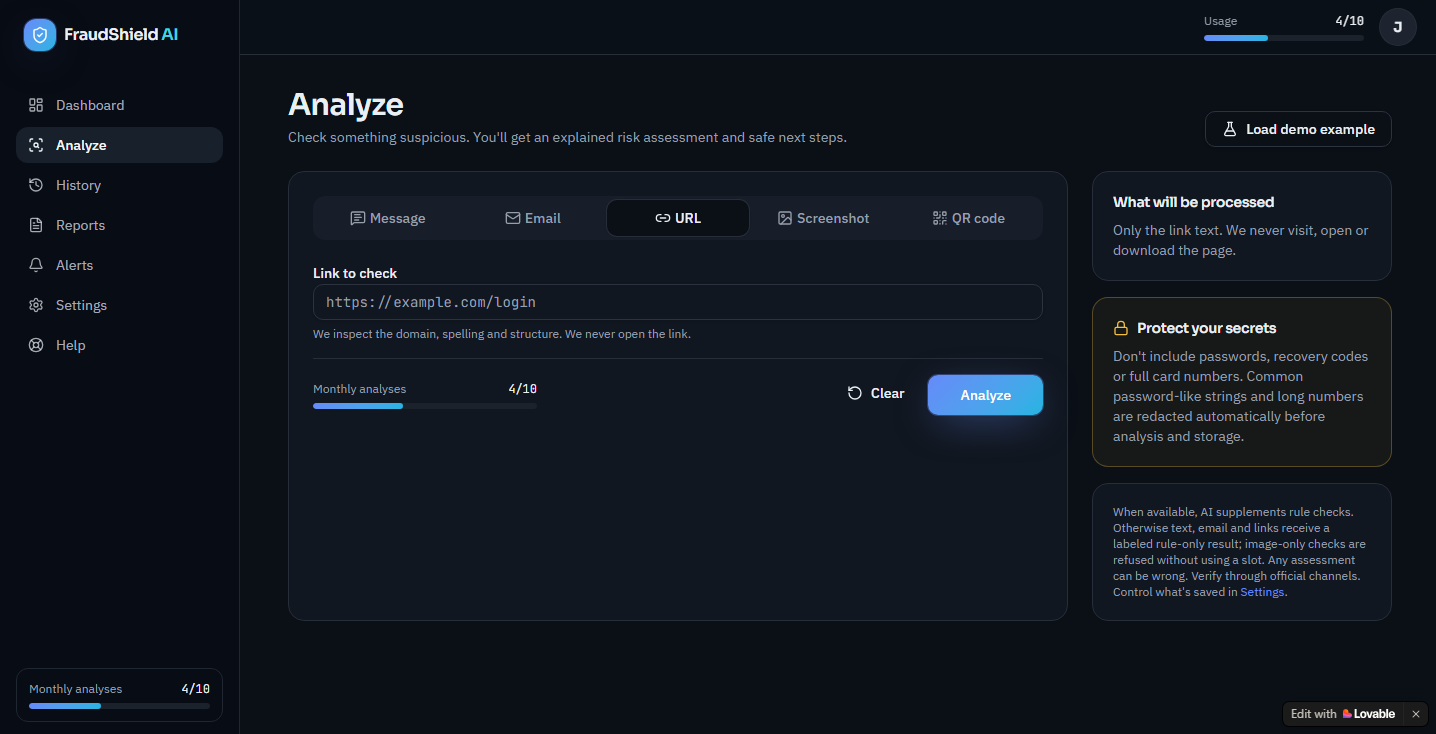
User Dashboard - Analyze URL
-
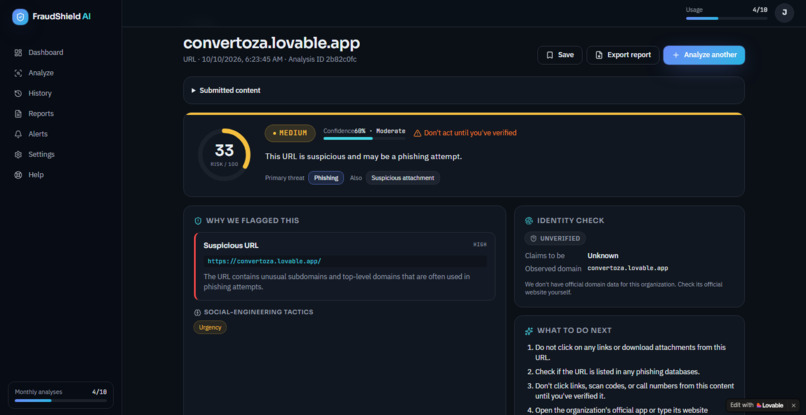
URL Analyze Report 1
Inspiration
Online scams and phishing attempts are becoming increasingly difficult to recognize. Suspicious messages, fake emails, misleading links, and QR codes can trick people into sharing personal information or making unsafe decisions. We wanted to build a tool that helps everyday users understand these risks instead of simply telling them to be careful. This inspired us to create FraudShield AI, an AI-powered assistant designed to make scam awareness easier and more accessible.
What it does
FraudShield AI brings five types of scam analysis into one platform:
- Message Analyzer: Reviews suspicious messages and identifies potential scam indicators.
- Email Analyzer: Highlights suspicious wording, urgency, and possible phishing signals.
- URL Analyzer: Examines submitted links for suspicious patterns without automatically opening them. 4.Screenshot Analyzer: Helps users assess suspicious content shown in screenshots, where supported.
- QR Analyzer: Decodes QR destinations so users can inspect them without automatically opening them.
The application aims to provide understandable risk assessments, explain potential warning signs, and suggest safer next steps. It is designed to support better decisions, not to guarantee that any message or link is safe or fraudulent.
How we built it
We built FraudShield AI as a web application with a user-friendly interface and multiple specialized analysis workflows. The application combines AI-assisted analysis with rule-based fallback logic for supported cases.
Our AI provider setup uses Lovable AI as the primary provider and Featherless AI as a backup for supported text-based analyses, using the Qwen2.5-7B-Instruct model.
We also focused on security-conscious implementation, including server-side API secret handling, input validation, bounded model requests, output sanitization, and safeguards against automatically opening submitted URLs or QR destinations. The platform includes supporting features such as analysis history, a dashboard, an evidence vault, and reports.
Challenges we ran into
One of our main challenges was designing a consistent experience across different input types, from plain text and emails to URLs, screenshots, and QR codes. Each type requires different handling and safety considerations.
Another challenge was ensuring that the application behaves responsibly when an AI provider is unavailable. We worked on fallback behavior, output validation, and safeguards intended to reduce unsafe or unsupported recommendations.
We also had to balance useful explanations with clear limitations. A risk score should help users understand potential warning signs without creating a false sense of certainty.
Accomplishments that we're proud of
We are proud to have brought five scam-analysis workflows together in one application rather than requiring users to switch between separate tools.
We also implemented an AI provider fallback design, security-focused input handling, and safeguards intended to prevent submitted links and QR destinations from opening automatically. The project includes supporting features for reviewing previous analyses and organizing findings.
A real test of the text-based analysis flow successfully used the Featherless backup provider when the primary AI provider was unavailable. However, complete end-to-end verification of all five analyzers is still pending.
What we learned
Building FraudShield AI reinforced that AI-based security tools need more than a model that generates answers. They also need input validation, controlled outputs, responsible fallback behavior, and clear communication about uncertainty.
We learned the importance of treating different input types according to their risks, protecting API credentials on the server, and avoiding claims that cannot be verified. Most importantly, we learned that helping users understand why something may be suspicious can be more useful than providing a warning alone.
What's next for FraudShield AI
Our next goal is to complete end-to-end testing of all five analyzers and improve the consistency and clarity of their results.
We plan to strengthen evaluation using safe synthetic scam examples, improve the explanations behind risk assessments, and refine the user experience based on testing and feedback. Future development could also explore verified threat-intelligence integrations, broader language support, and additional reporting features.
Our long-term vision is to make FraudShield AI a practical digital-safety assistant that helps people pause, investigate, and make more informed decisions before trusting suspicious messages, links, emails, or QR codes.
Built With
- aisafety
- apiintegration
- artificialintelligence
- cloudcomputing
- css
- cybersecurity
- featherlessai
- html
- inputvalidation
- javascript
- lovable
- lovableai
- machine-learning
- naturallanguageprocessing
- promptengineering
- qwen
- react
- responsivedesign
- restapi
- scamdetection
- serversidedevelopment
- typescript
- vite
- webapp
- webdevelopment

Log in or sign up for Devpost to join the conversation.