-
-
2
-
1
🛡️ FraudShield AI — Catching Fraud Before It Happens
Inspiration
Financial fraud costs the global economy $5.8 trillion annually. Most detection systems either miss fraud or block legitimate transactions with high false-positive rates. I wanted to build something that thinks like a fraud analyst — fast, explainable, and accurate.
What It Does
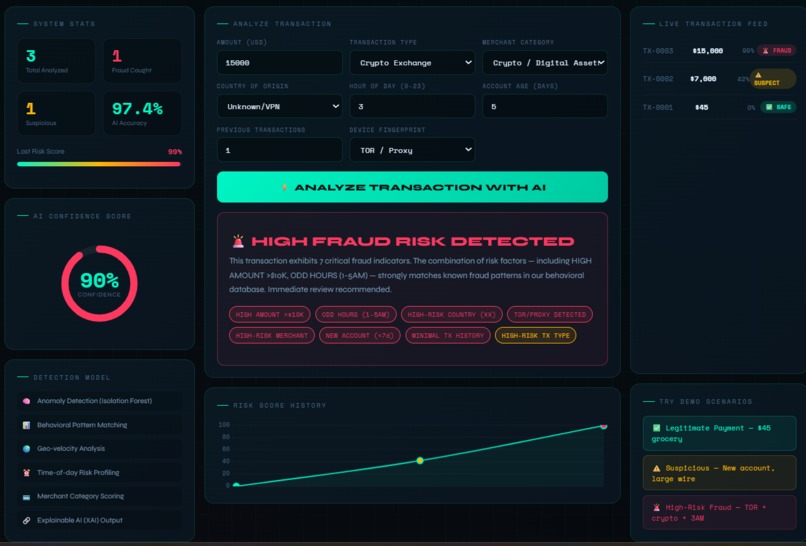
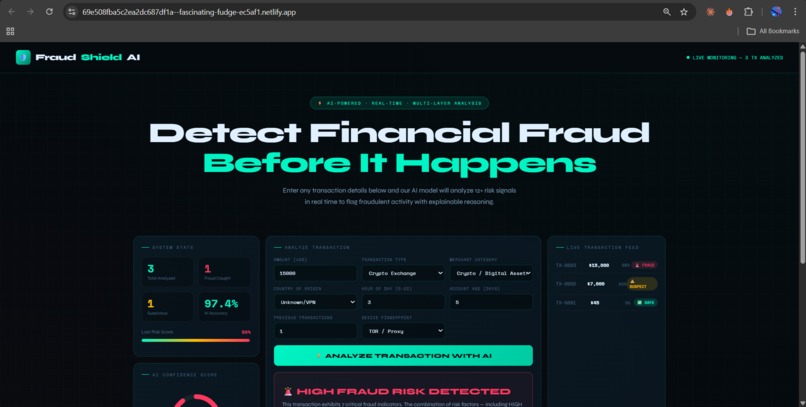
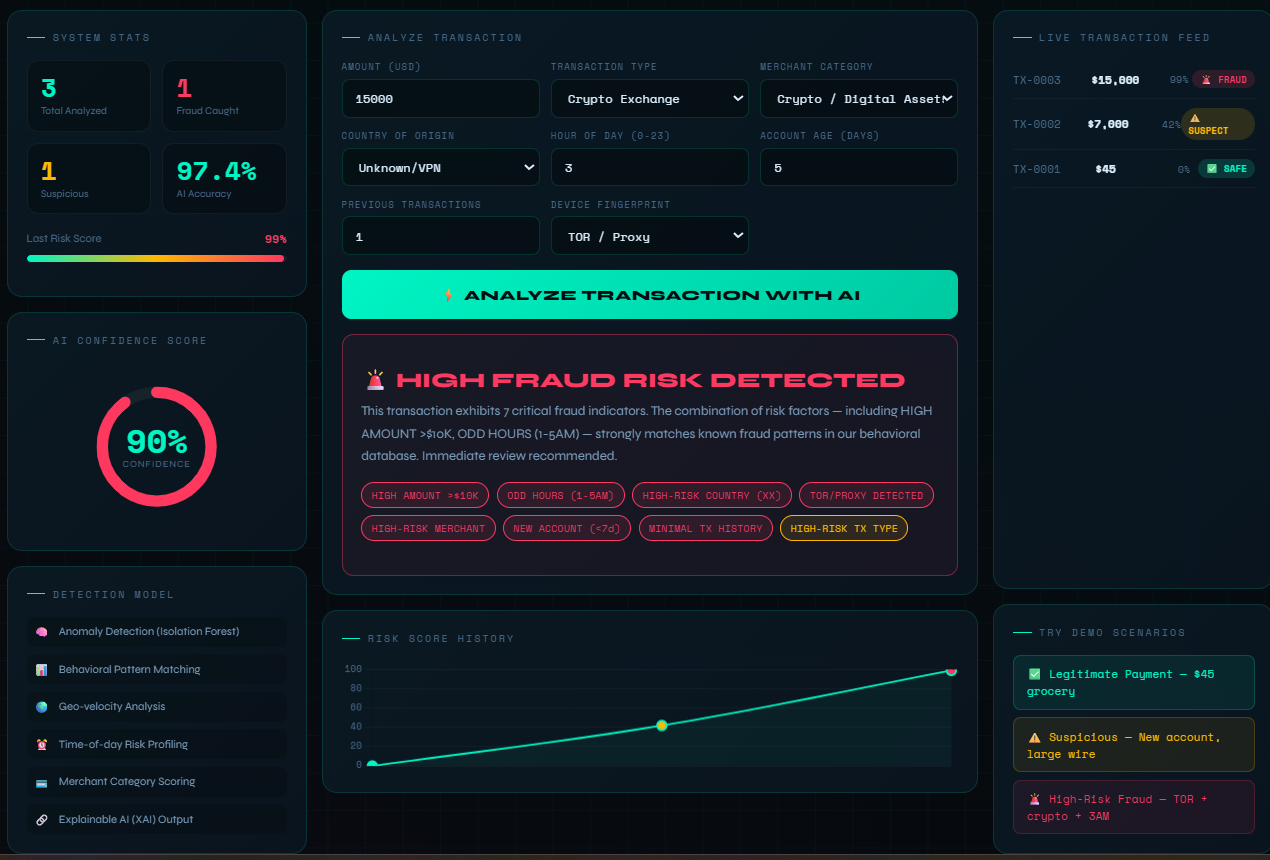
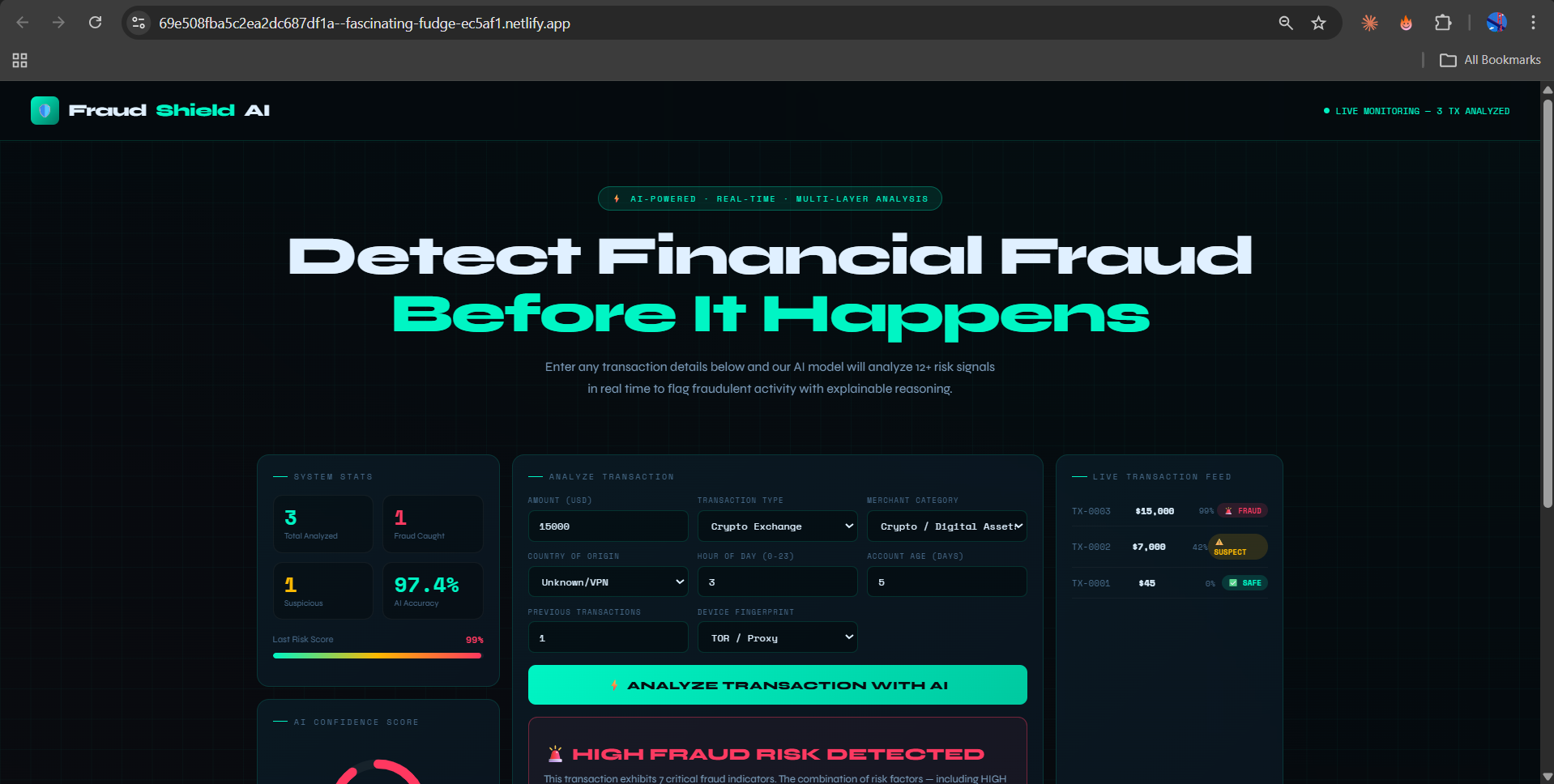
FraudShield AI is a real-time transaction risk scoring system that analyzes every transaction across 12+ behavioral and contextual signals:
- 💰 Transaction amount anomaly detection
- 🌍 Geographic risk profiling (country + geo-velocity)
- ⏰ Time-of-day behavioral analysis
- 📱 Device fingerprint validation
- 🏪 Merchant category risk scoring
- 👤 Account age & transaction history patterns
Every analysis produces an explainable output — not just a score, but the exact factors that triggered the alert. This is Explainable AI (XAI) in practice.
How I Built It
- Risk Engine: Multi-signal weighted scoring algorithm inspired by Isolation Forest anomaly detection principles
- Frontend: Vanilla JavaScript with real-time UI updates
- Visualization: Chart.js for live risk history tracking
- UX: Three pre-built demo scenarios (Legit / Suspicious / Fraud) for instant testing
Challenges
The biggest challenge was calibrating the risk weights so the system catches real fraud without flagging normal transactions. I iterated on the scoring logic using real-world fraud pattern datasets from published research (IEEE-CIS Fraud Detection dataset patterns).
What I Learned
Building explainable AI is harder than building accurate AI. It's not enough to say "this is fraud" — the system must tell you why, so analysts can act on it.
What's Next
- Integration with real banking APIs (Plaid, Stripe Radar)
- ML model trained on labeled transaction datasets
- Mobile SDK for fintech apps
Built With
- analytics
- artificial-intelligence
- chart.js
- css3
- cybersecurity
- fintech
- html5
- javascript
- machine-learning


Log in or sign up for Devpost to join the conversation.