-
-
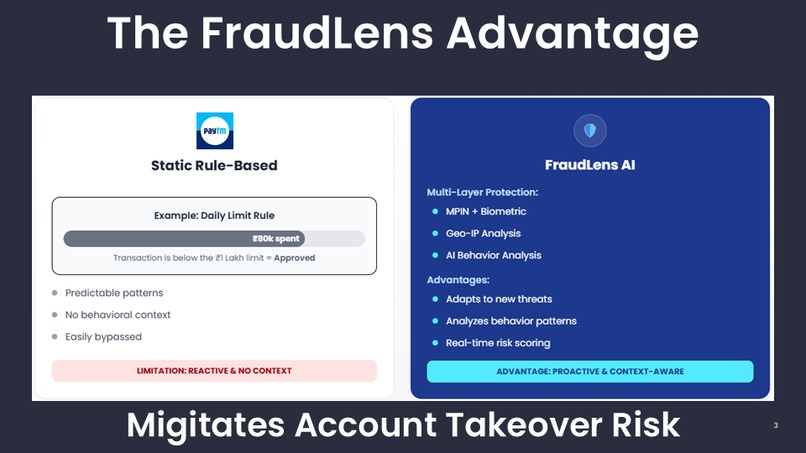
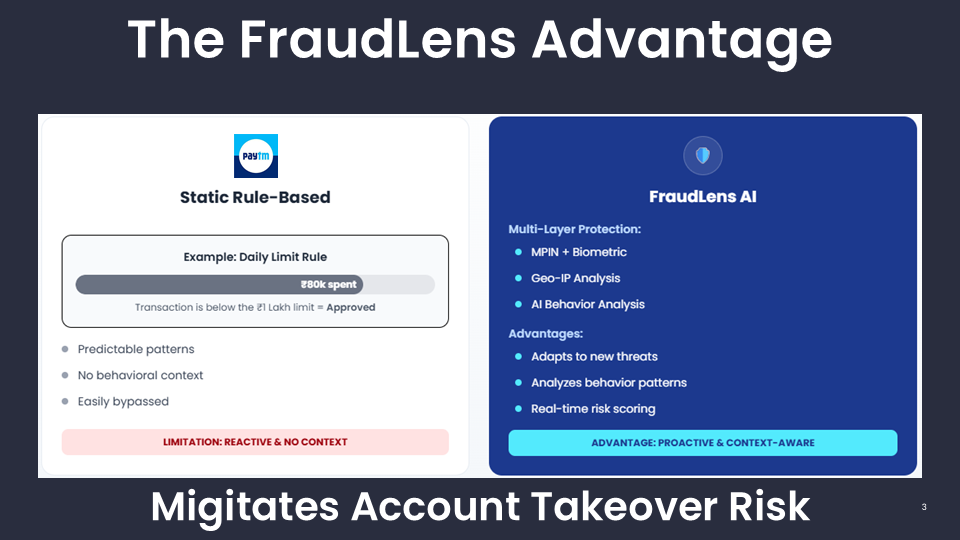
A comparison with existing systems and our solution -1
-
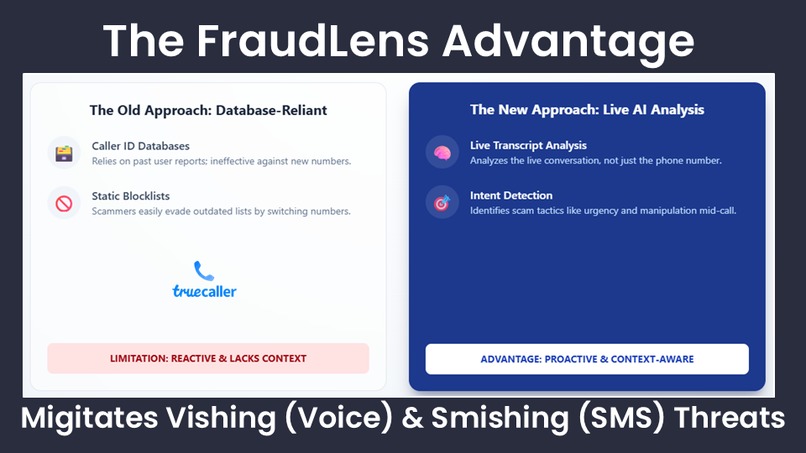
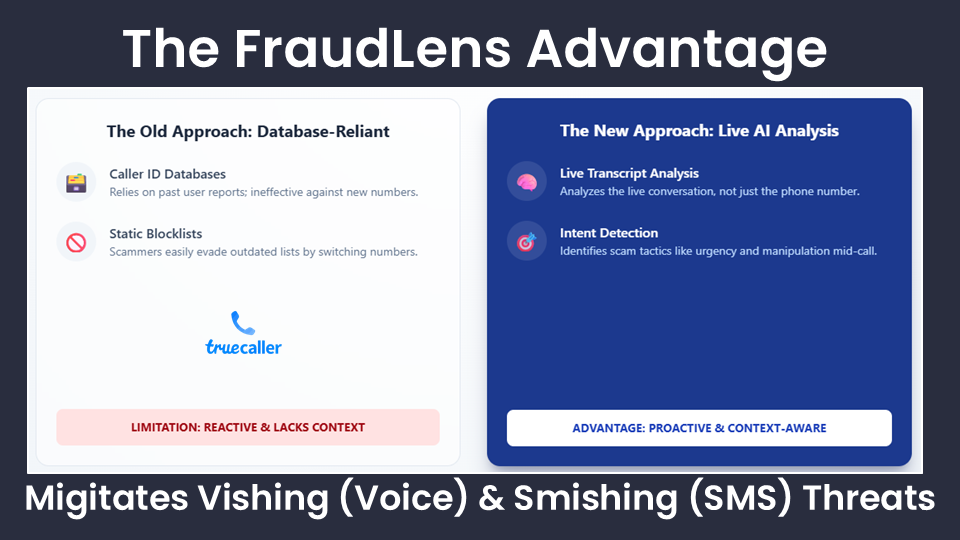
A comparison with existing systems and our solution -2
-
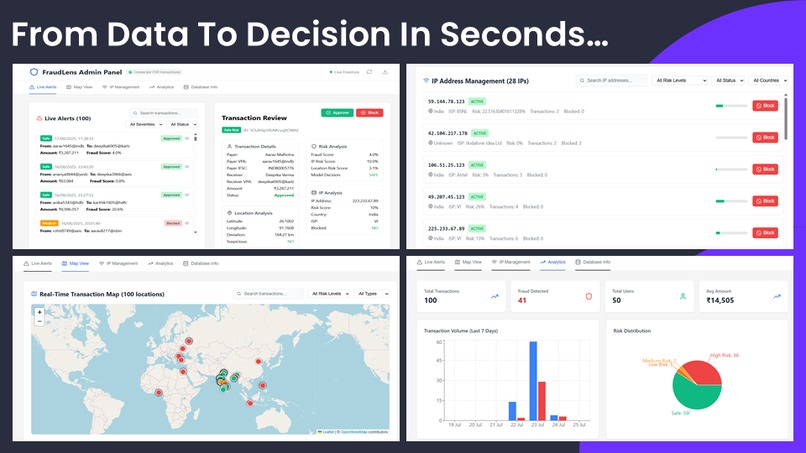
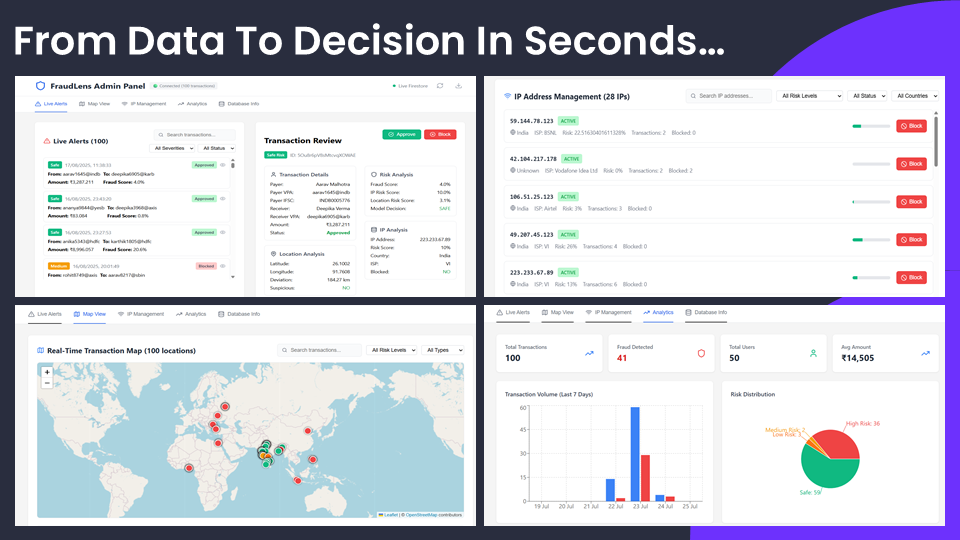
Web App Admin Panel demo
-
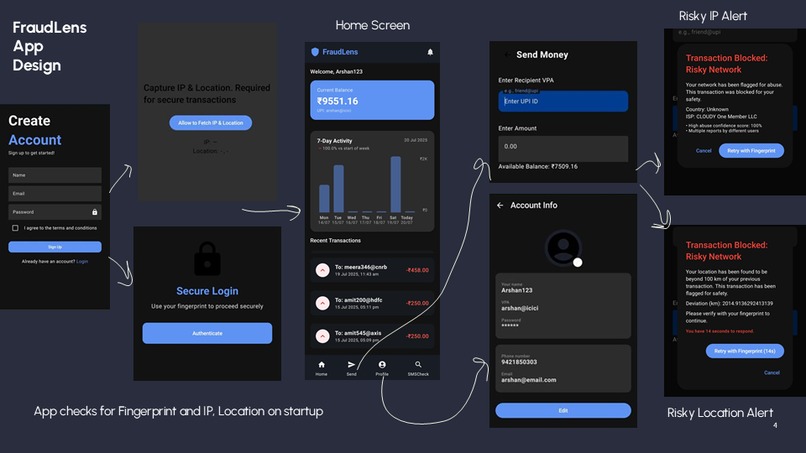
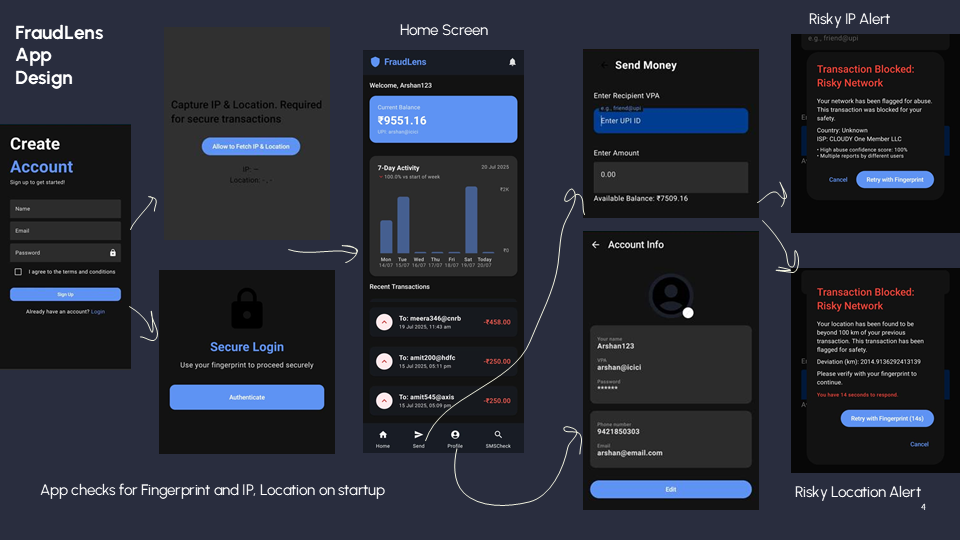
UI showcase of mobile app, which simulates frauds and detects them.
-
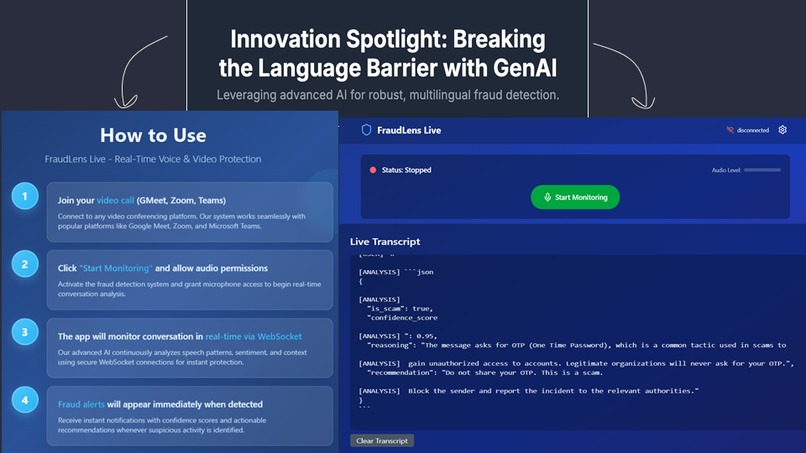
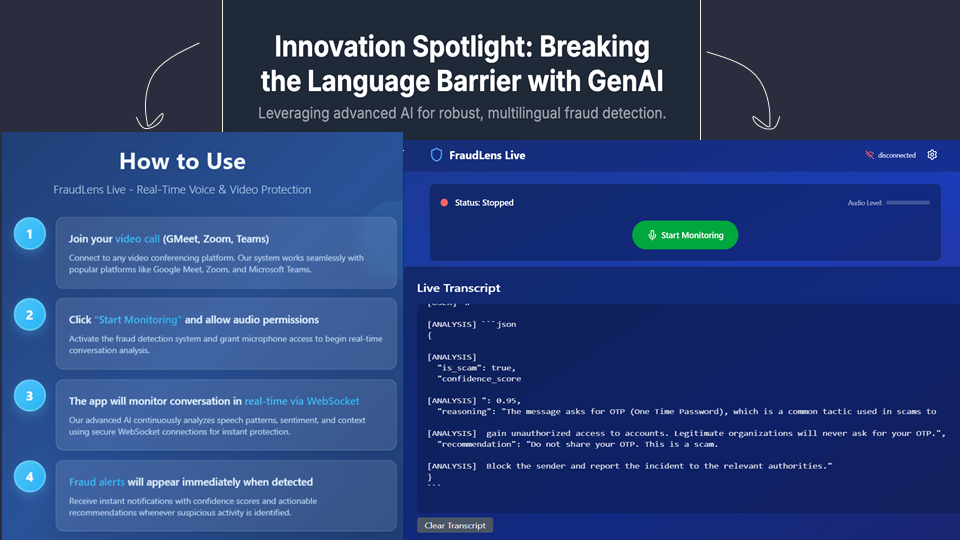
App feature, Our counter to Vishing and Deepfake Attacks using GenAI and websockets.
-
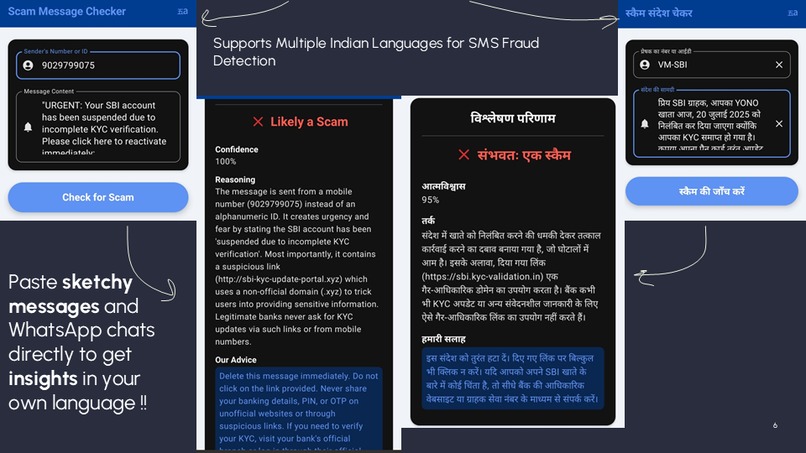
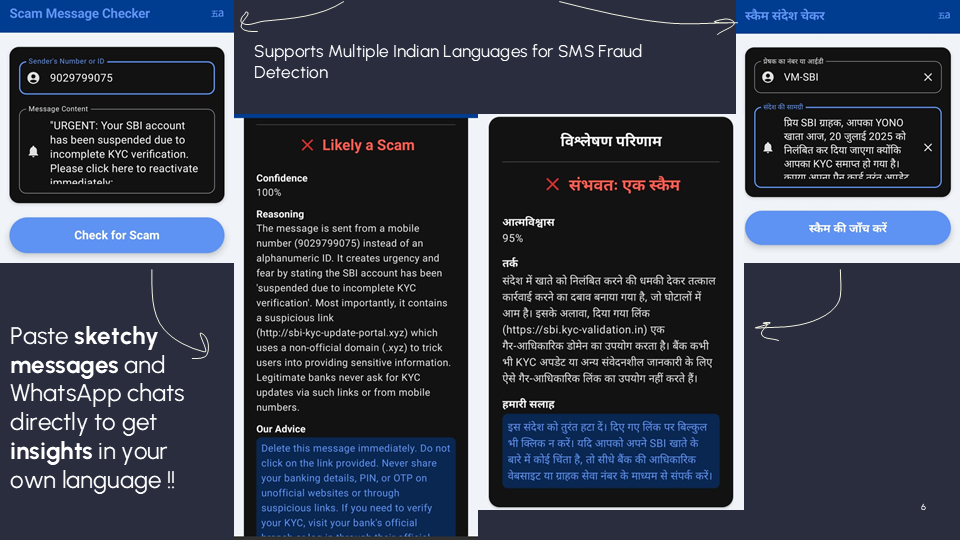
App feature, Our counter to SMShing attack using GenAI
Inspiration
India's Unified Payments Interface (UPI) has revolutionized digital banking with over 18.68 billion transactions worth ₹25 trillion in May 2025 alone. However, this rapid growth has created new avenues for fraud. UPI-related fraud cases rose by 85% year-over-year in FY 2023-24. Fraudsters, now technologically advanced, exploit user trust through impersonation, SIM swaps, vishing, and credential leaks. Current systems relying on OTPs and static credentials are reactive and ineffective. FraudLens aims to redefine digital banking security by proactively preventing fraud using AI, biometrics, and real-time intelligence.
What it does
FraudLens is a unified, AI-driven fraud detection platform that proactively prevents impersonation, registration frauds, and social engineering attacks in mobile banking. It integrates multiple security layers:
- Live Call Analysis: Detects scam keywords like "read OTP" during calls and issues real-time fraud alerts.
- Behavioral Anomaly Detection: Uses user behavior patterns to detect imposters during transactions.
- Dynamic Risk Scoring: Combines outputs from ML models to assign a real-time risk score (0-100).
The Admin Panel provides a live threat dashboard, case management, IP/device monitoring, and explainability through SHAP visualizations.
How we built it
Phased Approach:
Phase 1: Multi-Modal Data Collection & Preprocessing Behavioral, transactional, and contextual data (IP, location, biometrics) collected via the mobile app.
Phase 2: Core Model Development & Training
- Transactional Anomaly Detection using XGBoost.
- NLP Threat Intelligence using BERT-tiny.
Phase 3: Dynamic Risk Scoring & Integration Model outputs combined through a meta-learner for unified risk scoring.
Phase 4: System Implementation & Explainable AI Secure FastAPI backend, visualized explanations via SHAP, and integration with React Admin Panel.
Datasets Used:
- IEEE-CIS Fraud Detection Dataset (Kaggle)
- Synthetic dataset for behavioral biometrics (LSTMs, Autoencoders)
Tech Stack:
- Mobile App: Jetpack Compose, MVVM, Hilt, Coroutines + StateFlow
- Backend: FastAPI (Python), Docker
- Database: Firebase Firestore
- Admin Panel: ReactJS, NodeJS, Plotly.js/D3.js
- AI/ML Core: Scikit-learn, TensorFlow, PyTorch, HuggingFace (BERT-tiny), Google Gemini API, SHAP
- Deployment: Google Cloud Run, Vercel
- Threat Intelligence: AbuseIPDB, WHOIS APIs, Dark Web Scrapers
Challenges we ran into
- Generating realistic behavioral biometric datasets due to privacy constraints.
- Balancing security and user convenience without increasing friction.
- Integrating multiple AI models into a real-time meta-learner.
- Ensuring explainability for fraud decisions to meet regulatory compliance.
Accomplishments that we're proud of
- Successfully designed a multi-layered fraud defense system combining AI, biometrics, and contextual analytics.
- Built a real-time Admin Panel capable of live monitoring, investigation, and retraining.
- Developed an NLP-powered call analysis system that actively prevents social engineering in progress.
- Integrated dark web intelligence and device integrity modules for comprehensive protection.
What we learned
- Fraud prevention requires contextual understanding of user behavior, not just rule-based logic.
- AI explainability (via SHAP) is vital for trust in automated fraud systems.
- Continuous learning and retraining make fraud detection systems resilient to evolving threats.
What's next for FraudLens
- Expand to real-world pilot testing with banking partners.
- Add voice biometrics and federated learning for privacy-preserving authentication.
- Integrate multi-language NLP models for vishing detection in regional languages.
- Launch an API-based FraudLens SDK for fintechs and digital payment apps to integrate directly.
References:


Log in or sign up for Devpost to join the conversation.