-
-
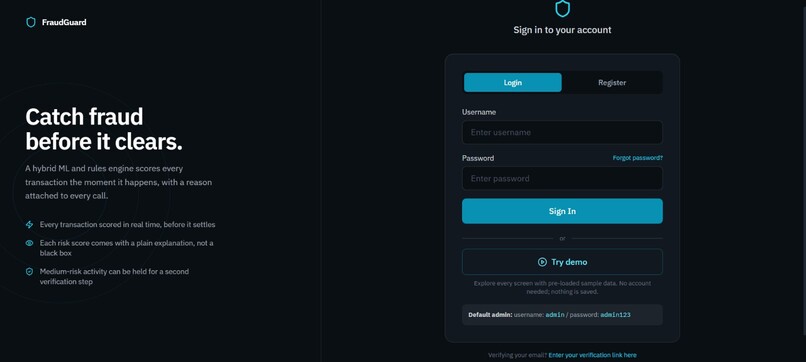
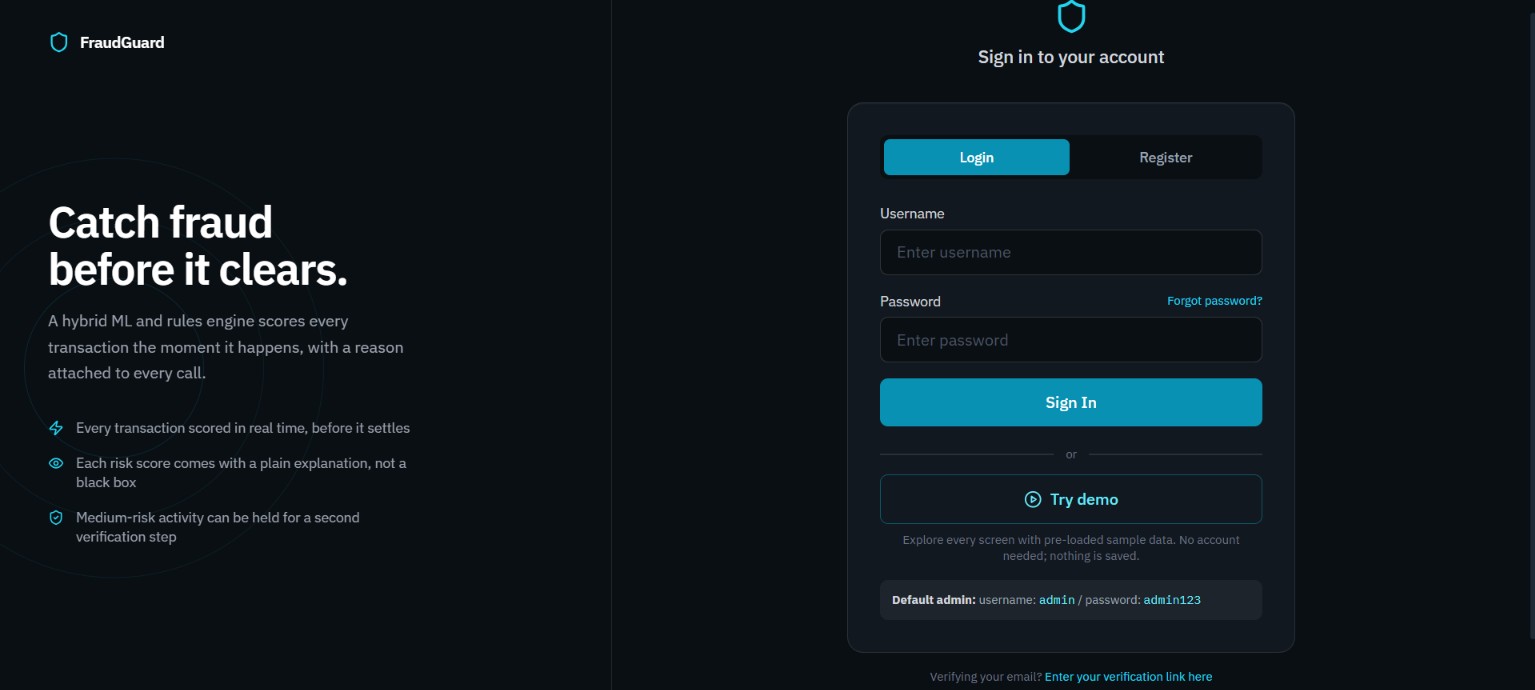
Signup Page: Secure authentication interface with login, registration, and demo access for FraudGuard users.
-
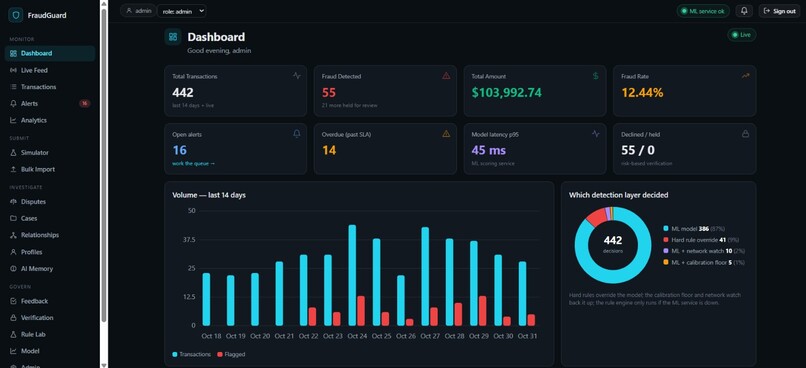
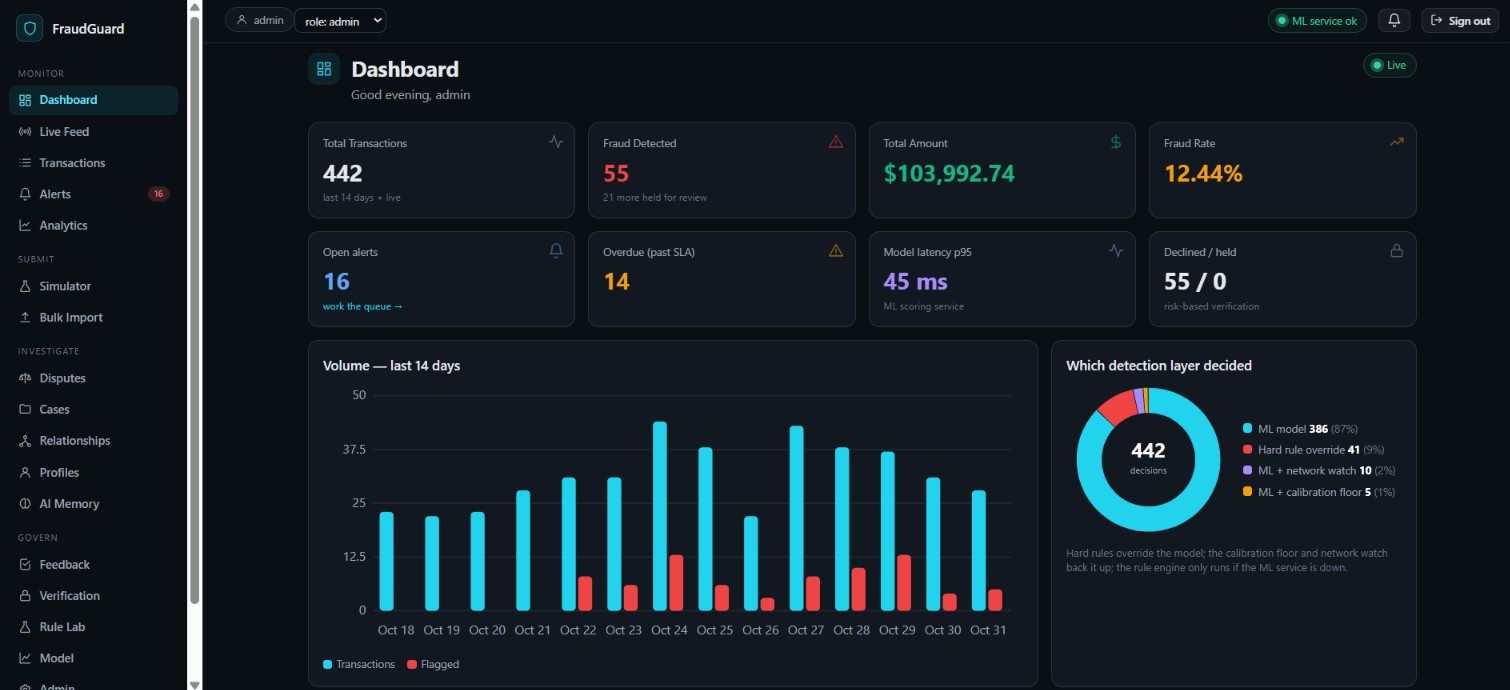
Dashboard: Real-time fraud monitoring dashboard displaying transaction volume, fraud detection, risk scores, and system insights.
-
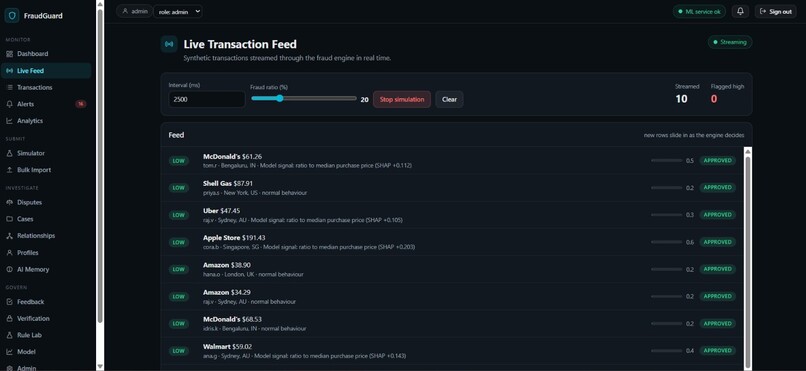
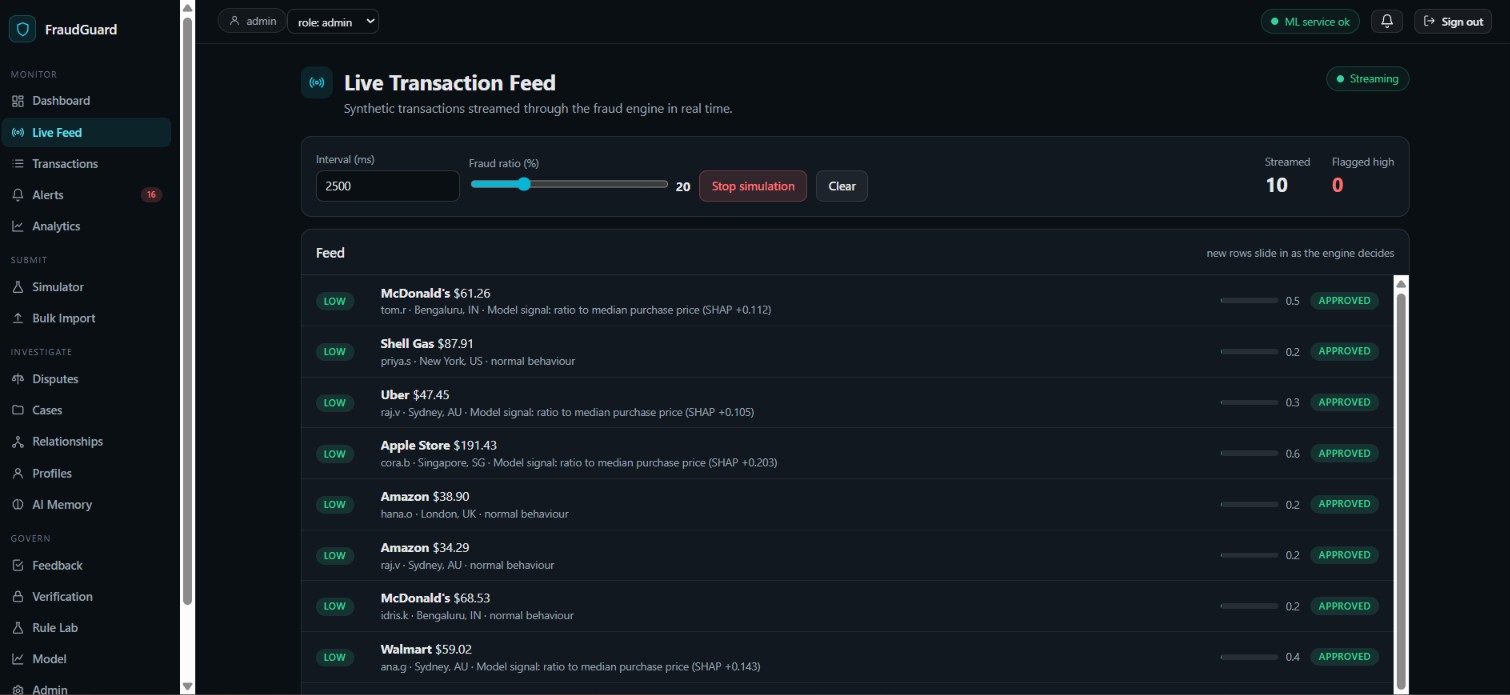
Live Transaction Feed: Monitor transactions in real time with instant fraud scoring, risk classification, and automated alerts.
-
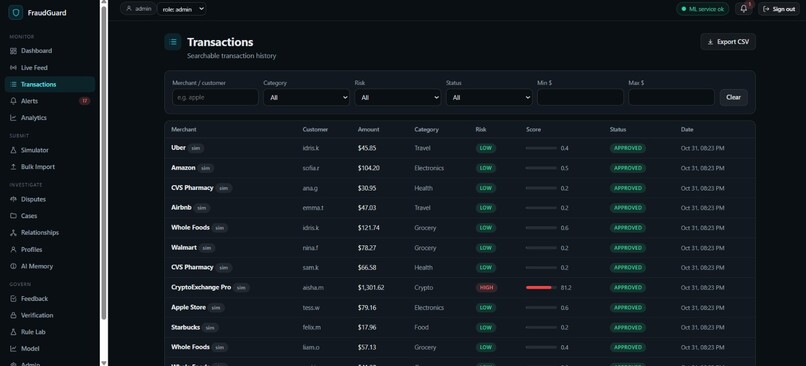
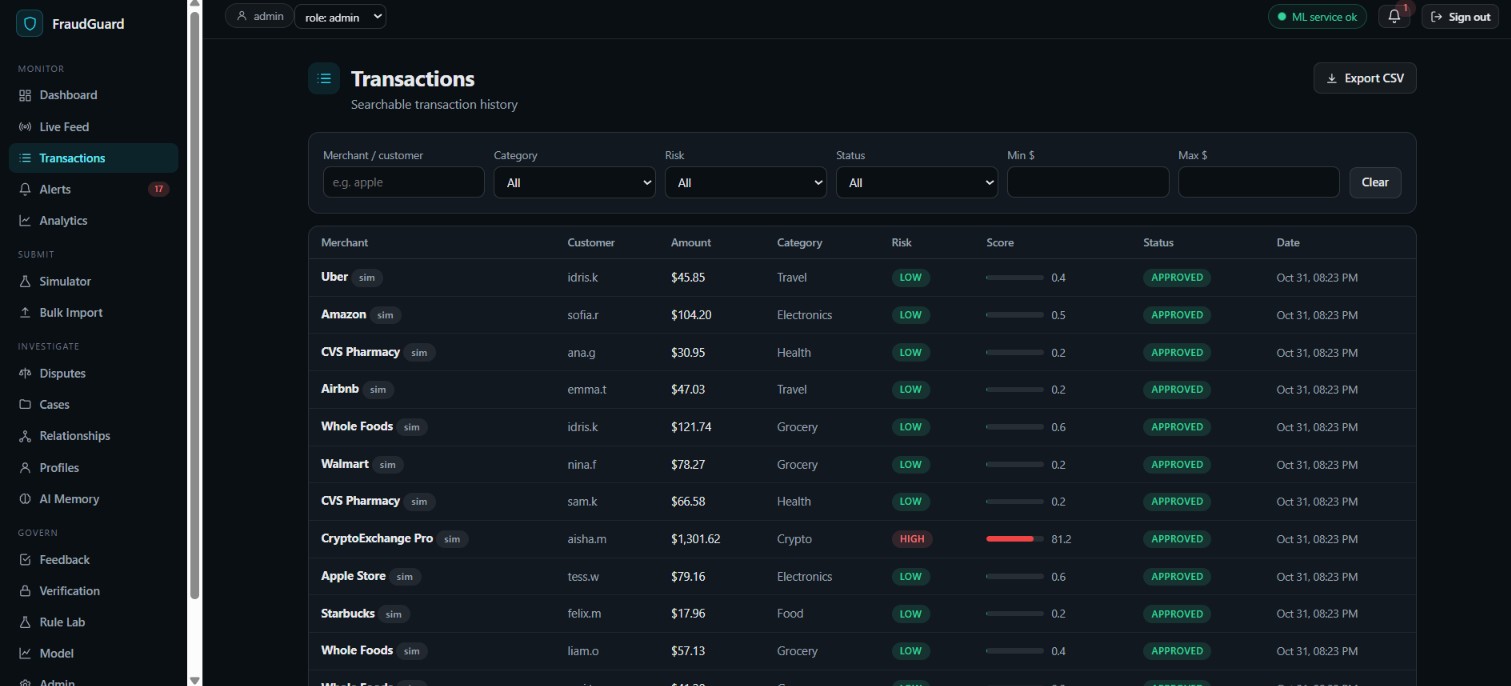
Transactions: Search, filter, and analyze transaction histories with fraud scores, merchant details, and risk classifications.
-
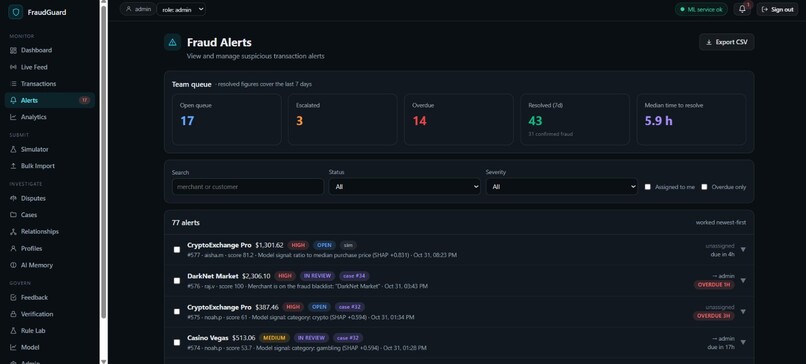
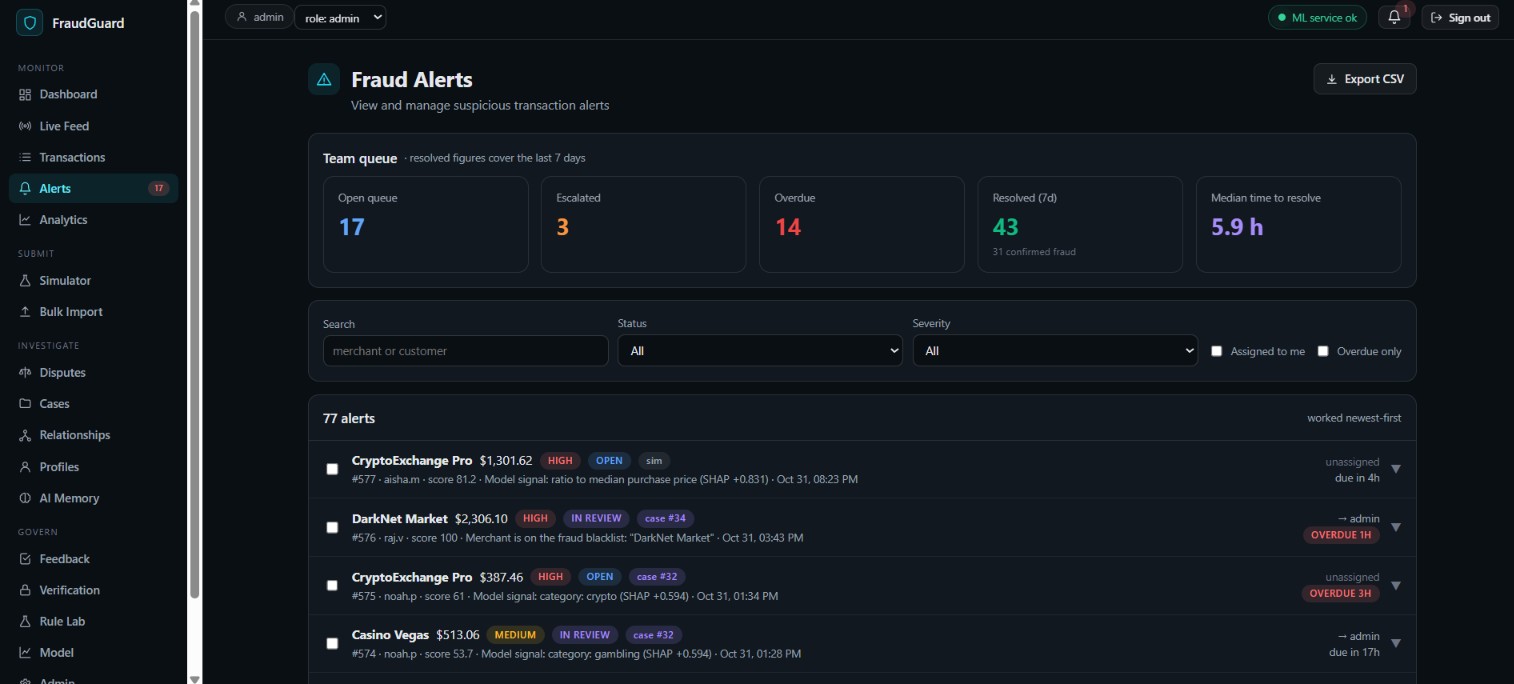
Fraud Alerts: Centralized alert management for suspicious transactions, investigation tracking, and fraud resolution.
-
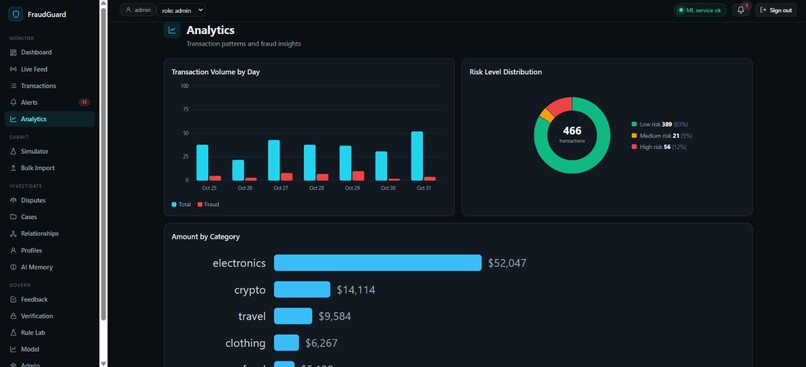
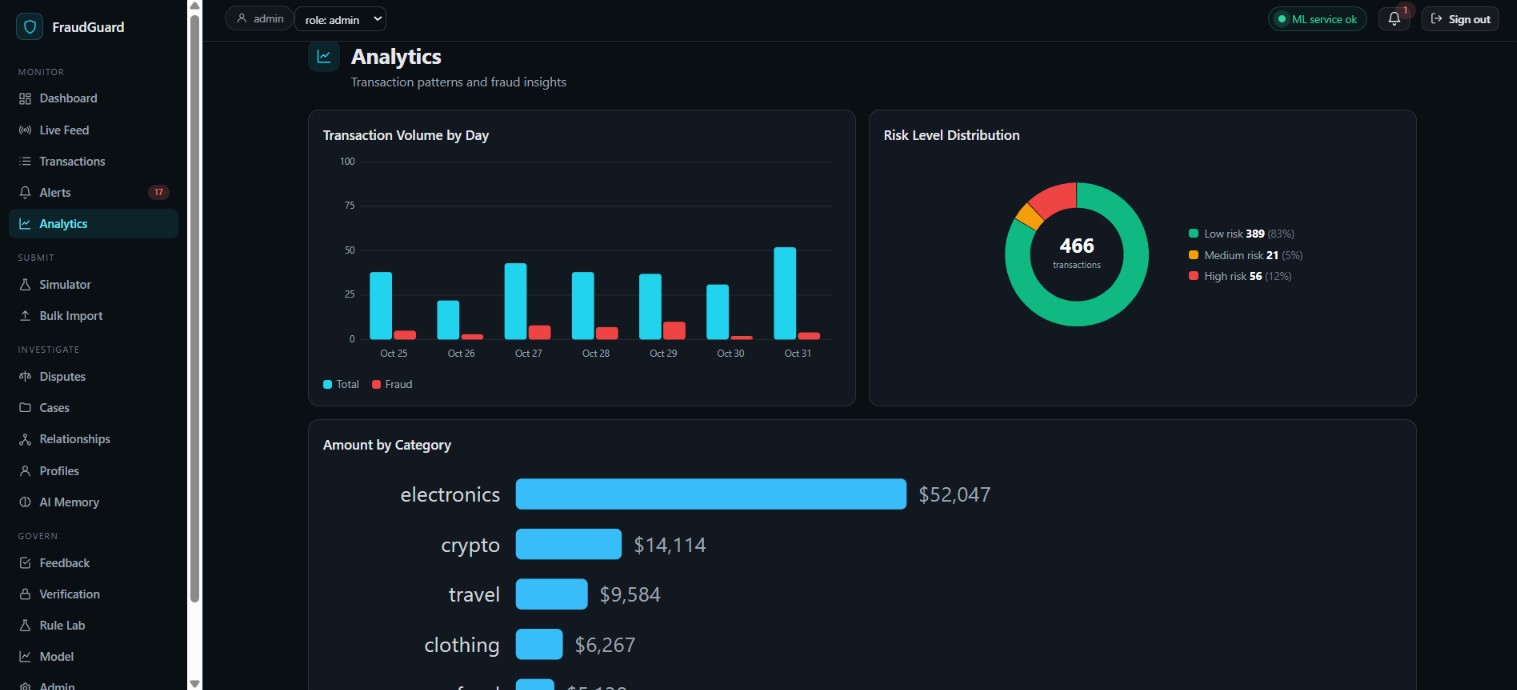
Analytics: Interactive analytics dashboard visualizing transaction trends, fraud rates, risk distributions, and spending patterns
-
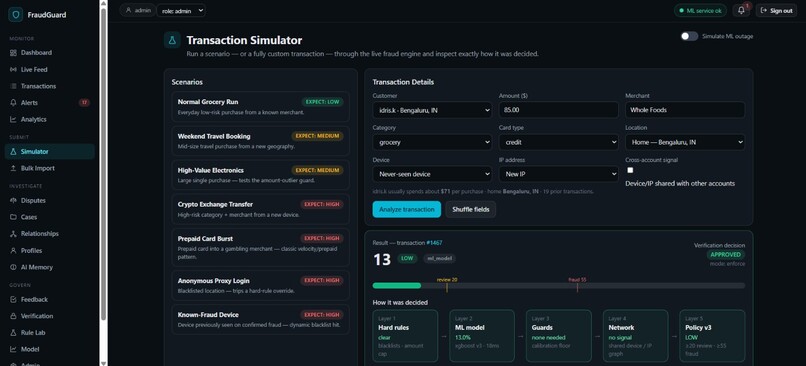
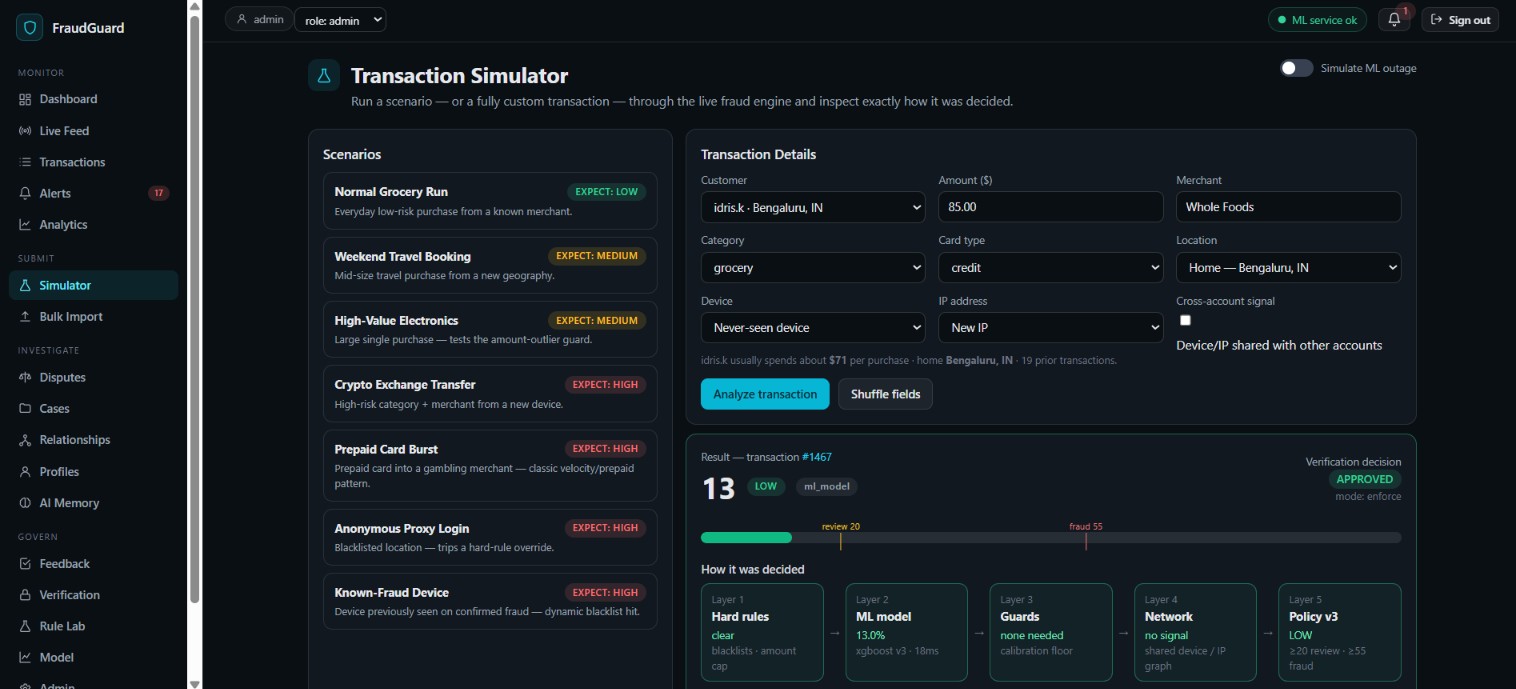
Transaction Simulator: Test real-world fraud scenarios and evaluate ML predictions, risk scores, and decision explanations.
-
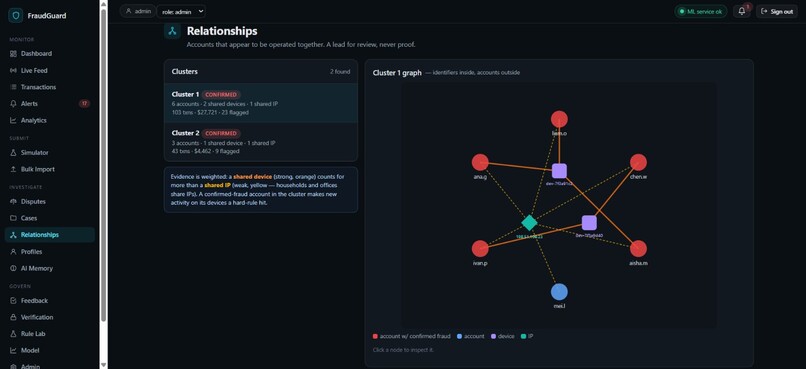
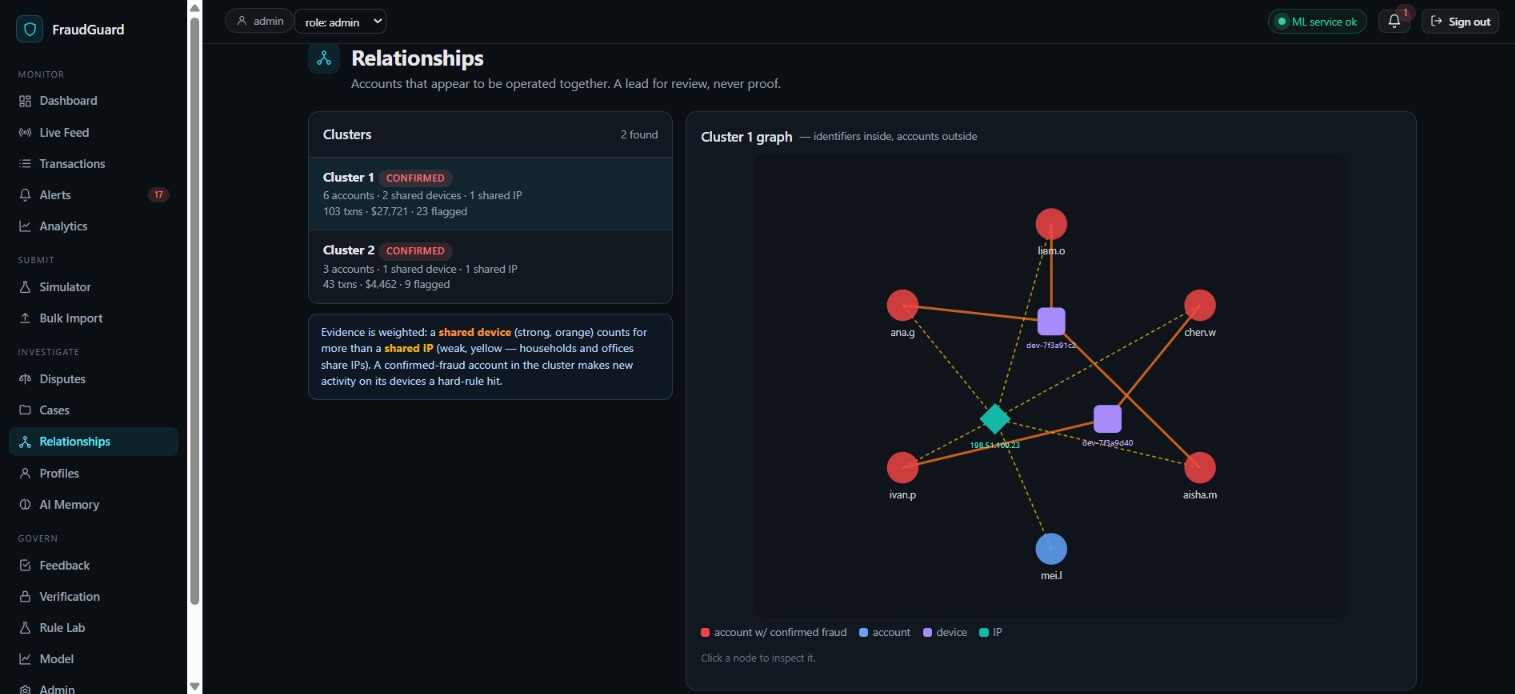
Relationships: Interactive entity graph connecting suspicious accounts, shared devices, IP addresses, and potential fraud networks.
-
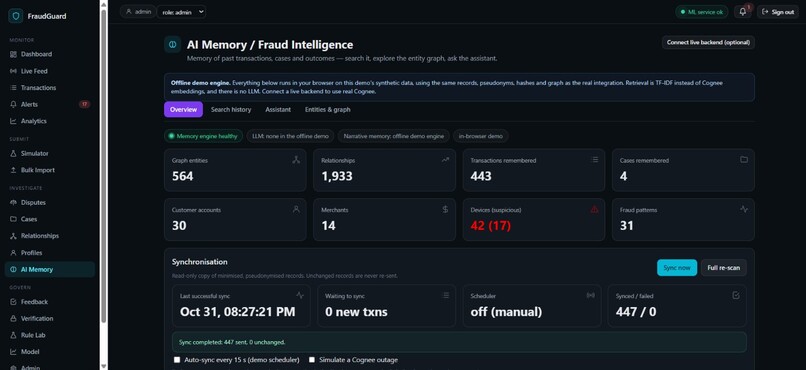
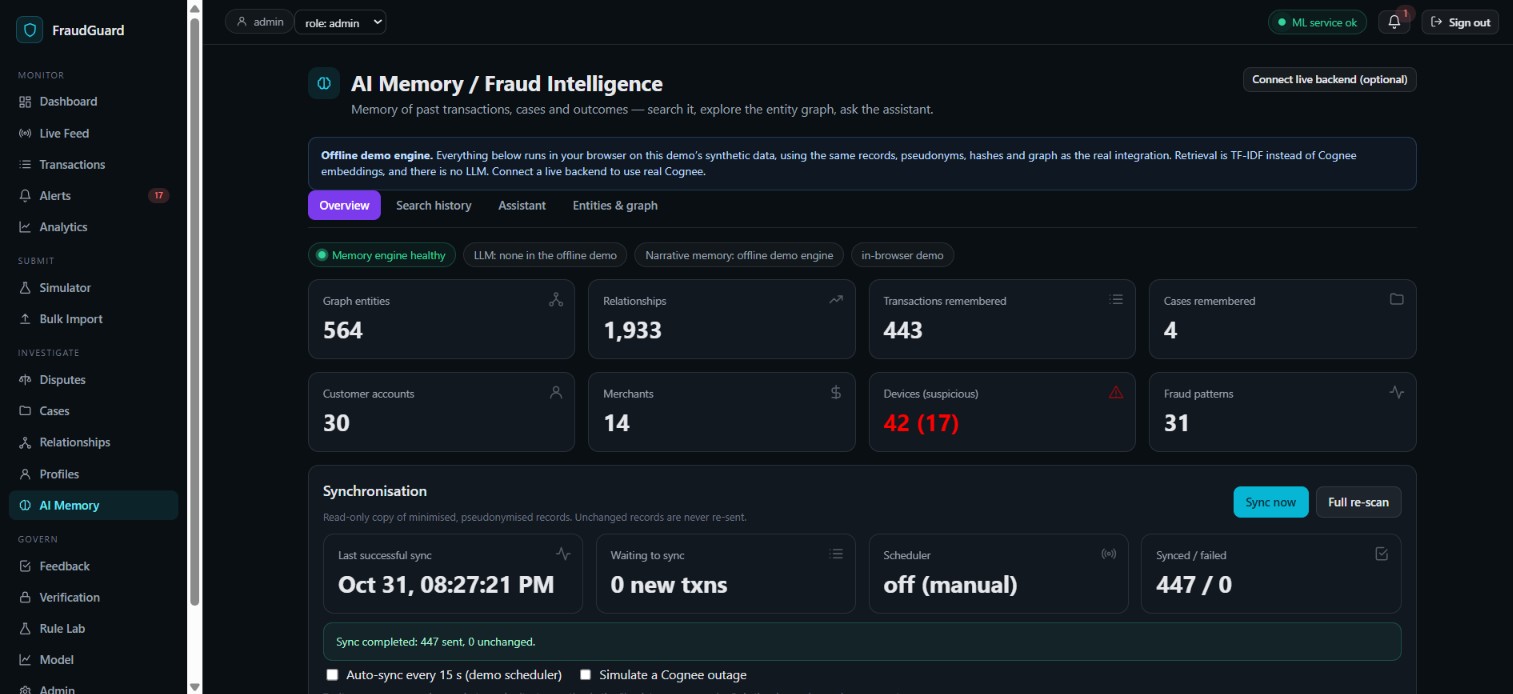
AI Memory: Historical fraud insights, contextual search, and knowledge graph visualization.
-
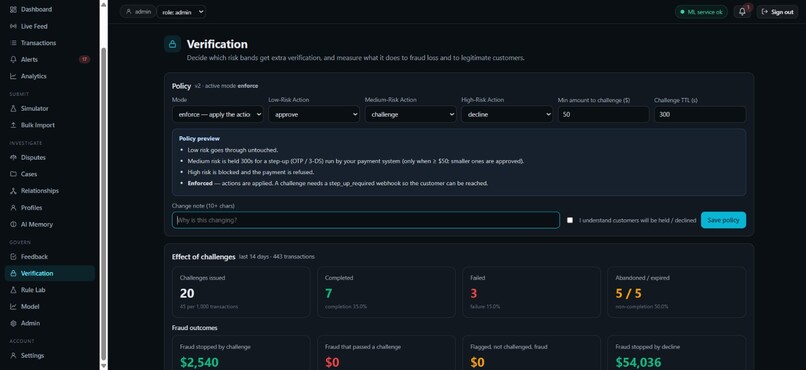
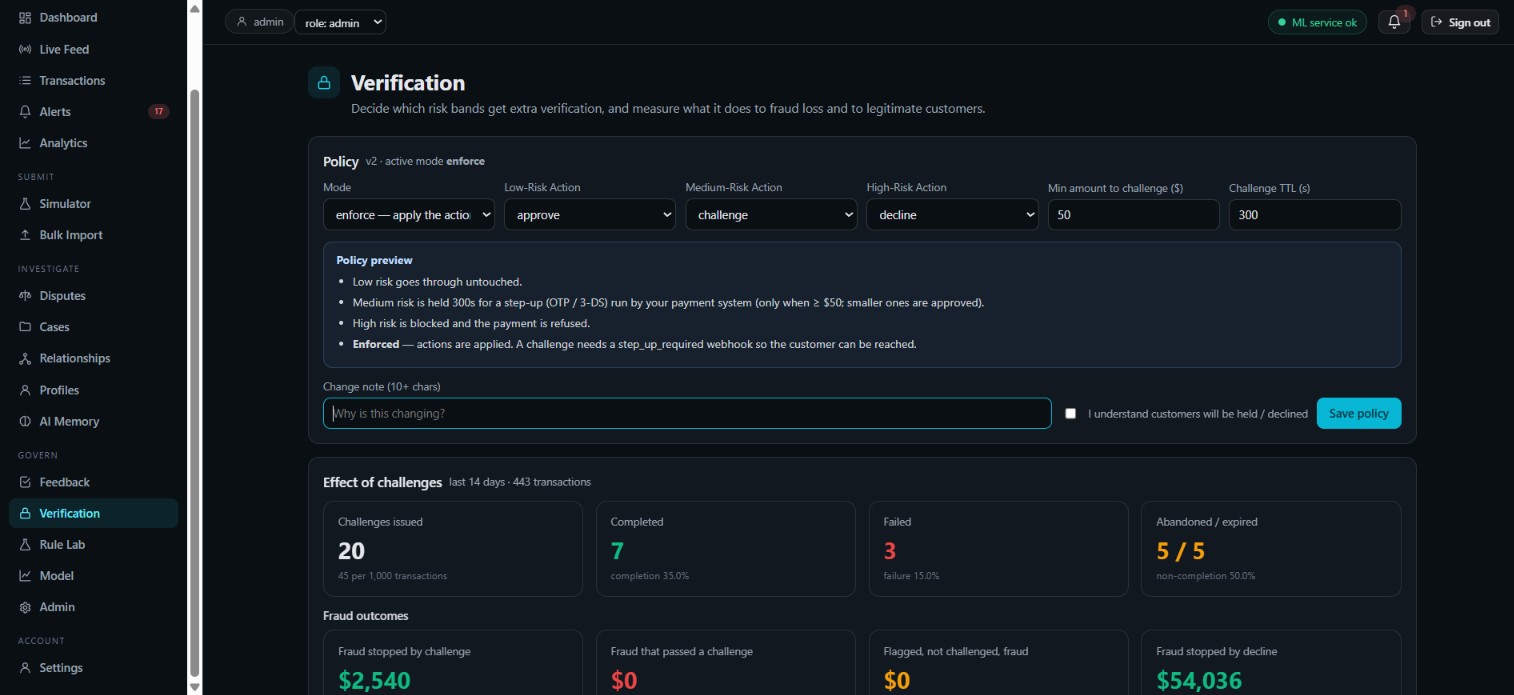
Verification: Configurable risk-based verification policies with transaction challenges and fraud prevention metrics.
-
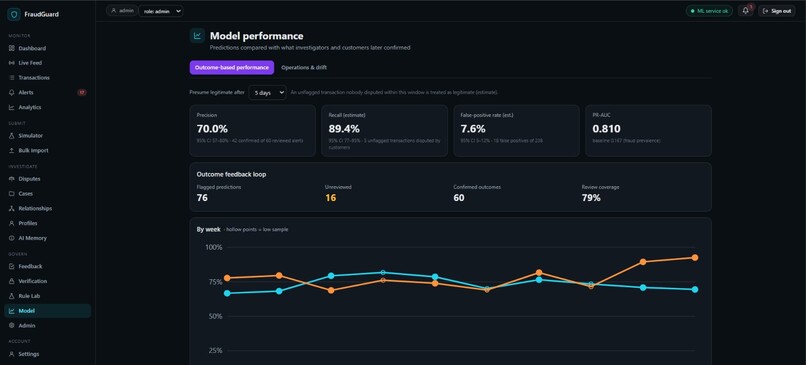
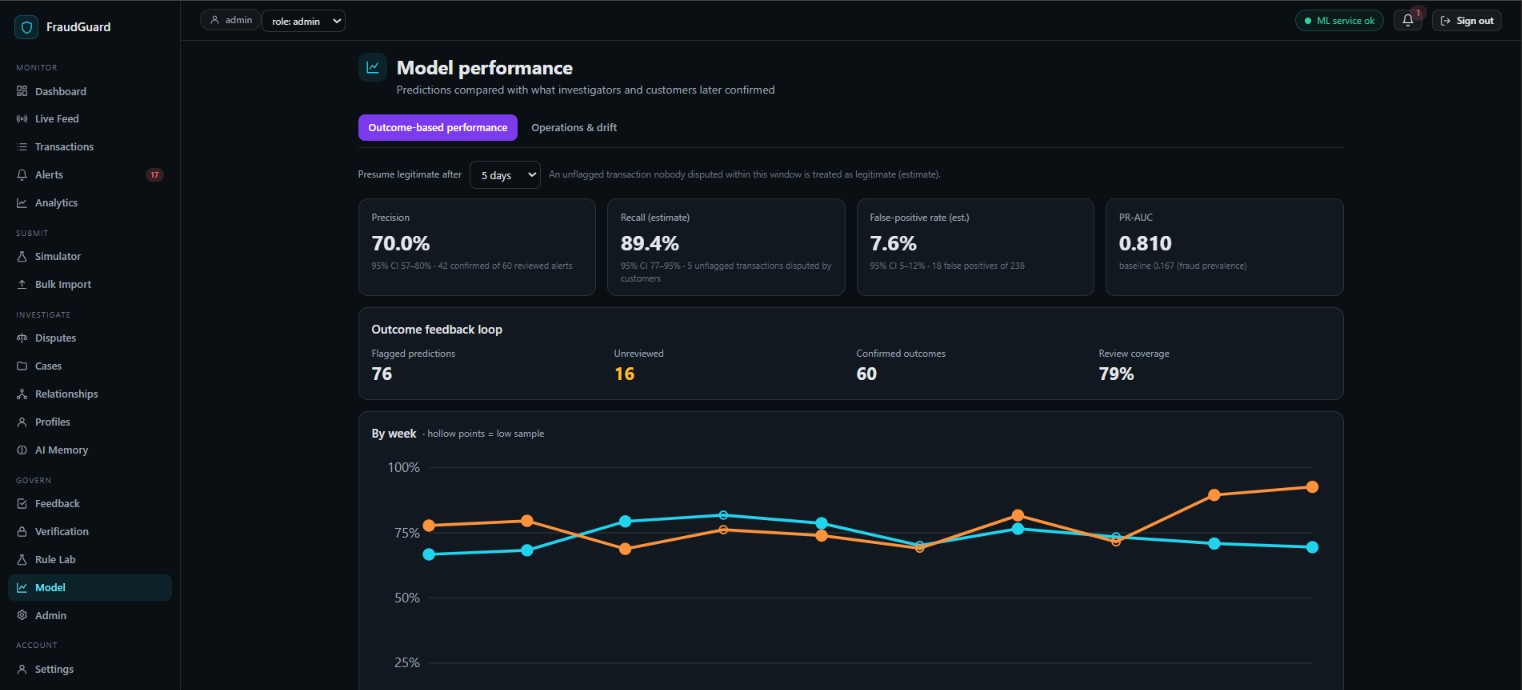
Model Performance: Monitor ML model precision, recall, false-positive rates, PR-AUC, and outcome-based performance.
-
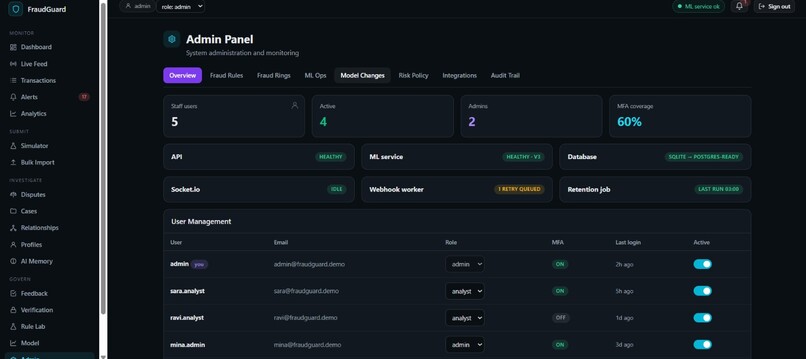
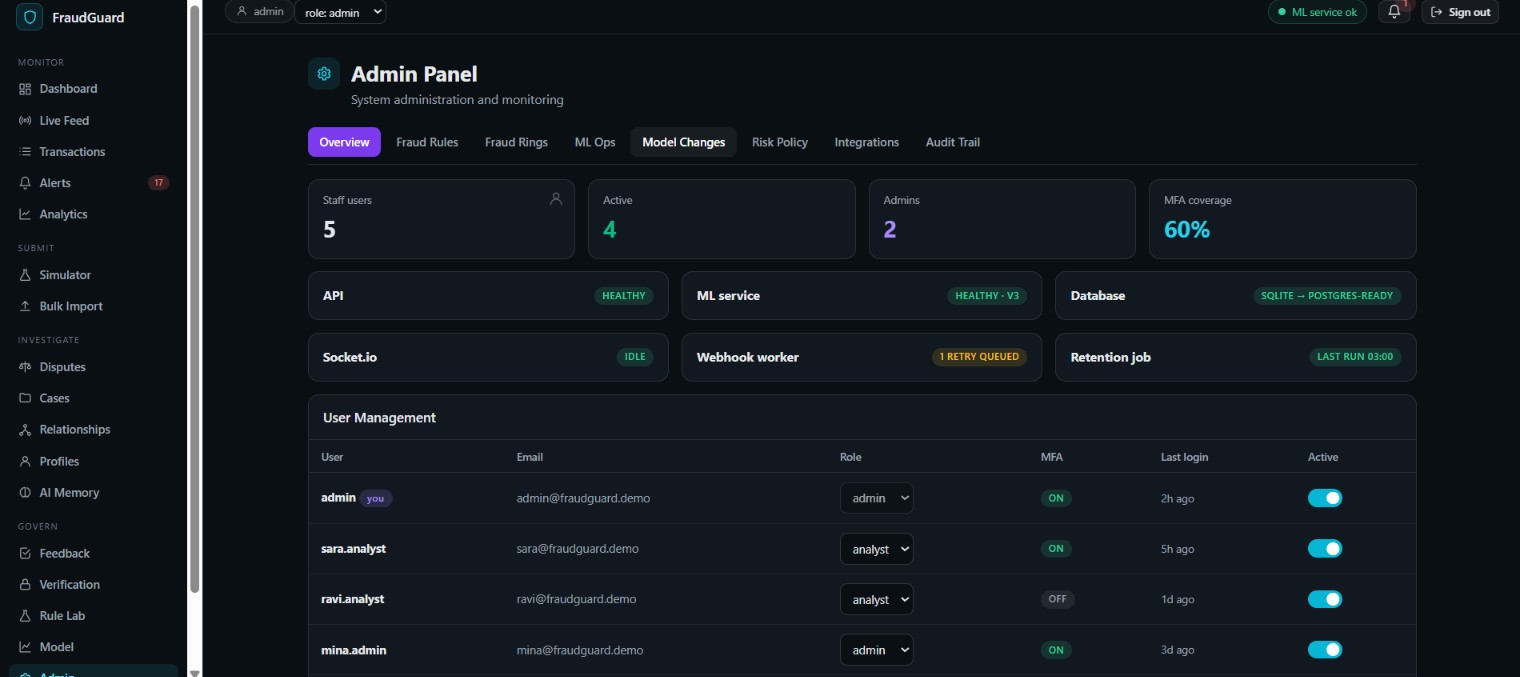
Admin Panel: Centralized administration for user management, system health, security controls, integrations, and model operations.
Inspiration
Traditional fraud detection systems primarily focus on analyzing individual transactions and assigning risk scores. However, financial fraud is rarely isolated. Suspicious activities often involve recurring patterns, connected accounts, merchants, devices, and previously investigated cases.
We wanted to build something beyond conventional fraud detection: an intelligent system that remembers previous fraud patterns, connects related entities, and gives AI agents the historical context needed to support better investigations.
This inspired us to integrate Cognee, an open-source AI memory and knowledge graph framework, into FraudGuard.
What We Built
FraudGuard Intelligence is an AI-powered fraud investigation platform that combines machine learning, persistent AI memory, and knowledge graphs to help investigators understand suspicious financial activities.
The Cognee integration is designed to transform historical fraud data into interconnected knowledge that an AI investigation assistant can retrieve and reason over.
Key capabilities include:
- Persistent Fraud Memory: Ingests transaction records, fraud alerts, investigation histories, and case outcomes into Cognee.
- Knowledge Graph Generation: Connects customers, merchants, transactions, accounts, devices, and suspicious entities to uncover relationships.
- Historical Fraud Intelligence: Retrieves previously observed fraud patterns and similar investigation cases.
- AI Investigation Assistant: Uses relevant historical context to help investigators understand suspicious transactions and identify potential connections.
- Incremental Data Synchronization: Keeps the memory layer updated as new transactions and investigation records become available.
- Explainable Fraud Detection: Combines existing machine learning predictions and SHAP-based explanations with historical investigation context.
- Privacy-Aware Data Processing: Uses sensitive-data filtering and pseudonymization to minimize exposure of customer information.
How We Built It
We extended our existing FraudGuard platform rather than creating an entirely new application.
The existing machine learning system handles transaction analysis and fraud prediction. We introduced Cognee as an additional memory layer that organizes historical fraud intelligence into interconnected knowledge.
Our architecture consists of:
- Frontend: React, TypeScript, and Tailwind CSS for the fraud investigation dashboard.
- Backend: Node.js and Python services for APIs, authentication, fraud processing, and integration.
- Machine Learning: Python, scikit-learn, XGBoost, and SHAP for fraud prediction and explainability.
- AI Memory: Cognee for data ingestion, persistent memory, knowledge graph construction, and contextual retrieval.
- Database: Existing FraudGuard database infrastructure for transaction and investigation records.
The workflow begins when FraudGuard collects transaction and investigation data. Relevant records are normalized and securely processed before being ingested into Cognee. The knowledge graph connects related entities, allowing the investigation assistant to retrieve historical context when an investigator submits a question.
Challenges We Faced
One of our biggest challenges was integrating persistent AI memory into an existing fraud detection architecture without disrupting its existing functionality.
Other challenges included:
- Designing meaningful relationships between transactions, customers, merchants, and historical fraud cases.
- Preventing duplicate records during repeated data synchronization.
- Handling sensitive financial information while preparing data for AI memory.
- Connecting Cognee's retrieval capabilities with the existing investigation workflow.
- Managing dependencies and compatibility across Python, Node.js, and machine learning libraries.
What We Learned
Through this project, we learned how knowledge graphs and persistent memory can make AI agents more context-aware.
We explored how disconnected records can become interconnected intelligence, how historical context can improve investigation workflows, and how existing machine learning systems can be extended with AI memory instead of being replaced.
Most importantly, we learned that building useful AI agents is not just about choosing a powerful language model. It is also about giving those agents reliable, structured, and relevant context.
What's Next
We aim to extend FraudGuard Intelligence with more financial threat intelligence sources, advanced relationship discovery, improved investigation recommendations, and broader integrations with enterprise security and fraud monitoring systems.
FraudGuard Intelligence – Turning Fraud Data into Connected Intelligence.
Built With
- ai-agents
- ai-memory
- artificial-intelligence
- cognee
- cybersecurity
- data-analytics
- data-science
- explainable
- fastapi
- fraud-detection
- fraud-prevention
- graph-database
- knowledge-graphs
- machine-learning
- natural-language-processing
- node.js
- postgresql
- python
- react
- rest-api
- scikit-learn
- shap
- tailwind-css
- typescript
- xgboost

Log in or sign up for Devpost to join the conversation.