-
-
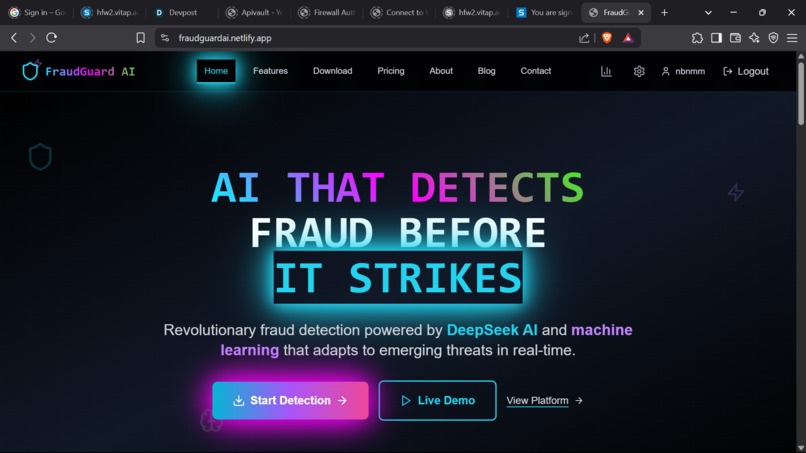
Home page
-
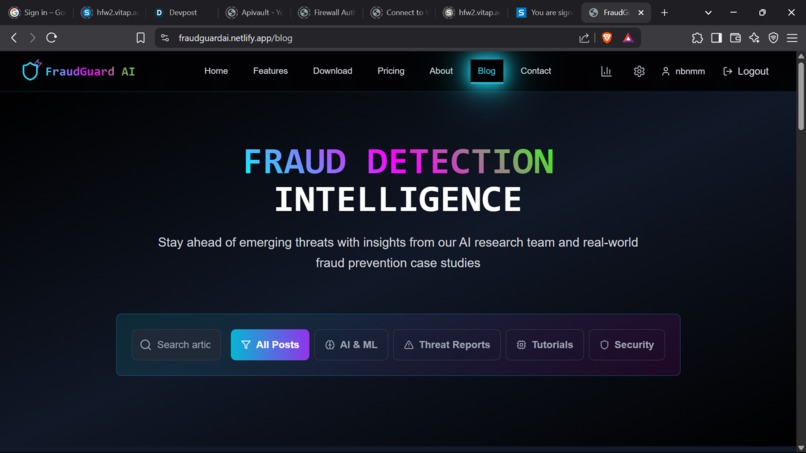
Blog
-
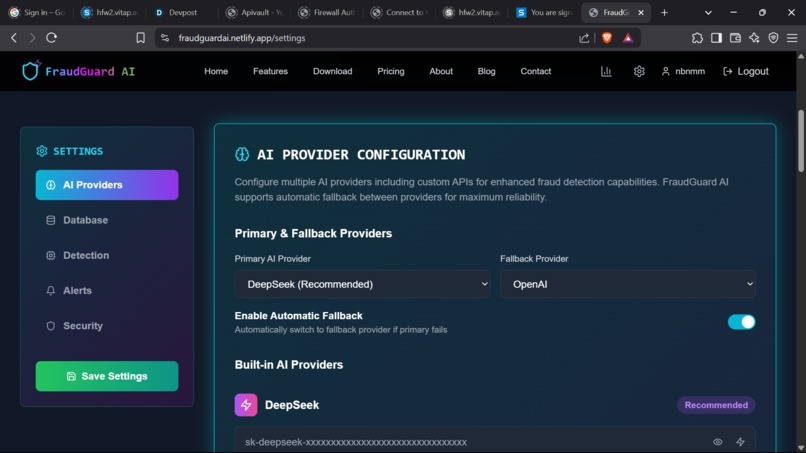
System configuration
-
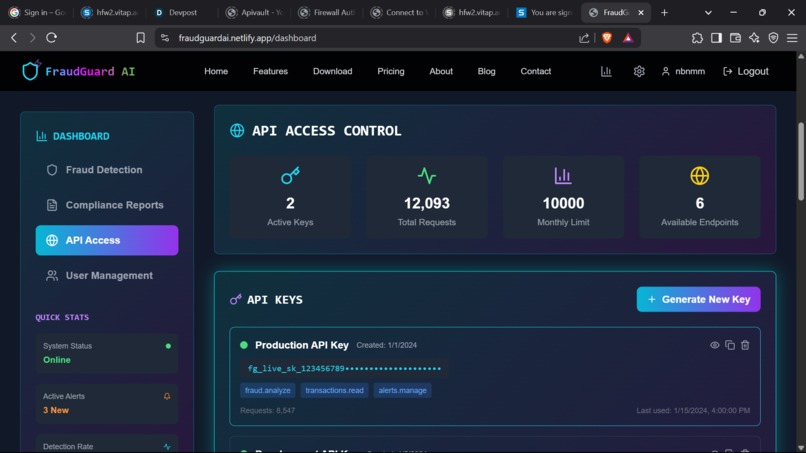
enterprise dashboard
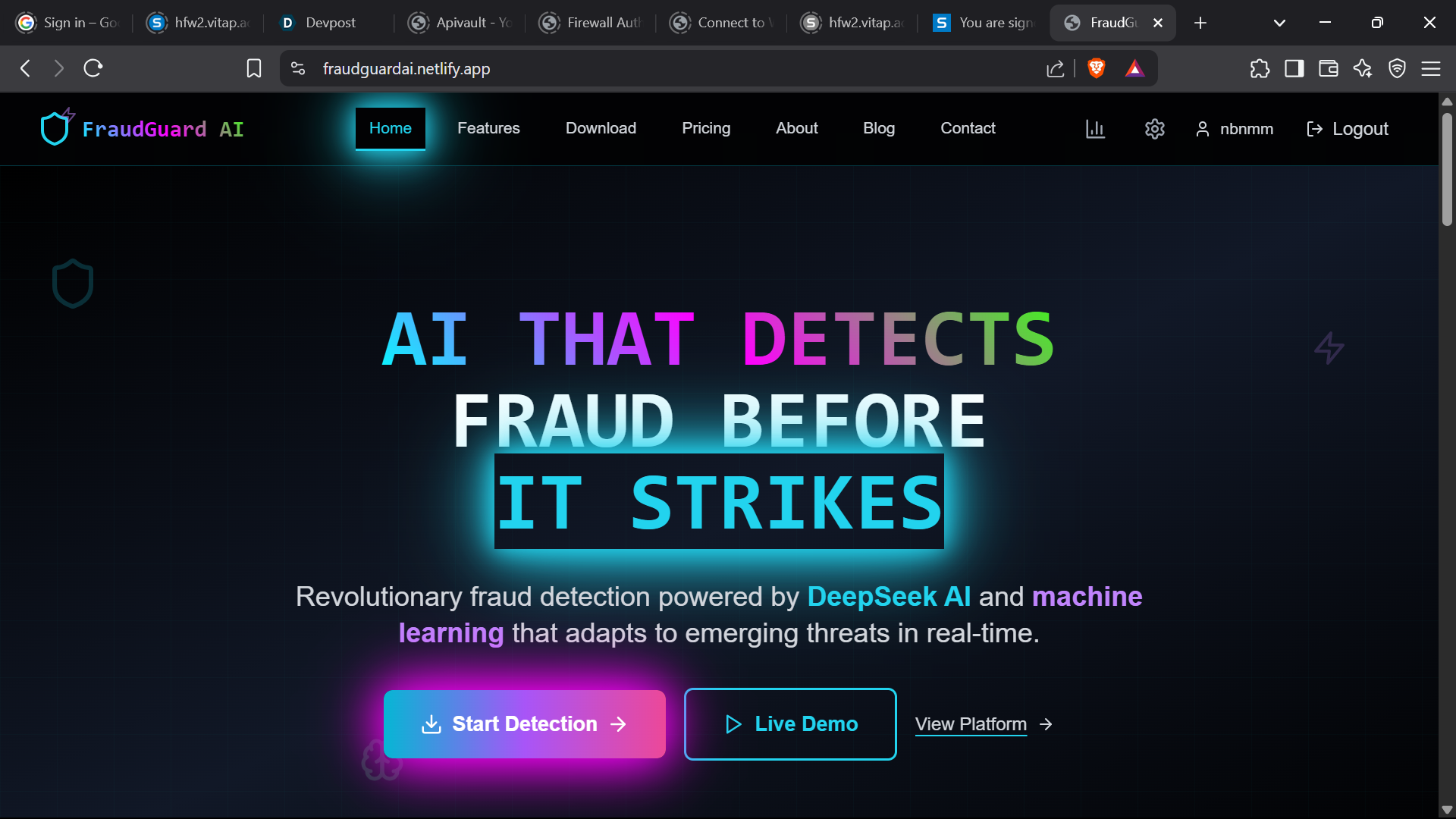
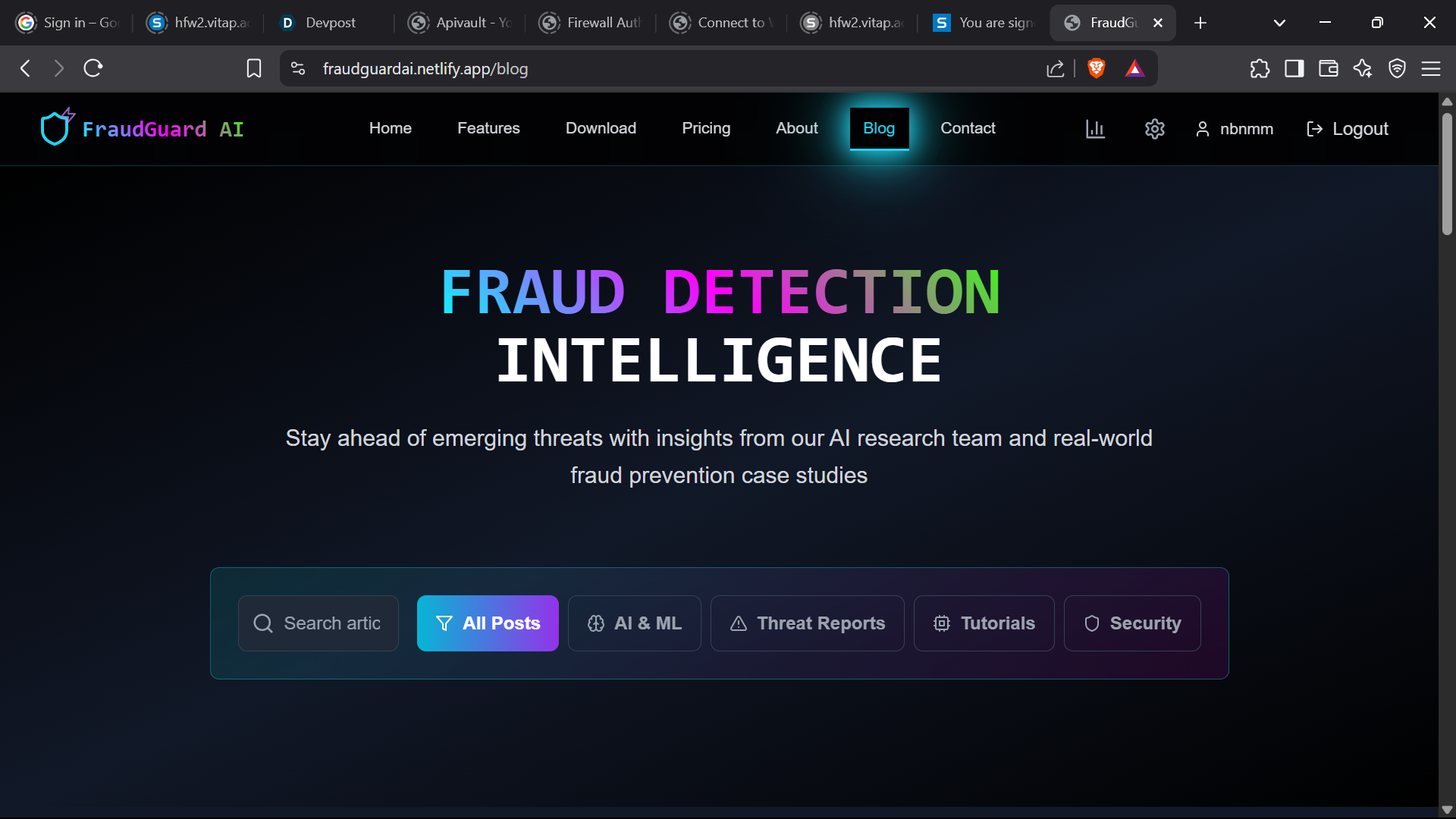
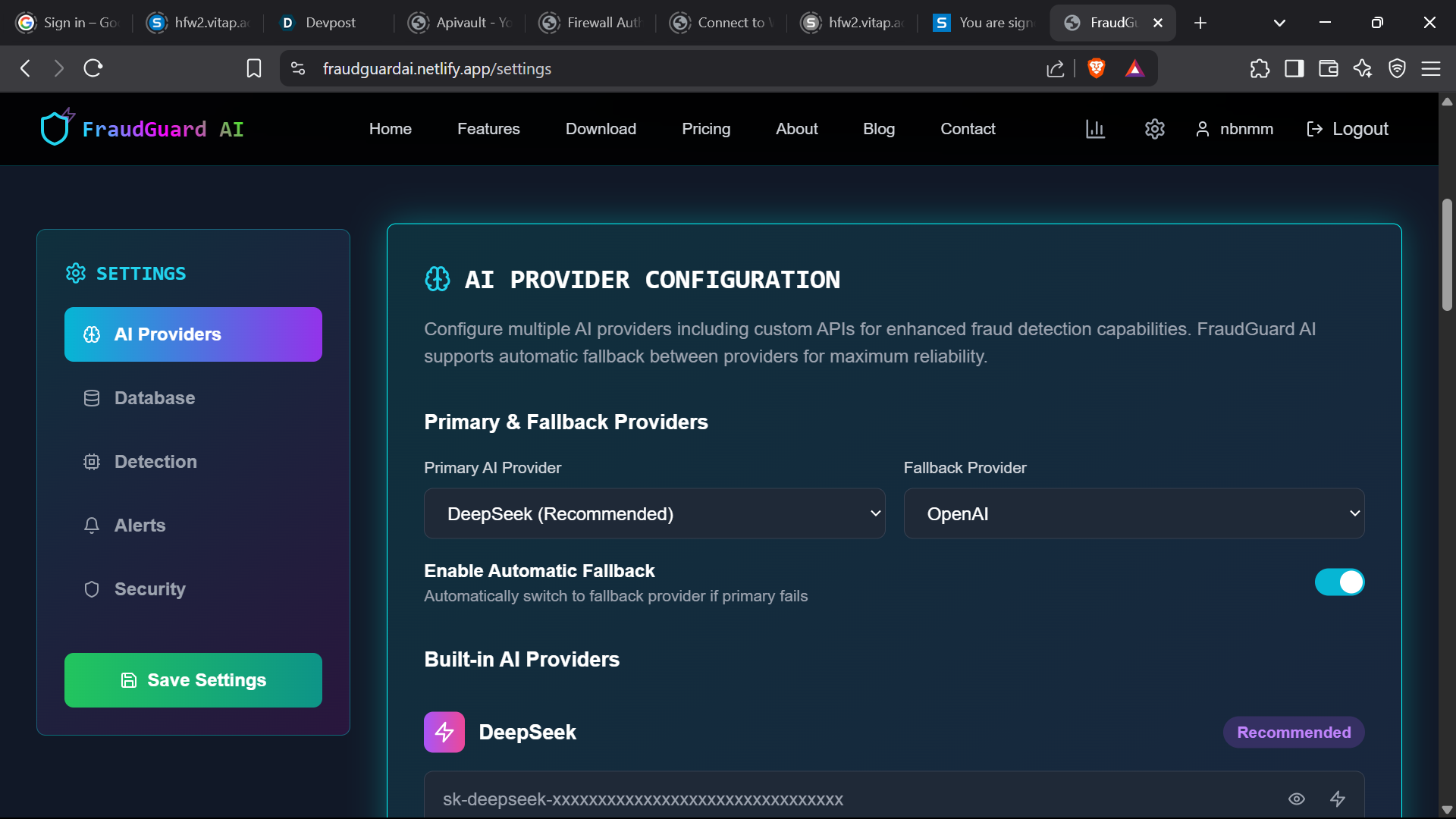
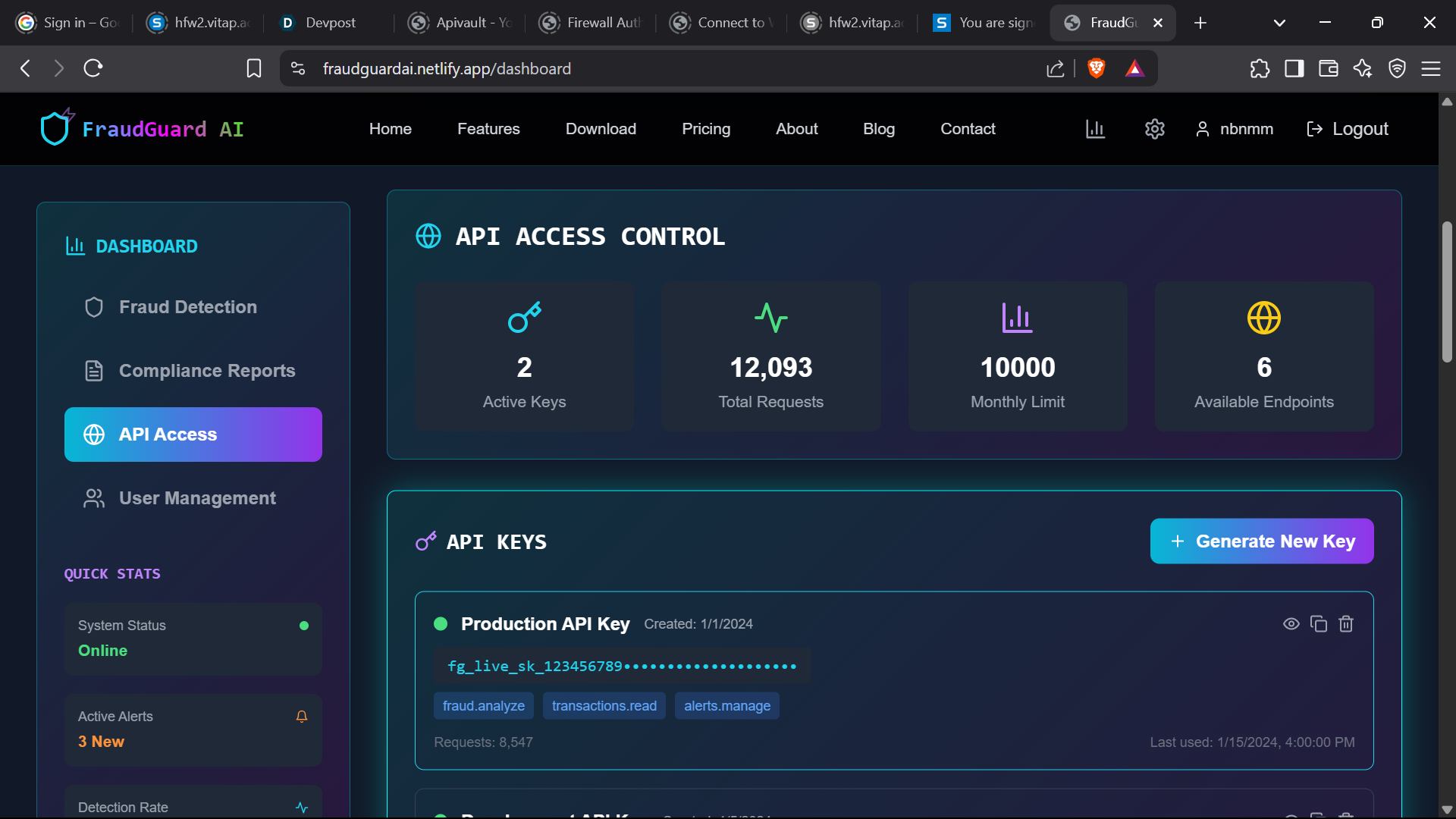
Inspiration
In today’s digital economy, fraud is evolving faster than ever—yet many organizations still rely on outdated, rule-based detection systems that are slow, reactive, and prone to false positives. We wanted to build an AI-driven fraud detection system that’s fast, adaptive, explainable, and accessible—even for small startups, not just big banks.
What it does
FraudGuard AI is a real-time fraud detection platform powered by DeepSeek + LLMs (like OpenAI). It: 1.Scans financial transactions and user behavior patterns in real time 2.Detects fraud using AI-trained rules and anomaly detection 3.Adapts to new threats via self-learning algorithms 4.Sends instant alerts with explainable insights 5.Supports offline detection fallback and enterprise integrations It’s designed to be: 1.Accurate (99%+ detection rate)
- Explainable (LLM-backed justifications) 3.Customizable (user-defined rules, API-ready) 4.Lightweight (offline-friendly via local rule engine)
How we built it
We used the following tech stack:
Frontend: HTML/CSS + React (for dashboard) Backend: Node.js + Express AI Models: DeepSeek for pattern detection, OpenAI for social engineering and explainability Database: SQLite (default), with support for MongoDB, PostgreSQL, MySQL Authentication: Role-based access with API key management APIs: REST endpoints for fraud analysis, alerts, reports, and analytics Monitoring: Real-time event logger + live demo simulation engine
Challenges we ran into
Balancing offline and online AI capabilities (fallback from LLM to local rules) Integrating multiple AI providers and switching automatically on failure Creating a realistic real-time fraud simulation log Designing a UI that balances technical detail with clarity Optimizing speed: Achieving ~0.045s response time for fraud detection
Accomplishments that we're proud of
Achieved 99.2% detection accuracy on test transactions Built a fully functional real-time dashboard with threat metrics Enabled modular AI provider support (DeepSeek, OpenAI, Claude, Gemini, etc.) Made it work offline, ensuring functionality without internet access Created a pricing model and compliance features ready for production use
What we learned
How to integrate LLMs like OpenAI with traditional pattern detection Building AI systems that are not just smart, but explainable Designing for enterprise-grade compliance (SOC2, PCI DSS) Real-world challenges of API throttling, key security, and fraud scoring The importance of UX in cybersecurity products
What's next for Fraudguard Ai
Add fraud prevention features (blocking, real-time action triggers) Release v3.0 with webhook integrations and SaaS multi-tenancy Build an AI Co-Pilot (LLM assistant) for fraud analysts Publish on GitHub with full open-source license and contributor guide Launch a hosted version for startups, with secure cloud backend Partner with cybersecurity firms and fintech orgs for real-world deployment
Built With
- express.js
- javascript
- node.js
- python
- react
- tailwindcss
- vscode

Log in or sign up for Devpost to join the conversation.