Inspiration
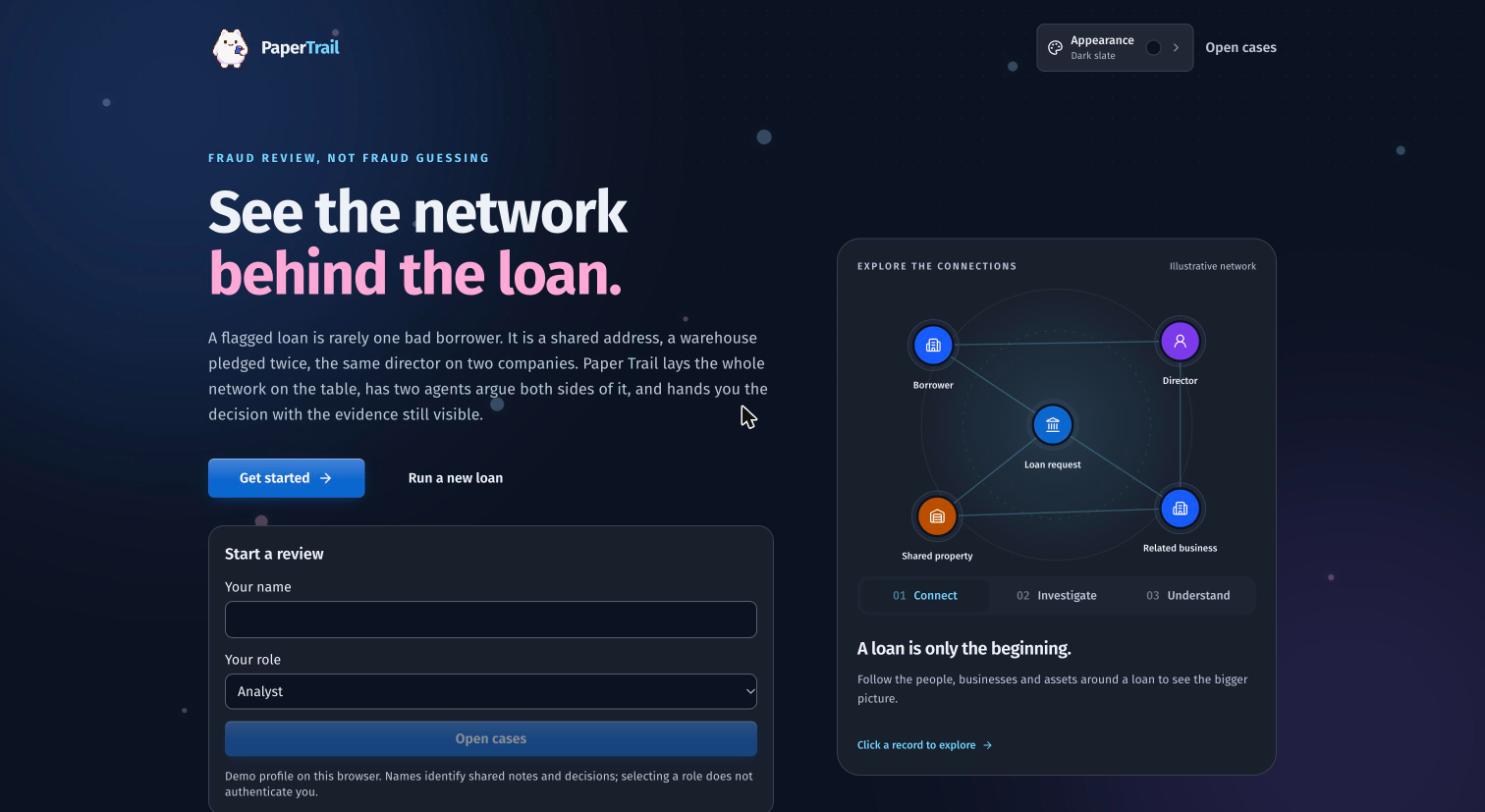
Commercial loan fraud rarely shows up as one bad borrower. It hides across deals: two companies at the same address, one warehouse pledged as collateral for two loans, one director behind several borrowers. Each loan looks fine alone. Goldman Sachs asked for a platform that "automates and secures the entire lifecycle of commercial loan processing, leveraging AI/ML to detect hidden, cross-deal fraud patterns and achieve operational excellence." Paper Trail is our answer: code gathers the evidence, AI argues both sides, and a human decides.
What it does
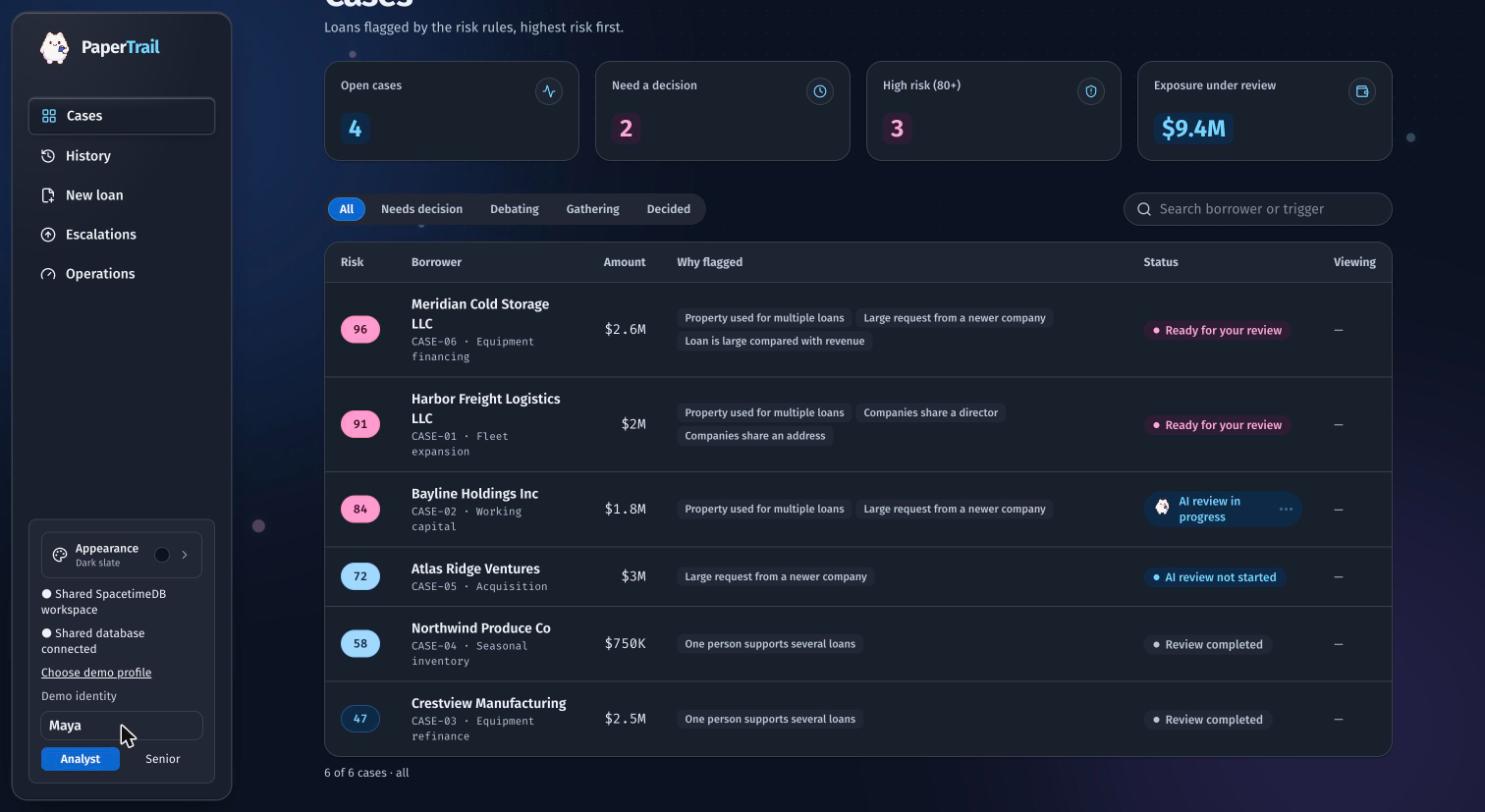
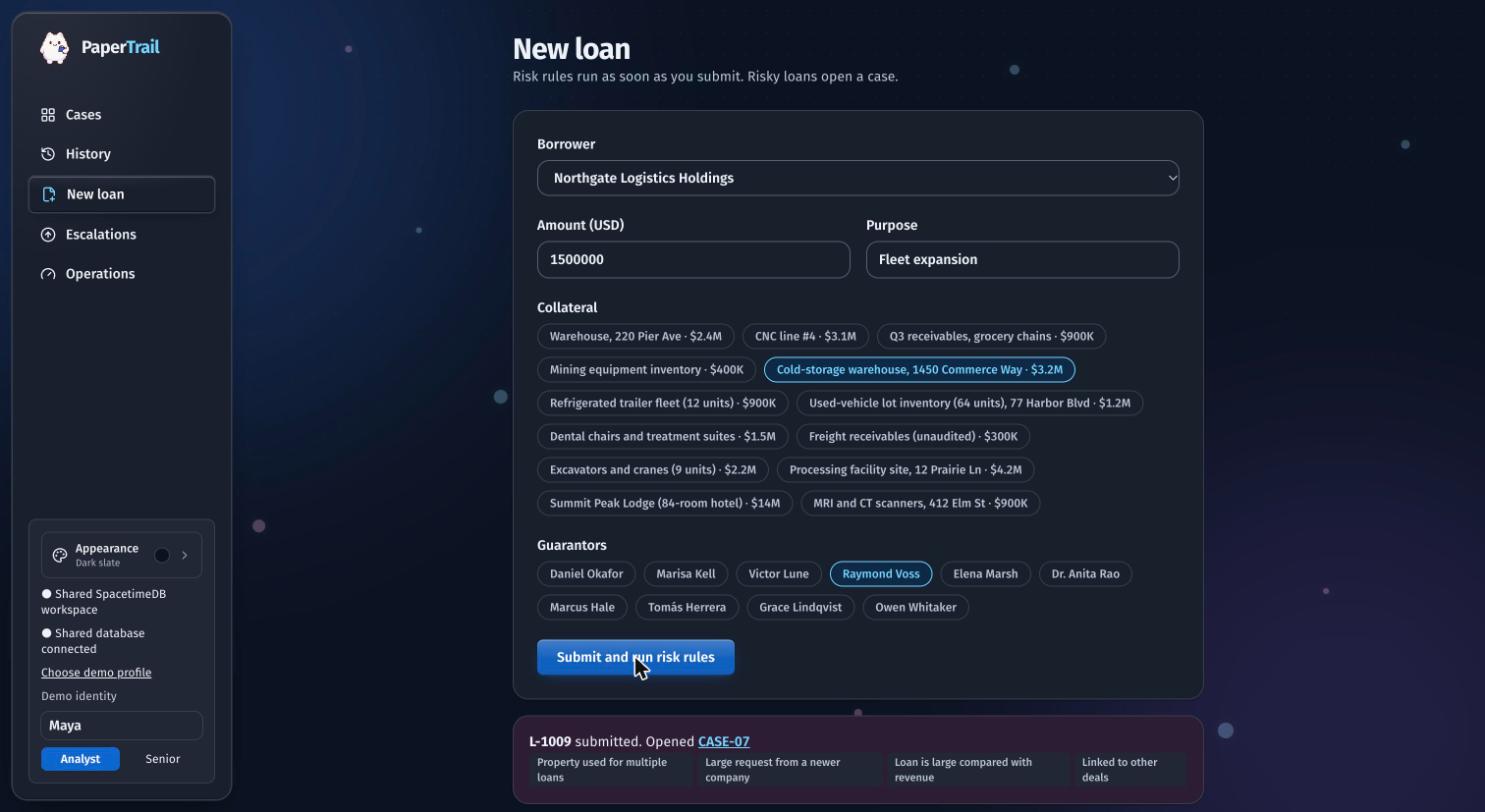
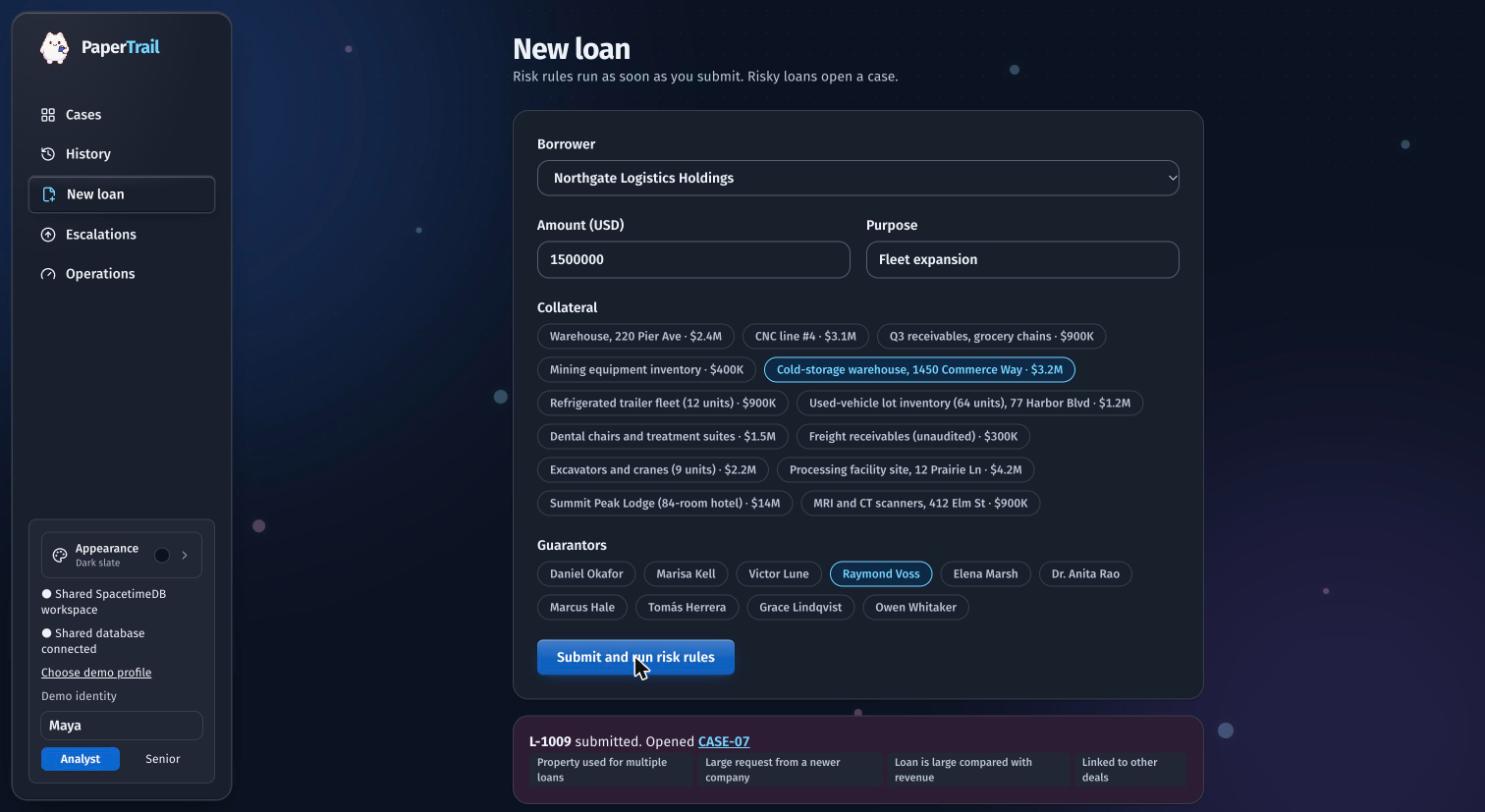
- Intake and risk rules (automated). A loan is submitted and code checks it right away: collateral already pledged elsewhere, a new company asking for a large loan, an amount over 3x revenue, and links to other deals through shared people or addresses. Clean loans are approved automatically; flagged loans open a case.
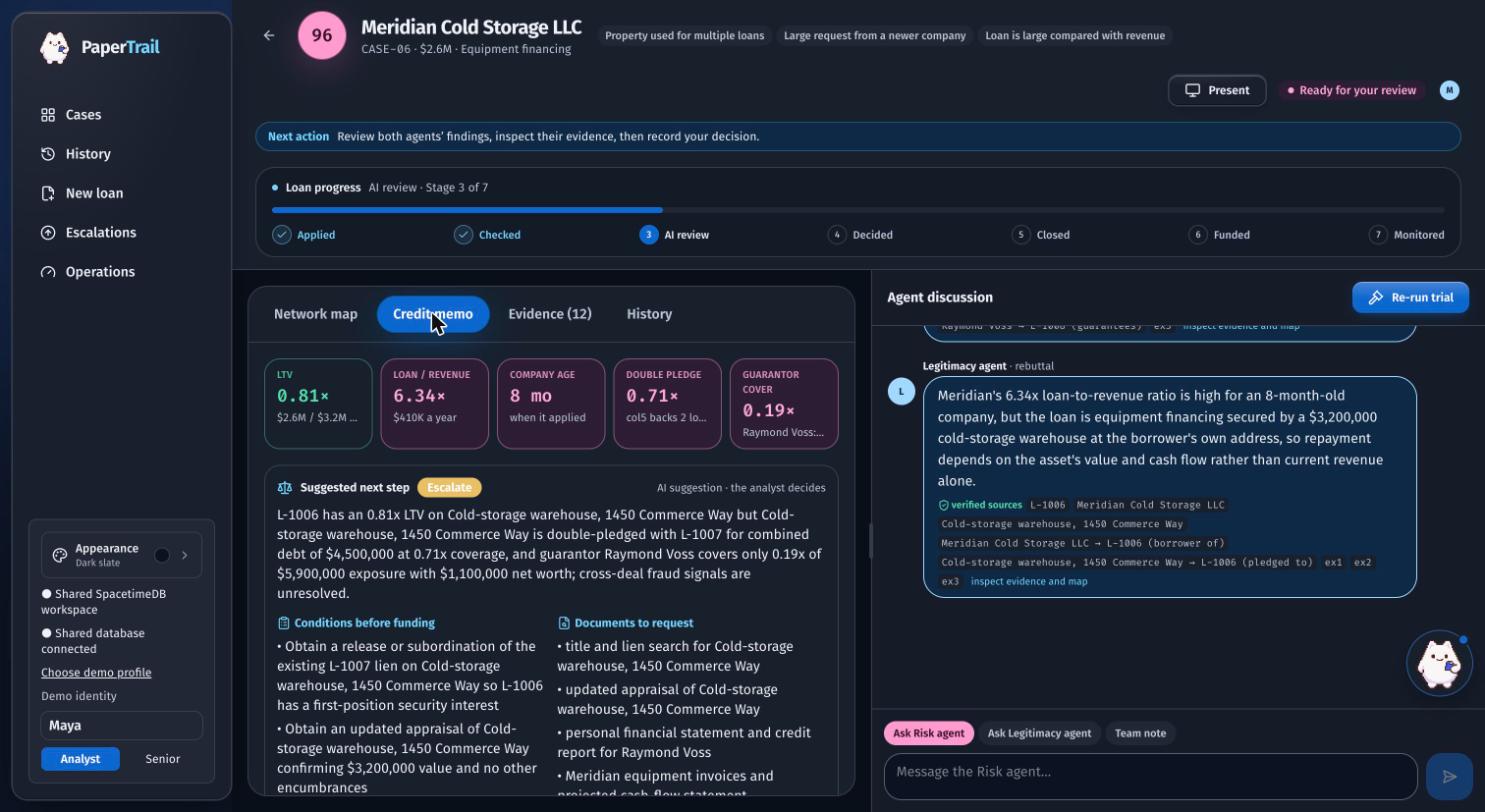
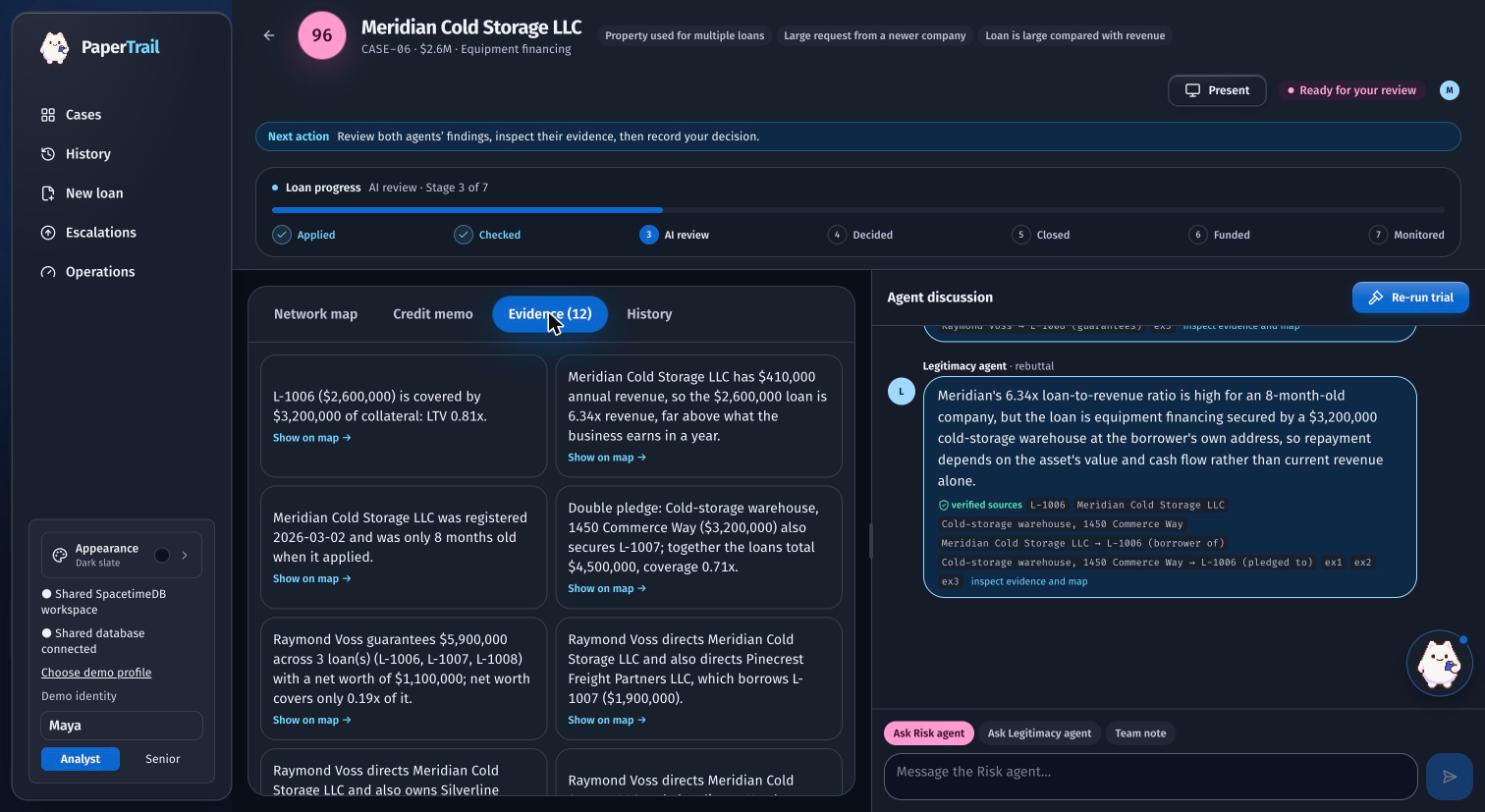
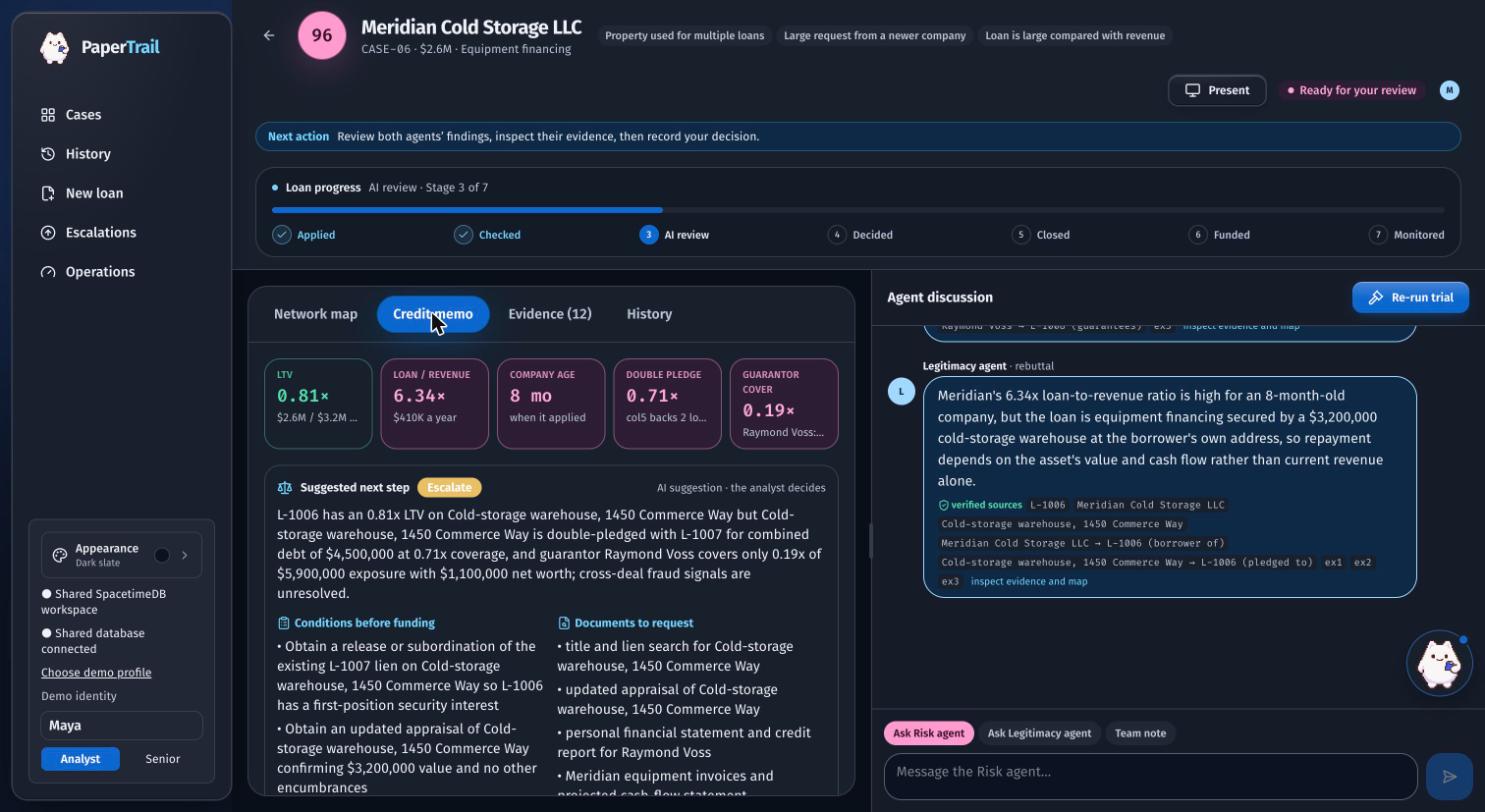
- The clerk is code, not AI. It files numbered exhibits: credit metrics (LTV, loan-to-revenue, company age, guarantor exposure across all loans) and a search across every deal for shared directors and owners, the same address written differently, and collateral pledged twice. Because the clerk is code, the evidence can't be made up.
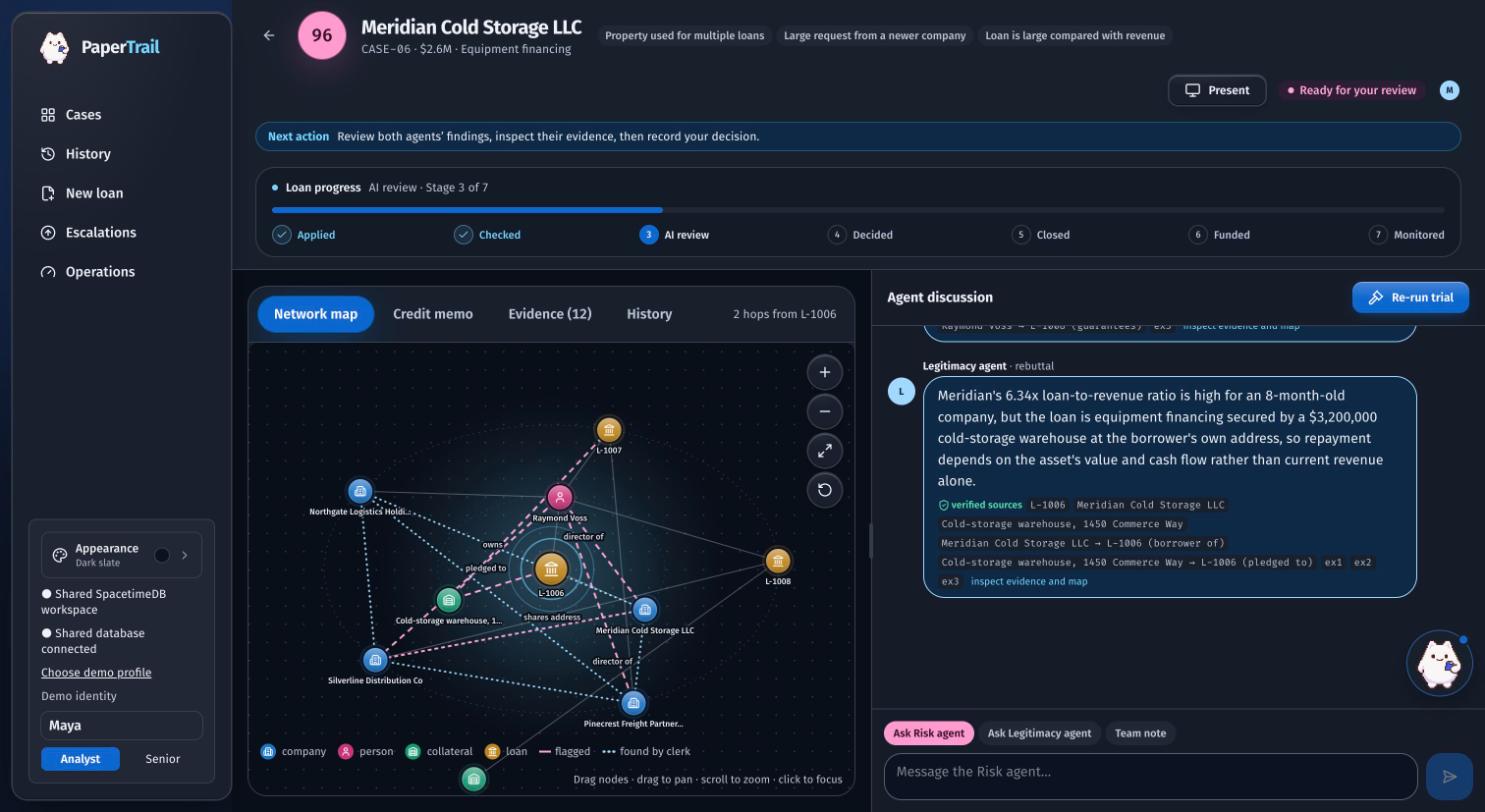
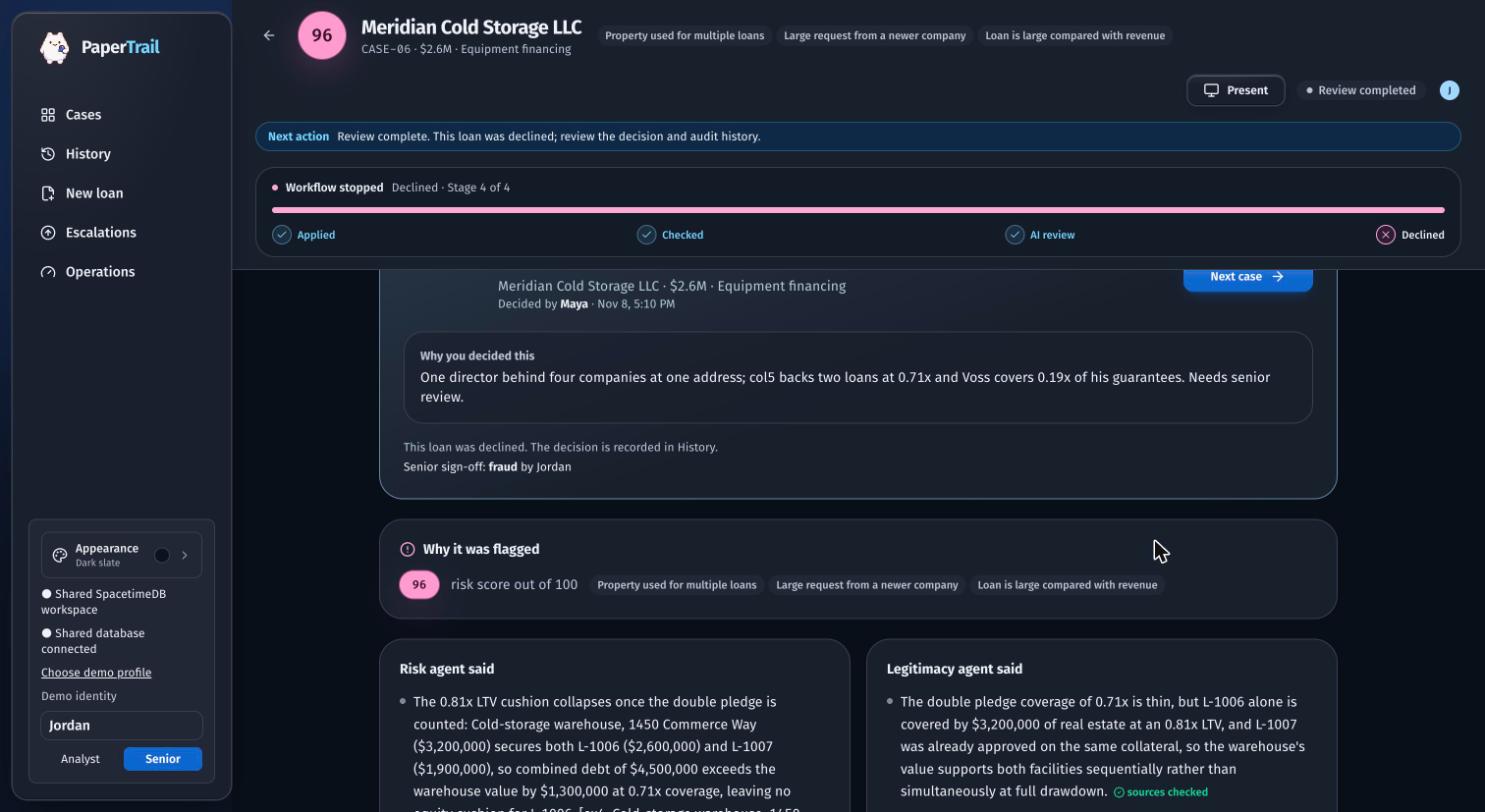
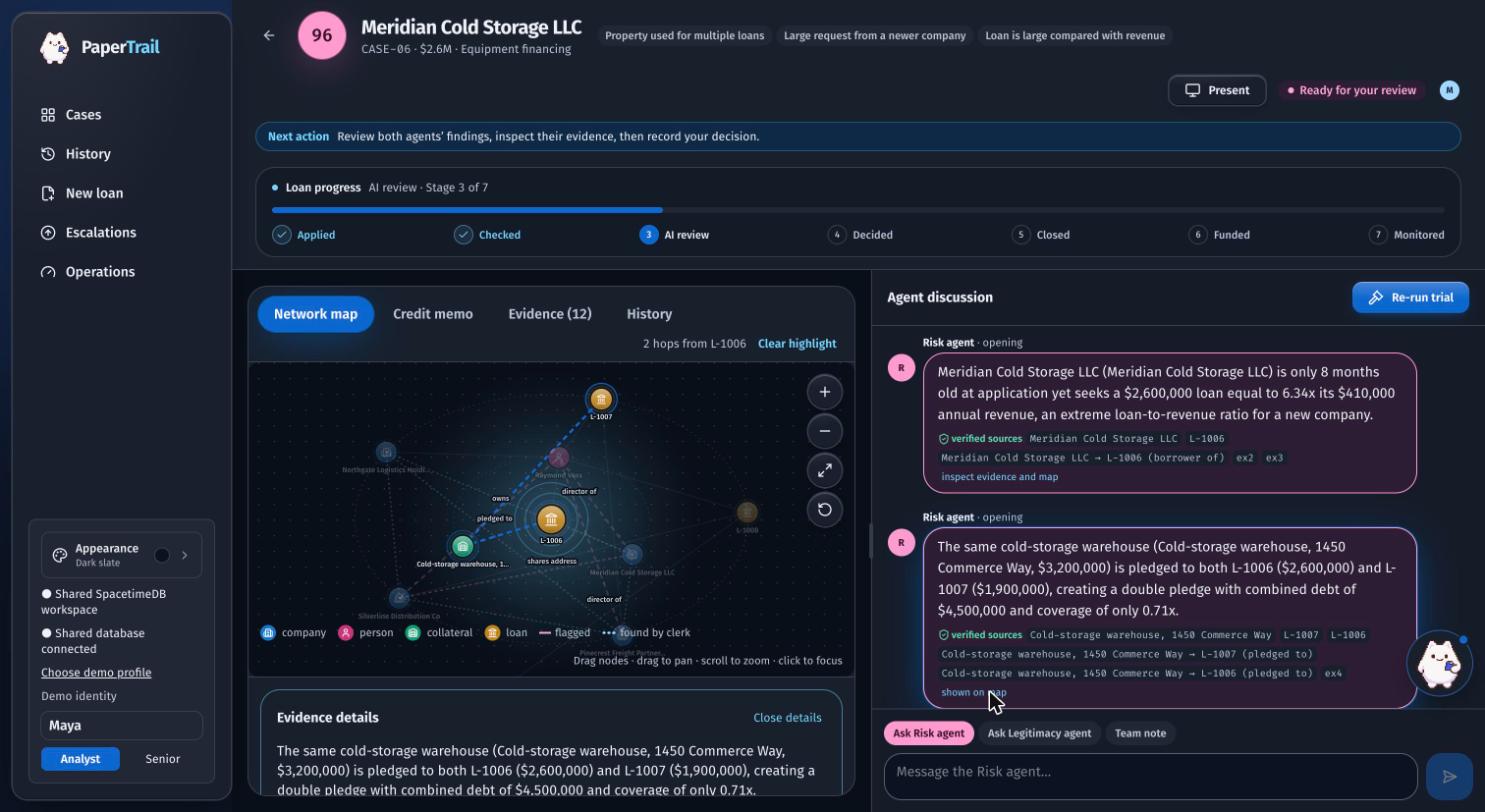
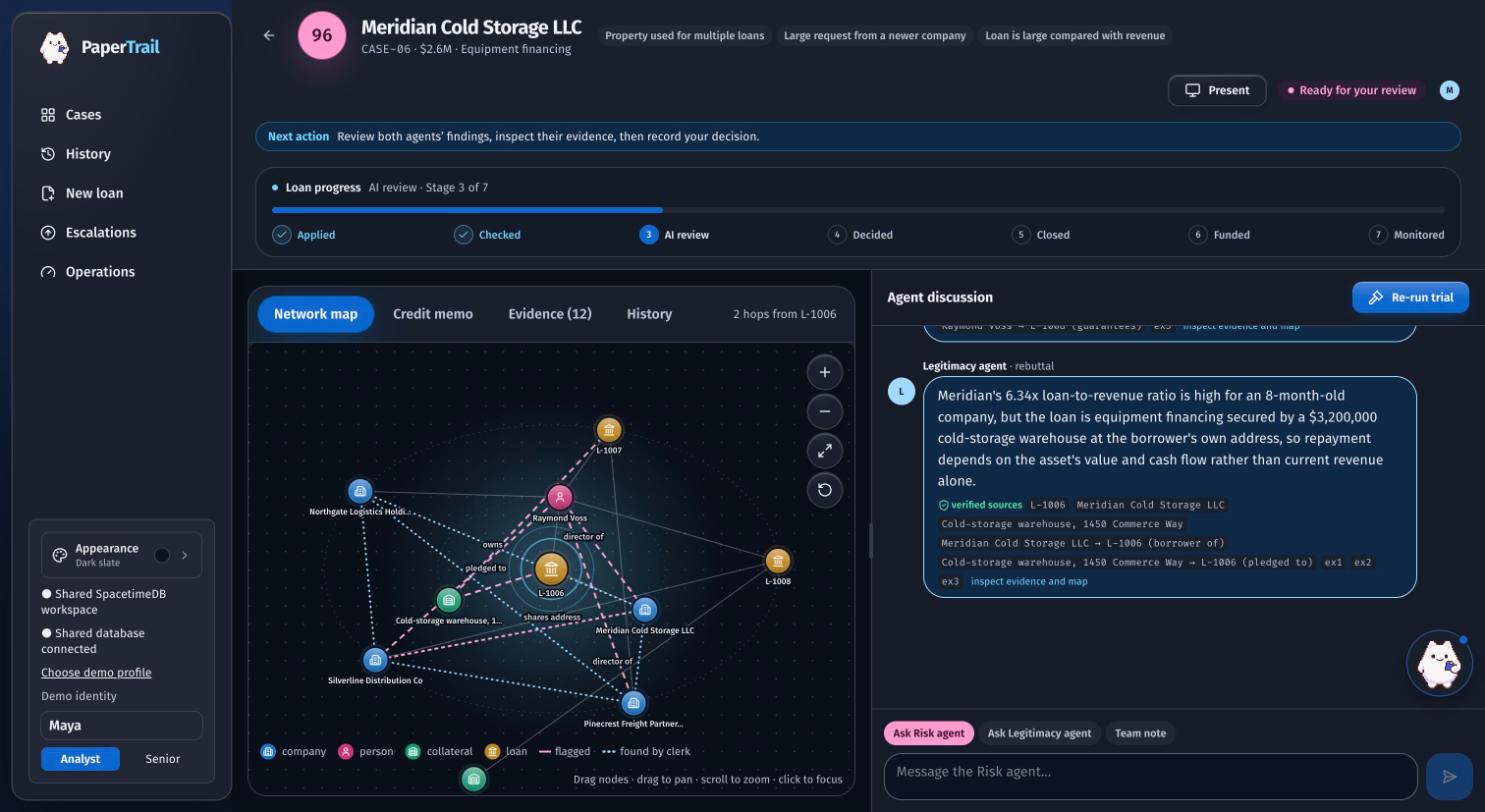
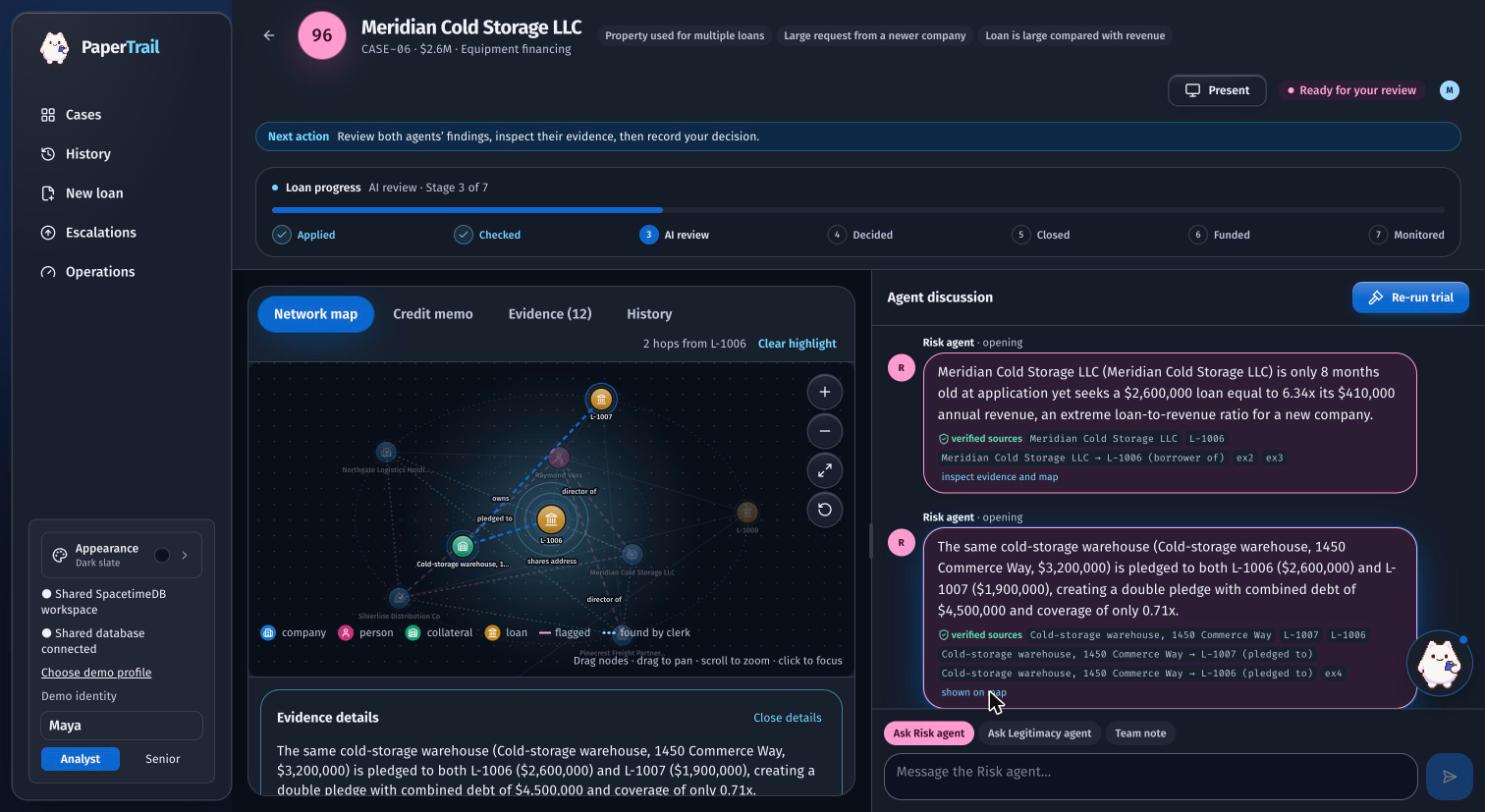
- Two NVIDIA Nemotron agents debate. A Risk agent argues fraud and a Legitimacy agent defends the borrower. Both argue in parallel; a trial takes about 10-15 seconds. Every claim must cite real record IDs, and clicking a claim lights up its evidence on the network map.
- A fact-checker (code) hides any claim that cites a record that doesn't exist.
- A credit memo. The AI writes a bank-style memo: approve, approve with conditions, decline, or escalate, plus conditions before funding and documents to request. It is labeled "AI suggestion, the analyst decides."
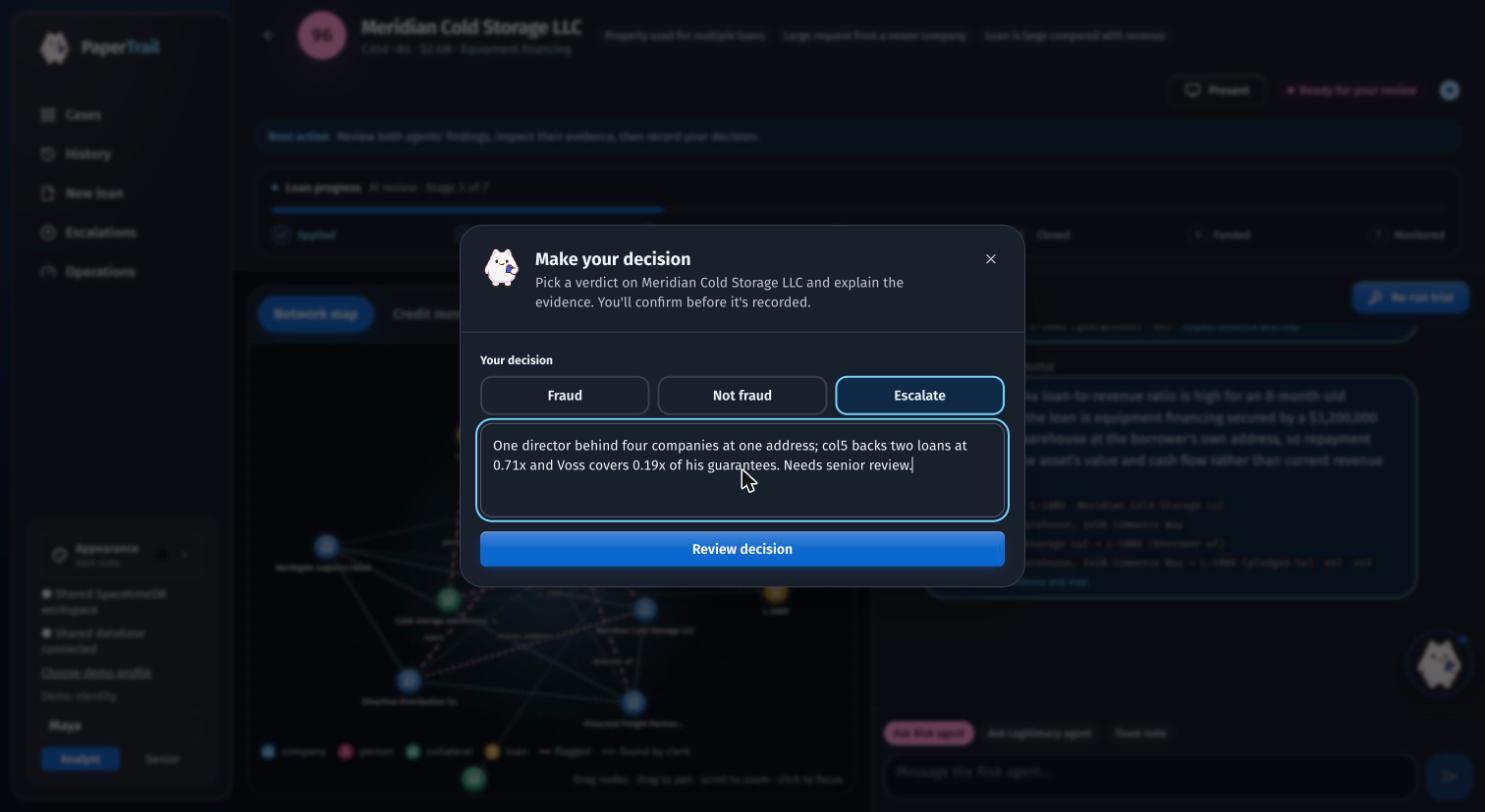
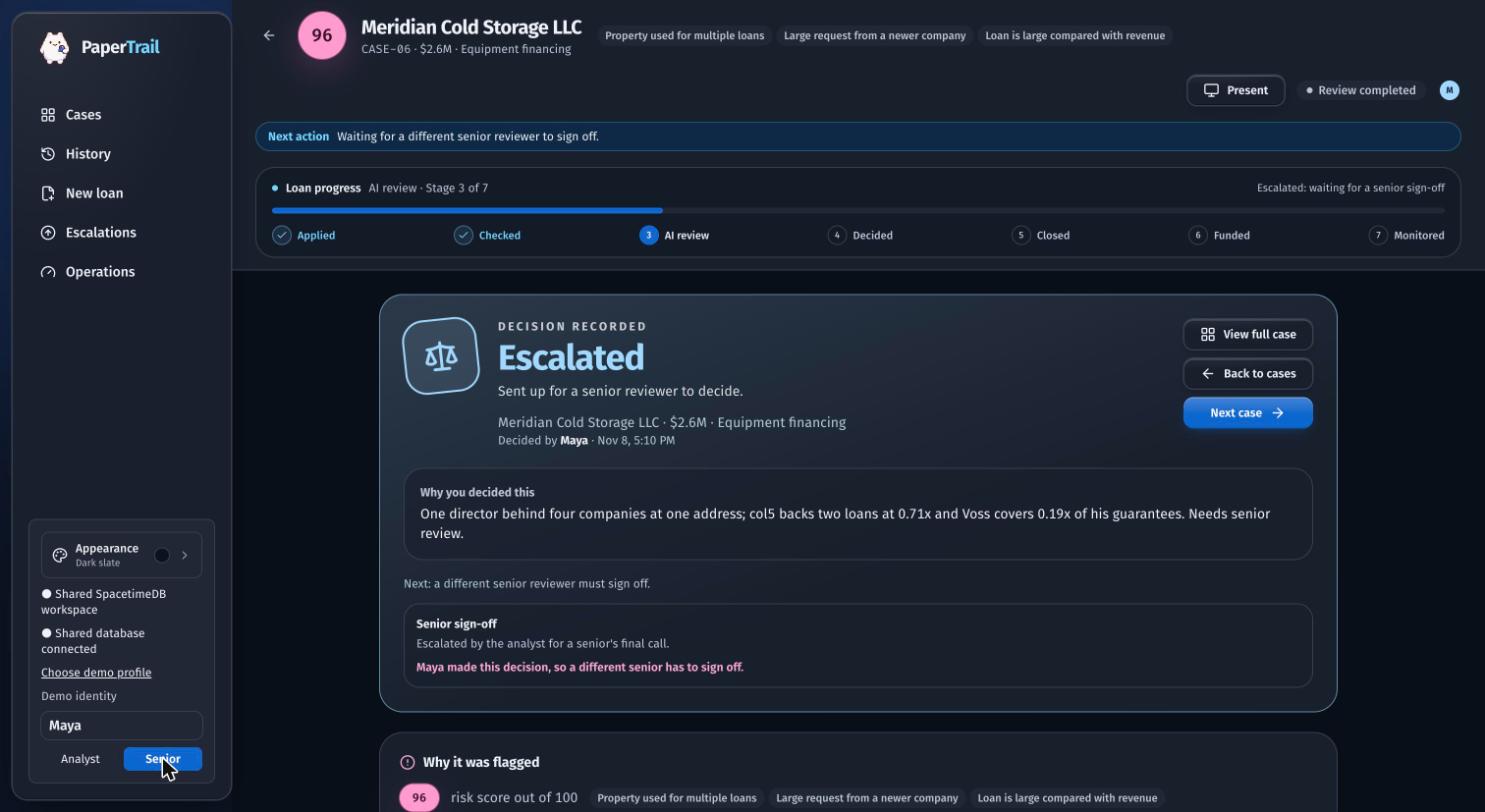
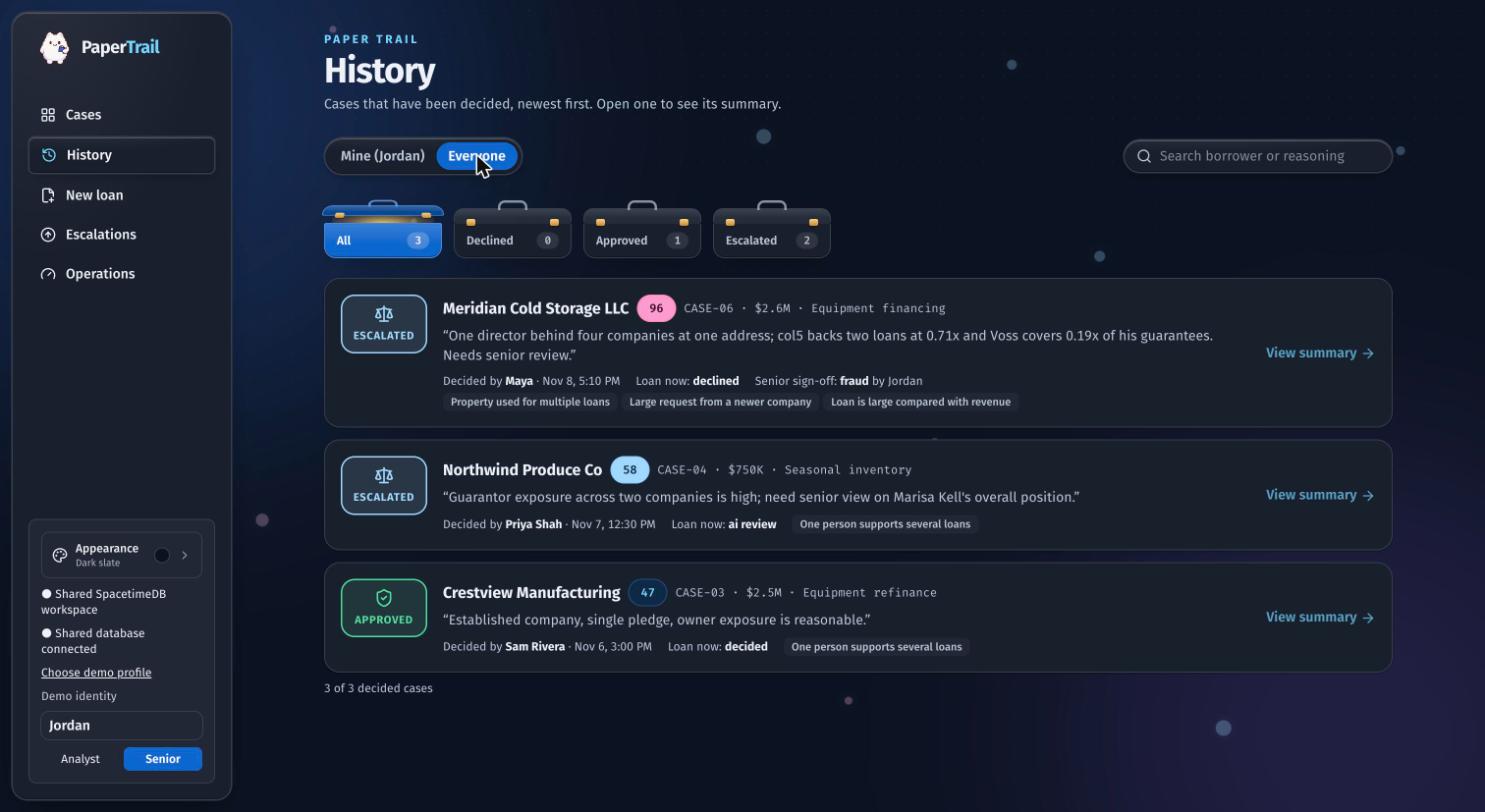
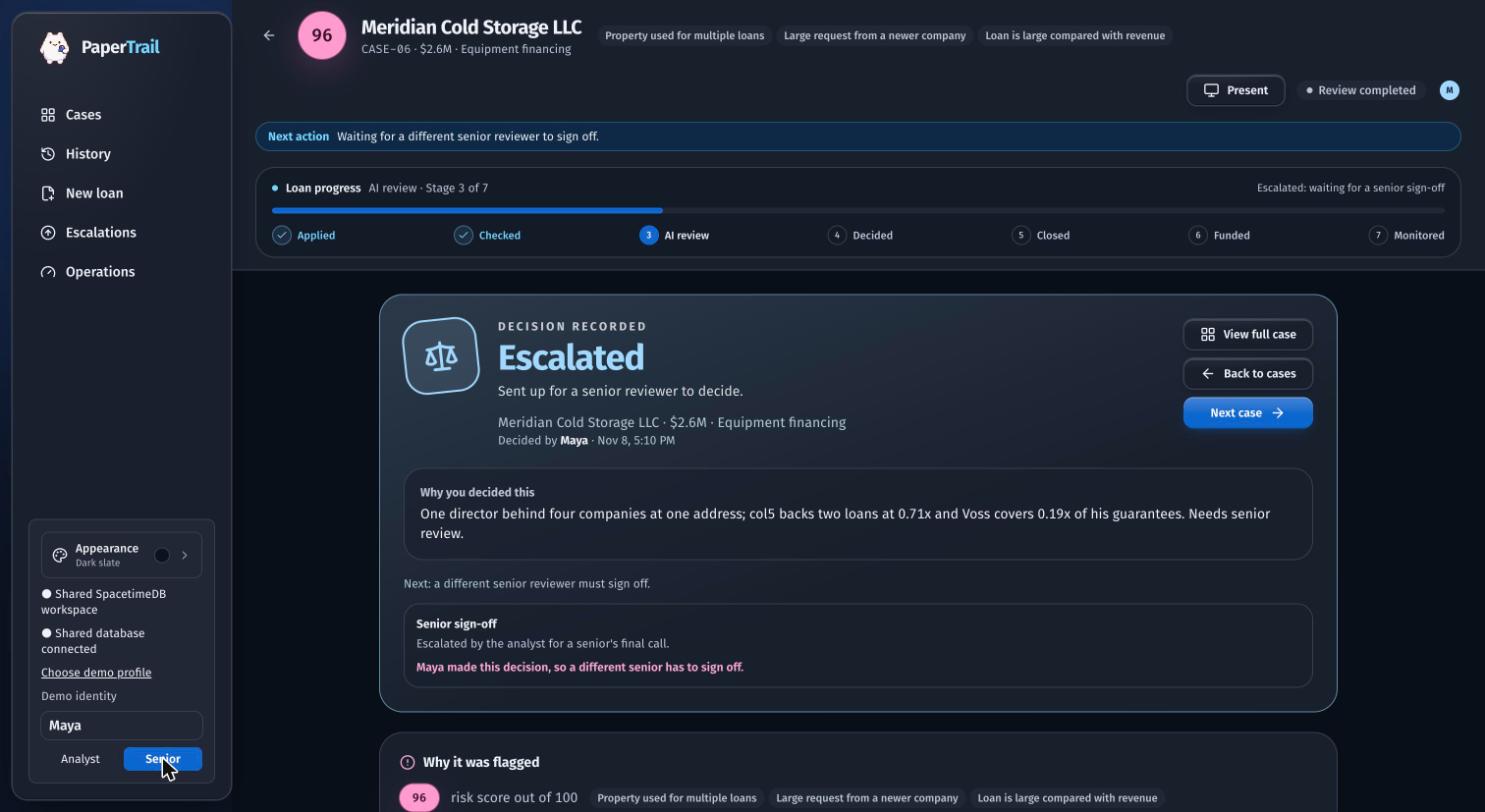
- A human decides, with four eyes. The analyst records fraud, not fraud, or escalate. Escalations and loans over $1M need a Senior sign-off from a different person. Every action is logged in History.
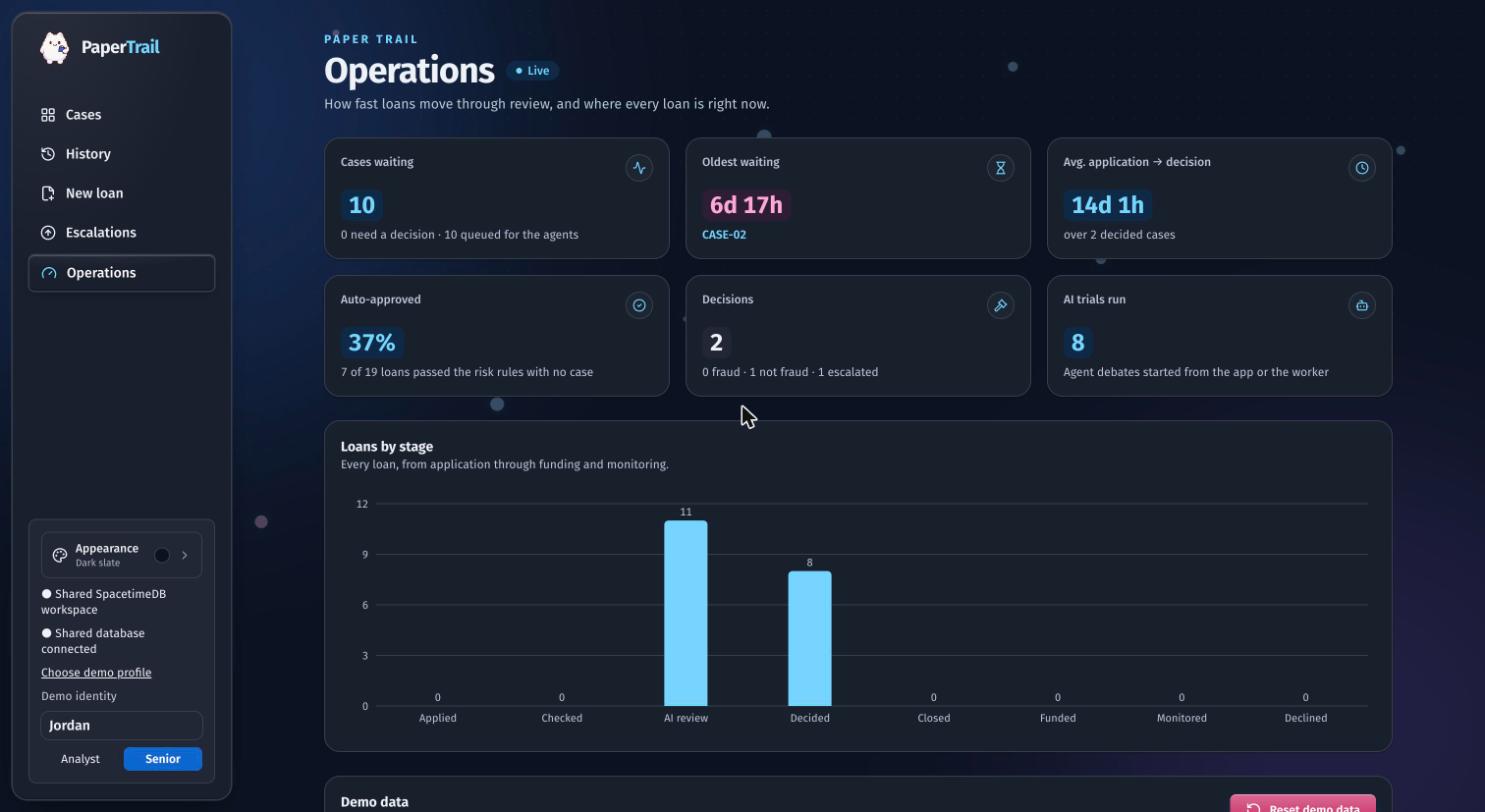
- The full lifecycle. Applied, Checked, AI review, Decided, Closed, Funded, Monitored, with Close and Fund steps on the case page.
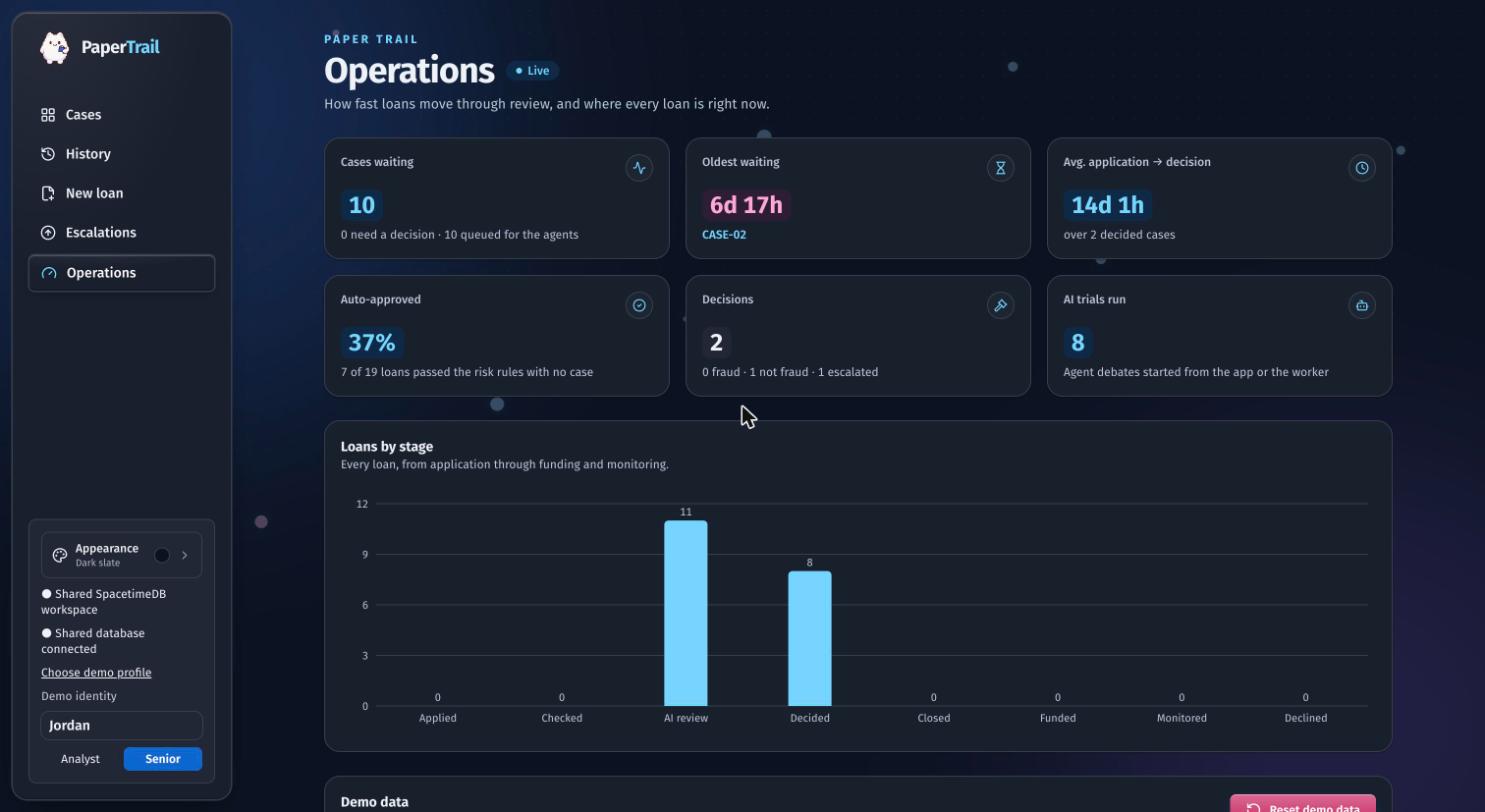
- Operations dashboard. Cases waiting, oldest case, time to decision, auto-approval rate and decision split.
Demo: the CASE-06 fraud ring. Raymond Voss runs four companies at one address (one written differently, so only the clerk finds it). One $3.2M warehouse backs two loans at 0.71x coverage, and Voss guarantees $5.9M on a $1.1M net worth.
How it maps to the prompt
- Entire lifecycle: lifecycle bar from application to funding
- Automates: rules on intake, automatic approval of clean loans, a background worker that debates new cases on its own, a memo after every trial
- Secures: code-filed evidence, the citation fact-checker, Senior sign-off over $1M, four eyes, the audit log
- AI/ML: Nemotron agents reasoning over metrics computed by code
- Hidden, cross-deal fraud patterns: cross-deal search over all loans, address matching that ignores formatting
- Operational excellence: the Operations page
How we built it
React + TanStack Start front end; a Node/TypeScript courtroom worker; NVIDIA Nemotron (nemotron-3.5-super) for the agents; SpacetimeDB on maincloud as the shared database, so every analyst, senior and the AI worker see the same state live. Shared TypeScript modules hold the metrics, clerk and memo logic so the app and the worker produce identical exhibits.
Challenges
- Keeping the AI honest: we moved evidence gathering from an AI clerk to code and added a citation checker.
- Speed: trials went from about 38 s to about 10-15 s by running both sides in parallel and dropping closing statements.
- Merging four people's work into one app in 24 hours.
What we learned
- Grounding LLM output in checkable record IDs makes it much easier to trust.
- Deterministic code for facts, AI for argument, humans for decisions is a good split for regulated work.
What's next
- Plug into a bank's loan origination system instead of our intake form
- Pull state business records, UCC lien filings and business credit reports
- Re-flag funded loans when a new loan links to them (real monitoring)
- A Senior "reopen" action for decisions
All companies, people and loans are synthetic, modeled on common commercial-lending fraud patterns.
Built With
- node.js
- nvidia-nemotron
- react
- spacetimedb
- tailwindcss
- tanstack
- typescript
- vite
