-
-
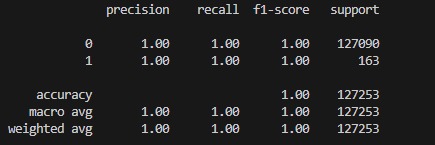
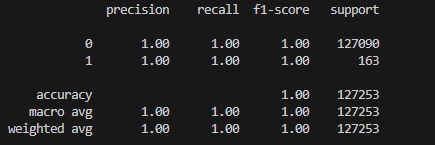
Models Test scores based off 5% of the dataset
-
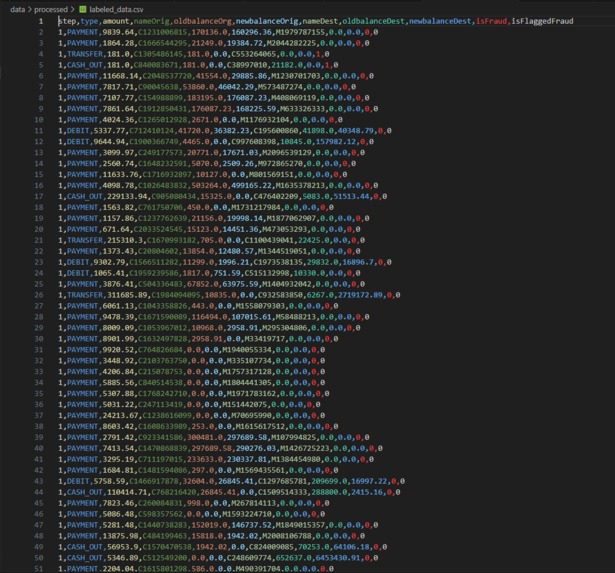
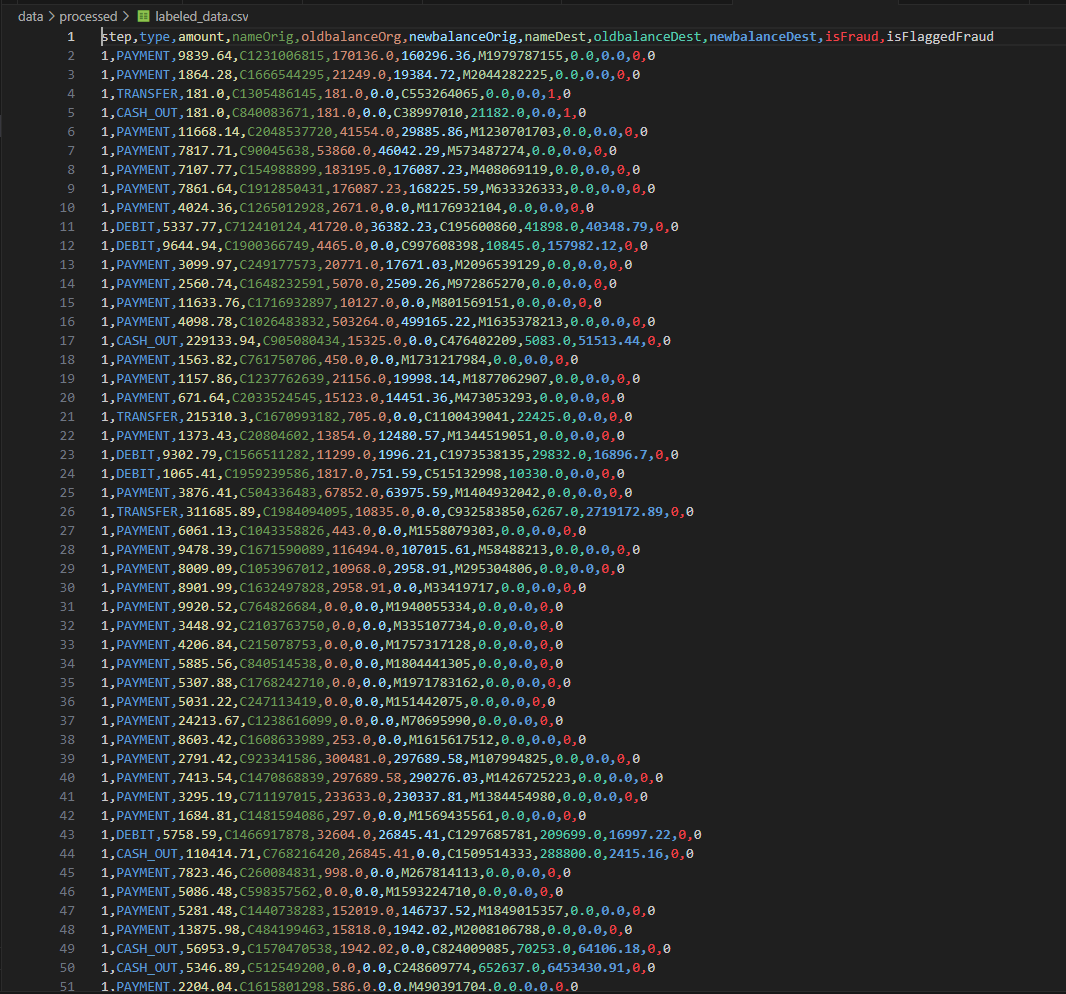
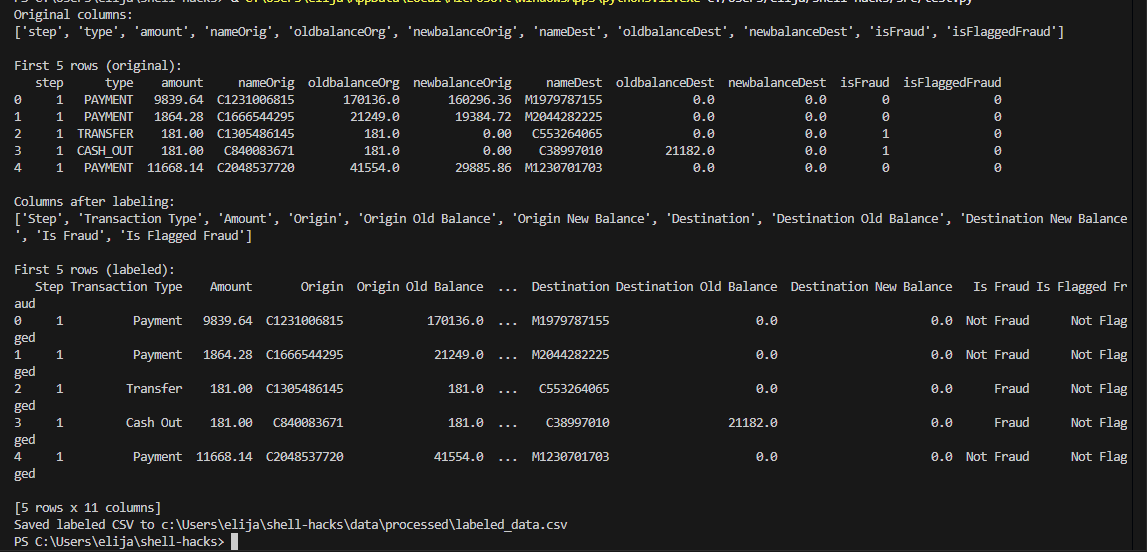
Labeled CSV file
-
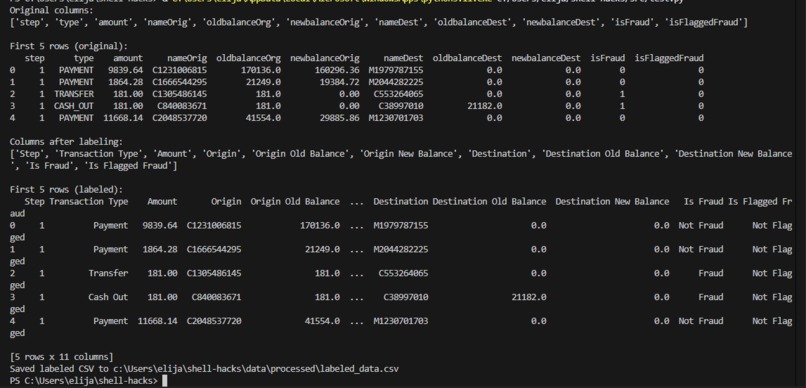
Preview of the dataset before and after labeling. original transaction columns are renamed and fraud flags are converted into labels
Inspiration
Credit card fraud costs billions every year, hurting both businesses and everyday users. I wanted to simulate a realistic fraud detection scenario where less than 1% of transactions are fraudulent. Using a dataset of 600,000+ transactions, I set out to see how AI could spot these rare cases with high accuracy.
What it does
FraudBuster is an AI-powered fraud detection system that analyzes transaction patterns and flags suspicious activity instantly. Trained on a large dataset, it achieved perfect accuracy in identifying fraudulent transactions.
How I built it
I used Python with pandas and scikit-learn to preprocess and clean the raw dataset. After scaling and balancing the data, I trained machine learning models including Logistic Regression and Random Forest. I evaluated performance with precision, recall, F1-score, and then saved the best-performing model.
Challenges we ran into
Accomplishments that I am proud of
-Achieved 100% accuracy on test data for fraud classification. -Built a full pipeline: from raw dataset → preprocessing → model training → evaluation → prediction API. -Created a clean, modular codebase with reusable scripts for loading, training, and evaluating.
What I learned
-How to deal with real-world challenges of class imbalance in machine learning.
What's next for FraudBuster
-Deploying the model as a live API service that integrates with payment platforms. -Extending the dataset with synthetic transactions to improve generalization. -Exploring deep learning models for anomaly detection to push performance beyond tabular ML.


Log in or sign up for Devpost to join the conversation.