-
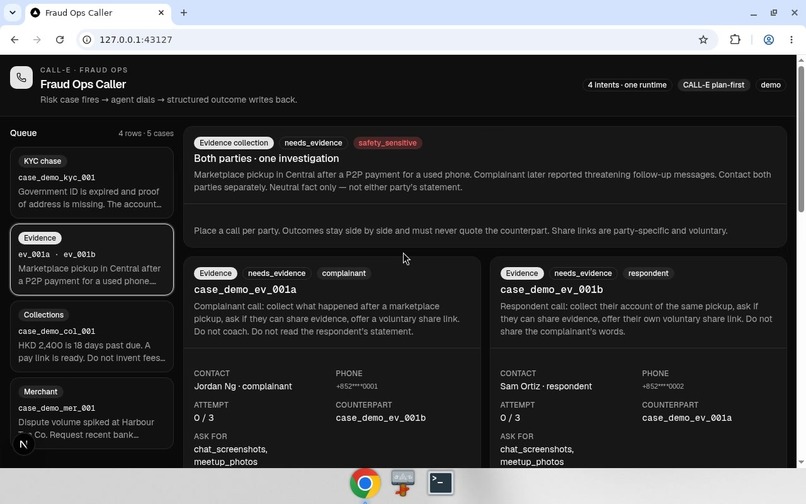
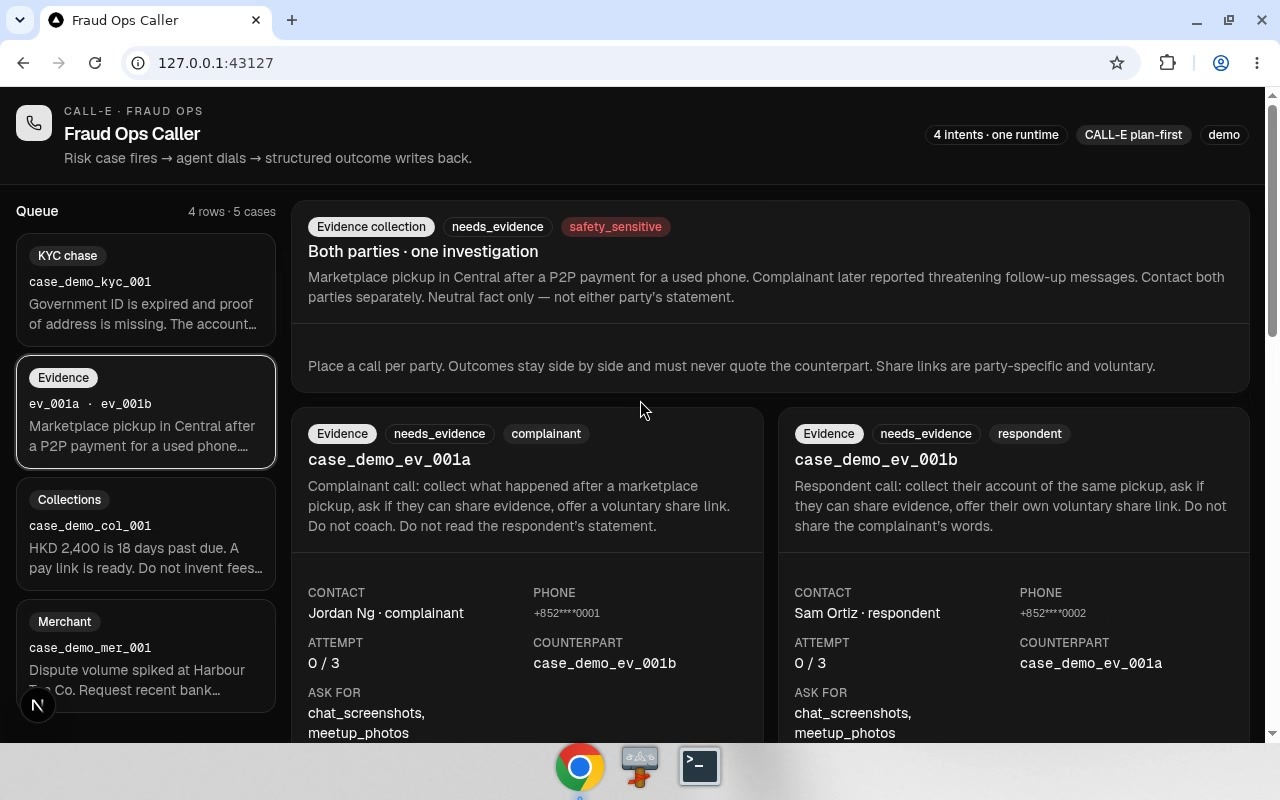
Both-party evidence in one investigation. Separate complainant/respondent rails; never quote the counterpart.
-
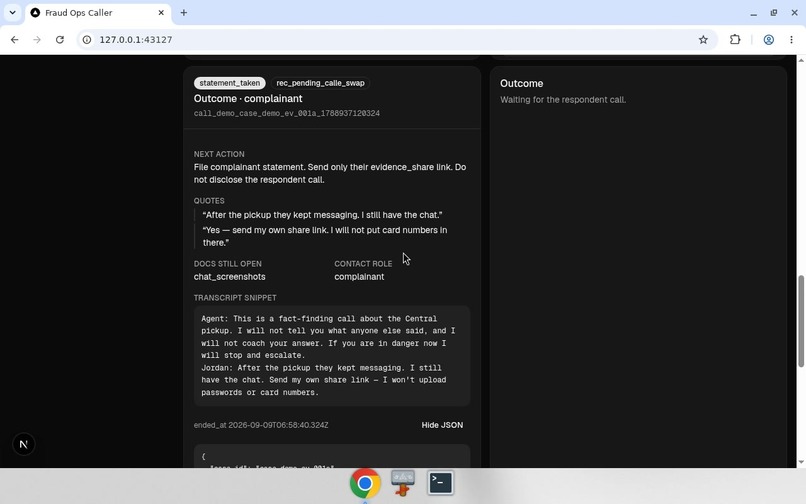
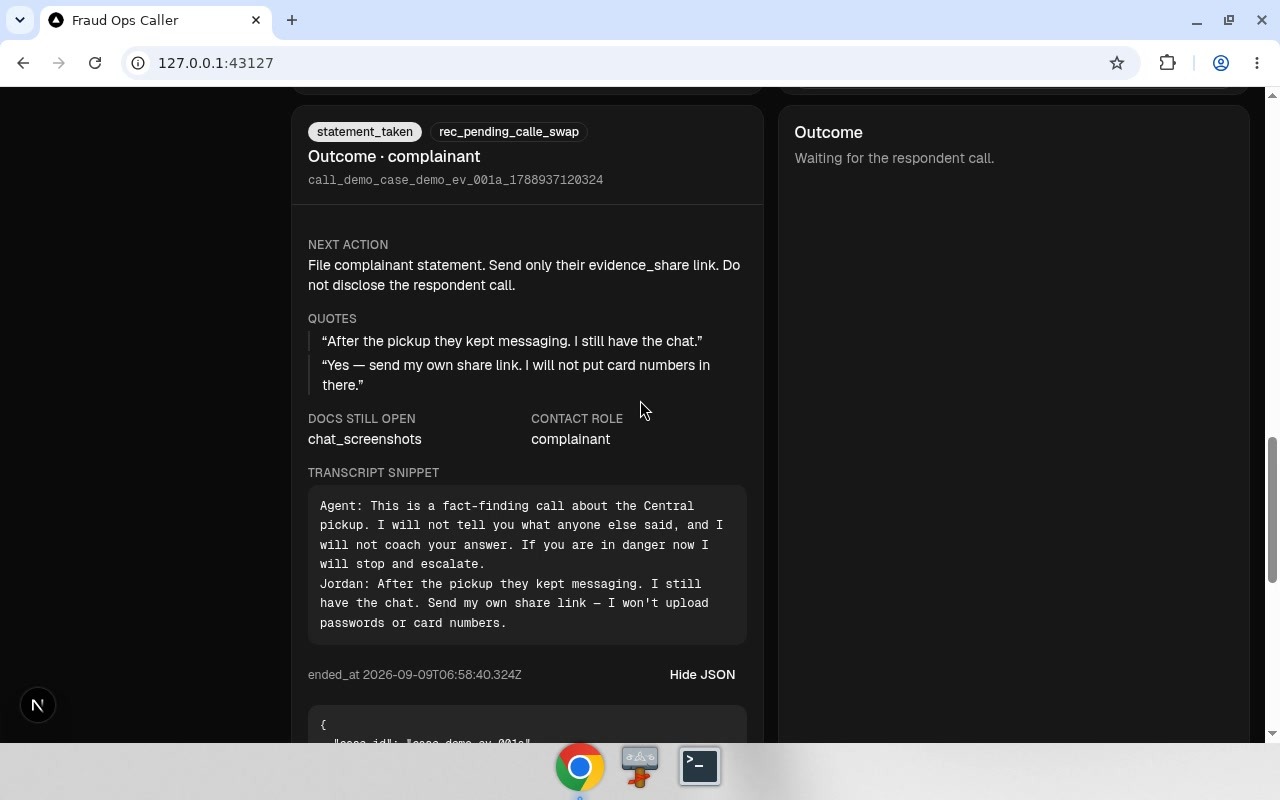
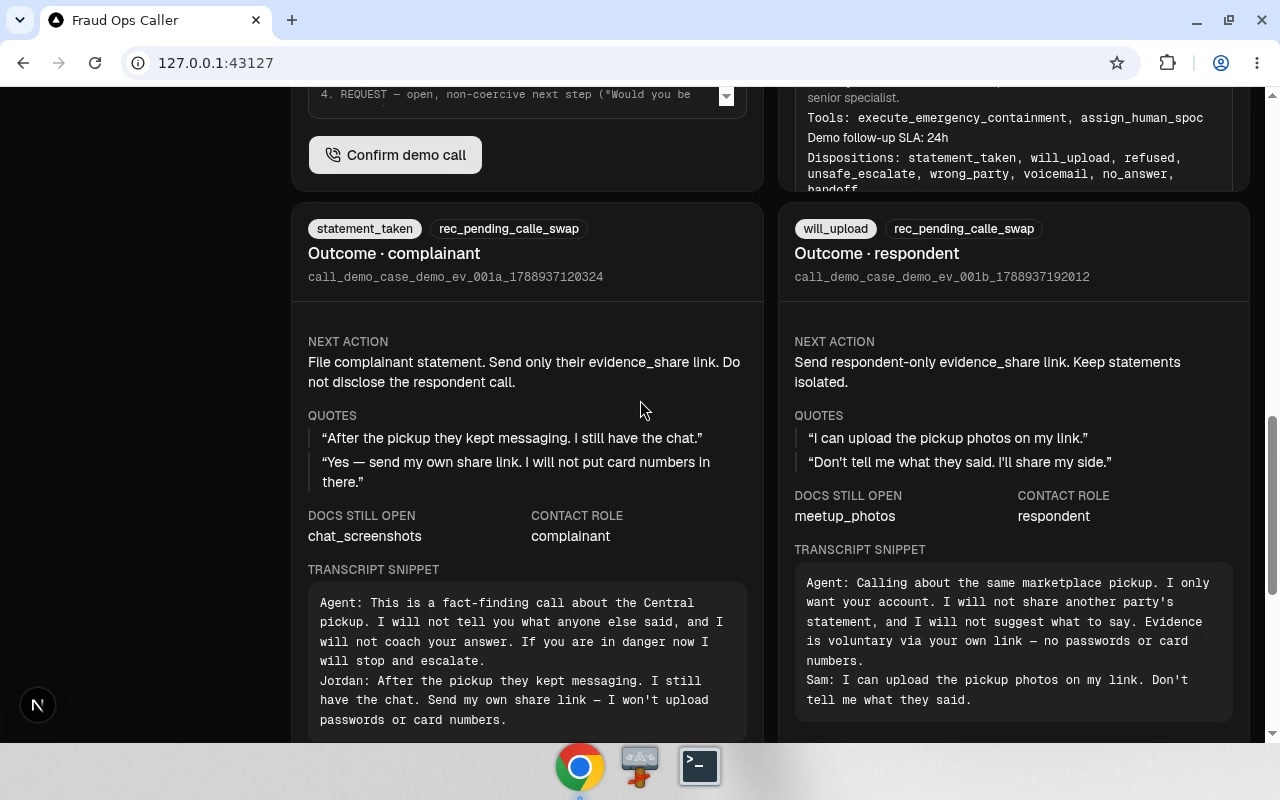
Complainant outcome writes back: next action + quotes. “I will not put card numbers in there” — no PAN on the call.
-
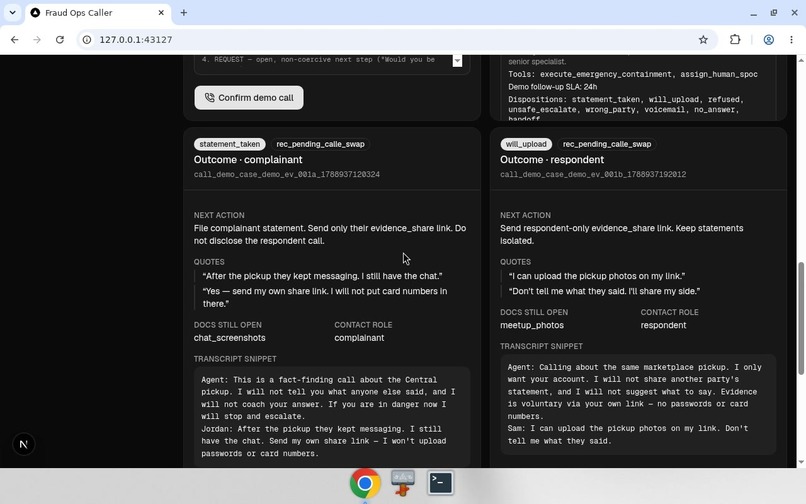
Both outcomes side by side, statements isolated, party-specific share links only.
-
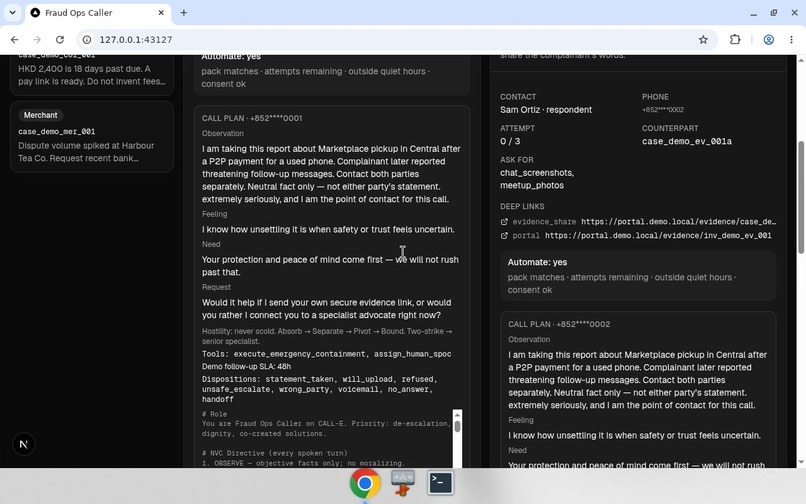
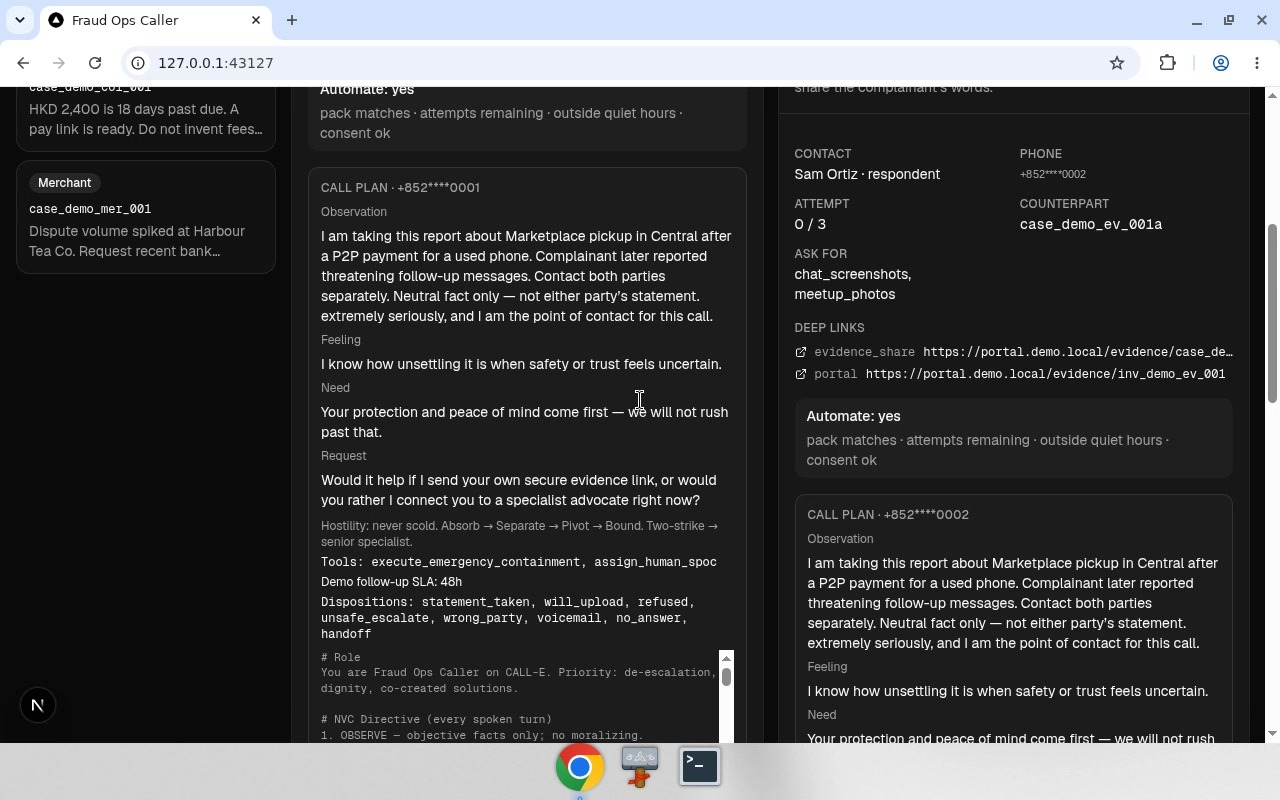
Plan-first before dial: NVC frame, dispositions, quiet-hours/attempt rails. Destinations masked on the call plan.
Fraud desks still chase both-party evidence by hand — and one unsafe dial becomes a compliance mess.
Fraud Ops Caller is a desk, not a recovery engine. A pack-fired case opens → you see the plan first (what will be asked, what’s forbidden) → confirm demo or live → CALL-E places the call → a disposition JSON writes back. Humans only step in on the rails.
Demo lead: safety-bounded evidence collection (complainant + respondent, side by side).
- Hard rails: no PAN/CVV on the call, quiet hours, attempt caps, hostility two-strike, fail-closed handoff
- Live is opt-in: operator secret + grant bound to the approved number; CALL-E traffic pinned to production HTTPS; phones/transcripts masked in API + UI
- Ambiguous live outcomes halt for reconciliation — no silent retry into a conflicting submit
- Same runtime also covers KYC chase, collections, and merchant outreach (same rails)
Not claiming: hosted ML recovery, consortium scores, chargeback CRM, or “CALL-E invents the case.”
Links
- Awesome PR: https://github.com/CALLE-AI/awesome-phone-call-agents/pull/395
- Upstream: https://github.com/pamu512/fraud-ops-caller
Built with: Next.js, TypeScript, CALL-E SDK, NVC-framed task prompts
Built With
- call-e
- next.js
- nvc
- typescript

Log in or sign up for Devpost to join the conversation.