Inspiration
We wanted to build a tool that helps people quickly identify fraudulent transactions without manually reviewing hundreds of records. Since financial fraud is a growing problem, we aimed to create a system that could automatically detect suspicious activity and explain why it was flagged.
What it does
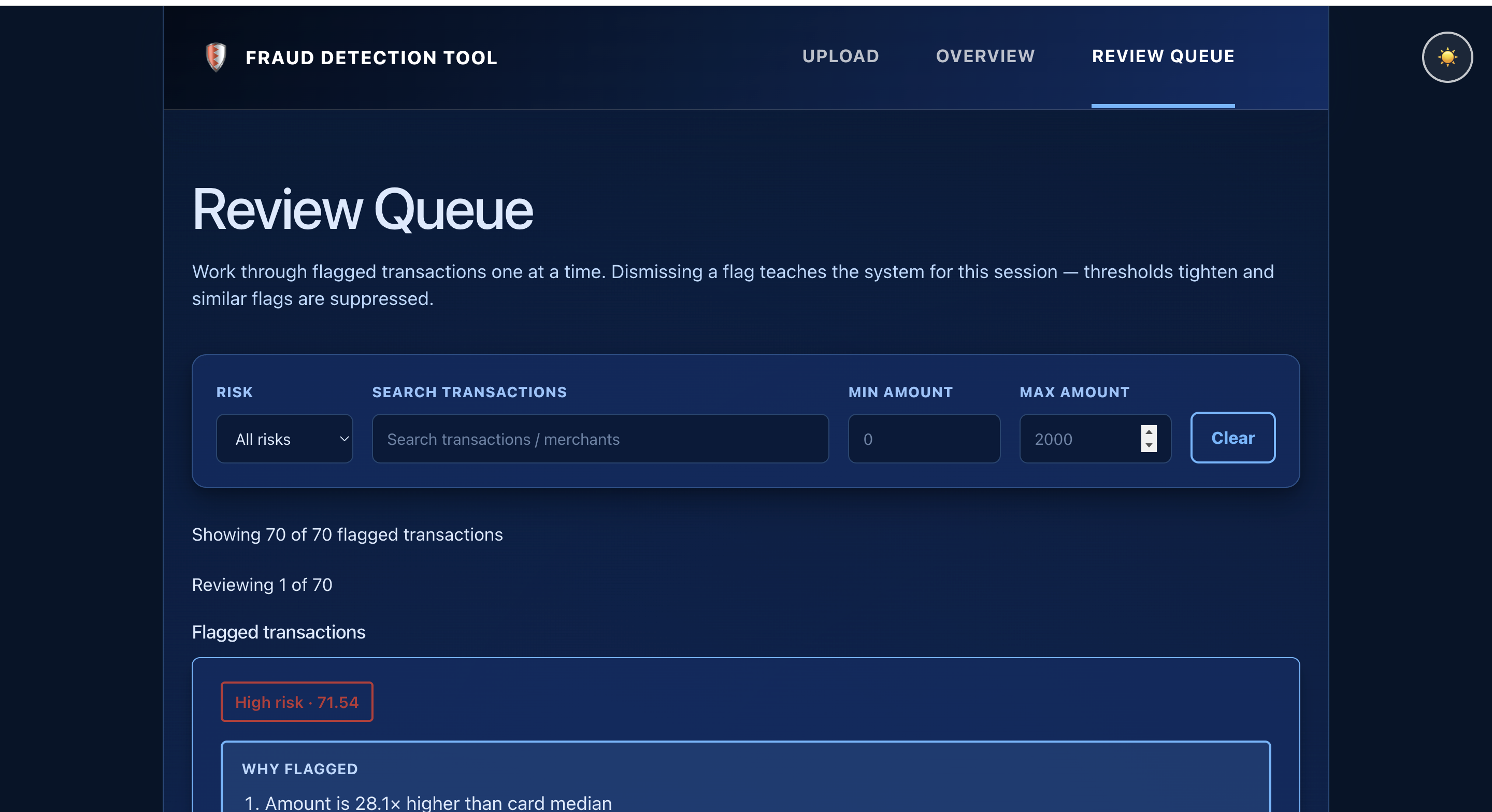
The tool analyzes transaction data, detects potentially fraudulent transactions, assigns a risk score, and provides clear explanations for each flag. It also includes a dashboard that allows reviewers to approve, dismiss, or escalate suspicious transactions.
How we built it
We built the project using Python and JavaScript. The backend processes the CSV dataset, applies fraud detection rules and anomaly scoring, and exposes the results through an API. The frontend dashboard displays flagged transactions and reviewer actions.
Challenges we ran into
As beginners, one of our biggest challenges was understanding fraud detection techniques and finding effective ways to identify suspicious patterns. We also had to learn how to connect the backend processing system with the frontend dashboard.
Accomplishments that we're proud of
We're proud that our system successfully identifies suspicious transactions and provides meaningful explanations for every flag. We also built a functional review dashboard that makes it easy to investigate transactions.
What we learned
We learned about data analysis, fraud detection, API development, and frontend-backend integration. We also gained experience working as a team and building a complete project from start to finish.
What's next for Fraud Hunter
We want to improve our detection model by adding machine learning, more advanced fraud signals, and a feedback system that learns from reviewer decisions. Our goal is to make fraud detection more accurate while reducing false positives.
Built With
- api
- css
- npm
- phython
- typescript


Log in or sign up for Devpost to join the conversation.