-
-
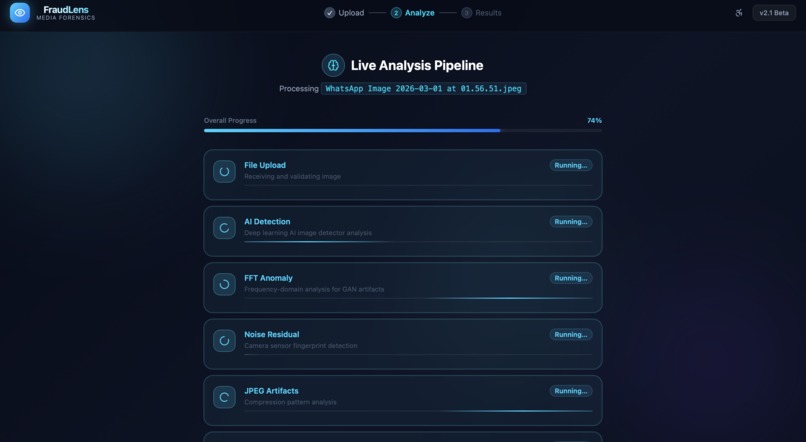
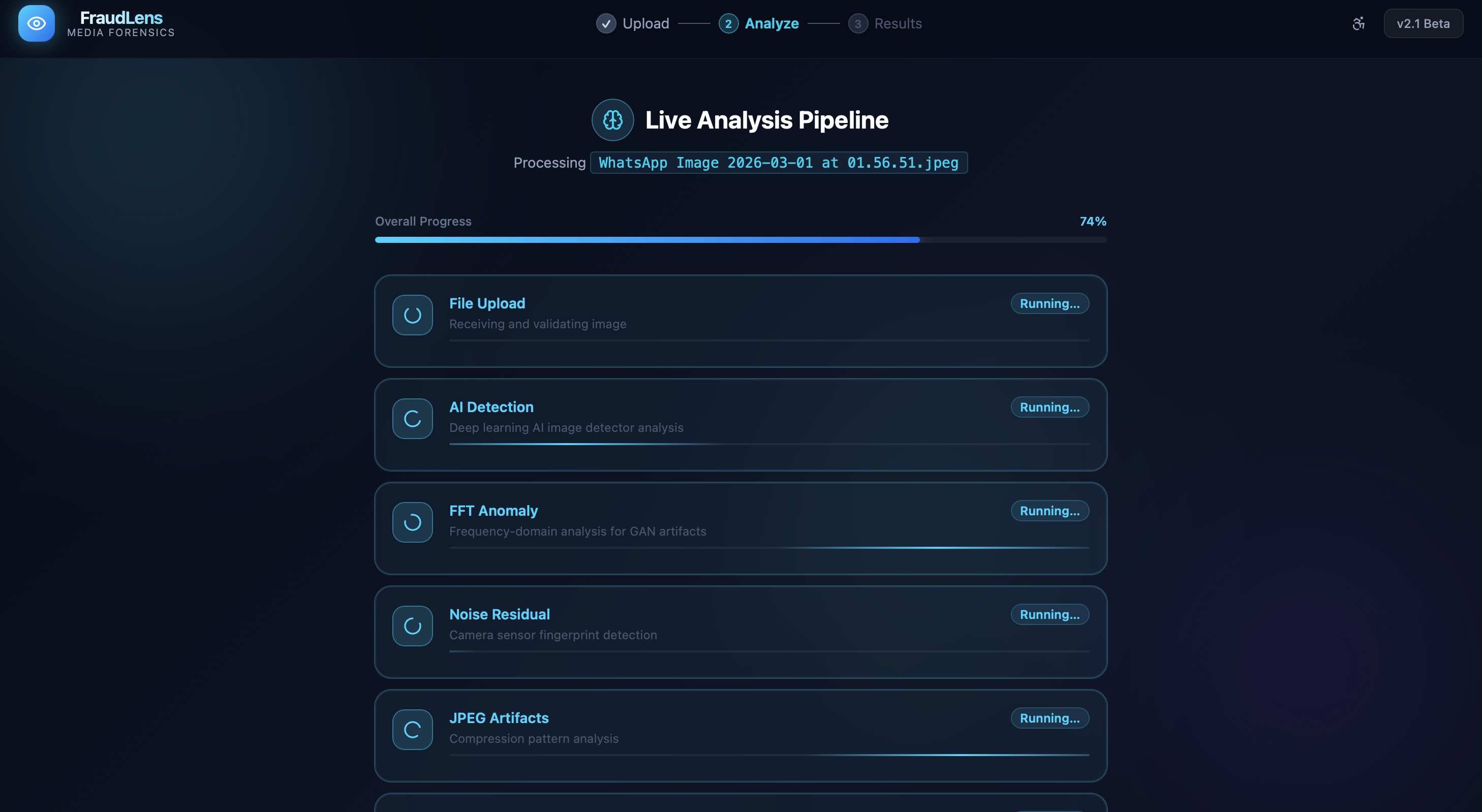
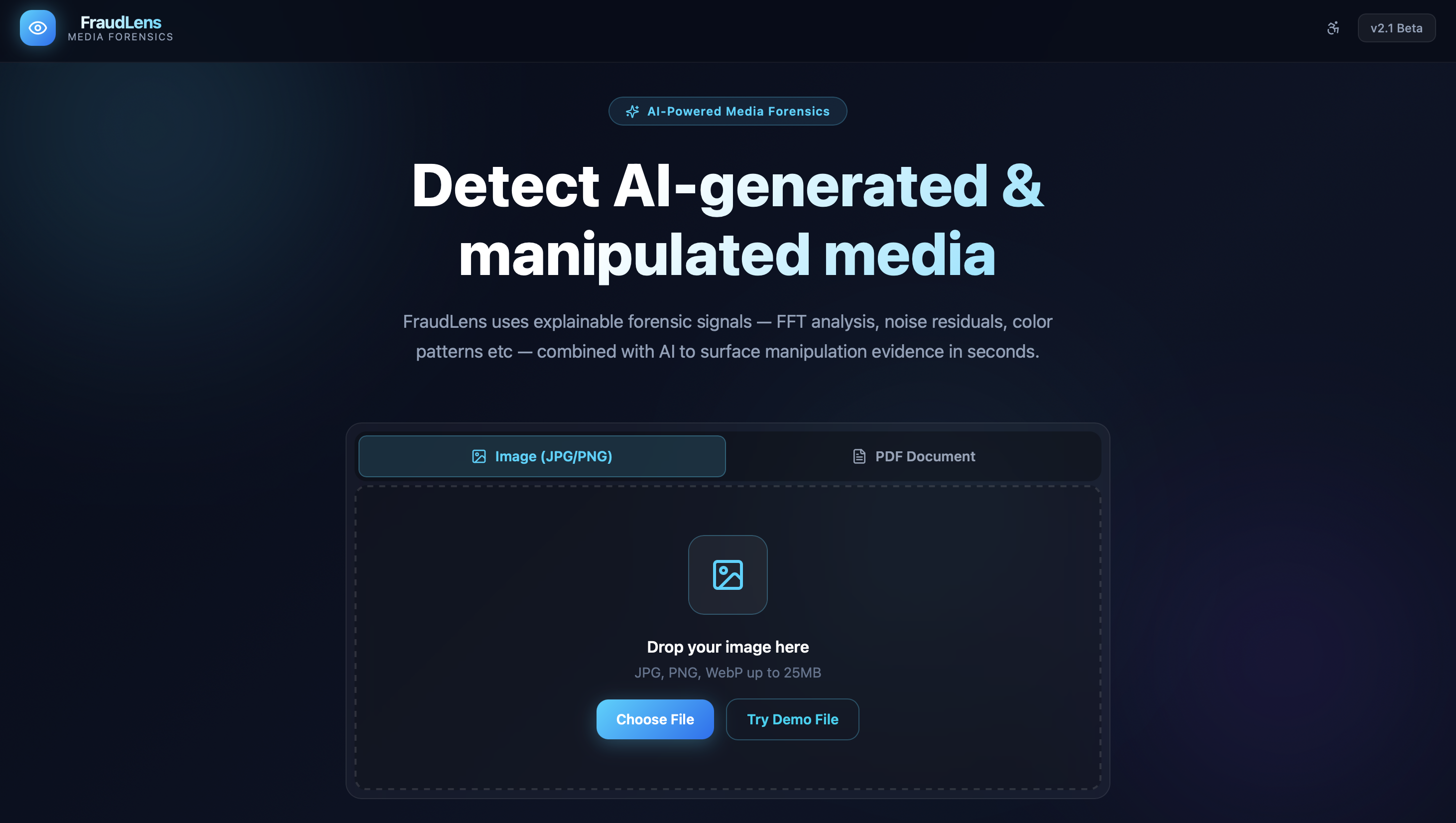
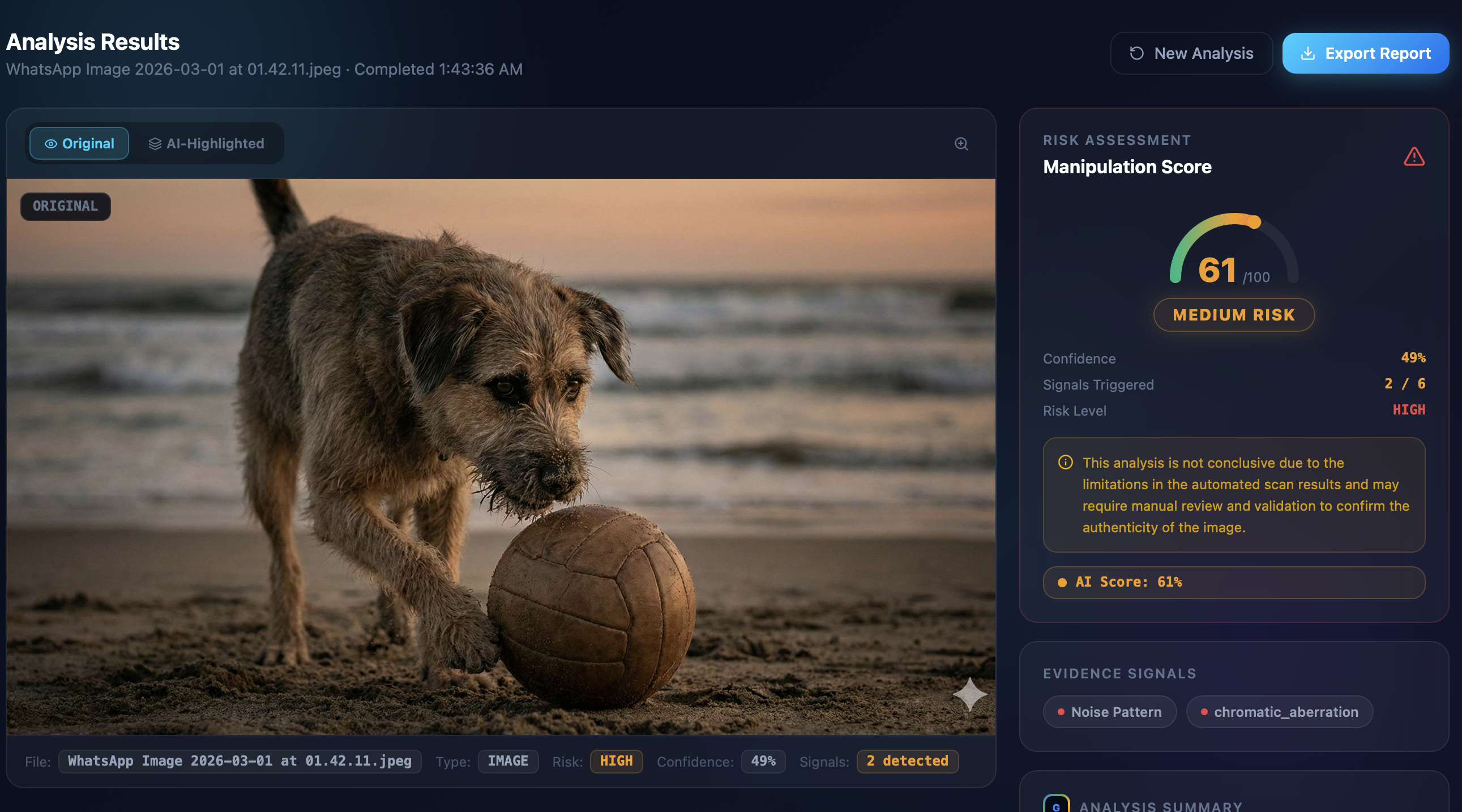
analysis processing page
-
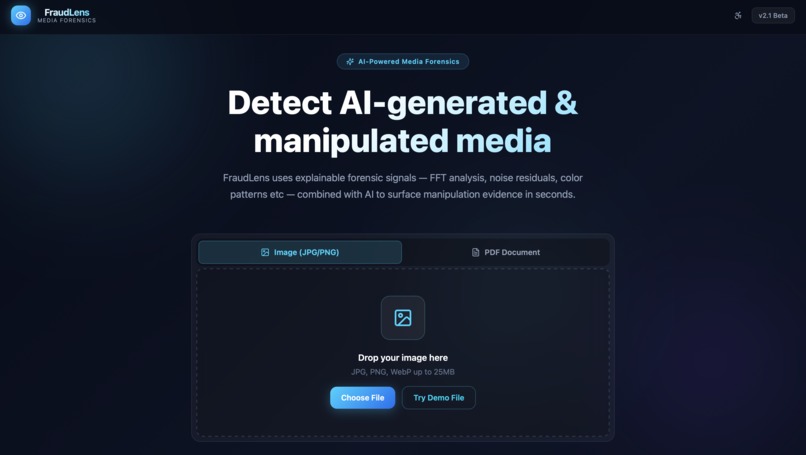
Front page
-
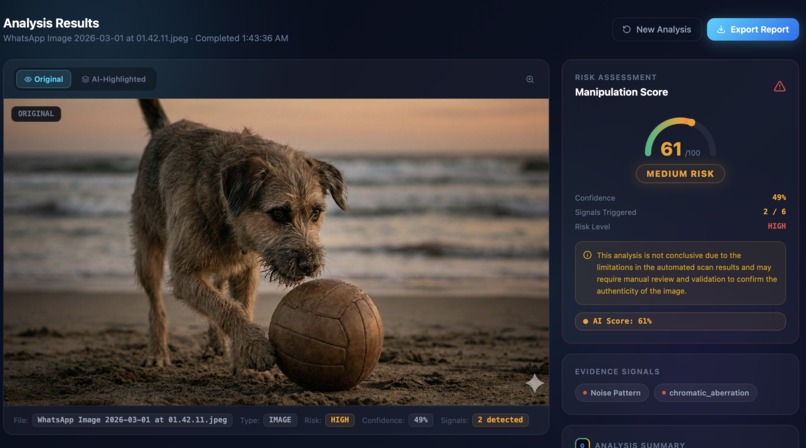
Analysis page
Inspiration
We were inspired by how quickly AI-generated fraud is becoming normal - fake IDs, forged transcripts, deepfake profile photos — things that used to require expertise can now be created in minutes. What surprised us most wasn’t just the technology, but how unprepared small businesses, universities, and HR teams are to detect it. Most existing solutions are expensive, opaque, or require GPUs and ML expertise. We wanted to build something powerful, explainable, and accessible to anyone with a laptop.
What it does
FraudLens is an explainable AI-fraud triage system that detects AI-generated images and AI-written PDF documents. Instead of relying on massive black-box models, it analyzes focused forensic signals and combines them using probabilistic fusion:
\[
P(\text{AI}) = 1 - \prod_i (1 - p_i)
\]
It also includes Artist’s Cloak — a tool that protects artwork by applying adversarial perturbations that disrupt CLIP-based AI scrapers, while remaining visually identical to humans.
How we built it
We deliberately avoided 22GB transformer models and instead engineered six forensic image signals (FFT anomalies, noise residuals, compression artifacts, etc.) and an 18-feature stylometric pipeline for PDF text detection. We built the backend using FastAPI, the frontend with React and TypeScript, and separated cloaking into a dedicated microservice running a PGD attack on CLIP. Everything was designed to run locally, privacy-first, with optional LLM explanations to translate technical scores into plain English.
Challenges we ran into
Balancing accuracy with explainability was the hardest challenge. Early versions either had too many noisy signals or relied on models that were powerful but impractical to deploy. Threshold calibration took extensive testing, and edge cases like compressed images or short PDFs produced unexpected behavior. We also had to carefully tune adversarial strength to maximize feature disruption without introducing visible distortion.
Accomplishments that we're proud of
We’re proud that FraudLens achieves 85–90% detection accuracy without heavy infrastructure, runs on consumer hardware, and provides transparent reasoning behind every score. These indictors does not include any machine learning and Gen AI to get their analysis, also we’re proud of the Artist’s Cloak seeing a CLIP-based model become visibly confused while the image still looks identical to humans was a breakthrough moment for us.
What we learned
We learned that explainability builds trust more than raw model size. We learned that constraints like no GPU, no expensive APIs etc, can actually drive better design decisions. And we learned that real-world tools require careful UX thinking, not just technical correctness.
What's next for Fraud Lens
Next, we plan to expand into advanced PDF visual forensics, OCR mismatch detection, and video deepfake analysis. Long term, we envision FraudLens as a lightweight fraud triage layer that organizations can integrate directly into their workflows — affordable, transparent, and privacy-first.
Built With
- fastapi
- html5
- javascript
- numpy
- opencv
- pillow
- python-3.11
- pytorch
- react
- react-18
- tailwind-css
- typescript
- vite


Log in or sign up for Devpost to join the conversation.