-
-
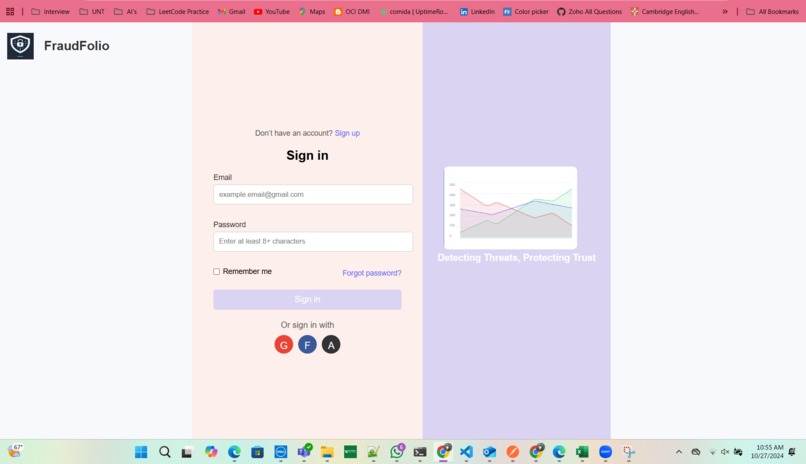
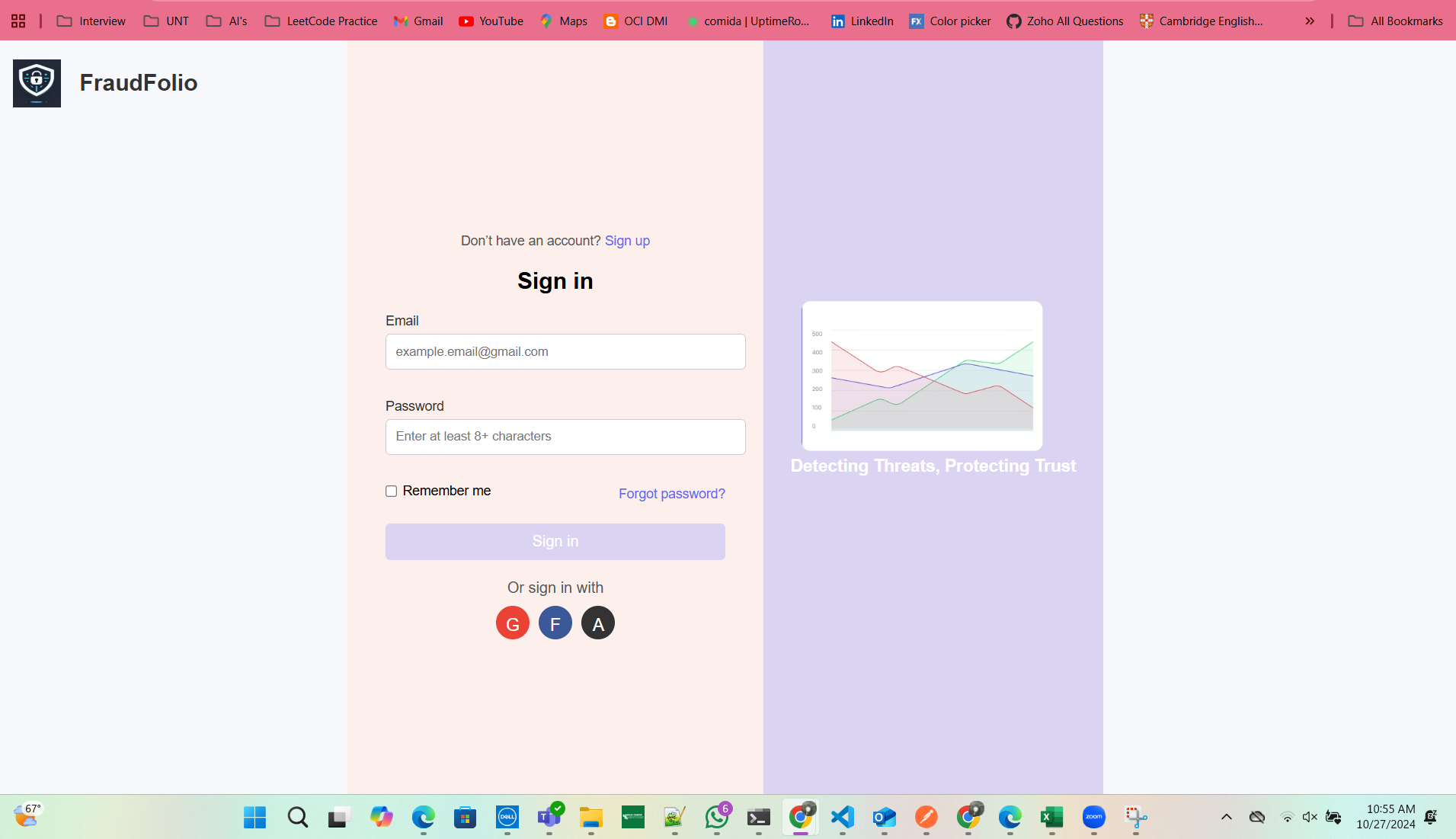
Login Page
-
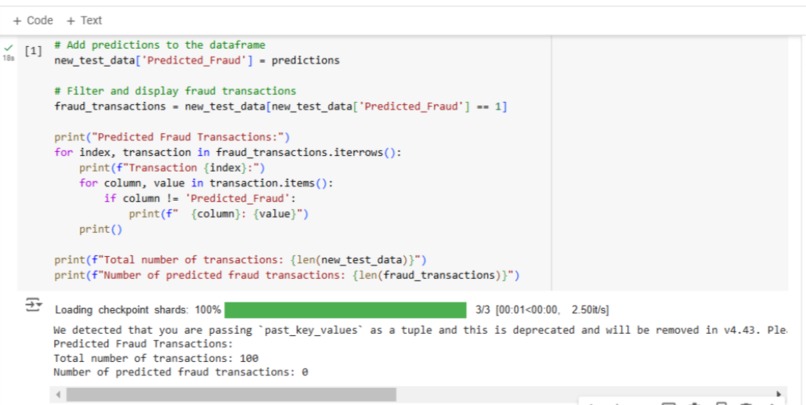
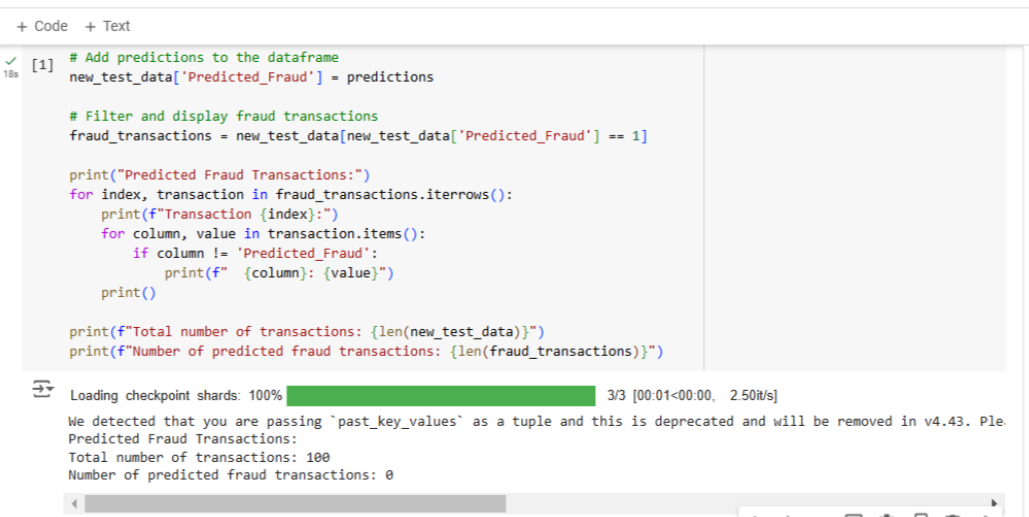
Large Language Model Training
-
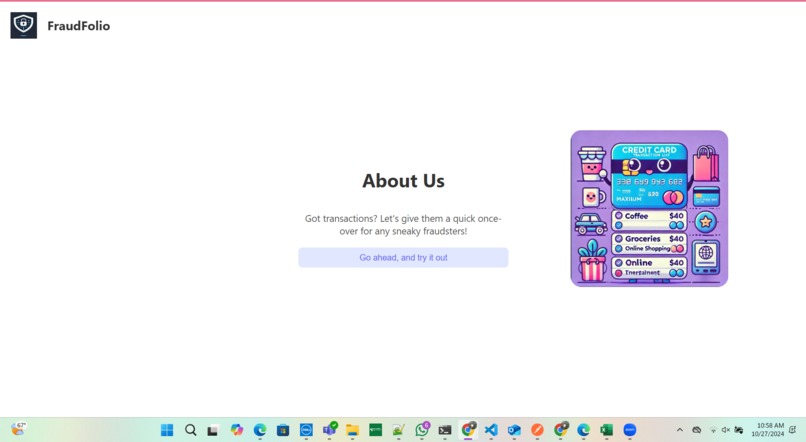
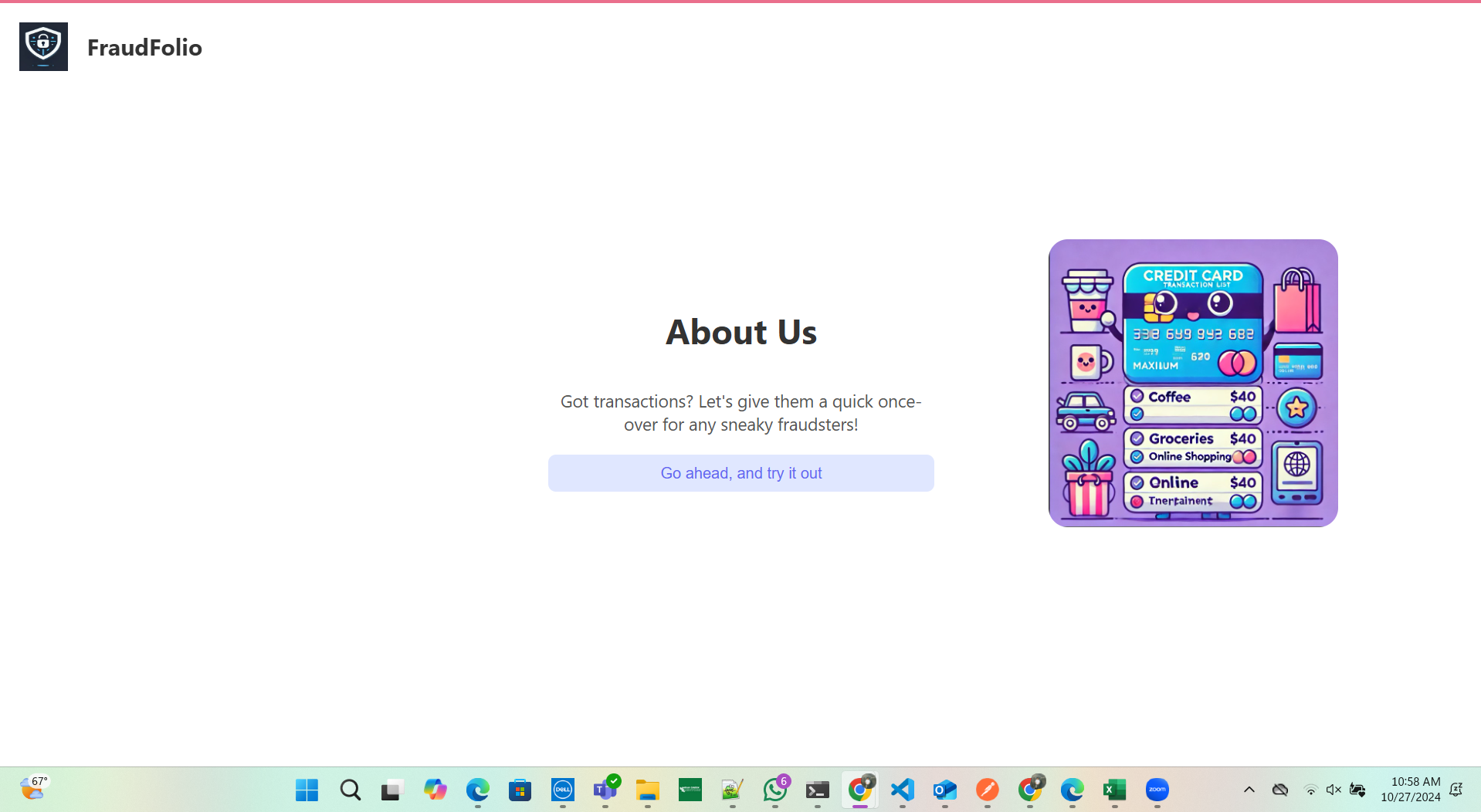
Landing Page
-
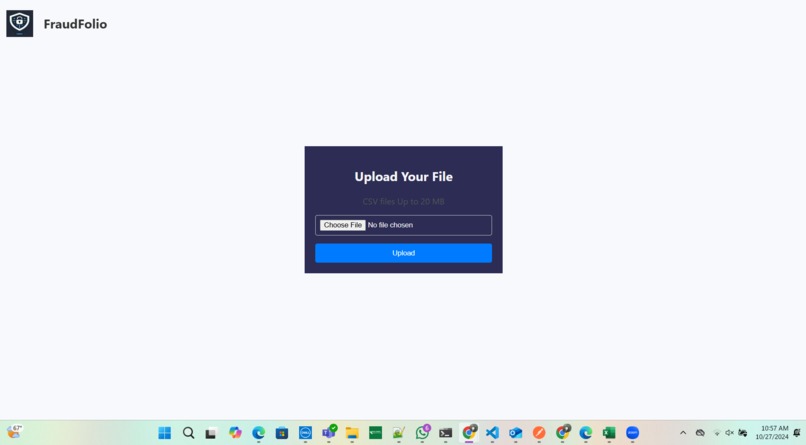
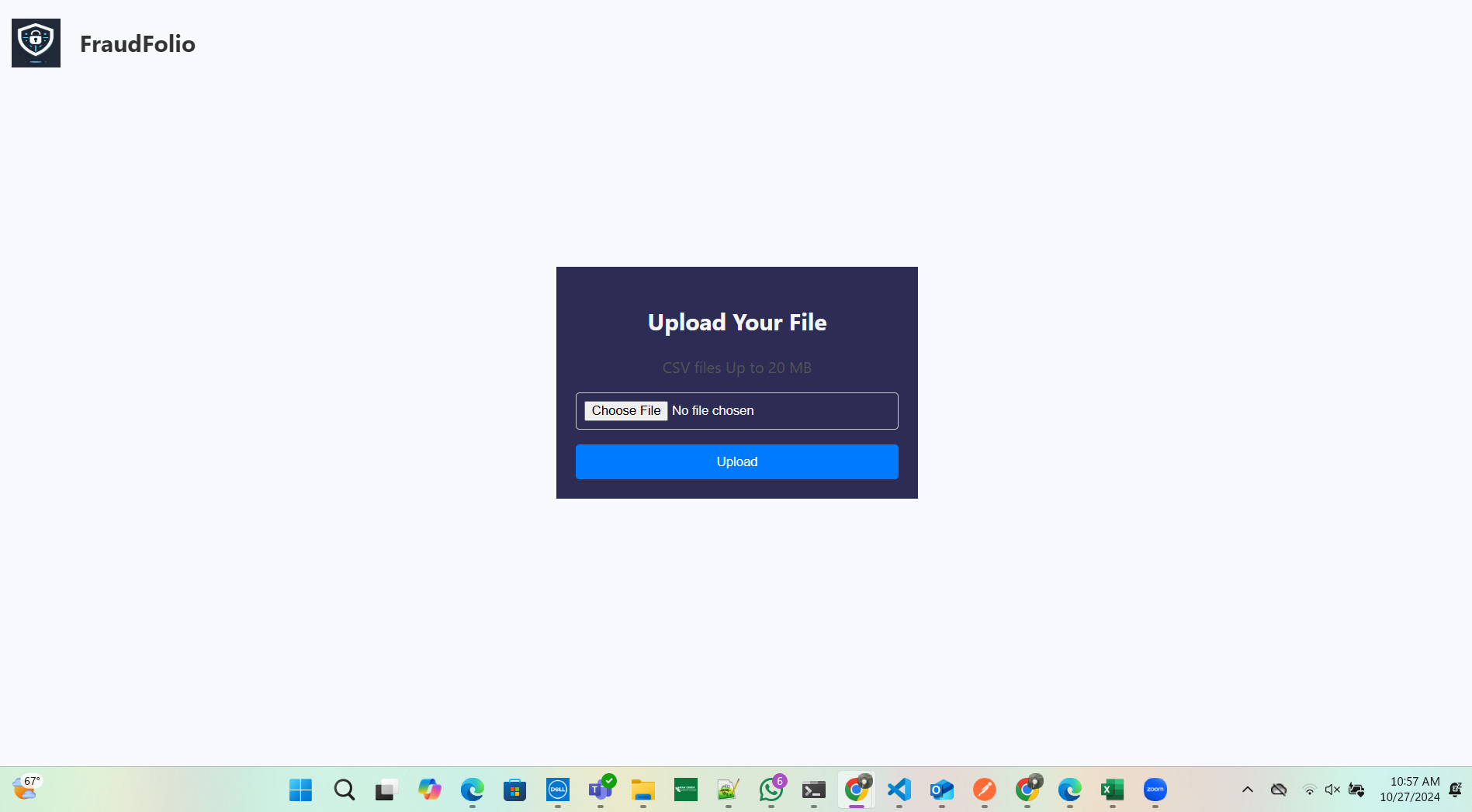
Upload Data Page
-
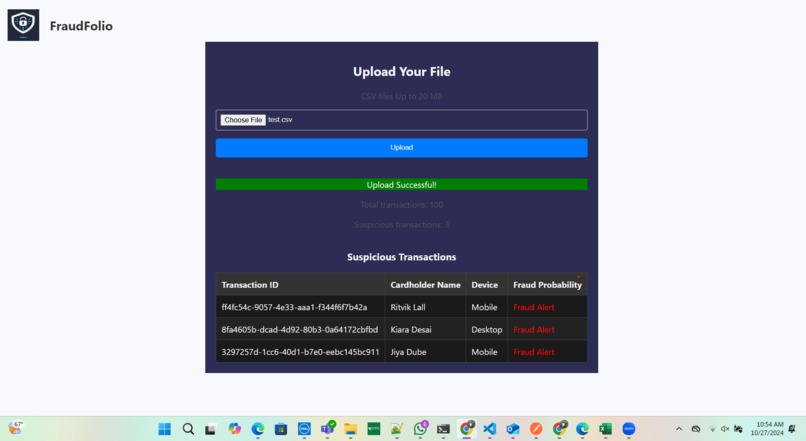
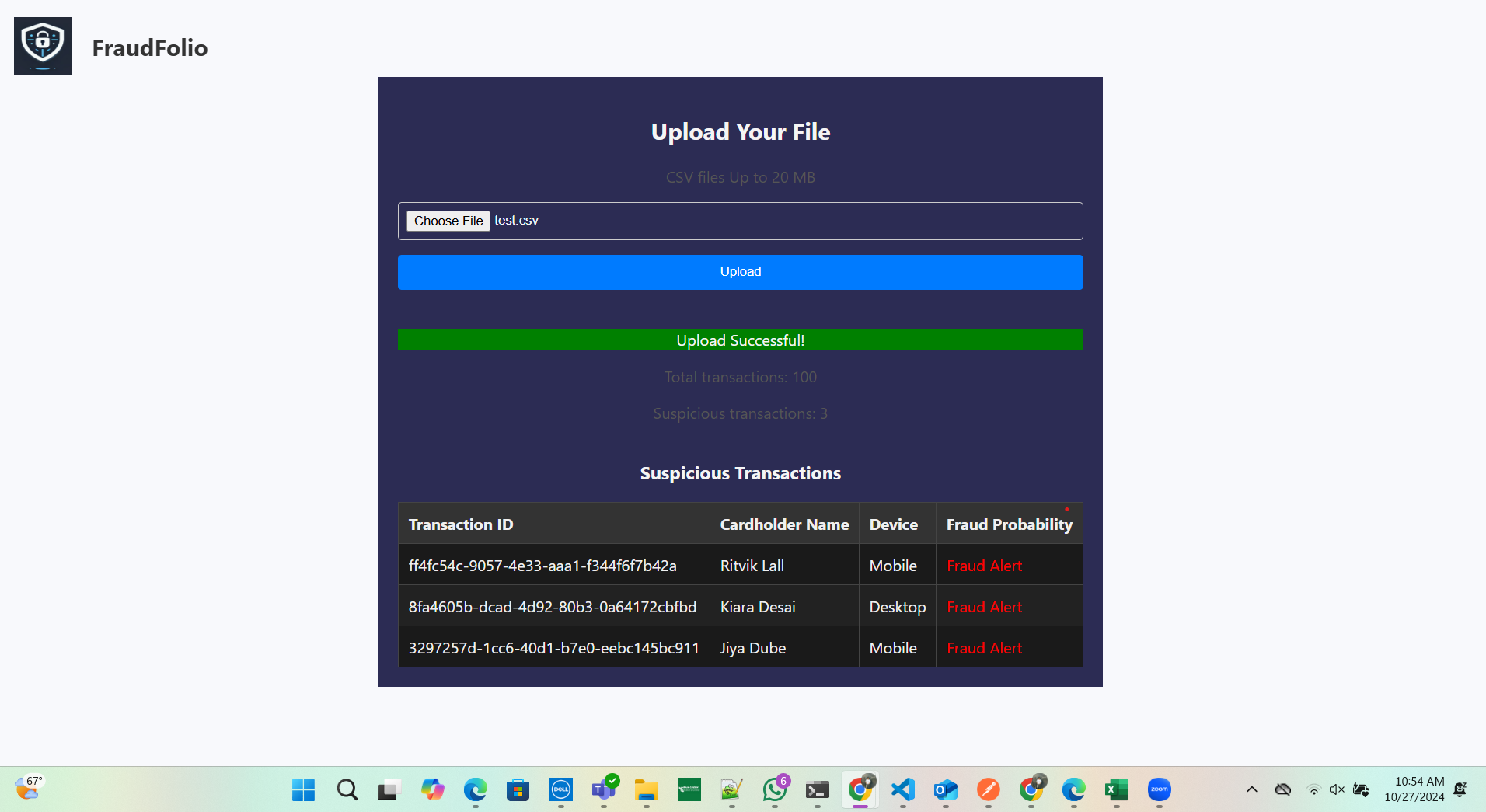
Results Page (same page)
Inspiration
Fraud Folio was born from the need to enhance security in digital transactions by proactively identifying fraudulent activities. With growing cases of credit card fraud, we aimed to create a solution that leverages advanced AI to protect consumers and institutions alike.
VIDEO :-
https://drive.google.com/file/d/1TALJEVKmtv5y0axhcIqVvMxKyydeBPO_/view?usp=sharing
What it does
Fraud Folio uses the LLAMA 3.2 3B model to predict fraud in real-time by analyzing credit card transactions. By examining transaction patterns and device information, it flags suspicious activity, providing users with actionable insights to prevent fraud before it happens.
How we built it
We trained our LLM on Google Colab Premium and deployed it on Runpod. The app combines Flask and Python for the backend, React for the frontend, and MongoDB for data storage, delivering a seamless user experience.
Challenges we ran into
Training and deploying a Large language model requires powerful computing resources, like 70 GB RAM CPU, AH100 46 GB, used 73 unit instances to train. NVIDEA L40 1GPU on Runpod to deploy. This costed ~20$
Accomplishments that we're proud of
We successfully deployed and integrated an AI-driven fraud detection system capable of making real-time predictions, a major milestone in combining machine learning with practical security applications.
What we learned
Our team gained insights into training, deploying and scaling custom LLMs, model optimization, and integrating AI with web and database technologies for a seamless application.
What's next for Fraud Folio
- Train and Generate a text response with Reasoning as to why this transaction is fraud.
- The app works for any kind of data, any kind of columns, our smart LLM picks up similar column name and processes it.
- Improvement in prediction by training with a larger dataset.

Log in or sign up for Devpost to join the conversation.