-
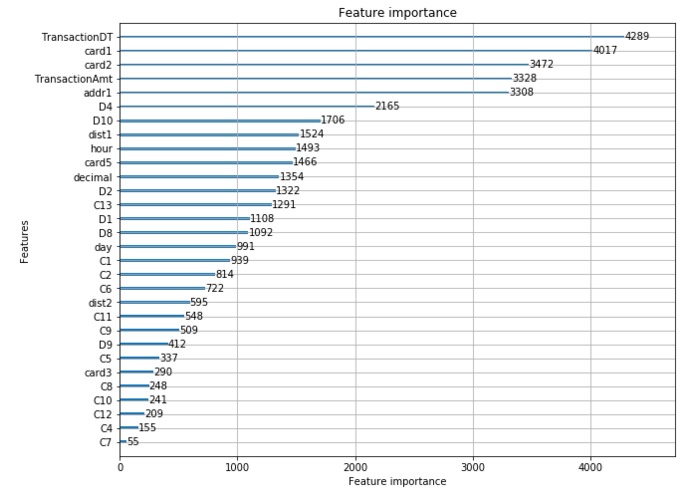
Feature Importance

Inspiration
What it does
Uses a gradient boosting model to predict fraudulent credit/debit card transactions. We loaded the model on the backend of our site to allow users to mess around with inputs.
How we built it
We used light gbm to quickly test machine learning models and improve accuracy. We then engineered several features which also improved our ROC-AUC score. The model was then loaded into the backend and a pipeline was established from the /predict endpoint to the python script which loaded the model.
Challenges we ran into
Establishing pipeline from node.js to python script and back. This involved several python/pip version issues which had to be resolved. Lots of columns in dataset had no description(because of privacy agreements with Vesta) and thus were harder to interpret
Accomplishments that we're proud of
Creating a highly accurate ML model which has an easily accessible frontend
What we learned
Everything takes longer than expected
What's next for Fraud Detection ML
Big things
Built With
- bulma
- css3
- express.js
- html5
- light-gbm
- node.js
- python

Log in or sign up for Devpost to join the conversation.