

Inspiration
Every year, millions of people lose money due to credit card fraud. I wanted to create a system that could analyze transaction data in real time and detect fraudulent behavior instantly — something that could protect users and banks before any loss occurs. That inspired me to build FraudShield, a full-stack fraud detection dashboard powered by machine learning and Django.
What it does
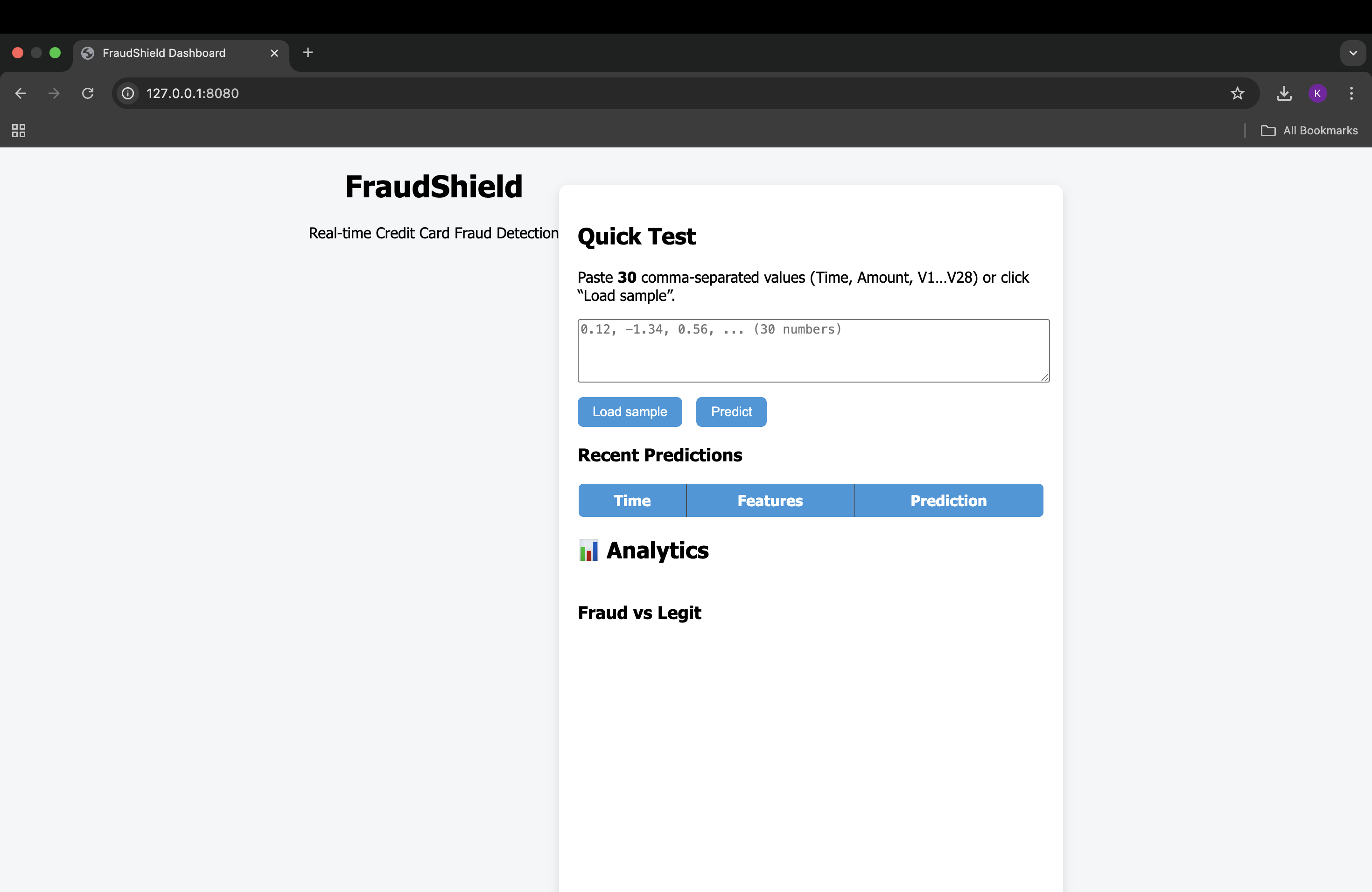
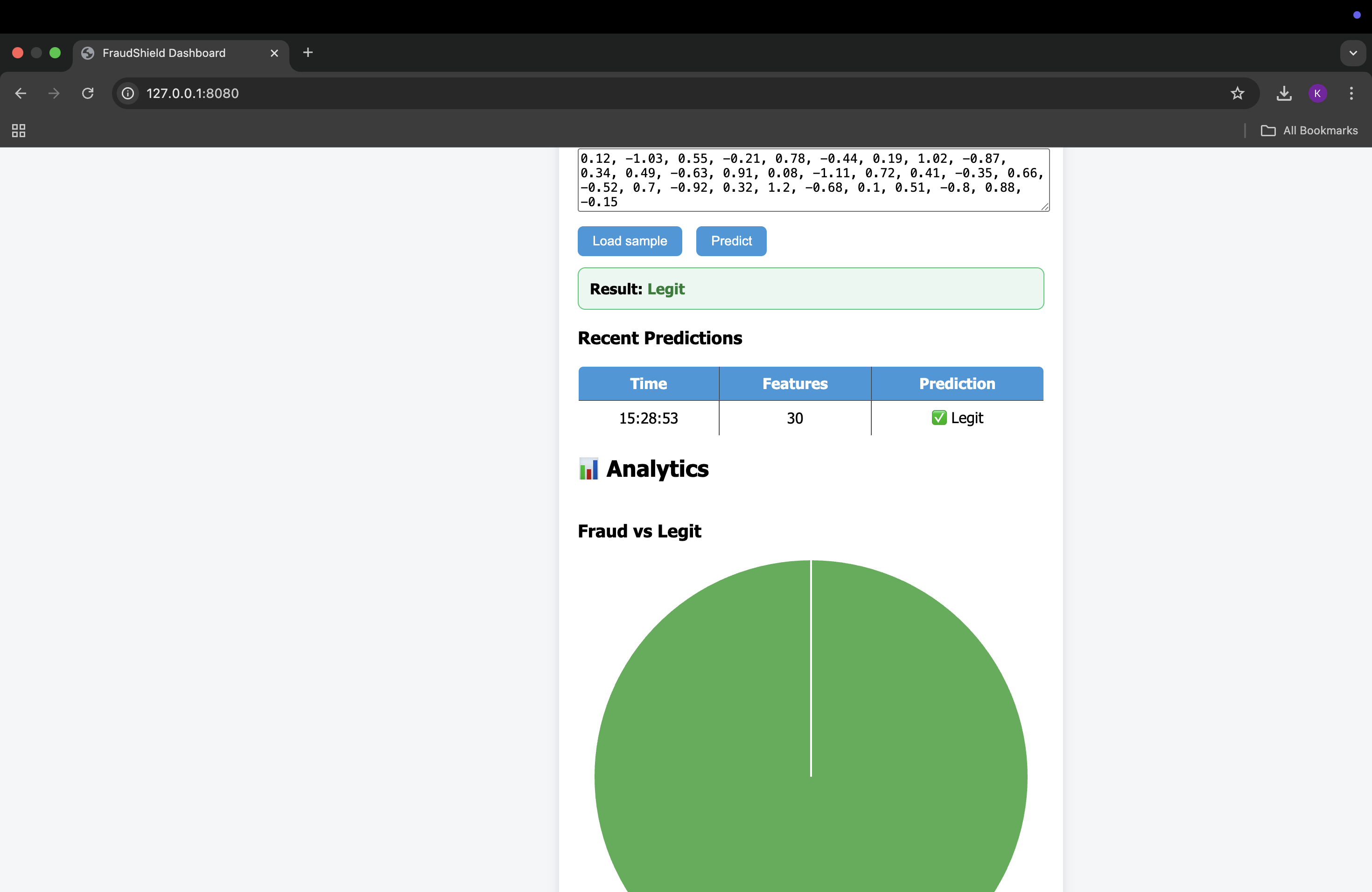
1)FraudShield predicts whether a credit card transaction is Legit or Fraudulent in real-time.
2)Takes 30 transaction features as input (Time, Amount, V1–V28)
3)Sends them to a Django backend for prediction using a trained ML model
4)Displays prediction instantly on the dashboard
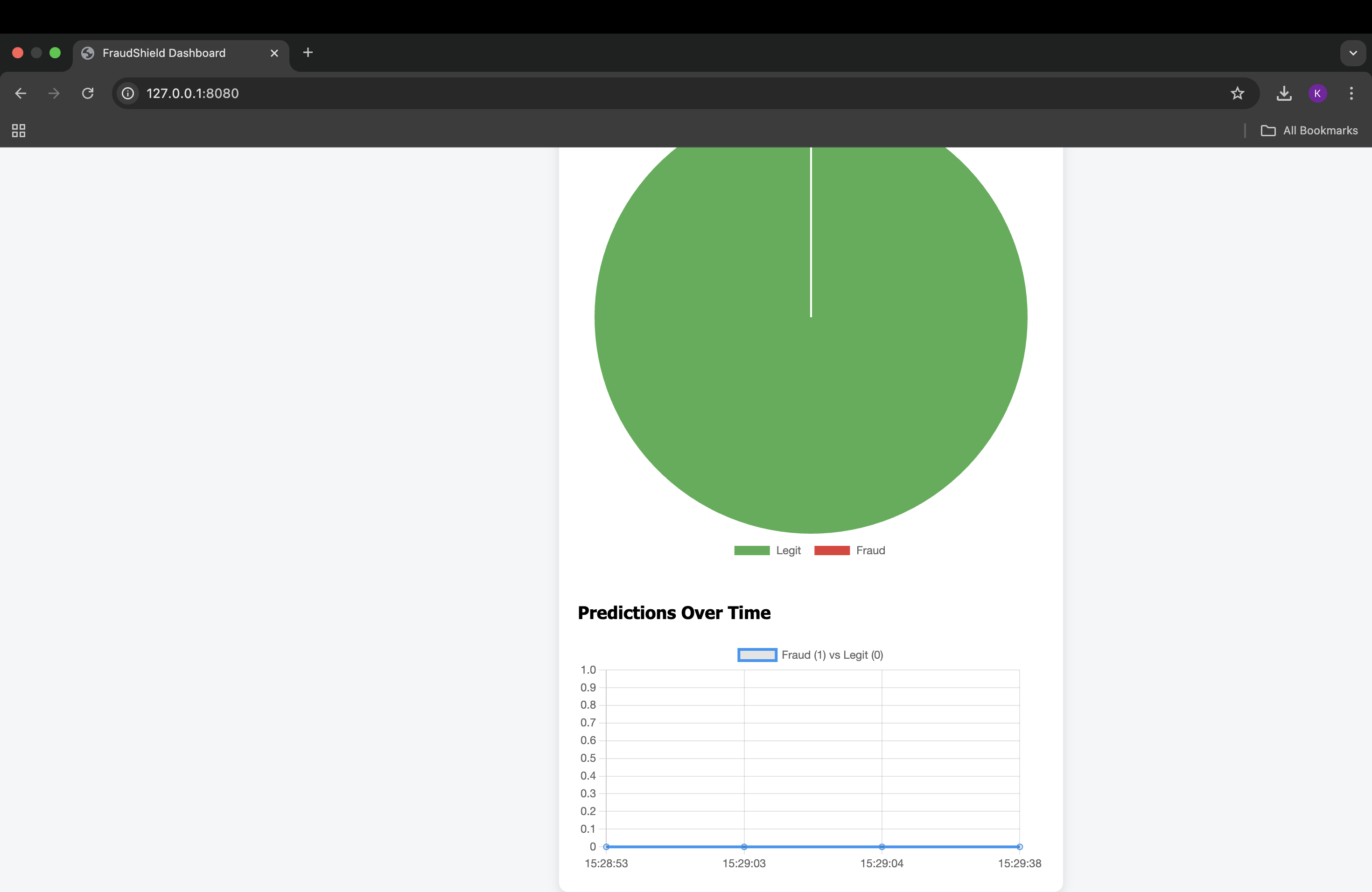
5)Visualizes fraud trends through interactive charts and recent transaction history
How we built it
Machine Learning: 1)Trained a Logistic Regression model on the popular Credit Card Fraud Detection dataset. 2)Preprocessed data using pandas, numpy, and scikit-learn, and saved the model as fraud_model.pkl.
Backend (Django): 1)Created REST API endpoints /api/predict/ and /api/transactions/. 2)Integrated the ML model to return fraud predictions in JSON format.
Frontend (HTML, CSS, JS): 1)Designed a responsive dashboard that connects to the backend using Fetch API. 2)Added live charts using Chart.js to show fraud vs legit ratios and trends over time.
Challenges we ran into
1)Debugging 404 and CSRF errors while connecting Django and JS.
2)Handling model path errors (FileNotFound) during deployment.
3)Making charts update dynamically without refreshing the page.
4)Ensuring consistent styling and responsiveness across browsers.
Accomplishments that we're proud of
1)Built a fully functional full-stack ML app from scratch
2)Created an intuitive dashboard that updates predictions and analytics live
3)Deployed a trained model successfully and verified with real fraud samples
4)Pushed everything cleanly to GitHub for reproducibility
What we learned
1)Handling security with CSRF tokens
2)Visualizing data with Chart.js
3)Importance of clear architecture between backend, model, and UI
4) End-to-end ML lifecycle — from model training to integration
5) Using Django REST Framework to connect APIs with frontends
What's next for Fraud Detect
1)Add user authentication (login/signup dashboards)
2)Deploy the project live on Render / Railway / Vercel
3) Improve model accuracy using ensemble methods like Random Forests or XGBoost
4) Store prediction history in a database for long-term analytics


Log in or sign up for Devpost to join the conversation.