-
-
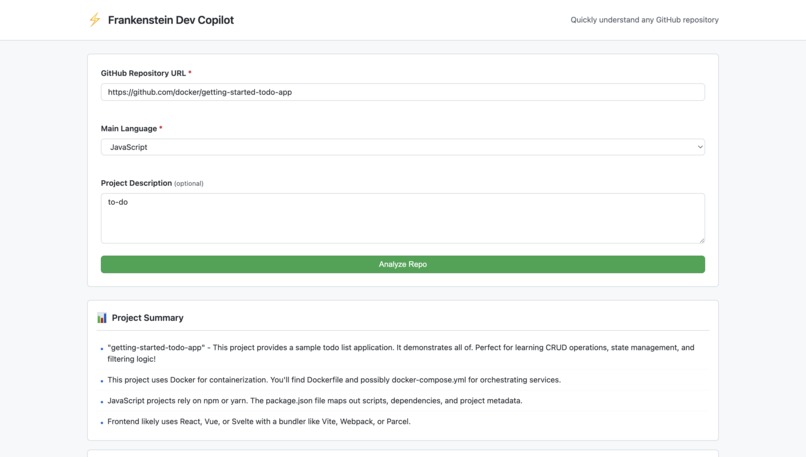
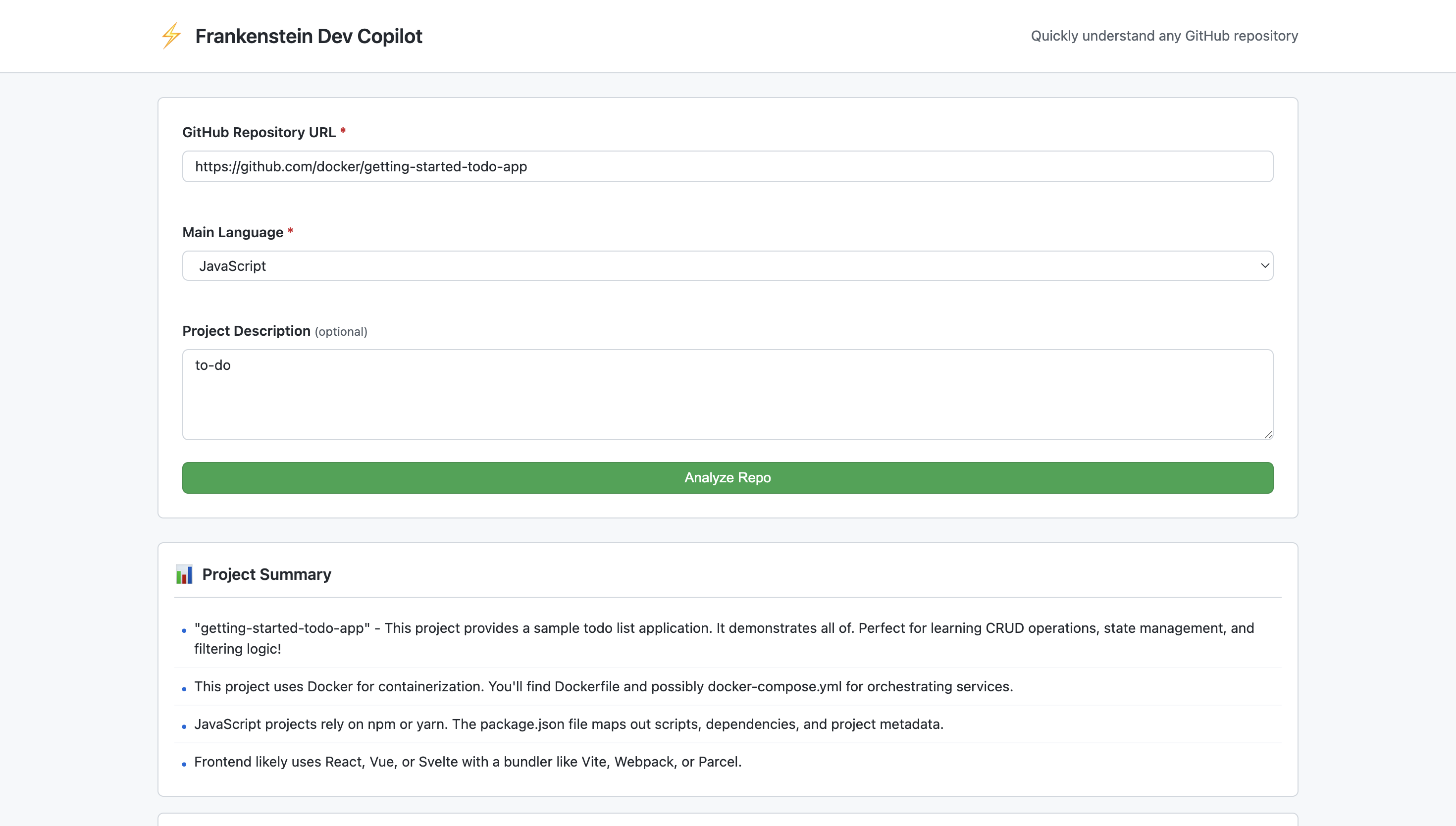
Main interface with repo URL form and Analyze button
-
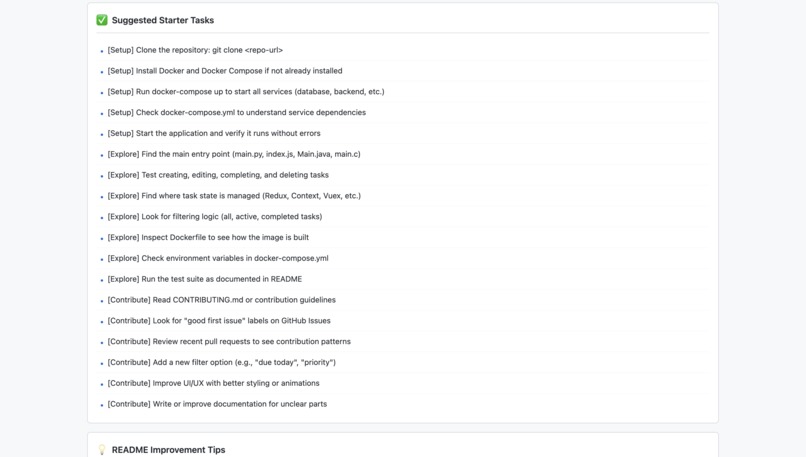
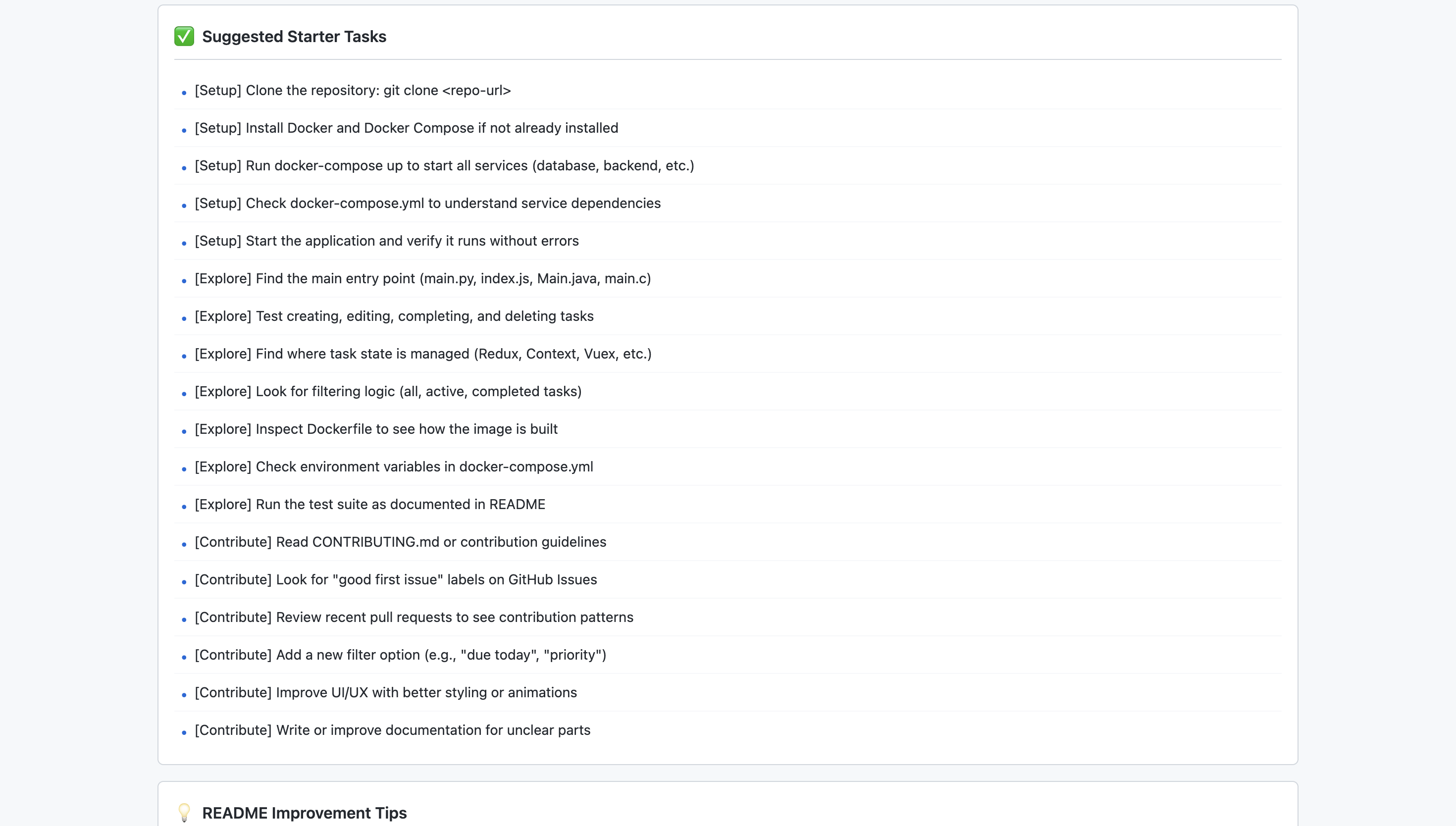
Generated project summary and suggested starter tasks
-
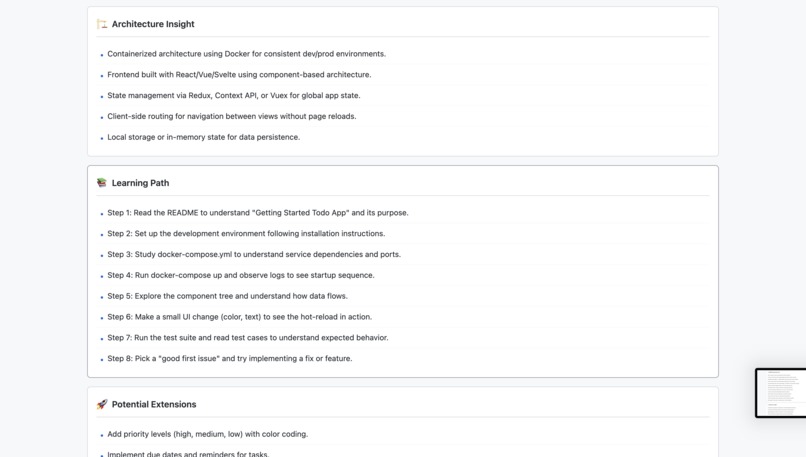
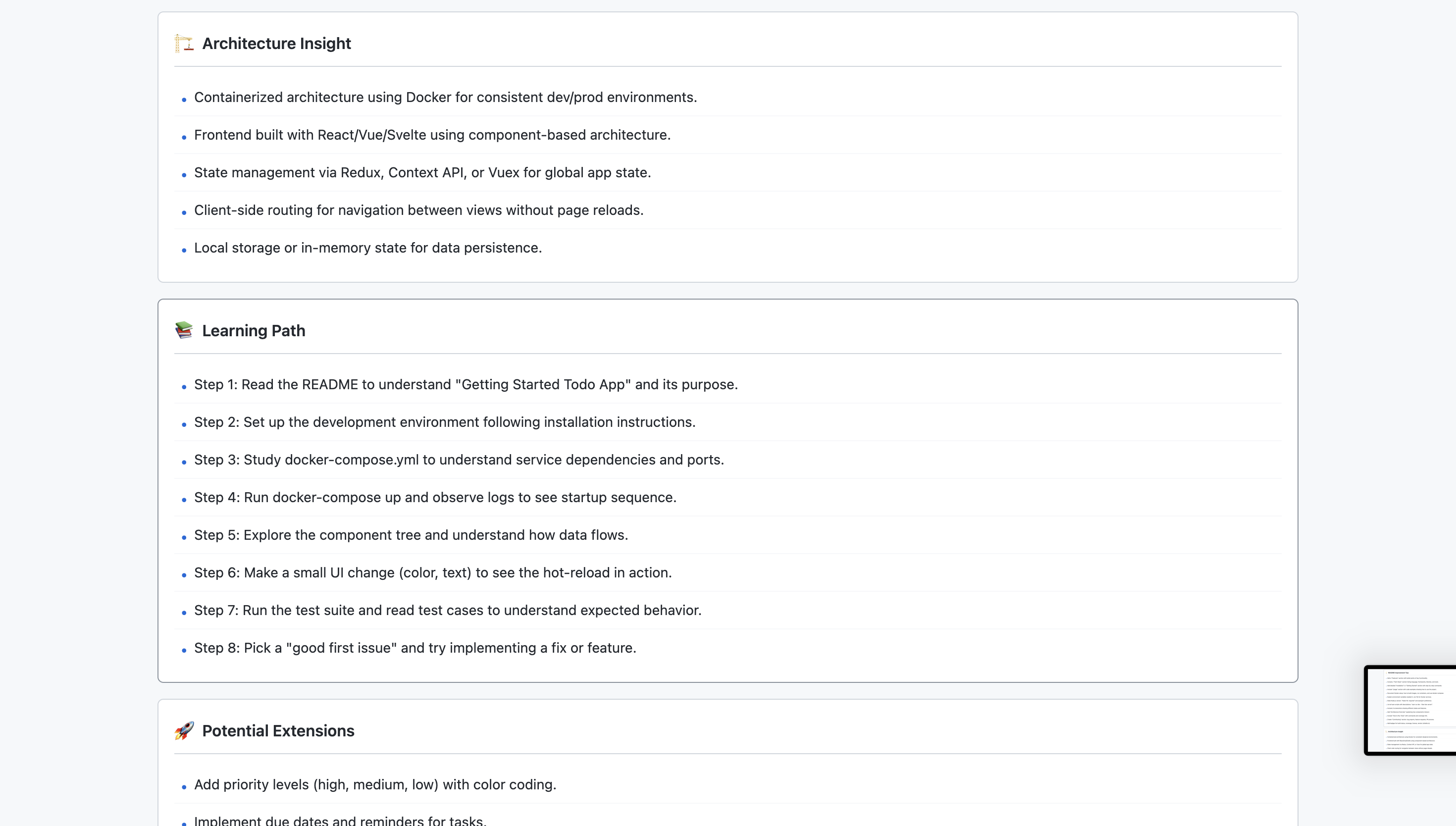
README improvement tips and architecture insight sections
-
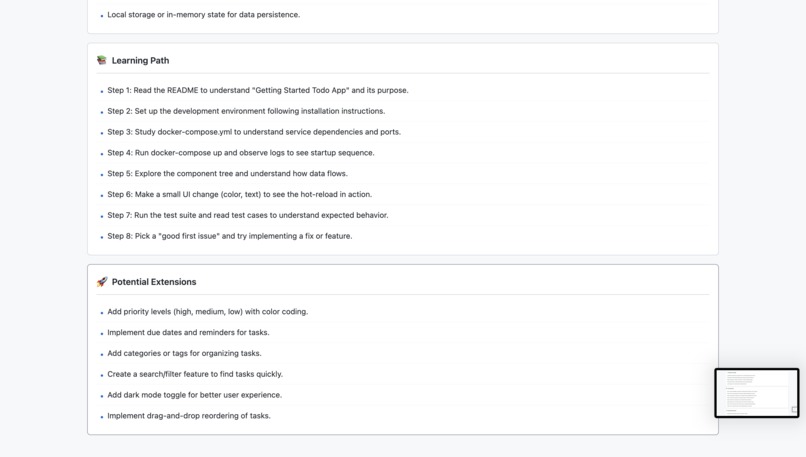
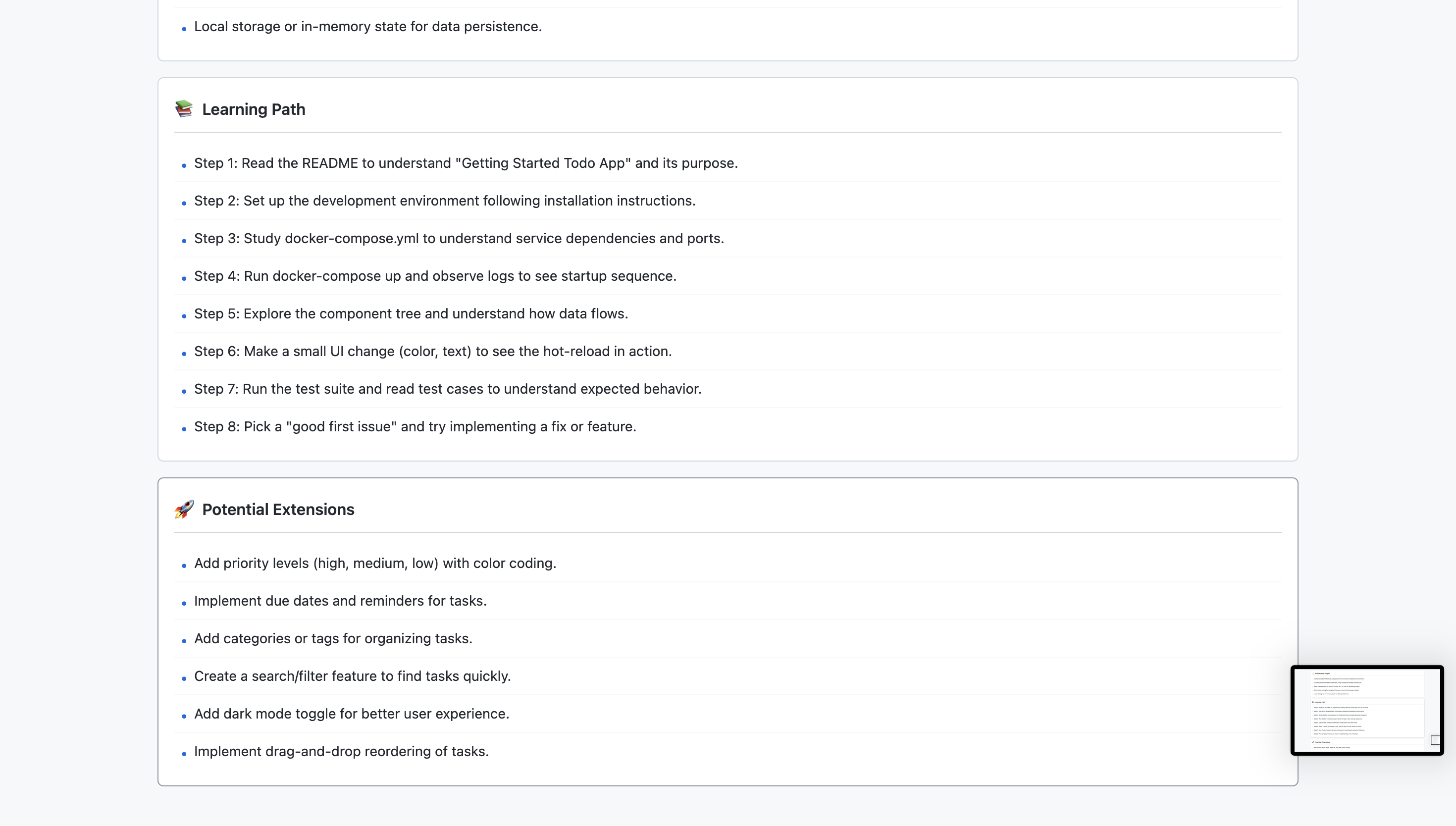
Learning path and potential extensions for a sample todo app
Inspiration
Digging into a new GitHub repo is overwhelming, especially for student developers. I wanted a tiny tool that could take a repo link and instantly tell me what it is, how to get started, and what to build next—without reading walls of README text. Kiro made it possible to go from idea to working app in one evening.
What it does
Frankenstein Repo Copilot turns any GitHub repository URL into a structured “onboarding guide” for beginners. It generates a project summary, starter tasks, README improvement tips, a learning path, roadmap ideas, and potential risks, all in a simple web UI.
How we built it
The app is a front‑end‑only HTML, CSS, and JavaScript project. I defined the behavior in .kiro/specs/repo_analyzer.md, set coding style and UX preferences in .kiro/steering/coding-style.md. Then I used Kiro Vibe sessions to generate and iterate on index.html, style.css, and script.js until the UI and analysis felt right.
Challenges we ran into
The hardest parts were making the analysis feel specific (not generic advice like “read the README”) and getting the Git/GitHub workflow right under time pressure. I also struggled with UI polish at first, but steering docs plus several Vibe iterations helped land on a cleaner GitHub‑inspired design.
Accomplishments that we're proud of
I’m proud that the tool now understands hints from the repo URL and language to tailor summaries, tasks, and learning paths—for example, detecting todo apps and Dockerized setups. I’m also happy that the entire experience runs locally in the browser, so anyone can open index.html and start exploring repos.
What we learned
I learned how powerful Kiro’s specs and steering are for shaping both code structure and UX, and how fast Vibe can generate production‑feeling interfaces when guided well. I also got much more comfortable with Git, GitHub, and structuring a project so other people (and judges) can understand and run it easily.
What's next for Frankenstein Repo Copilot
Next, I’d like to call real GitHub APIs (via MCP or a backend) to pull live repo metadata and issues, generate even more repo‑aware suggestions, and save custom learning plans. I also want to add presets for popular stacks (Flask, MERN, Spring, etc.) and deploy the app so students can use it without cloning the repo.

Log in or sign up for Devpost to join the conversation.