Inspiration
I wanted to make a Halloween film that wasn’t just another “look, a monster kills people” story. I wanted something that actually mattered. Something that hits a real issue we deal with every year, especially in the darker months: loneliness.I wanted charm. Warmth. A bit of humor. And the Frankenstein monster felt perfect. A misunderstood creature, stitched together by nobody, thrown into a world it never asked for. It mirrors how a lot of people feel today. So the idea was to create an emotional film that touches people without slipping into cheesy territory.
What it does
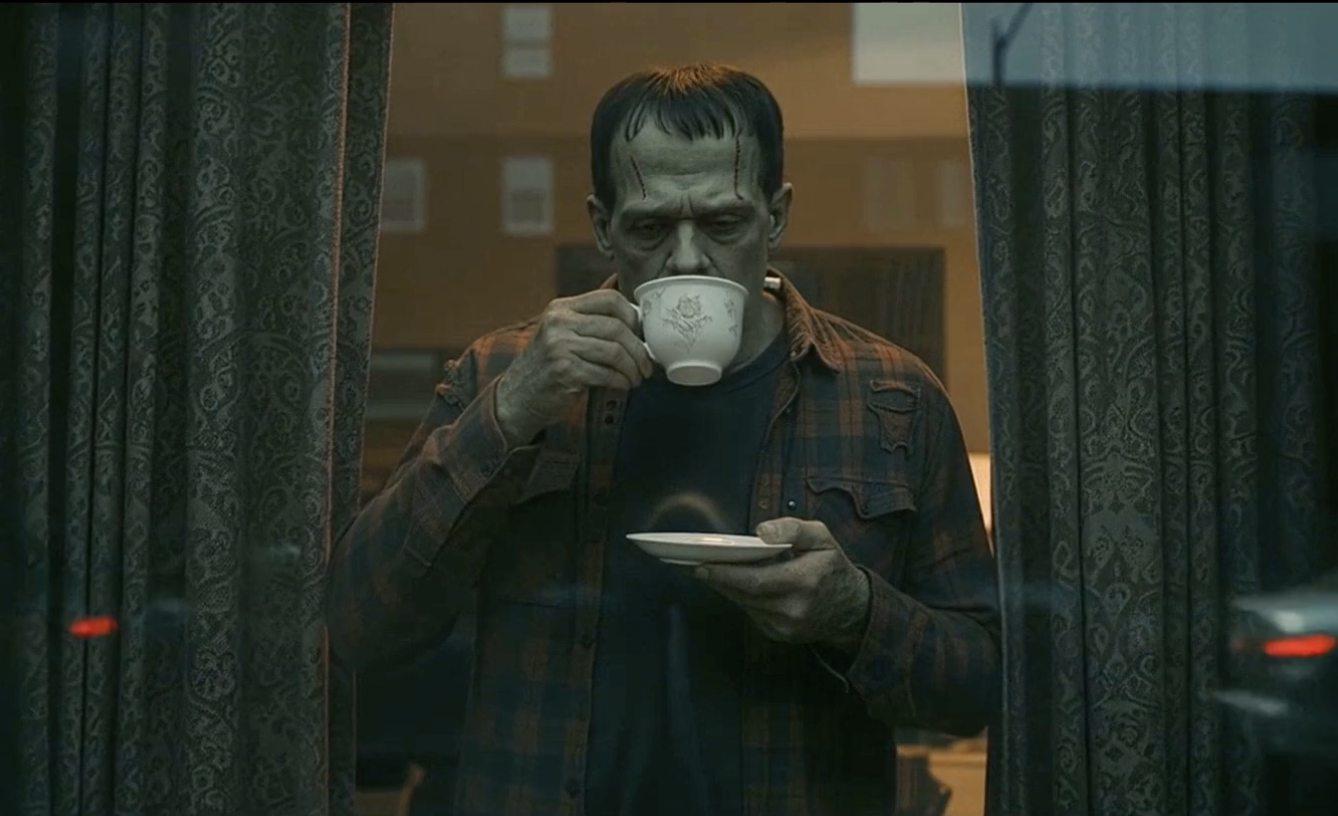
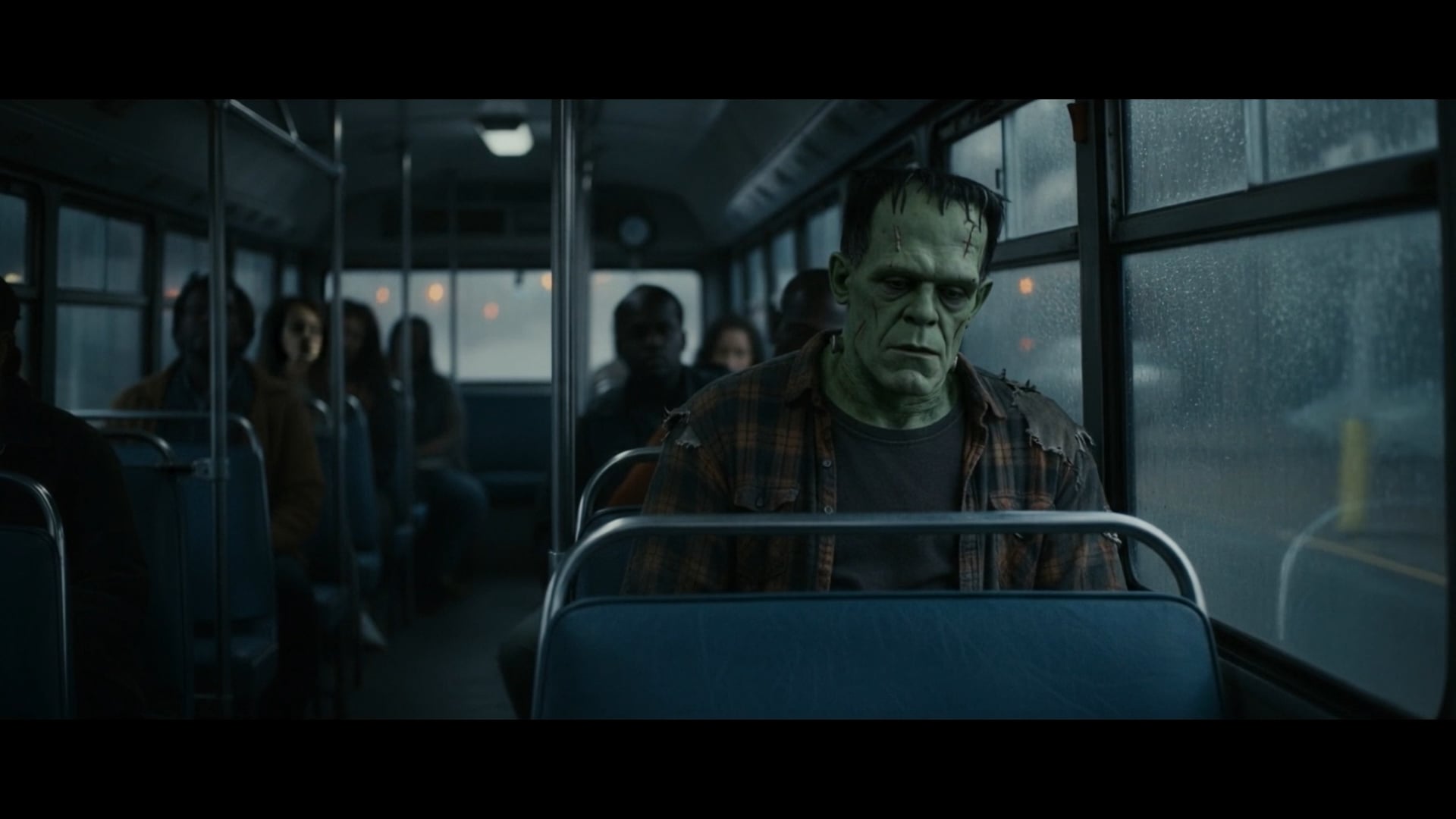
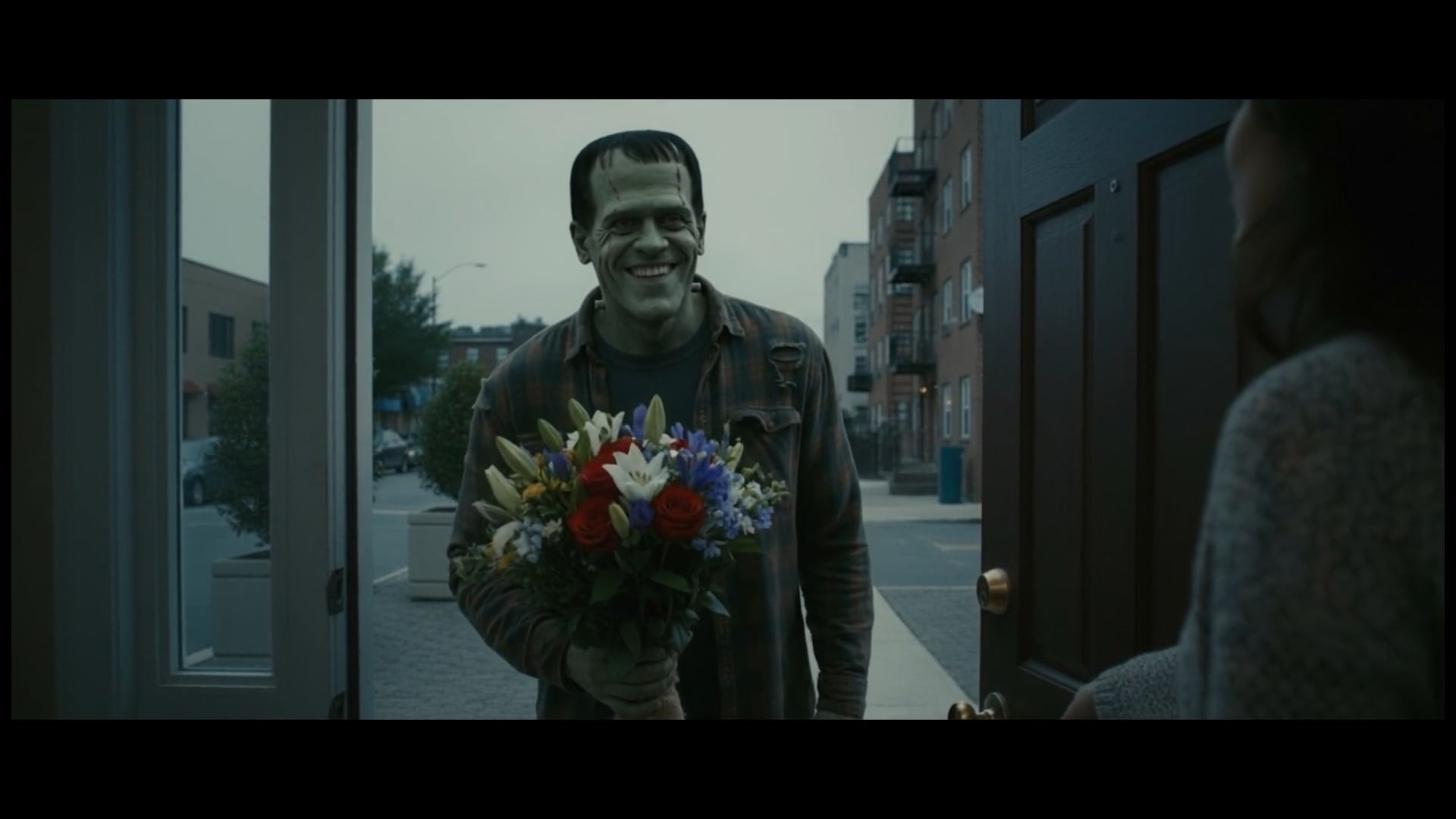
“Frankenstein” is an emotional short film about a misunderstood creature trying to find its place in the modern world. The story follows the Frankenstein monster, who openly talks in an interview about how difficult everyday life is for him. No matter where he goes – a yoga class, the street, bus– people react with fear or disgust. He wants nothing more than to belong, but he constantly feels like an outsider. Only on Halloween does the world shift. For one night, the monster can walk among people without being judged.
How we built it
I started by building a rough audio bed, combining my written Frankenstein interview with music from Artlist. Then I generated the wide shots with Google DeepMind Nano Banana via Freepik, followed by close-ups and cutaways using Nano Banana and Higgsfield AI Popcorn. I upscaled everything with Enhancor and Magnific AI. Once all visuals were ready, I animated them with Kling AI and ByteDance Seedance. For the interview voiceover, I used ElevenLabs’ voice changer, though I still think a human voice actor would sound much better.
Challenges we ran into
Emotional consistency Getting the monster to speak with the same emotional tone was a nightmare. VEO3 kept giving him slightly different voices every time. To fix it, I ran the audio through ElevenLabs and used a voice changer to unify it. Generating children Not possible in VEO3. That was a whole separate challenge to visually solve. Storytelling The biggest challenge overall. Turning AI-generated shots into a story that actually feels coherent and human.
Accomplishments that we're proud of
The emotional realism. You forget the monster is AI-generated. At some point, it stops feeling like a digital experiment and starts feeling like a real character with a real inner life. That was the biggest win. The story carries so well that the tech disappears.
What we learned
It’s absolutely possible to tell full stories with AI now… not just clips or vignettes. And more importantly: an AI-generated film can still create real emotional impact. Real reactions. Real connection. That was the biggest lesson.
Built With
- elevenlabs
- freepik
- kling
- nanobanana
- veo3


Log in or sign up for Devpost to join the conversation.