-
-
-
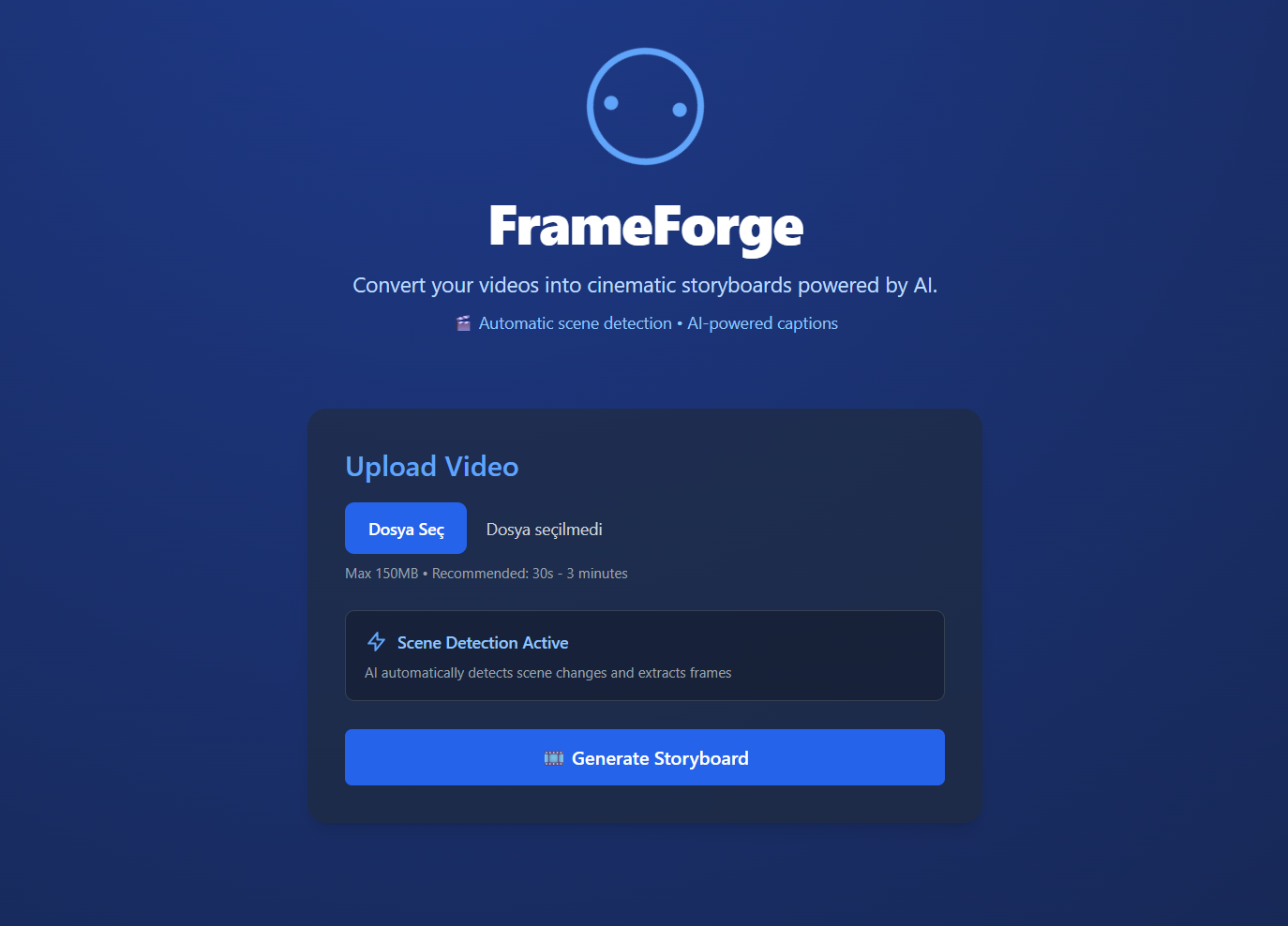
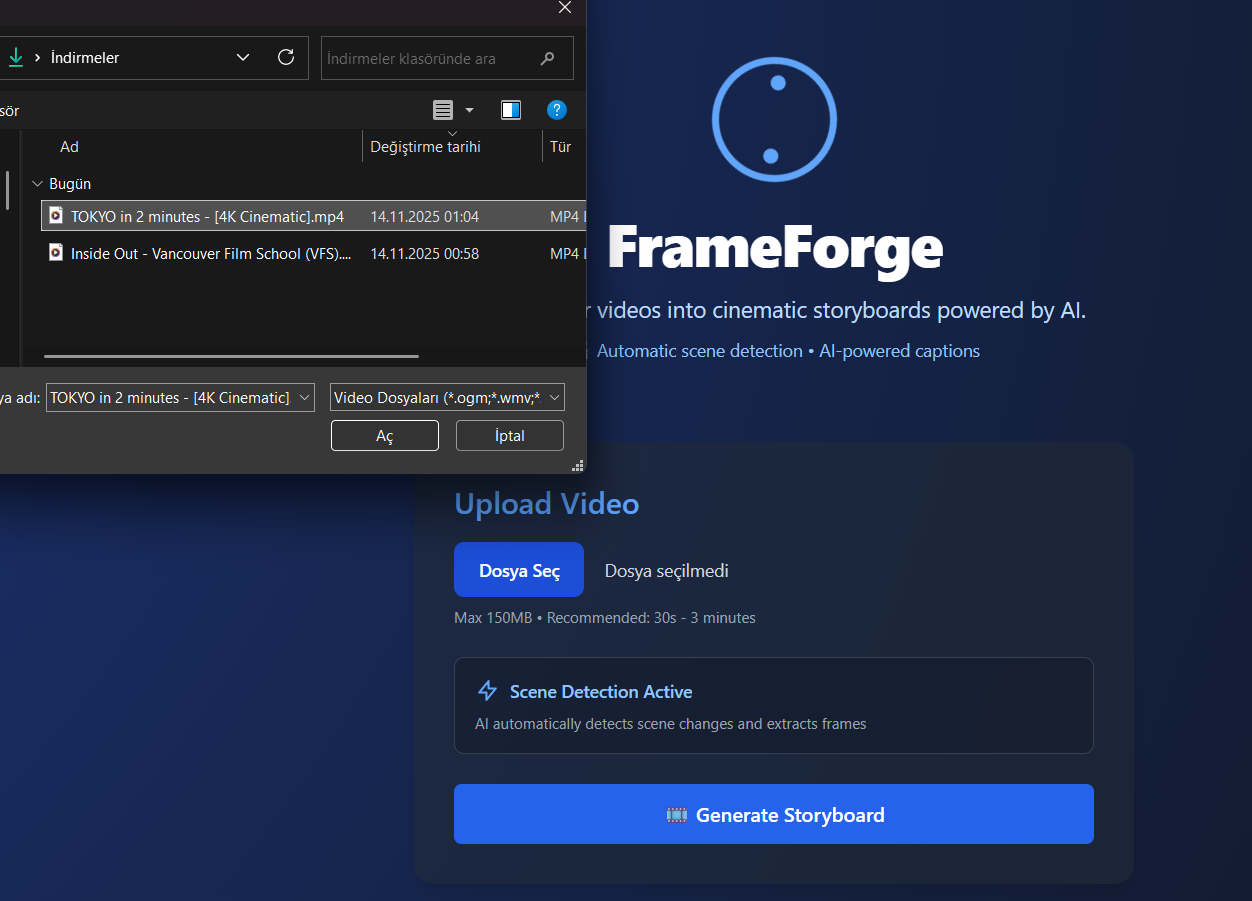
Choose File
-
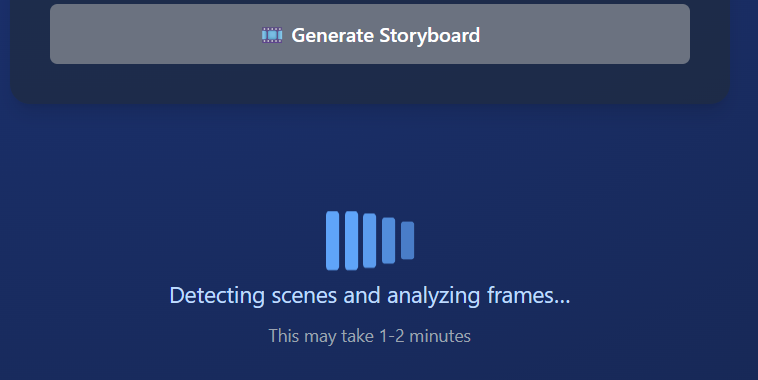
Detecting scenes and analyzing frames
-
Frames
-
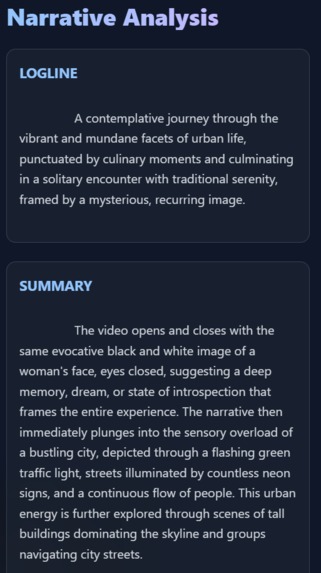
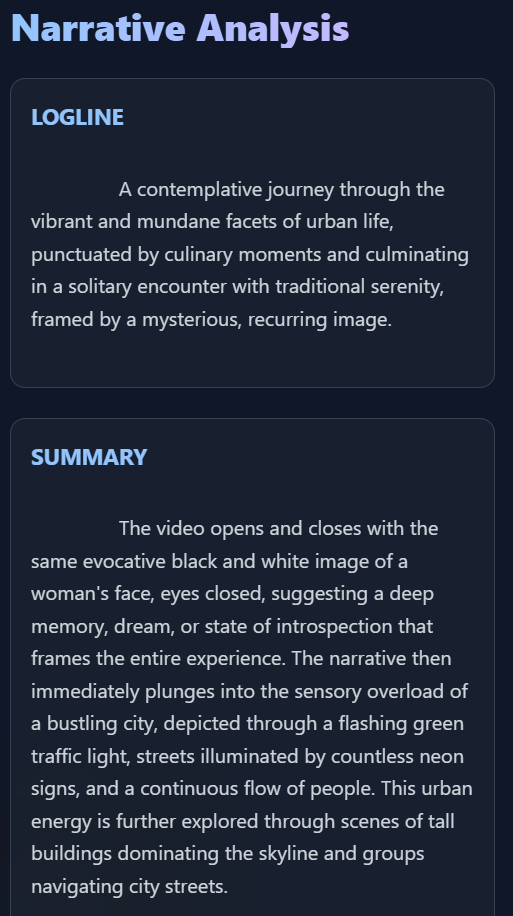
A part of the Narrative Analysis
-
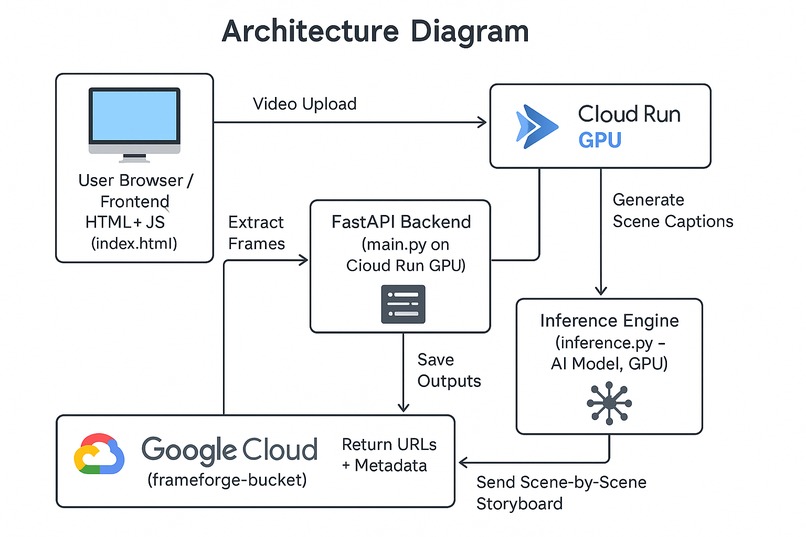
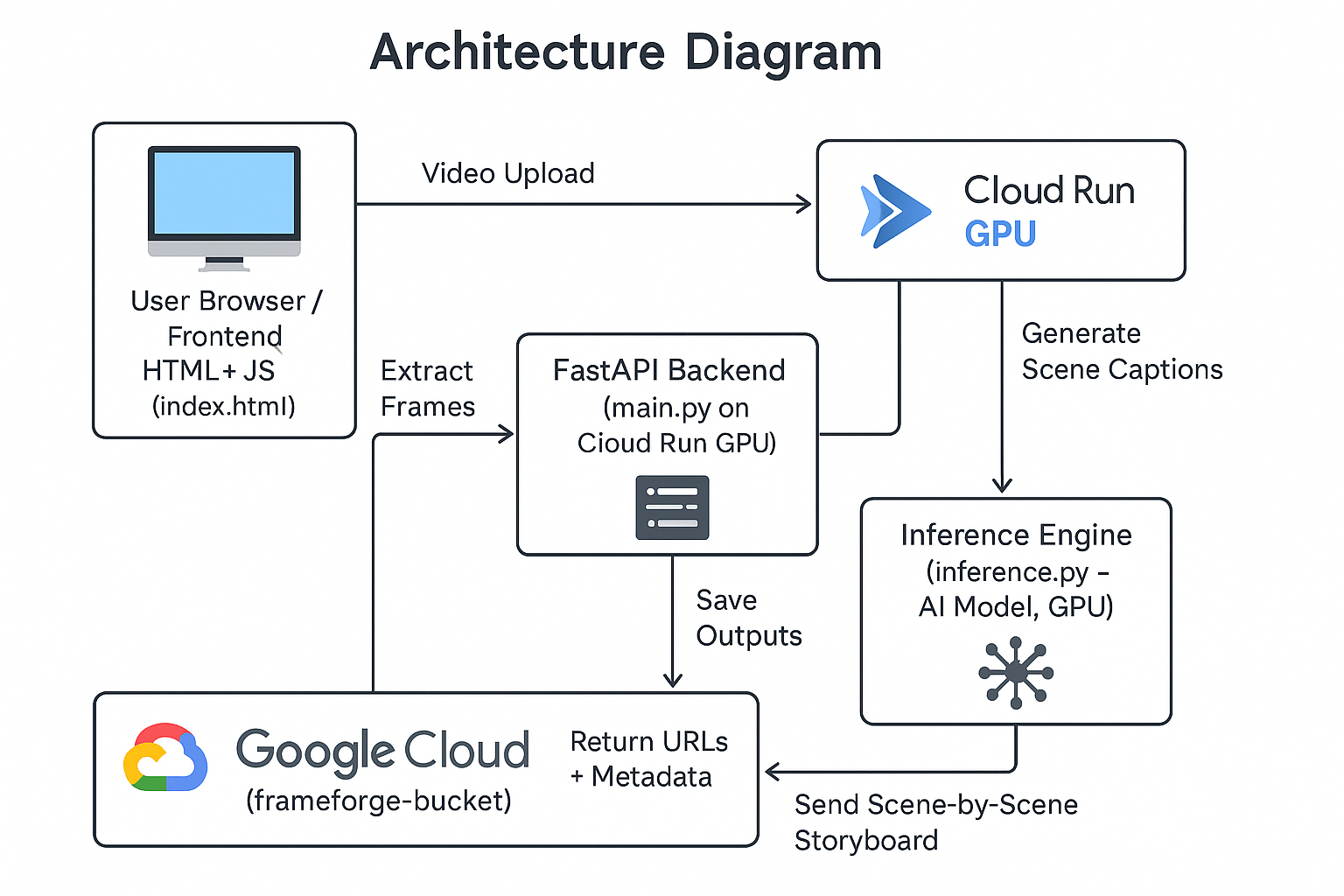
Architecture Diagram

Inspiration
The idea behind FrameForge GPU came from the challenge that filmmakers, designers, and storytellers face when trying to visualize their ideas. Creating professional storyboards usually requires time, skill, and expensive tools. I wanted to simplify that process and make it possible to turn any video scene or script into a cinematic storyboard in seconds. By using Google Cloud Run with GPU acceleration, I saw an opportunity to combine AI creativity with scalable cloud infrastructure.
What it does
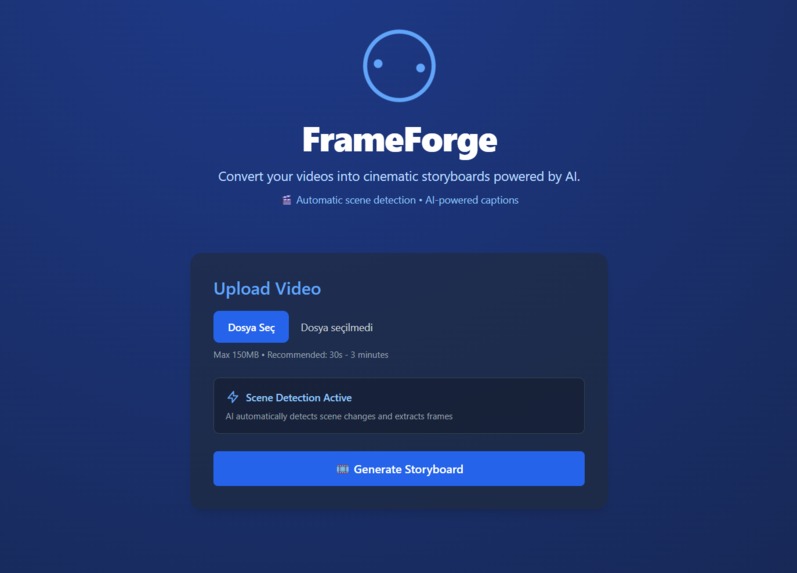
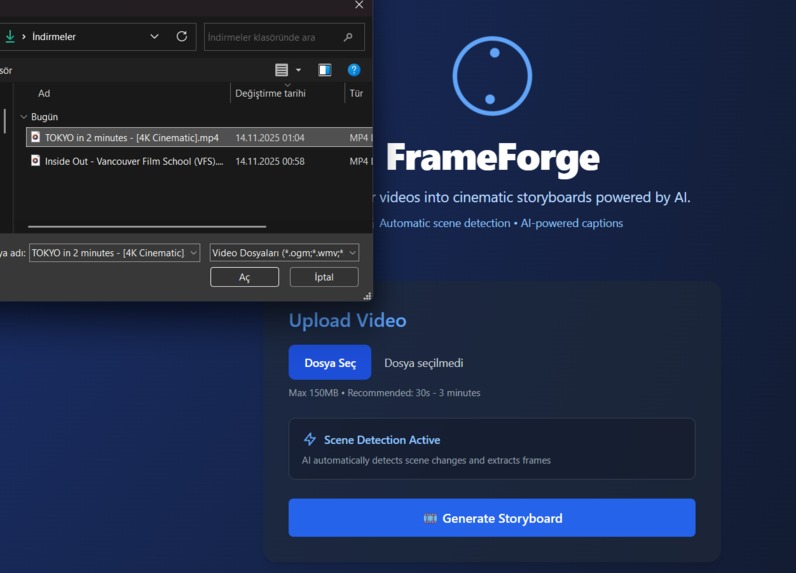
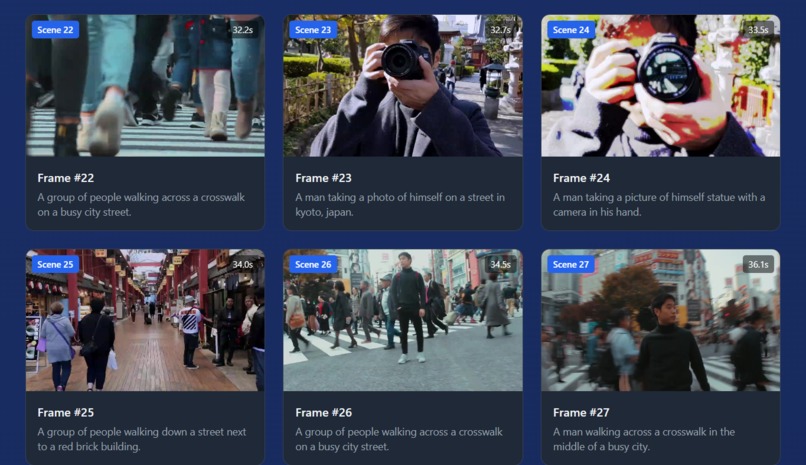
FrameForge GPU automatically transforms uploaded videos or frame sequences into cinematic storyboard visuals using an open-source diffusion model. The system extracts frames, processes them through an AI model running on Cloud Run’s NVIDIA L4 GPU, and returns stylized storyboard frames to the user. It provides a fast, scalable, and cost-efficient way to visualize ideas without the need for local GPU hardware or complex installations.
How we built it
The project was developed using a FastAPI backend packaged inside a Docker container and deployed on Google Cloud Run with one NVIDIA L4 GPU in the europe-west4 region. The workflow includes:
Preparing a lightweight inference pipeline using Stable Diffusion 1.5 optimized for CUDA.
Storing model weights and user-uploaded data in Google Cloud Storage.
Managing images and GPU jobs through asynchronous FastAPI endpoints.
Hosting and versioning the container image in Google Artifact Registry. This setup allows GPU inference to scale automatically while staying serverless.
Challenges we ran into
One of the main challenges was optimizing GPU cold-start times. Cloud Run GPU containers take longer to initialize, so adjusting startup probes and readiness checks was essential. Another difficulty was ensuring CUDA, PyTorch, and model dependencies matched correctly within the container to avoid runtime incompatibilities. Memory optimization for large diffusion models and handling parallel user requests within resource limits were also significant challenges during development.
Accomplishments that we're proud of
Successfully running a GPU-accelerated diffusion model in a fully serverless environment was a major achievement. I am also proud of how the project integrates multiple Google Cloud components—Cloud Run, Artifact Registry, and Cloud Storage—into a cohesive and production-ready system. The fact that FrameForge GPU can process complex AI workloads without any manual scaling or infrastructure management demonstrates the true potential of serverless GPU computing.
What we learned
Throughout this project, I learned how to efficiently deploy and optimize GPU-based AI models on Cloud Run. I gained practical experience in managing container performance, startup configurations, and balancing inference workloads. Additionally, I learned how to design architecture that combines the flexibility of AI frameworks with the scalability of serverless cloud infrastructure.
What's next for FramForge
Next, I plan to expand FrameForge GPU into a complete web platform where users can upload scripts or videos and instantly generate storyboards with scene descriptions. The next step will include a lightweight front-end interface, real-time preview capabilities, and multi-user support. I also aim to integrate Gemini for automatic scene summarization, making the tool even more creative and accessible for filmmakers and visual storytellers worldwide.
Built With
- artifact
- docker
- fastapi
- ffmpeg
- google-cloud
- html
- javascript
- oogle-cloud-run-(gpu)
- opencv
- python
- pytorch
- transformers

Log in or sign up for Devpost to join the conversation.