-
-
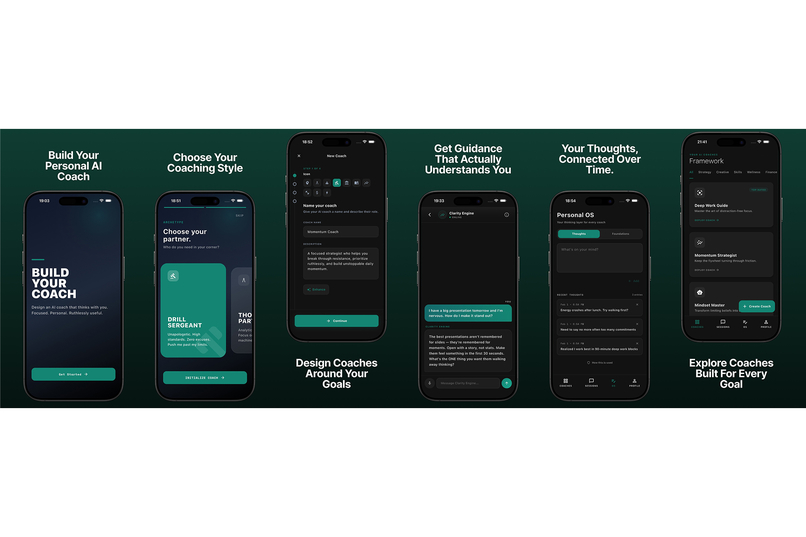
Framework
Inspiration
Coaching delivers one of the highest returns on time and energy, yet most people never access it. It’s expensive, hard to find, and difficult to fit into daily life. Meanwhile, AI agents promise personalized guidance but often feel fragmented, overly technical, and difficult to set up.
Inspired by Simon’s vision of making AI coaching simple, beautiful, and accessible, we built Framework — a personal AI operating system that allows anyone to use, create, and share AI coaches without complexity.
Instead of isolated AI chats, Framework focuses on continuity. Every coach understands the user better over time, enabling more relevant, grounded, and meaningful guidance.
What it does
Framework turns AI into a structured coaching ecosystem.
Users can:
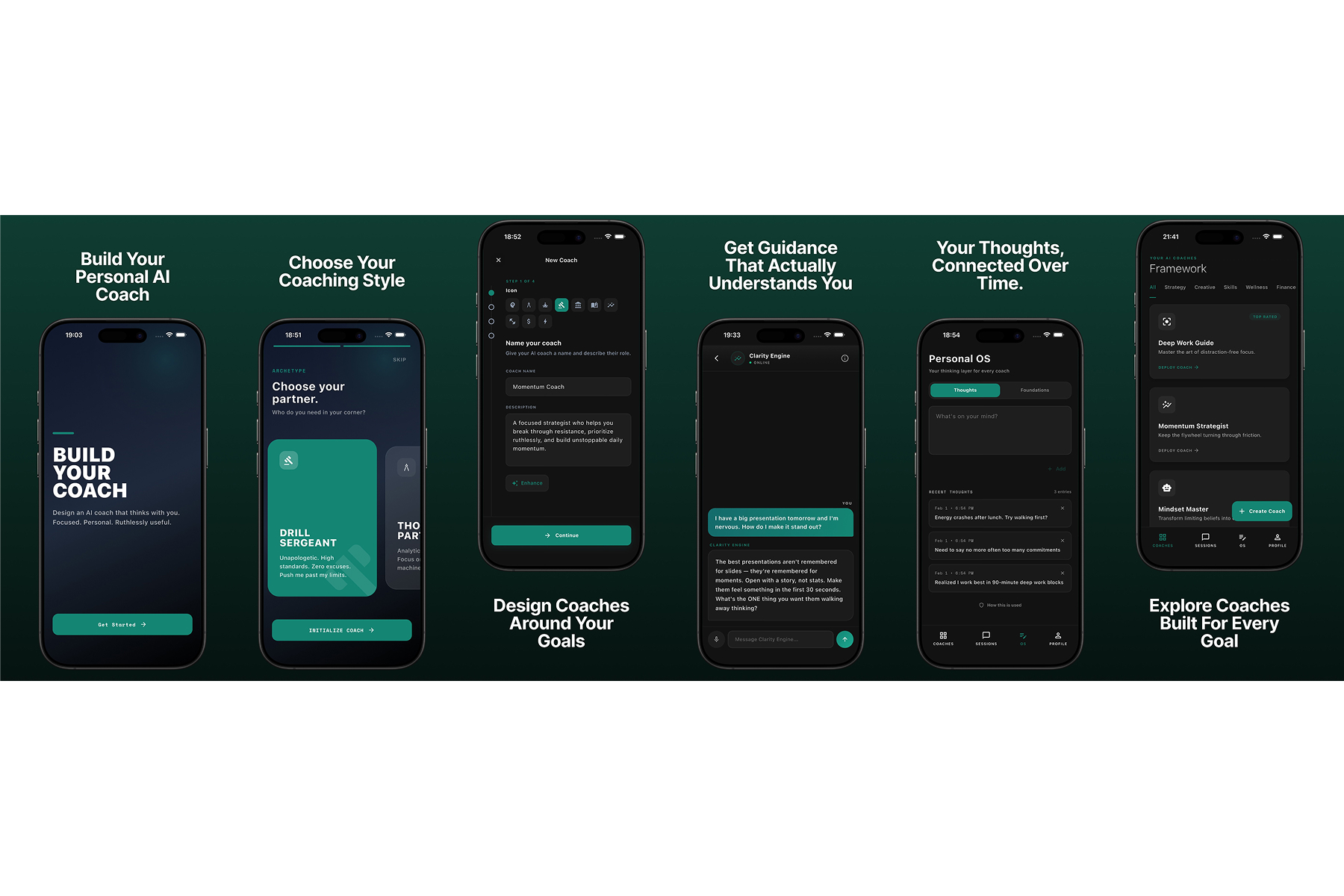
- Access a curated library of predefined AI coaches
- Create custom AI coaches through a guided, no-code interface
- Maintain a shared Personal OS, designed like a journal, where goals, values, and reflections live
All AI coaches draw from the same Personal OS, allowing guidance to compound over time instead of resetting with every conversation.
How we built it
Framework is built as a mobile-first application using:
- Flutter for cross-platform development
- A serverless backend for AI orchestration
- Large Language Models for coaching intelligence
- RevenueCat for subscription and entitlement management
We designed a modular prompt system where:
- Each coach has structured system instructions
- Personal OS data is dynamically injected
- Conversations are summarized to maintain performance and personalization
This architecture allows scalability while keeping the experience fast and minimal.
Challenges we ran into
- Reducing AI complexity without removing power
- Designing a coach creation flow that doesn’t require prompt engineering
- Maintaining coherent context across multiple AI agents
- Balancing personalization with performance and cost
A major challenge was making advanced AI concepts feel intuitive to non-technical users.
Accomplishments that we're proud of
- Designing a journal-based Personal OS that genuinely improves AI relevance
- Abstracting complex prompt engineering into a clean user experience
- Creating a cohesive multi-agent system instead of isolated chats
- Building a clear monetization model without hard paywalls
Most importantly, we created something that feels calm, intentional, and useful — not overwhelming.
What we learned
- Users want outcomes, not AI configuration
- Structure and constraints dramatically improve AI usefulness
- Shared context is more valuable than longer conversations
- Good design builds trust with AI systems
AI becomes far more powerful when it feels like a system, not a tool.
What's next for Framework
Next steps include:
- Community sharing and discovery of AI coaches
- Coach marketplaces and versioning
- Deeper long-term memory for the Personal OS
- Enhanced privacy controls and transparency
- Shipping a public beta and iterating with real users

Log in or sign up for Devpost to join the conversation.