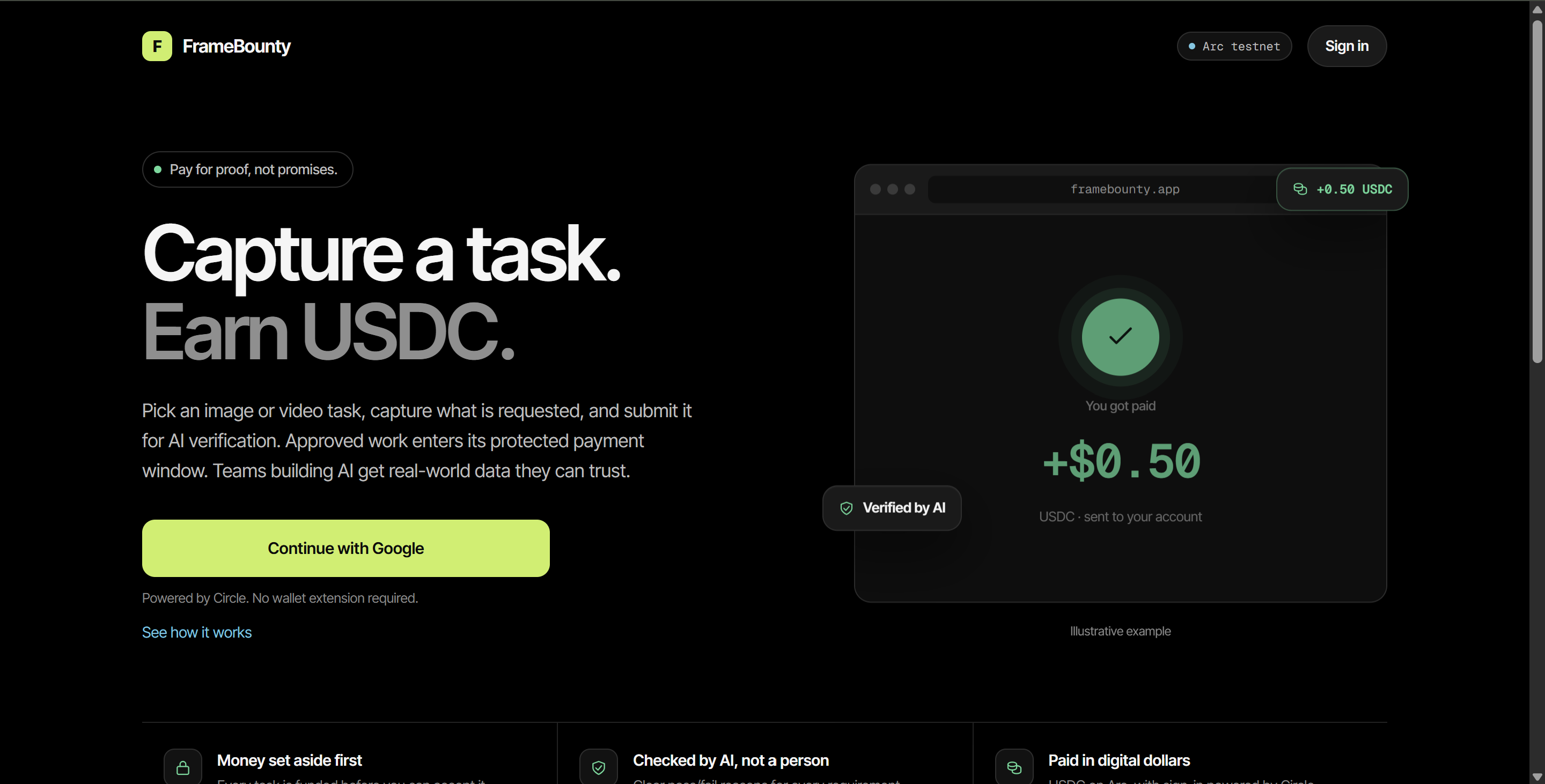
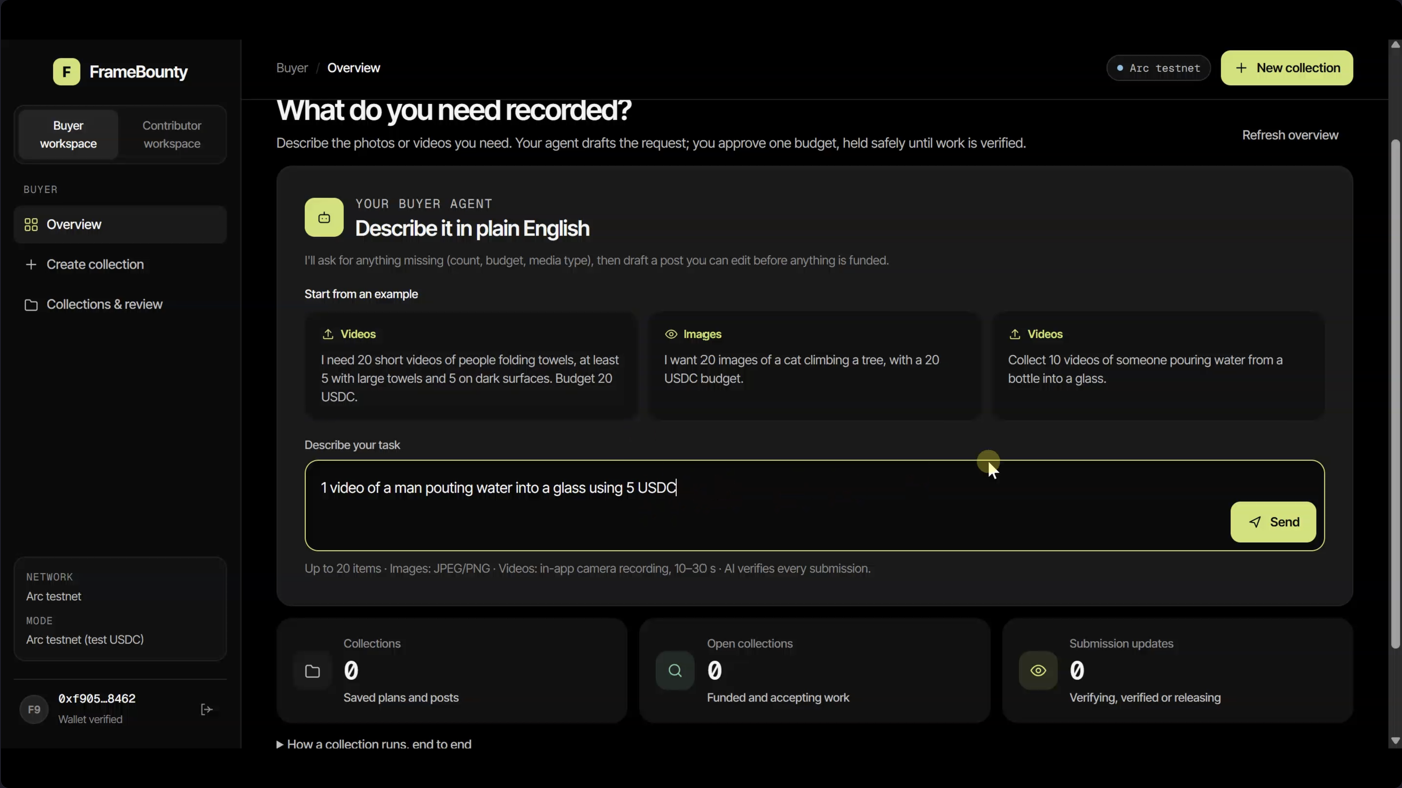
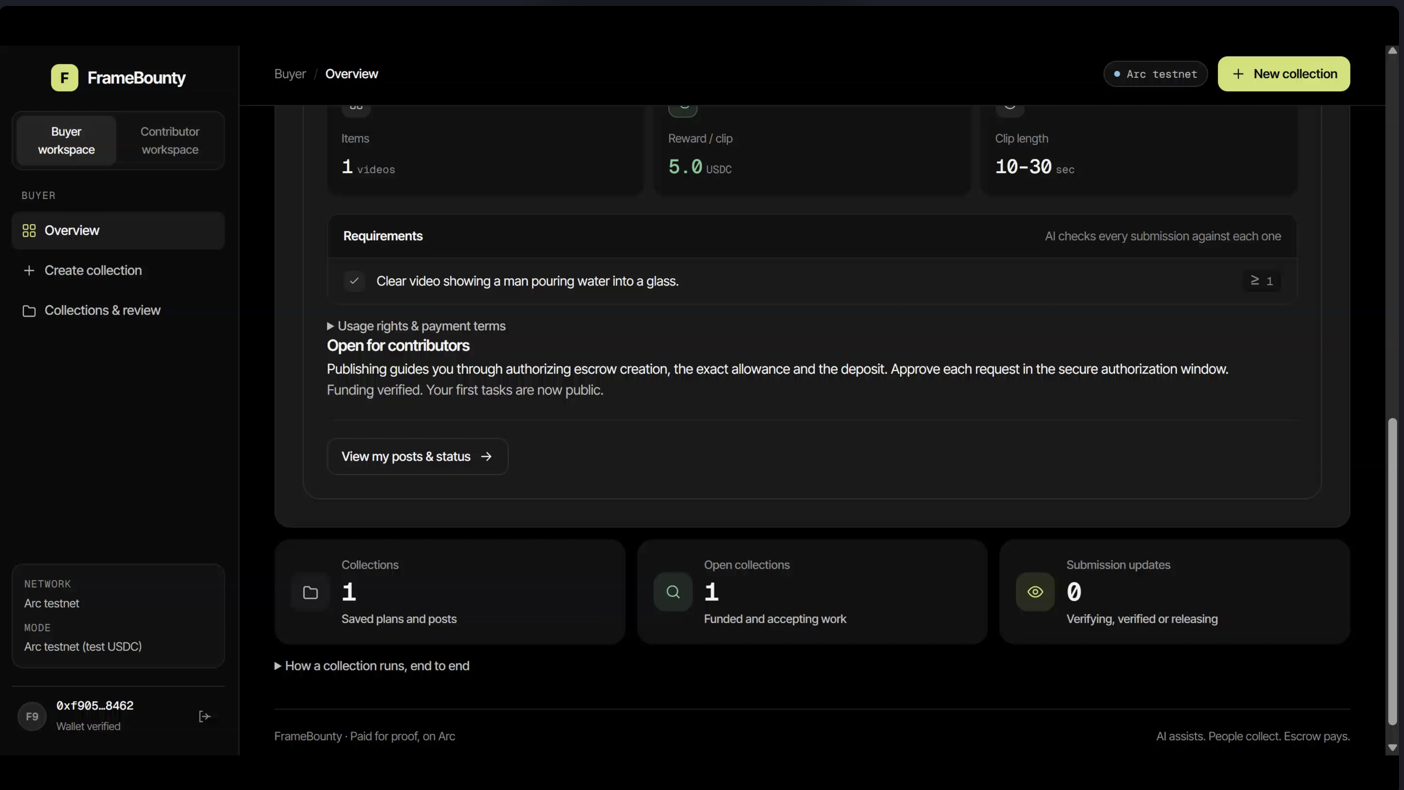
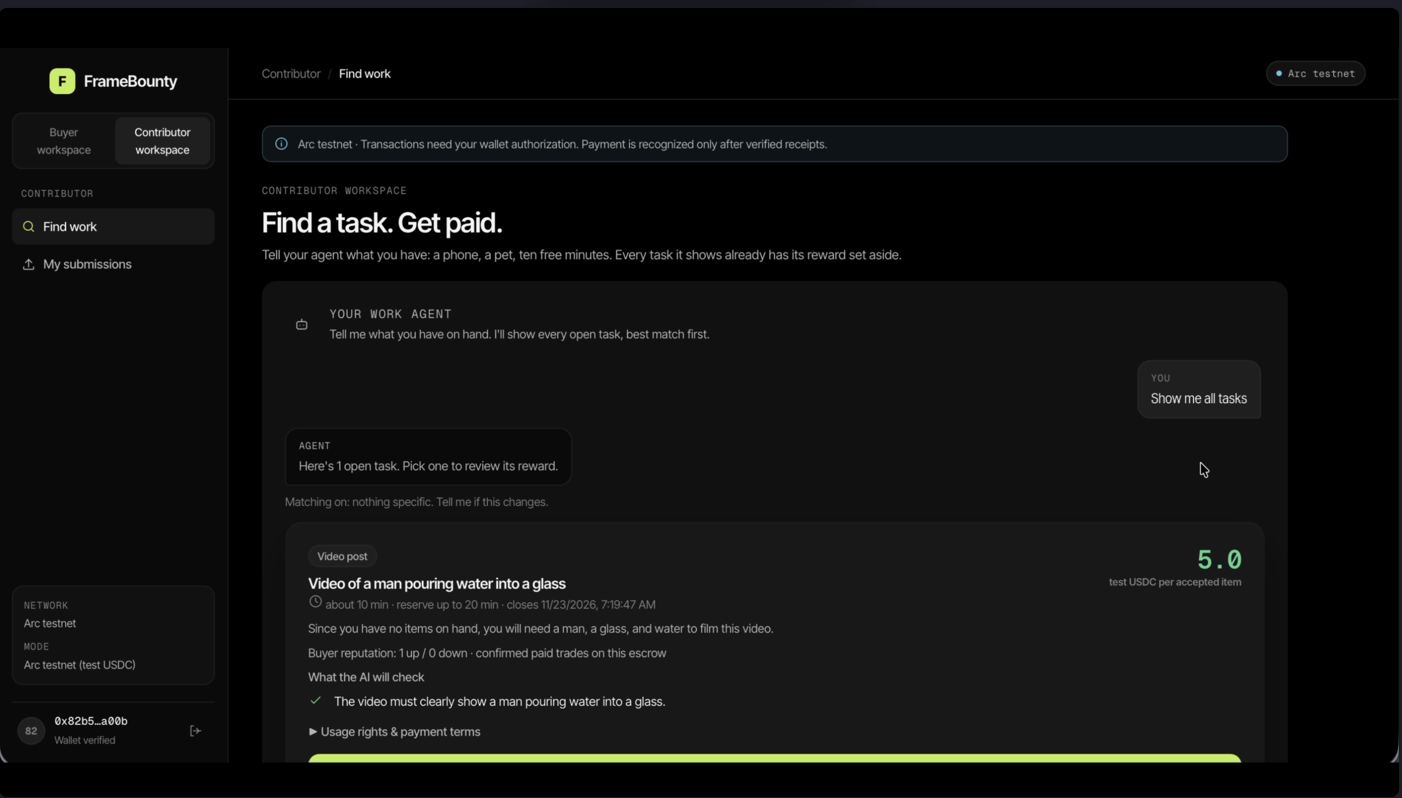
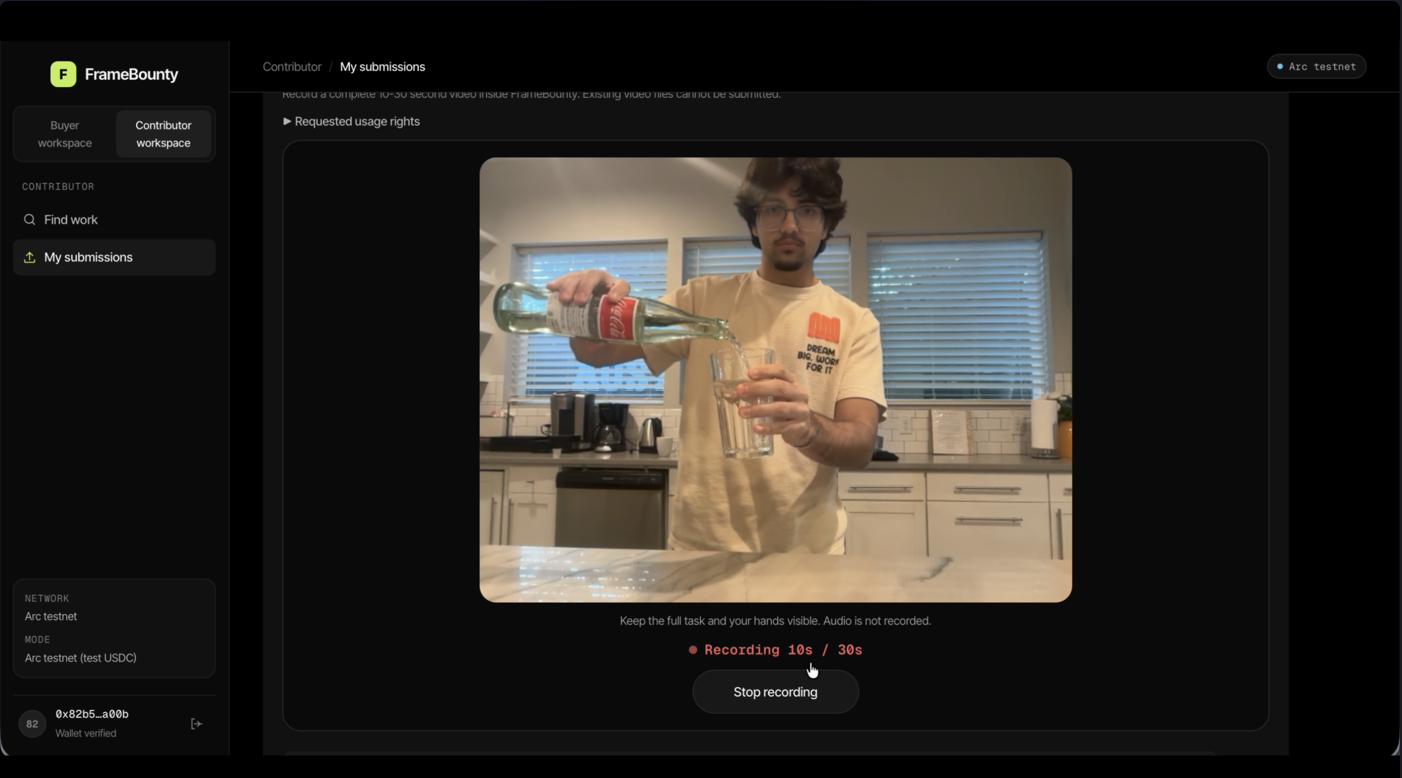
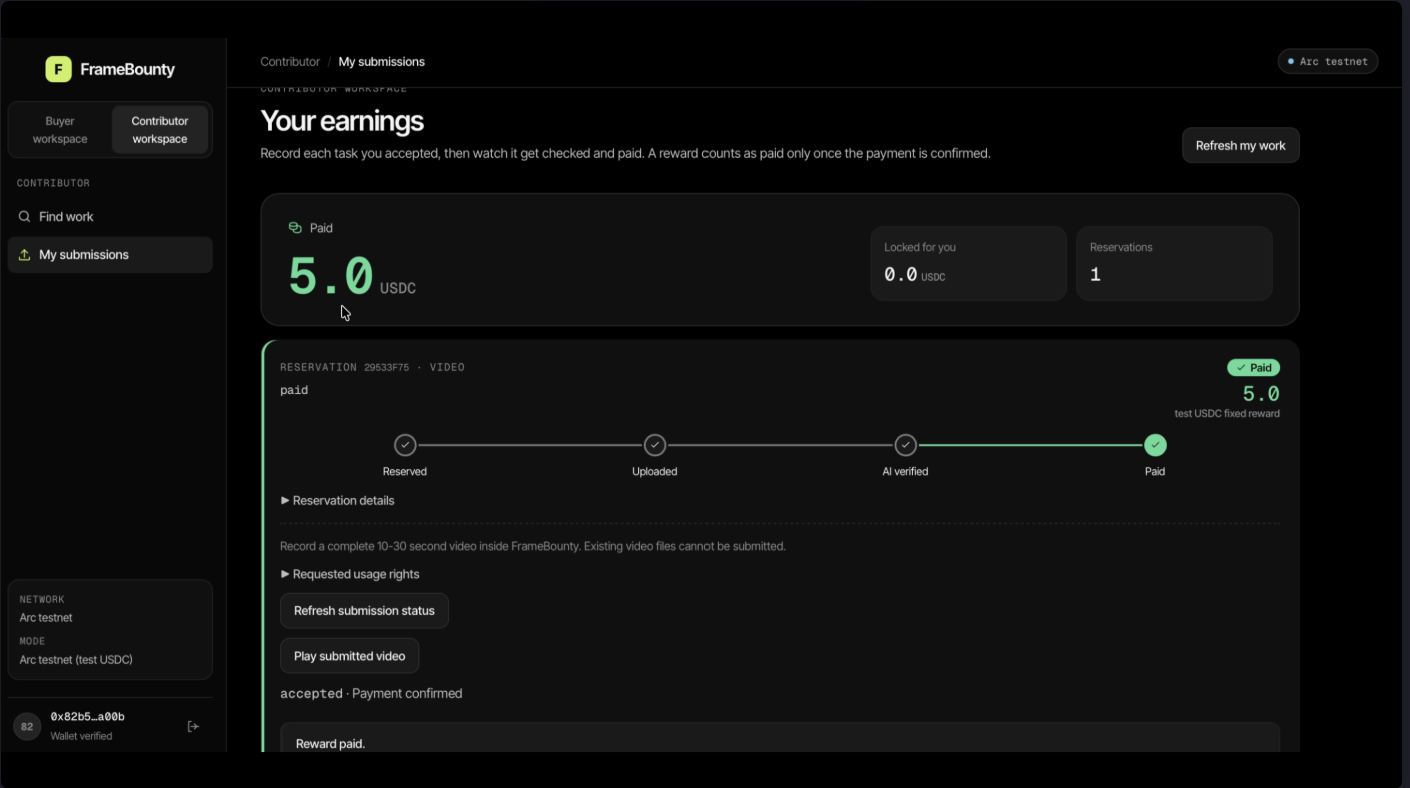
The idea came from Rithvik’s work at Purdue’s ARIES Lab, where researchers didn’t always have the data they needed. He spent time manually labeling images, which made him wonder how many other labs were dealing with the same problem. We wanted to give labs and individuals a way to request the data they need and connect with people who could help collect or label it.
 We built FrameBounty by following an engineering design process. First, we defined the problem and thought through what both buyers and contributors would need. Then we broke the system into smaller pieces that we could build and test. We added unit and integration tests throughout development to catch changes that could break something elsewhere in the project. This became especially important as we connected the AI agents, submission reviews, and payments.
 Our biggest challenge was figuring out how to make the system fair for both sides. Buyers need to know they’re paying for useful data, but contributors also need confidence that their work will be judged fairly and that they’ll get paid. We introduced a rating system to help users decide who they want to work with. We also added watermarked previews so buyers can review submissions before payment, while access to the original files stays restricted until payment is confirmed. This helps protect contributors from someone taking their work without paying, while still letting buyers check what they’re getting. We wanted both sides to have some protection instead of giving all the control to one person.