-
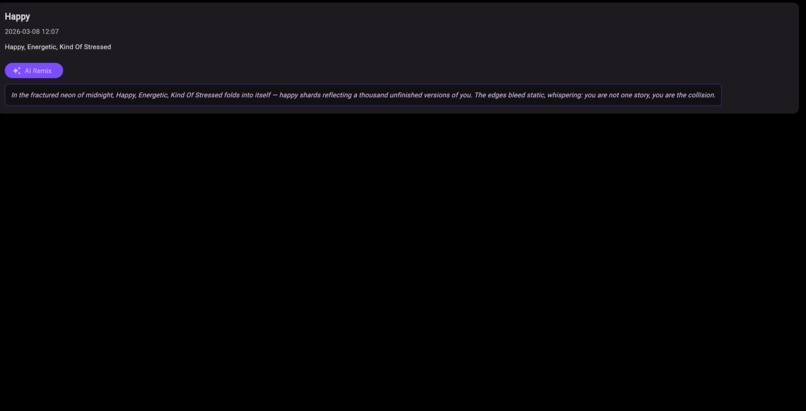
The Forge Where You Can Make Remixes
-
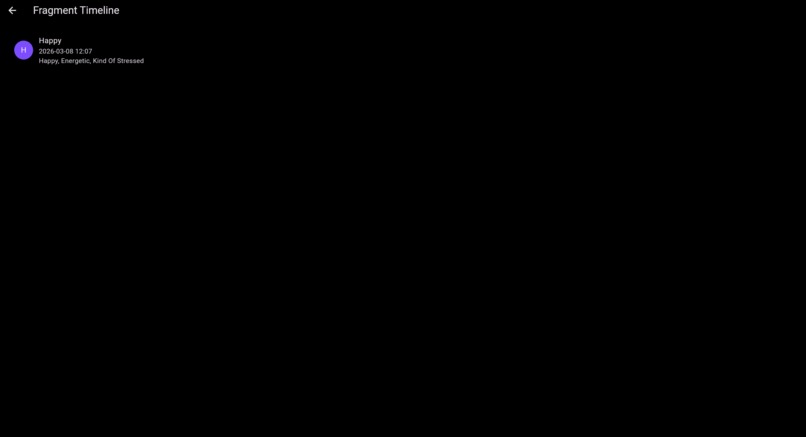
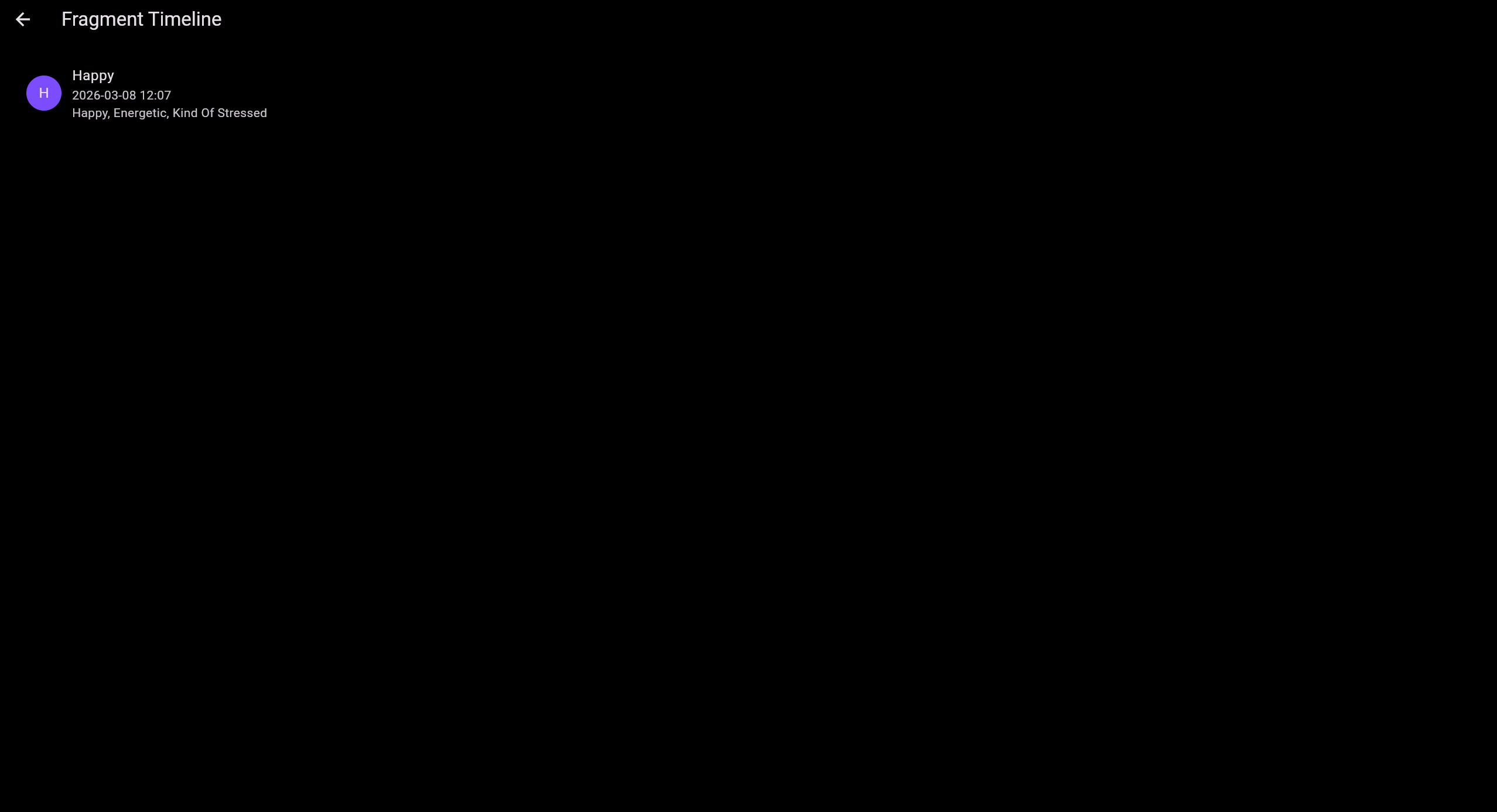
Your Timeline
-
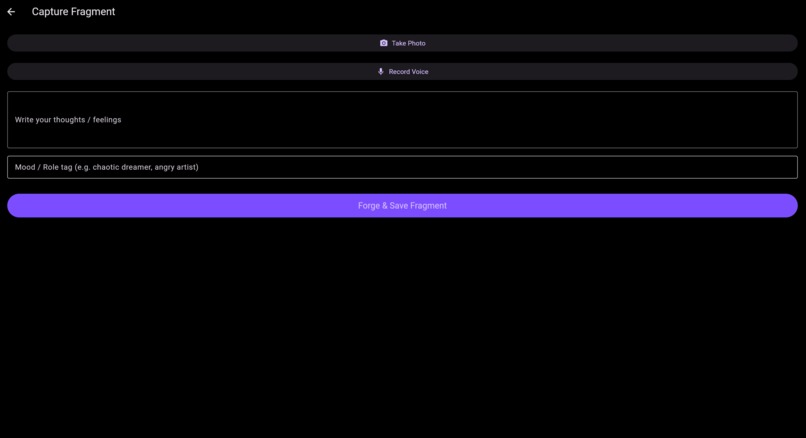
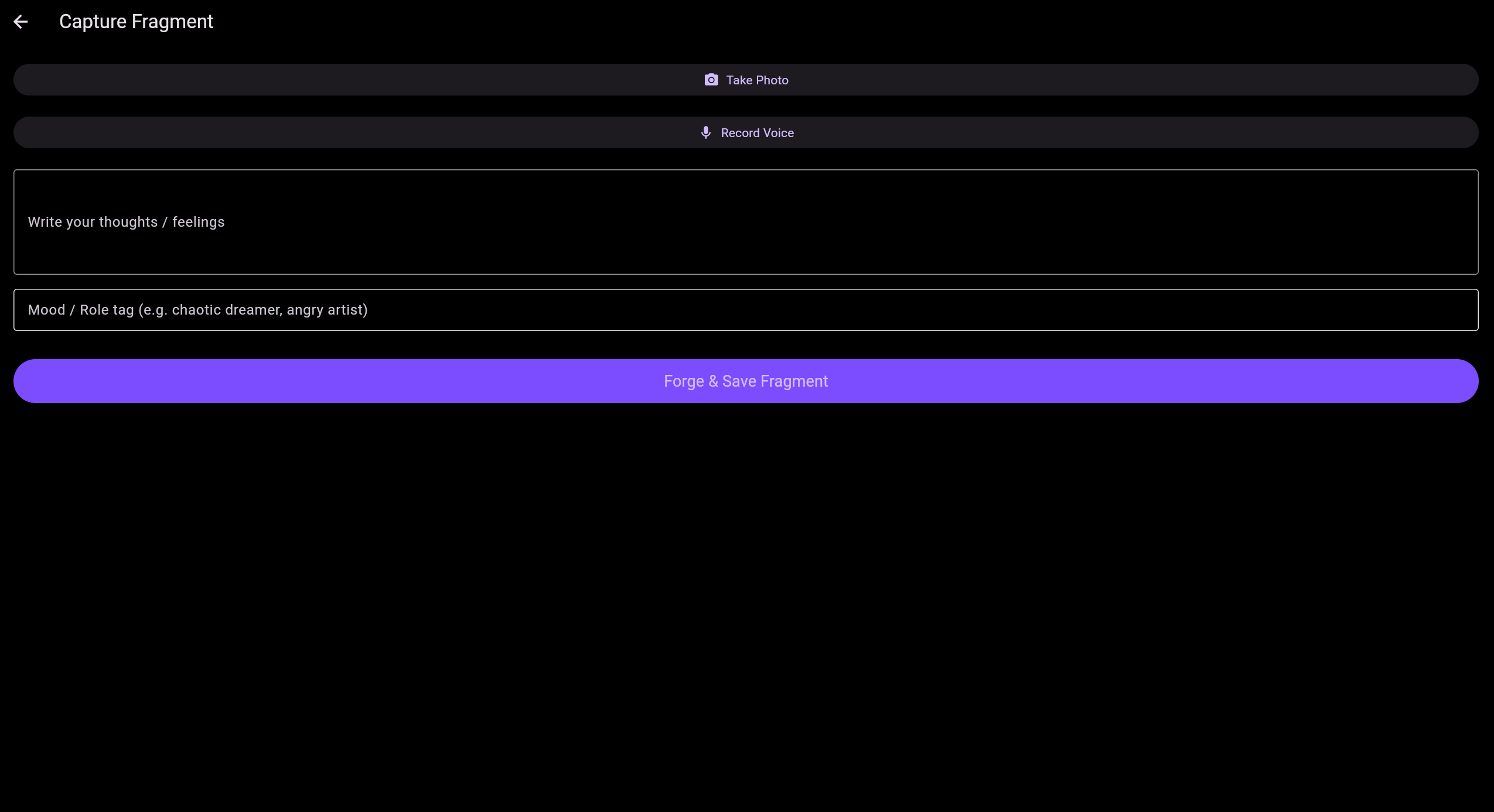
Capture Your Fragment
Inspiration
I was inspired by the constant pressure teens face to "figure out who they are" — the anxiety of fitting in, the fear of being stuck in one version of yourself. I wanted to turn that chaos into something creative and freeing, not stressful. Fragment Forge lets teens embrace their messy, changing identity instead of trying to solve it perfectly.
What it does
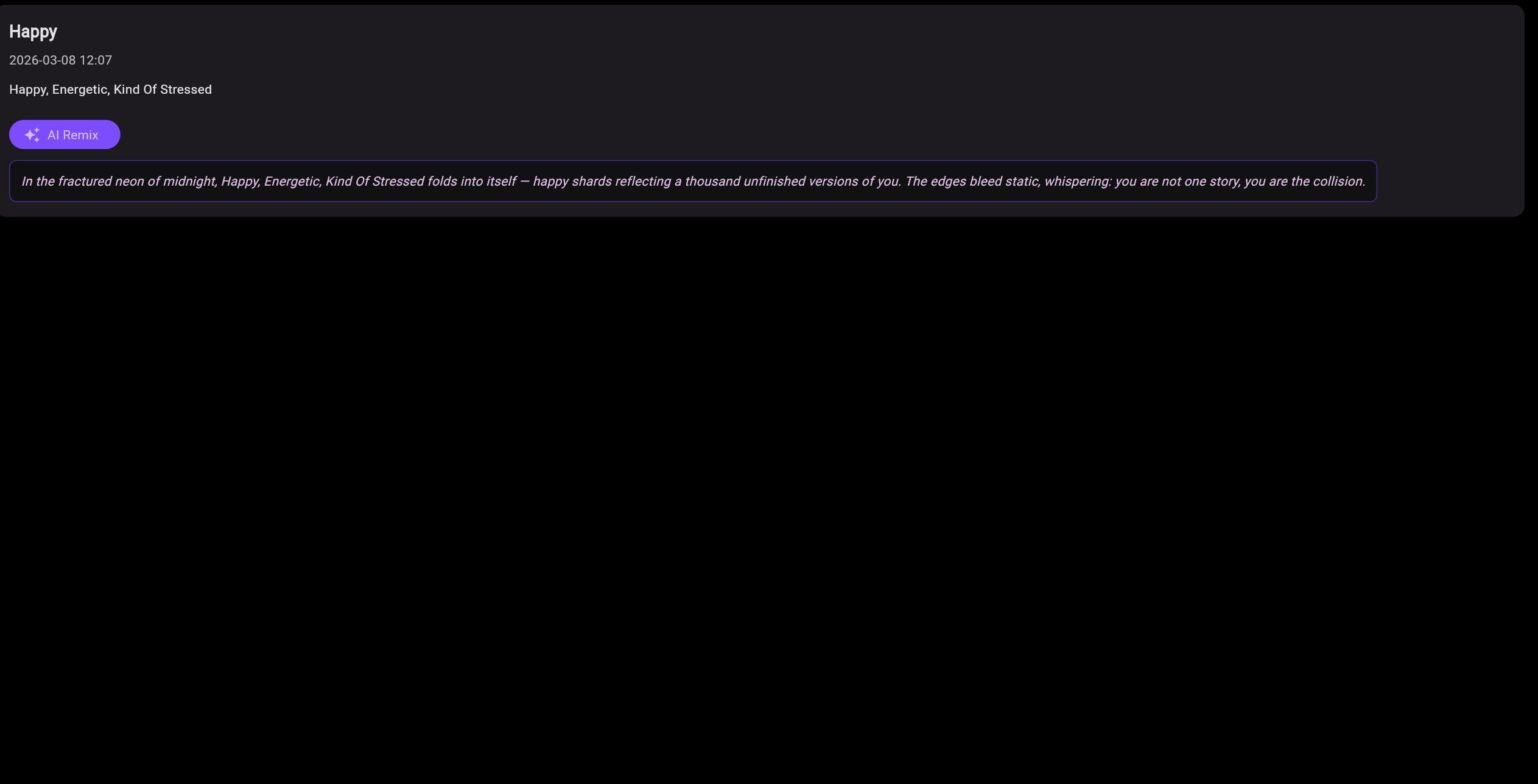
Fragment Forge is a creative app where I capture raw pieces of my daily life—unfiltered photos, voice rants, quick thoughts, mood tags—and forge them into evolving, artistic versions of myself. With one tap on "AI Remix," I get a poetic, surreal description that reinterprets the fragment, helping me see my identity as fluid art instead of a problem to fix.
How I built it
I built it entirely with Flutter for cross-platform support (mobile, web, desktop). I used Hive for local storage of fragments, image_picker and record for capturing media, sensors_plus for shake detection nudges, and a simple local AI-style remix function that generates poetic descriptions. The UI is dark, glitchy, and teen-centered with gradients and neon accents.
Challenges I ran into
The biggest challenge was setting up Flutter on Windows, dealing with PATH issues, OneDrive file locking during builds, symlink permissions for plugins, and deprecated APIs (withOpacity, accelerometerEvents). Debugging permissions and moving the project out of OneDrive took time, but it taught me a lot about real-world development hurdles.
Accomplishments that I'm proud of
I'm proud that I created a complete, working app from scratch that directly addresses teen identity struggles with creativity and AI. The AI Remix feature turns personal chaos into beautiful poetry, and the app runs smoothly on the web (Chrome) after fixing all setup issues. It feels personal, rebellious, and actually useful.
What I learned
I learned how to handle real Flutter setup on Windows (PATH, permissions, symlinks, deprecated APIs), how to use local storage with Hive, media capture packages, and how to keep iterating even when setup errors felt endless. Most importantly, I learned that identity apps can be fun and artistic instead of clinical.
What's next for Fragment Forge
Next, I want to add real AI integration (Gemini or Grok API for deeper remixes), glitch/particle effects on images, export forged selves as images or audio, optional anonymous sharing of remixes, and mood-based suggestions for new fragments. I'd also love to make it a full mobile app on app stores. Feel free to copy-paste this directly into your presentation slides or Hackathon submission.
Built With
- dart
- flutter
- vscode

Log in or sign up for Devpost to join the conversation.