-
-
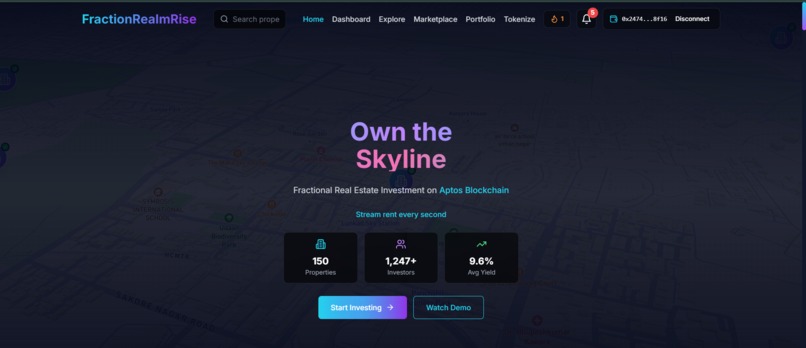
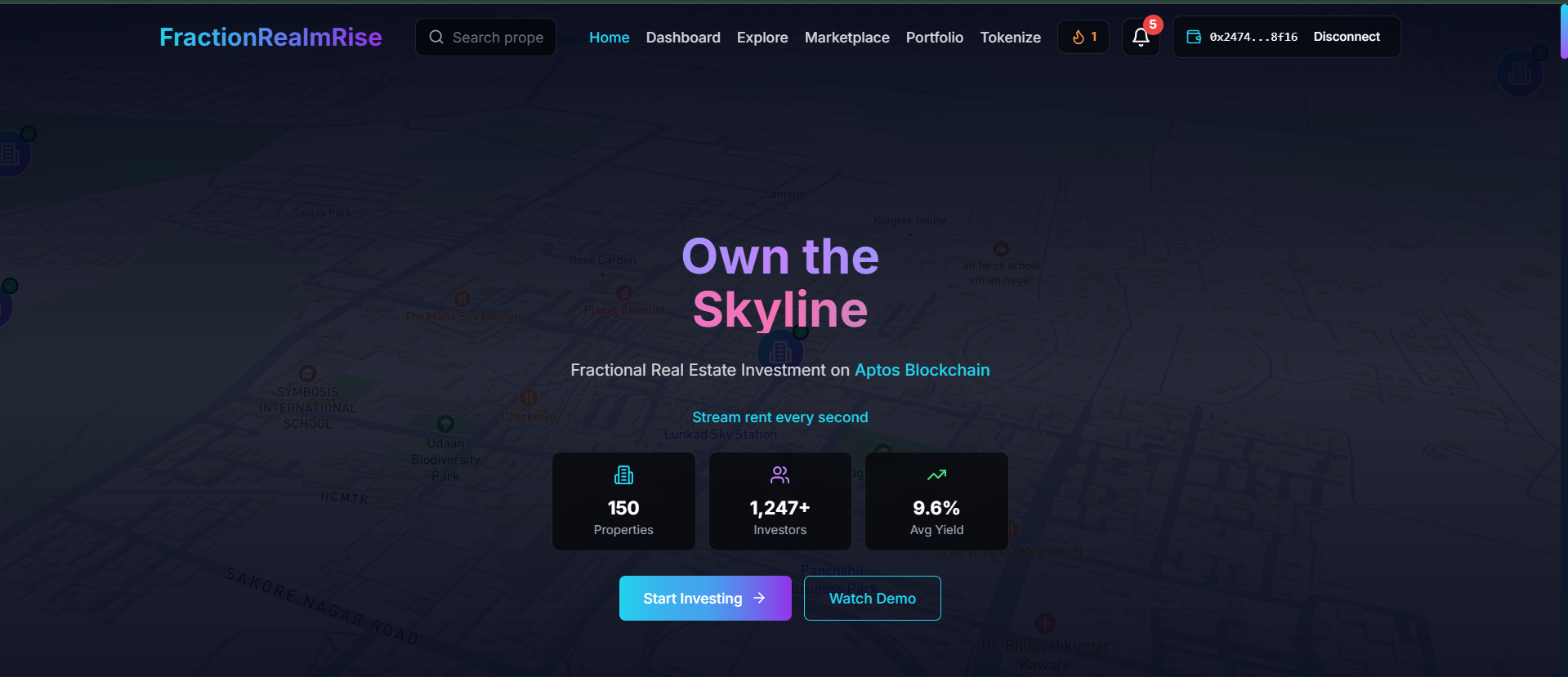
Header Section
-
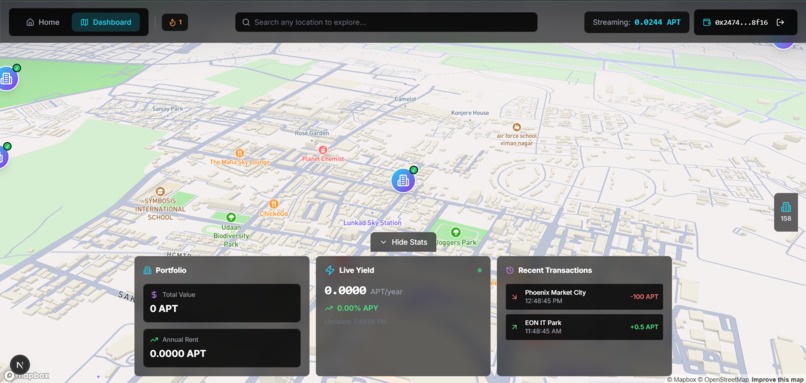
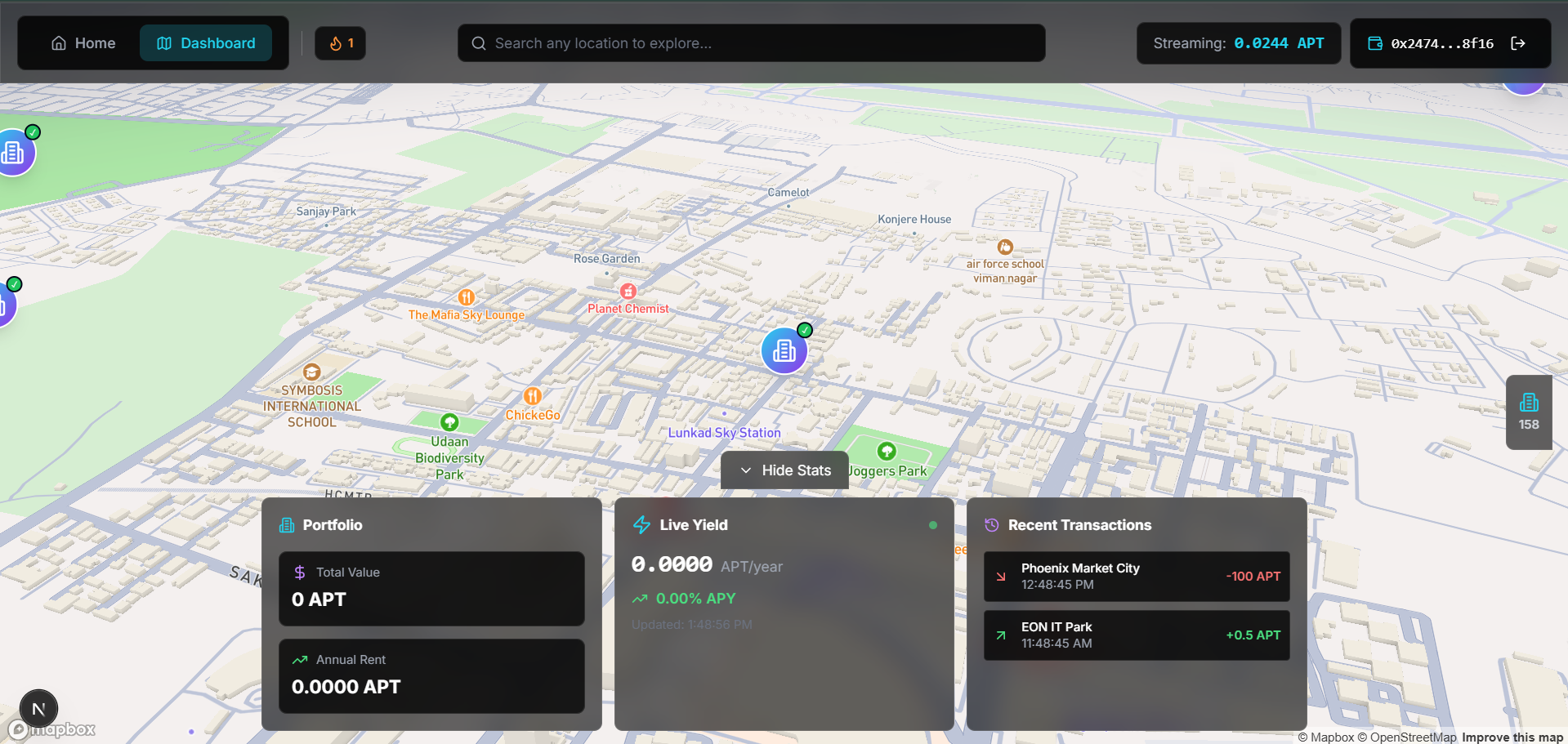
Map for city properties
-
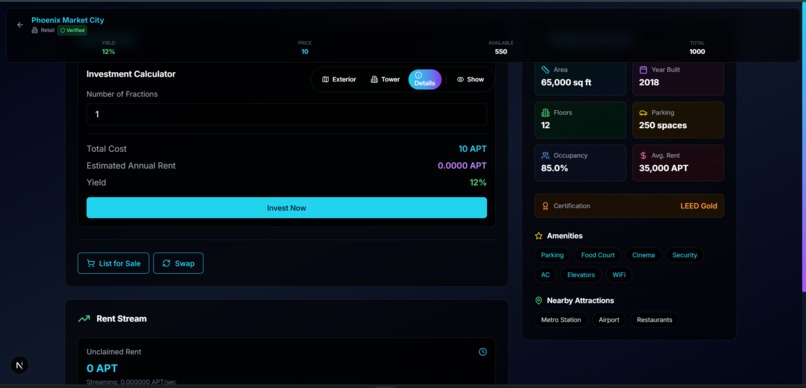
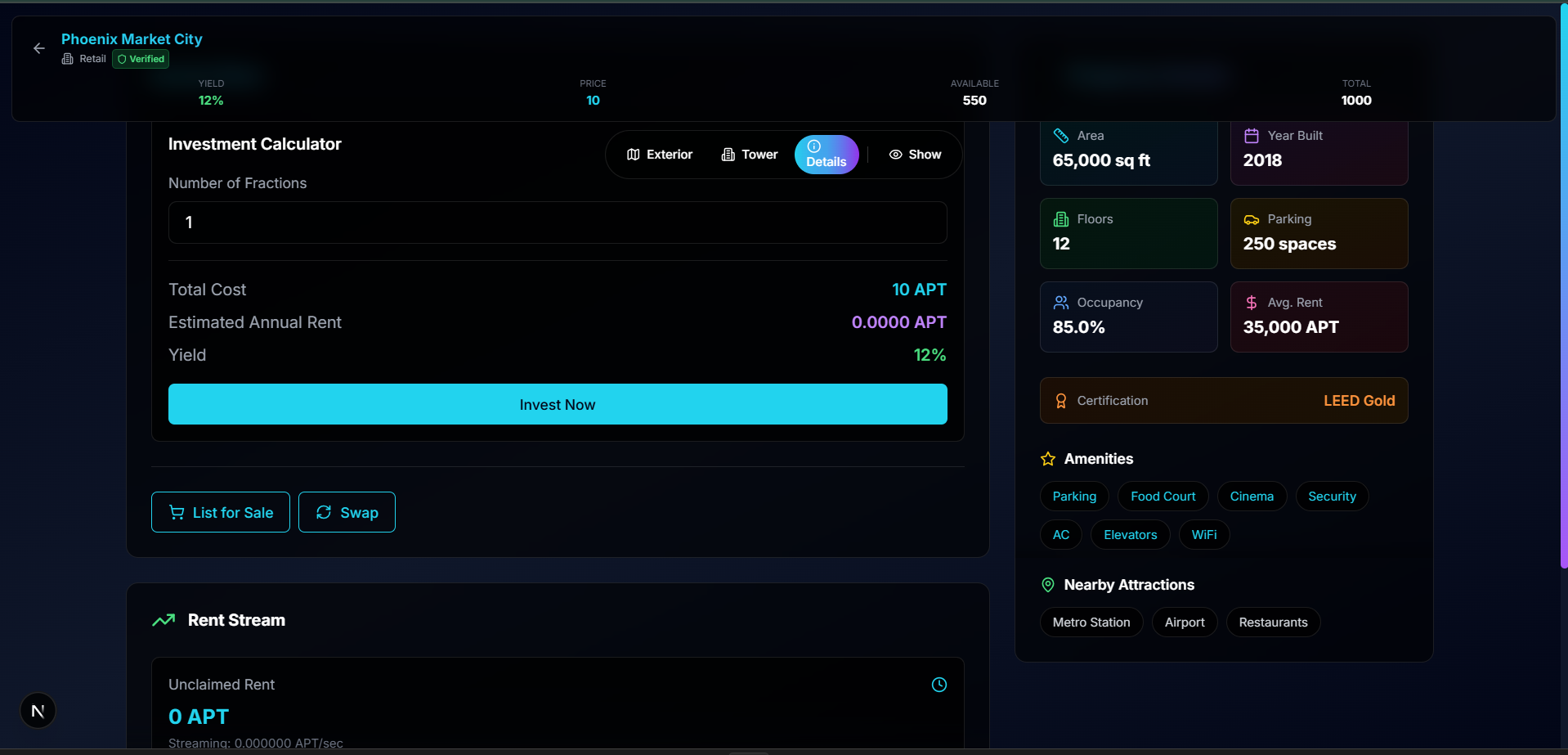
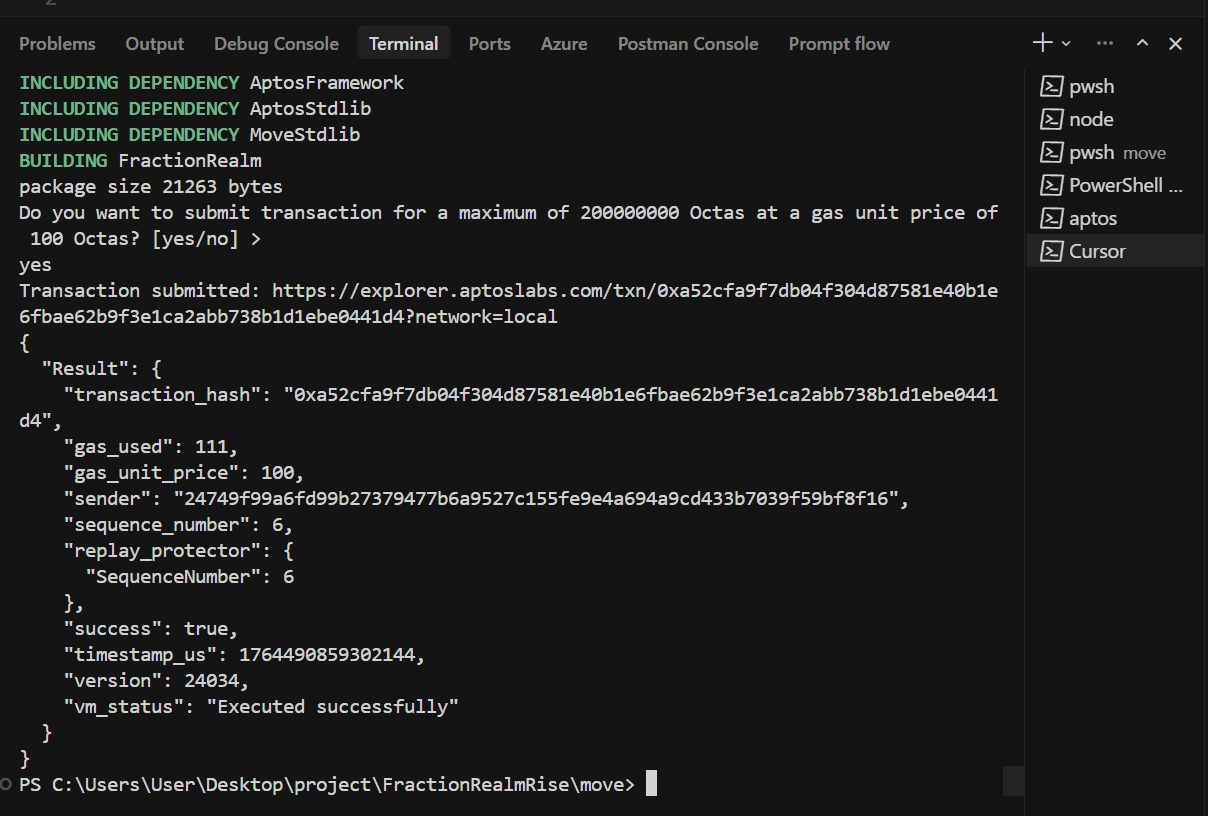
Transaction
-
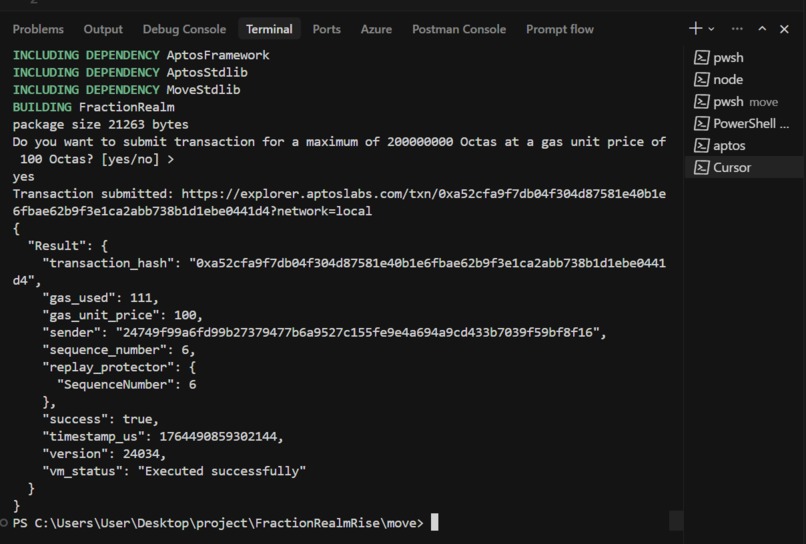
Compling and deploying contract - 1
-
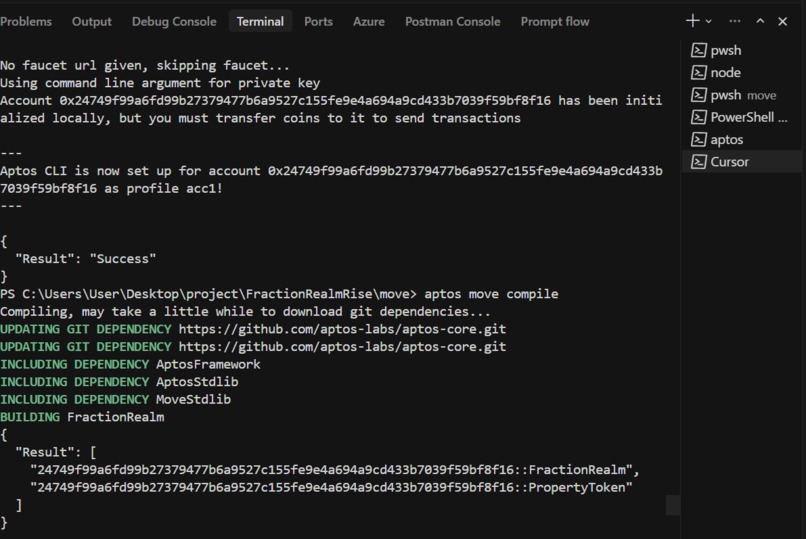
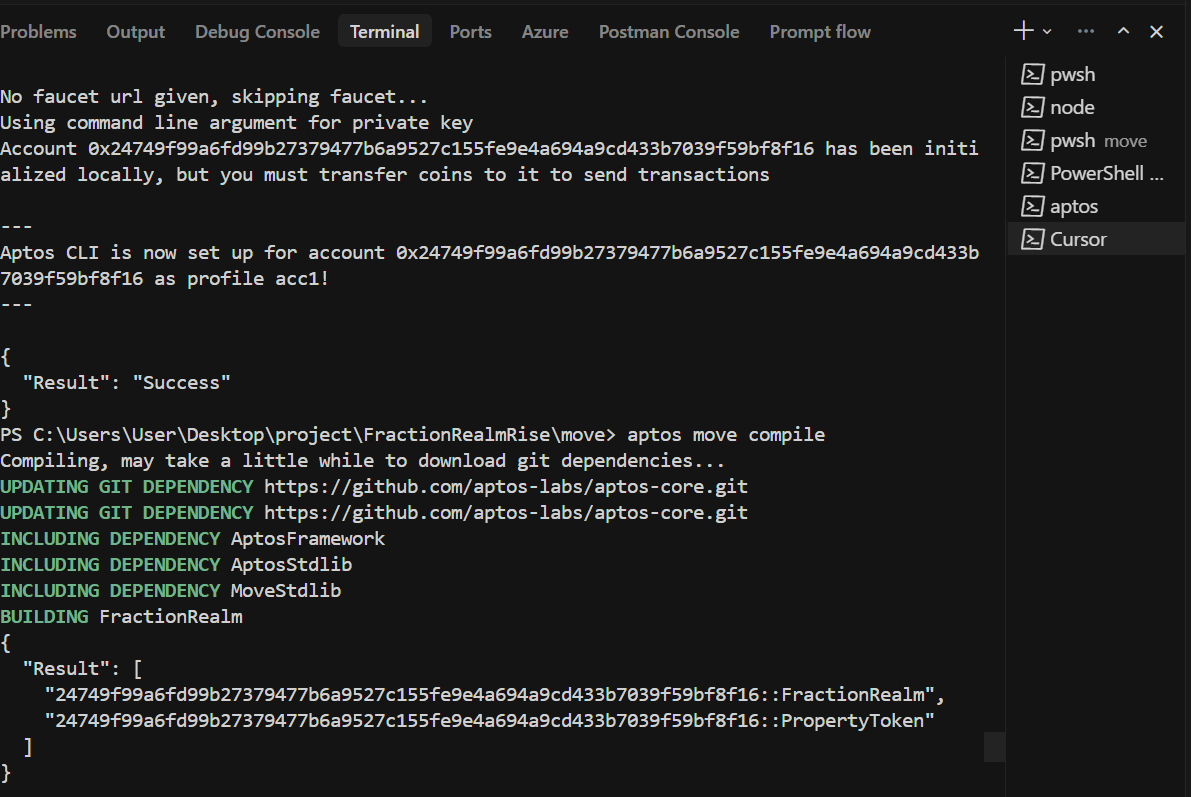
Compling and deploying contract - 2
Inspiration
Real estate is one of the world’s largest asset classes, yet its behavior remains slow, opaque, and paperwork-driven. Ownership verification depends on fragmented records, rental income moves monthly, and sustainability signals rarely influence investment decisions in real time.
We explored a different direction:
What if real estate behaved like a programmable financial primitive, similar to crypto-native assets, while enabling sustainability-aware capital allocation for smarter urban investment decisions?
FractionRealmRise prototypes a functional decision-support interface for real-world assets (RWAs) where property becomes:
- fractional
- transparent
- continuously yielding
- AI-assisted
- decision-support driven instead of listing-driven
This aligns with Quantum Sprint’s goal of building practical, working innovation for real-world financial systems.
What it does
FractionRealmRise is a working Web3 + FinTech prototype on Aptos that transforms static property listings into interactive programmable investment workflows.
The platform enables users to:
- Explore properties through immersive 3D city → building → unit navigation
- Acquire fractional ownership using Aptos Move smart contracts
- Simulate per-second streaming rental yield visibility
- Verify ownership through on-chain transaction transparency
- Compare assets using sustainability-aligned investment indicators
- Interpret signals through AI-assisted compliance and trust layers
- Experience diversified exposure via gamified fractional allocation sets
Instead of acting as a listing marketplace alone, the system demonstrates how RWAs can function as interactive financial decision-support infrastructure.
How we built it
FractionRealmRise was implemented as a modular full-stack Web3 prototype combining blockchain ownership logic, spatial visualization, and sustainability-aware scoring workflows.
Blockchain Layer
We implemented programmable ownership using:
- Aptos Move smart contracts
- resource-based fractional ownership structures
- checkpoint-based streaming yield accounting logic
- wallet-based ownership verification flows
These allow property fractions to behave like secure non-copyable on-chain financial assets.
Aptos Move was selected for its resource-oriented programming model, ensuring integrity of fractional allocation tracking.
Spatial Discovery Layer
To improve usability beyond spreadsheet-style listings:
- Mapbox Standard Style rendered real-world 3D city environments
- React Three Fiber enabled interior-level visualization
- hierarchical City → Building → Unit navigation simplified asset comparison
This creates a visual decision-support interface instead of static dashboards.
Frontend Architecture
We developed the interface using:
- Next.js 14 modular frontend architecture
- wallet-aware interaction states
- real-time transaction visibility layers
- component-driven financial UI rendering
The frontend bridges immersive discovery with blockchain execution workflows.
Compliance & Sustainability Layer
To simulate real-world financial onboarding pipelines within hackathon constraints, we implemented:
- identity-aware onboarding logic simulation
- compliance signal visualization
- explainable sustainability scoring
- SDG-aligned investment indicators
- interpretable trust-layer architecture for RWAs
This enables transparent decision-support signals instead of opaque investment ratings.
Challenges we ran into
Designing a functional RWA investment workflow within hackathon constraints required solving:
- building registry-independent ownership modeling
- designing gas-efficient streaming yield accounting
- simulating ESG indicators without institutional datasets
- translating compliance workflows into intuitive investor-facing UX
- optimizing browser-based 3D spatial rendering performance
- ensuring explainable AI-assisted scoring instead of black-box outputs
These constraints shaped a transparency-first system architecture.
Accomplishments that we're proud of
Within the development timeline, we successfully demonstrated:
- resource-based fractional ownership logic on Aptos
- a working prototype of continuous-yield financial interaction
- a 3D spatial investment navigation interface
- wallet-visible ownership verification flows
- integration-ready compliance and sustainability scoring architecture
- an applied AI + blockchain decision-support workflow for RWAs
This shows how emerging technologies can be combined into a functional FinTech experimentation platform, aligning with Quantum Sprint’s applied innovation focus.
What we learned
Building FractionRealmRise revealed key insights:
- sustainable finance platforms must evolve into decision-support infrastructures
- trust in RWAs depends on explainable UX as much as blockchain transparency
- streaming yield models improve perceived liquidity even without secondary markets
- sustainability indicators influence allocation only when financially actionable
- AI agents translate SDG-aligned impact metrics into interpretable investment guidance
- RWAs require hybrid trust architectures combining on-chain verification with compliance signals
These insights guided the system toward practical usability instead of conceptual experimentation.
Responsible AI & Ethical Design Direction
FractionRealmRise prioritizes fairness, transparency, and interpretability through explainable investment signals.
Future iterations introduce:
- explainable investment scoring dashboards
- liquidity risk indicators
- regulatory exposure visibility layers
- bias-aware allocation signals across emerging markets
- accessibility-ready interface modes
- investor-facing rental variability risk meters
This supports responsible adoption across diverse investor groups.
What's next for FractionRealmRise
We plan to extend the prototype into a scalable sustainable finance experimentation platform:
- deploy AI decision agents combining rental forecasts with SDG indicators
- introduce dynamic property-level risk meters
- enable portfolio optimization engines
- support secondary ownership mobility layers
- integrate legal-backed compliance onboarding pipelines
- develop institutional sustainability analytics dashboards
- expand toward green credit scoring and infrastructure financing workflows
Our long-term direction is transforming RWAs into programmable capital aligned with sustainability outcomes.
Built With
- ai-assisted
- aptos-move-smart-contracts
- mapbox-standard-style
- next.js-14
- on-chain-ownership-logic
- react-three-fiber
- react.js
- streaming-rent-simulation
- sustainability
- wallet-adapter-integration


Log in or sign up for Devpost to join the conversation.