-
-
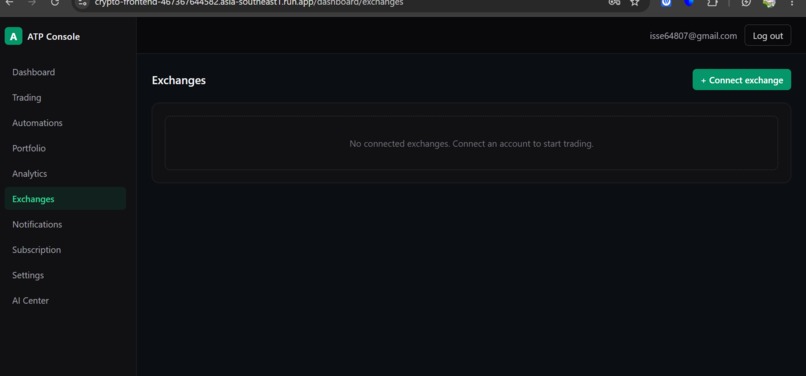
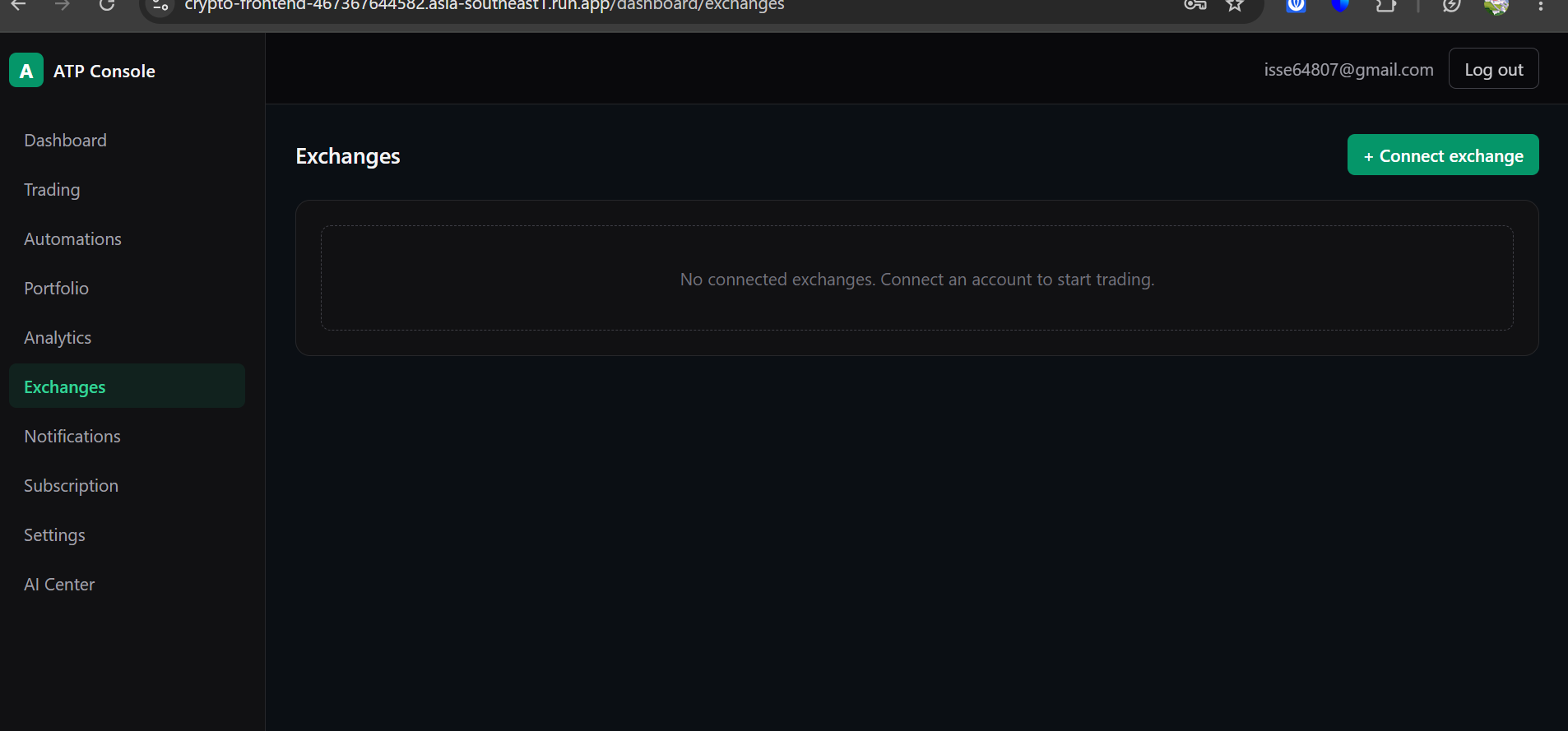
exchange Page
-
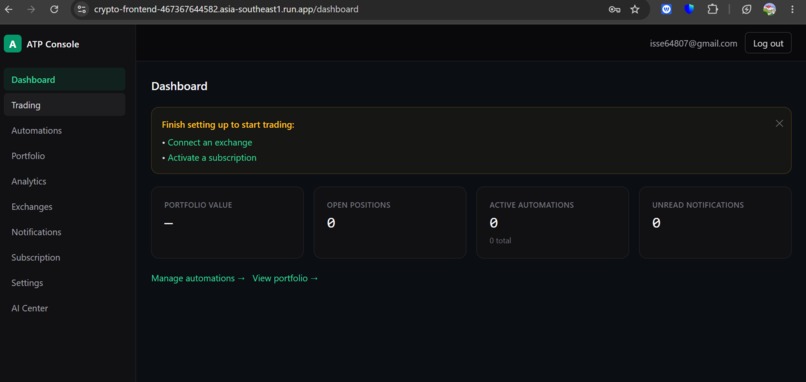
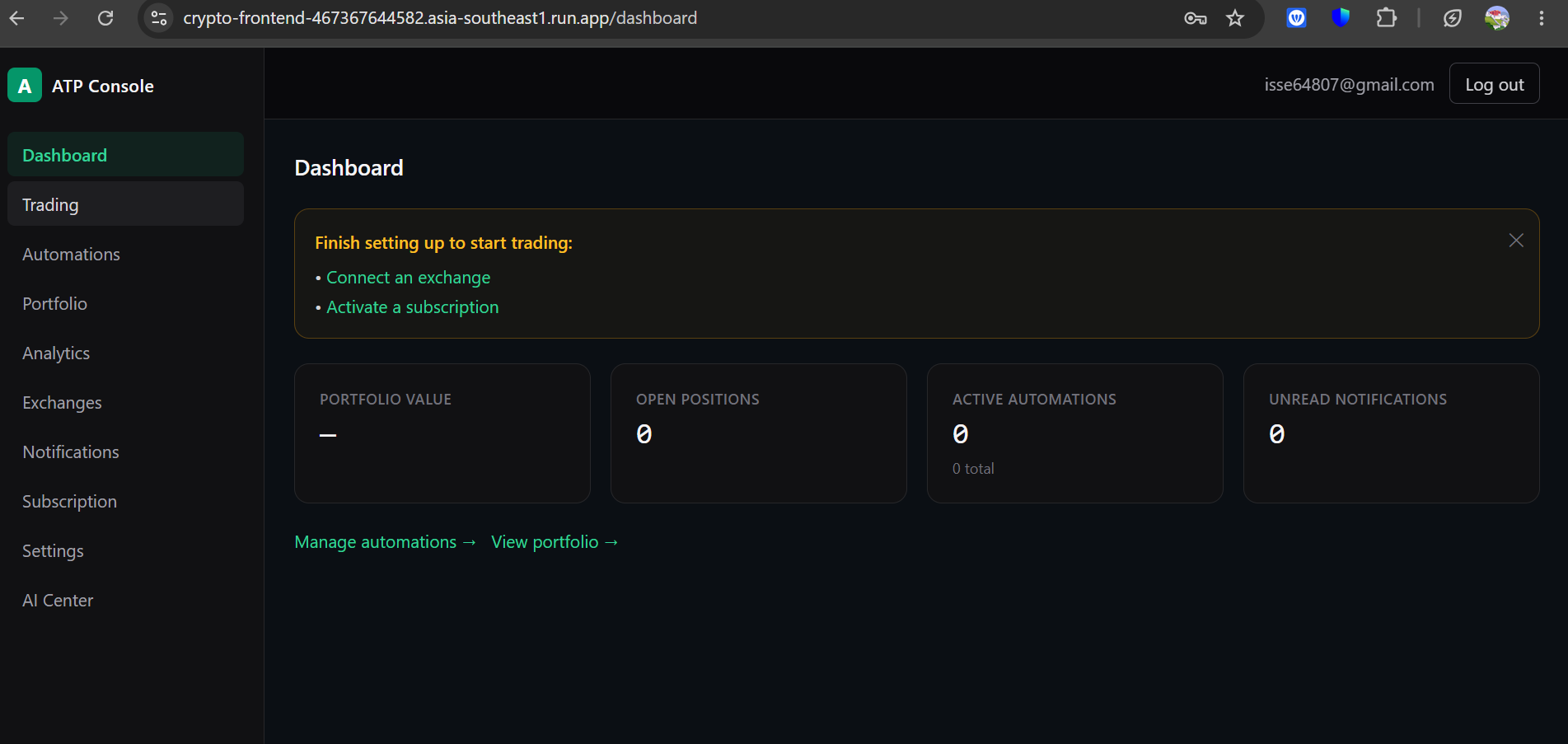
Dashourd Page
-
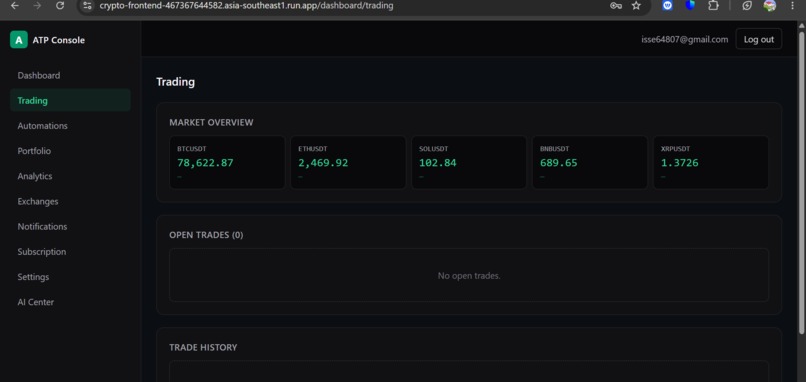
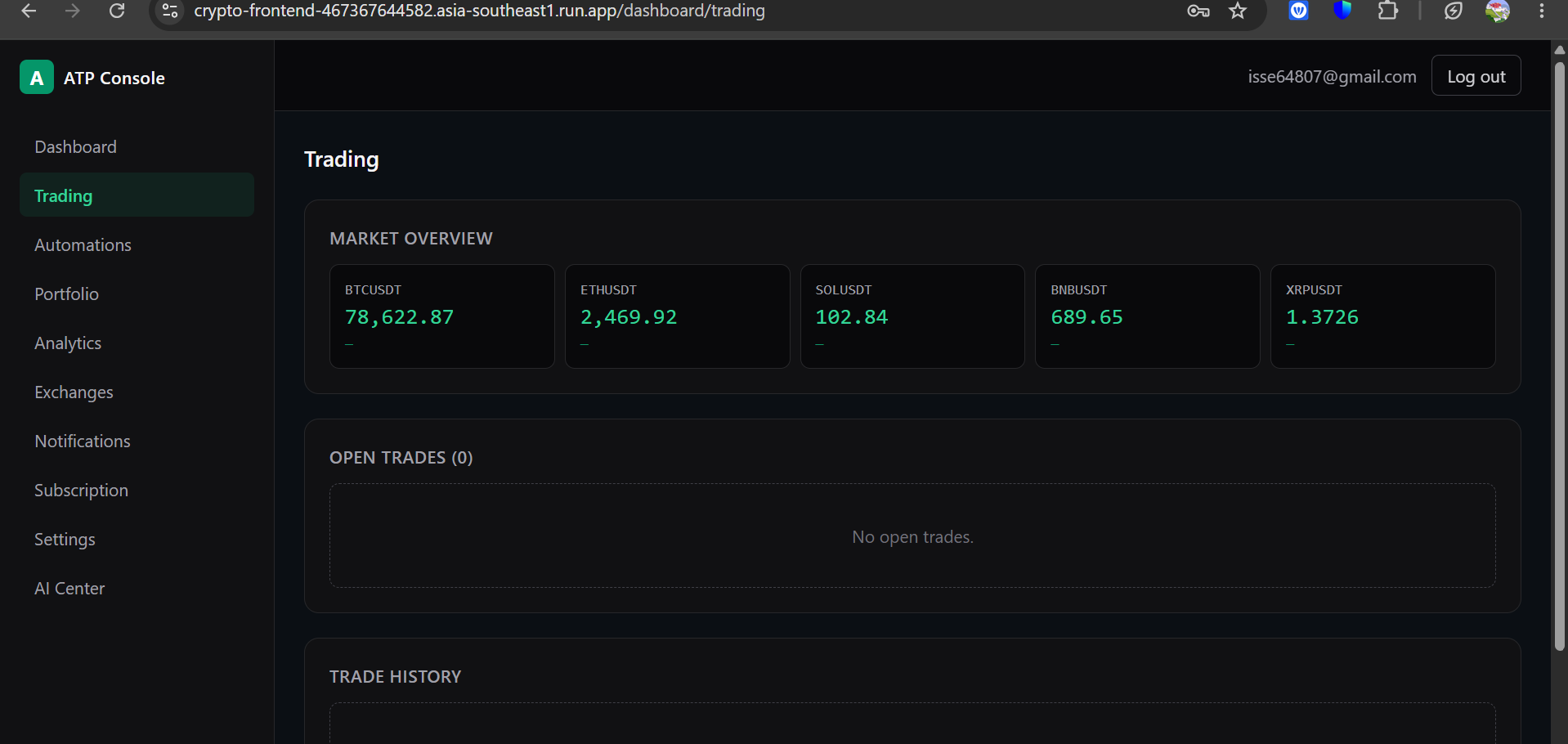
Trading Page
-
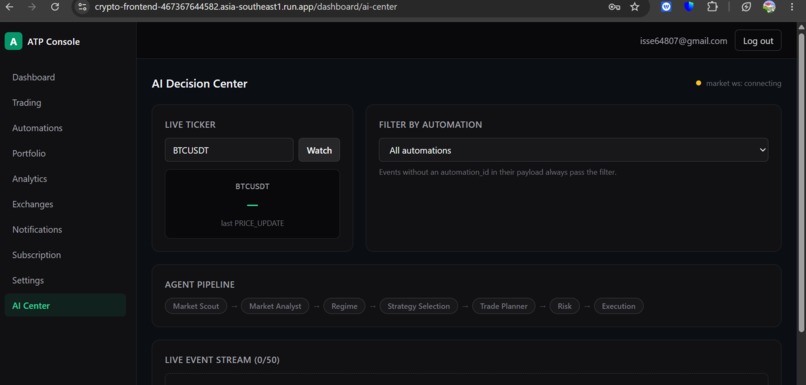
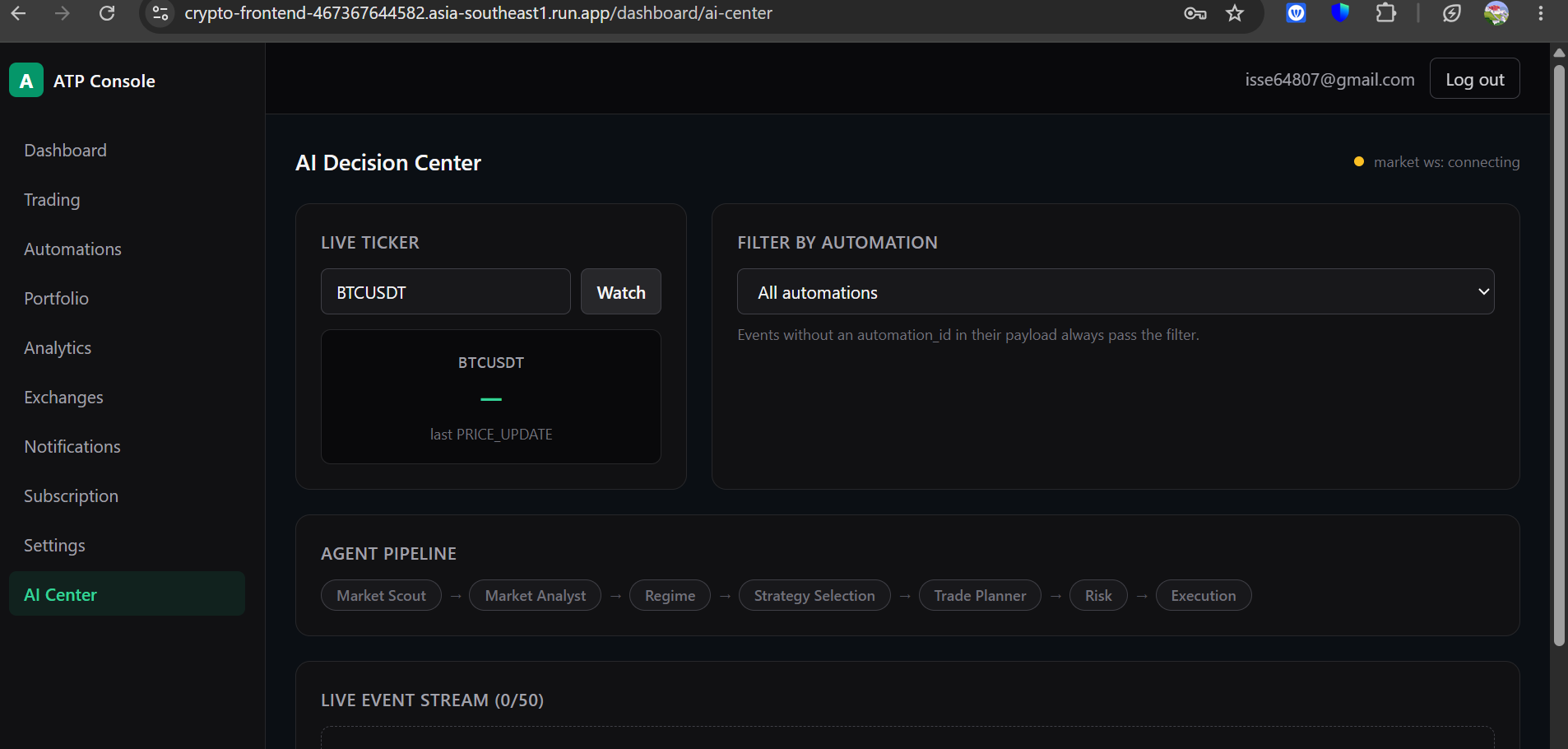
AI Center Page
-
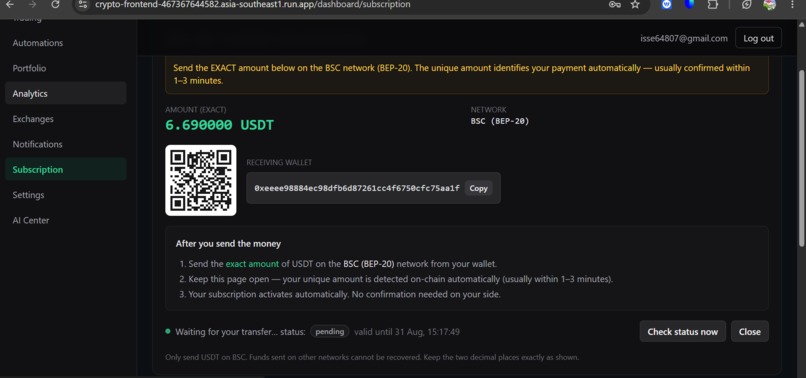
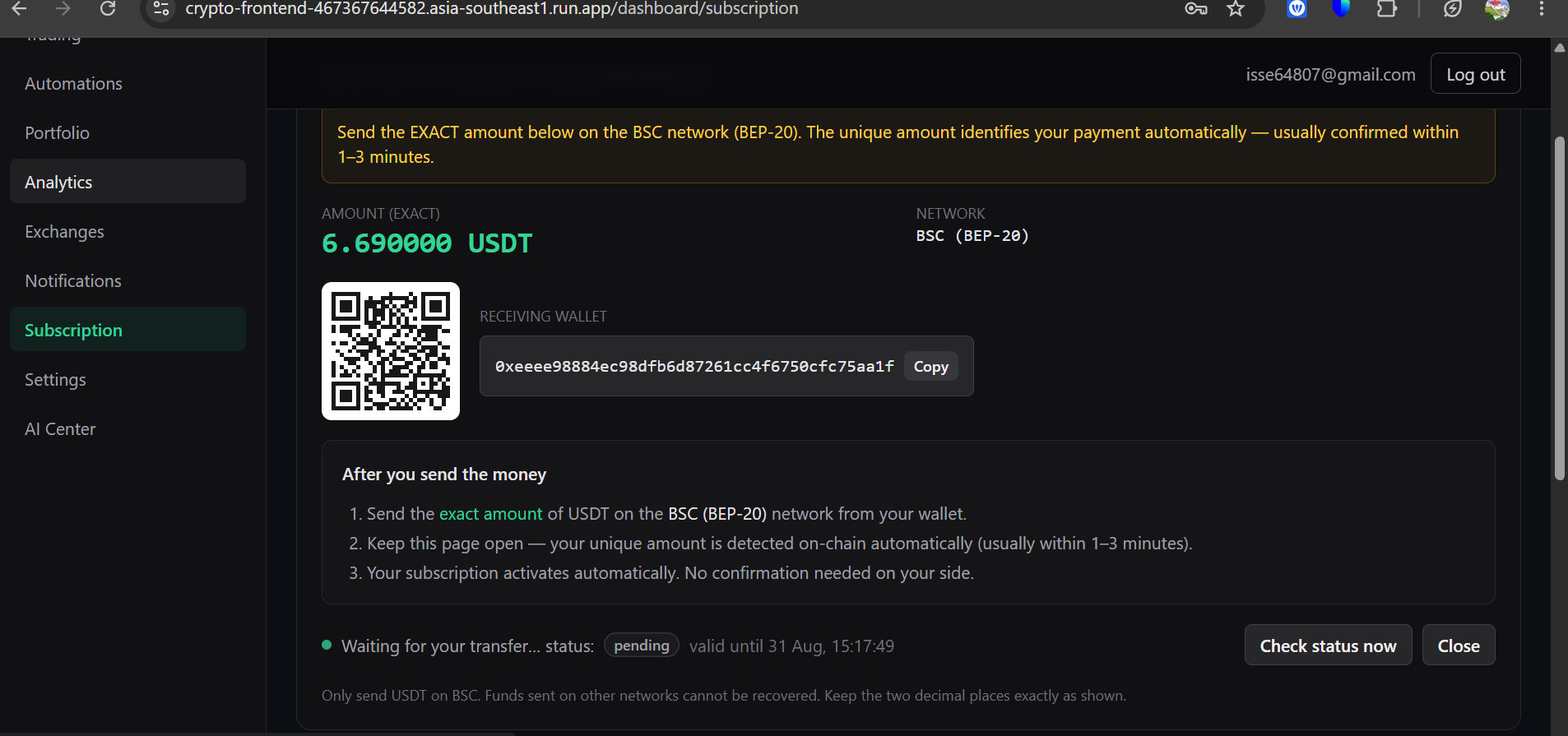
Subscription Page
-
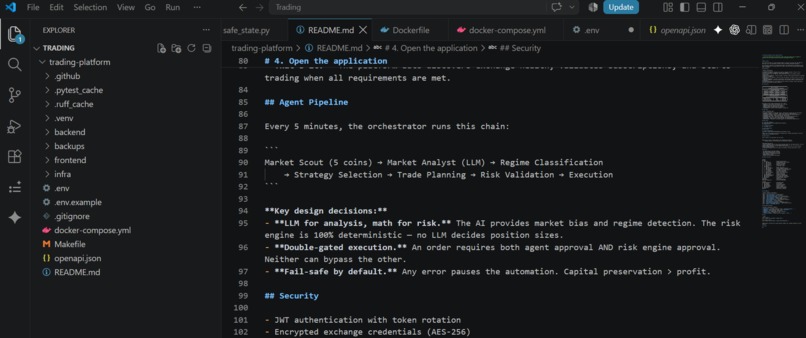
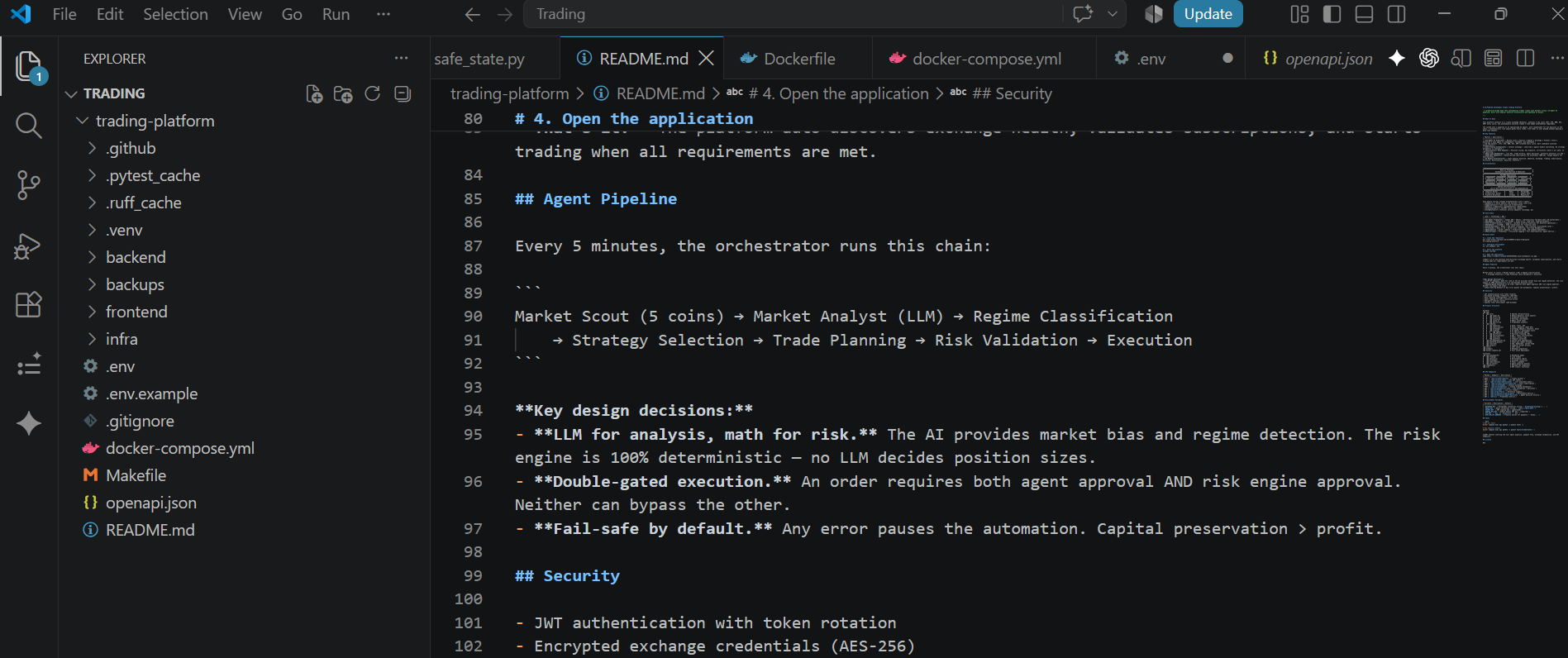
Project Folder
About the Project
Where It All Started
I grew up in an environment where technology was still relatively limited, and cryptocurrency was almost unknown.
I entered the technology space in 2022. Before becoming a software engineer, however, my journey was very different. I explored crypto, content creation, and affiliate marketing. I was trying to find a direction, but I was confused, I was not making meaningful income, and I had no mentor to guide me.
I also did not have a group of young people around me who shared the same ambitions and wanted to build together.
Instead, I often faced doubt from the people around me. My ambitions were sometimes seen as unrealistic or even as a fantasy.
At the end of 2023, I made a major decision: I left my school-teaching job and decided to dedicate my time to technology.
I had around $500 that I thought would help me survive while I pursued this path.
Two days later, on a Friday, I lost that money through memecoin trading.
That could have been the moment I gave up.
It became the opposite.
That night, instead of giving up, I decided that I would become a software engineer and build technology myself.
The next morning, Saturday, I started learning Python through YouTube.
That was the moment when my desire to create something became a deliberate action.
The Problem That Inspired FOZERA
While learning about crypto, I noticed a problem very close to me.
Many teachers and other people around me became interested in cryptocurrency. They wanted to participate and make money, but most of them did not want to deeply study markets, technical analysis, risk management, APIs, and trading systems.
They had limited time and limited knowledge, yet they were entering a highly volatile market.
Several people experienced losses.
I realized that the problem was not a lack of interest.
There were people who wanted to participate, but they did not have the time, knowledge, or technical ability required to manage the complexity of crypto trading.
That led me to a question:
What if I could build a system that handles the complexity of crypto trading autonomously, so that users do not need to become technical experts just to use it?
That question became one of the foundations of FOZERA.
From a Trading Bot to an Autonomous System
My first attempt at the project was a trading bot near the end of 2025.
At that time, I built it using what is commonly called "vibe coding." However, I quickly discovered a major limitation: I did not yet have the deep software-engineering knowledge required to properly operate, understand, extend, and maintain what I had built.
Eventually, I deleted that project.
I did not delete the idea.
Instead, I went deeper into software engineering.
I started learning how real systems are architected, how components communicate, how data flows through applications, how state is managed, how workflows are orchestrated, how systems are deployed, and how autonomous systems can be designed.
When I returned to the idea of FOZERA, my thinking had changed.
I no longer wanted to build just another trading bot.
I wanted to build an autonomous system.
How I Built FOZERA
FOZERA is designed around the idea that a trading system should be able to operate through the entire workflow, from market observation to execution and monitoring, without requiring a human to manually perform every step.
At a high level, the system follows a flow like:
Market Data → Context → Analysis → Strategy Evaluation → Risk Validation → Execution → Verification → Monitoring → Feedback
A user connects their Binance account, has an active subscription, and starts an automation.
The system can then monitor the automation's state and trading activity while the user observes what is happening through the platform.
The goal is to move the user away from manually performing every step and toward supervising an autonomous system.
Technology Stack
I built FOZERA primarily around the Google ecosystem because I found that it provided a strong set of tools for the AI, software-engineering, and cloud requirements of the project.
Frontend
- Next.js
Backend
- Python
- FastAPI
- Pydantic
Database
- Google Cloud SQL
- SQLAlchemy
Cache
- Google Memorystore
Authentication
- Firebase Authentication
AI and Agents
- Google Agent Development Kit (ADK)
- Gemini
Workflow Orchestration
- Temporal
Deployment and Infrastructure
- Docker
- CI/CD
- Google Cloud Run
The architecture allowed me to connect application development, AI agents, long-running workflows, authentication, databases, caching, and cloud deployment into one production-oriented system.
The Biggest Thing I Learned About AI
The most important thing I learned was not a framework.
It was Data.
Before this project, I mainly thought about data as information stored in a database or passed between different parts of a system.
Building an autonomous system changed that perspective completely.
I developed a mental model around this continuous chain:
Data → Context → General Models → Specialized Models → Reasoning → Decision → Action → Verification → Feedback → Data
The more I understood this chain, the more I realized that the quality of an autonomous system depends heavily on the quality of the information surrounding the model.
Good data creates better context.
Better context supports better reasoning.
Better reasoning can produce better decisions.
Better decisions can lead to better actions.
Actions can be verified.
The resulting feedback becomes new data.
And that data can be used to continuously improve the system.
This led me to one of the strongest conclusions I gained from the project:
Great Data and correct data are at the core of useful AI and Agentic systems.
The model is important, but the model is not the entire system.
What an Agent Means to Me Now
Building FOZERA fundamentally changed how I understand AI agents.
Previously, I could have thought of an agent as an AI feature or simply an LLM connected to some tools.
Now I see an agent more like a real digital worker.
An agent needs:
- A clear goal
- Responsibility
- Tools
- Context
- Reasoning
- Decision-making
- The ability to take action
- Verification
- Feedback
This changed how I think about system architecture.
An agent is not simply a model.
It is a system that uses intelligence inside a structured environment to understand a goal, reason about it, use available tools, take action, verify the result, and continue improving through feedback.
That became an important principle behind FOZERA.
What I Learned About Software Engineering
FOZERA also changed the way I think about software engineering.
Before going deeply into software engineering, I often thought of software primarily as lines of code.
Now I think about mental architecture first.
I see the frontend as the part of the system that the user interacts with.
I see REST APIs, WebSockets, and other communication mechanisms as a communication layer connecting different components and systems.
I see the database as the home of persistent application data.
I see caching as a fast-access layer for information that needs to be retrieved frequently.
I see monitoring as the layer that allows me to observe how the system itself is behaving.
This shift from thinking mainly about code to thinking about architecture has been one of the most important outcomes of building FOZERA.
The project went through periods where the architecture felt confusing and difficult to manage.
But by building, debugging, rebuilding, and learning, I developed a much clearer mental model of software engineering and AI systems.
The Hardest Challenges
1. Agent Architecture
Agent architecture was one of the hardest technical challenges because it was the first time I was learning how to design and implement an agentic system practically.
I had to move beyond simply calling an AI model.
I had to think about responsibilities, tools, reasoning, decisions, actions, verification, and feedback.
That forced me to rethink how the different parts of the system should work together.
2. Cloud Deployment
Cloud deployment was another major challenge because it was also a new practical area for me.
Moving from a local development environment to a production-oriented environment required me to understand and work with:
- Docker
- CI/CD
- Cloud Run
- Databases
- Authentication
- Secrets
- Networking
- Service configuration
- Distributed application components
These were not concepts I wanted to understand only theoretically.
I wanted to make them work in a real system.
3. Building Without the Resources I Wanted
Some of my hardest challenges were not technical.
After leaving my job, I did not have stable financial resources to support myself, operate projects, or invest heavily in infrastructure.
I was spending my mornings, afternoons, and nights learning and building around my laptop.
At the same time, I did not have a team of young developers with whom I could share ideas and build together.
I also did not have companies where I could work freely and gain practical experience.
So much of this journey had to be done alone.
4. Resistance From My Environment
Another major challenge was my environment.
My family and relatives did not always understand what I was trying to achieve.
Sometimes I faced negative opinions, insults, and criticism because people believed I was wasting my time or that I had lost direction.
There were even situations where my laptop was damaged because of that misunderstanding.
It was difficult.
But it also strengthened my determination.
What the Hackathon Means to Me
I did not enter this hackathon simply to submit a trading application.
I wanted to present my goal, demonstrate what I am capable of building, and create an opportunity to receive support that could help me overcome some of the barriers I have faced.
Most importantly, I wanted to show the direction I believe technology can take in my community.
FOZERA is the beginning of that vision.
Beyond Crypto
FOZERA is not intended to remain a single trading product.
The trading platform is the first product in what I envision becoming a much larger family of autonomous products.
My long-term vision is to use AI, Agentic systems, automation, software engineering, and eventually autonomous machines to address problems across different areas of life.
These include:
- Education
- Agriculture
- Livestock
- Healthcare
- Transportation
- Manufacturing
- Supply and logistics
- Environmental systems
- Business operations
- Accessibility for people with disabilities
- Security
- And other areas where repetitive and complex work can be made more autonomous
The idea is that every product should continuously collect and use useful information.
My long-term architecture can be summarized as:
Historical Data + Real-time Data + Context + Feedback → Great Data → Great Reasoning → Reliable Execution → Verification → Continuous Improvement
The objective is not simply to automate a task.
The objective is to create systems that can observe, understand, reason, act, verify, learn from feedback, and become better over time.
Why Non-Custodial?
One important decision in FOZERA is that users remain responsible for their own assets.
I do not want to take custody of people's funds.
Holding user assets creates an additional level of responsibility and risk. A system can be attacked, credentials can be compromised, or software can fail.
I therefore wanted FOZERA to operate without becoming the custodian of users' assets.
The goal is to provide autonomous functionality while avoiding unnecessary custody of people's wealth.
The Vision
My vision for FOZERA is much larger than crypto trading.
I want to build a company that makes different parts of life more autonomous.
I want people to benefit from sophisticated technology without needing to understand every technical detail behind it.
The complexity should be handled by the systems.
The human should be able to define the goal, maintain appropriate control, and benefit from the result.
In the future, I want FOZERA to develop products across many sectors, with each product collecting high-quality data, building context, reasoning, executing reliably, verifying its actions, and continuously improving.
The trading platform is only the beginning.
Why FOZERA?
For me, FOZERA represents more than a software product.
It represents the decision I made when I had very little:
To stop waiting for the opportunity to come to me and start building the opportunity myself.
I grew up without the technology ecosystem, mentors, teams, resources, and opportunities that I wished I had.
Instead of allowing those limitations to define what I could build, I decided to learn the skills necessary to create what I could not find.
That is the larger purpose behind FOZERA.
I want to build systems that can eventually make 80% of repetitive work operate autonomously, while improving reliability through better data, reasoning, verification, and continuous feedback.
And I want to use that capability to solve real problems in my community.
**FOZERA is my first product.
Autonomy is the vision.**


Log in or sign up for Devpost to join the conversation.