-
-
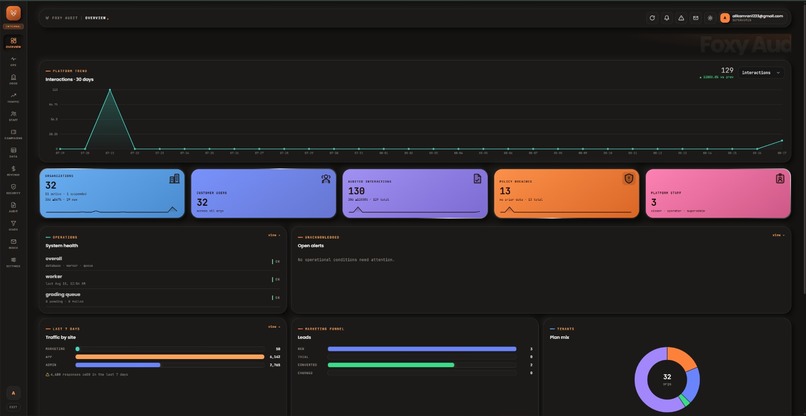
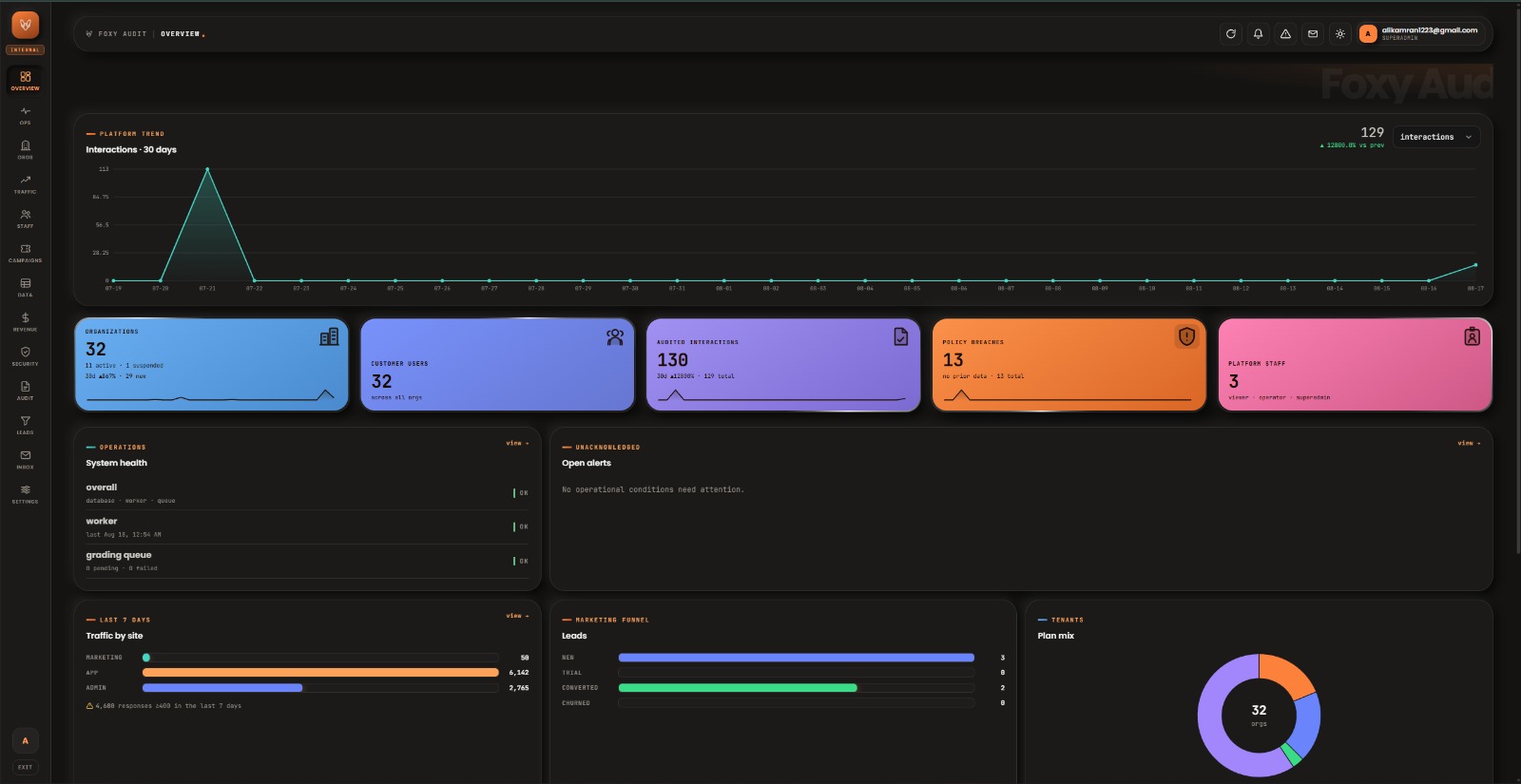
Dashboard
-
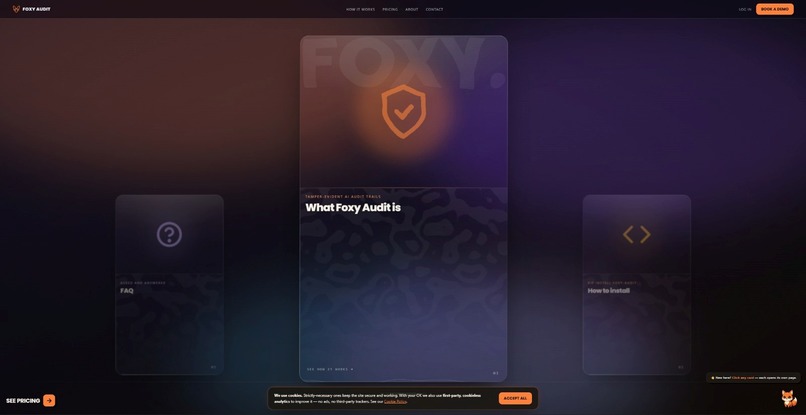
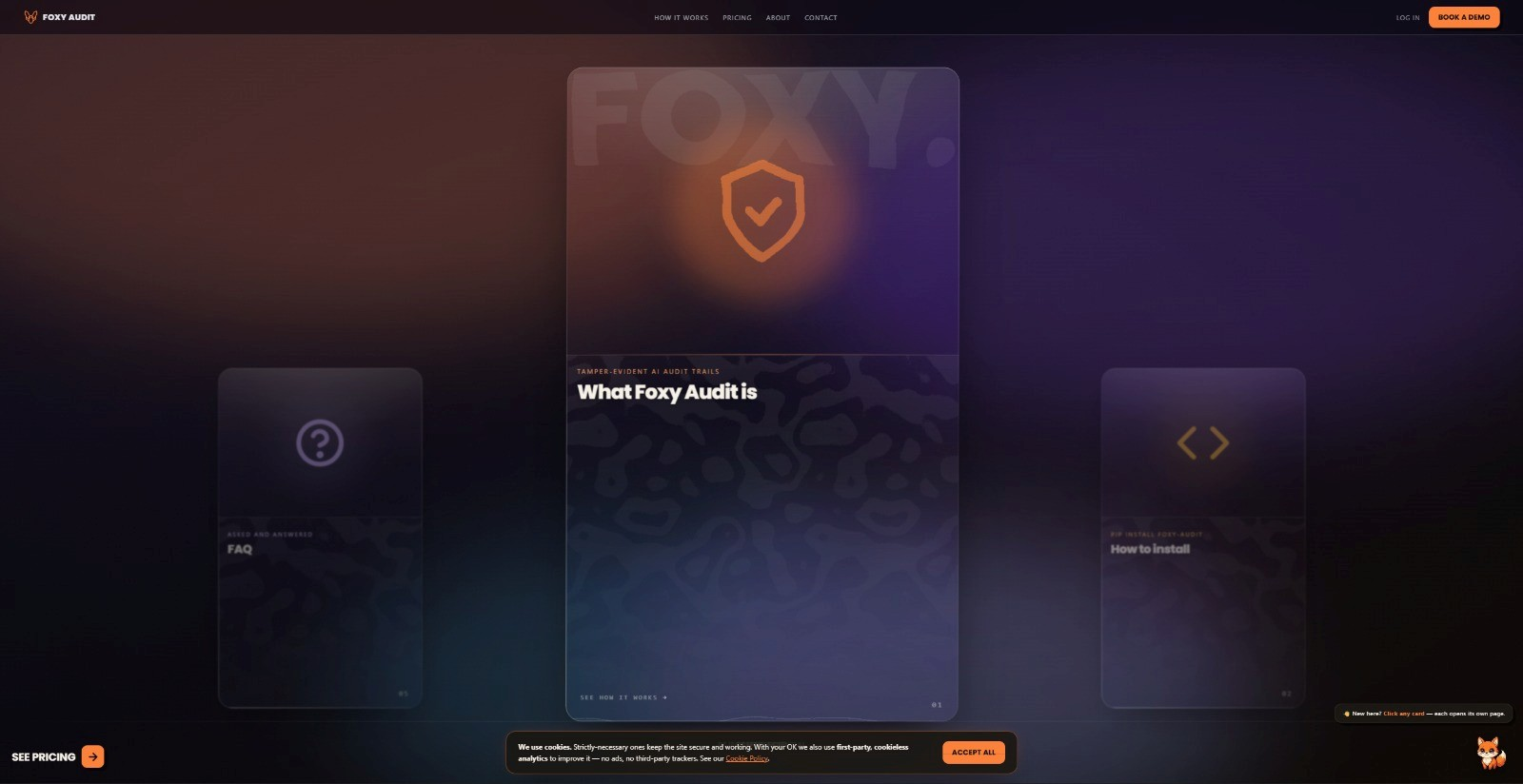
sales page
-
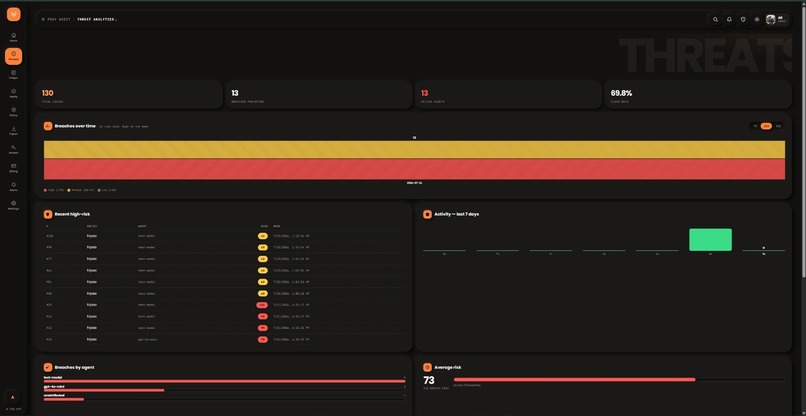
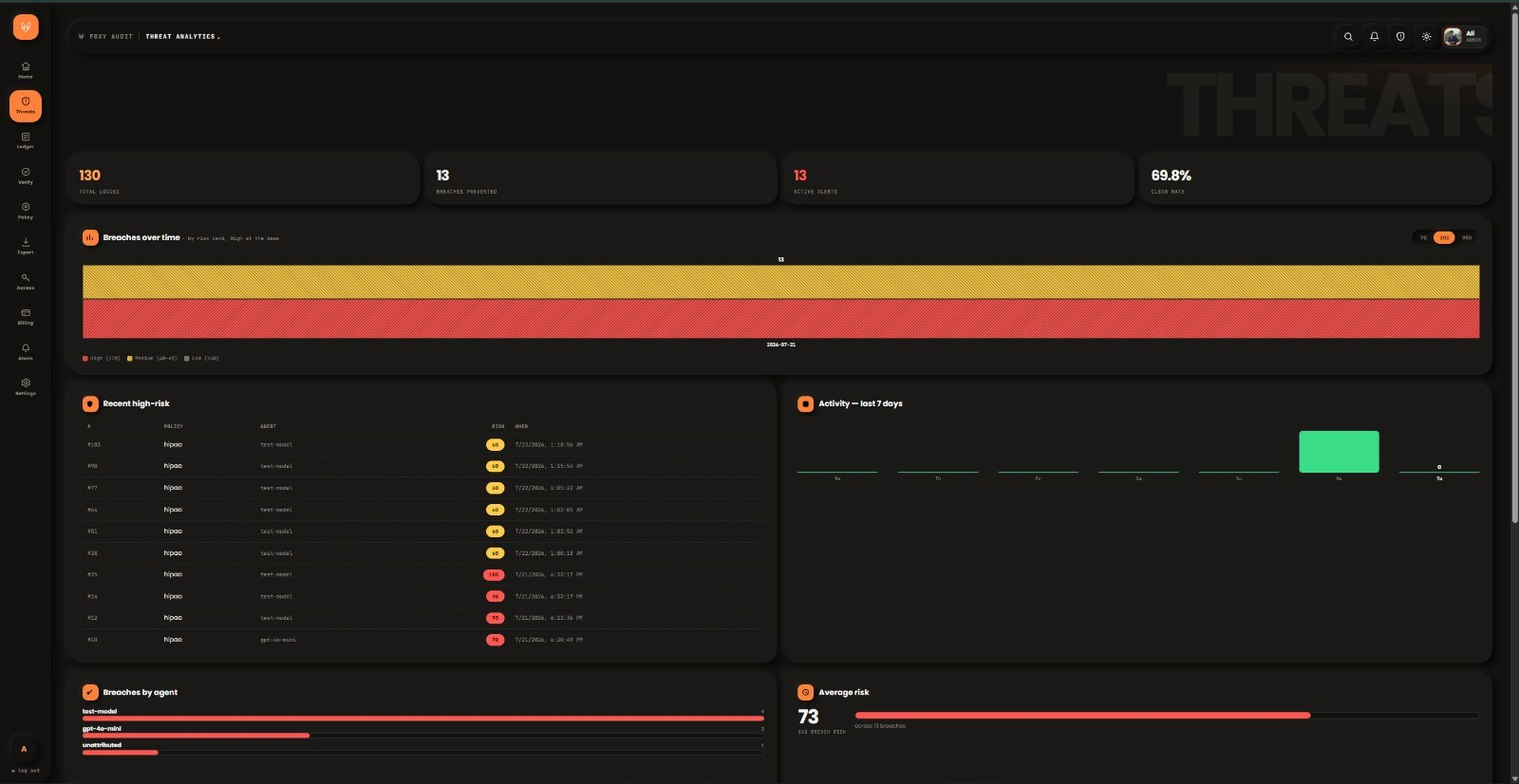
admin page
-
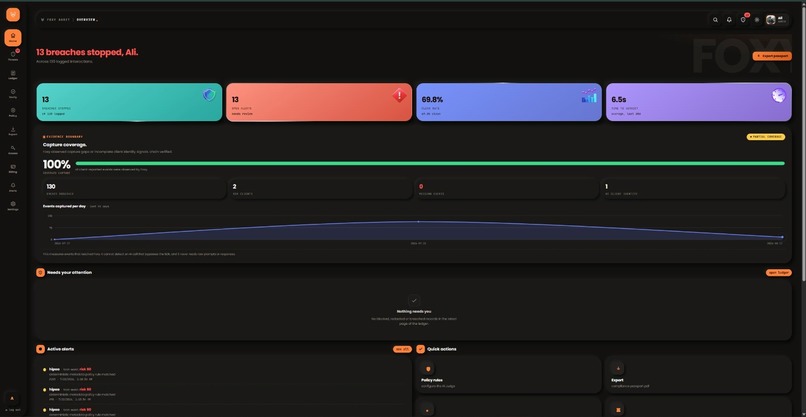
admin page
-
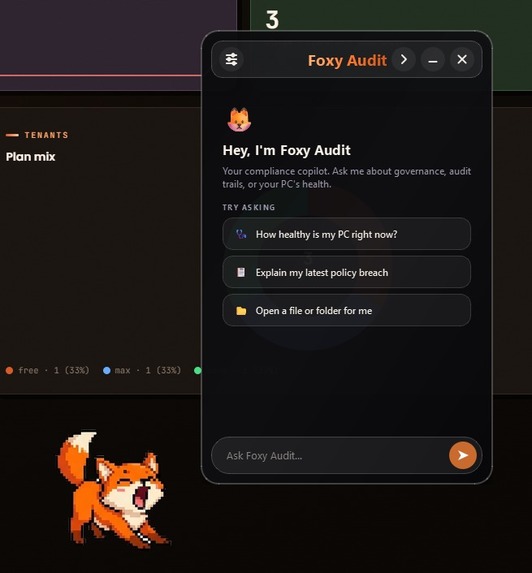
pet
Inspiration
The threat of indirect prompt injection is an existential risk for any company shipping an AI feature. We watched standard enterprise AI assistants exfiltrate private files simply because a user summarized an inbox containing a hidden instruction. With the EU AI Act imposing massive compliance liabilities, startups and small businesses are forced into a terrible paradox: to prove their AI is safe, they have to either spend thousands on manual external auditors or pipe their highly sensitive user prompts directly into third-party security vendors. We were shipping our own AI features after previously building hash-chained access logging for a psychiatric care system, and the manual auditing process was a nightmare. We realized that protecting data shouldn't require collecting data. We didn't think AI should get to say "trust me" it needs to prove it.
What it does
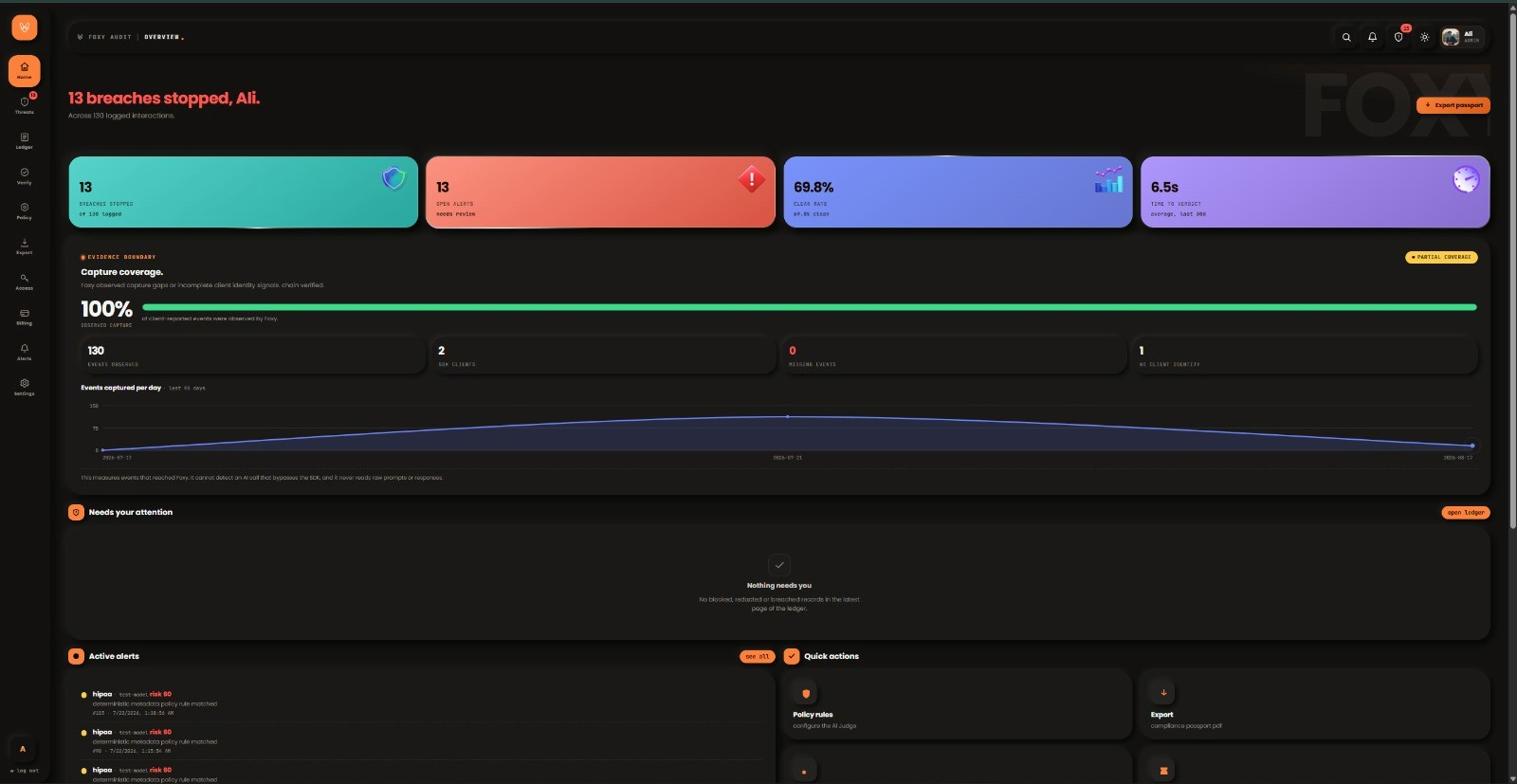
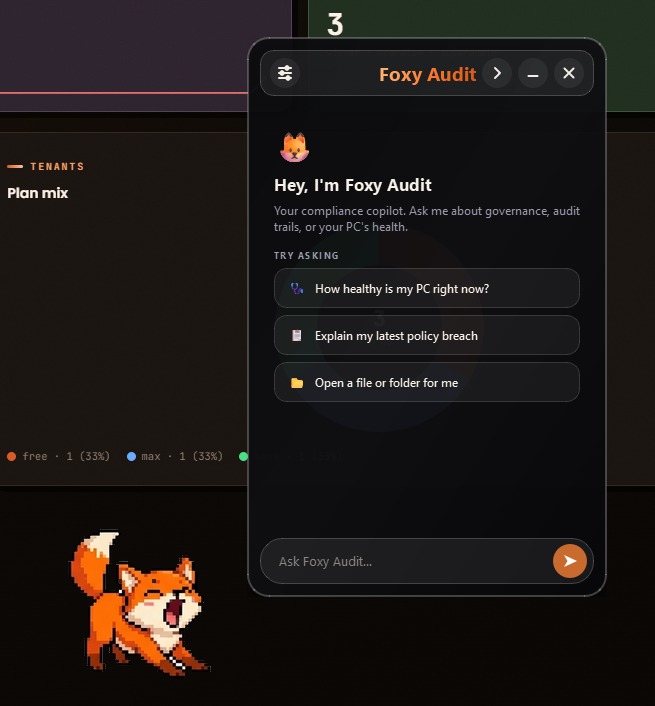
Foxy Audit is a zero-knowledge AI runtime security and continuous compliance platform. It operates directly at the application boundary to intercept prompt injections and redact sensitive data (like PII) locally in real-time. Instead of saving raw text, it extracts structural metadata and generates a cryptographic hash of the event, chaining it to the previous interaction and anchoring it to a public blockchain.
Every interaction is then asynchronously evaluated by an AI judge for compliance violations. If an auditor or client asks for proof of security, Foxy Audit generates an exportable, tamper-evident compliance passport automatically. If a single byte of the audit log is altered, the cryptographic proof breaks instantly.
How we built it
We built Foxy Audit with a strict "content-blind" architecture.
- The SDK: A lightweight Python SDK that developers wrap around their LLM calls with exactly one line of code. It handles the local PII redaction and cryptographic hashing.
- The Engine & Infrastructure: The backend is deployed entirely on Google Cloud, ensuring high availability and secure processing.
- The AI Judge: We integrated Google's Gemini 2.5 Flash as the core evaluation engine. Because of our privacy-first design, Gemini analyzes only structural metadata, token distributions, and local heuristics to grade the interaction against compliance frameworks (like HIPAA, PCI DSS, or the EU AI Act). It never sees the raw prompt or response.
- The Ledger: We utilized smart contracts to periodically anchor the cryptographic hash chains to a public blockchain, ensuring the audit trail lives somewhere we do not control.
Challenges we ran into
The hardest technical challenge was achieving accurate compliance grading without exposing the payload. Standard AI security tools work by reading the raw text, which violates data privacy. We had to engineer a way to extract enough structural signals at the runtime boundary so that Gemini 2.5 Flash could make a highly accurate, deterministic block-or-pass decision using only metadata. Prompting an LLM to reliably return strict JSON verdicts based purely on sequence gaps, token limits, and regex flags took massive iteration. Furthermore, ensuring the local hashing and redaction added near-zero latency to the host application was critical for production viability.
Accomplishments that we're proud of
- The Zero-Knowledge Breakthrough: Successfully proving that an LLM can grade another LLM's compliance posture completely blind to the content.
- Live Production Traction: Moving beyond a hackathon prototype to a live, commercial-grade platform with over 20 active organizations deployed and securing real tokens in production.
- Provable Immutability: Building a system where we can literally try to cheat our own database on a live demo, and the hash chain shatters and flags the tampering instantly.
- High-Fidelity Local Detection: Hitting a measured 93% recall on credit card numbers and 100% on phone numbers at the edge before data ever leaves the host.
What we learned
We learned that the gap in the AI security market isn't about mapping policies or generating post-hoc reports for humans to review it's about real-time enforcement. Startups want to ship fast, and any security tool that takes weeks to integrate or introduces privacy liabilities will be ignored. By reducing integration to a single line of code and abstracting the complex cryptography and Gemini grading into the background, we learned that developers will happily adopt enterprise-grade compliance if it removes friction rather than adding it.
What's next for Foxy Audit
- Customer Acquisition & Monetization: Our immediate next milestone is translating our early traction into revenue. We are actively converting our pilot deployments into paying customers and expanding our reach into highly regulated markets like healthtech and fintech.
- Zero-Knowledge Proofs (ZKP): Technically, we are researching the integration of robust Zero-Knowledge Proofs. This will harden our cryptographic guarantees, allowing organizations to mathematically prove policy adherence to third-party auditors without exposing even the metadata footprints of their operations.
- Advanced GRC Capabilities: We plan to expand Foxy Audit to support broader Governance, Risk, and Compliance (GRC) techniques. This means evolving from a runtime guardian into a comprehensive, automated risk-mapping engine that directly ties AI execution logs to enterprise risk matrices and regional regulatory frameworks out-of-the-box.
Built With
- alembic
- cryptography
- css3
- docker
- ethereum
- fastapi
- gemini
- github-actions
- google-cloud
- html5
- javascript
- nginx
- postgresql
- pydantic
- pyside6
- python
- qt
- recaptcha
- sendinblue
- smart-contracts
- solidity
- sqlalchemy
- ubuntu
- web3
- zero-knowledge

Log in or sign up for Devpost to join the conversation.