-
-
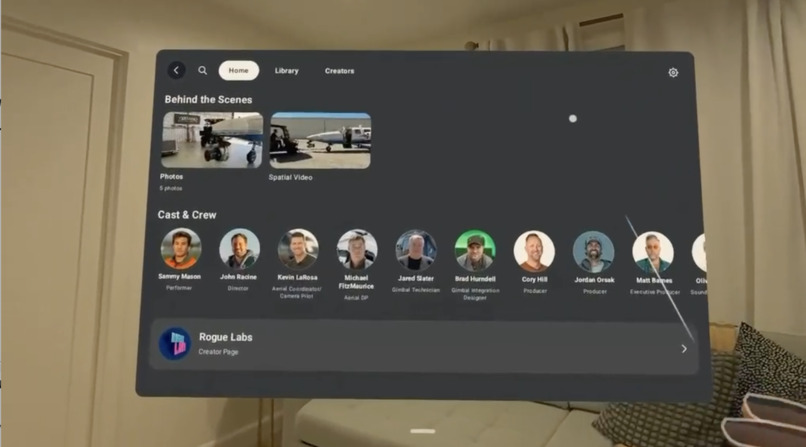
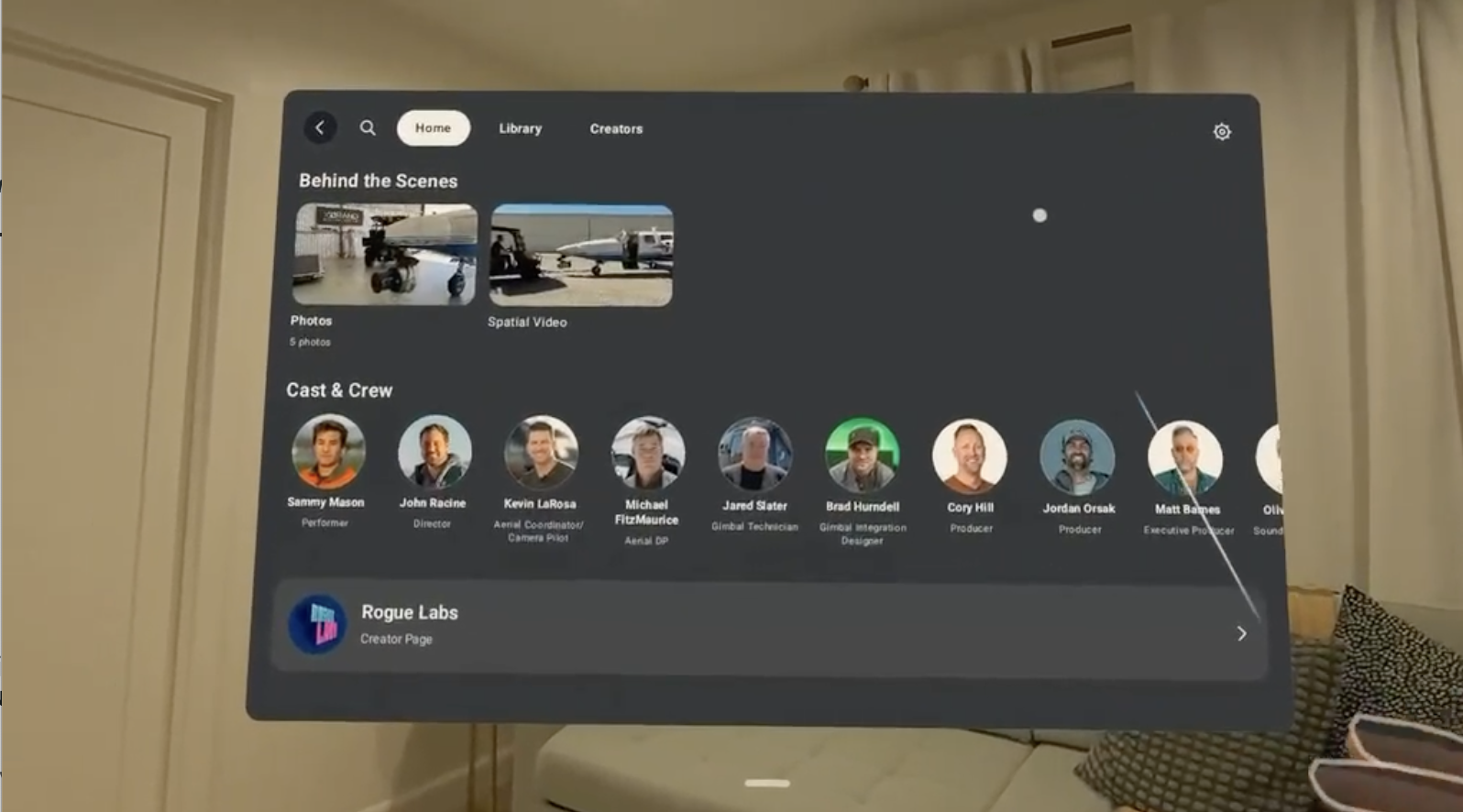
Film Detail Page with Behind-The-Scenes images and spatial videos along with Cast & Crew
-
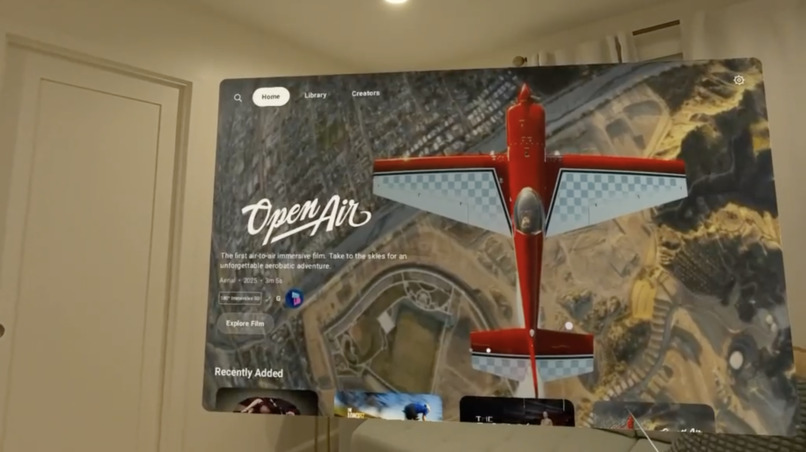
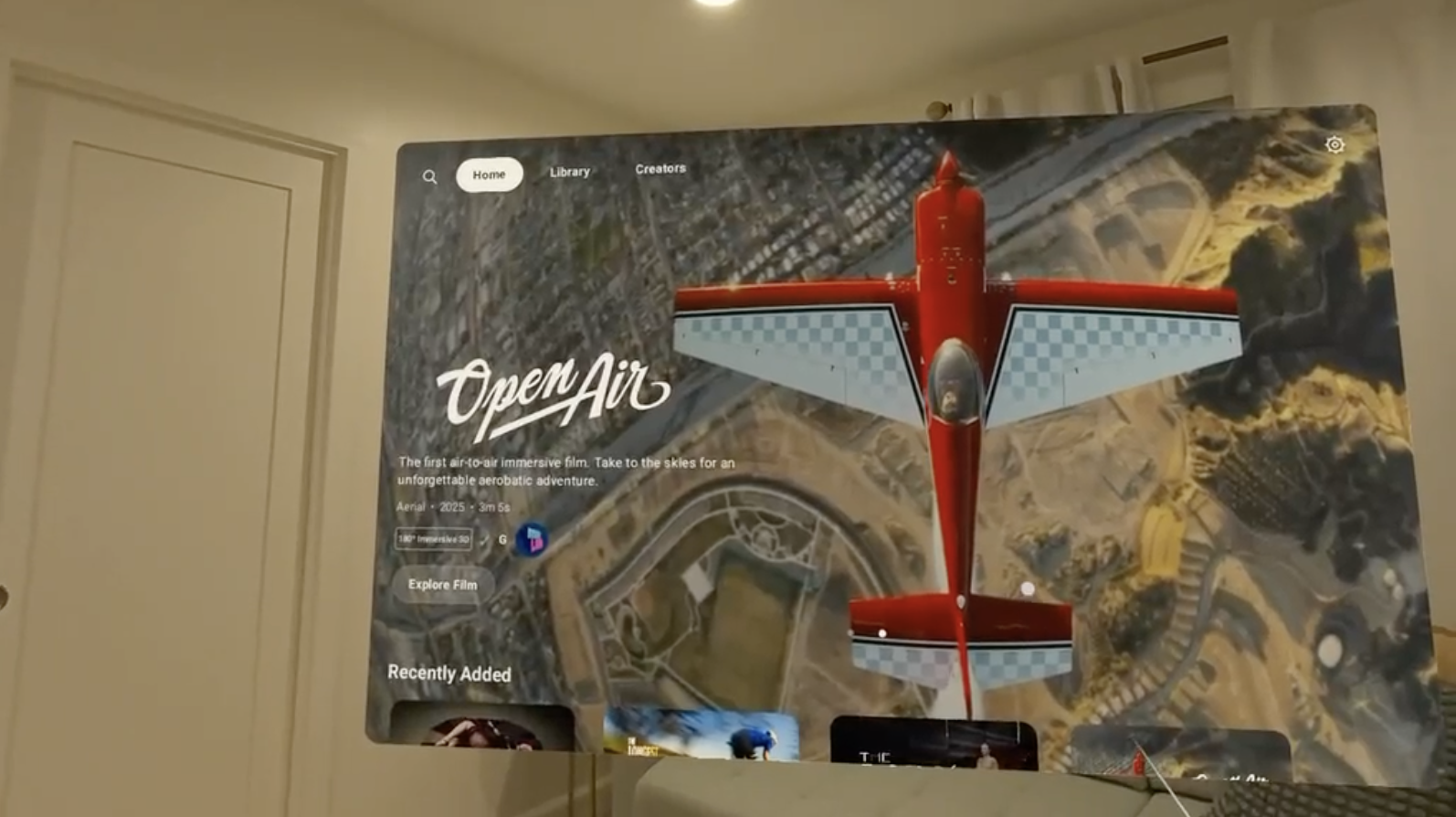
Home Page
Inspiration
Immersive films can put you beside a performer, inside a story, or in the air with an aerobatic pilot. We wanted discovering those experiences to feel as approachable as choosing a film, while giving the people who make them a place to tell their stories. Fovii began on Apple Vision Pro. This project brings that experience to Meta Quest with a new native application and an interface designed for hands-first, seated viewing.
What it does
Fovii combines film discovery with immersive playback. Viewers can browse Home, search the collection, explore film details and cast and crew, visit creator pages, and open behind-the-scenes photo galleries and spatial videos. The competition edition includes free access to four films: Open Air, AEQUUS, The Dobos Connection, and The Longest Day.
A film opens into stereoscopic 180-degree video with the controls initially hidden. A hand pinch reveals playback controls; selecting outside them dismisses them while the film plays. When a film finishes, the viewer returns to its detail page.
How we built it
We built the Quest application in Kotlin with Jetpack Compose for the catalog and Meta Spatial SDK for immersive presentation and input. AndroidX Media3/ExoPlayer handles video playback. We retained Fovii's existing Supabase-backed JSON catalog structure for film information, credits, creators, and artwork. The competition edition uses a curated catalog snapshot so the four-film selection stays consistent.
SpatialGen reprojects the immersive masters into Quest-compatible stereoscopic VR180 HEVC streams delivered over HLS. The player uses verified side-by-side renditions with 4096 × 4096 pixels per eye. We used Gradle, automated regression checks, simulator testing for supported surfaces, and physical Quest feedback to iterate on the experience. OpenAI Codex assisted development and debugging.
Challenges and what we learned
The hardest work was the transition between a familiar browsing window and immersive video: preserving stereo projection, making controls work naturally with hands, returning to the right film, and handling Android and spatial-runtime lifecycle changes. Headset diagnostics helped us identify release-build SDK registration problems that ordinary catalog tests could not reveal.
We learned that a successful port needs more than matching screens. Input, rendering, lifecycle, and distribution each need validation on the destination platform.
What's next
We plan to expand the Quest-ready collection, complete Meta-specific commerce, and continue improving playback comfort and accessibility. The competition build focuses on a free, complete viewing experience.
