-
-
Thumbnail
-
Individual Card details
-
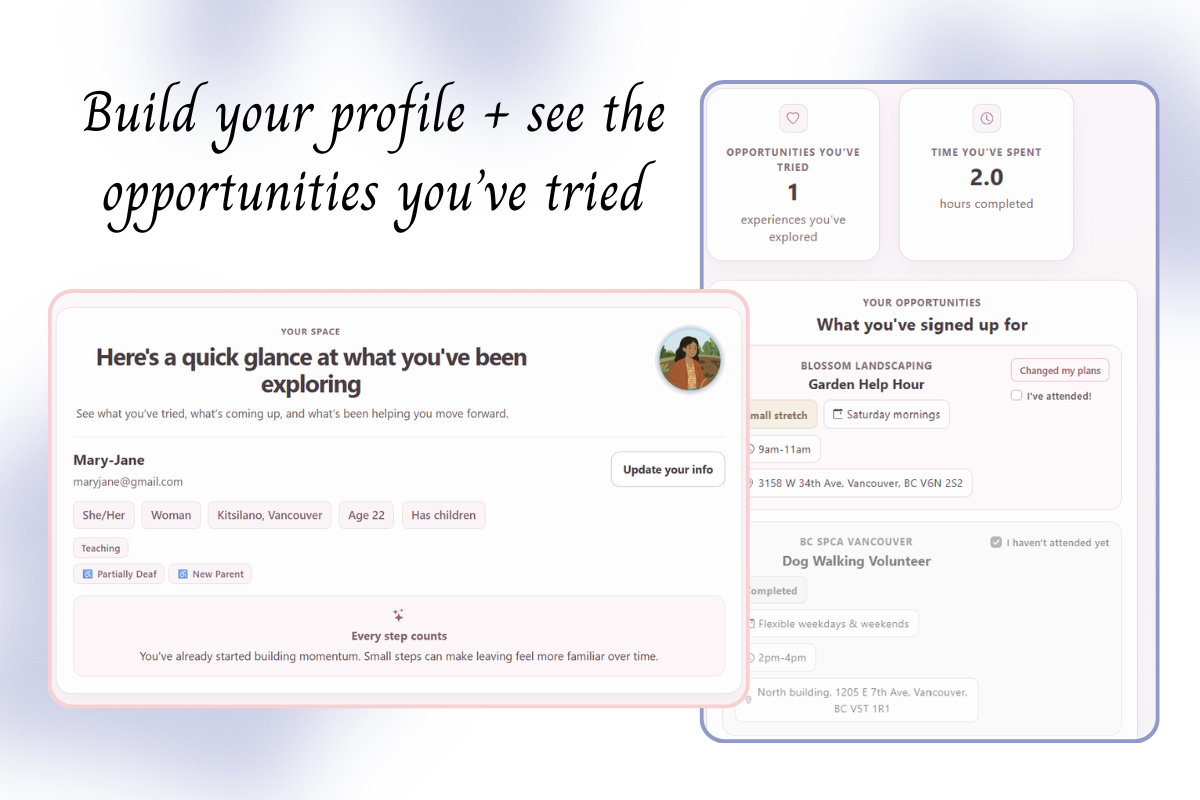
Build a profile and get involved
-
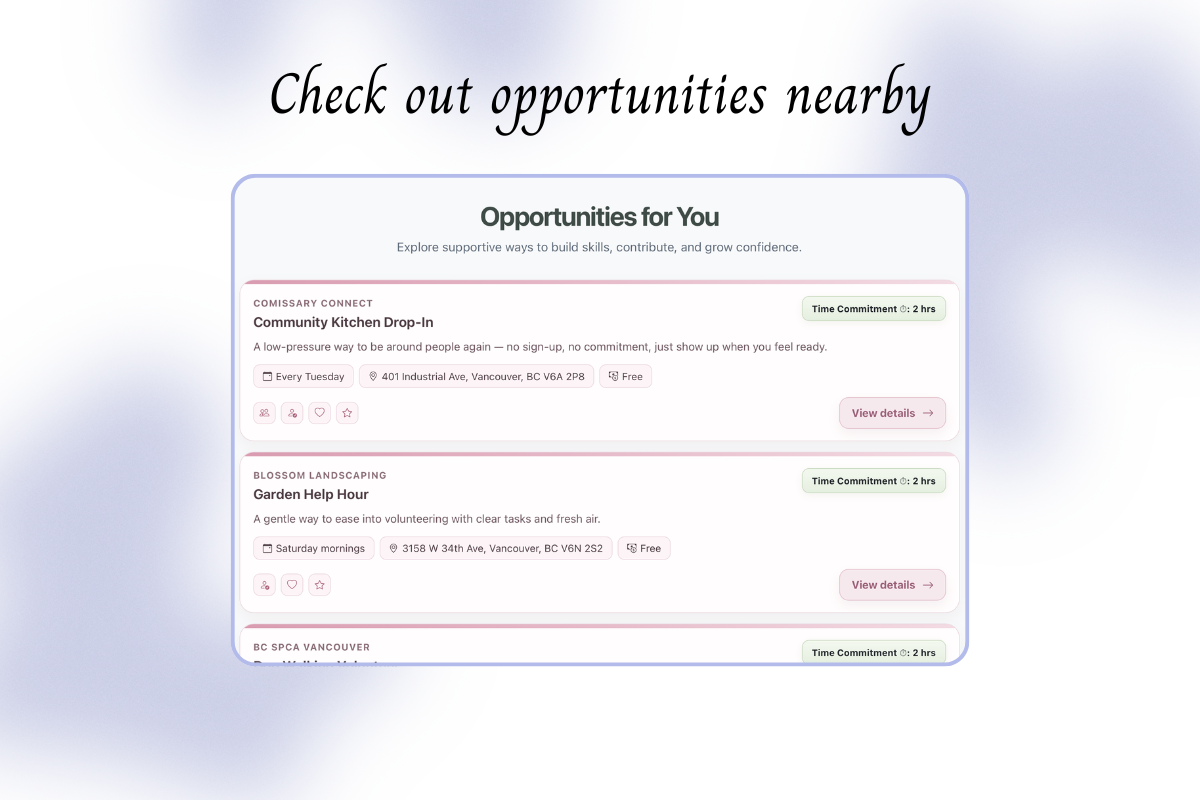
Try out new things
-
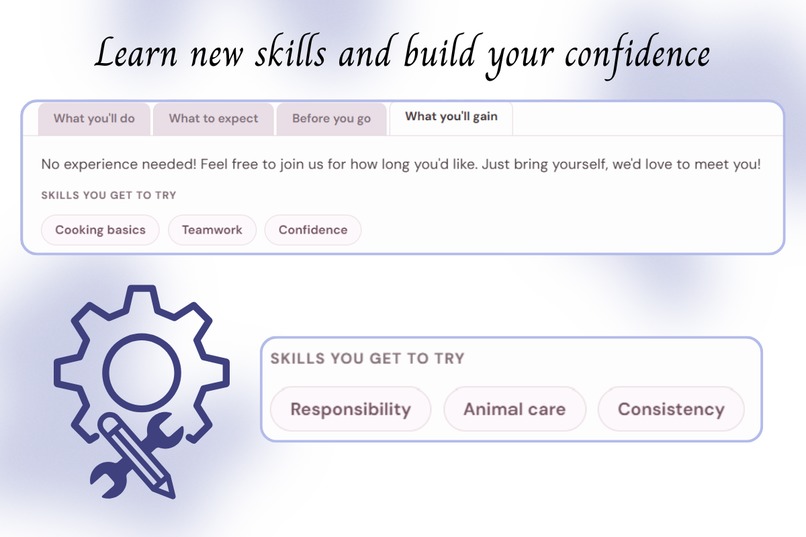
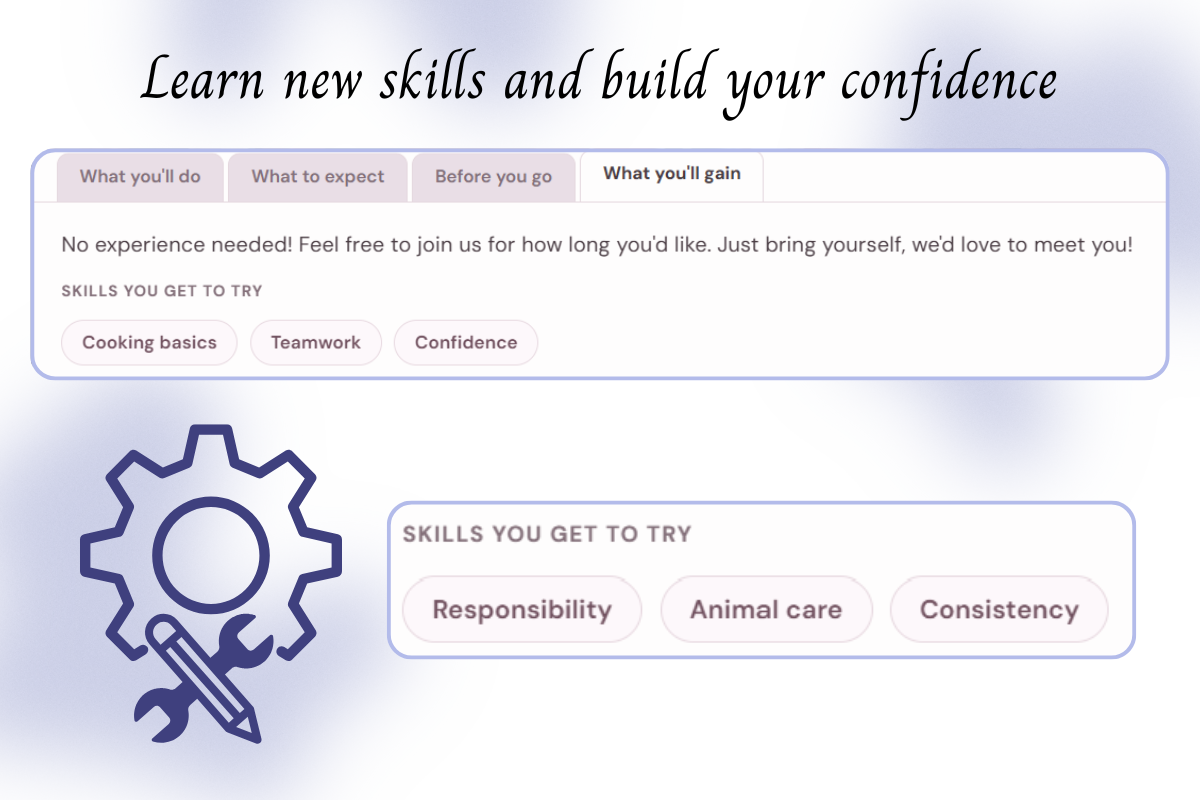
Learn new skills
-
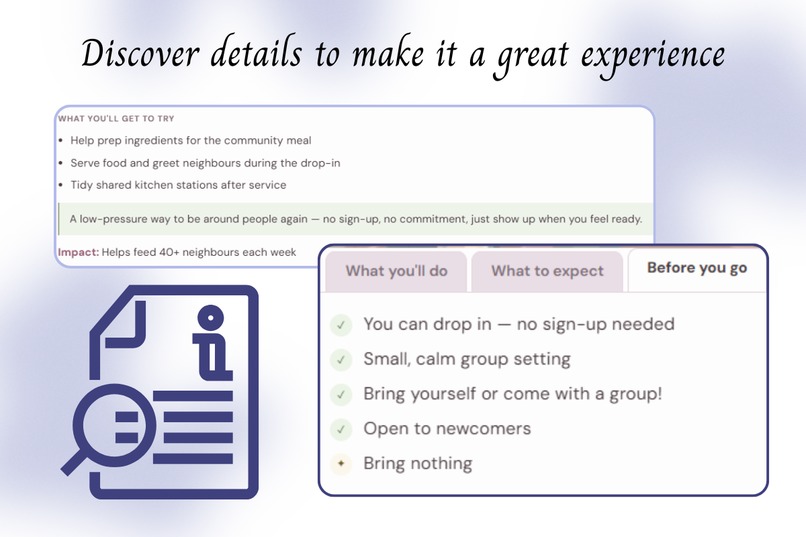
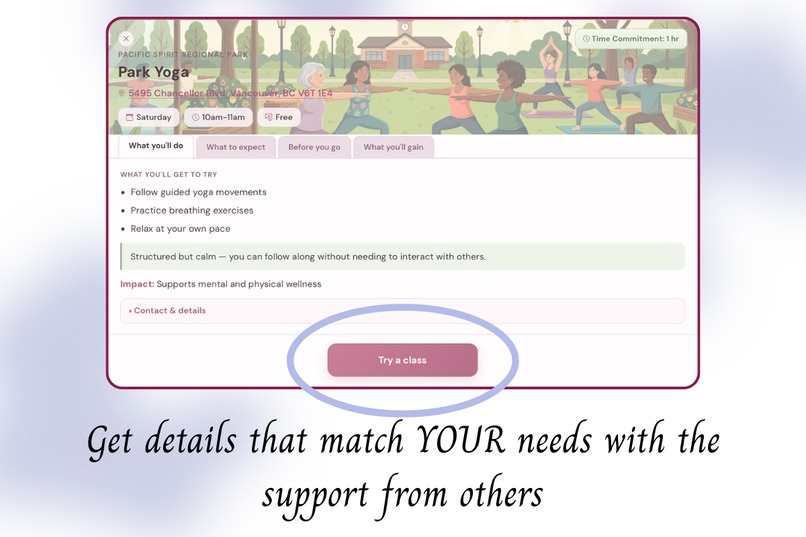
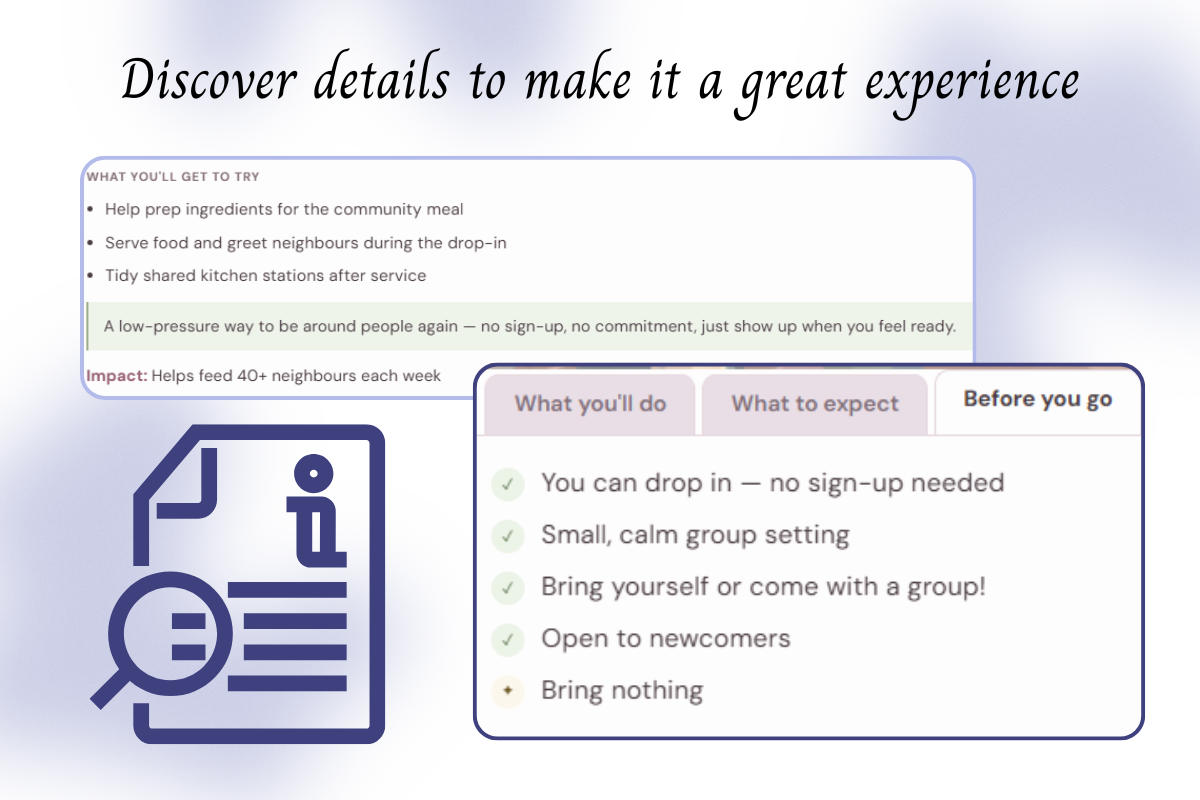
Discover details about opportunities
Inspiration
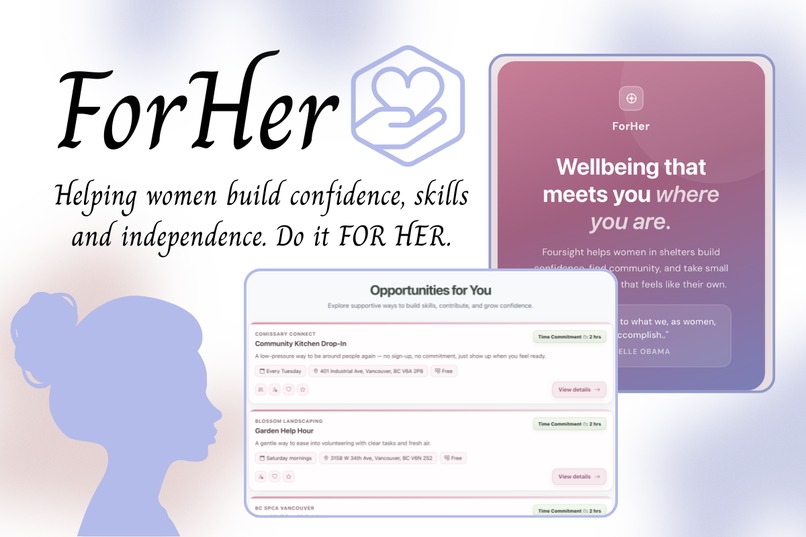
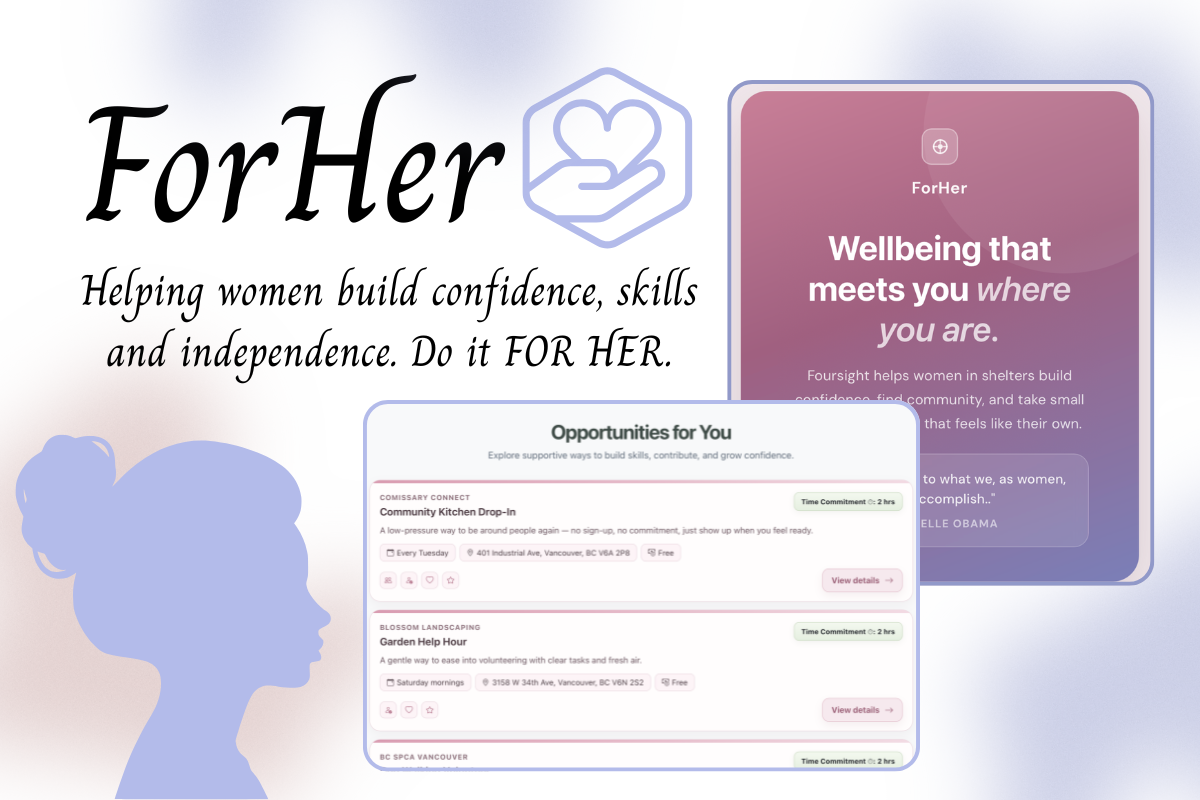
The inspiration for ForHer came from the thought that women in shelter homes often prefer not to leave since they do not want to risk the stability they have found for themselves and their families. This led us to think about what a low-risk way of getting involved in the community might look like. Volunteering kept coming up as an answer. It builds skills, creates routine, and gets you connected, so we decided to build something that makes it as easy as possible to take that first step.
What it does
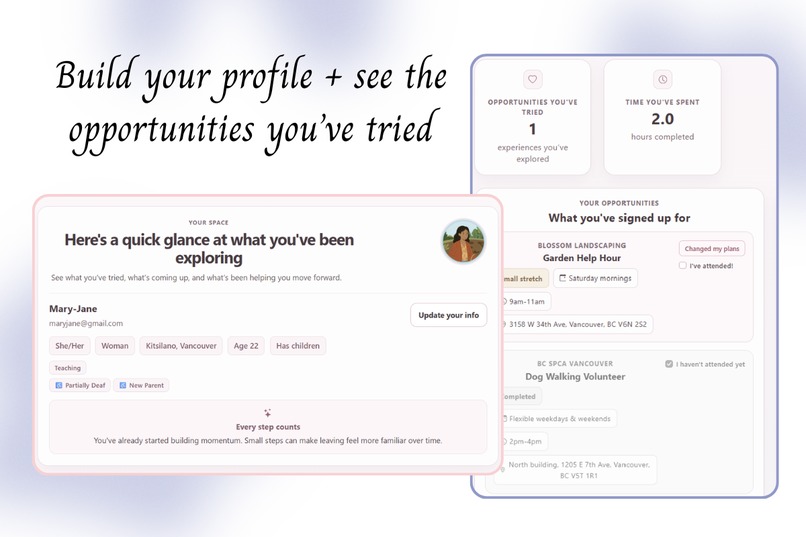
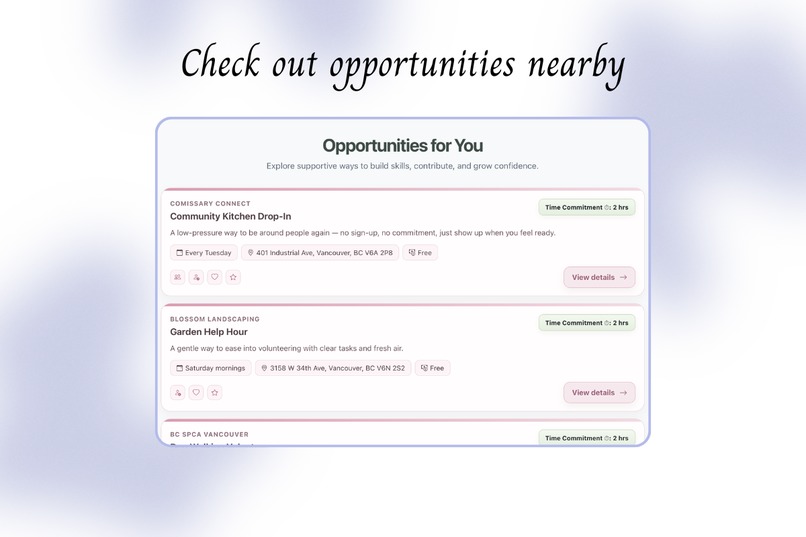
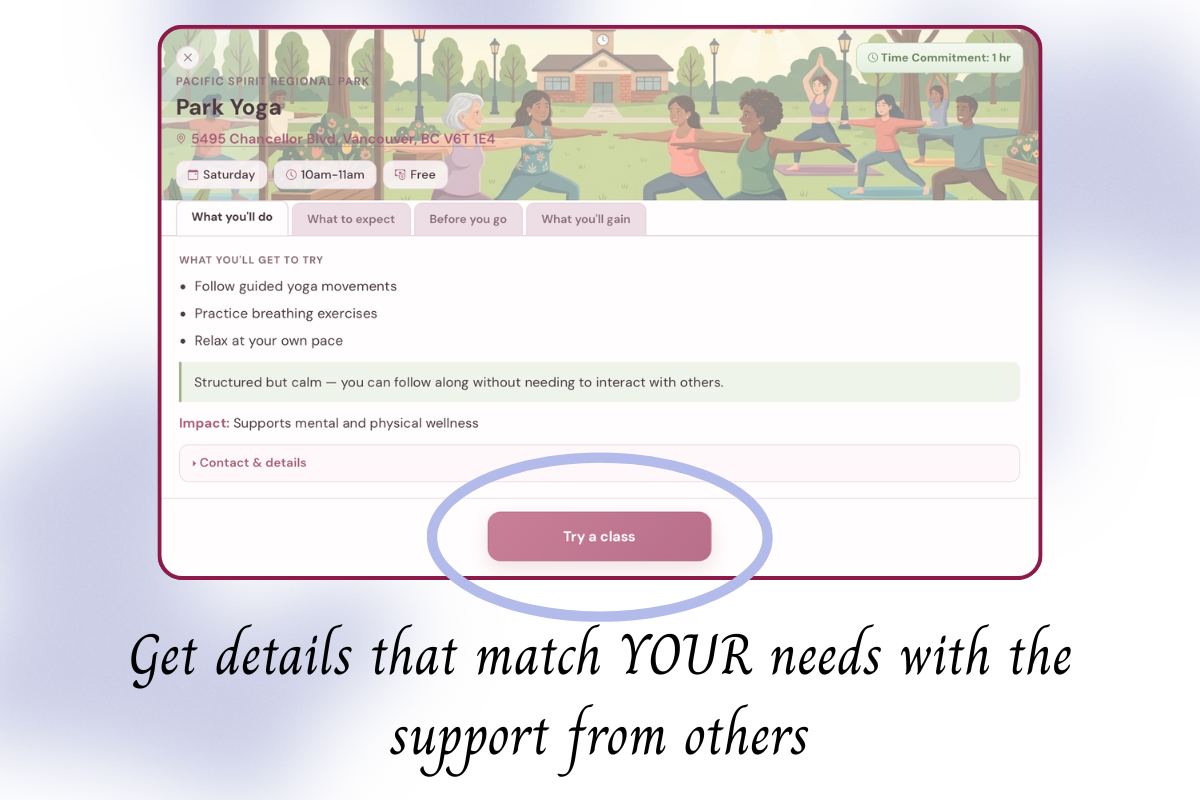
ForHer is a platform that allows women in shelters to sign up for local volunteering and recreational opportunities that match their comfort level and availability. Users create a profile with their skills, accessibility needs, and preferences. Opportunities are sorted by time committment so users can start small and build up over time. Once they complete an event they can mark it as done and their profile updates to reflect their progress.
How we built it
We built ForHer using React and Vite on the frontend with Supabase handling the backend including authentication, the database, and file storage. We used React Bootstrap as a foundation and customised the styling throughout. Features include profile creation with avatar upload, geolocation, skill and accessibility tagging, event registration, completion tracking, and a stats dashboard that updates in real time.
Challenges we ran into
One of the major challenges we ran into was linking the database to the frontend and keeping them in sync. Getting Supabase's row-level security policies configured correctly took significant time and debugging. We also had to think carefully about how to manage the flow between registered events and completed events without creating duplicates.
Accomplishments that we're proud of
Being able to learn and work with each other to tackle a real issue in society. We came in with extremely different levels of experience and built something that actually works end to end, from signup and profile creation all the way through to event registration and completion tracking, within a single hackathon weekend.
What we learned
We learned a lot about working with new tools like Supabase and connecting a live database to a React frontend. We also learned that building for a specific group of people means thinking carefully about details you might otherwise overlook: the language you use, the images you choose, and whether the product actually feels like it was made for the person using it.
What's next for ForHer
The next step would be getting the app in front of real users in shelters to understand what works and what needs to change. From there we would look to add a portal for shelter workers to recommend opportunities and track engagement. Longer term we see potential in building a verified volunteer record that women can use when applying for jobs or housing as concrete evidence of the skills and consistency they have built up.
Built With
- javascript
- react
- supabase
- vite


Log in or sign up for Devpost to join the conversation.