Four Sight
A semi-autonomous robot and a custom 3D-printed AR visor for finding people trapped under rubble



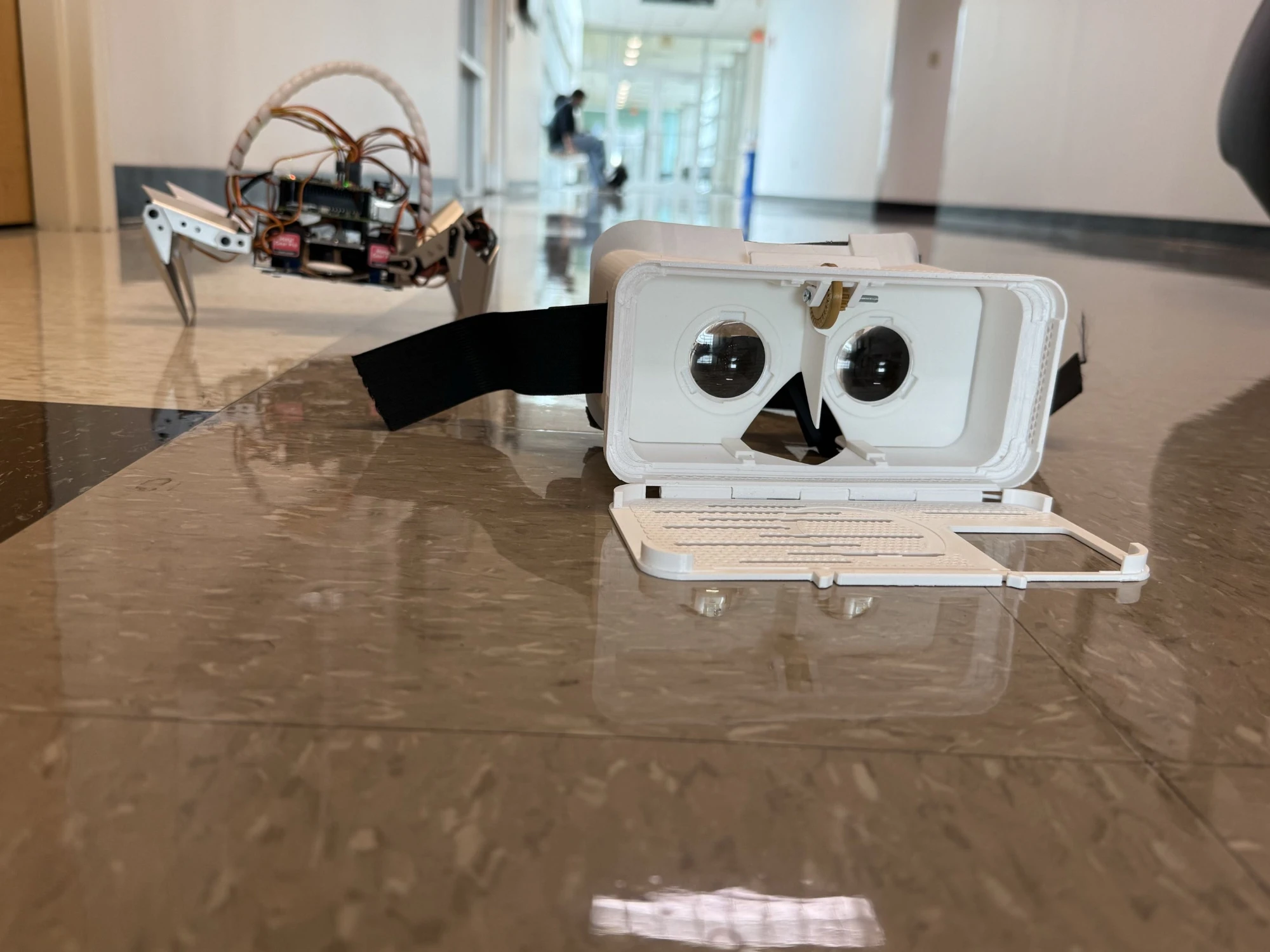
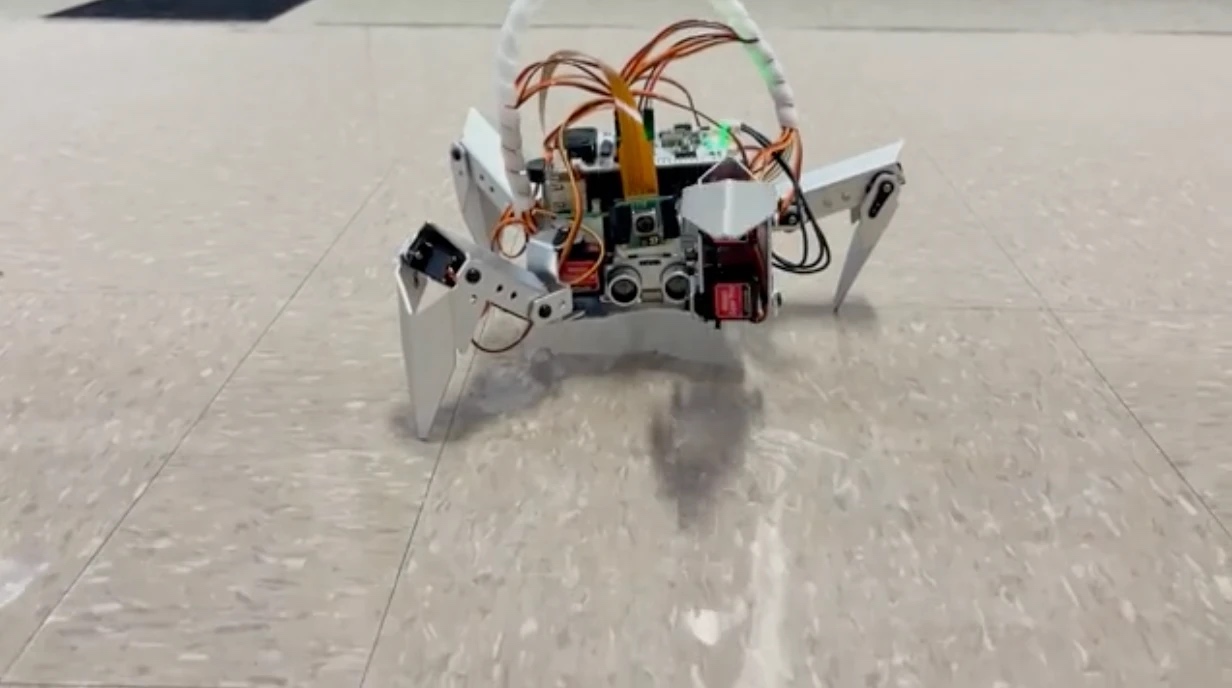
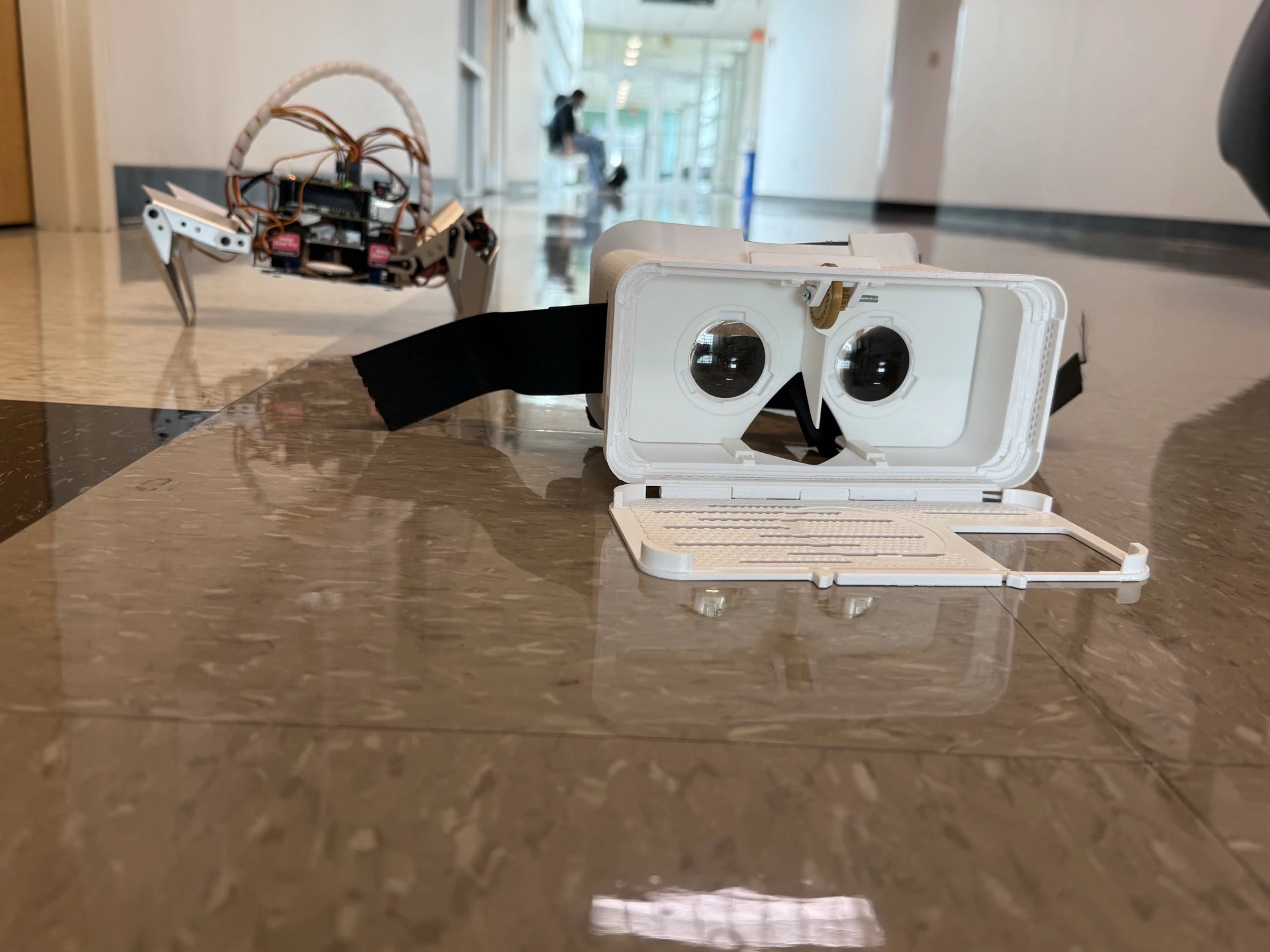
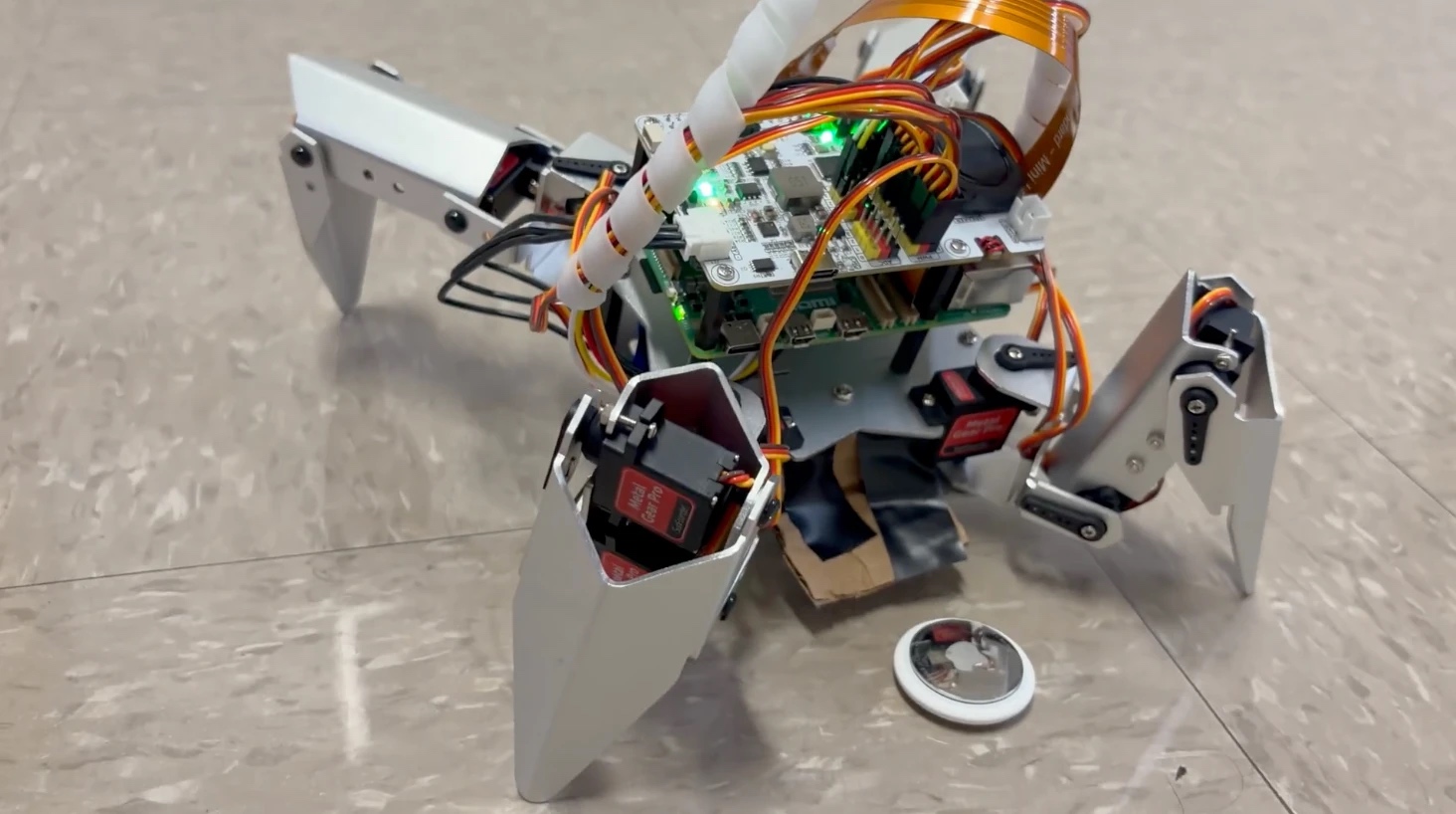
prada, our robot, and the visor we printed for it.
Inspiration
After an earthquake, the people most likely to survive are the ones found in the first hours. Rubble is unstable, dark, and full of gaps no person can safely crawl into. Rescuers need eyes in those gaps, and they need them without giving up their hands.
We wanted to give a rescuer a way to be the robot: see what it sees, steer it with their head, and talk to the person it finds.
What it does
Four Sight is a semi-autonomous search robot paired with a custom 3D-printed AR visor.
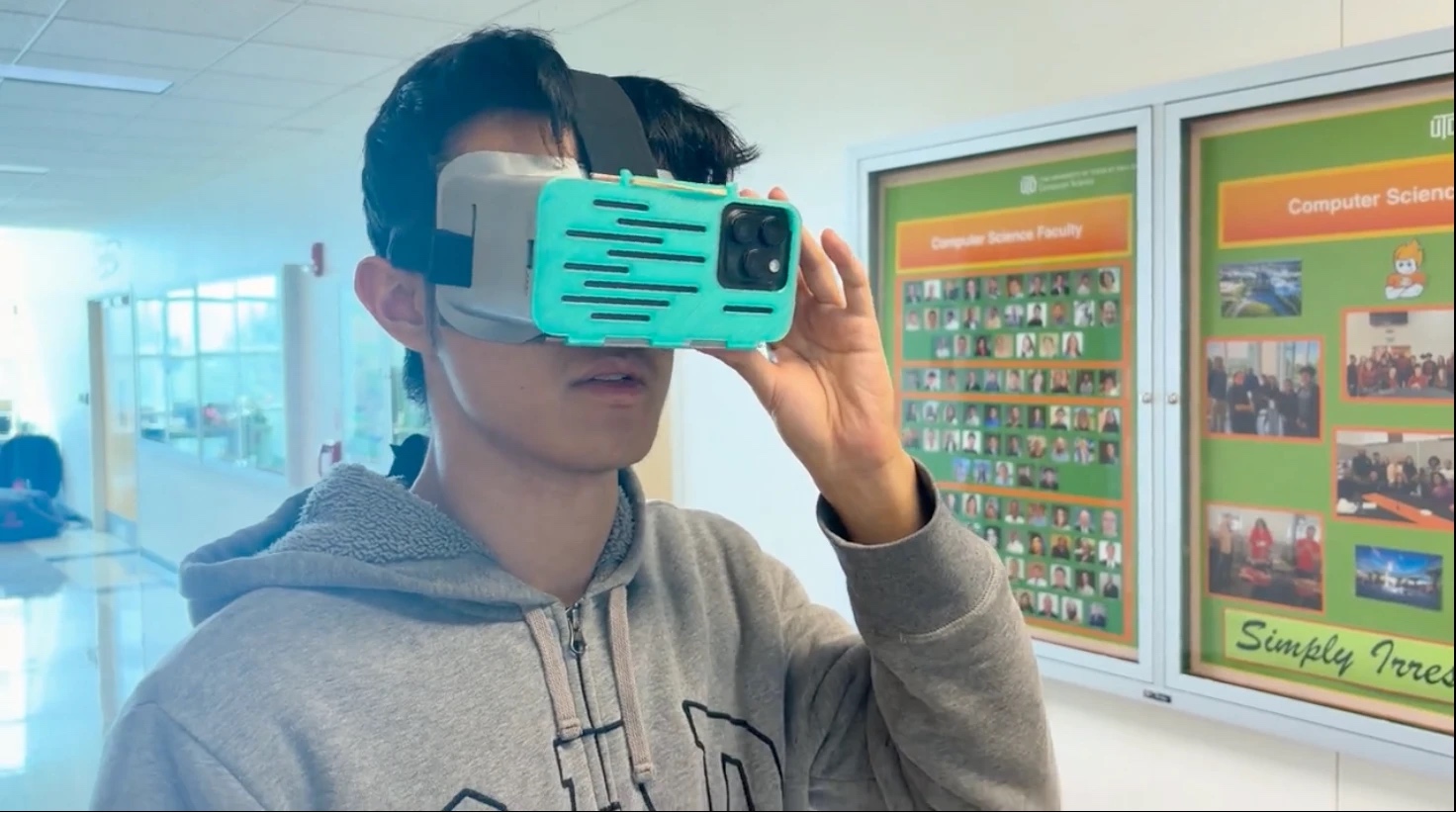
A rescuer straps on the visor, puts on a glove controller, and taps in to a live feed from prada, our robot. Tilting their head moves the camera. The joystick drives the robot. When prada finds someone, the rescuer can talk to them through the robot and drop a beacon so responders can walk straight there.
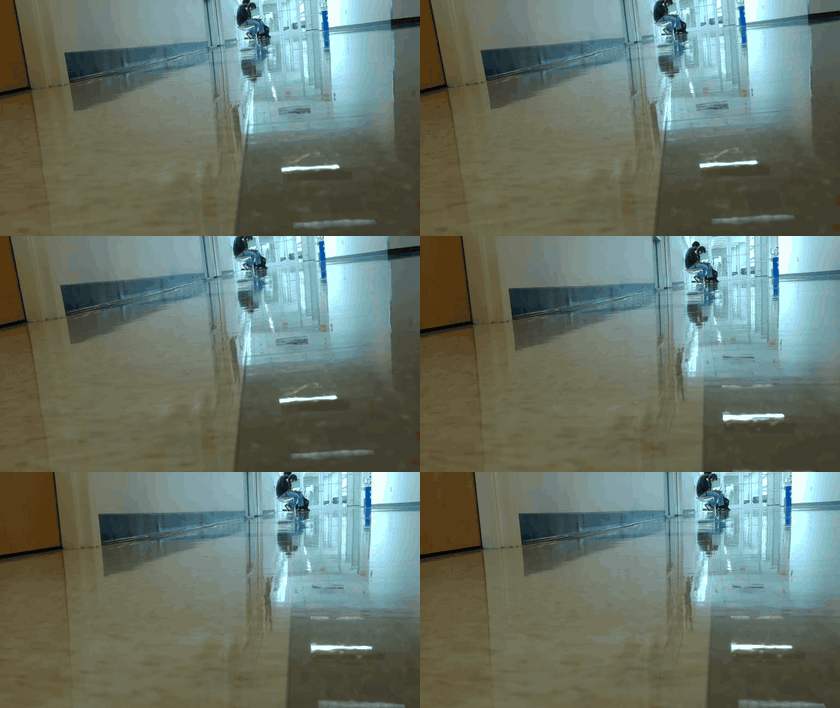
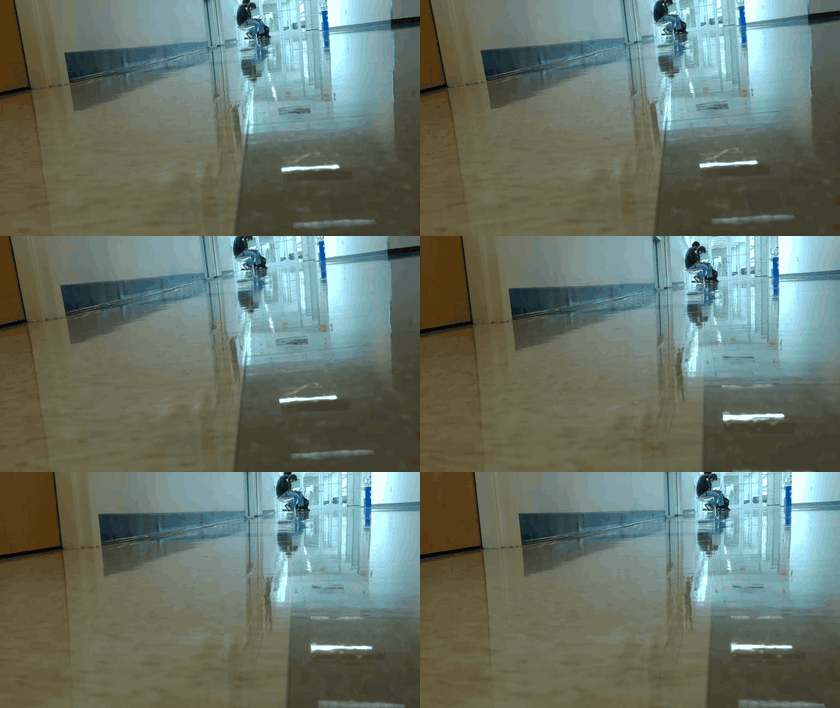
What prada sees: live from its camera while walking forward at half speed.
Features
- Direct robot feed. See prada's camera in the visor, then switch to the visor's front camera to see the path ahead.
- Head-tracked camera. Tilt and turn your head to aim the robot's view.
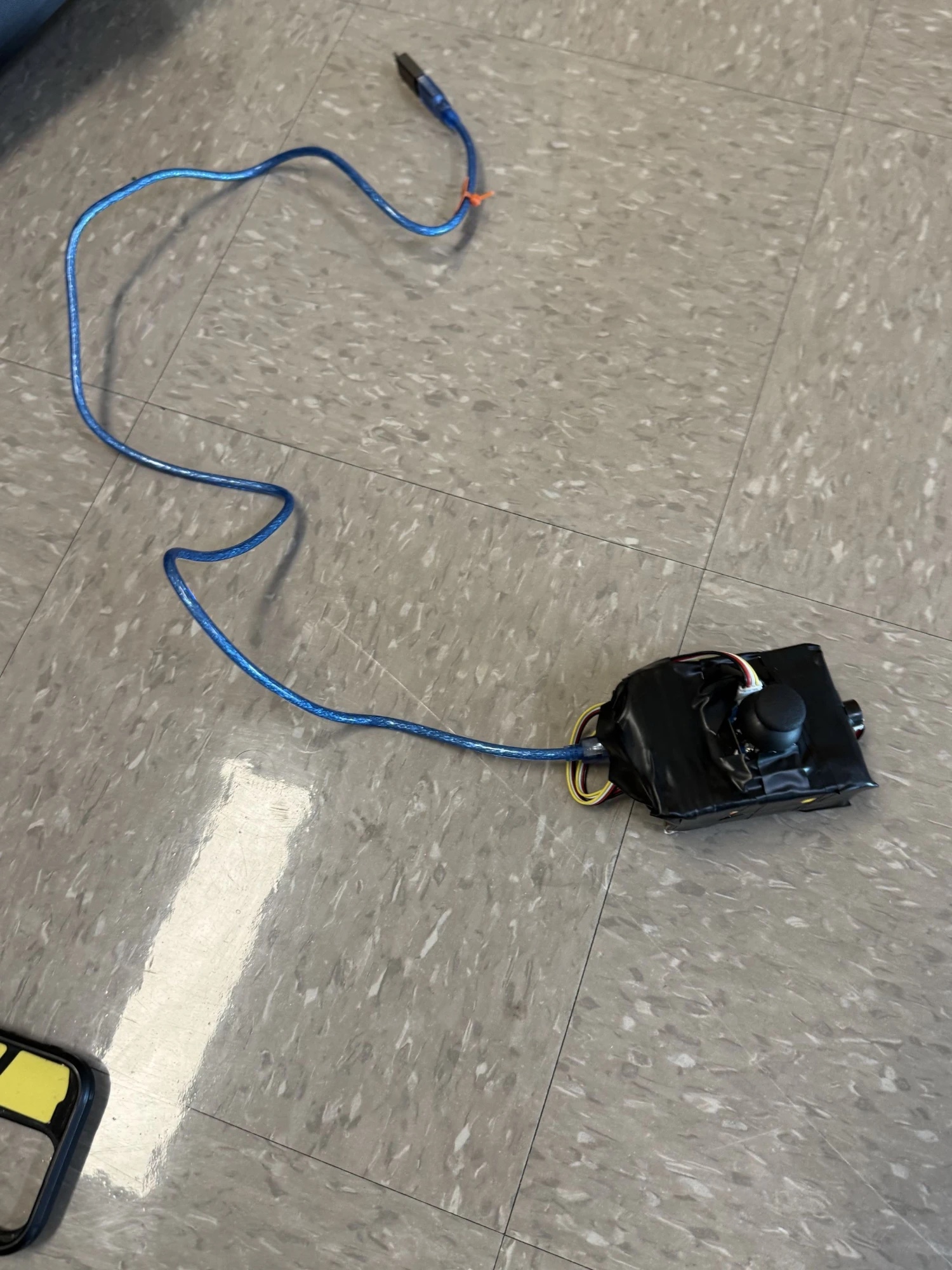
- Glove controller. A thumb joystick drives prada forward, backward, up, and down, so your hands stay free.
- Survivor detection. On-device segmentation highlights people in the robot's view, and a fading radar in the HUD shows where they are.
- Talk to survivors. Speak through prada's speaker to comfort someone and tell them help is coming, and hear them through its microphone.
- Location beacon. prada tilts back to drop an AirTag where a survivor was found.
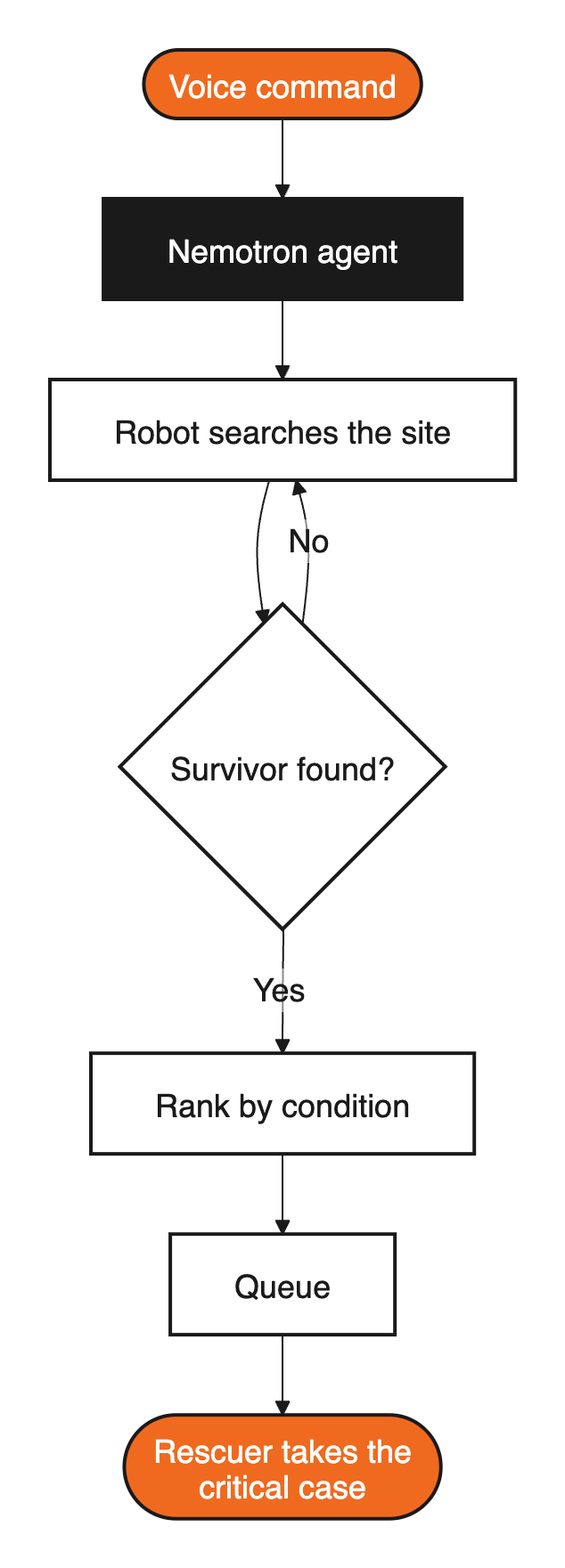
- Autonomous search. When nobody is driving, prada explores on its own and hands control to a rescuer the moment it finds a person.
- Voice-directed Nemotron agent. Say "Sight" and give commands out loud without taking the visor off.
- Critical-first queue. The agent triages survivors, puts critical cases first, and keeps a queue of everyone who has been found.
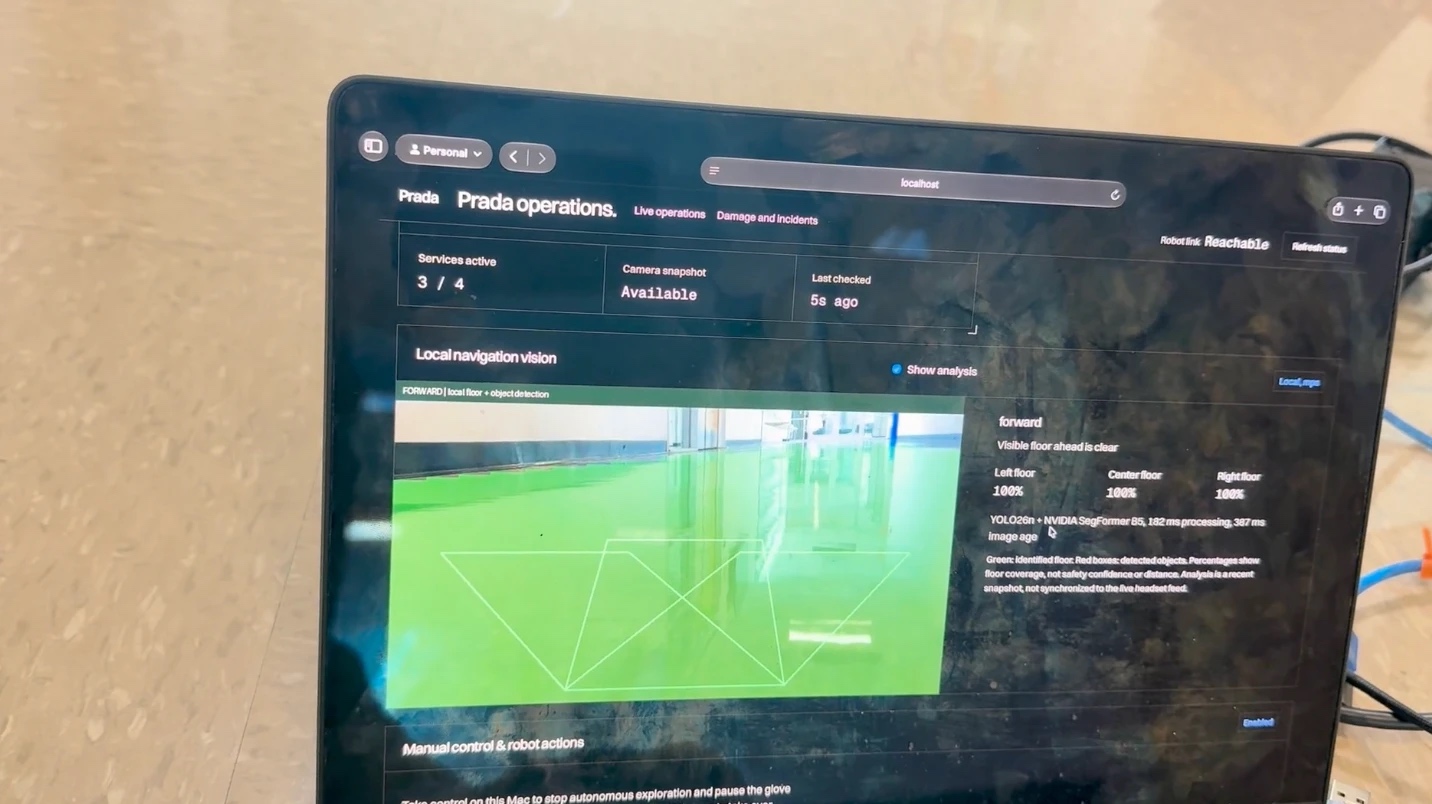
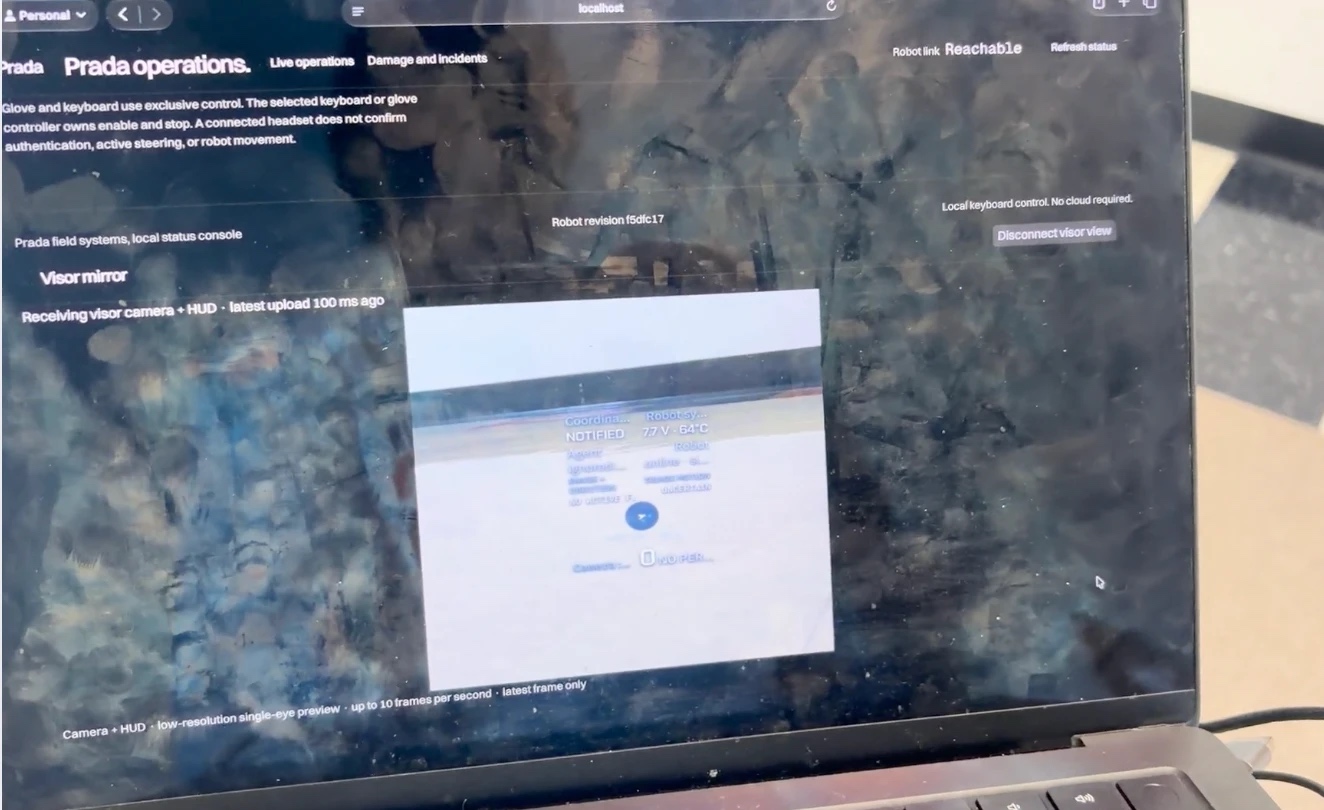
- Operations console. A laptop dashboard shows robot status, battery, the live camera, and a mirror of what the rescuer sees.
The hardware
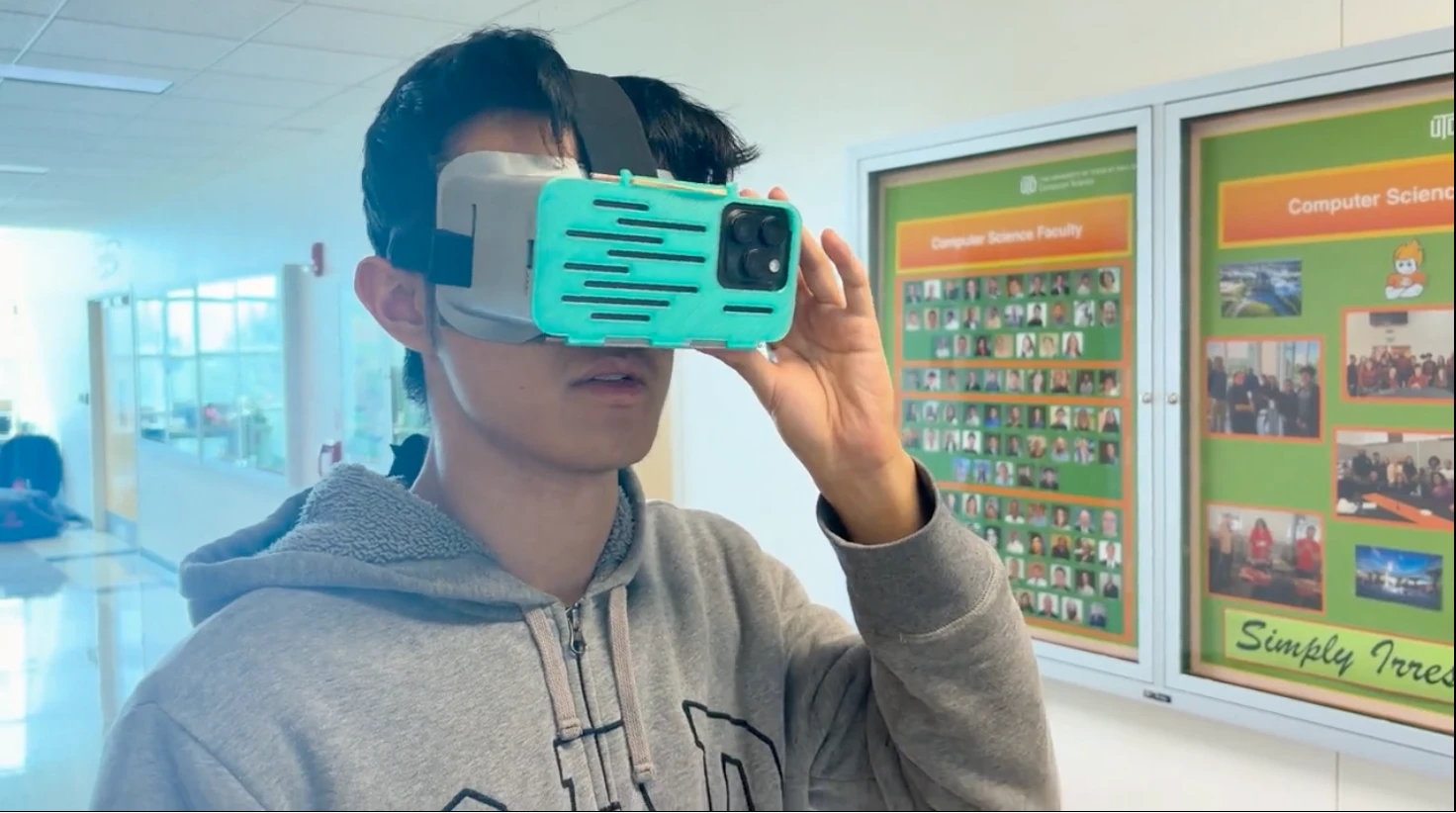
The visor. 3D-printed shell, biconvex lenses, and an iPhone doing stereo video, segmentation, and head tracking.
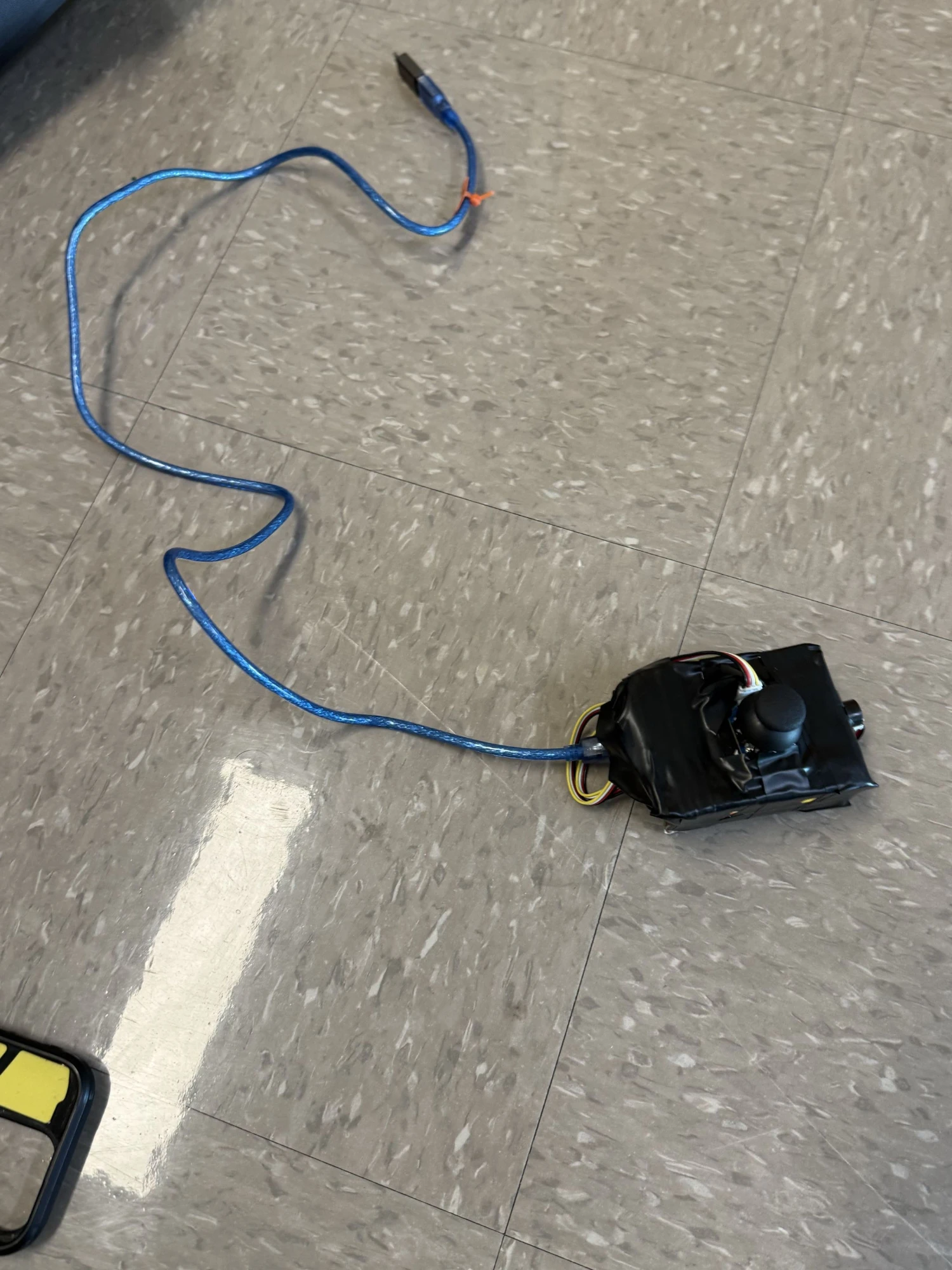
The controller. A thumb joystick that drives prada while the rescuer's head aims the camera.
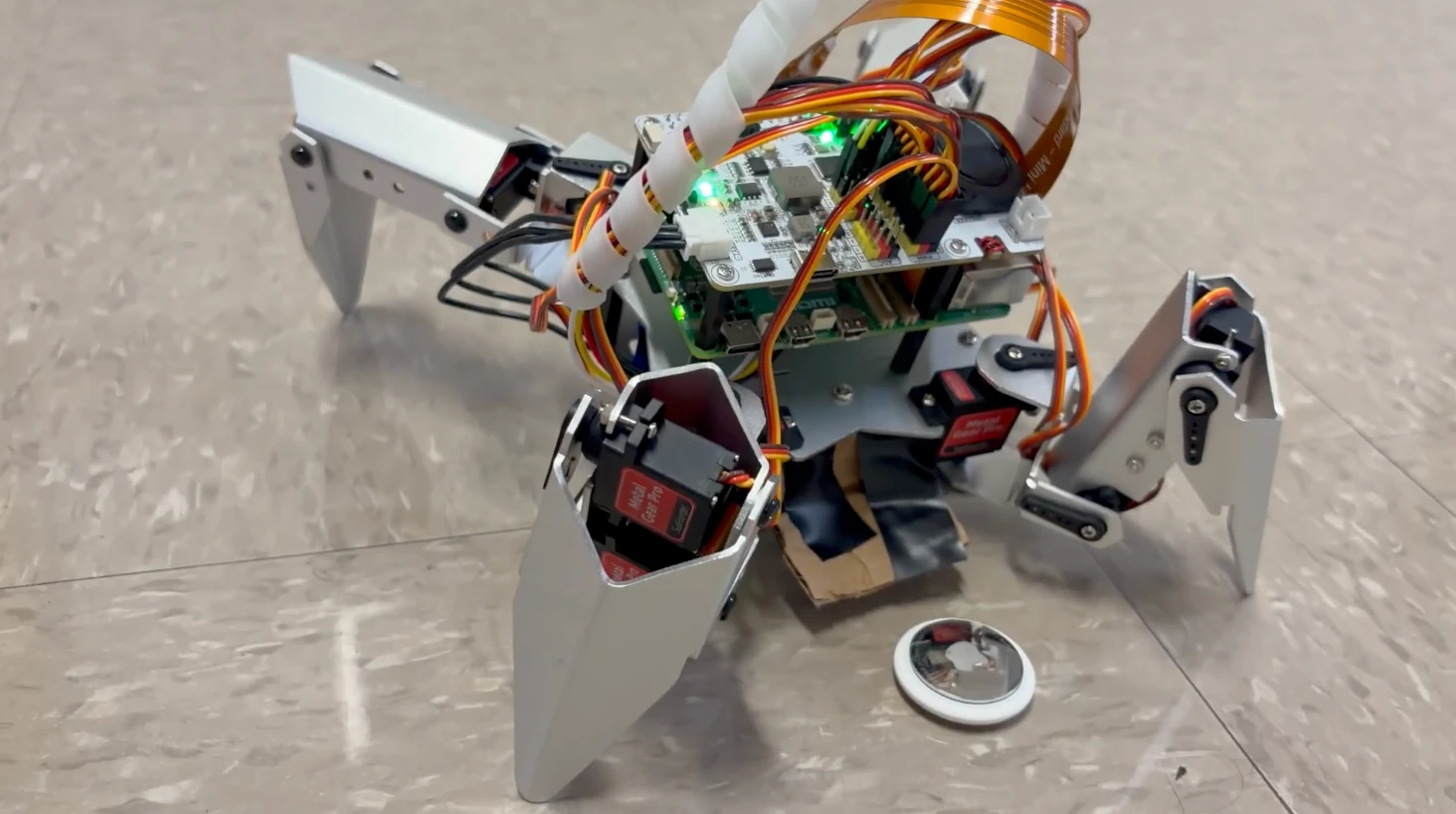
The beacon. prada marks where a survivor was found so responders can walk straight to them.
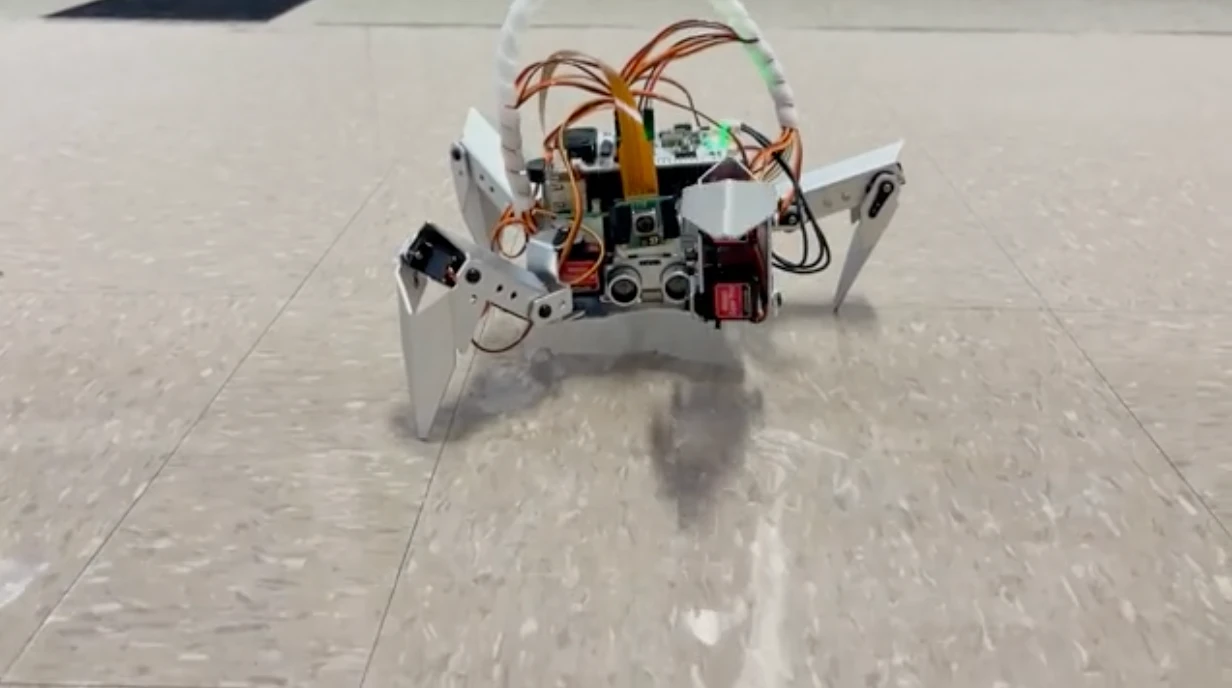
prada. A SunFounder PiCrawler on a Raspberry Pi 5.
The operations console
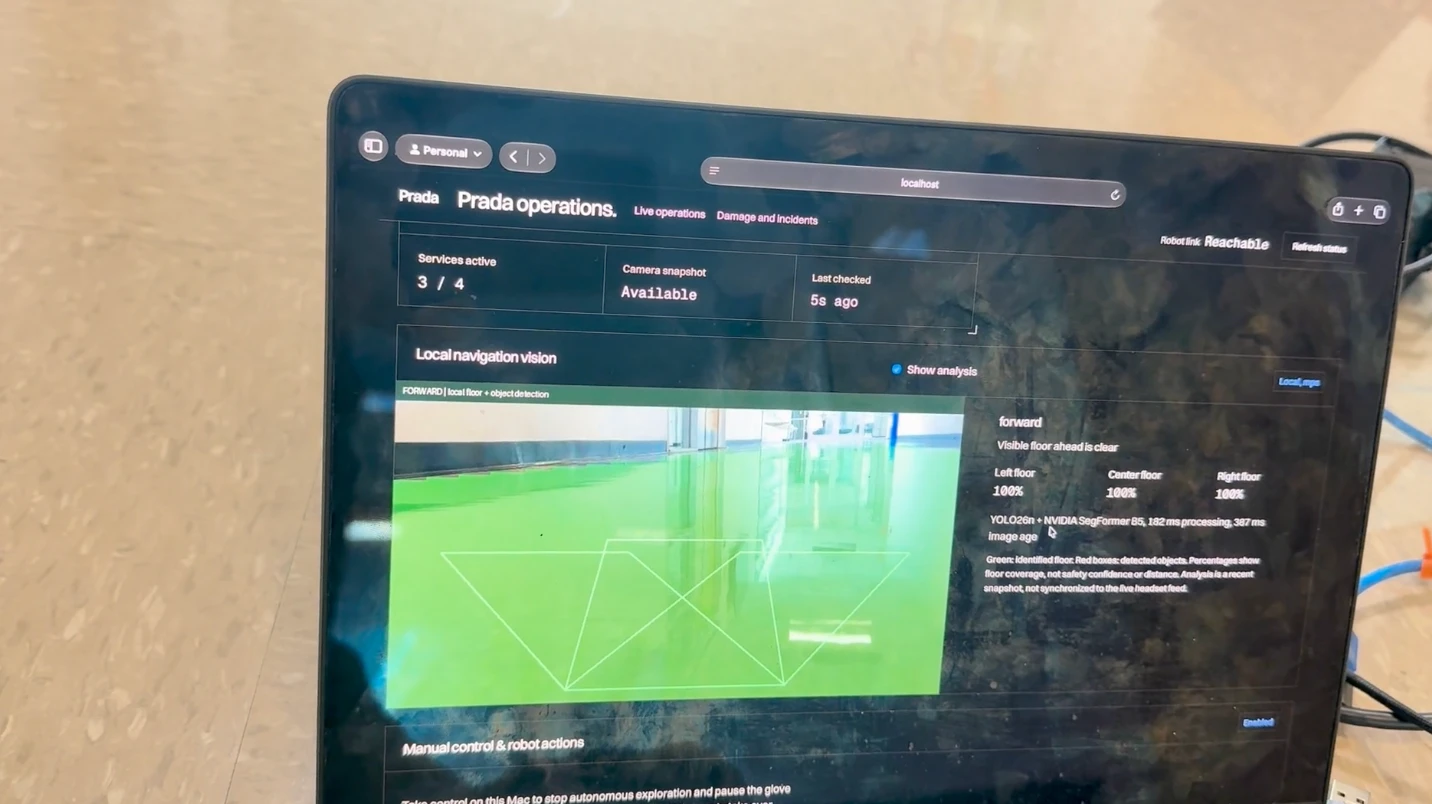
Local navigation vision. YOLO26n and SegFormer mark open floor in green and objects in red.
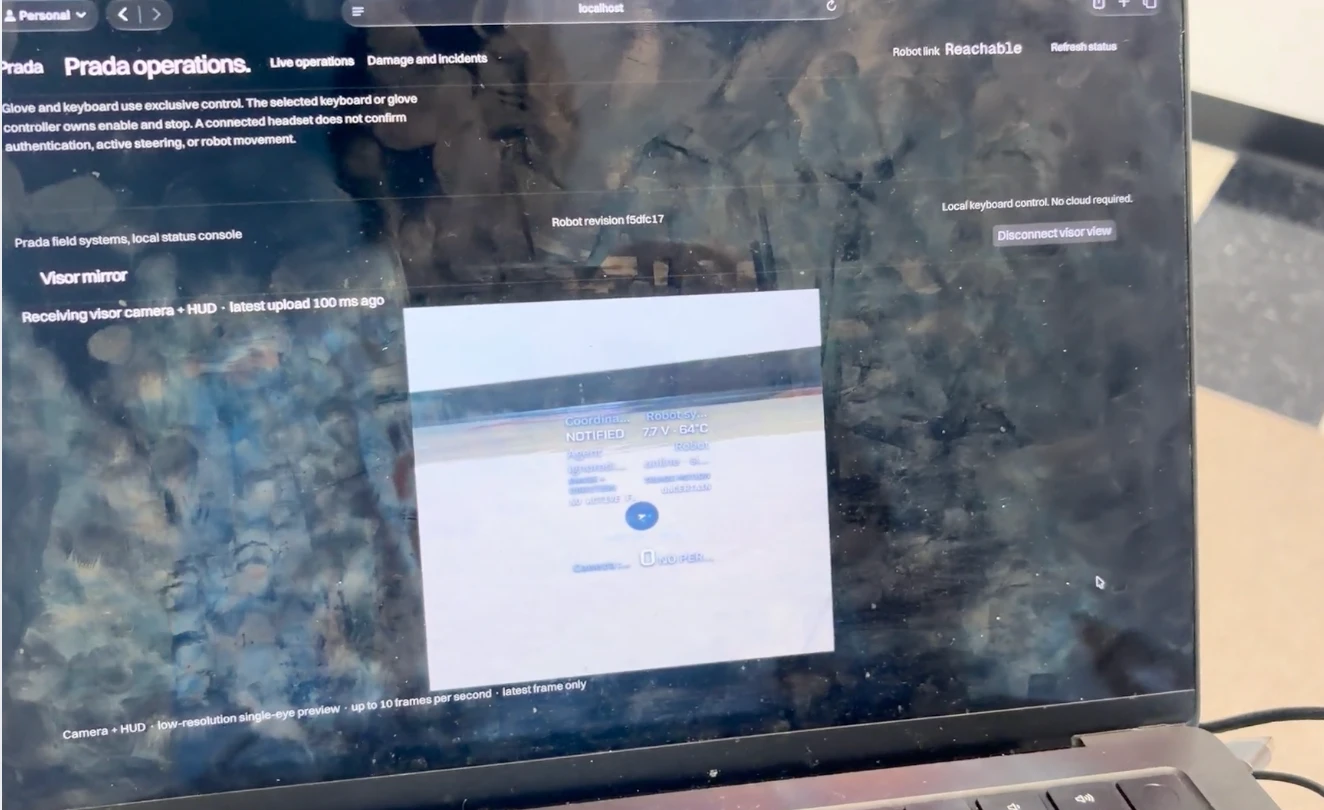
Visor mirror. The console sees the same camera and HUD the rescuer sees.
How we built it






Robot
prada is a SunFounder PiCrawler on a Raspberry Pi 5 with a Camera Module 3. A Python control server handles gaits, head poses, and an emergency stop. The camera streams MJPEG over Wi-Fi at up to 120 fps, and text-to-speech plays through the Robot HAT speaker.
Visor
We 3D-printed a headset shell sized for the iPhone 16 Pro and 16 Pro Max, with an adjustable lens carriage for 34 mm and 45 mm biconvex lenses and printed strap adjusters. The visor app is native SwiftUI and Metal. It renders stereo video from the robot, runs YOLO26n-seg person masks through Core ML, reads head pose from ARKit for steering, and draws a blueprint-style HUD inside each lens.
Controller
A glove-mounted joystick drives the robot, either over Bluetooth directly to the Pi or over USB through the dashboard Mac.
Agent
A Node.js 22 and TypeScript mission team built on NVIDIA Nemotron. A coordinator delegates to triage and search agents that call tools against the robot (camera frames, speaker, movement) and shared state. A vision model reads each camera frame to describe survivors and hazards.
Shared state
SpacetimeDB holds robots, survivor cases, takeover requests, hazards, and incident evidence. Video, drive commands, and the emergency stop stay on the local network and never go through the database.
Console
A Python web dashboard runs YOLO26n and SegFormer locally on the camera feed, marking open floor in green and obstacles in red, and drives the autonomous guidance loop.
How it works
1. Take over a robot
The rescuer straps on the visor, puts on the glove, and drives the robot that found someone.
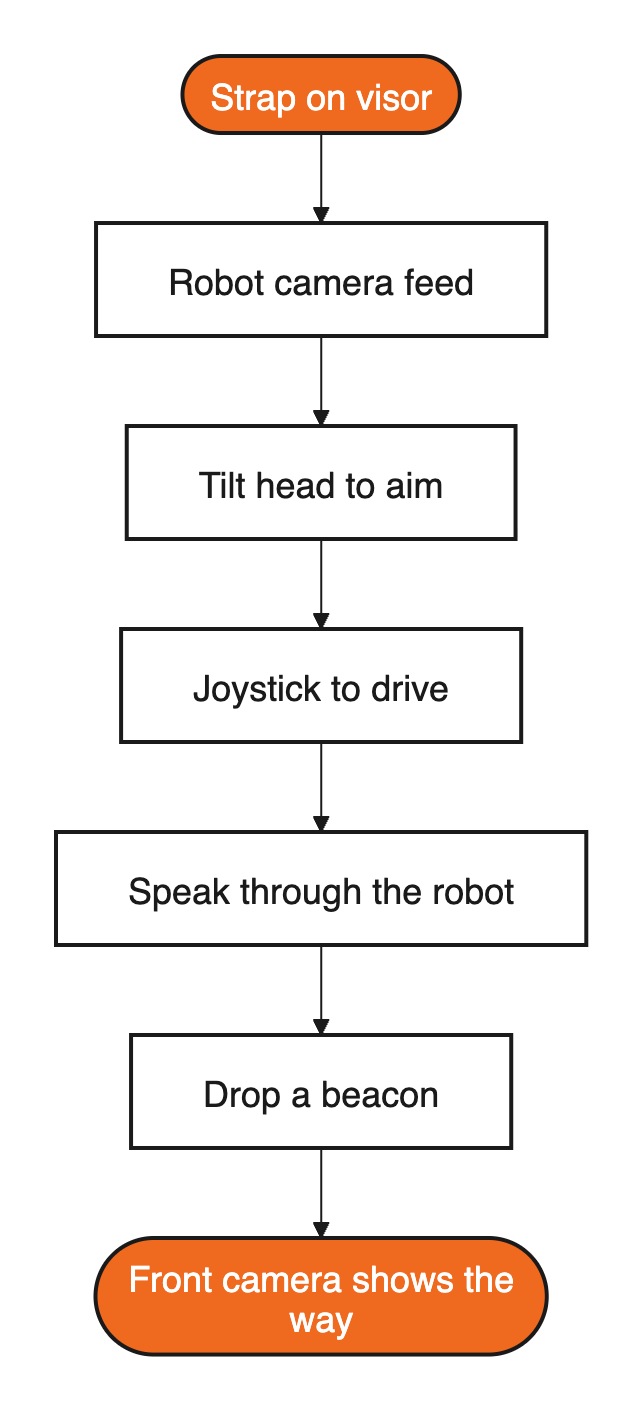
2. Search with the agent
The robot searches on its own. The rescuer talks to Nemotron and steps in when someone is critical.
Challenges we ran into
- The visor took three tries. We started with a Unity Cardboard XR build, then rewrote it as a native Swift app so we could control the lens math, run Core ML segmentation, and hit a smooth frame rate. Lining up each eye's image with the physical lenses took a lot of print-and-measure rounds.
- Latency. Video lag makes head steering feel awful. We pushed the camera to 120 fps and made the stream drop frames for slow viewers instead of queueing them, so the visor always shows the newest frame.
- The beacon. Our first beacon was an ESP32. We replaced it with an AirTag that prada releases by tilting back and rocking, which was simpler and far more reliable to locate.
- A joystick with a mind of its own. An off-center joystick made prada walk by itself. We added a calibrated dead zone and gated head steering on the joystick so the robot only moves when the rescuer means it to.
- Handing control back and forth. Autonomy, the agent, the glove, and the keyboard all want to drive the same robot. We built explicit takeover and cancel rules so a manual action always wins and the emergency stop always works.
Accomplishments that we're proud of
- A rescuer can put on a visor we printed ourselves, look around through a robot's eyes, drive it with one thumb, and talk to a person it found.
- Survivor segmentation runs live on the phone inside the headset, with no server in the loop.
- The whole stack (robot, visor, console, agent, and database) runs on a local network with no internet, which is what a disaster zone actually looks like.
- prada can explore on its own, recognize a person, greet them, and hand off to a human responder.
What we learned
- Latency matters more than resolution for anything you wear on your head.
- Hardware fails in ways software doesn't: power cuts, drifting joysticks, servo zero points. We learned to write system files atomically and calibrate everything.
- Smaller agents behave better. A coordinator with focused triage and search agents was far more predictable than one large prompt.
- Keep safety off the shared path. Drive commands and the emergency stop never touch the database, which made the system simpler to trust.
What's next for Four Sight
- Swarms. Run many robots across a site at once, with the Nemotron agent assigning search areas and routing the rescuer to whoever needs them most.
- More sensors. Thermal or infrared imaging, gas, and light sensors to find people hidden from the camera and flag dangerous conditions.
- Mapping. A shared SLAM map of the site so beacons, hazards, and survivors all appear in one place.
- Ruggedized hardware. A sealed chassis and stronger legs for real rubble instead of hallway floors.
Built With
- nemotron
- node.js
- python
- raspberry-pi
- swift


