-
-
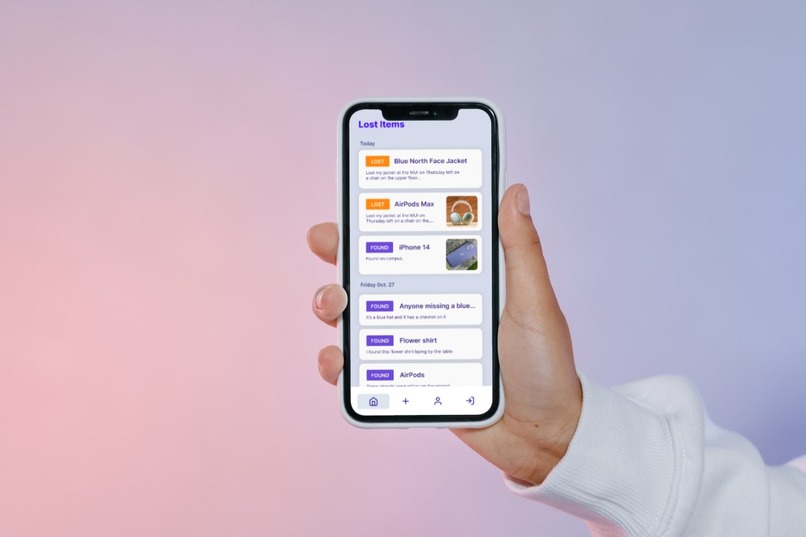
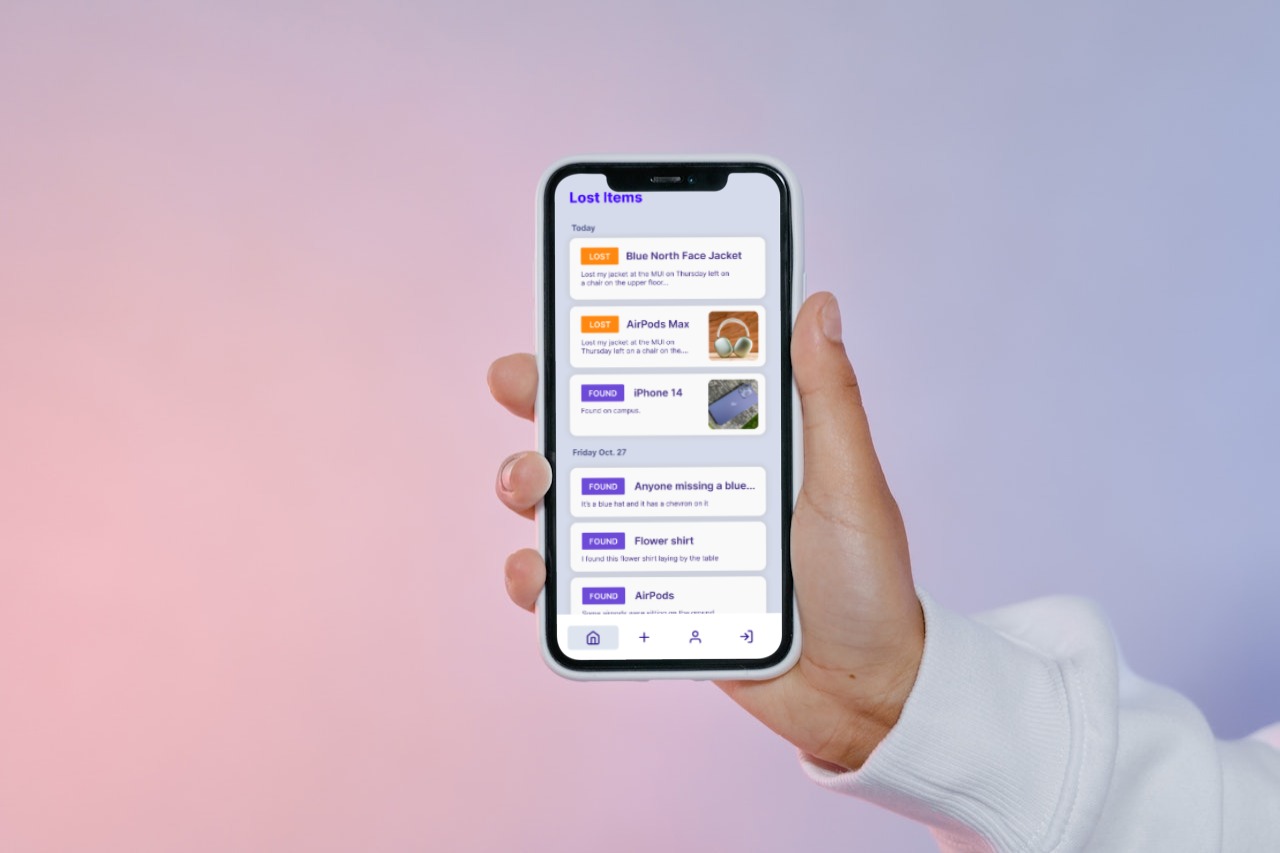
Items List page
-
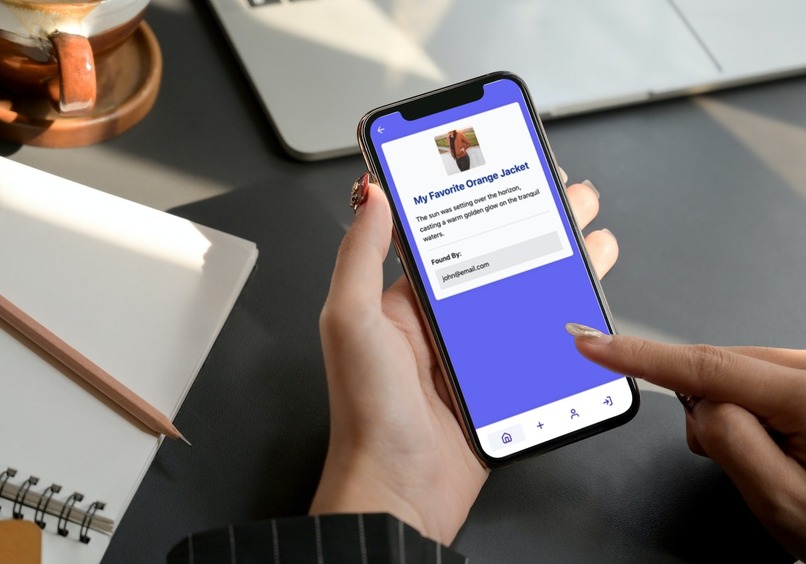
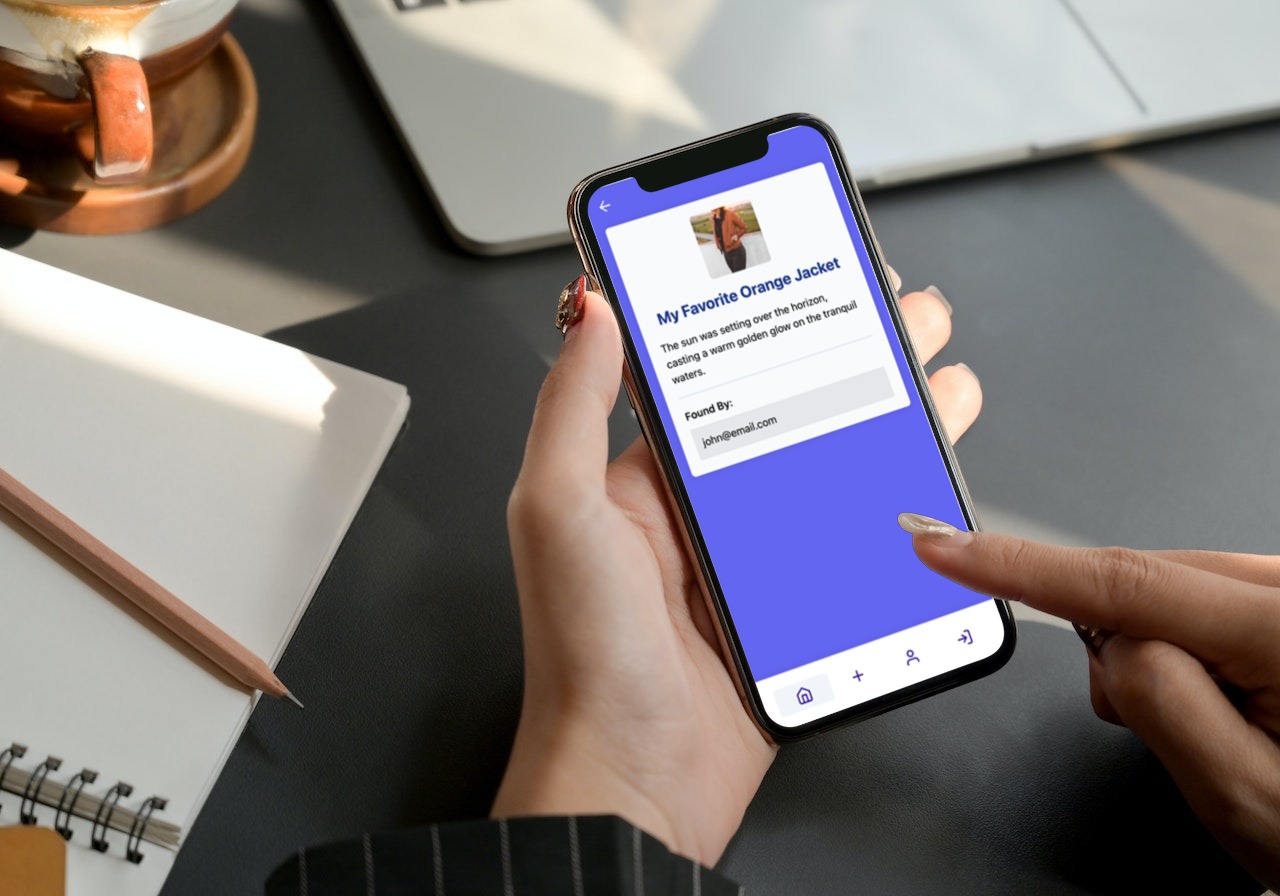
Item Detail page with contact information
-
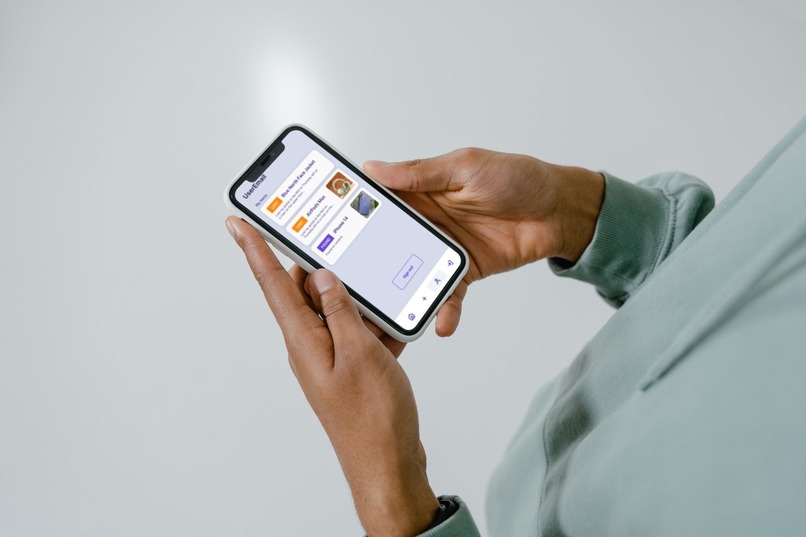
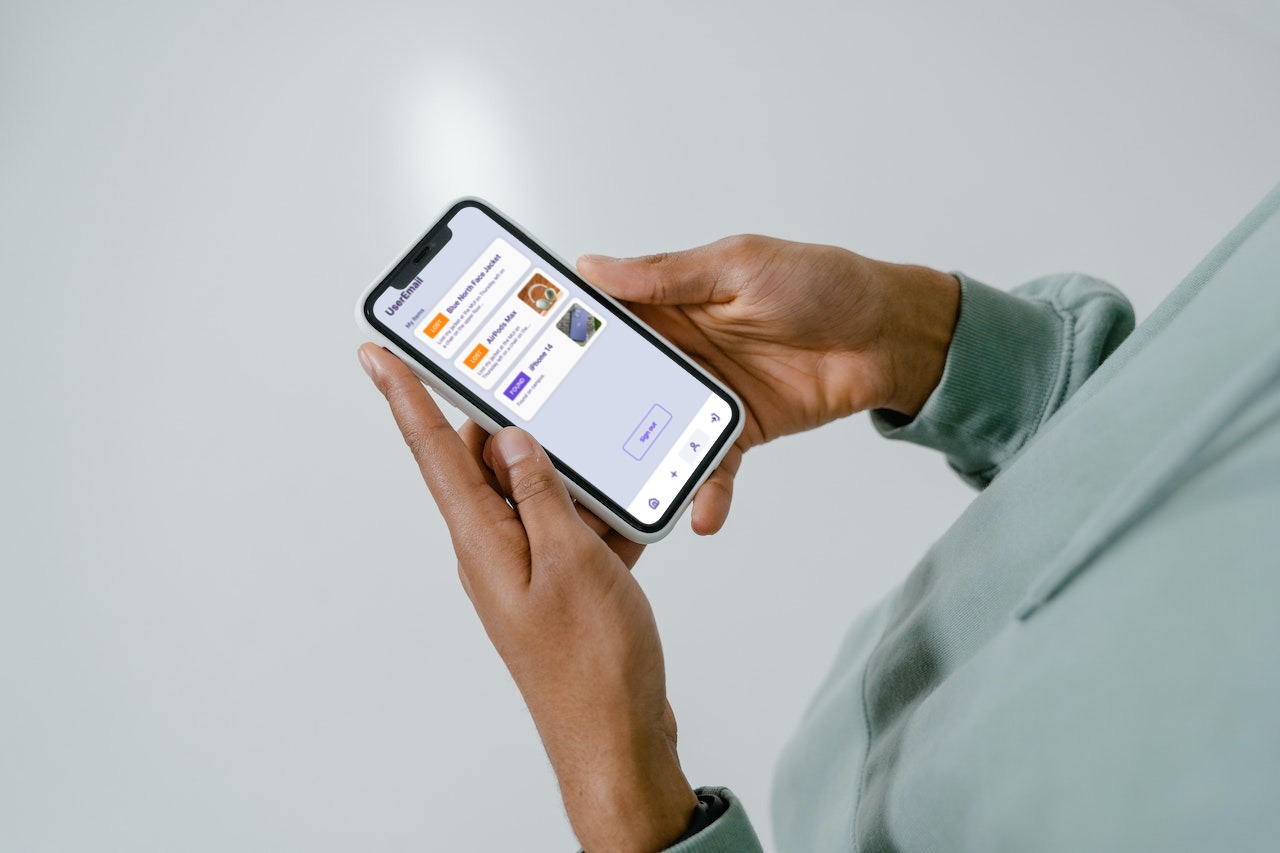
My Items page
-

Team Logo

Inspiration
Our team identified a common issue among students: the challenge of recovering lost items and finding their rightful owners. Existing solutions lacked consensus, with students scattered across platforms like Snapchat and Reddit, and each campus having its own individual way of handling it. Foundit was born from our vision to unify this process, offering a clear and universal solution for everyone. A simple, cross-platform solution that college campuses can adopt and make known to their students as the hub for finding lost items.
What it does
Foundit provides a one-stop place for posting and recovering lost or found items in an easy-to-use way. Given the time constraints, the capabilities had to be stripped back significantly. However, it is still the same at its core. The current UI has all of the essential pages: A list of actively lost items, an interface for adding a lost item to the list, and a way to mark view the items you've posted (with the future goal of being able to mark those as found or inactive).
What we didn't get to, but have visions for
Target Audience:
- We envision the app being marketed towards college campuses.
Student Portal Authentication:
- Integration of a system allowing colleges to create admin accounts and enabling students to sign up through a portal using their student email addresses.
- This approach enhances the overall security of the system.
Location-Based Services:
- Implementation of location-based services within the app.
- Reporters can add a location to their lost item, increasing the likelihood of successful recovery.
Search Functionality:
- Addition of a search feature for easier filtering of the list of lost items.
- While location-based services and college-specific feeds assist in filtering, a search function provides an additional layer of convenience.
How we built it
The frontend is built with Svelte and Tailwind, and the backend runs on Express and Supabase.
Challenges we ran into
- The team members all took on the challenge of learning 2 new technologies while also having a time constraint. This proved to be challenging, as there was a learning curve that we all needed to overcome very quickly in order to be efficient.
- Supabase's servers were down for a portion of the hackathon, which made it difficult to test the database functionalities when we had initially planned to.
Accomplishments that we're proud of
- All three team members used at least one technology they had never used before.
- The planning process was thorough and proved to be very useful as a source-of-truth.
- There's a working UI prototype connected to routes that also work (only running locally).
- We set up the UI so that as soon as data was available, it was easy to plug-and-play in a predictable way.
What we learned
Even though we significantly scoped down the project from our original plans, we still bit off more than we could chew. Given the time scope, we should have used technologies we're familiar with already; However, I think we all took it as a learning experience and are happier having experimented with different technologies.
What's next for Foundit
- Connecting the database further. We did not get a chance to hook up the POST endpoints.
- Location services
- Admin portal for colleges and student-only portals
- Search capabilities
Built With
- express.js
- javascript
- node.js
- supabase
- svelte
- tailwind


Log in or sign up for Devpost to join the conversation.