Inspiration
It all started when our UI/UX designer shared her story about losing her tablet at SFU. During her experience of trying to retrieve her tablet, we noticed a pain point of messy communication and stressful situations. With this problem, we decided to get together as a group to come up with a solution to help ease the process of retrieving a missing item from school.
What it does
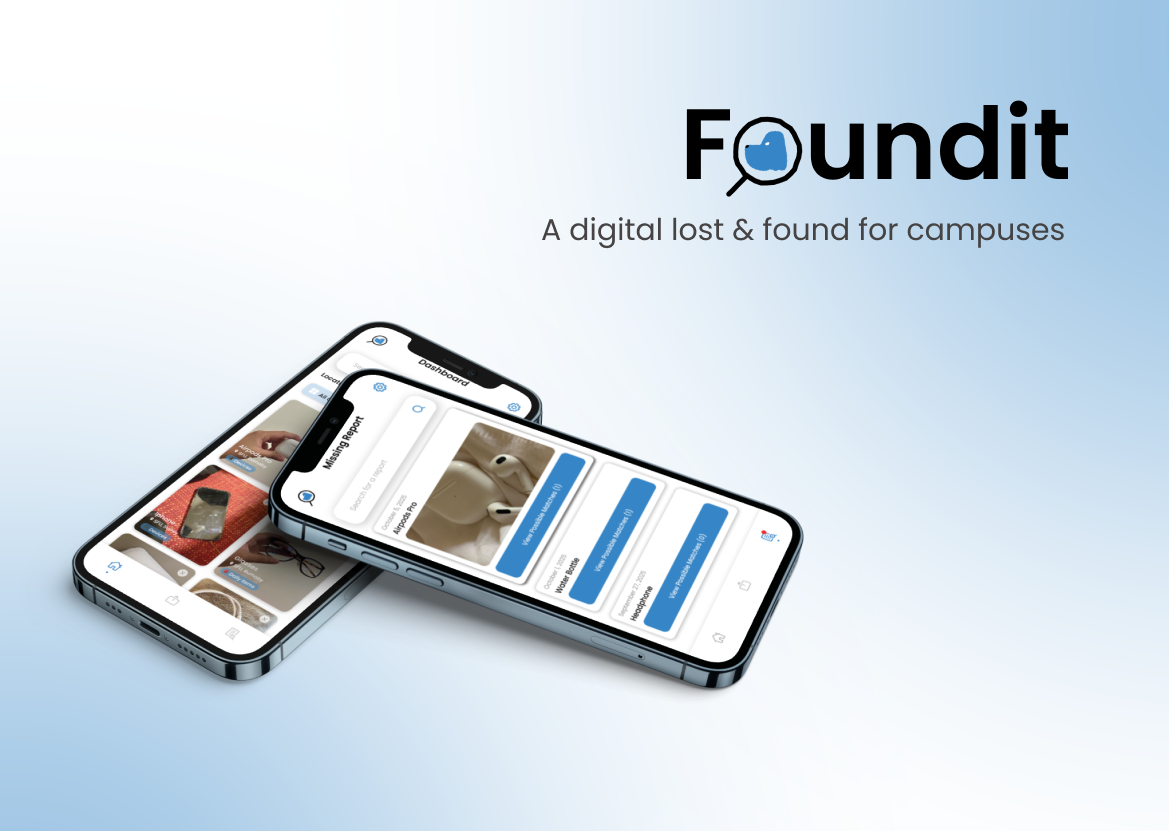
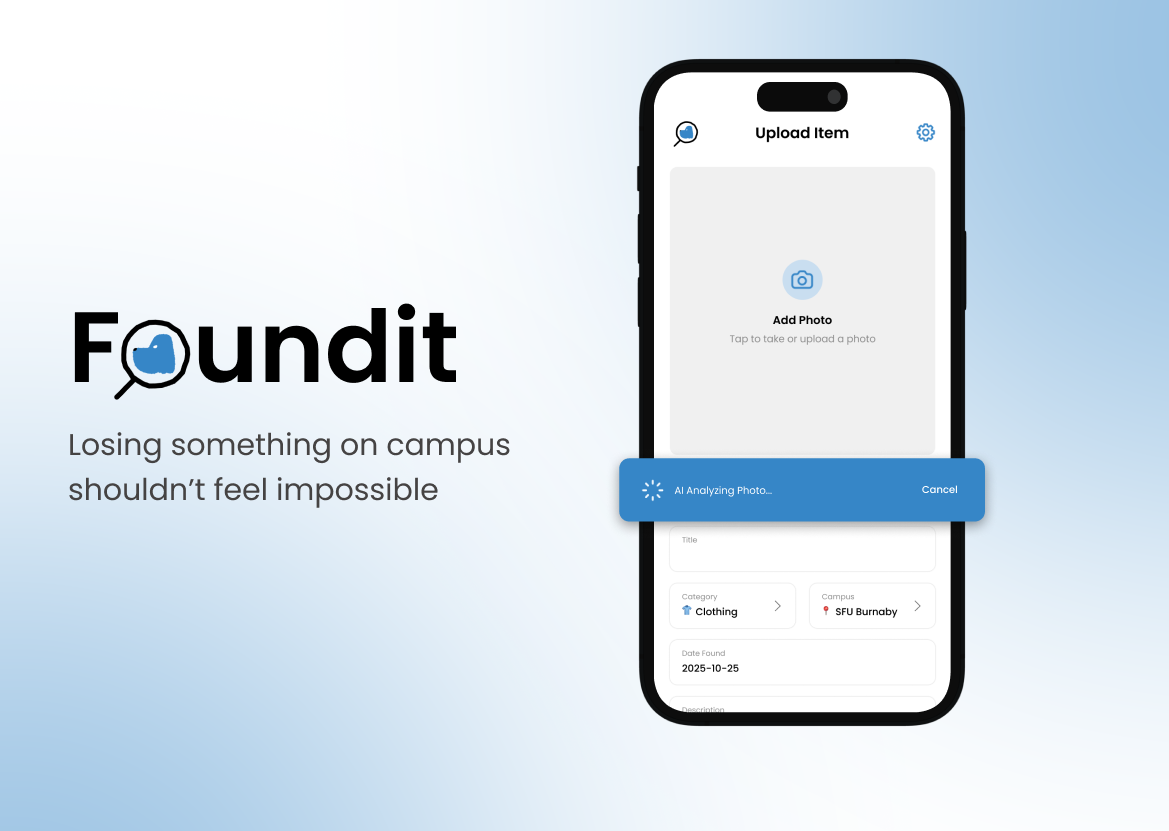
FoundIt is a digital lost and found system for campuses. When staff find an item, they snap a photo and upload it. The system automatically tags what’s in the image, organizes it by category and location, and makes it searchable for students. Students can quickly check online to see if their item’s been found, no more digging through boxes or sending emails.
How we built it
During the first phase of building this project, we decided to do our research by using an UX AI website that helped us increase our efficiency. We were also able to go around the booths asking for their opinions and insights about our project and what kind of features we can include. Furthermore, luckily, we were able to catch one of the security guards for a short interview asking about their experiences with handling lost & found which was then used to improve our user flows.. Moving on to the second phase, our designer decided to use Figma to build low to high fidelity wireframes which was then passed on to devs after refining. Our dev team decided to use Next.js with a Supabase backend because it’s easy to deploy, lightweight, and doesn’t require much setup or middleware. It let us focus on building features instead of managing servers. Supabase handled our authentication, storage, and database in one place, while Next.js gave us a fast and flexible frontend for both the student and admin dashboards. Together, it made shipping updates and pushed production smoothly.One of our developers spent most of his time refining the Gemini prompting and parsing, and learned the ins and outs of handling image responses, from getting accurate item names to formatting clean, readable outputs for our database.
Challenges we ran into
Like any hackathon project, Foundit came with plenty of obstacles. We all had to learn fast and lean on each other’s strengths.
Andrei spent time learning new software concepts like user flows, personas, and APIs while getting used to Node.js for the first time. Solomon had to pick up DaVinci Resolve from scratch for our demo, which felt overwhelming at first but ended up looking amazing.
William struggled to speed up the AI photo analysis, it was slow and buggy at the start, but after a lot of trial and error, he figured out how to run the upload and AI tagging in parallel. Claire hit creative blocks while designing the wireframes, especially when exhaustion kicked in, but teamwork and feedback helped her push through.
By the end, every late-night bug and crash felt worth it. We learned to adapt fast, support each other, and turn frustration into something we’re proud of.
## Accomplishments that we're proud of We’re really proud of what we managed to pull off in just one weekend. For Solomon, this was his first time working with animation, and seeing the final demo come to life felt incredibly rewarding. Irish was proud of pushing through the exhaustion and completing her first full hackathon project before the deadline. Andrei’s also proud of finishing his first hackathon on time and learning so much along the way. William’s proud that everything actually worked, both portals running smoothly and the AI integration functioning just as planned. But more than that, we’re proud of how well we worked together. Everyone kept a good vibe, helped each other through challenges, and made the most of every hour.
What we learned
We learned how much can be done in just 24 hours when everyone stays focused and supports each other. Some of us picked up new tools like Node.js, APIs, and DaVinci Resolve for the first time, while others learned how to manage performance issues and design under pressure. We also realized how important clear communication is when everything’s moving fast. More than anything, we learned how to take a simple idea and turn it into something real that actually helps people.
What's next
Next, we want to test FoundIt with SFU’s campus security to see how it fits into their daily workflow and get real feedback from students. From there, we plan to improve the UI, streamline the upload process, and add better search filters. Long term, we want to bring FoundIt to other schools, airports, and malls, anywhere people lose things and need a faster way to find them.
Built With
- gemini
- next.js
- supabase


Log in or sign up for Devpost to join the conversation.