-
-
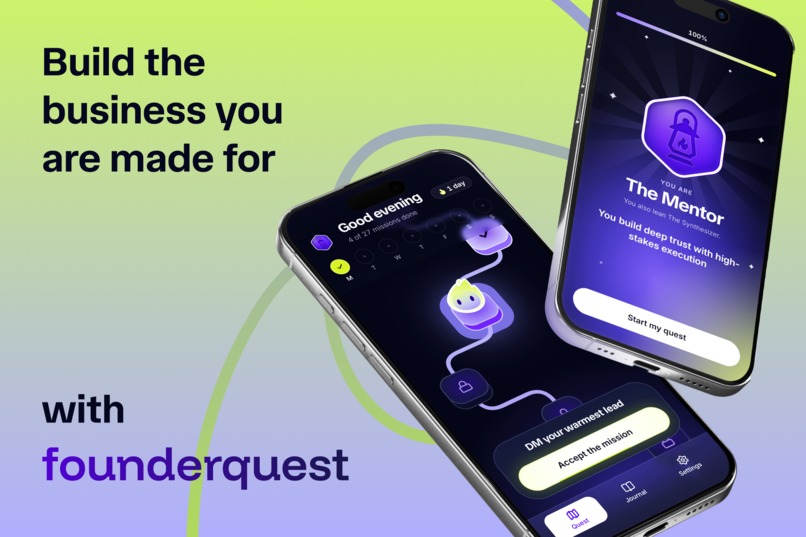
Free until your first closed mission. No account, no login, nothing to set up.
-
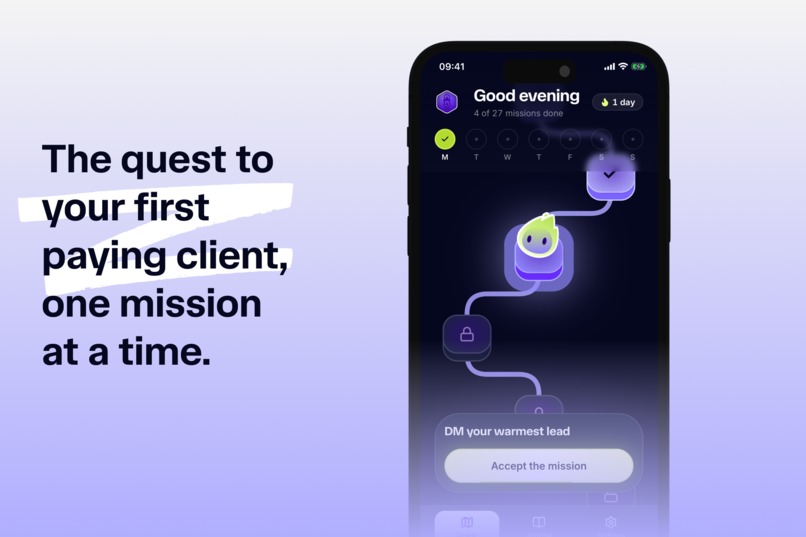
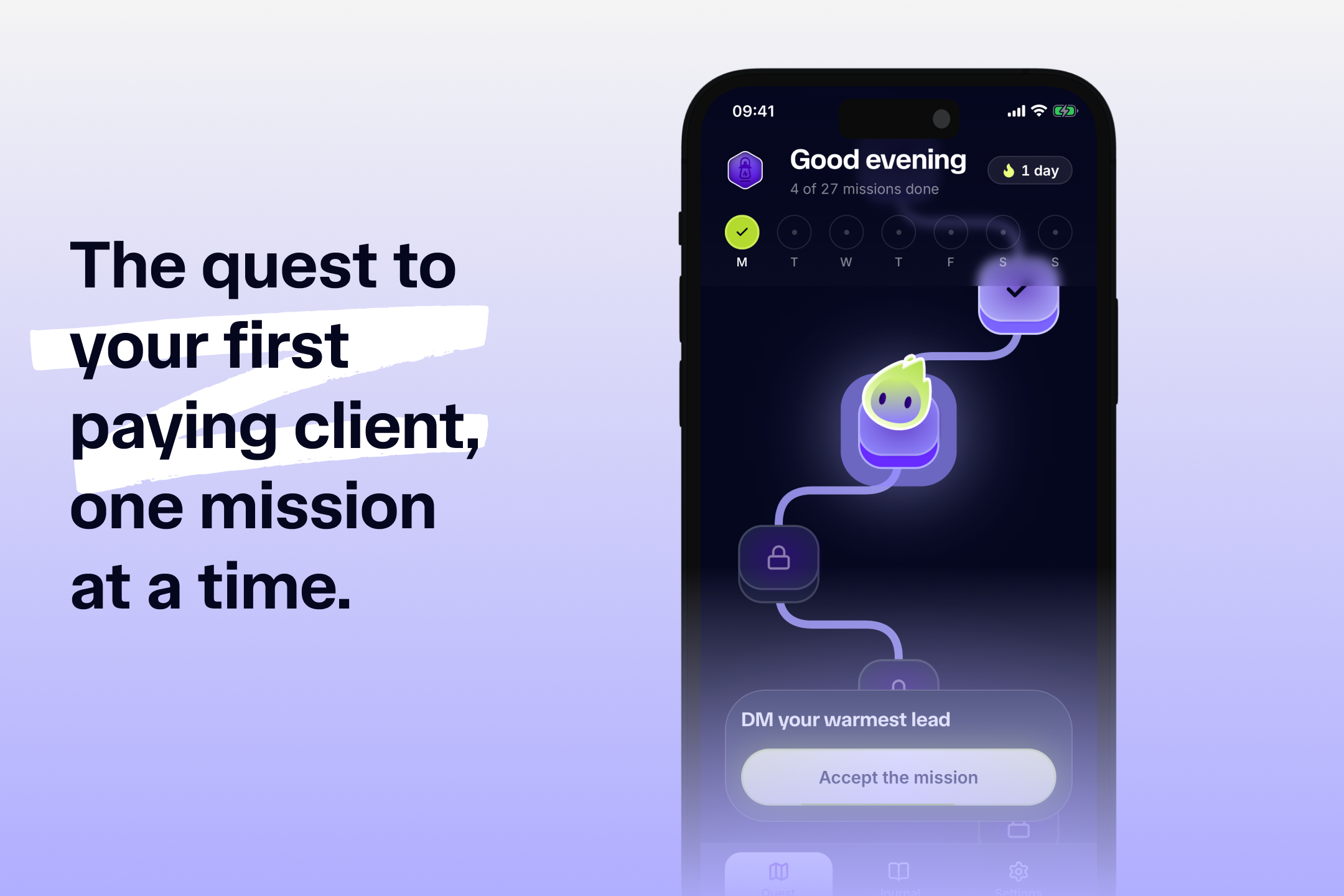
27 missions in three chapters: Foundations, First Proof, First Client.
-
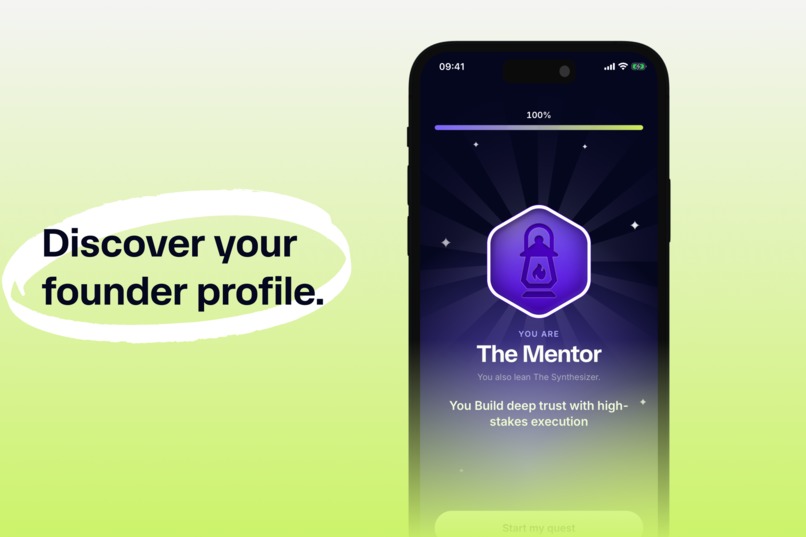
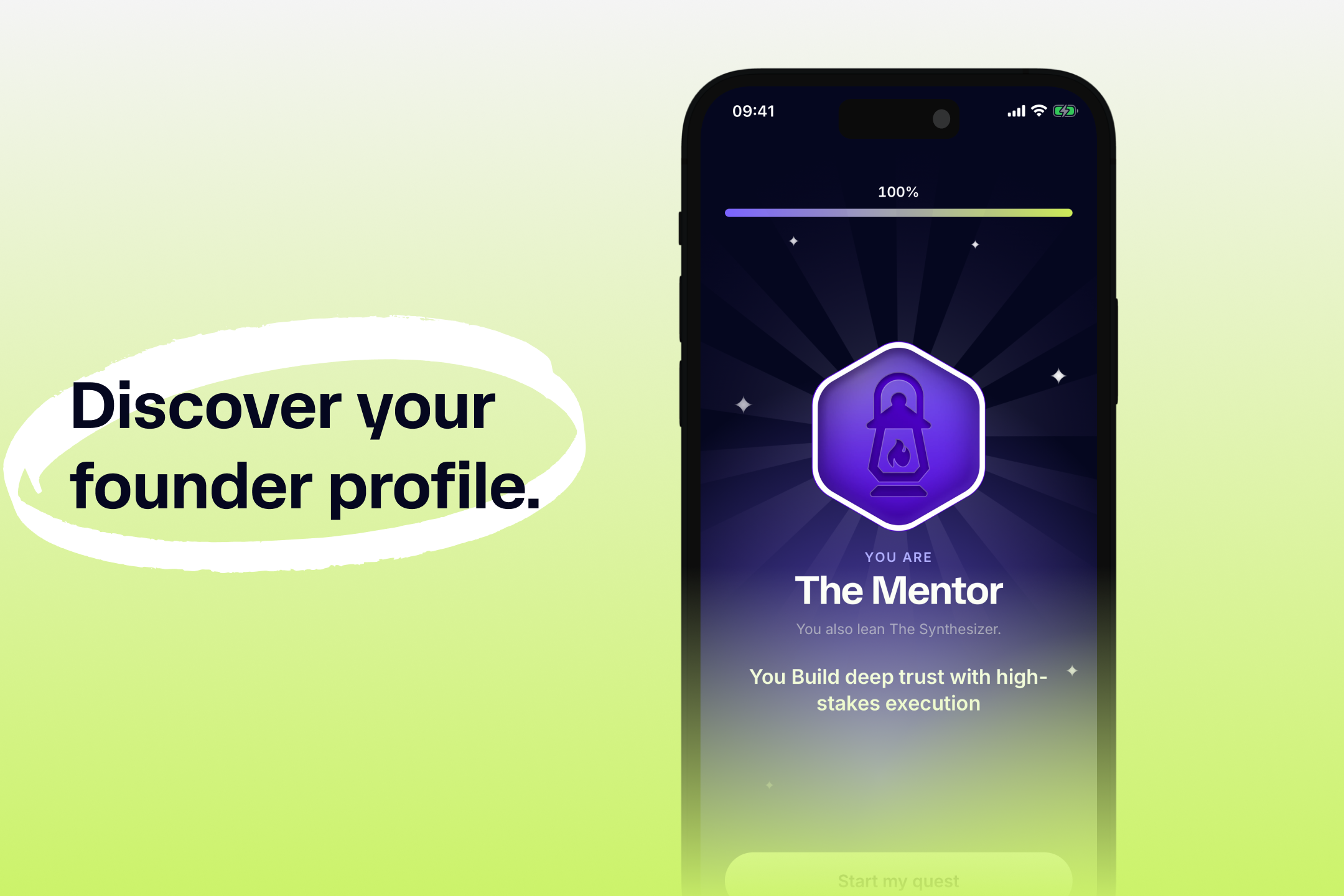
A few honest questions produce your founder edge. Every mission is built from it.
-
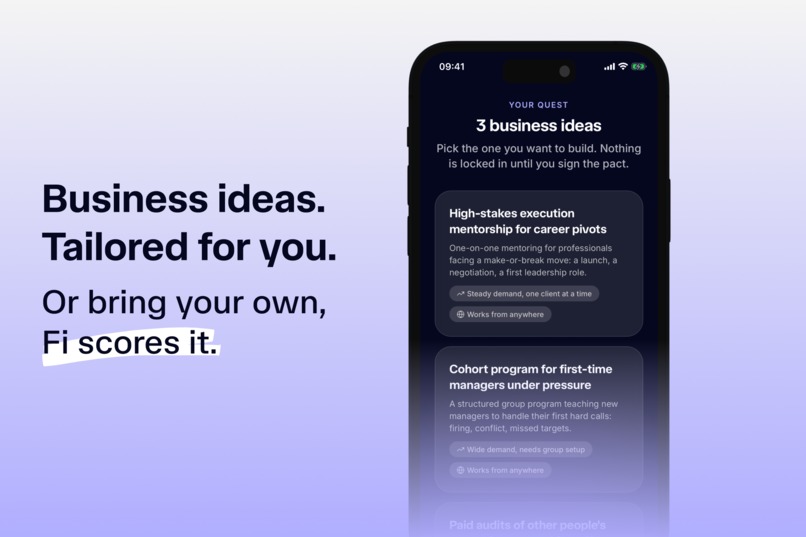
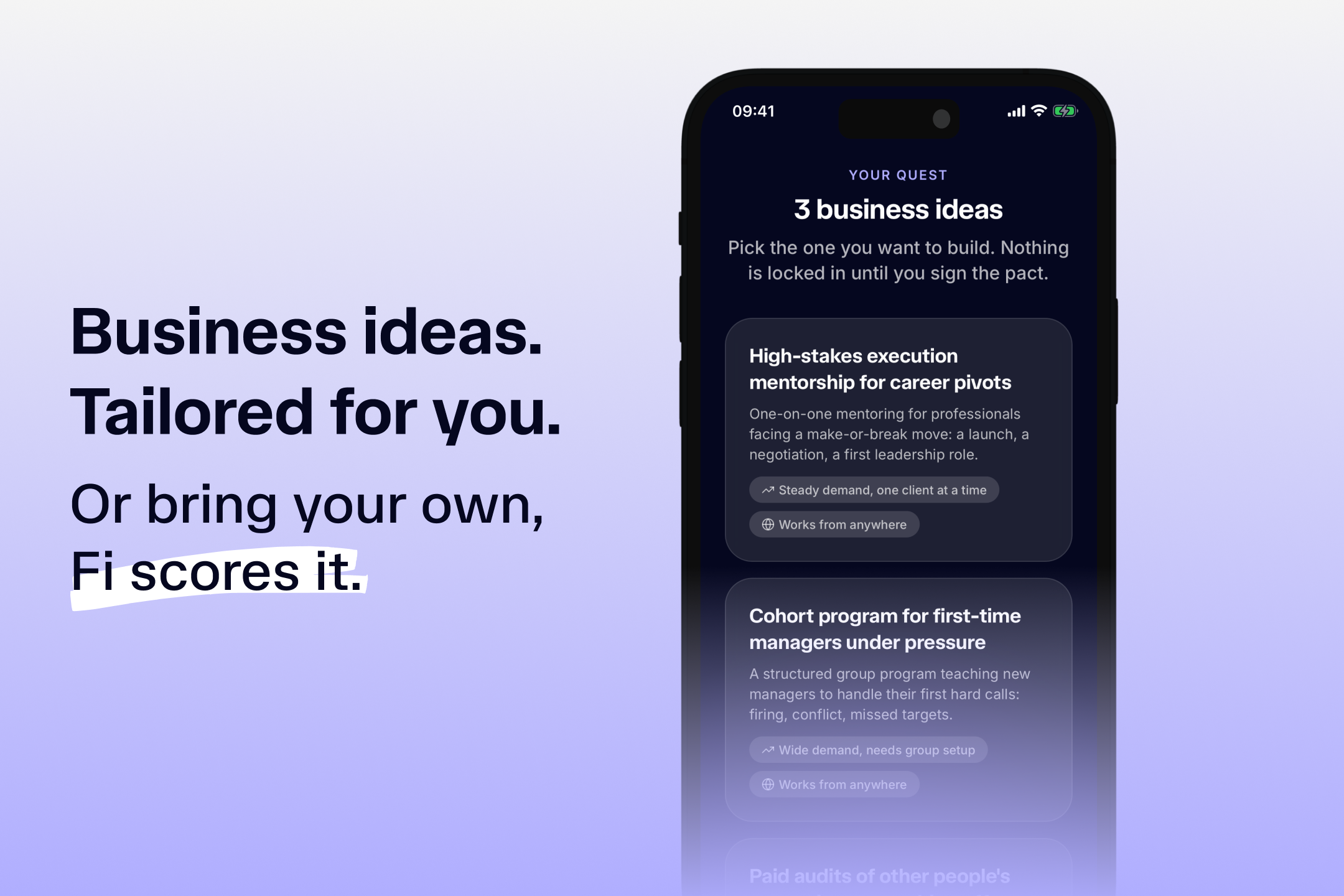
Three ideas drawn from your profile. Or bring your own, and Fi scores it out of ten.
-
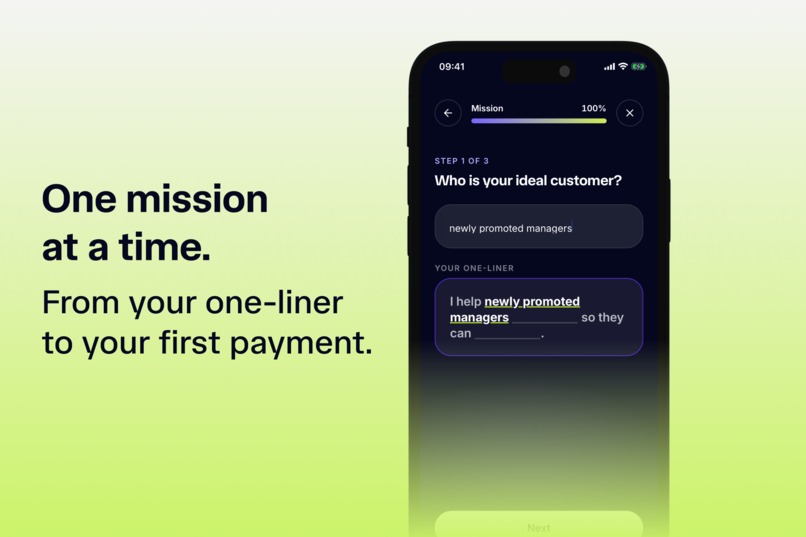
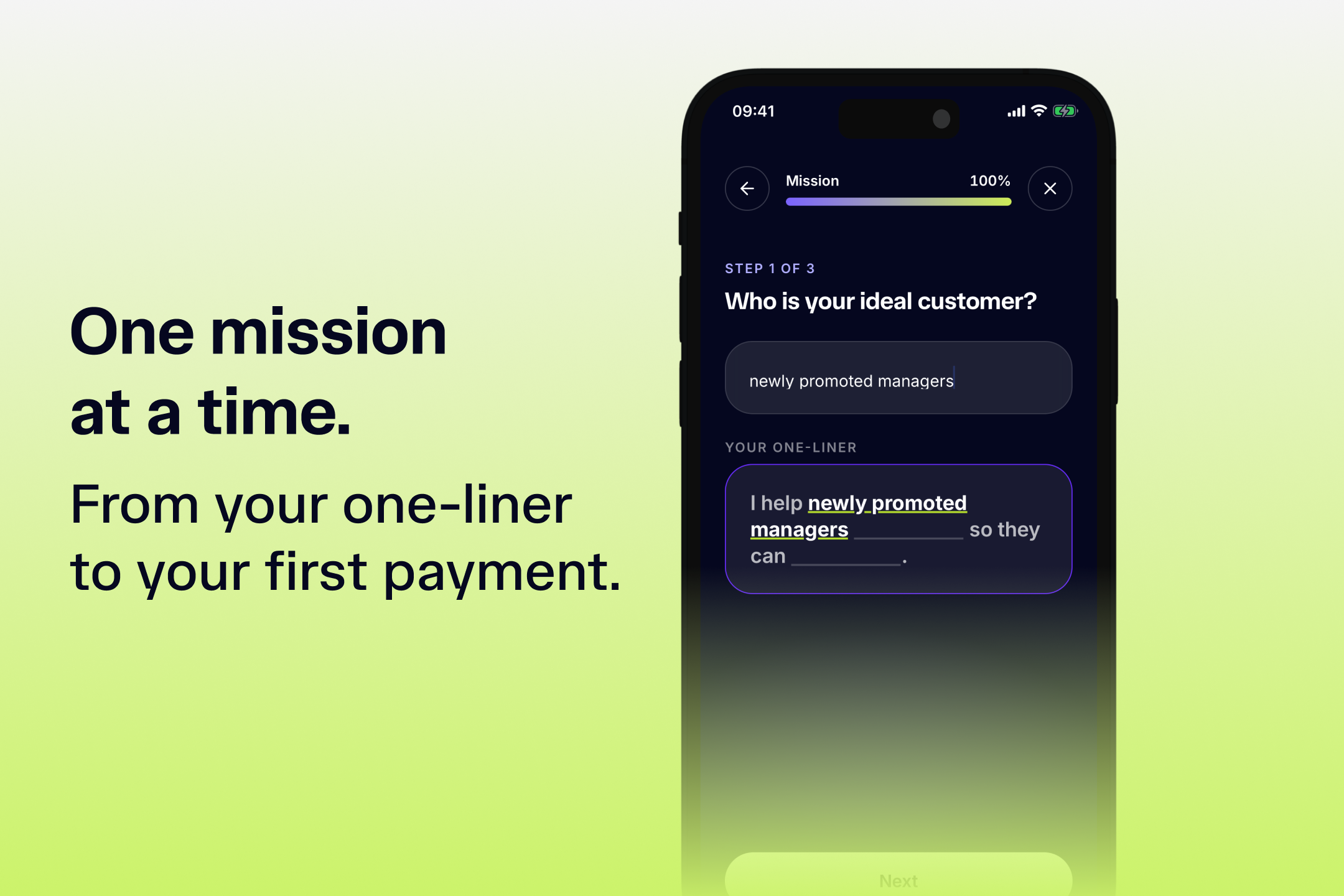
Each mission is one concrete action that ends with a clear question.
-
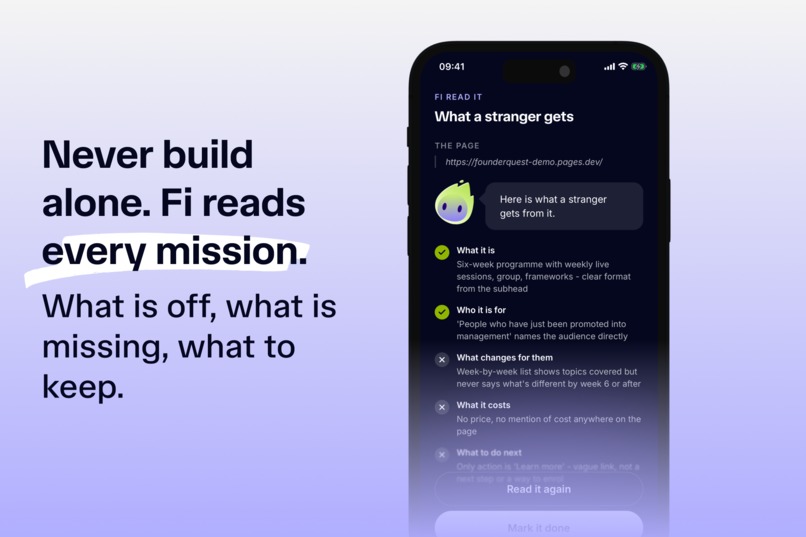
Fi reads what you wrote, names what is missing, and drafts the message you send.
-

App icon 1024x1024px
-
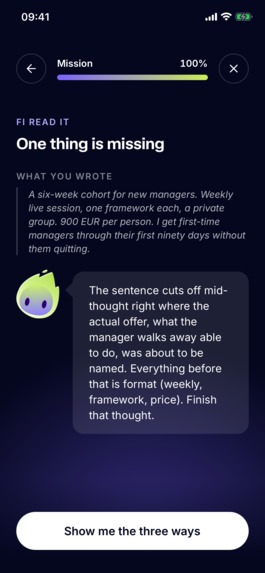
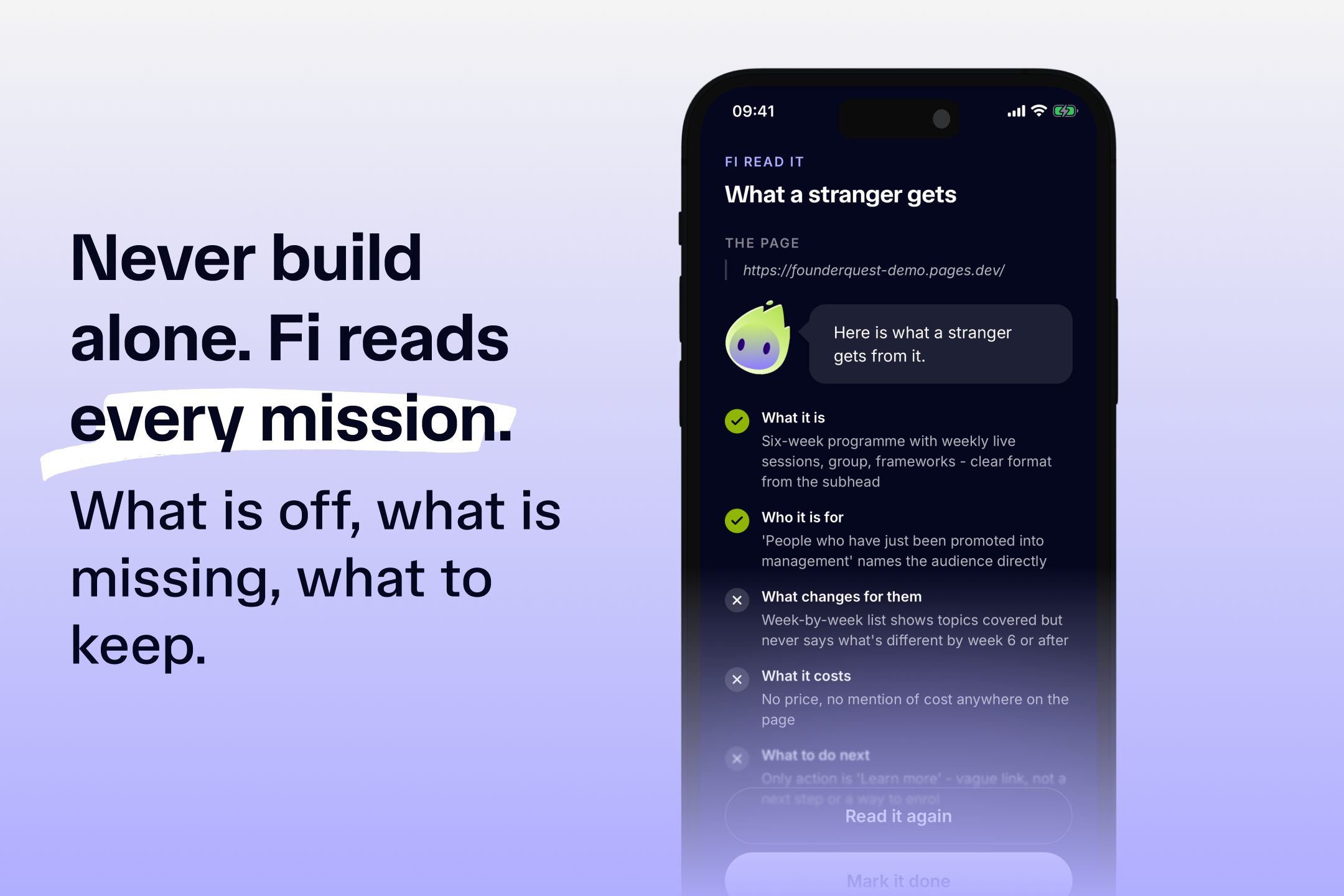
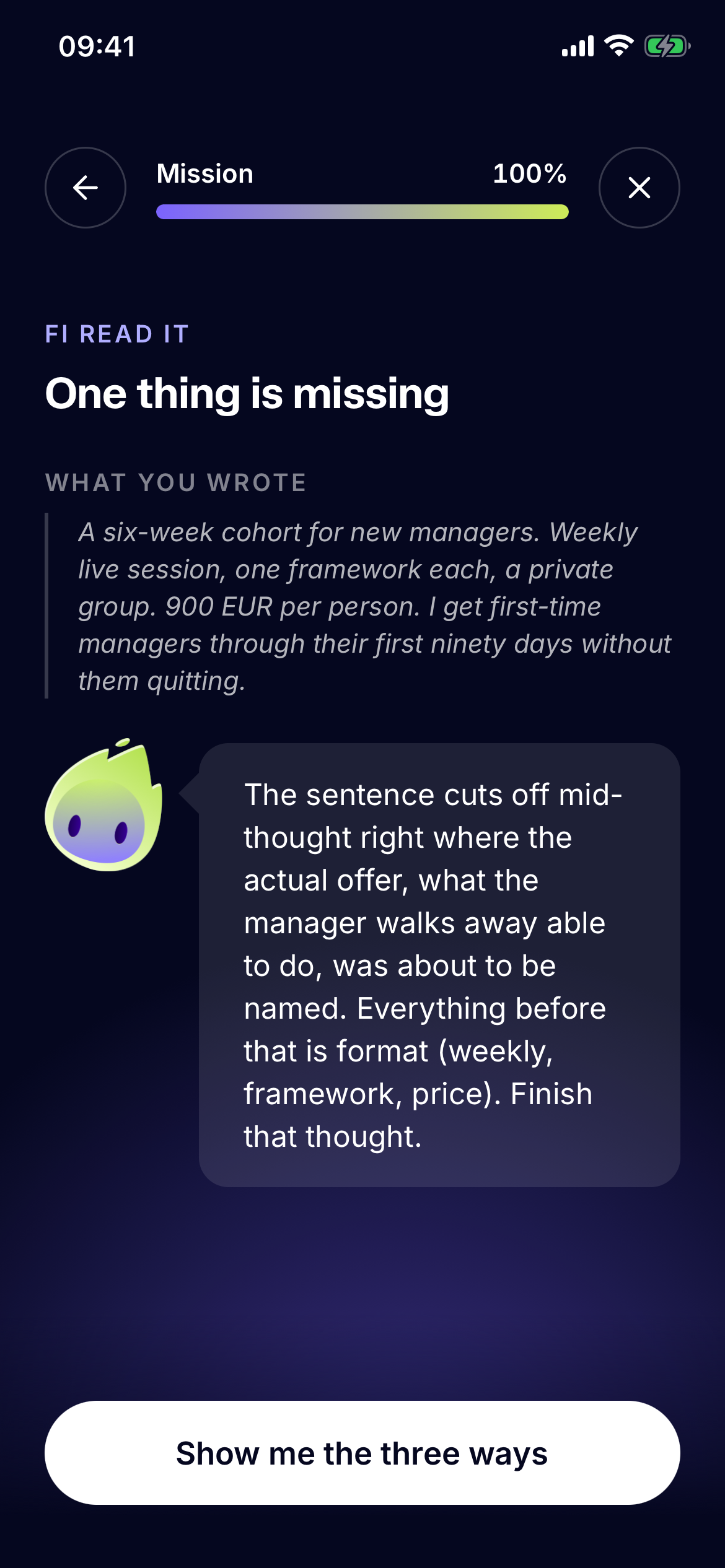
Fi's review of a mission: what is off, what is missing, what to keep.

Inspiration
I spent 10 years as a freelance designer, so I know what it takes to find clients. However, when it came to launching my own side projects or collaborative ventures, I realized I lacked a blueprint and often did things in the wrong order.
Today, a single person can build a business from A to Z, but there is a major downside: the overwhelming amount of scattered, conflicting advice across social media, and the pain of finding customers in such a competitive landscape.
I wanted to cut through this noise and create a structured path that keeps aspiring founders from losing focus. Essentially, a "Duolingo for entrepreneurship."
What it does
Founderquest takes you from "I want to start something" to your first paid client.
- Your founder profile. A few honest questions: what you are good at, what people already come to you for, and what you would rather never do again.
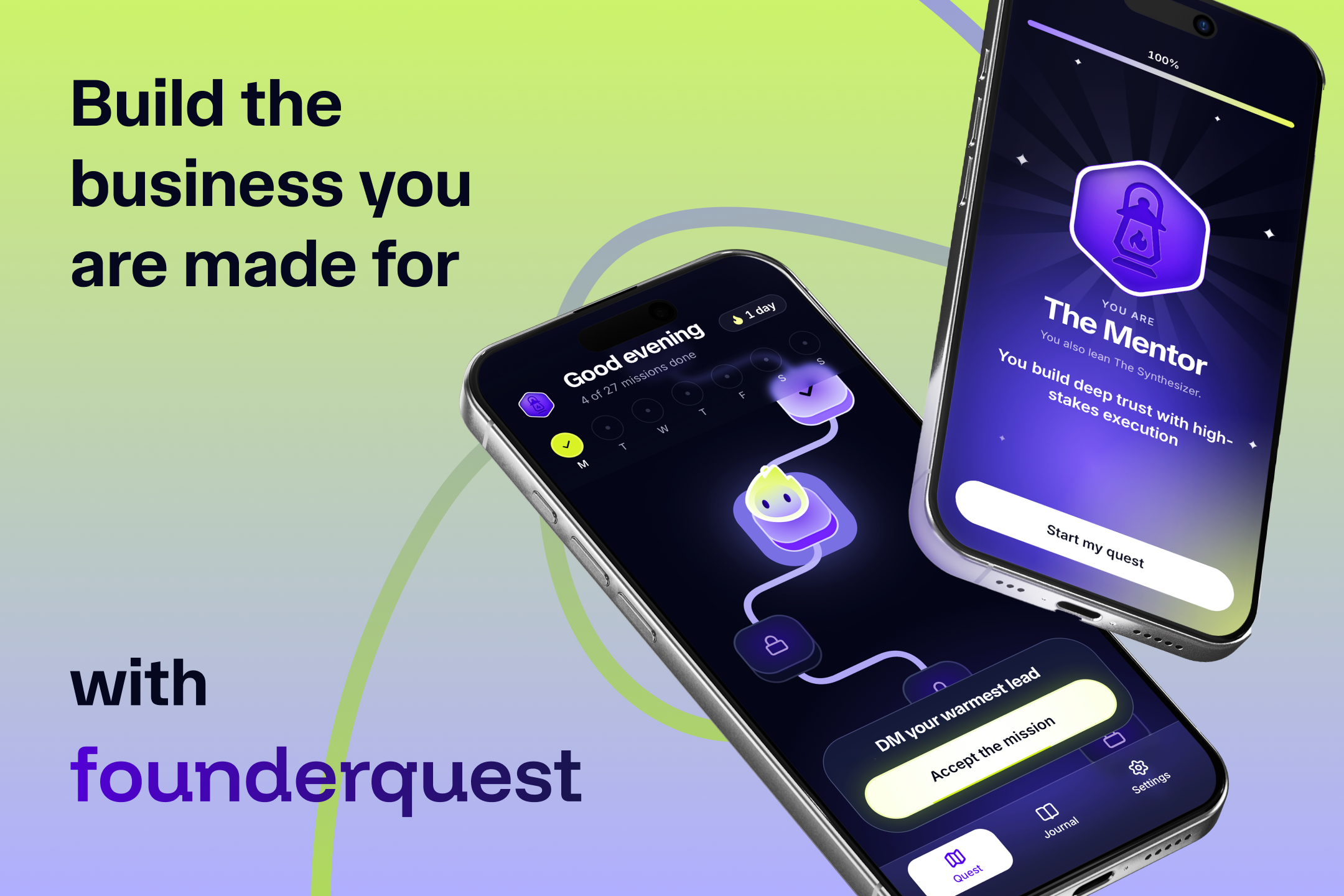
- A business tailored to you. Three ideas drawn from that profile. Or bring your own, and our AI guide, Fi, scores it and highlights the changes that would raise your score.
- Missions in three chapters. Foundations, First Proof, and First Client. Each mission is a concrete action, from writing your one-liner to collecting payment from client number one, and ends with a clear question.
- Fi, on every mission. Fi reads what you wrote and tells you what is off, what is missing, and what to keep. Fi also remembers everything, so you stay on track.
- The Closer. When a mission ends with something you need to send, like a pitch, a follow-up, or an invoice, the Closer drafts it using your own words. You just hit send.
- A Journal and a Quest Card. A journal that exports as a single document, and a Quest Card summarizing everything you have built.
Everything up to your first closed mission is free. No account, no credit card required. The Full Quest is a monthly subscription with an introductory first month, managed through RevenueCat.
How I built it
I built Founderquest with Figma and Claude Code. I designed the product, the flow and the screens, decided what stayed and what got cut, and tested every build on my phone. Claude wrote most of the code and the mission copy, grounded in proven business frameworks.
- Expo SDK 57 / React Native, TypeScript, Expo Router, Reanimated 4 for the map and the mission flow, react-native-svg for Fi and the Quest Card.
- RevenueCat for the subscription: one product, one entitlement, and a paywall that only opens when you reach mission two. Restore from Settings.
- Fi runs on Claude Sonnet 5, behind a Cloudflare Worker that relays between the app and the model. The relay keeps nothing: no database, no logs, no copy.
- Everything else lives on the phone, in local SQLite. No account, no login, nothing about you for us to look at.
- The missions were tested end to end with scripted personas so the flow never dead-ends.
Challenges I ran into
- Testing different personas. I wanted to see how the app handled non-tech businesses to make sure the framework was specific yet versatile enough for anyone. To test efficiently, I built a developer mode to bypass onboarding and instantly load one of four distinct personas. I also used pre-written scripts with exact answers for each mission, so I could rapidly test the entire flow and the AI responses from multiple angles.
- Nailing the app's tone and copy. Finding the right voice was hard. Early AI drafts often sounded brutal or condescending. I started with Claude, then switched to Gemini, which gave better tone and wording. I also rewrote and cut the text myself to make sure the final copy was punchy and impactful.
- Keeping Fi honest and balanced. As an AI guide, Fi needs to give a real, objective read. The challenge was tuning the prompt so Fi is neither too harsh nor too flattering, and gives fair scores. Fi also has to hold when a user gets insulting or pastes nonsense. The moderation rules are behaviors to assert, tested against a lot of hostile prompts.
- Designing the user flow and the paywall strategy. Deciding when to ask for money and what to give away for free was a challenge. I wanted users to start experiencing the app immediately with zero friction and no account required. I benchmarked the onboarding flows of top-tier apps to craft a journey where the paywall only appears once real value has been delivered.
- Privacy as a strict design constraint. Deciding that the relay stores absolutely nothing shaped the entire architecture and forced all data handling to stay local.
- And a few visual bugs, like a 3D and scroll conflict on iOS.
Accomplishments I'm proud of
- A cool name and domain. Finding a clear, explicit name that states exactly what the product does, and managing to secure the founderquest.app domain.
- A cohesive design and a meaningful mascot. Crafting a consistent visual identity from scratch, from the dark-mode interface and the visual mission map to the mascot. I went through several iterations for the character before stripping it down to a simple, endearing flame. It captures the "spark of creation," and the animations feel just right.
What I learned
- Shipping my first iOS app. I come from a web app background, so building a native mobile app from scratch and navigating the App Store submission process was a big learning curve.
- Onboarding is a discipline. Designing a cohesive, engaging onboarding flow that delivers value immediately, before asking for anything, took continuous iteration.
What's next for Founderquest
The first user who closes the last mission with a real client, and tells me how it went.
Then, for the product:
- Scaling chapters. Expanding the map with new chapters to take founders from their first client to their first ten, and eventually to a hundred.
- Turning Fi into a long-term coach. For a monthly subscription to make sense, the value cannot stop after the first client. Fi will evolve into an ongoing business coach to drive true long-term retention.
Built With
- anthropic
- claude
- cloudflare-workers
- expo.io
- react-native
- revenuecat
- sqlite
- typescript

Log in or sign up for Devpost to join the conversation.