-
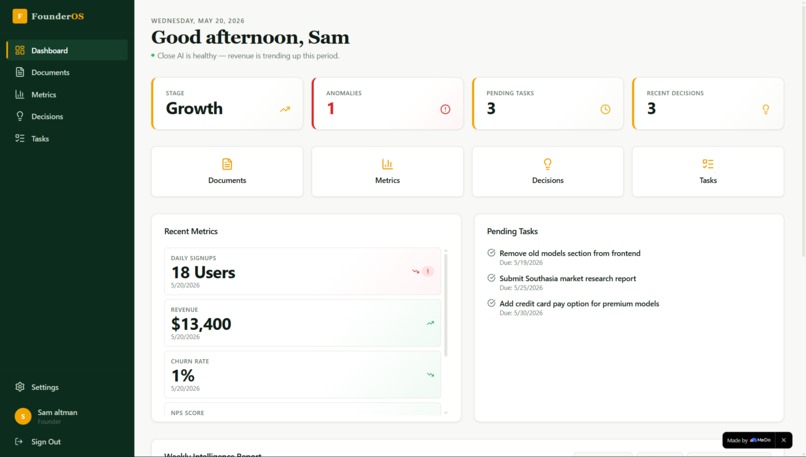
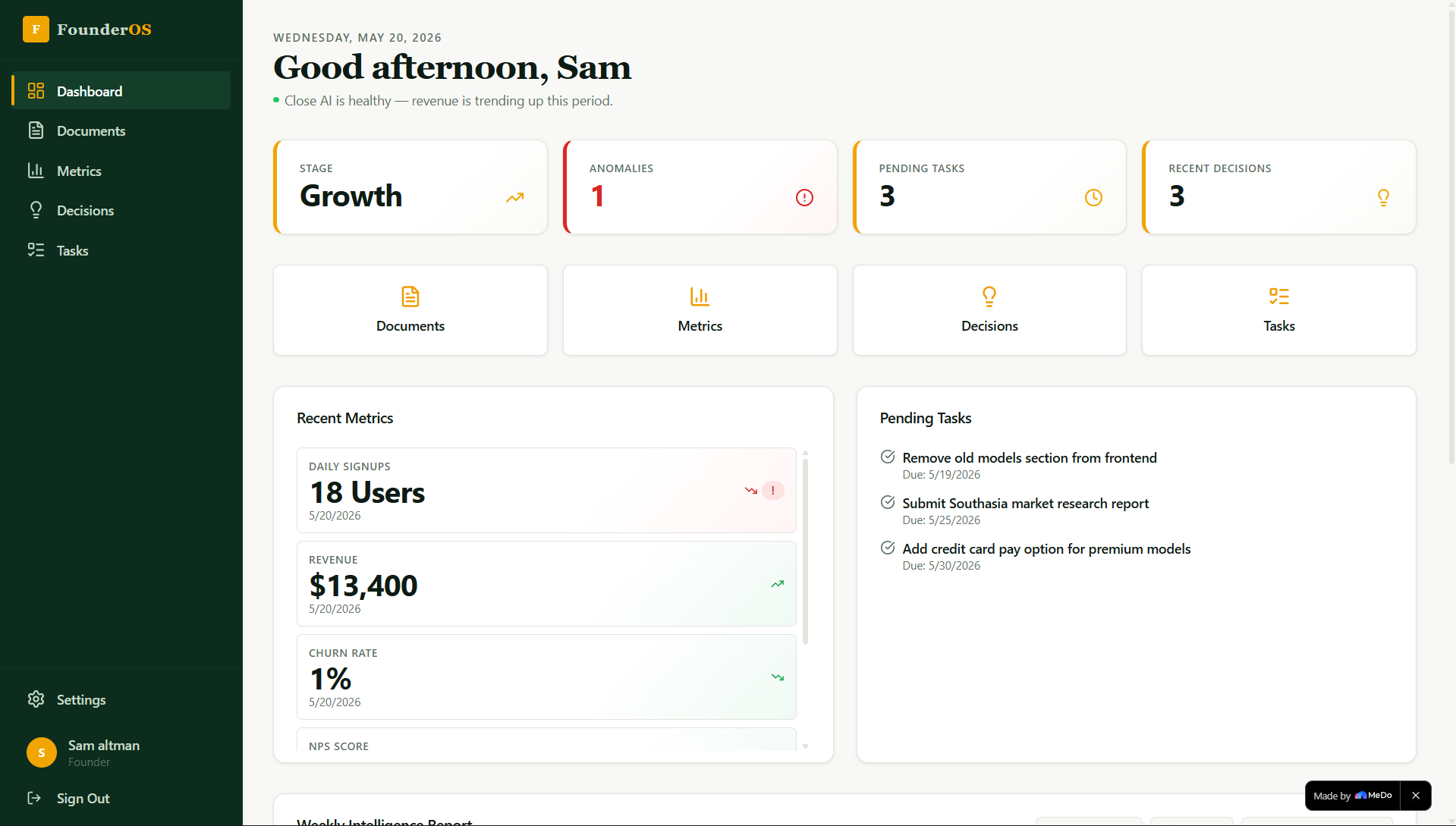
Founder Dashboard
-
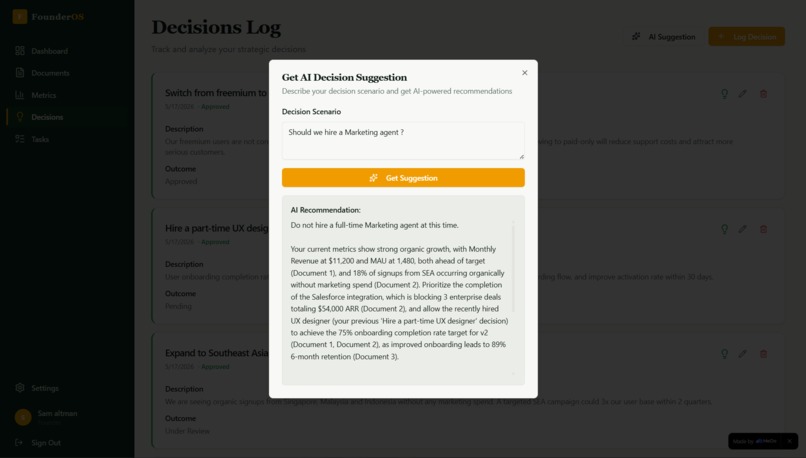
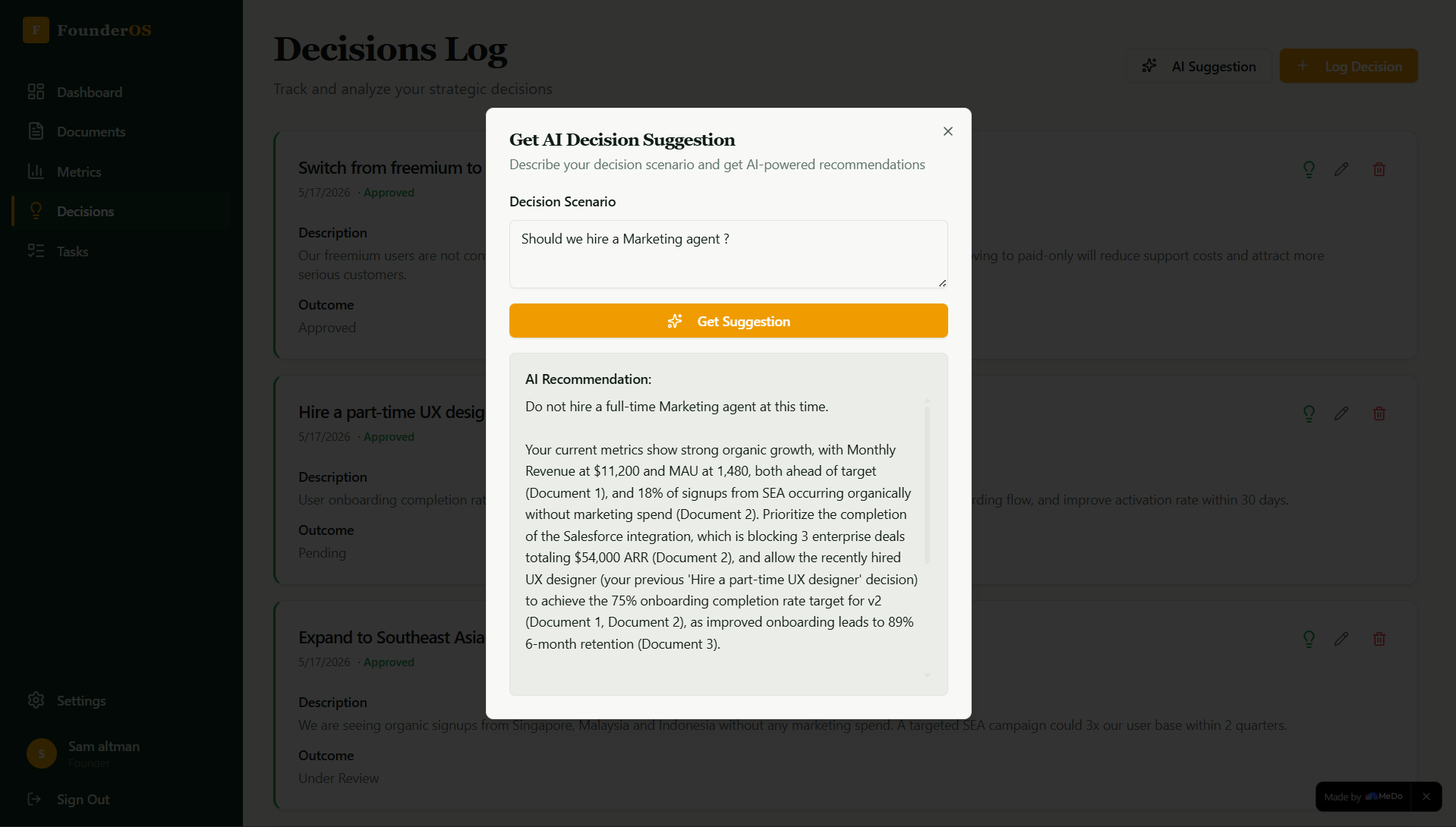
AI Decision Engine: Uses company documents, historical decisions, and startup metrics to generate context-aware recommendations.
-
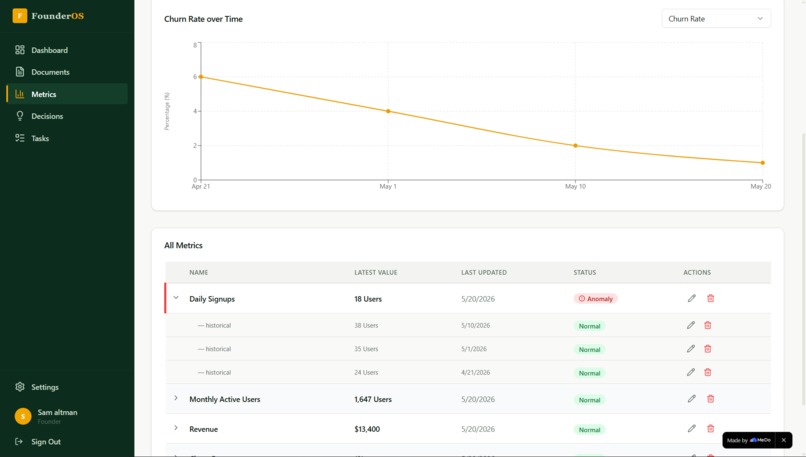
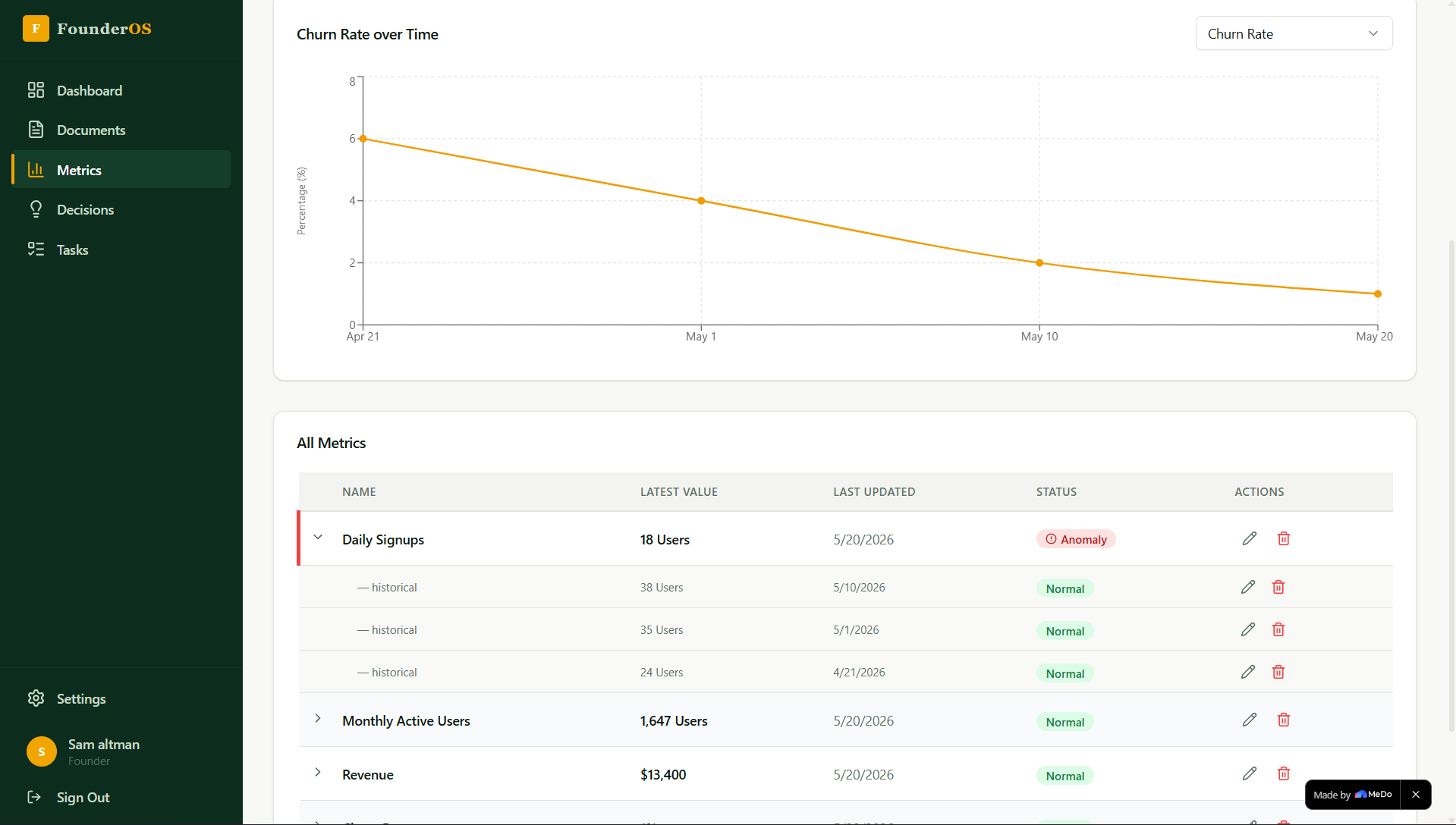
Metrics + Anomaly detaction: Understands when something is actually going wrong.
-
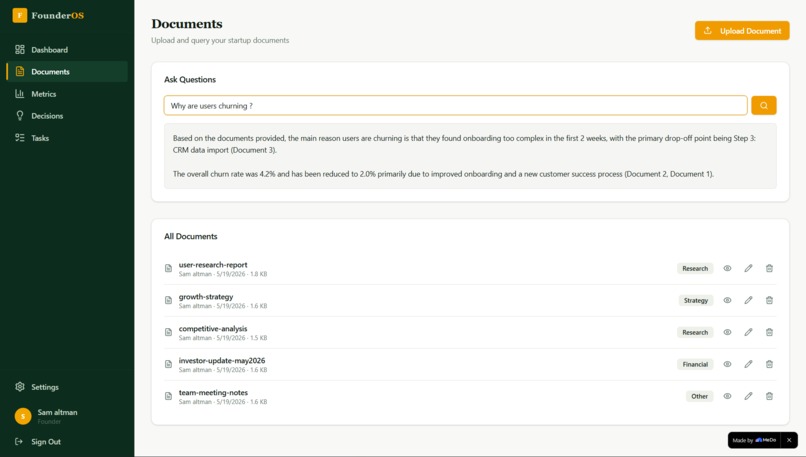
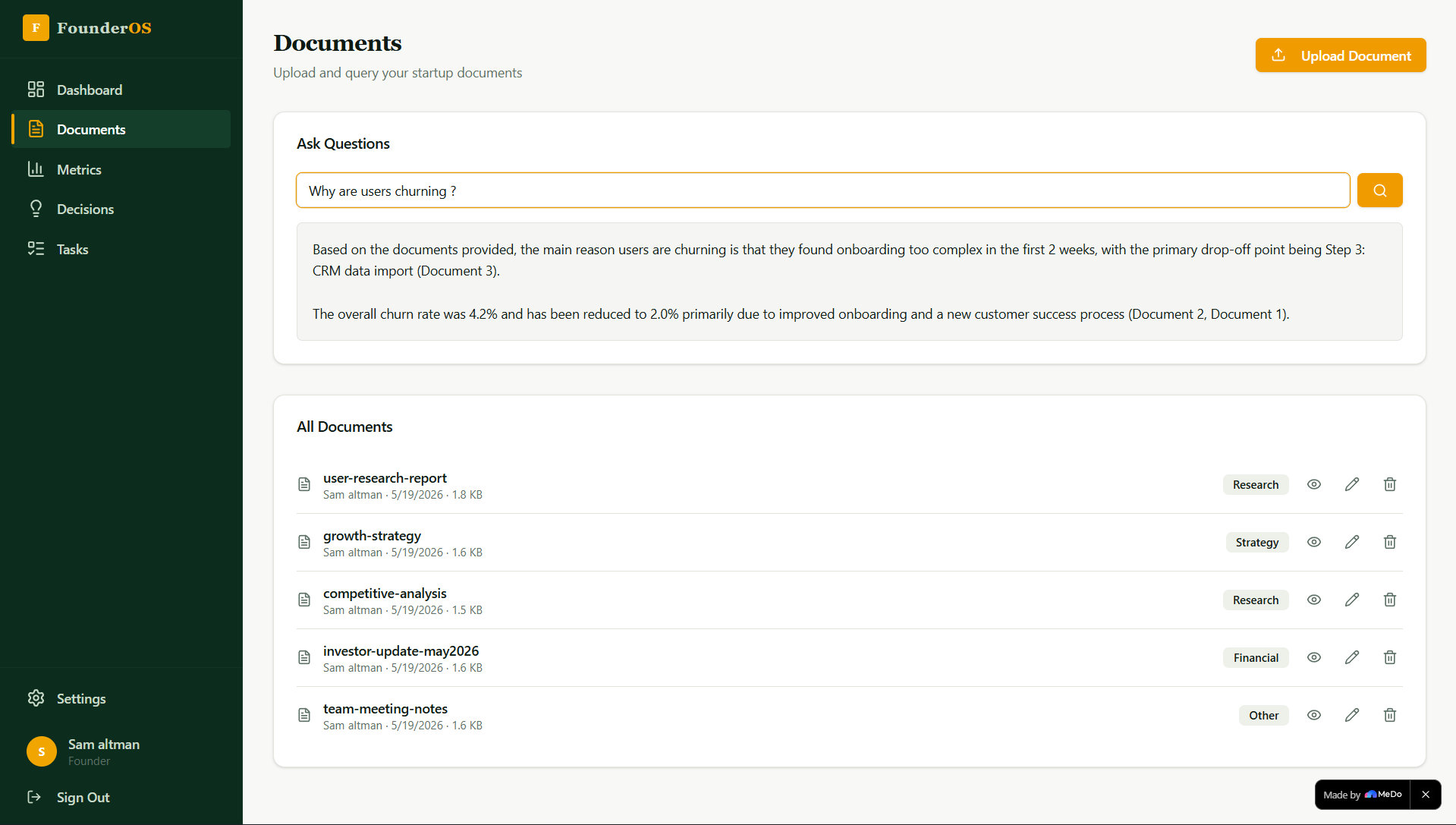
RAG Document Intelligence
-
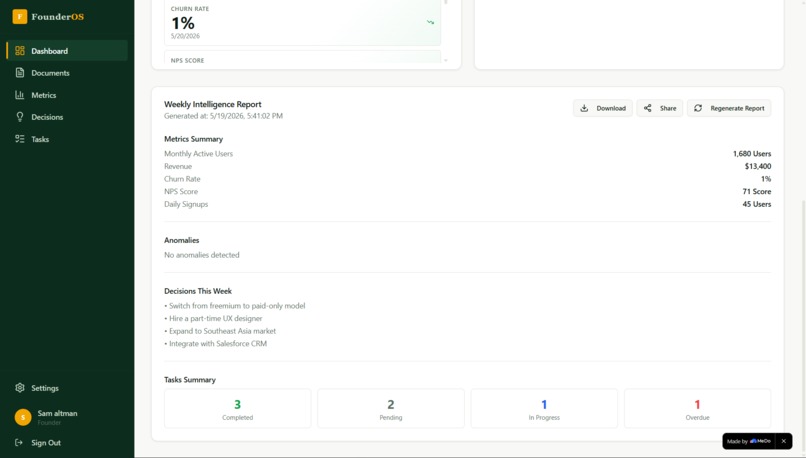
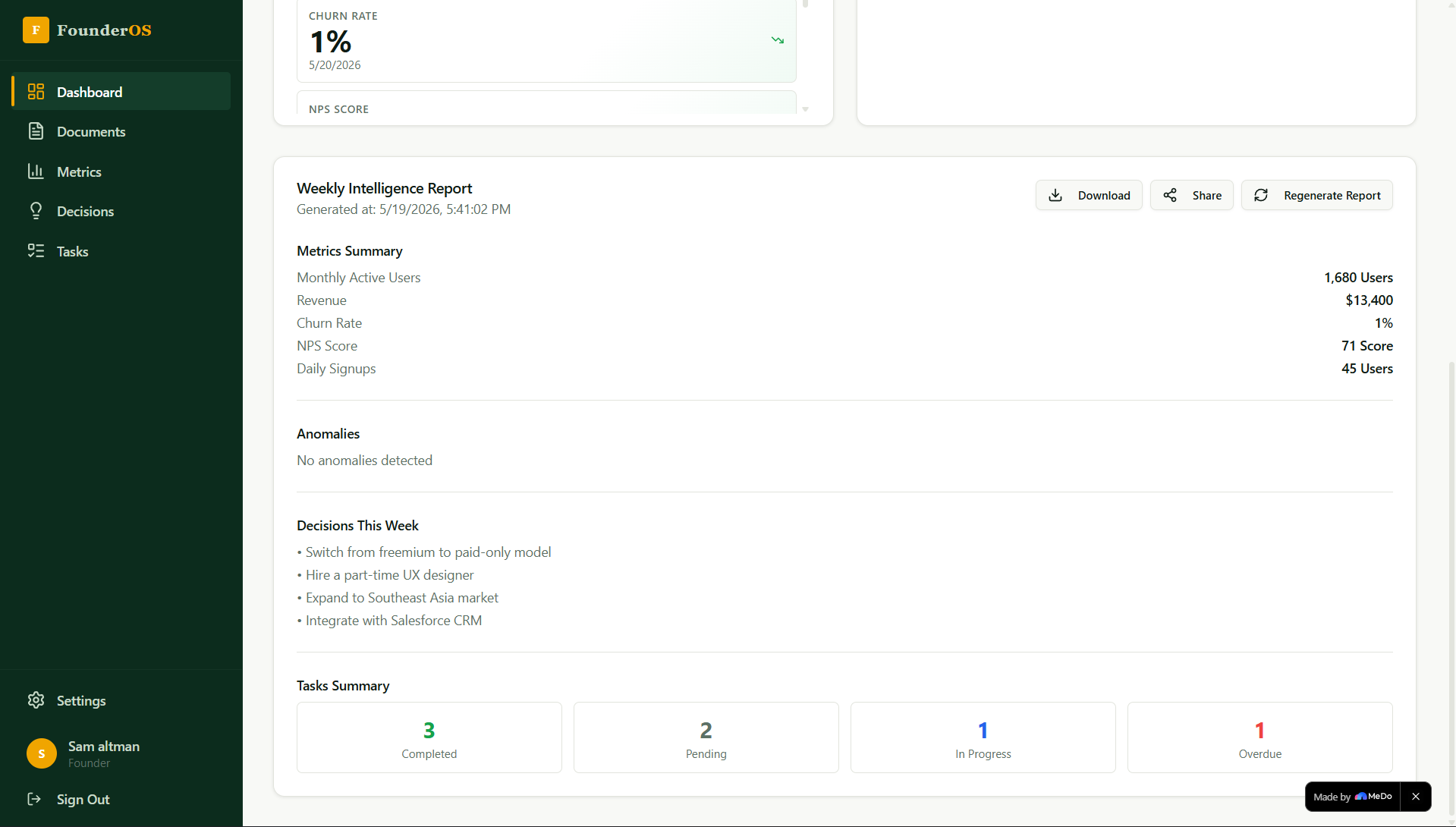
Weekly Intelligence Report
-
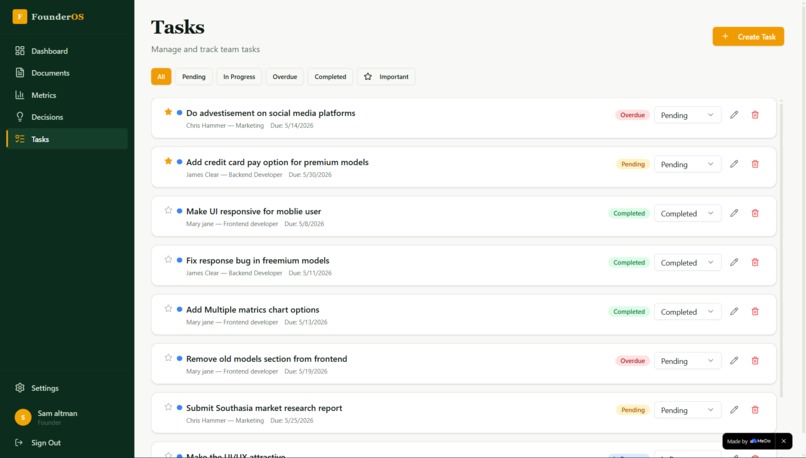
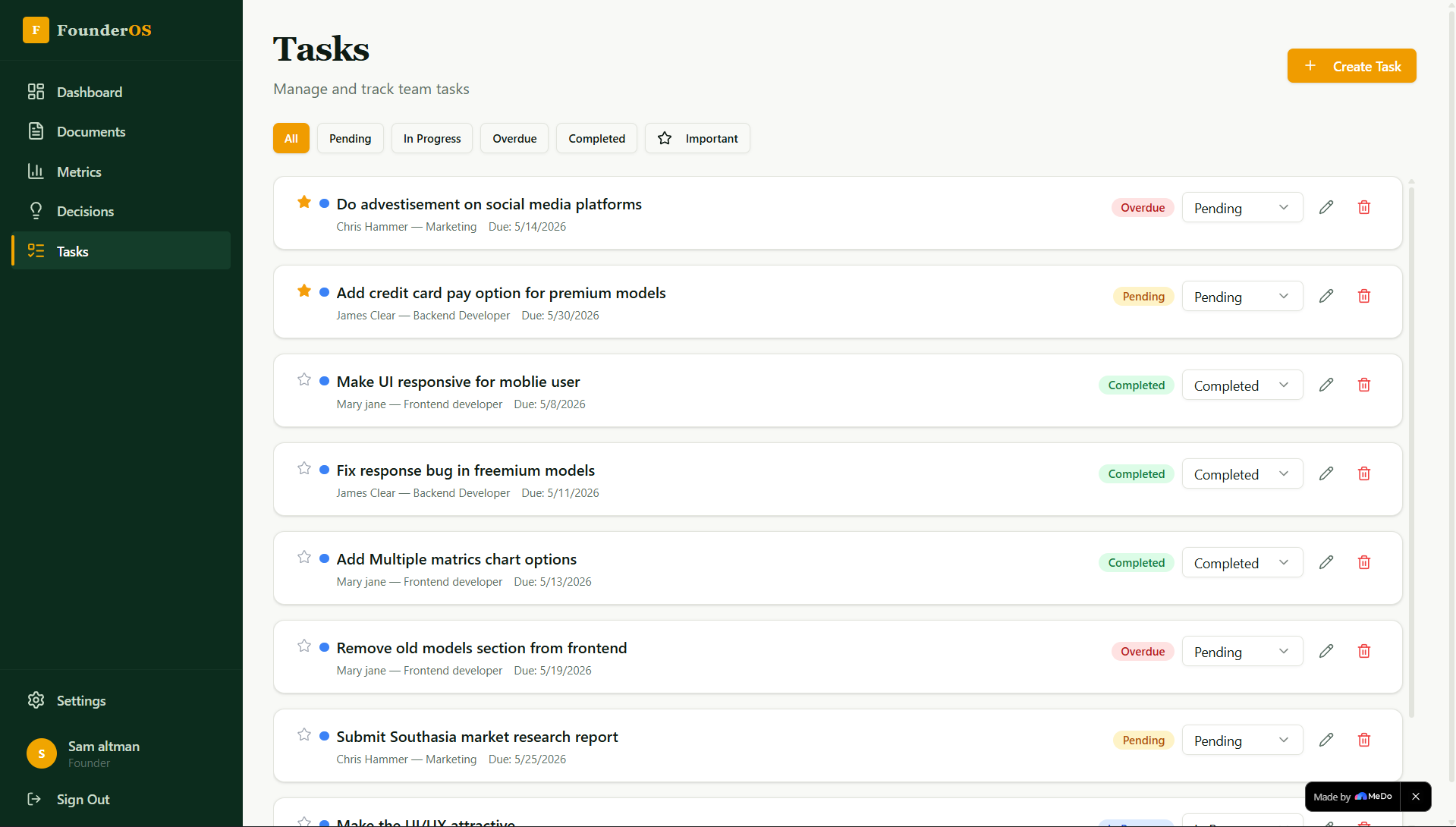
Team Workspace/ Tasks
-
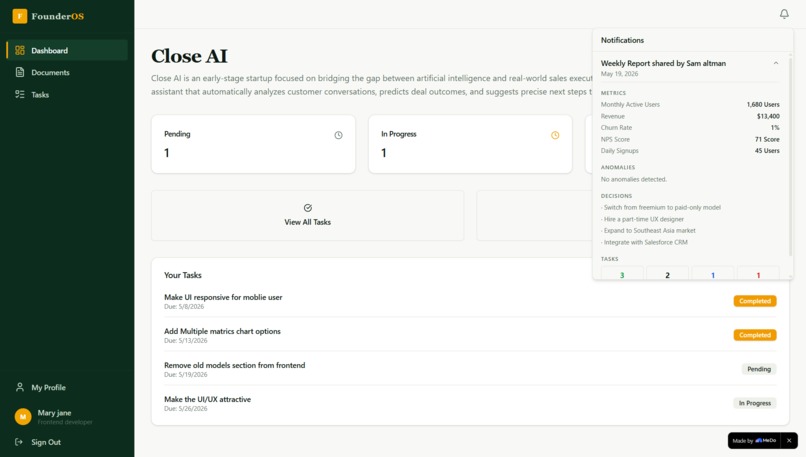
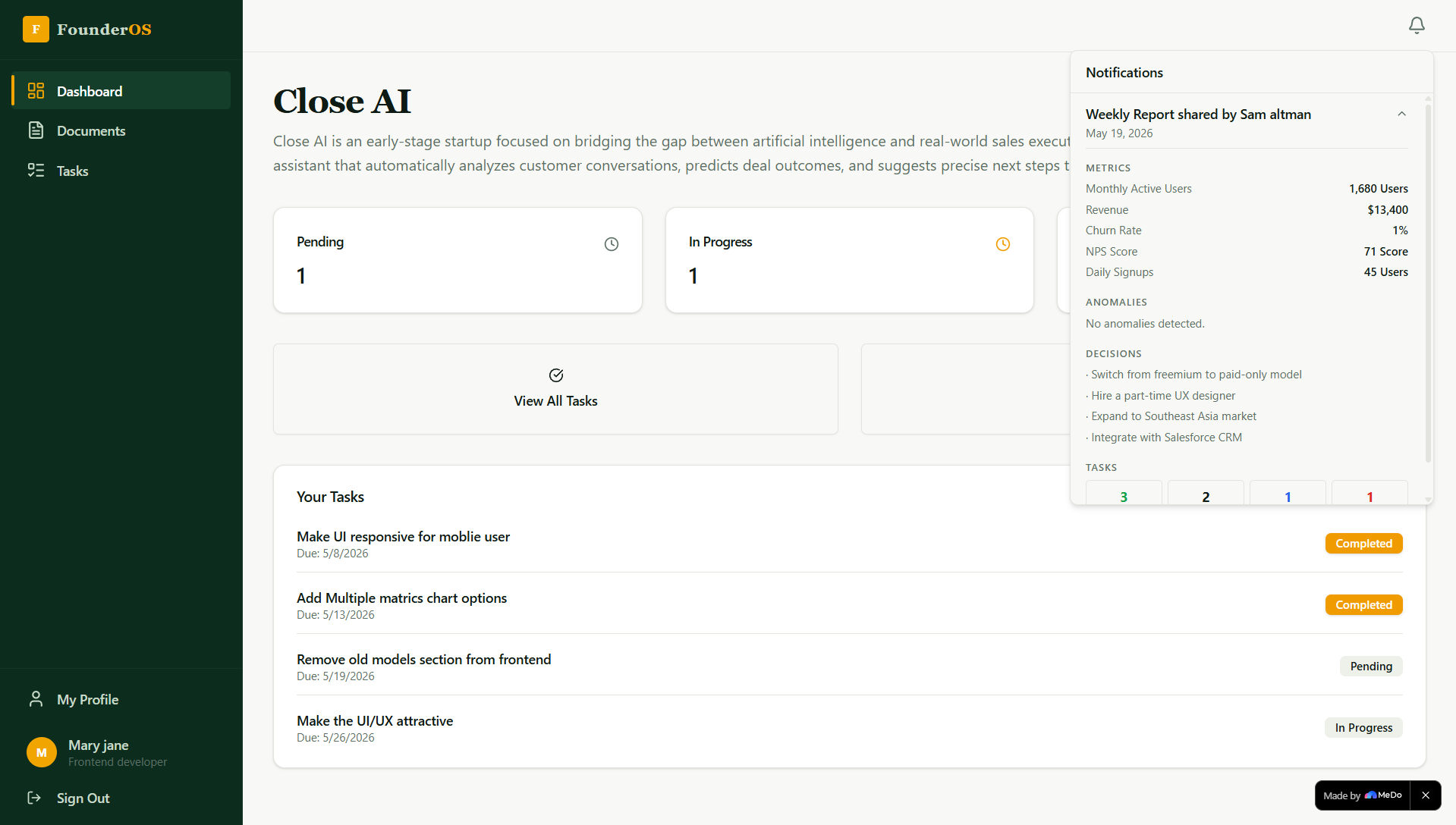
Team member Dashboard ( Role switched )
-
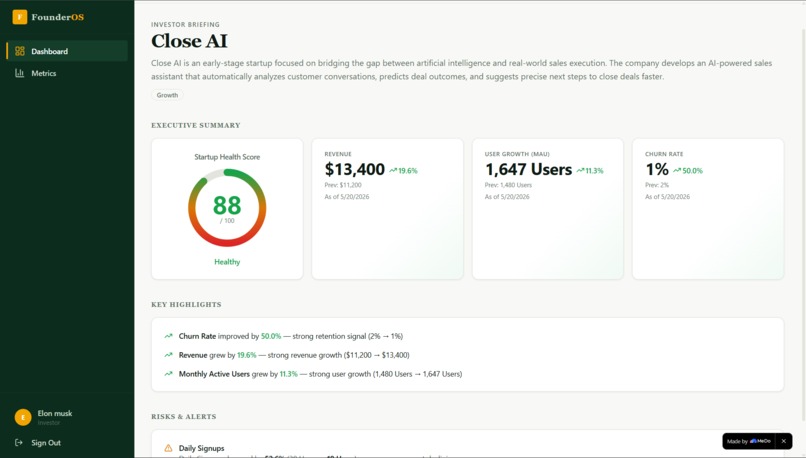
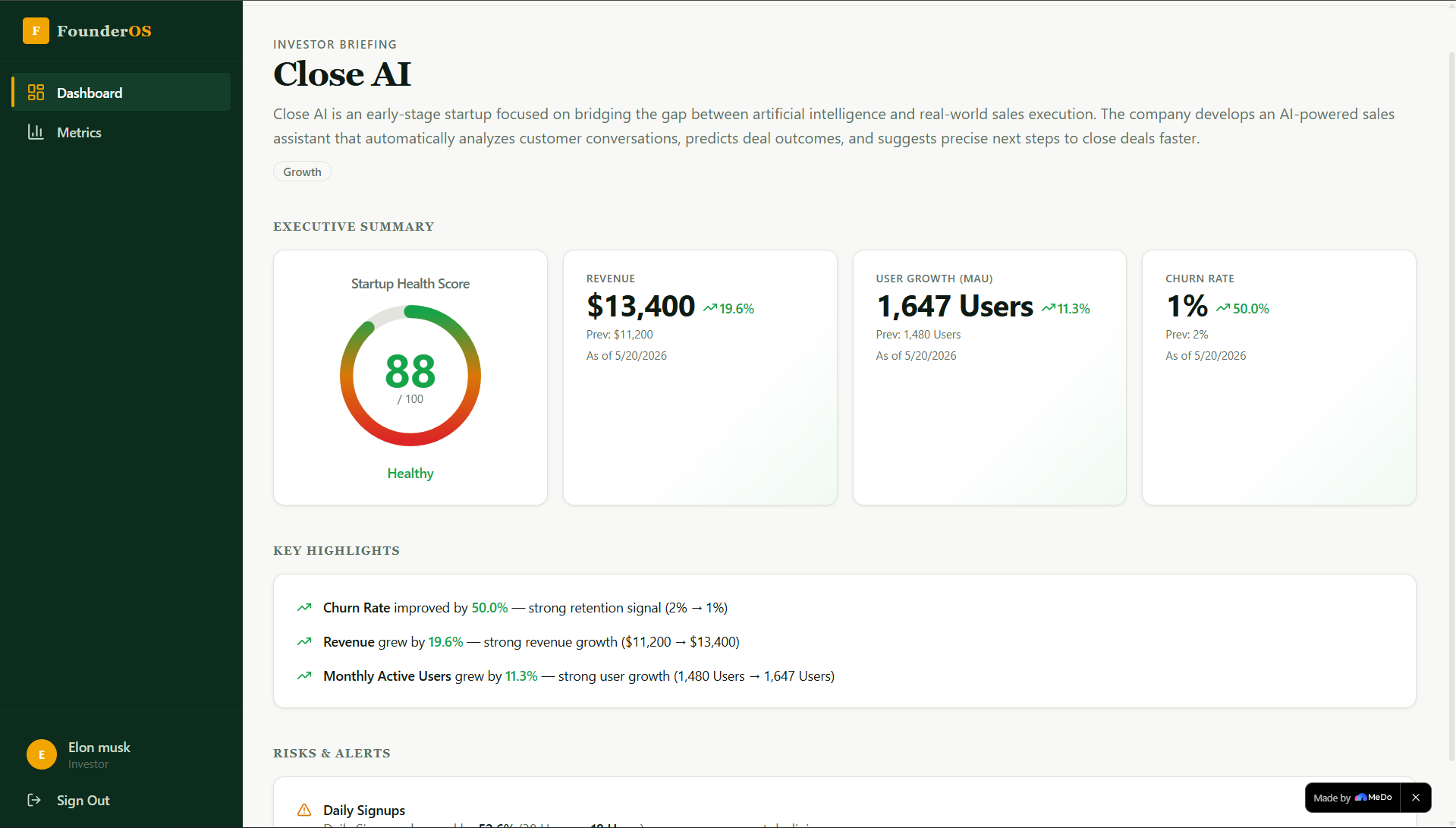
Investor Dashboard ( Role Switched ): Investors receive a high-level operational view.
Inspiration
Startups live across too many disconnected tools.
Metrics are in spreadsheets. Strategy lives in docs. Tasks are somewhere else. Investor updates are manual. AI tools forget everything after every conversation.
I wanted to build something that give eveything at one place, operating system for a startup. That became FounderOS.
What it does
The platform has three role-based experiences.
Founders
- Metrics tracking with anomaly detection
- AI-powered decision suggestions
- RAG-powered document intelligence
- Automated weekly intelligence reports
Team Members
- Task-focused workspace
- Document access
- Status updates
Investors
- Startup Health Score
- Growth analytics
- Automated risk alerts
One feature I spent a lot of time on was the AI Decision Engine. A founder can ask:
"Should we hire another backend engineer right now?"
The system looks at:
- company documents
- previous decisions
- operational metrics
and generates recommendations with confidence scores.
Another feature - The Weekly Intelligence Report. Every Monday, FounderOS automatically generates a report containing:
- startup metrics
- anomalies
- recent decisions
- task performance
The report can be downloaded or shared directly with team members and investors from inside the platform.
How I built it
Instead of building page-by-page, I started with one large prompt describing:
- the database structure
- user roles
- workflows
- permissions
- dashboards
- and AI systems That gave me a stable foundation to build on.
From there, I refined features through focused multi-turn conversations with MeDo.
I heavily used MeDo's full-stack capabilities:
- full-stack application generation
- multi-turn conversational development
- RAG pipelines
- role-based authentication
- scheduled automations
- persistent multi-user architecture
- real-time shared data
Challenges I ran into
first challenge : The first version of the AI Decision Engine was honestly terrible.
No matter what I asked, it responded with vague advice like:
"Consider your options carefully."
Getting the system to actually read company documents, reference previous decisions, and use startup metrics required completely rethinking how context was passed into the model.
Second challenge: Permissions and security.
Founders, team members, and investors all see completely different experiences, so the database policies had to be carefully designed to keep startup data isolated.
Accomplishments that I'm proud of
I'm most proud that FounderOS actually behaves like a shared operational system.
Different users log into the same startup and see completely different experiences, reports generate automatically every week, and the AI improves its recommendations based on company context over time.
That was the moment it stopped feeling like an AI feature and started feeling like a real product.
What I learned
This project changed how I think about AI products.
The most useful AI systems are not isolated chat interfaces — they're systems that accumulate memory, context, workflows, and operational knowledge over time.
I learned that how powerful MeDo can be for building large full-stack systems through a conversations.
What's next for FounderOS
The next step is proactive intelligence. Instead of founders asking questions manually, FounderOS should surface insights automatically.
For example:
"Your churn rate has been Increasing for 3 weeks — here's what your user research suggests is causing it."
Future plans include:
- predictive forecasting
- meeting intelligence
- investor portfolio management
- email delivery for weekly reports
- AI-generated strategic planning
The long-term vision is simple:
A founder should wake up every morning and already know exactly what needs their attention today — without opening five different tools.
Built With
- ai-agents
- automation-workflows
- full-stack-generation
- medo
- rag
- rbac
- real-time
- relational-databases
- scheduled-jobs
- semantic-retrieval
- vector-search


Log in or sign up for Devpost to join the conversation.