-
-
FoundersOS Icon
-
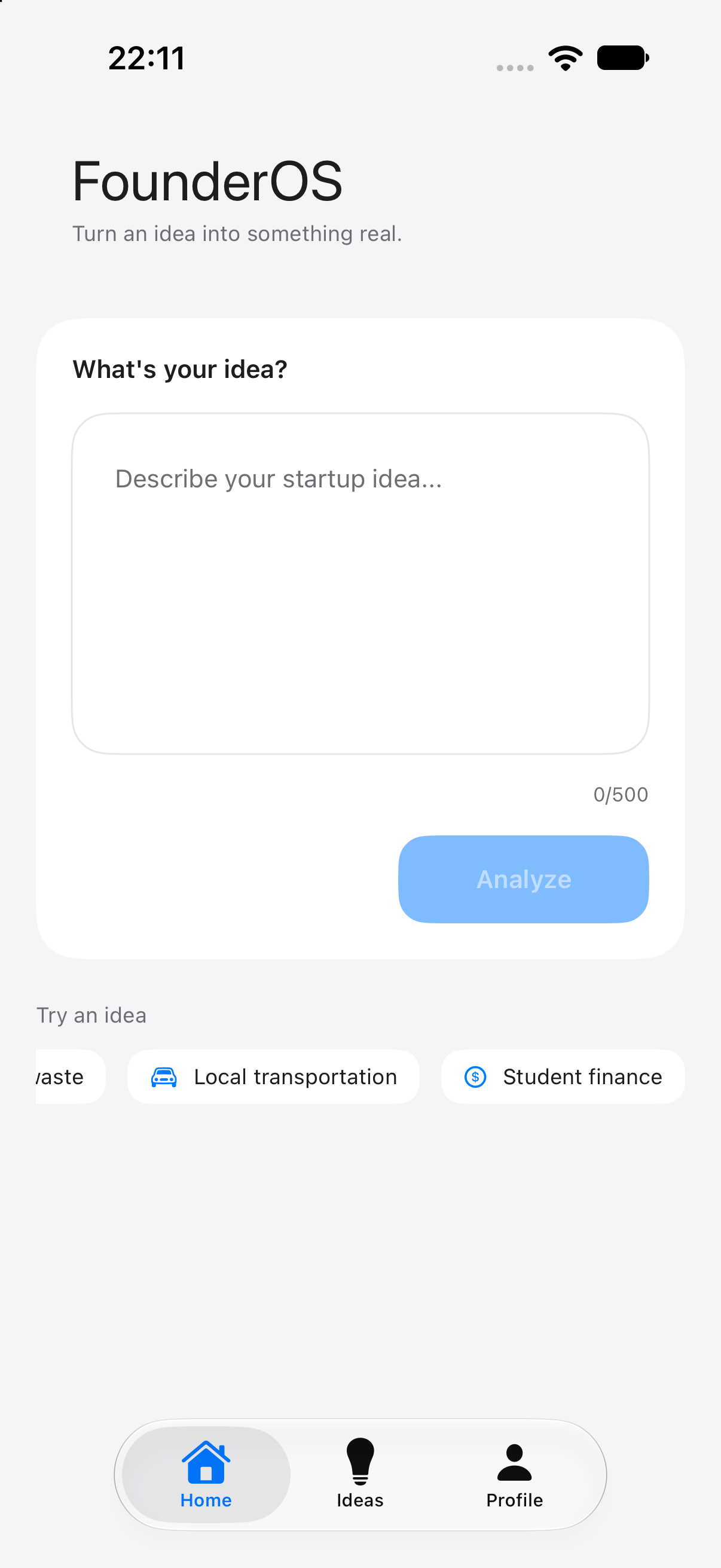
Idea generating
-
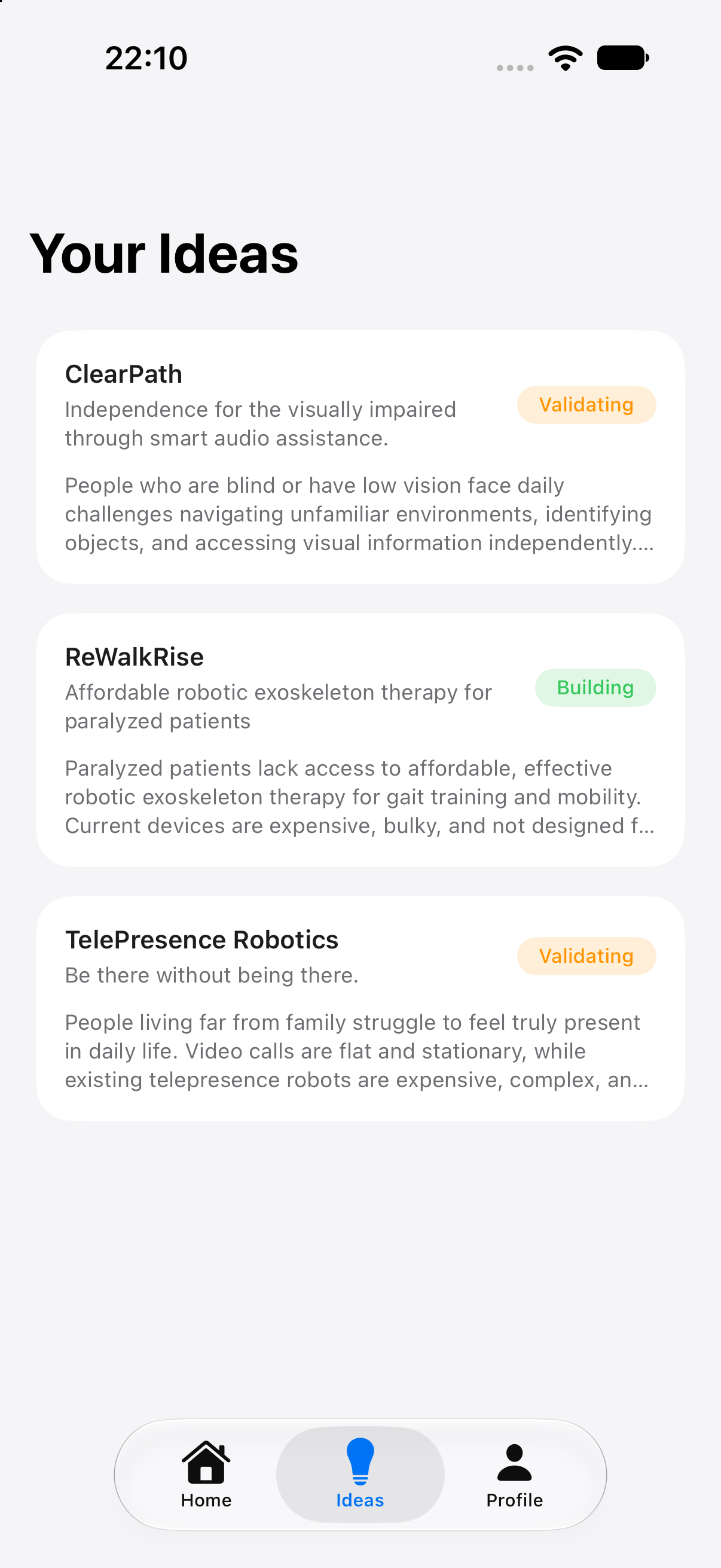
Idea Managing
-
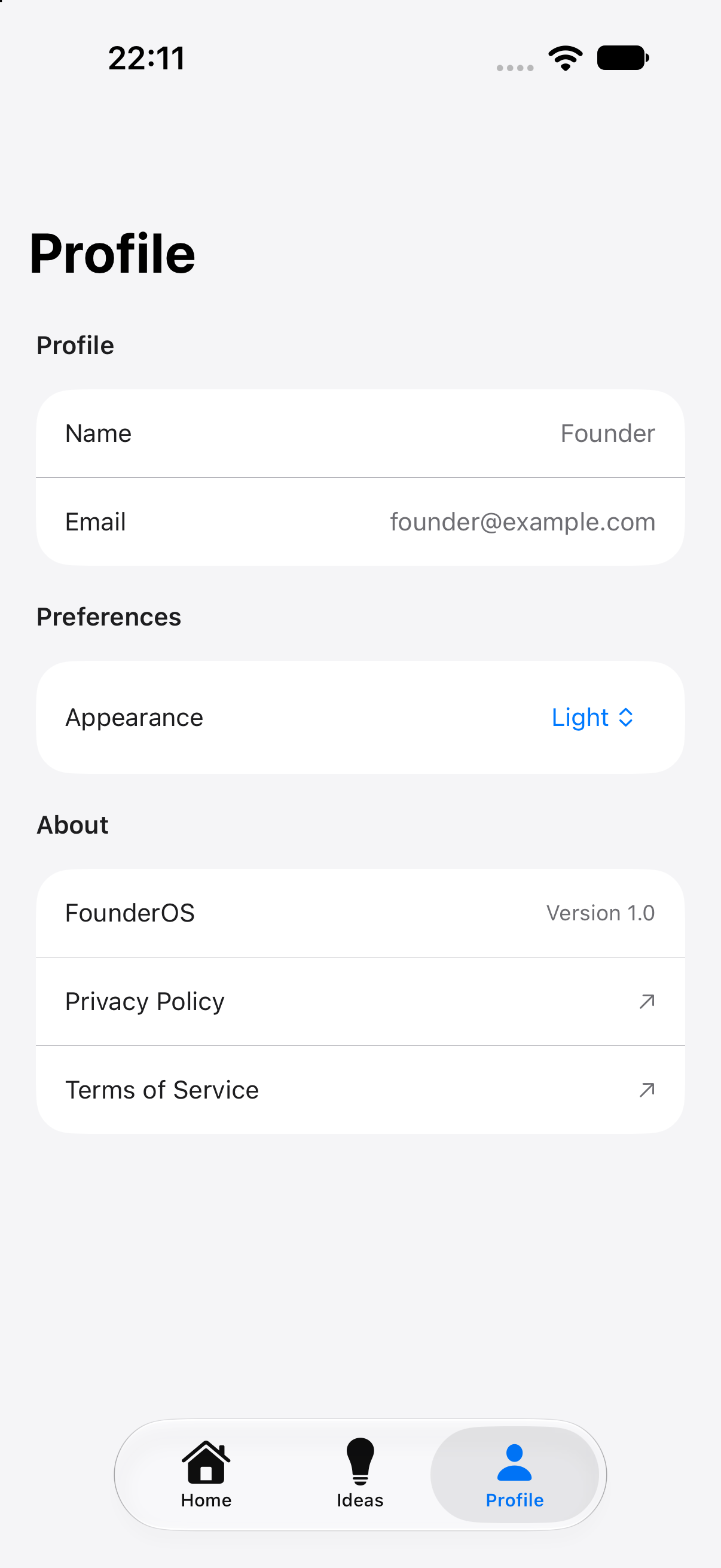
Profile Control
-
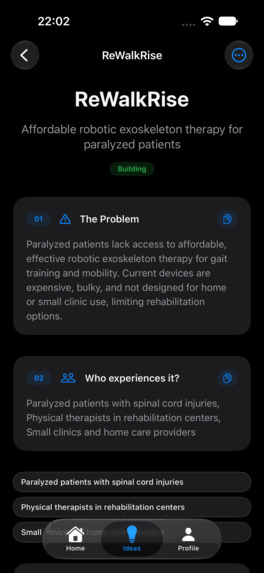
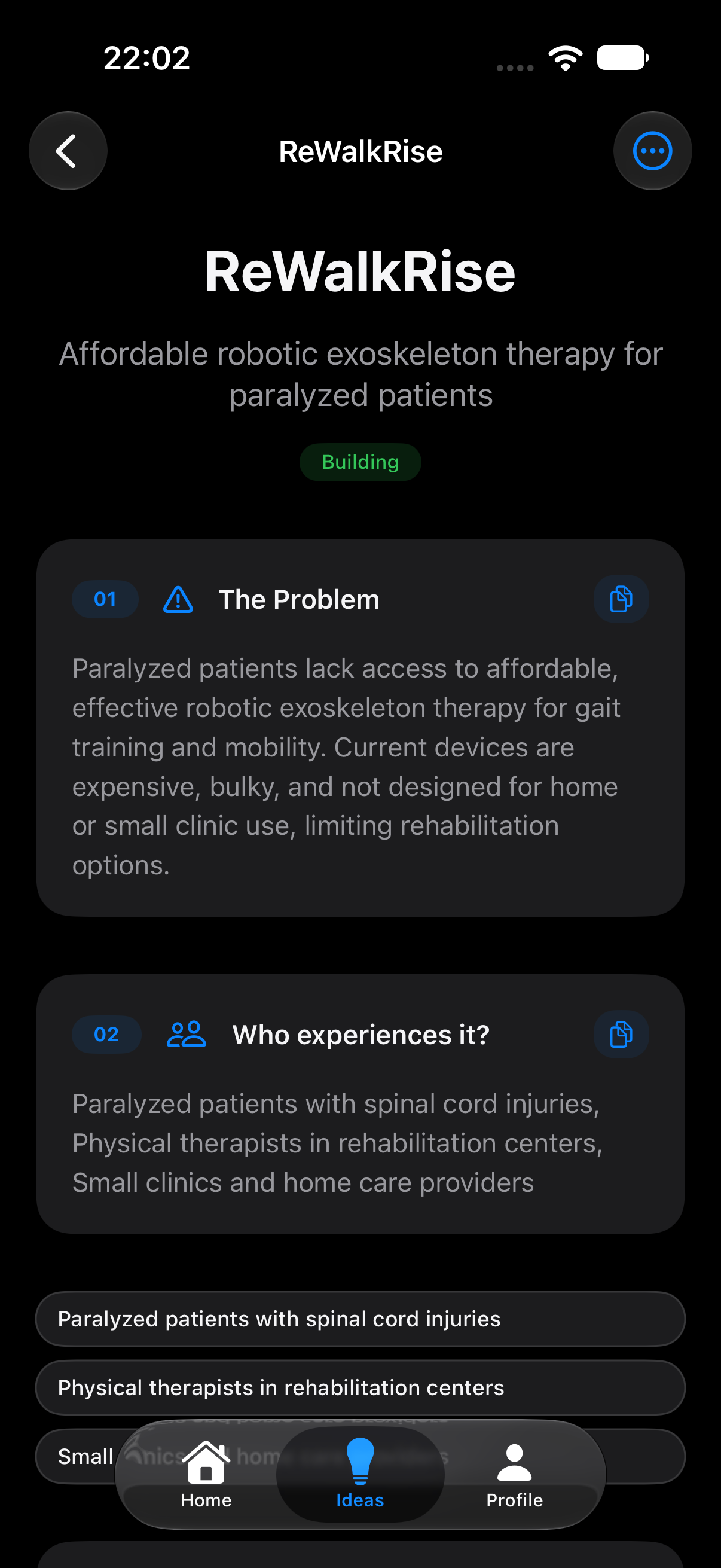
ReWalkRise Idea
-
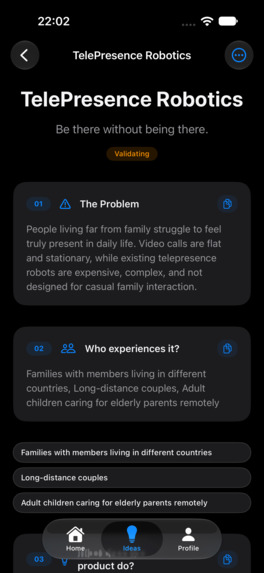
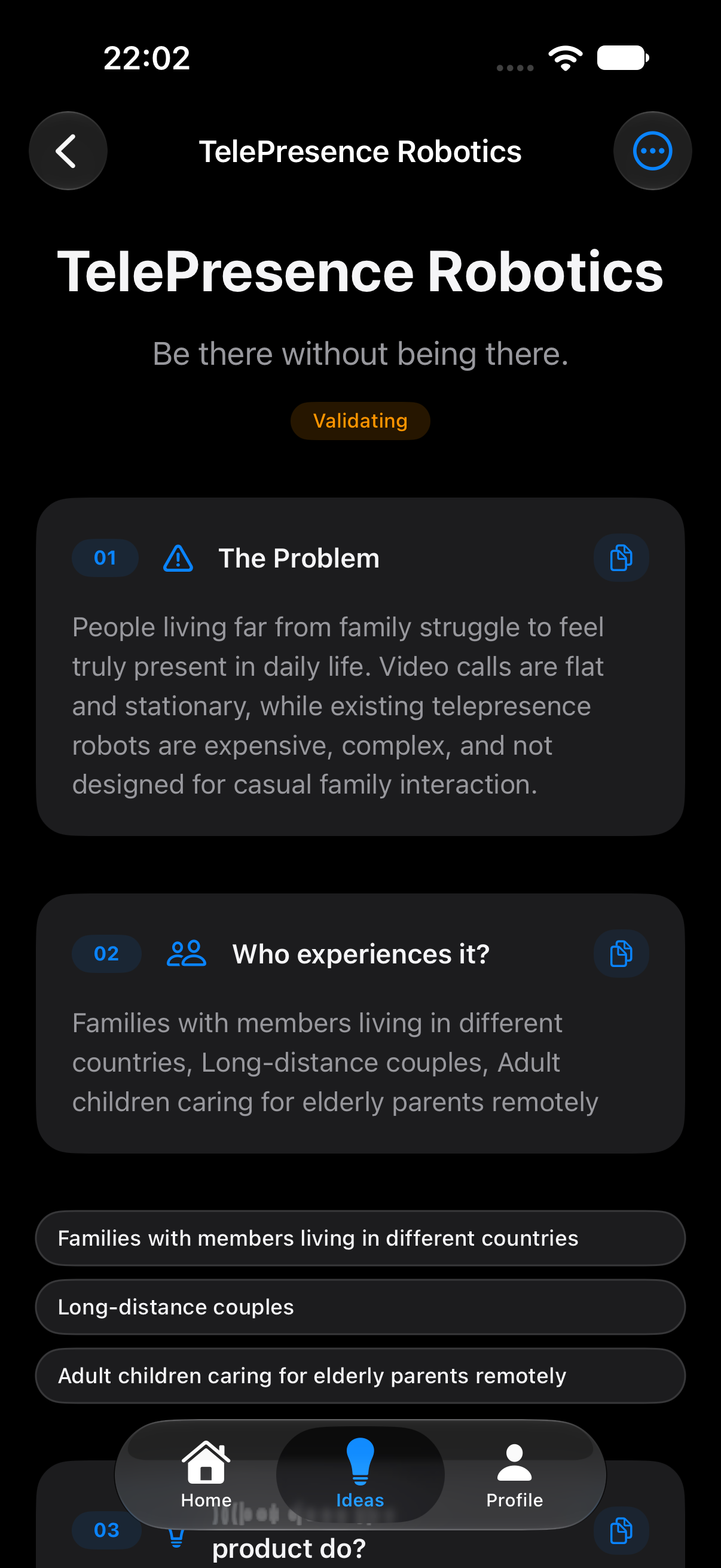
Tele Presence Robotics Idea
-
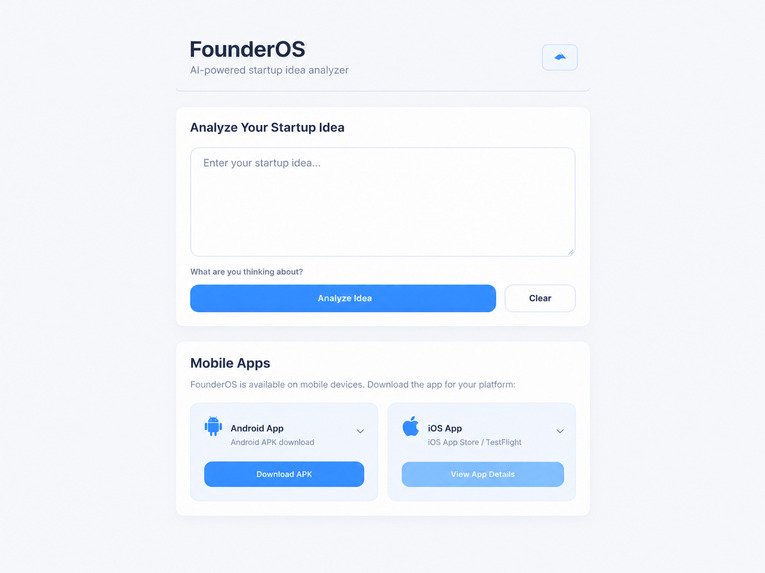
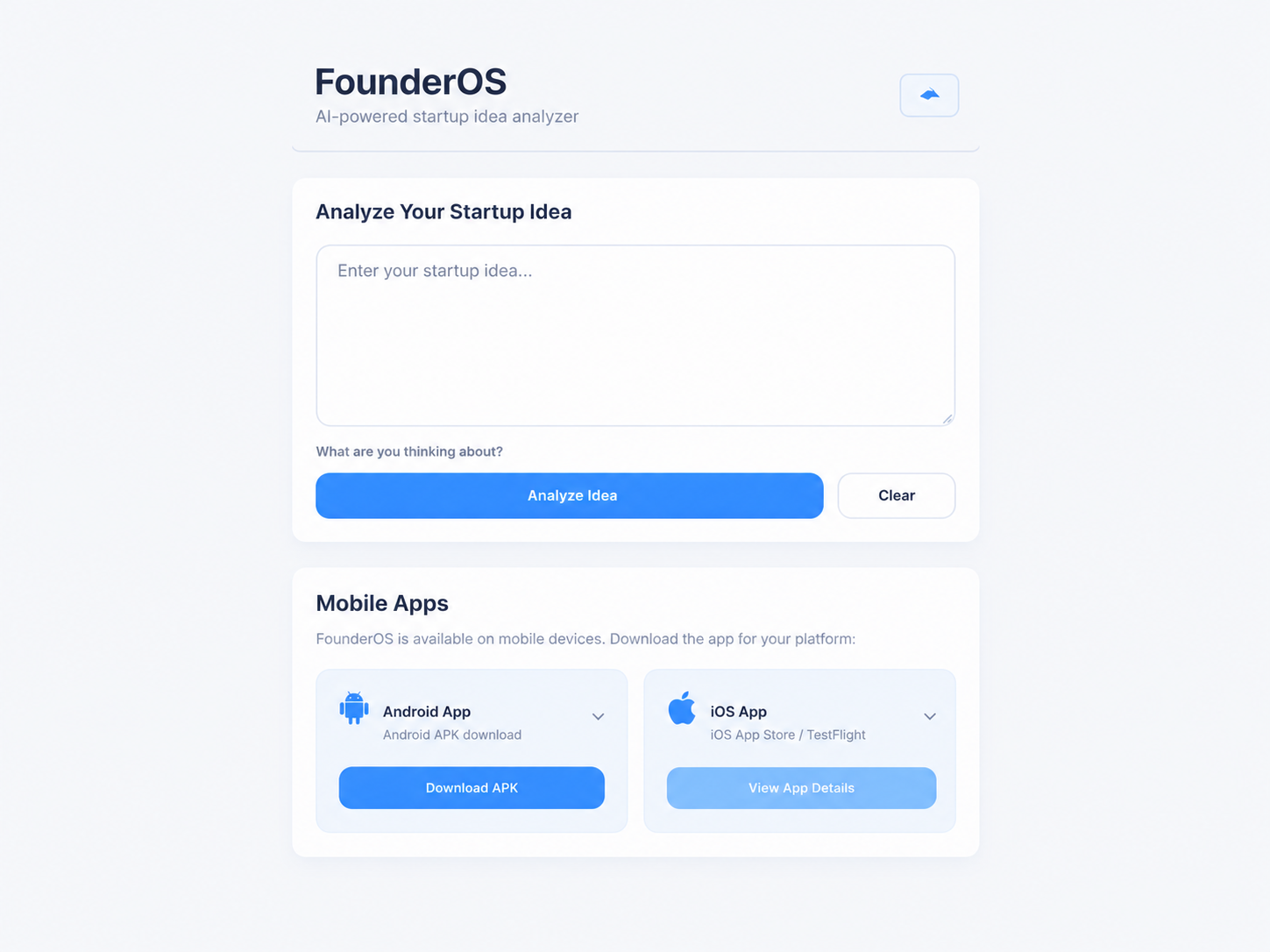
Web dowload
Inspiration
Every great company begins with an idea. But what happens to the people who have great ideas and no idea how to turn them into reality?
Around the world, students, independent thinkers, and aspiring entrepreneurs have ideas that could solve real problems. Yet many never take the first step. They lack access to mentors, funding, technical expertise, or even a clear understanding of where to begin.
We believe that potential should not be limited by access.
The inspiration behind FounderOS came from a simple question: What if everyone could have access to the guidance and tools needed to start building something meaningful?
We didn't want to create another AI chatbot that simply answers questions. We wanted to build something that helps people take action. Something that transforms an overwhelming journey into a series of understandable, achievable steps.
Our vision is to make entrepreneurship more accessible, empowering people to move from imagining what could exist to actually creating it.
We believe the world doesn't just need more ideas. It needs more people who have the confidence, knowledge, and tools to bring those ideas to life.
FounderOS exists to help close the gap between having an idea and knowing what to do next.
What it does
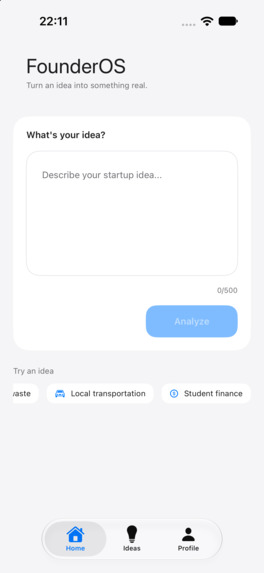
FounderOS is an AI-powered platform that helps aspiring entrepreneurs turn their ideas into structured, actionable startup plans.
Users submit an idea, and FounderOS uses DeepSeek AI to generate an initial analysis containing:
- Startup Name: A potential identity for the business.
- Tagline: A concise description of its value.
- Problem: The problem the idea aims to solve.
- Target Users: The people who might benefit from the solution.
- Proposed Solution: How the product could address the problem.
- MVP Features: The essential features to build first.
- Business Model: Potential ways to generate revenue.
- Validation Questions: Questions to investigate before investing significant resources.
- Next Step: A concrete action the founder can take.
- Future Features: Ideas for potential expansion.
Instead of leaving users overwhelmed by the complexity of starting a business, FounderOS gives them a structured starting point.
Our goal is not to promise that every idea will succeed. It is to help people think more clearly, identify assumptions, and take meaningful steps toward discovering whether their ideas have real potential.
Ultimately, we want FounderOS to grow into a comprehensive platform that supports founders throughout their journey, from their first idea to building, validating, and launching a real product.
How we built it
We built FounderOS by connecting a mobile application, a custom backend, and an external AI service.
1. iOS Application
We used Swift and Apple's development tools to build the iOS application. The frontend provides the interface through which users submit their ideas and receive structured startup analyses.
2. Backend Infrastructure
We built a backend using Node.js and Express. It receives requests from the application, communicates with the AI provider, and returns the results to the frontend.
3. AI Integration
We integrated the DeepSeek API to analyze startup ideas. Rather than returning unstructured text, our backend processes the AI response as structured JSON, allowing the iOS application to decode and display individual fields.
The workflow is:
User Idea → iOS App → FounderOS Backend → DeepSeek AI → Structured Analysis
4. API Security
Security was an important consideration in our architecture. Instead of embedding the DeepSeek API key in the mobile application, we store it in the backend's environment configuration.
The application communicates with our backend, and the backend makes the authenticated request to DeepSeek.
This architecture keeps the provider's secret key out of the client-side code and gives us a foundation for implementing additional protections, including authentication, rate limiting, and usage monitoring.
5. Structured Startup Planning
We designed the AI output around practical startup decisions rather than generic advice. By including an MVP, validation questions, and a recommended next step, FounderOS encourages users to move beyond brainstorming and begin investigating their ideas.
Our approach is to turn a complex process into a more manageable sequence of decisions:
Idea → Problem Identification → Solution Design → Validation → Action Plan
This is the foundation of the experience we are building.
Challenges we ran into
One of our biggest challenges was understanding how to connect the different parts of an AI-powered application.
Initially, it was easy to think of AI integration as simply sending a message to a model and displaying the answer. In practice, we needed to understand how the frontend, backend, external API, environment variables, HTTP requests, and data models work together.
Connecting the frontend and backend required us to understand API endpoints, request formats, response handling, and JSON decoding. We had to ensure that the structure returned by DeepSeek matched what our Swift application expected.
Protecting API credentials introduced another important engineering challenge. Embedding an API key directly in a mobile application could expose it to extraction and unauthorized use. We addressed this by creating a backend proxy that keeps the DeepSeek API key on the server and handles requests on behalf of the application.
Debugging the development environment also taught us that a working application depends on more than code. We needed to verify that the backend started correctly, loaded its environment configuration, and could successfully communicate with the external AI service.
Another challenge was deciding how much of the startup journey to build initially. Entrepreneurship involves market research, customer discovery, financial planning, product development, and many other activities. Trying to solve everything at once would have made our first version unnecessarily complicated.
We chose to focus on a smaller, useful starting point: helping users transform an idea into a structured startup concept with a practical next step.
These challenges taught us that building a product is not just about making features work. It is about designing a system that is understandable, reliable, secure, and useful to real people.
Accomplishments that we're proud of
We are proud that FounderOS has progressed beyond an idea into a working AI-powered application.
We successfully connected our iOS application to a custom Node.js backend and integrated DeepSeek to generate structured startup analyses. The application can send a user's idea through our backend, receive an AI-generated response, and decode that response into structured data for the interface.
We are also proud of the architectural decisions we made early in development.
By separating the frontend from the backend, we established a foundation that can support multiple clients, including iOS and Android, without requiring each application to implement its own direct integration with DeepSeek.
We made API credential protection part of the design instead of treating it as an afterthought. Although additional security controls are needed before public deployment, the decision to keep the provider's secret key on the server gives us a more appropriate foundation for developing a real product.
Most importantly, we turned an ambitious vision into something we can test, improve, and build upon.
We know that a working prototype is only the beginning. But every real product starts somewhere, and we are proud to have taken that first step.
What we learned
Building FounderOS taught us lessons about software engineering, product design, and entrepreneurship.
First, we learned to think in systems.
An AI-powered product is not just a model connected to an interface. It is a system of interconnected components, each with its own responsibilities and potential failure points.
Understanding the relationship between the frontend, backend, API provider, and data structures helped us make better architectural decisions.
Second, we learned that security must be considered from the beginning.
Protecting API keys, separating client-side and server-side responsibilities, and planning for authentication and usage limits are essential considerations when building an application that depends on paid external services.
Third, we learned that useful AI should lead to action.
Generating an impressive answer is not enough. A good product should help users understand their options, identify what they do not know, and decide what to do next.
For FounderOS, this means treating AI-generated startup plans as starting points for investigation rather than guarantees of success. Real validation still requires evidence, experiments, and conversations with potential customers.
Finally, we learned that building a product is itself a process of discovery.
We are developing a platform to help people navigate uncertainty while learning to navigate that uncertainty ourselves. Each technical challenge forces us to ask better questions, research unfamiliar concepts, and improve our approach.
That experience reinforces the principle behind FounderOS: you do not need to know everything before you begin. You need to be willing to learn, experiment, and take the next step.
What's next for FounderOS
FounderOS is an early step toward a larger vision: making the process of building a startup more accessible to anyone with an idea worth exploring.
Our immediate priorities are to improve the reliability of the AI analysis, refine the user experience, and strengthen our backend infrastructure.
We also plan to develop the platform beyond its initial idea-analysis workflow.
Our long-term direction includes several stages:
1. Discover
Help users clarify the problems they want to solve and identify the people experiencing them.
2. Validate
Guide users through customer discovery, assumption testing, and early market research so they can investigate whether a real need exists.
3. Plan
Help founders define their minimum viable product (MVP), prioritize essential features, and explore potential business models.
4. Build
Support users as they turn their plans into working products, with guidance on technical implementation and product development.
5. Launch and Improve
Help founders introduce their products to real users, gather feedback, measure results, and decide what to improve next.
We also want to continue developing the shared backend architecture so that the iOS and Android applications can use the same AI services consistently.
As the platform grows, security and responsible resource management will remain important priorities. We plan to strengthen authentication, rate limiting, usage tracking, and cost controls before making the service publicly available at scale.
Our ultimate goal is to evolve FounderOS from a tool that generates startup plans into a platform that helps people make continuous progress toward building real businesses.
We envision a future in which a student with no technical background, an independent creator without funding, or an aspiring entrepreneur without access to experienced mentors can begin exploring an idea with greater clarity and confidence.
The future should not belong only to people who already know how the system works. It should also belong to people who are curious enough to question it, imaginative enough to envision something better, and determined enough to build it.
We are building FounderOS because we believe that having an idea should be the beginning of a journey, not the point where that journey ends.
One idea. One experiment. One first step at a time.


Log in or sign up for Devpost to join the conversation.