-
-
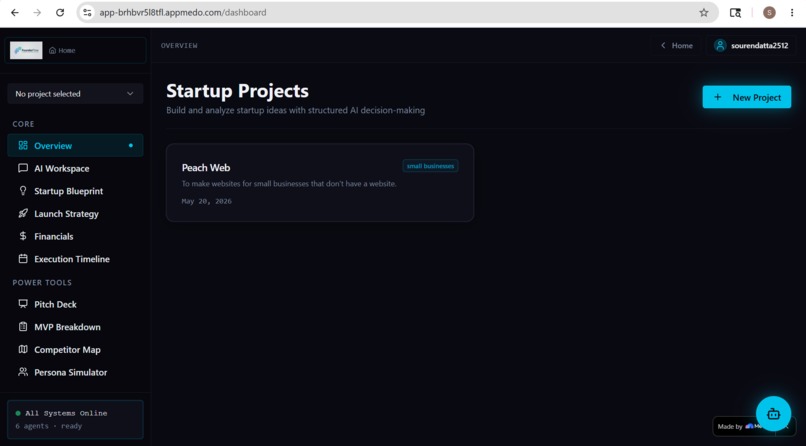
AI tool
-
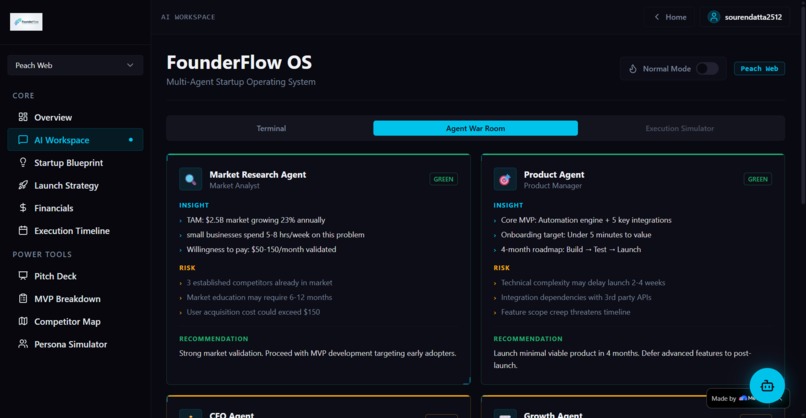
AI tool
-
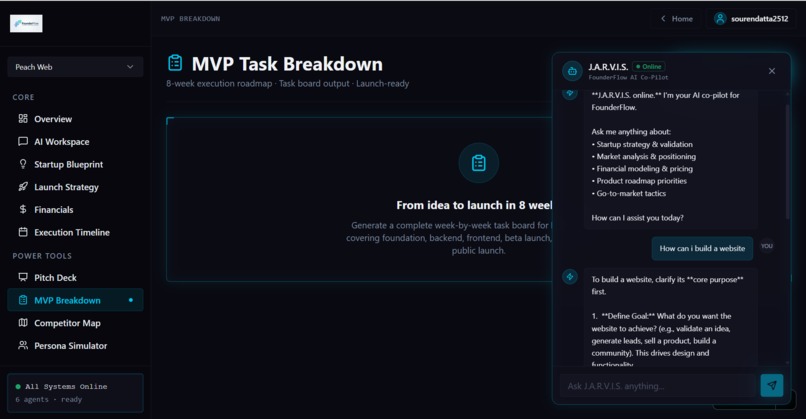
AI Chatbot
-
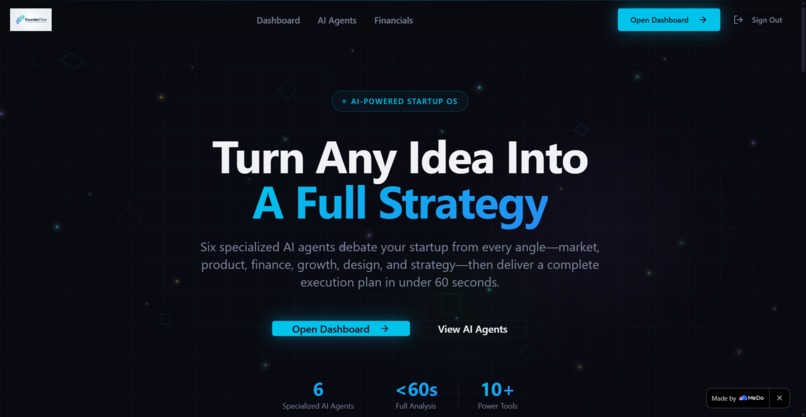
HomePage
Inspiration
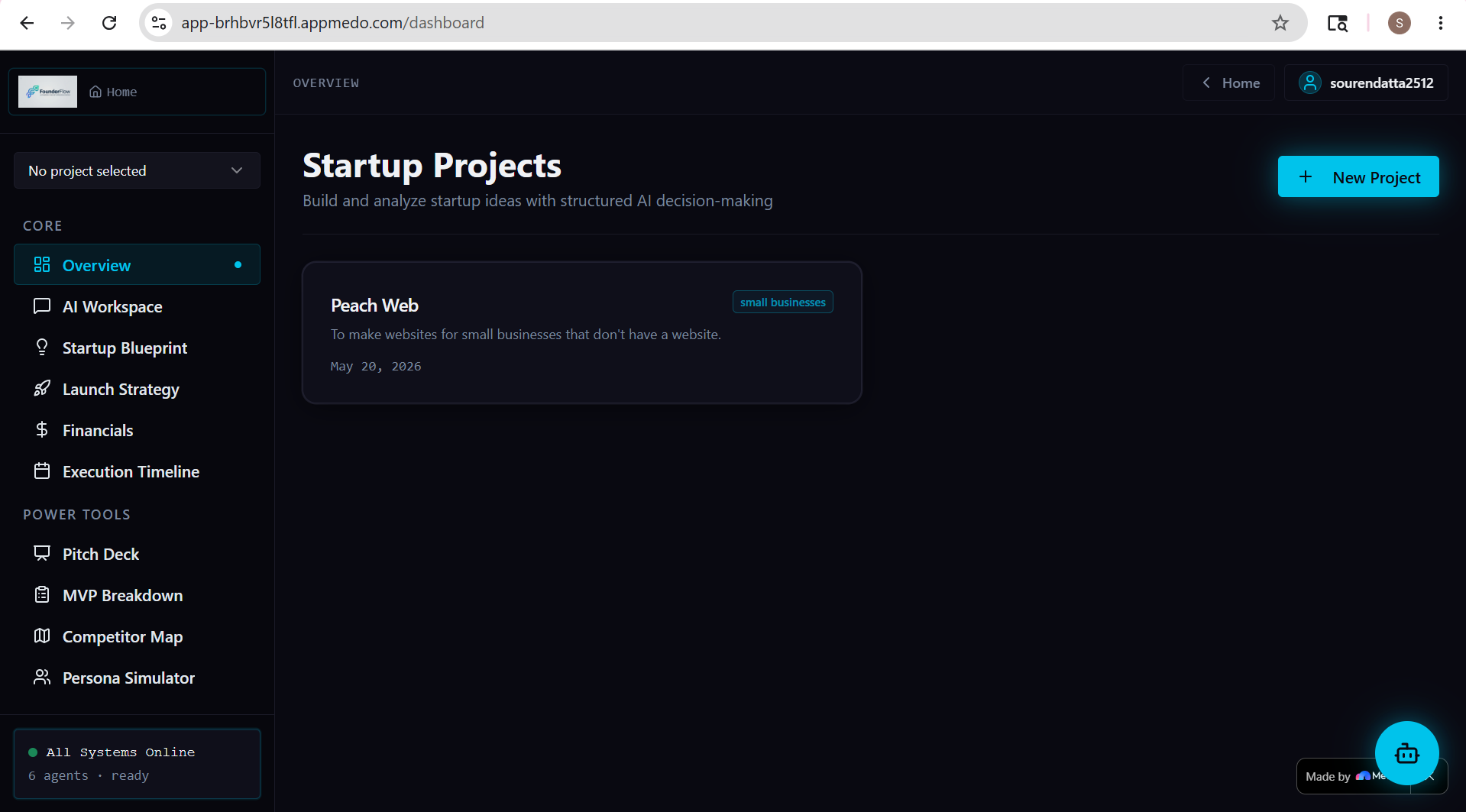
Most startup founders and student builders don’t fail because they lack ideas. They fail because they lack clarity. We noticed that planning a startup usually means jumping between random AI chats, Notion docs, spreadsheets, and conflicting advice from YouTube or Twitter. We wanted to create something that feels like a real executive team working together in one place.
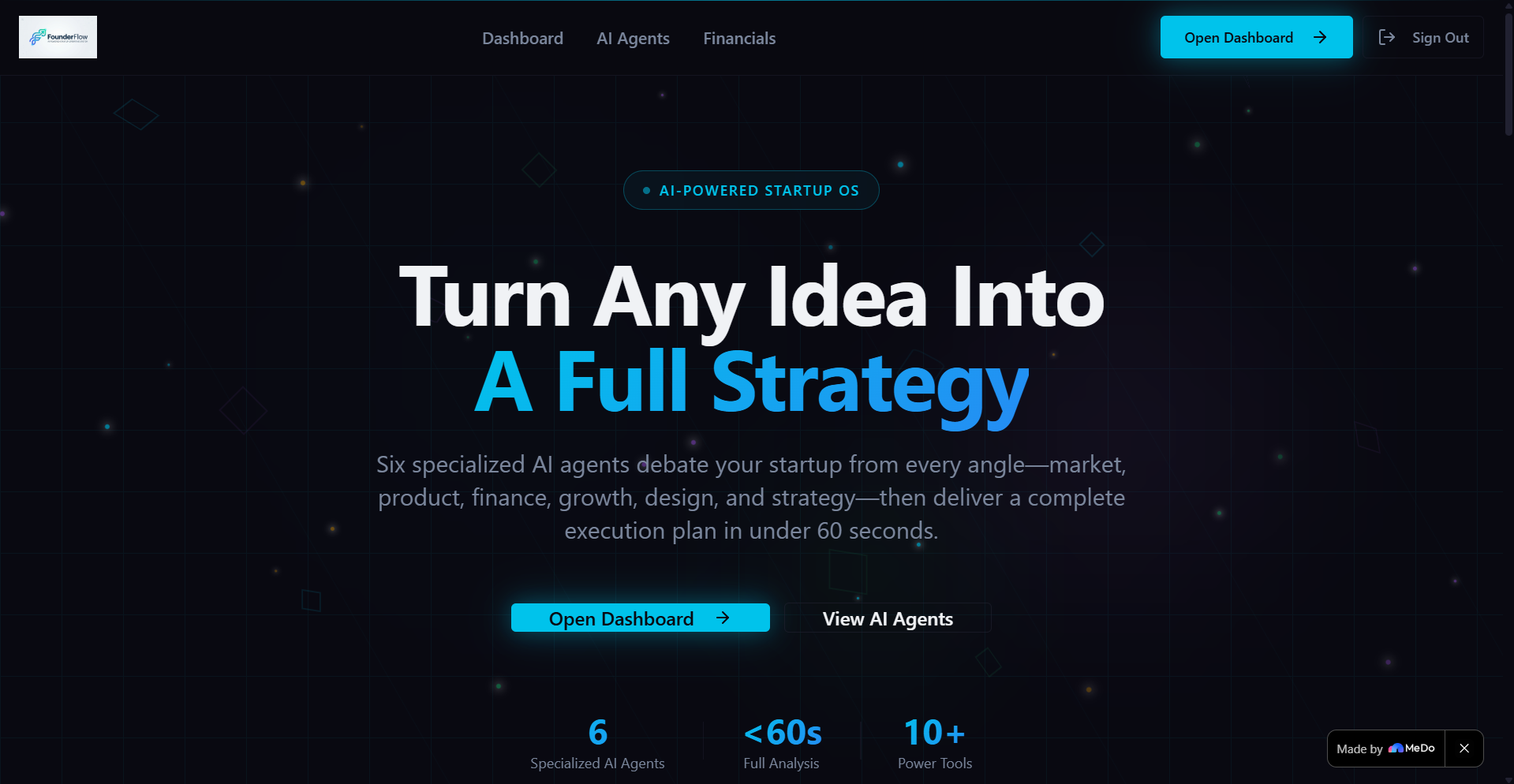
That’s where FounderFlow came from: an AI-powered Startup Operating System where specialized AI agents collaborate, debate, challenge assumptions, and generate actionable startup strategies in real time.
What it does
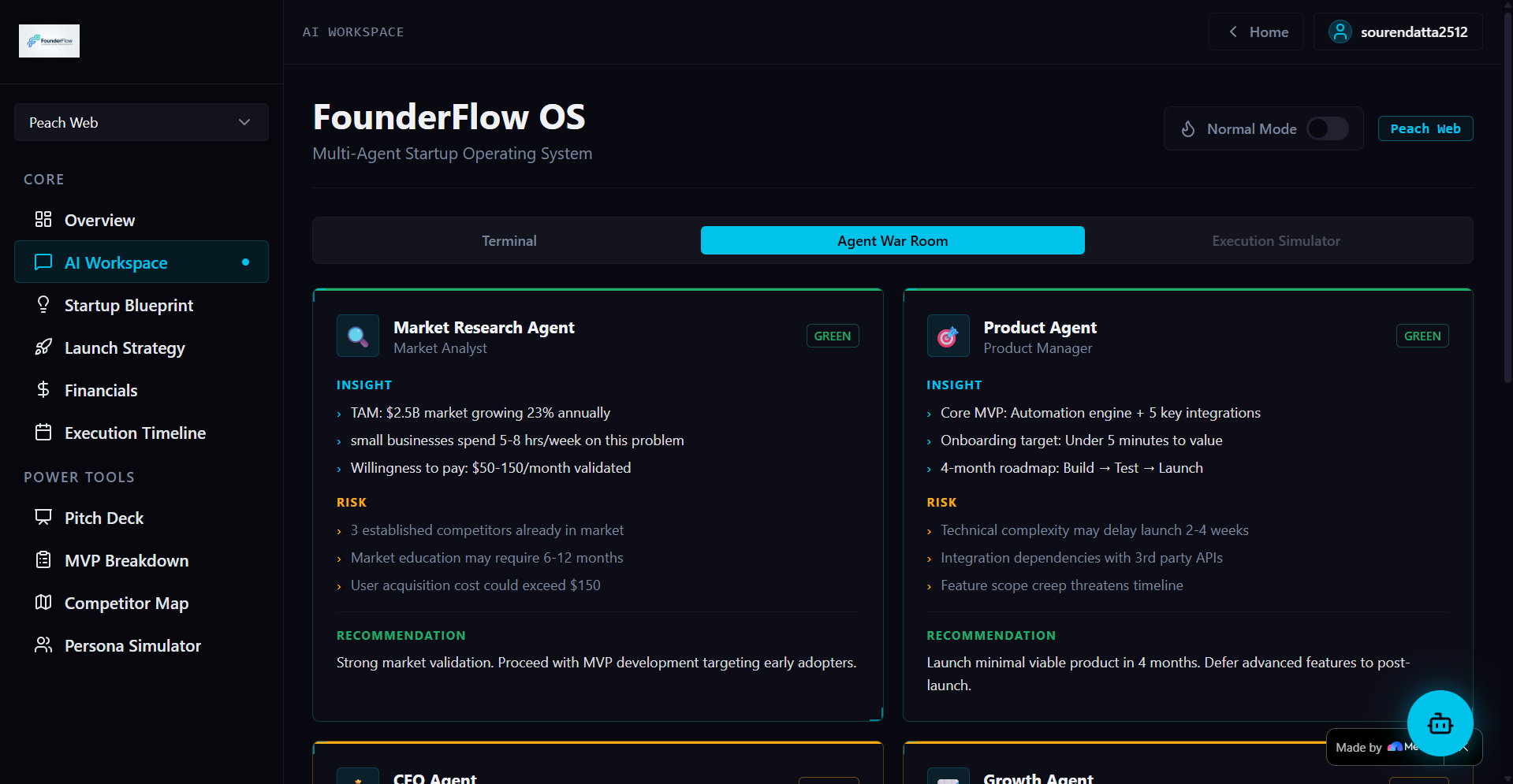
FounderFlow simulates an entire startup leadership team using specialized AI agents like:
- CEO Agent
- Product Agent
- CFO Agent
- Growth Agent
- Market Research Agent
- Designer Agent
Users enter a startup idea, target audience, and constraints. The agents then:
- Analyze the market opportunity
- Build a product roadmap
- Generate financial projections
- Create a go-to-market strategy
- Debate conflicting decisions
- Resolve disagreements with executive reasoning
- Produce a final strategic recommendation
The platform presents everything in a live terminal-style interface that feels like watching an AI company operate in real time.
One of our favorite features is the “Conflict Resolution Engine,” where agents openly disagree and the CEO agent synthesizes the best decision instead of blindly agreeing like normal AI apps.
How we built it
We built FounderFlow using:
- Next.js for the frontend
- Tailwind CSS for the UI system
- TypeScript for scalable development
- Firebase/Supabase for backend and data handling
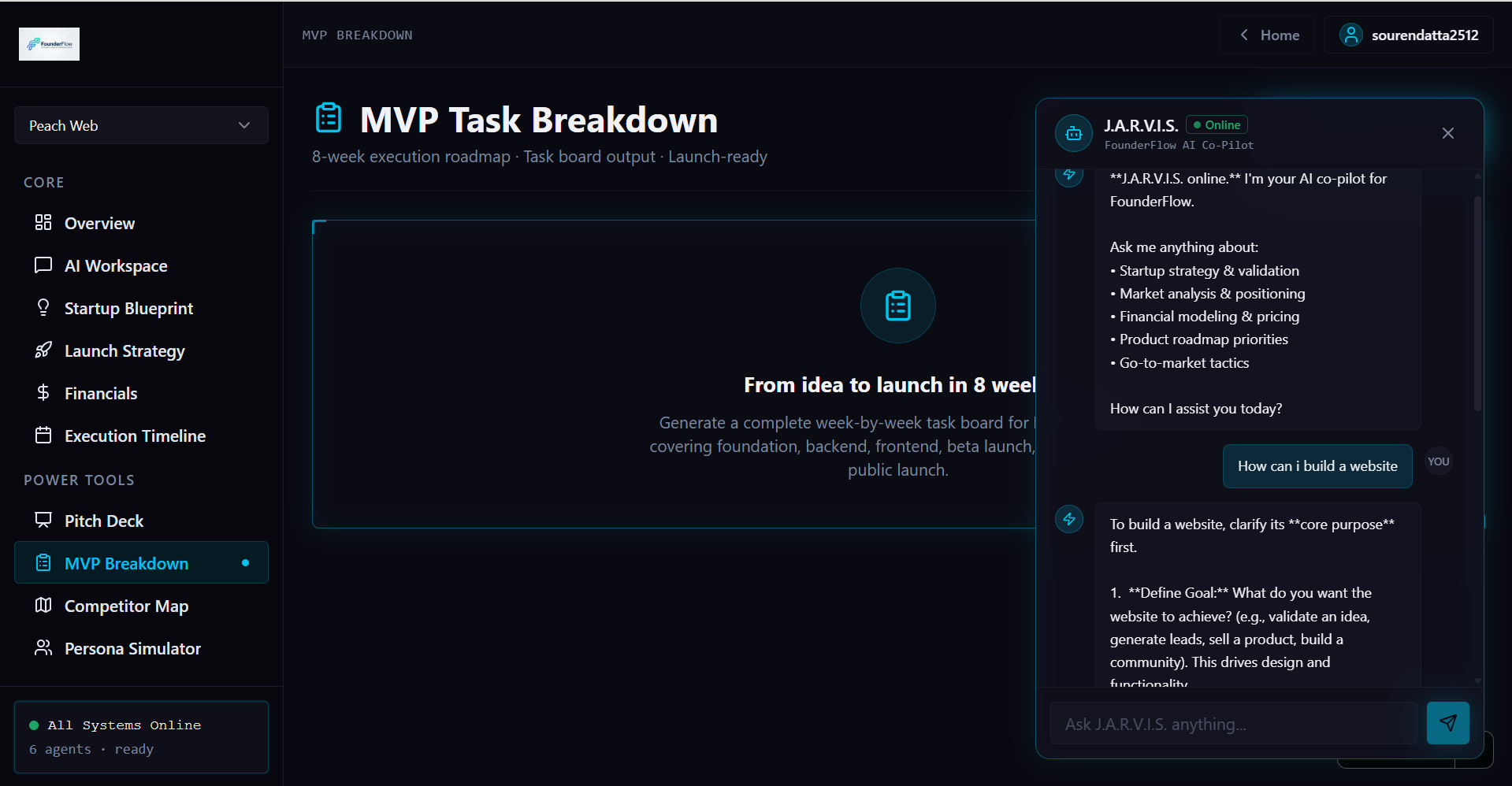
We designed the UI around a professional dark “startup terminal” aesthetic instead of the typical bright AI chatbot look. The experience combines terminal outputs, executive dashboards, live agent statuses, and structured analysis tabs.
Challenges we ran into
One of the hardest challenges was making the agents feel genuinely different from each other. Early versions sounded too similar and produced repetitive outputs.
Another challenge was information overload. The first design dumped massive walls of text onto a single screen, which felt overwhelming. We redesigned the experience into structured tabs and terminal-style streaming outputs to make the system feel cleaner and more immersive.
We also had to balance speed with quality. Running multiple AI agents simultaneously while keeping responses coherent and fast required heavy prompt optimization and workflow tuning.
Accomplishments that we're proud of
- Building a real multi-agent AI system instead of a single chatbot2.
- Creating dynamic agent debates with conflict resolution
- Designing a polished startup-operating-system interface
- Making AI outputs feel actionable rather than generic
- Turning complex startup planning into an engaging experience
- reating a product that feels closer to an AI executive boardroom than a normal SaaS tool
We’re especially proud that users can actually watch decisions happen live instead of receiving one giant AI-generated paragraph.
What we learned
We learned that UI matters just as much as AI quality. Even strong AI outputs feel weak if the experience is cluttered or confusing.
We also learned how important structured prompting is when coordinating multiple AI agents. Giving each agent distinct goals, priorities, and personalities dramatically improved the realism of the debates and recommendations.
Most importantly, we learned that people trust AI more when it shows reasoning, disagreement, and tradeoff analysis instead of pretending every answer is perfect.
What's next for FounderFlow
Next, we want to expand FounderFlow into a full AI operating system for startups.
Future plans include:
- Real-time collaborative workspaces
- Investor pitch deck generation
- AI-generated financial models
- Live competitor tracking
- Autonomous execution agents
- Integrations with tools like Slack, Notion, and GitHub
- Voice-based AI board meetings
- Persistent memory for long-term startup strategy evolution
Our long-term vision is to make starting a company feel less chaotic and more like having an elite founding team available 24/7.
Built With
- css
- firebase/supabase
- next.js
- tailwind
- typescript


Log in or sign up for Devpost to join the conversation.