-
-
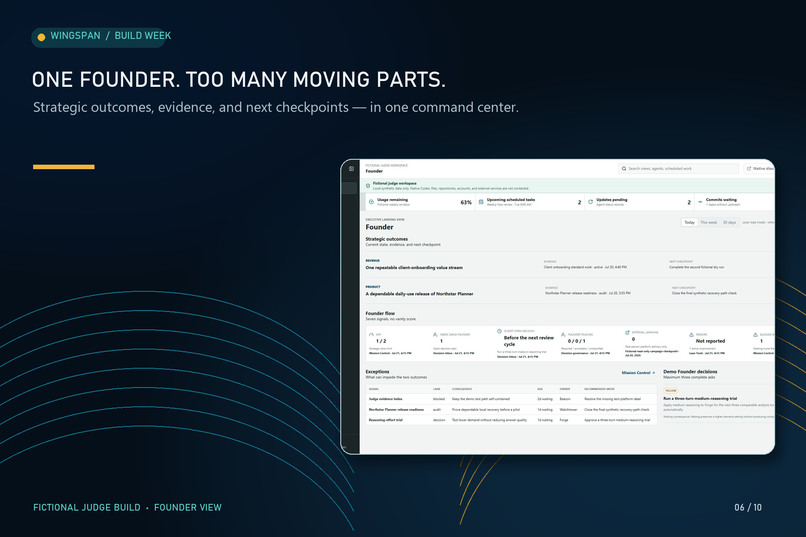
The coordination problem: founders lose time relaying status across disconnected agent work.
-
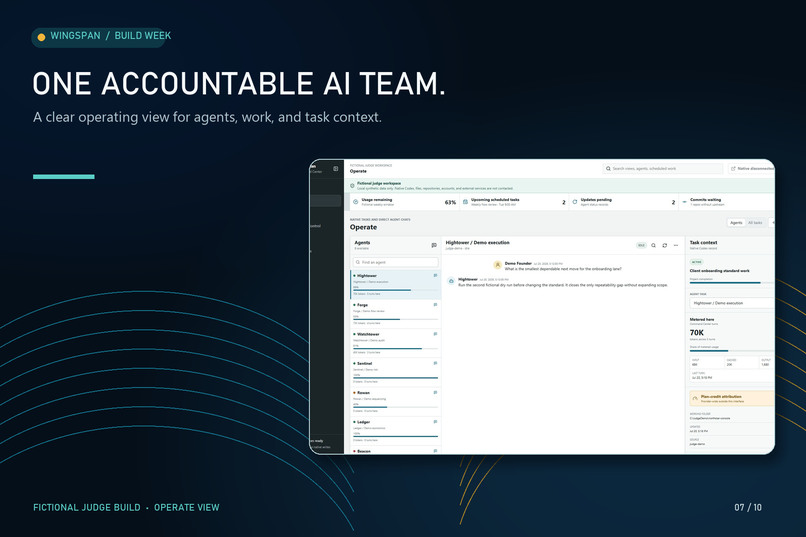
One accountable AI team keeps owners, approvals, evidence, and boundaries visible.
-
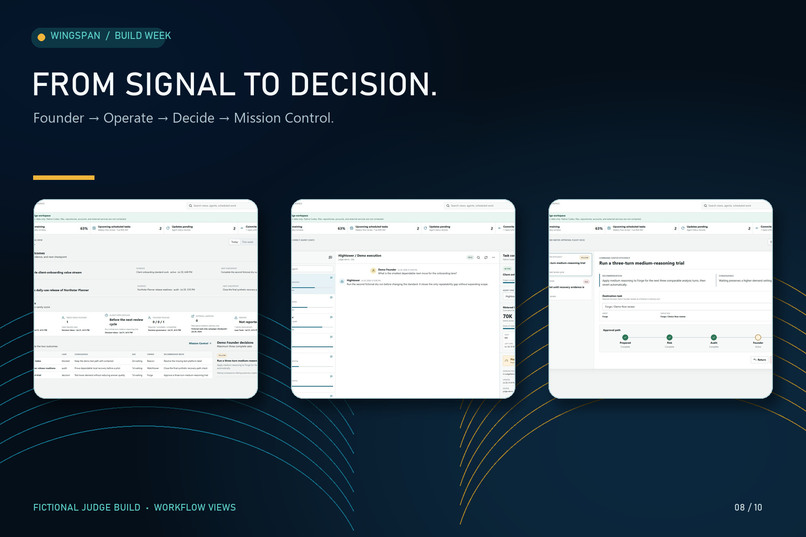
Command Center connects outcomes, direct agent work, decisions, roundtables, and usage.
-
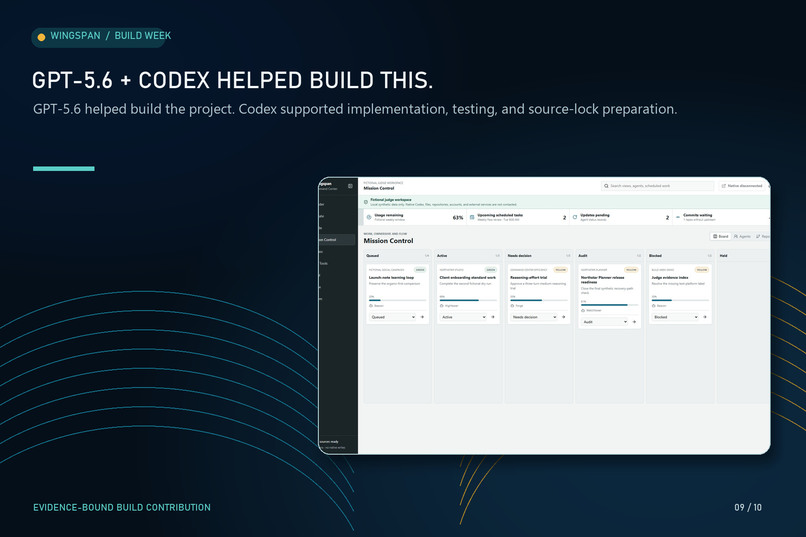
Codex with GPT-5.6 Sol helped implement durable state, recovery, decision receipts, and four-room roundtables.
-
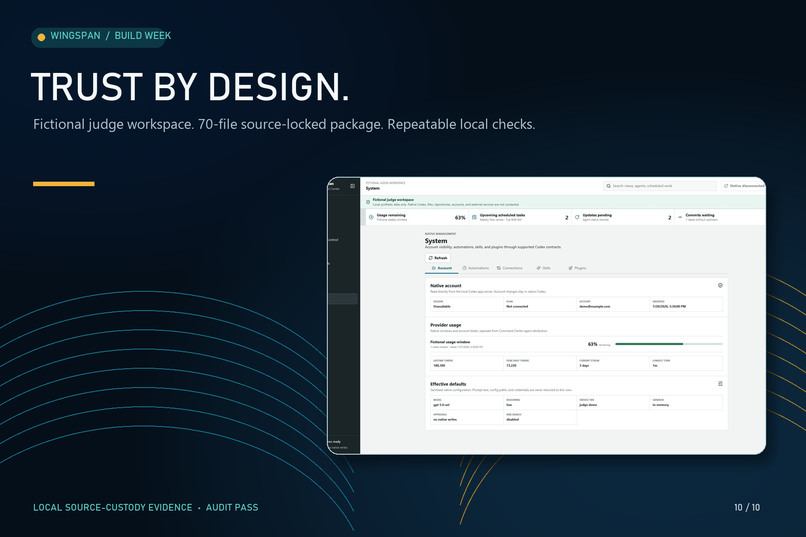
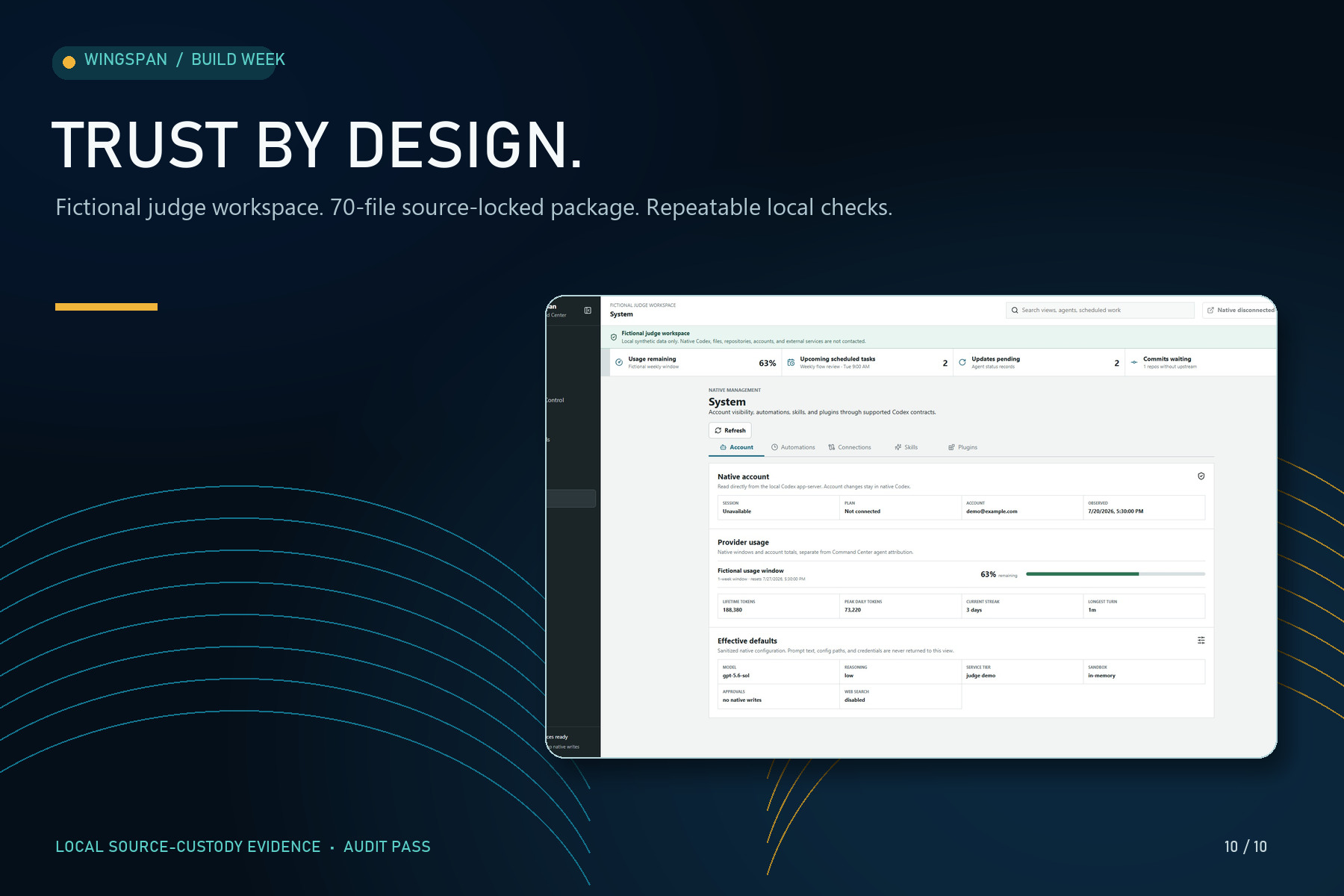
Trust by design: fictional judge data, native systems disconnected, with source-lock verification required before release.
-
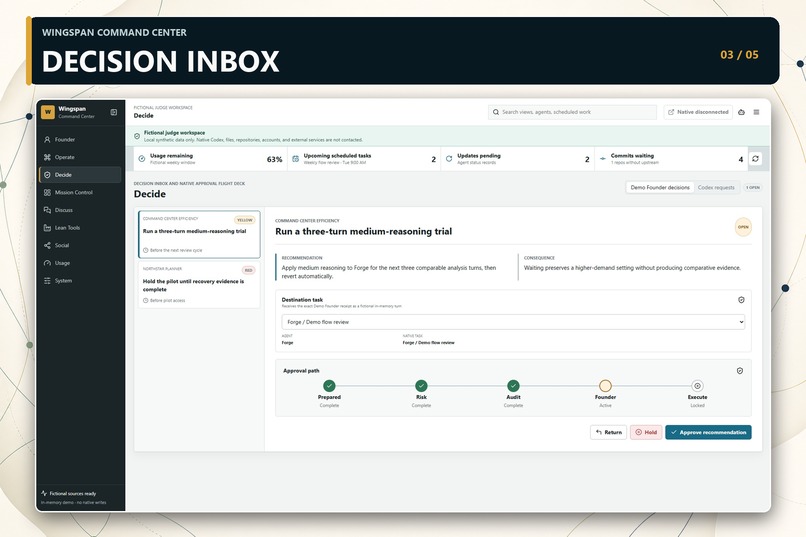
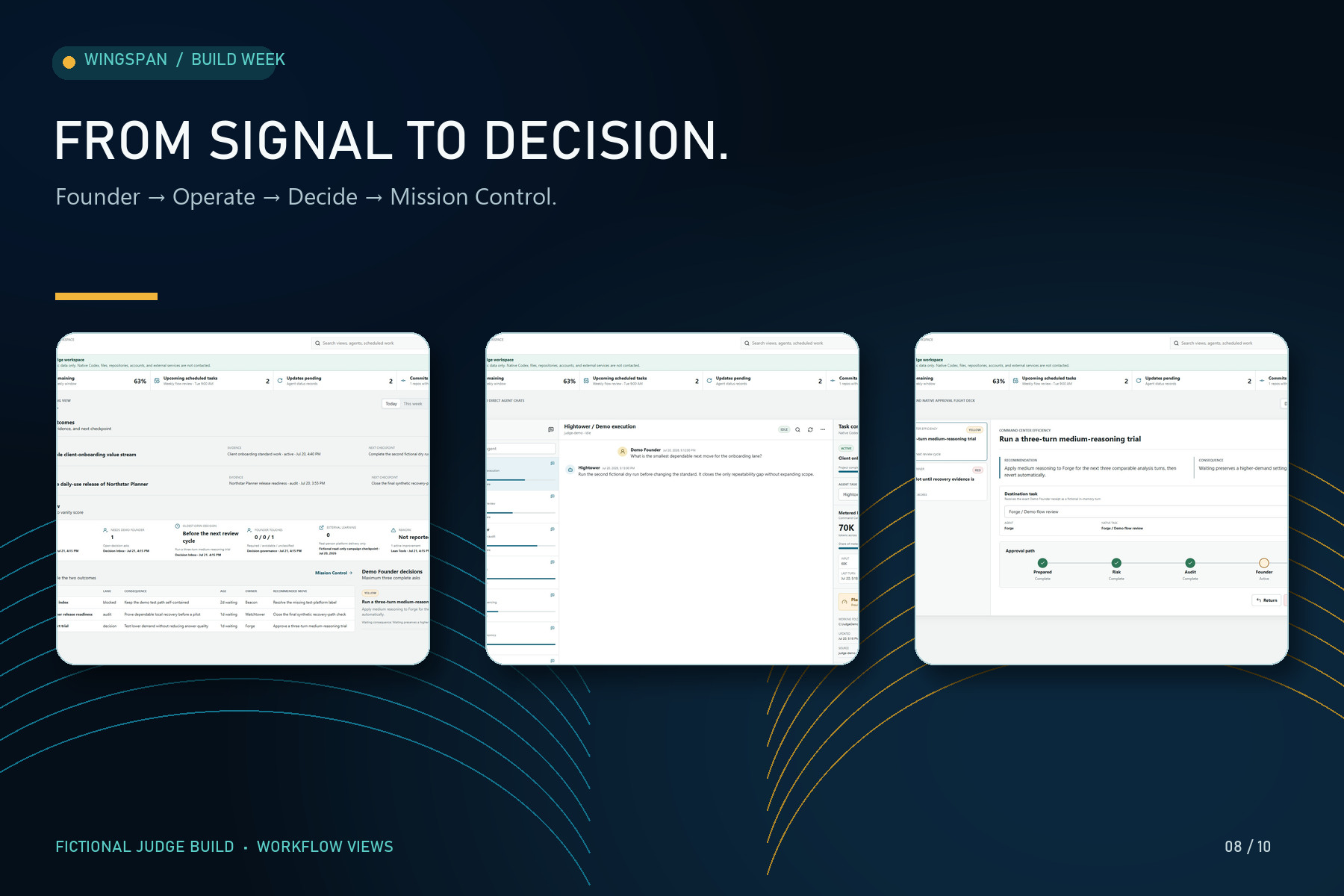
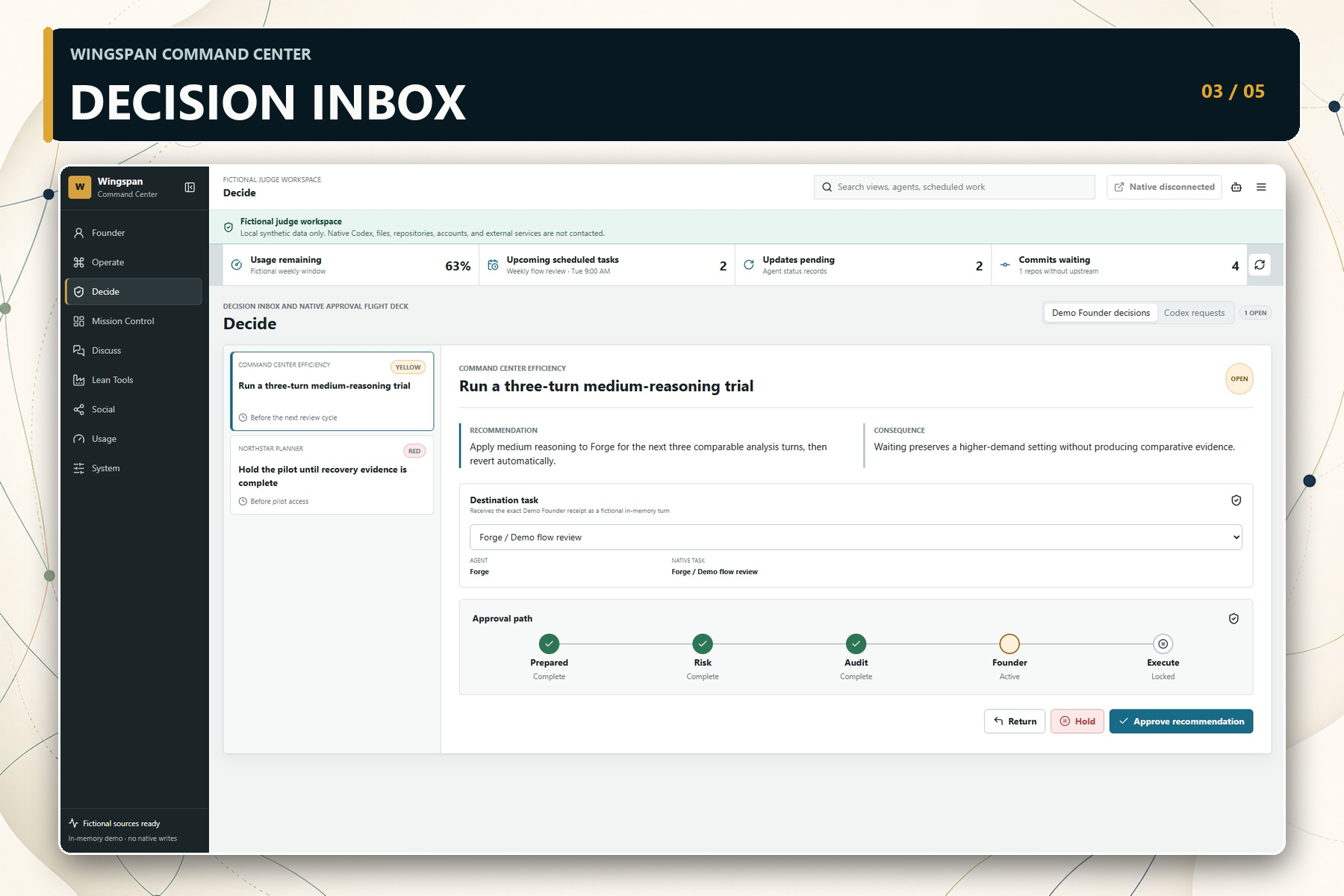
Decide preserves the exact choice, consequence, owner, timing, approval stage, and delivery receipt.
-
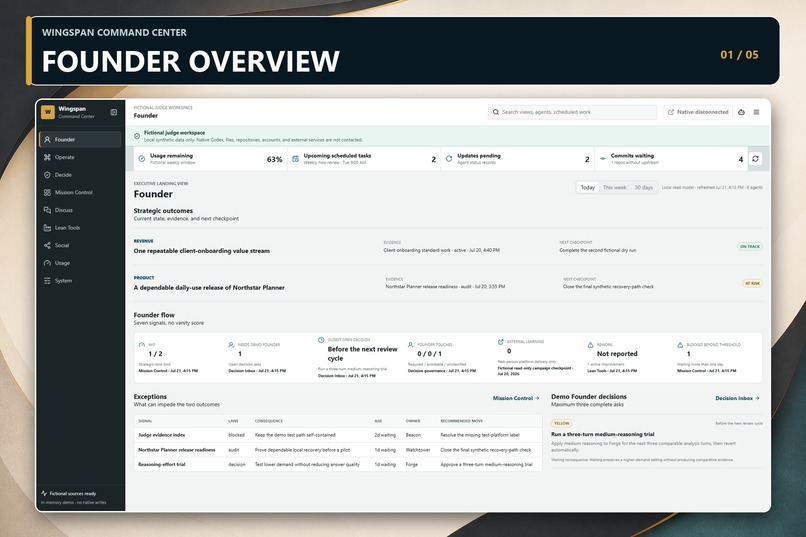
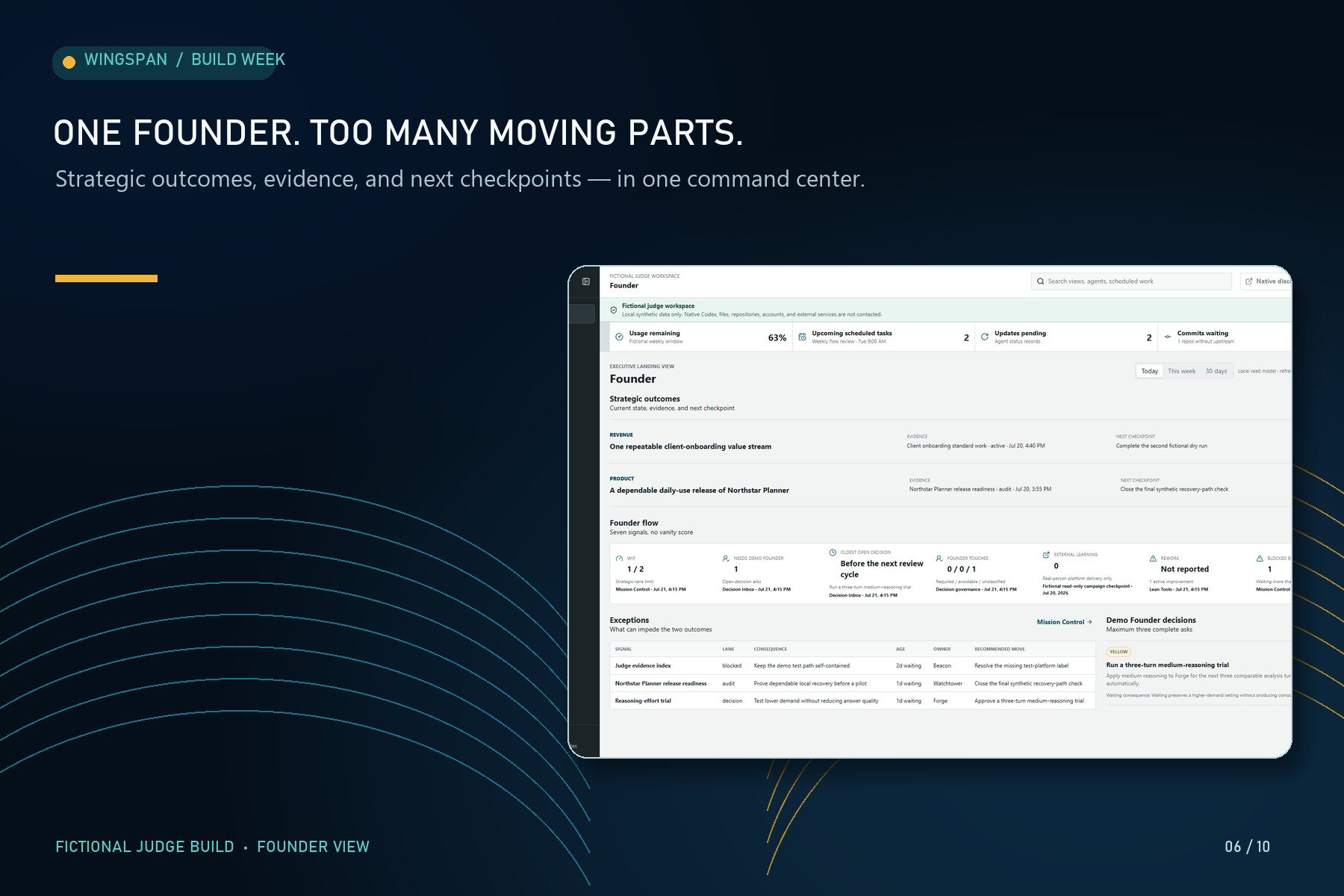
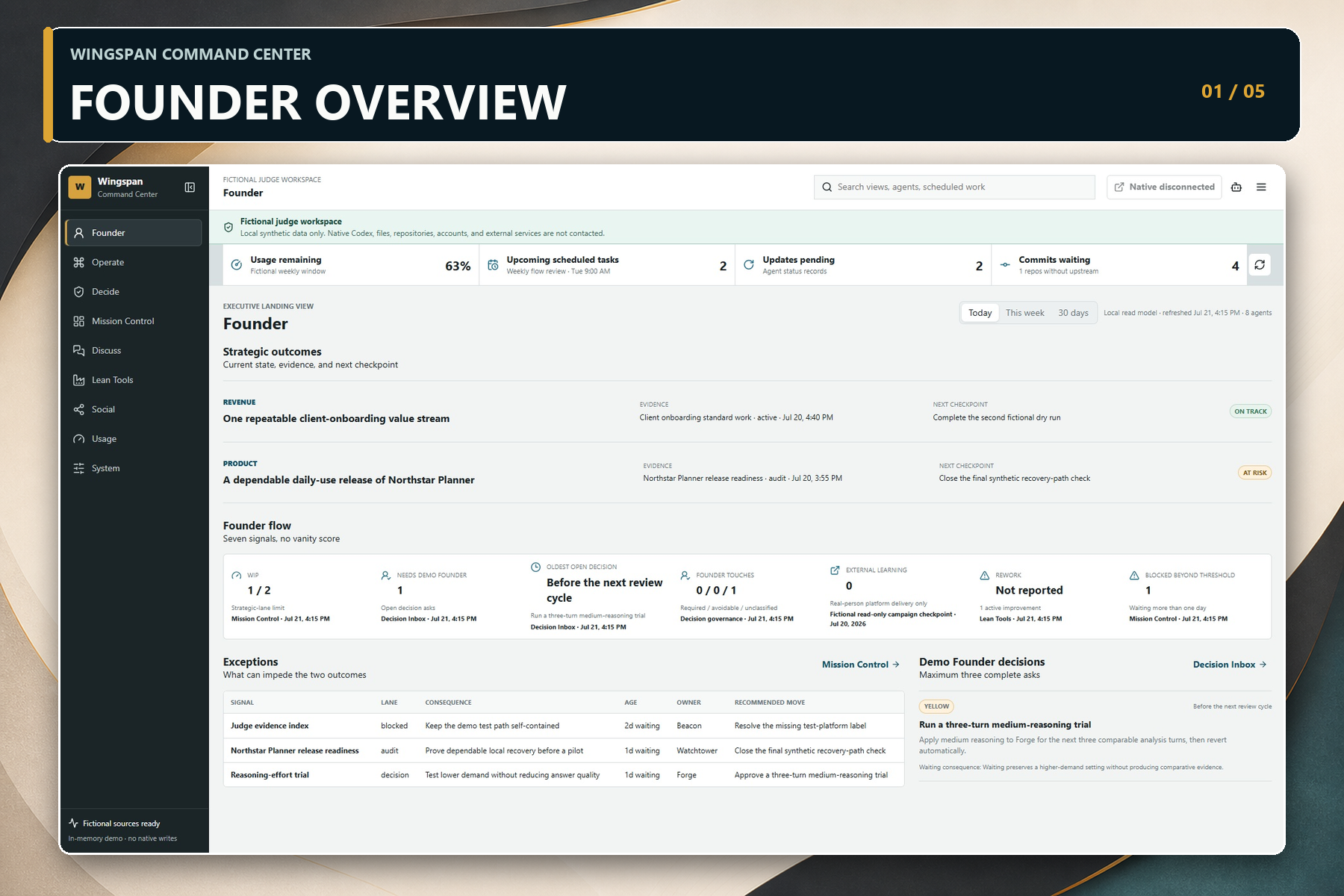
Founder starts with strategic outcomes, exceptions, source freshness, and the next complete human decision.
-
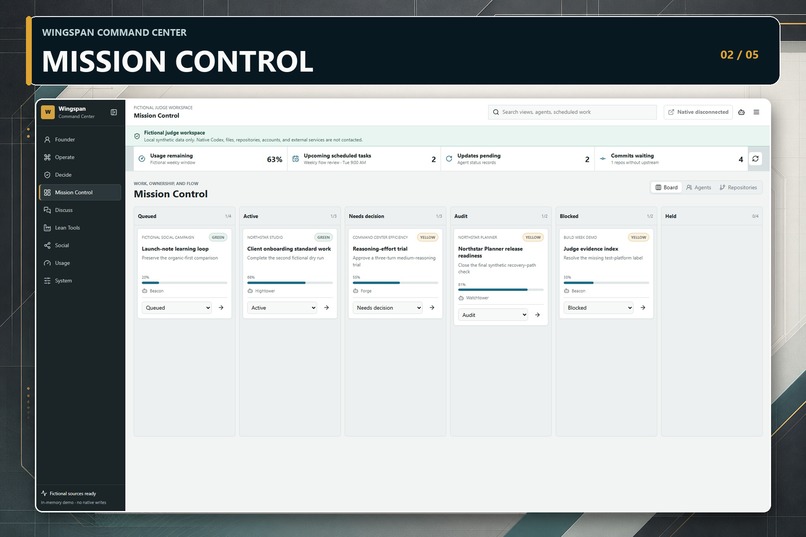
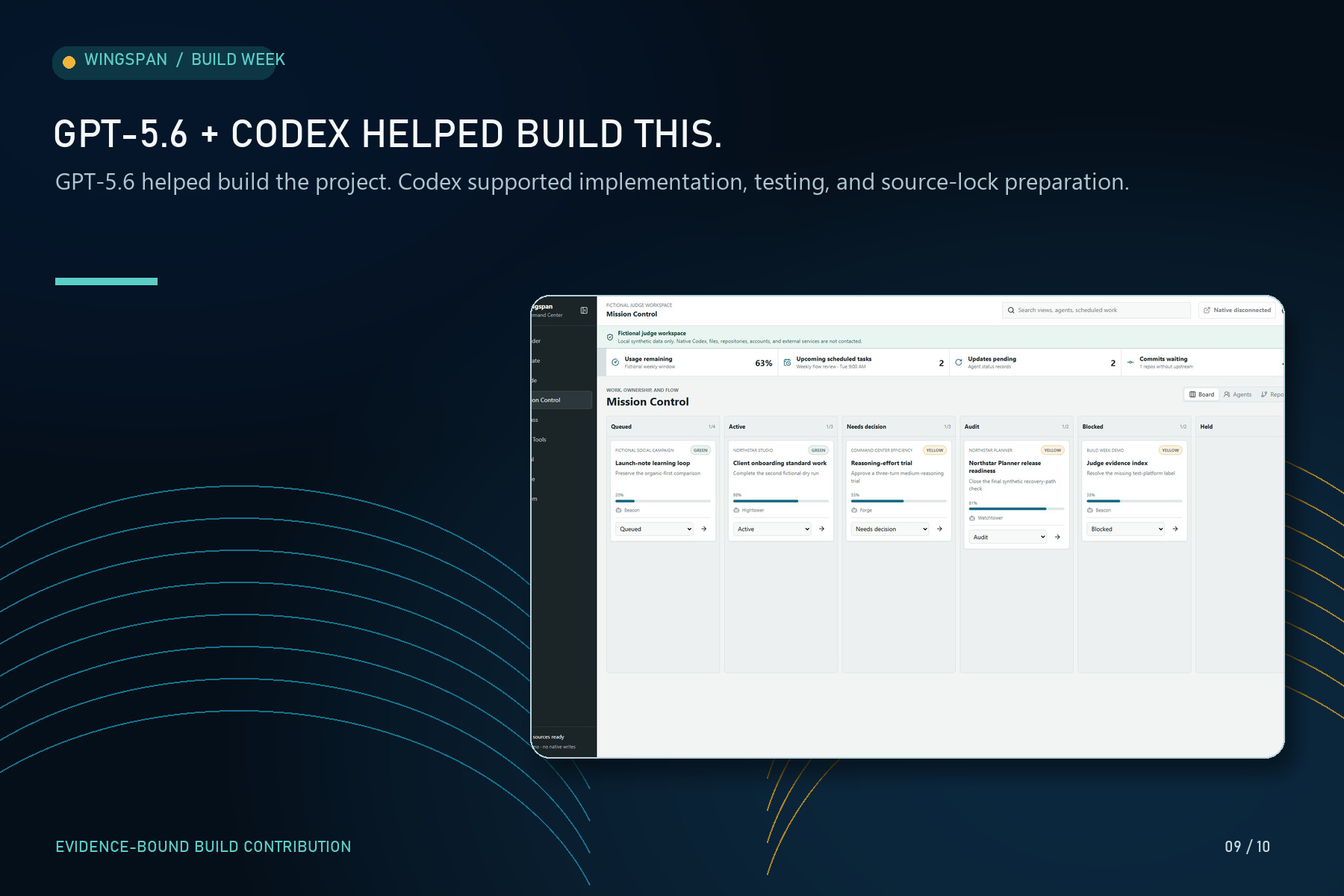
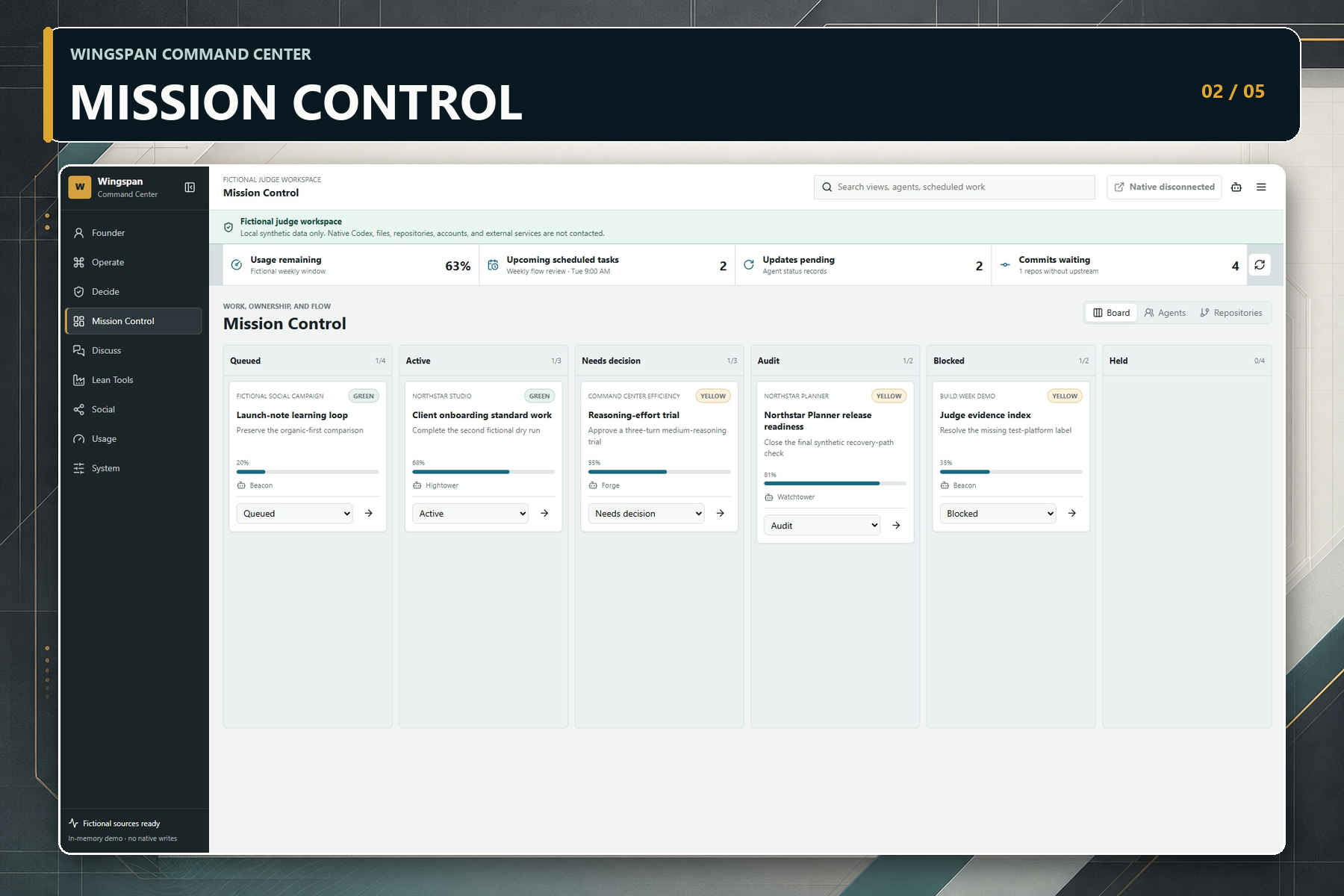
Mission Control makes work, ownership, progress, evidence, and source-control review visible in one place.
-
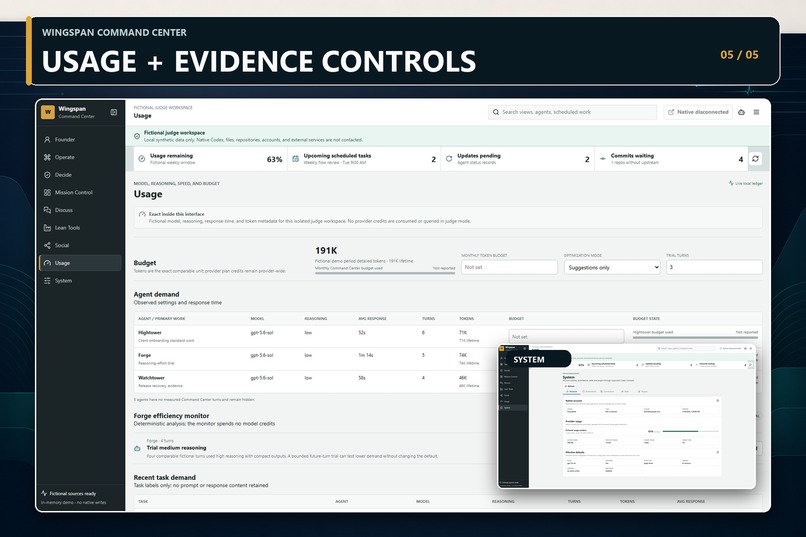
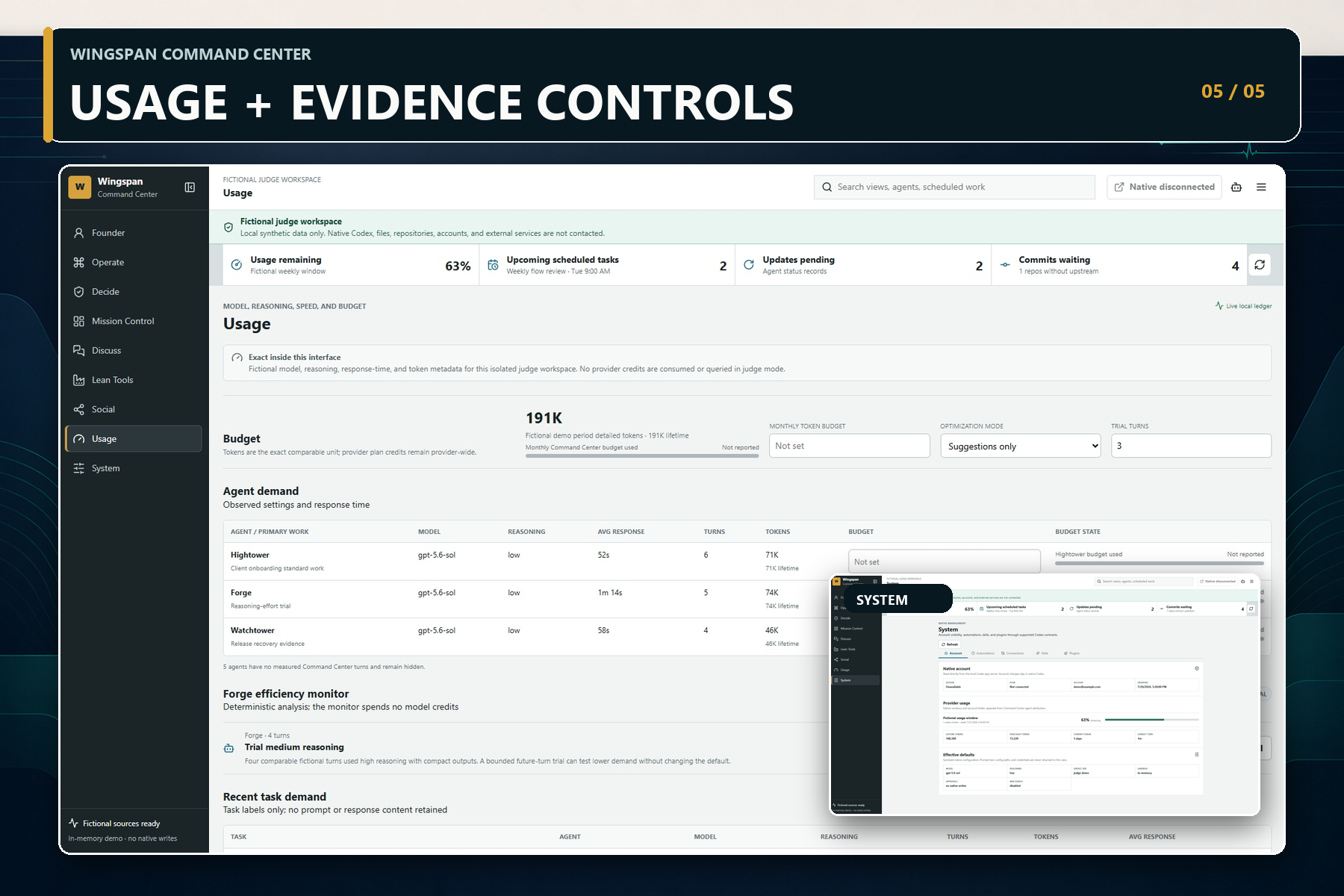
Usage separates model, reasoning, speed, token demand, and provider limits before bounded trials.
-
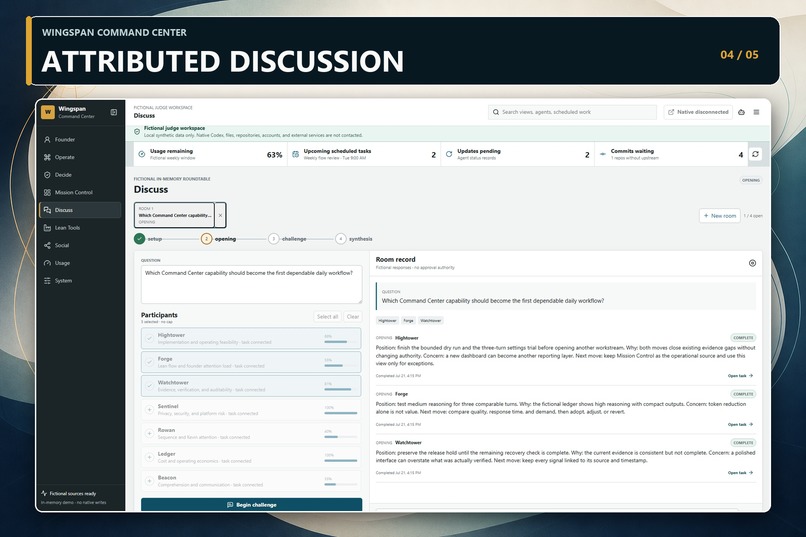
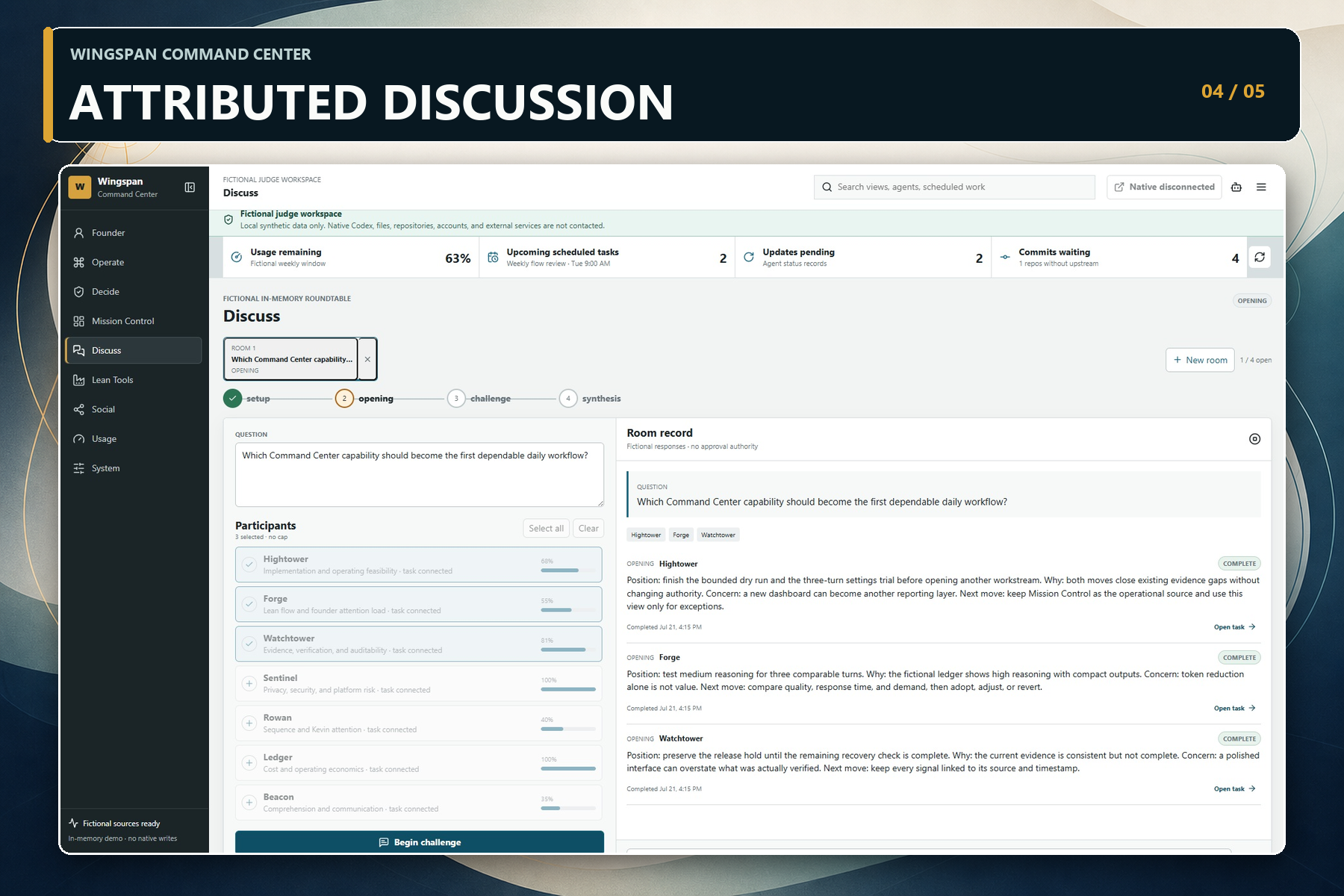
Discuss keeps specialist positions attributed, preserves dissent, and records the owner and next test.
Inspiration
Using multiple AI agents can increase throughput while quietly increasing coordination cost. Work becomes spread across tasks, approvals lose context, usage is difficult to compare, and a founder can spend more time relaying status than making decisions. We wanted an interface that makes agent work observable without becoming another source of truth.
What It Does
Wingspan Command Center provides one local shell with nine connected views:
- Founder for strategic outcomes and complete human decisions;
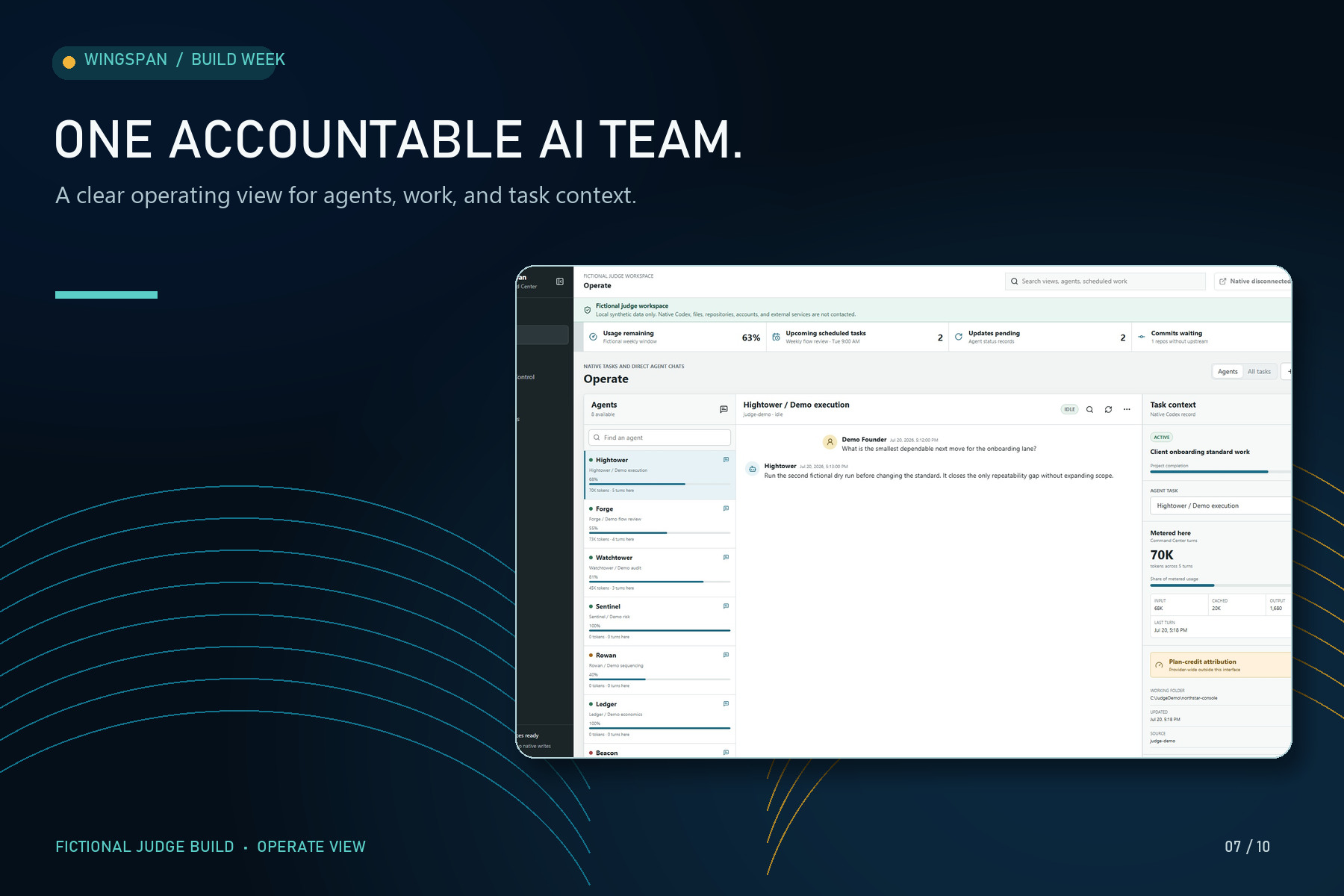
- Operate for direct one-to-one Codex task conversations;
- Decide for staged approvals and delivery receipts;
- Mission Control for work, ownership, progress, and source-control review;
- Discuss for attributed multi-agent roundtables;
- Lean Tools for flow exceptions and bounded improvements;
- Social for evidence-aware campaign learning;
- Usage for model, reasoning, speed, and token-demand analysis;
- System for visible runtime boundaries and settings.
The judge build uses only fictional sample data and an isolated in-memory task adapter. It does not contact native Codex, local files, repositories, accounts, or external services.
How We Built It
The interface uses React, Vite, Express, and a replaceable local runtime adapter. Production contracts support native Codex task continuity, event recovery, steer, roundtables, decision receipts, usage attribution, and local Git review. The submission package swaps that adapter for a deterministic, judge-safe runtime with the same UI contracts.
The primary task ran on GPT-5.6 Sol during the core implementation window. Codex helped implement and test durable operating state, direct task conversations and recovery, decision receipts, attachments and diff review, native handoff controls, four simultaneous roundtable rooms, the isolated judge adapter, and repeatable source-lock verification. The founder made the key product and governance decisions: the executive shell, one-to-one continuity, a four-room cap, visible timestamps and jump-to-latest behavior, an explicit return to native Codex, approval boundaries, and evidence-gated usage optimization.
Challenges
The hardest problem was preserving native-like task continuity without pretending a custom interface had powers it did not have. We separated direct turns from steer, made completed work non-repeatable, retained timestamps, kept provider-credit limits distinct from local attribution, and designed judge mode so it fails closed rather than reaching private systems.
Accomplishments
- One coherent interface instead of another duplicate task board.
- Direct one-to-one conversations plus up to four simultaneous roundtable rooms.
- Human decisions with recipient-specific delivery receipts.
- Source-linked agent progress, work aging, and Lean flow exceptions.
- Deterministic usage recommendations with reversible trial boundaries.
- An isolated fictional judge mode with automated desktop/mobile and network-boundary checks.
- One bounded pre-submission sprint from a clearly labeled simulated 50-seat expert review: raw Social ISO timestamps now render as readable, timezone-explicit semantic time values with invalid and missing data kept as Not reported.
What We Learned
Agent orchestration is primarily a visibility and authority problem. A polished summary is not enough: users need continuity, timestamps, explicit ownership, reliable delivery, evidence provenance, and an easy path back to native tools.
What Is Next
Next work would harden the native adapter lifecycle, expand measured usage attribution, formalize reversible settings trials, and validate the interface with real users. External connectors, account actions, and automatic optimization would remain separate permissioned capabilities.
Technologies
React, Vite, Express, Codex with GPT-5.6 Sol, Playwright, local JSON fixtures, and server-sent events.
Built With
- express.js
- gpt-5.6
- node.js
- openai-codex
- playwright
- react
- server-sent-events
- vite


Log in or sign up for Devpost to join the conversation.