Inspiration
Universities are full of students with ideas for startups, research projects, and hackathon builds — but most never get off the ground because finding the right teammates is hard. Students rely on small friend groups or random Discord servers, leaving great ideas stranded at the idea stage.
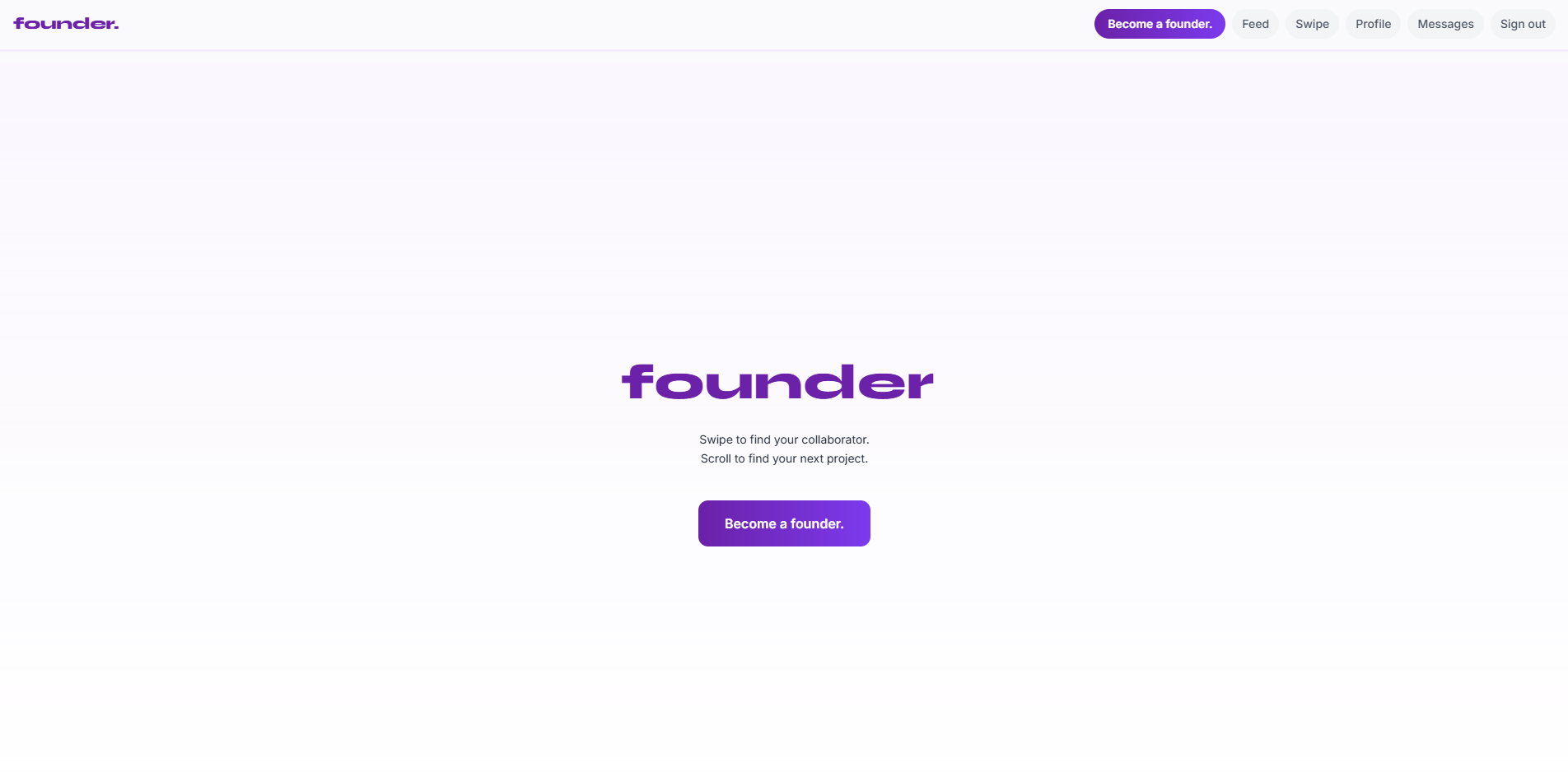
We asked: what if finding collaborators was as easy as swiping on a dating app? That question became founder., a platform that connects students, professors, and alumni based on skills, interests, and project goals.
What it does
Founder is a collaboration platform for students to form teams for hackathons, startups, research projects, and side projects.
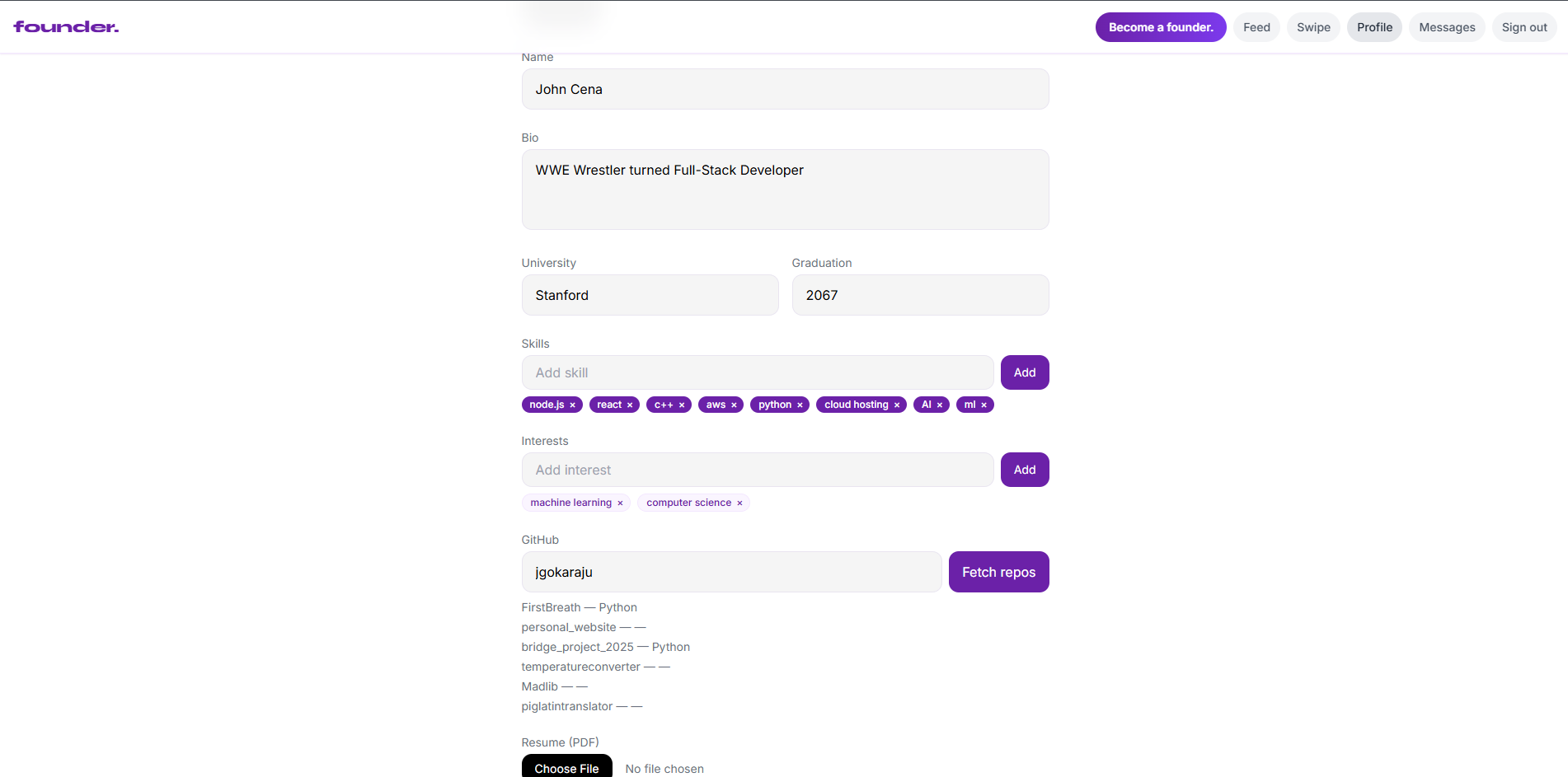
Users build a profile with their resume, GitHub, Devpost, LinkedIn, skills, and university background. The platform has two roles: Builders, who want to contribute to projects or find collaborators, and Founders, who create a project and recruit teammates. Everyone is fundamentally a builder — the founder role only exists in the context of a project they create.
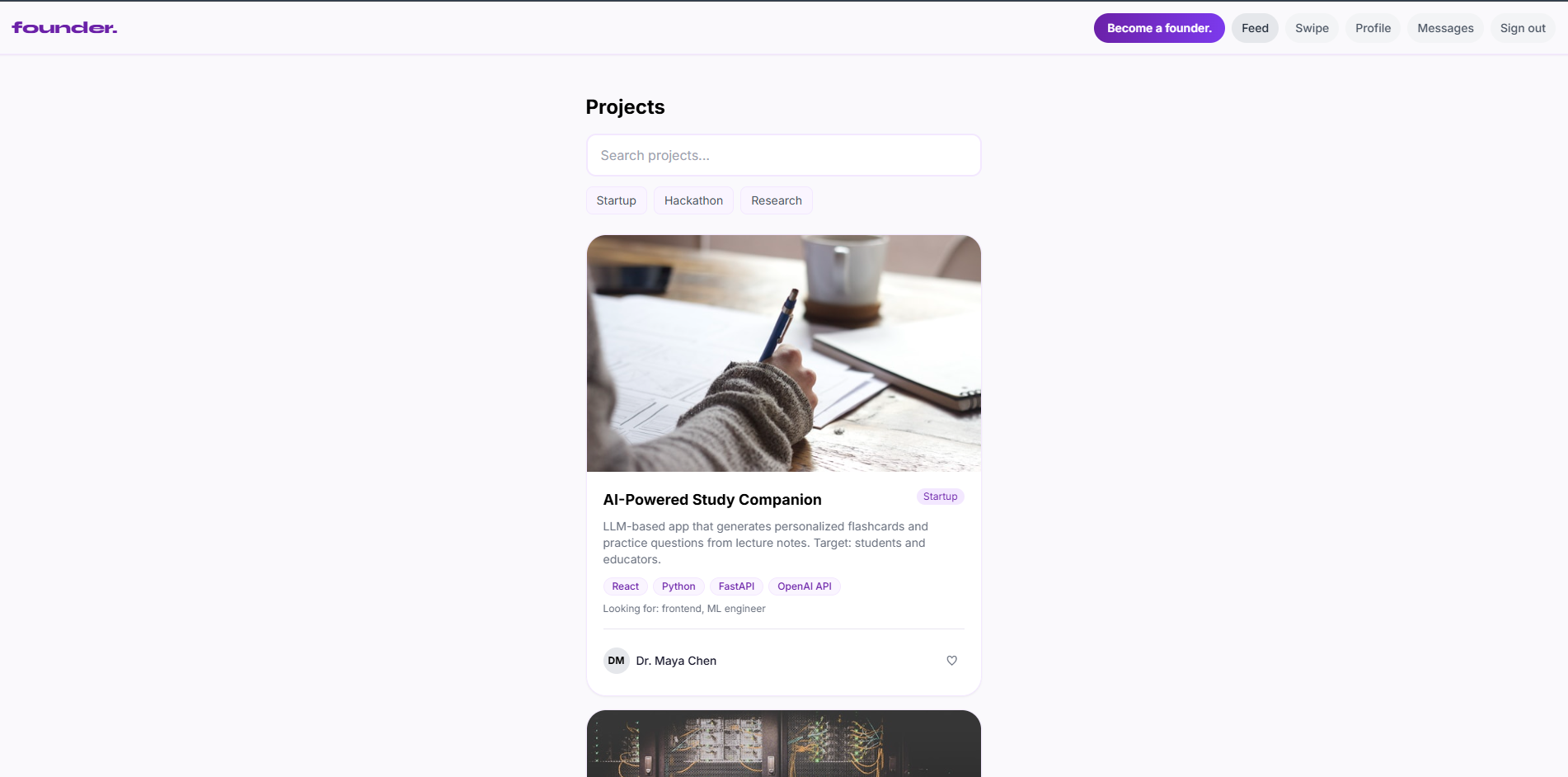
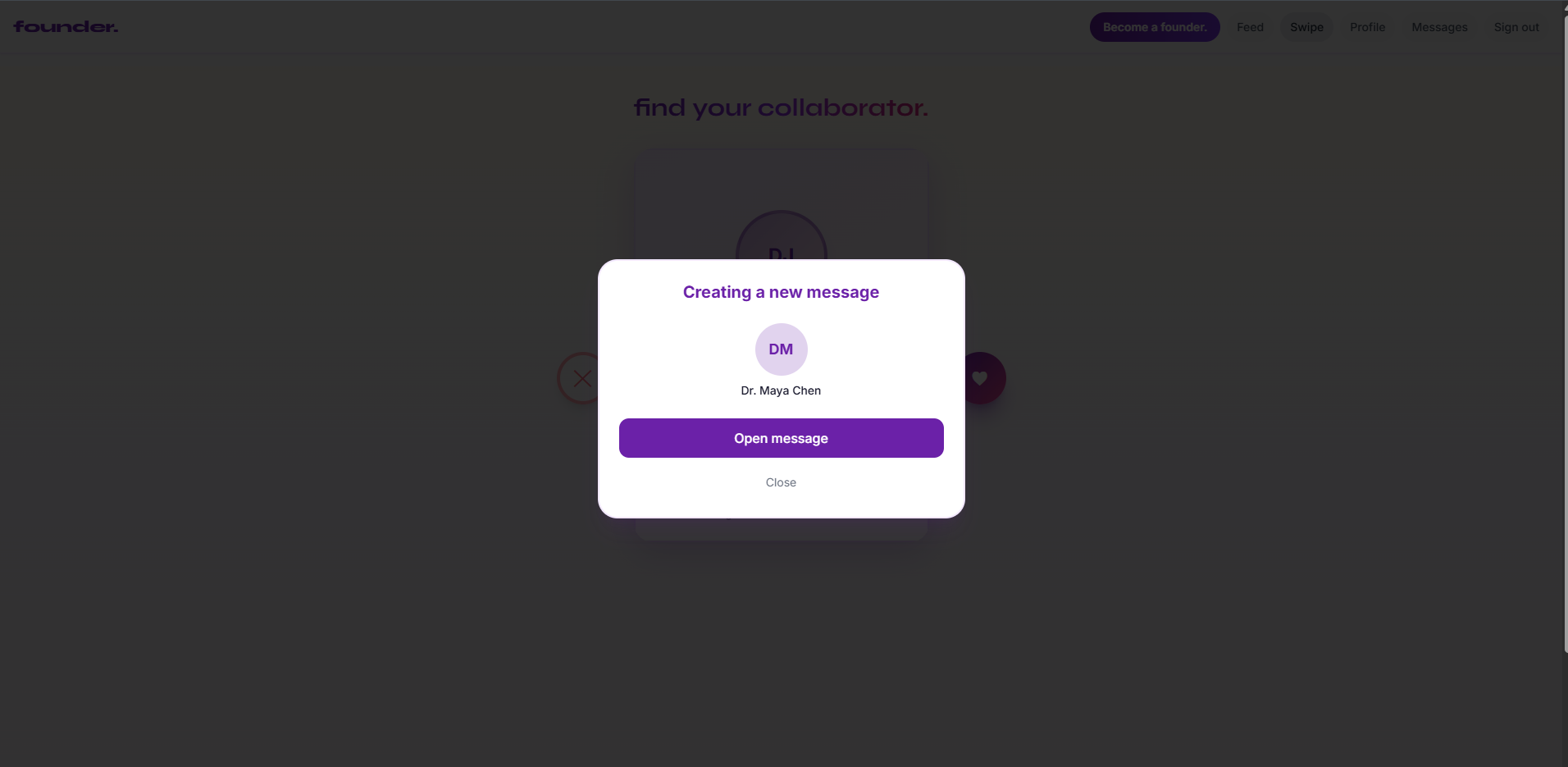
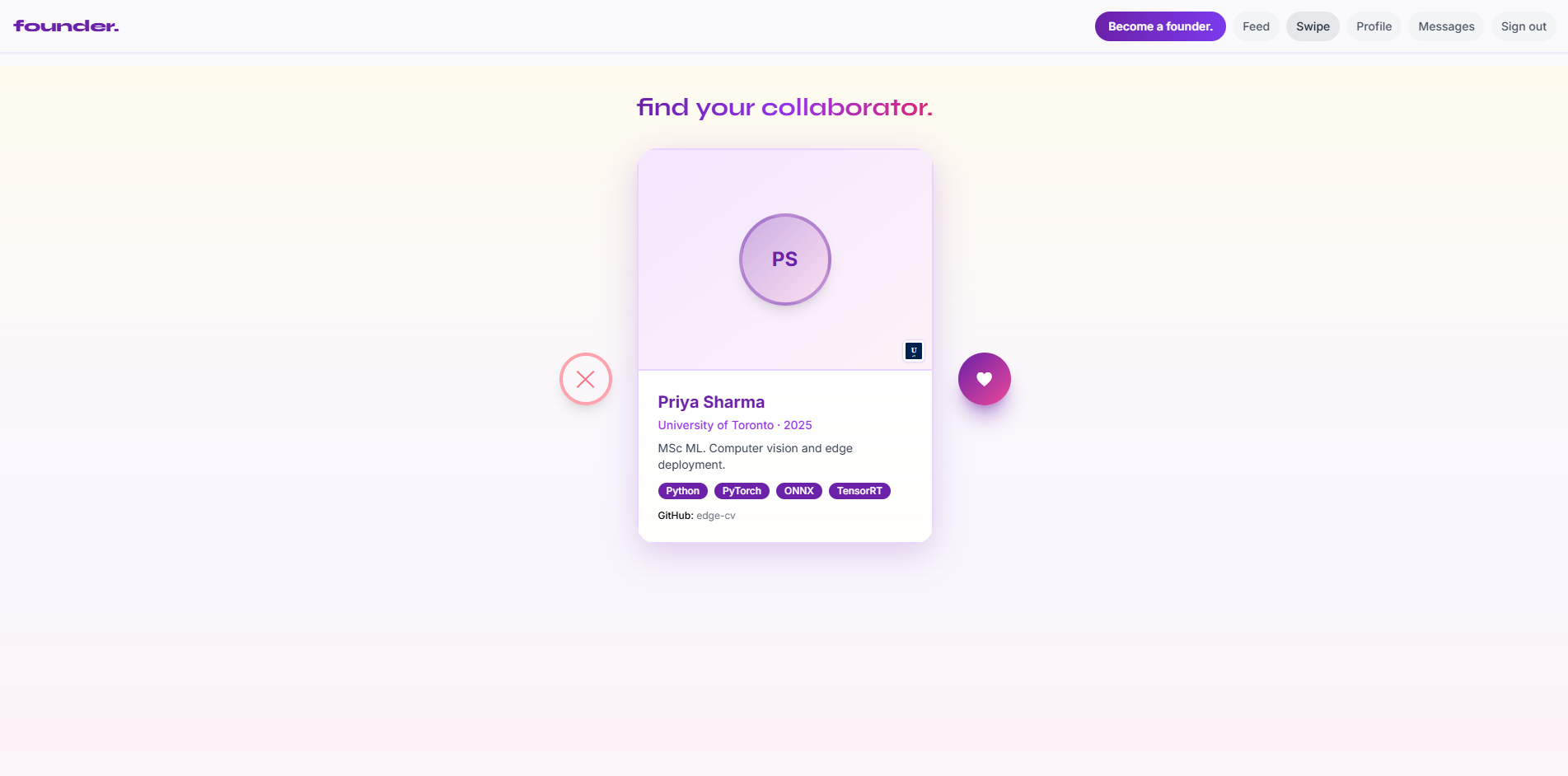
The core experience is a Tinder-style swipe feed where you browse other builders, swipe right to connect, and get notified when there's a mutual match. There's also a project feed where founders post what they're building and what skills they need.
How we built it
We built a fully serverless backend on AWS using SAM — Lambda functions handle each API endpoint, API Gateway routes requests, DynamoDB stores users, projects, and swipes, S3 stores resumes and avatars, and SNS publishes match notifications. The frontend is a React + Vite app deployed to AWS Amplify. We used Amazon Textract and Bedrock to parse uploaded resumes and auto-populate profile fields.
Challenges we ran into
Deploying a multi-service AWS backend from scratch during a hackathon was the biggest hurdle — debugging IAM policies, CloudFormation changesets, and getting the frontend zip deployment working correctly took significant time. We also had to coordinate between team members pushing changes mid-deployment, which required careful git workflow management.
Additionally, our rudimentary resume parser in C did not initially work. We had to use AWS Textract and sending information through AWS Bedrock to Claude Sonnet in order to extract JSONL data from the submitted pdf.
Accomplishments that we're proud of
We built and deployed a fully functional, cloud-hosted product end-to-end during the hackathon. The resume parsing pipeline — uploading a PDF, running it through Textract, and using Bedrock to extract structured profile data — works seamlessly and meaningfully reduces onboarding friction. What we learned
We learned how to architect and deploy a production-grade serverless application on AWS, including how SAM abstracts CloudFormation, how API Gateway integrates with Lambda, and how to handle real deployment challenges under time pressure. We also learned the importance of keeping frontend and backend changes in sync across a team.
What's next for founder.
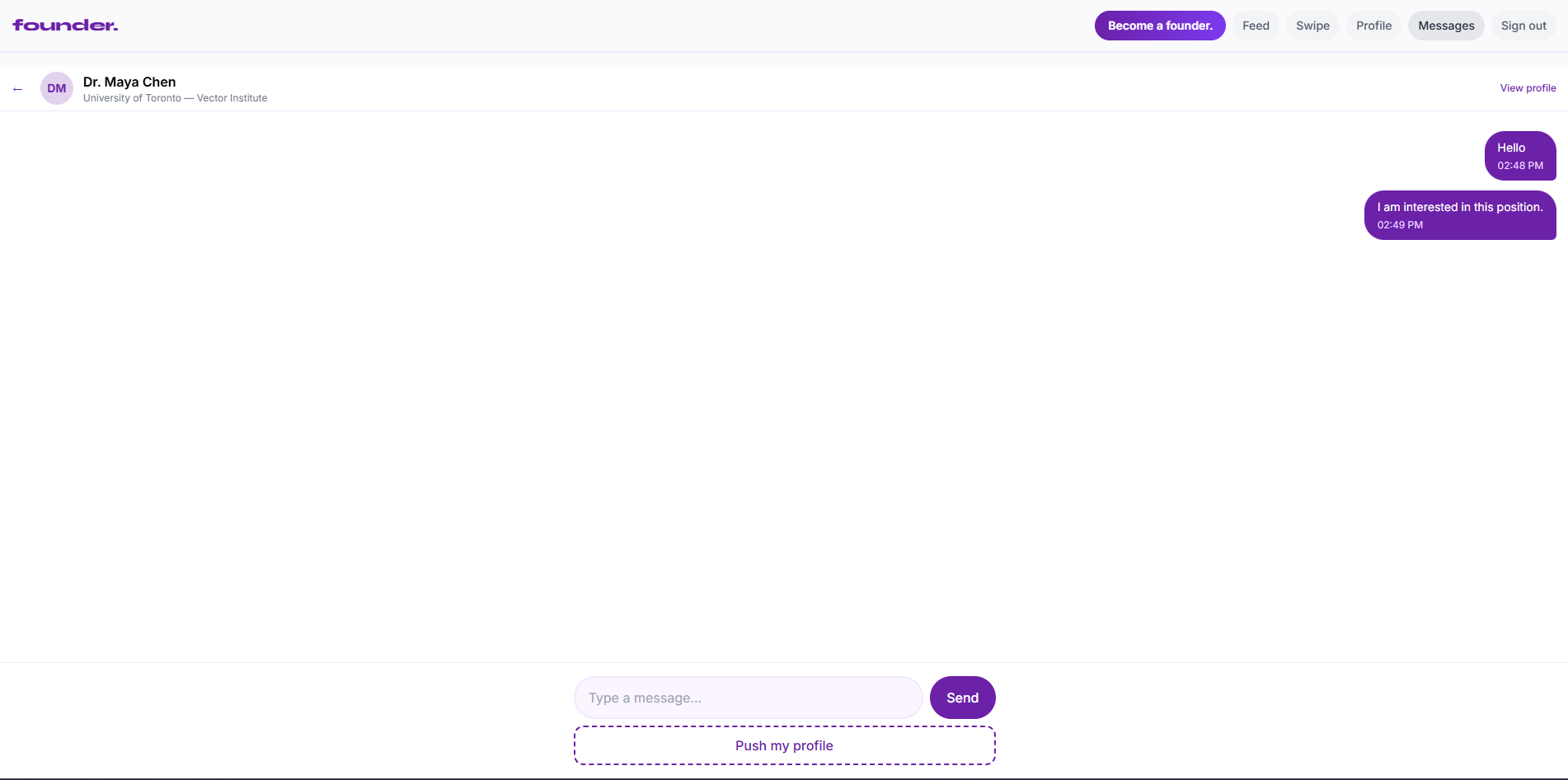
Real authentication and verified university email sign-up Messaging between matched users Integration with Devpost and GitHub to auto-populate project and contribution history A recommendation algorithm that surfaces collaborators based on complementary skills Expansion beyond hackathons to research labs and early-stage startups
Built With
- amazon-amplify
- amazon-bedrock
- amazon-dynamodb
- amazon-lambda
- amazon-sam
- amazon-sns
- amazon-textract
- amazon-web-services
- css
- fuse.js
- github
- node.js
- postcss
- react
- tailwind
- vite

Log in or sign up for Devpost to join the conversation.