Inspiration
We were inspired by how schools usually have a physical lost and found cupboard but no proper system to reconnect those items with their owners. So we wanted to solve that gap and make finding and returning lost belongings easier.
What it does
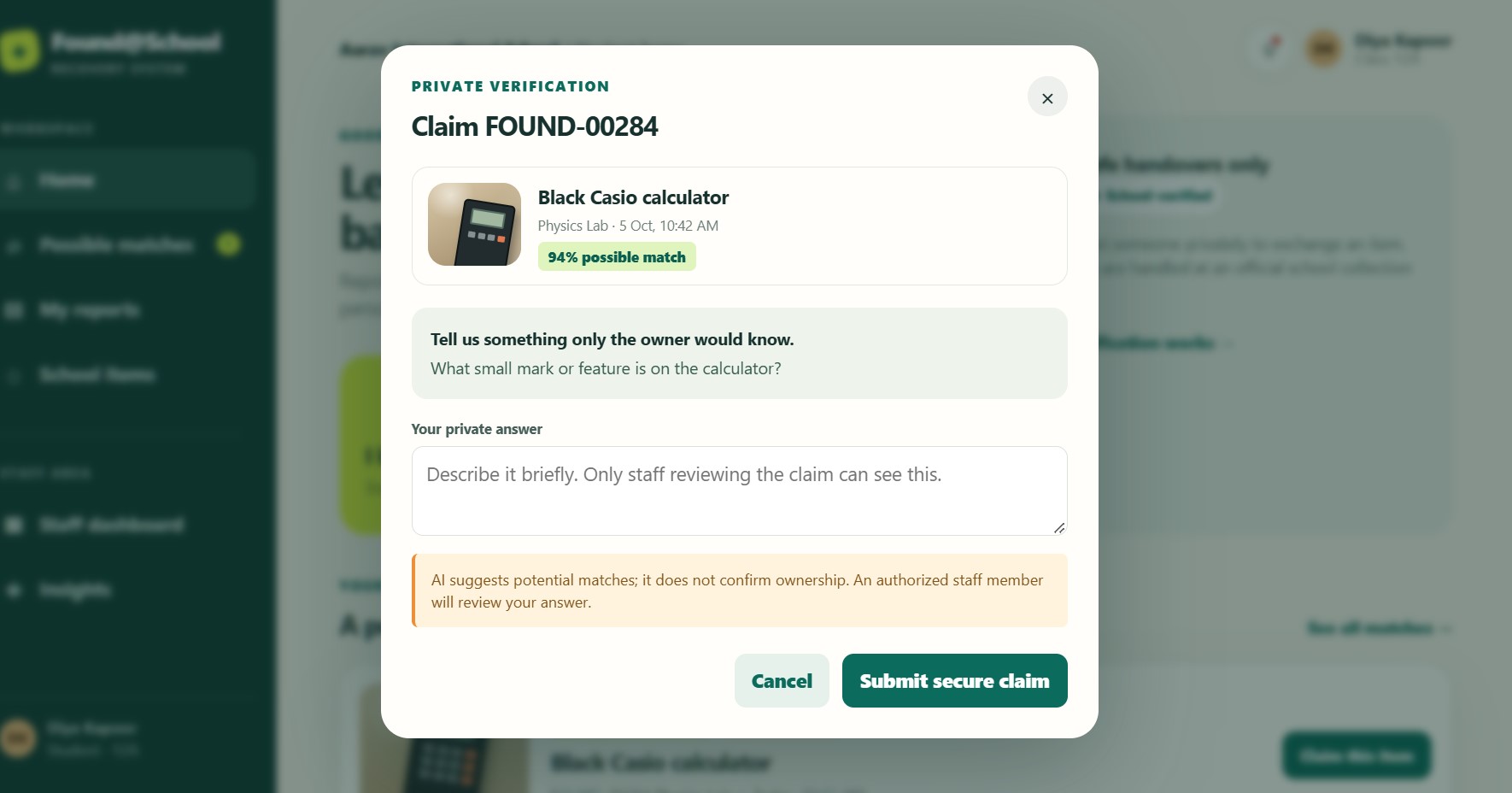
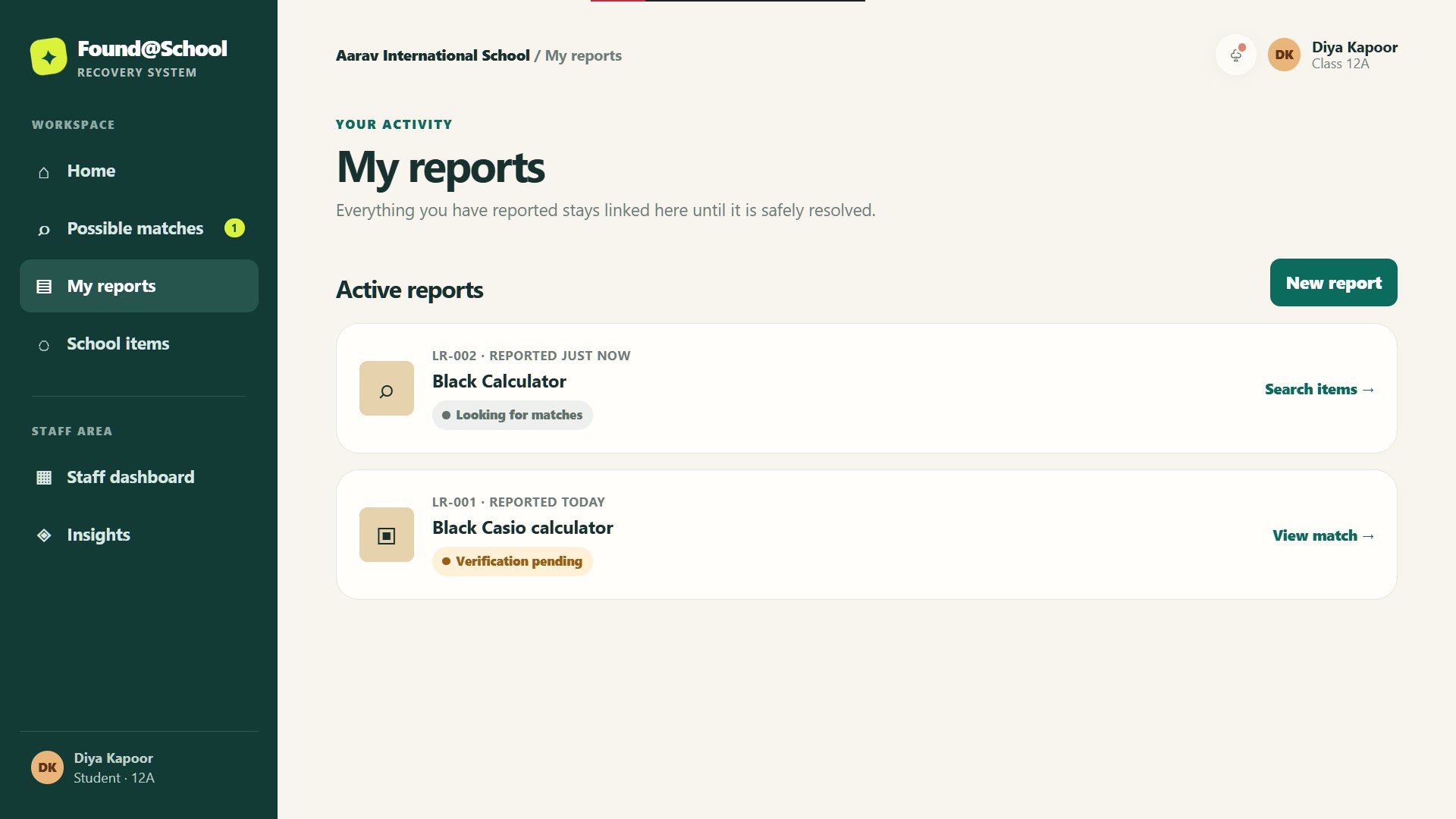
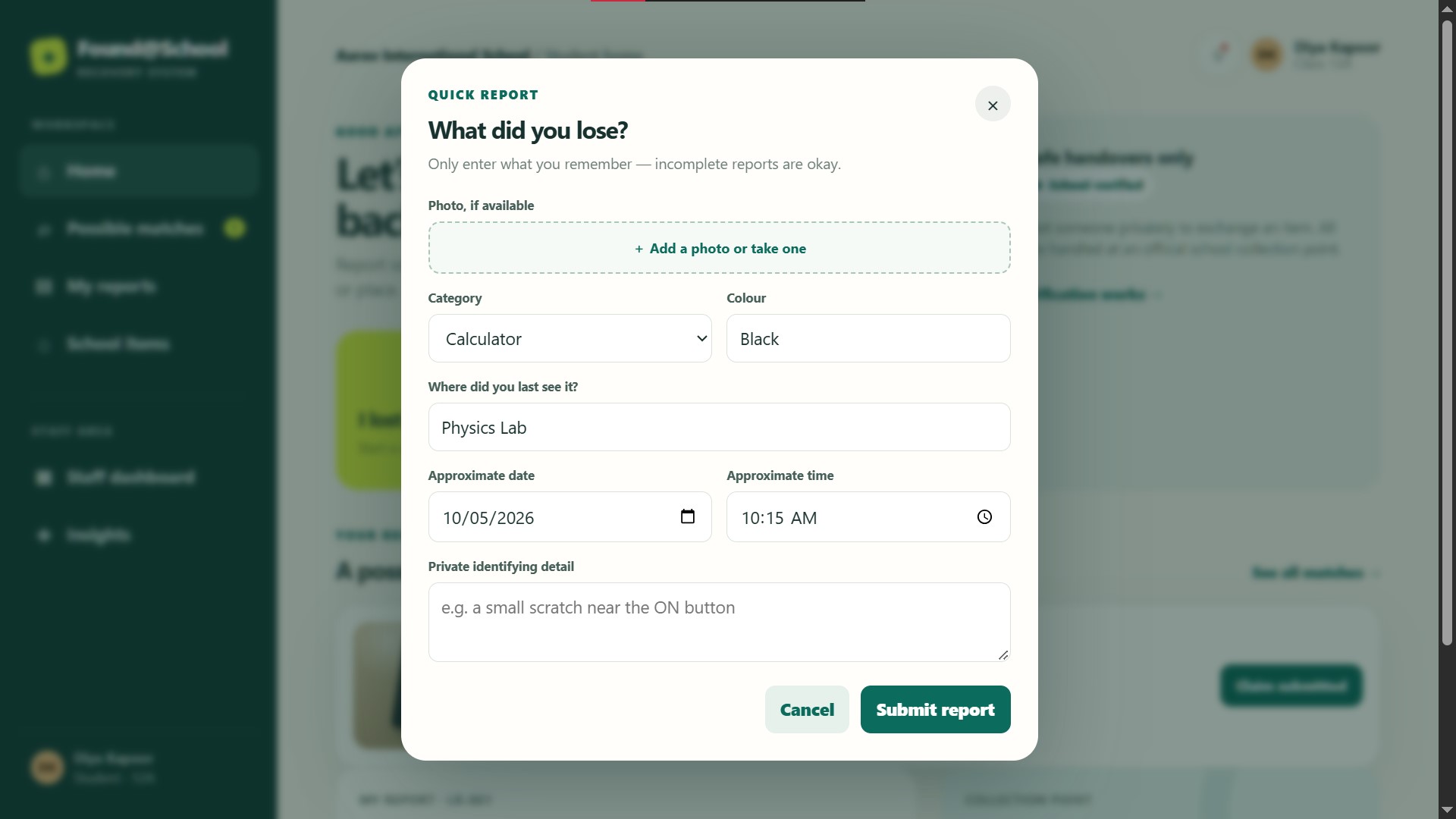
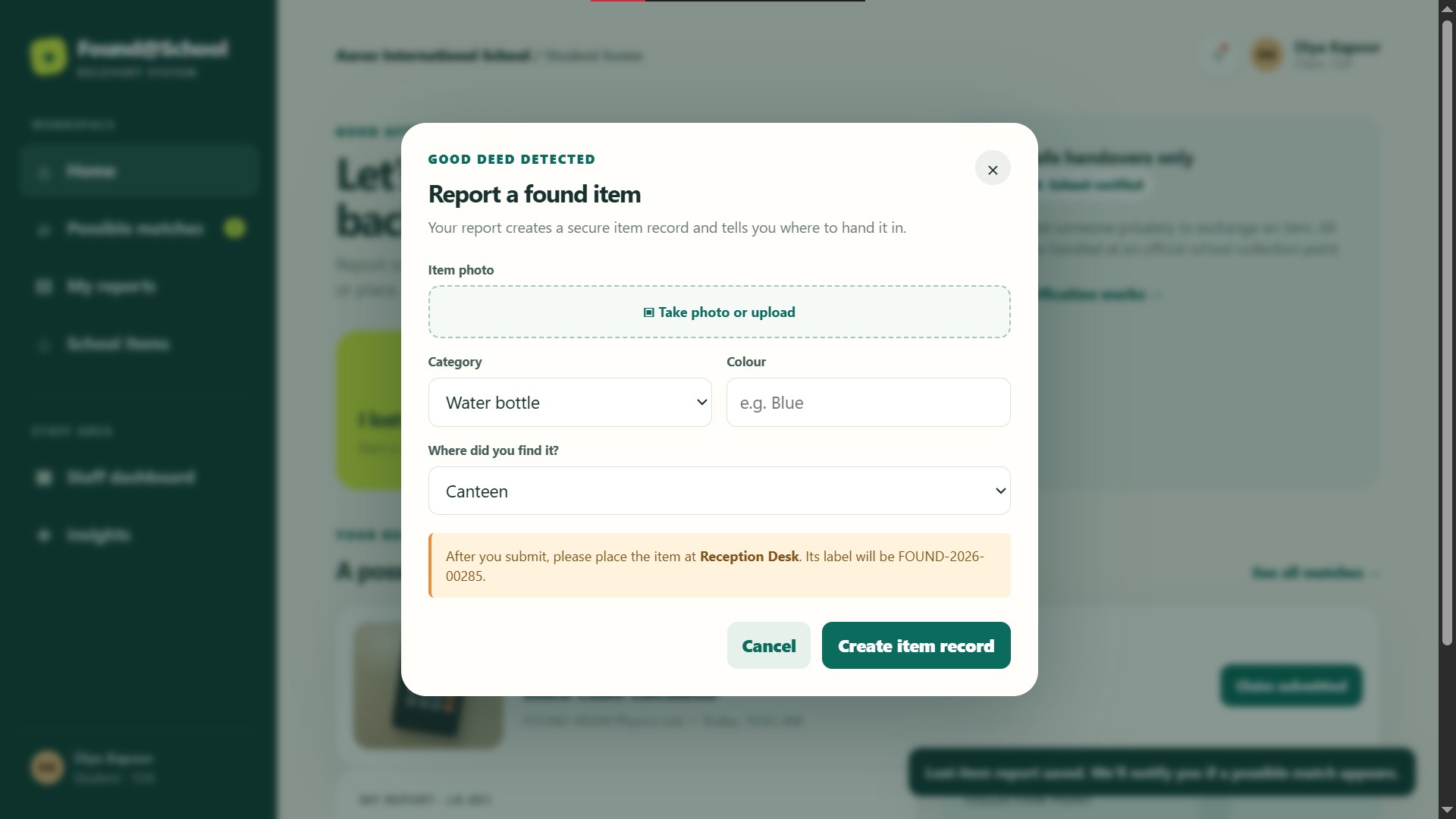
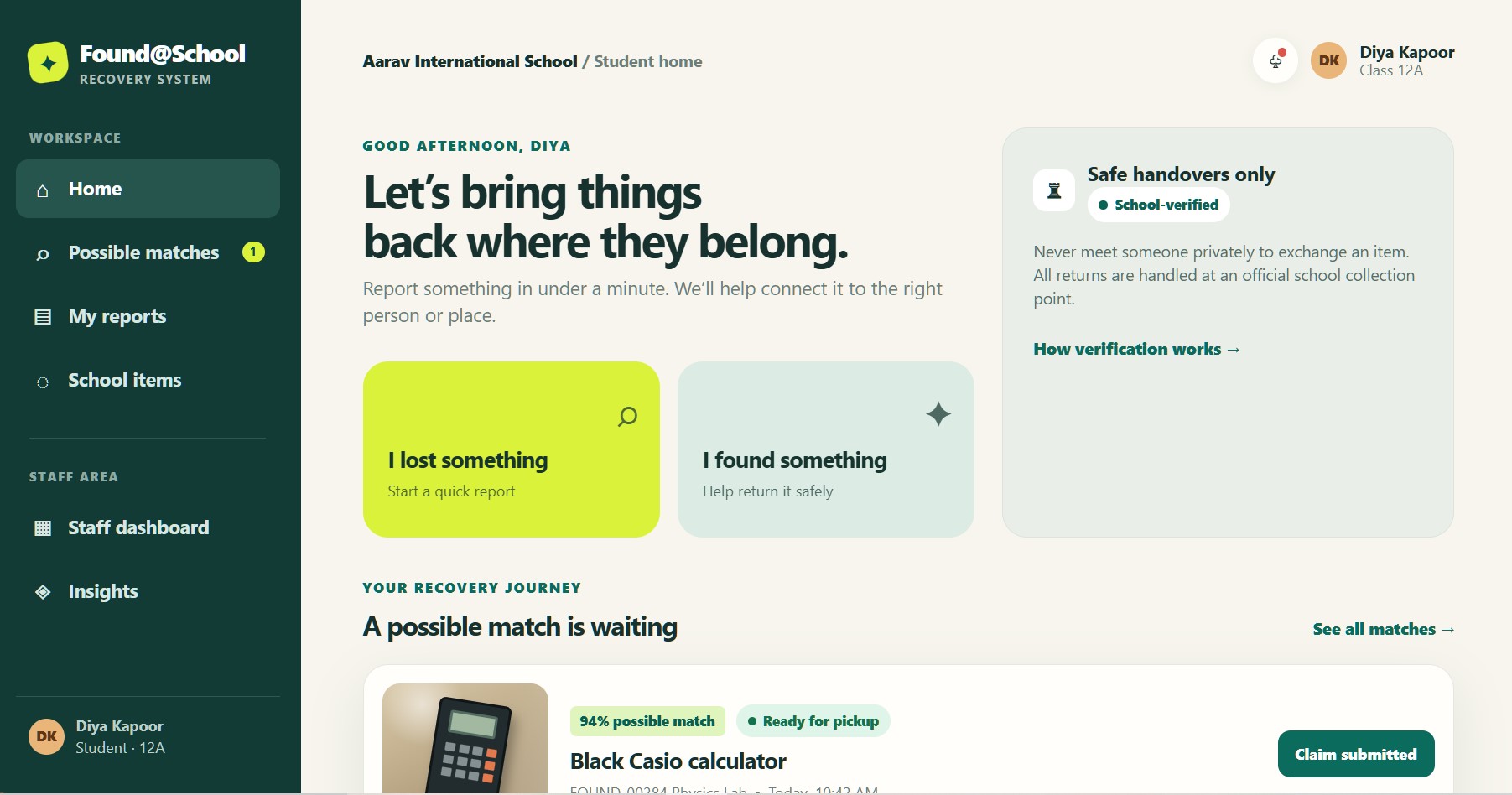
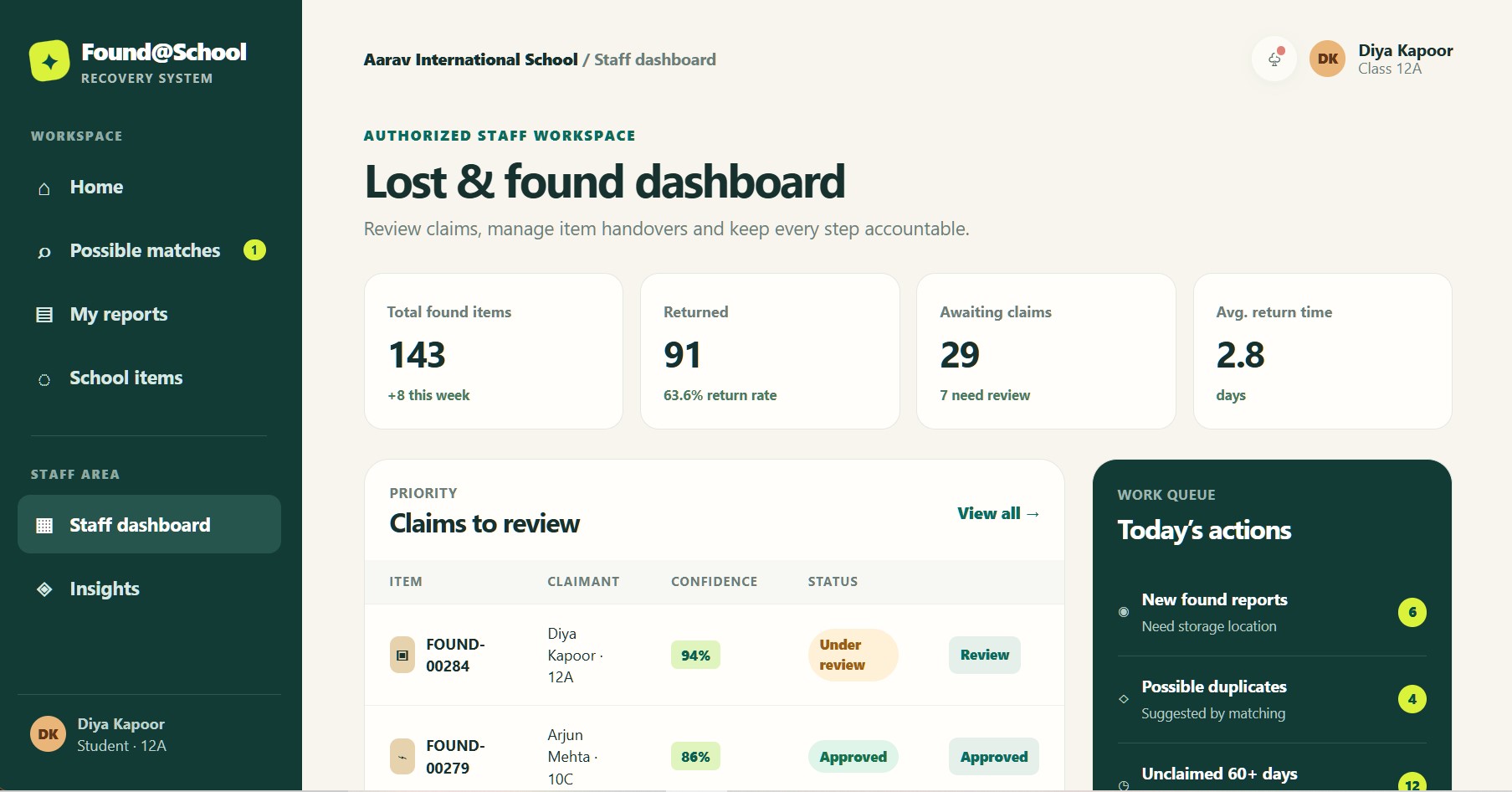
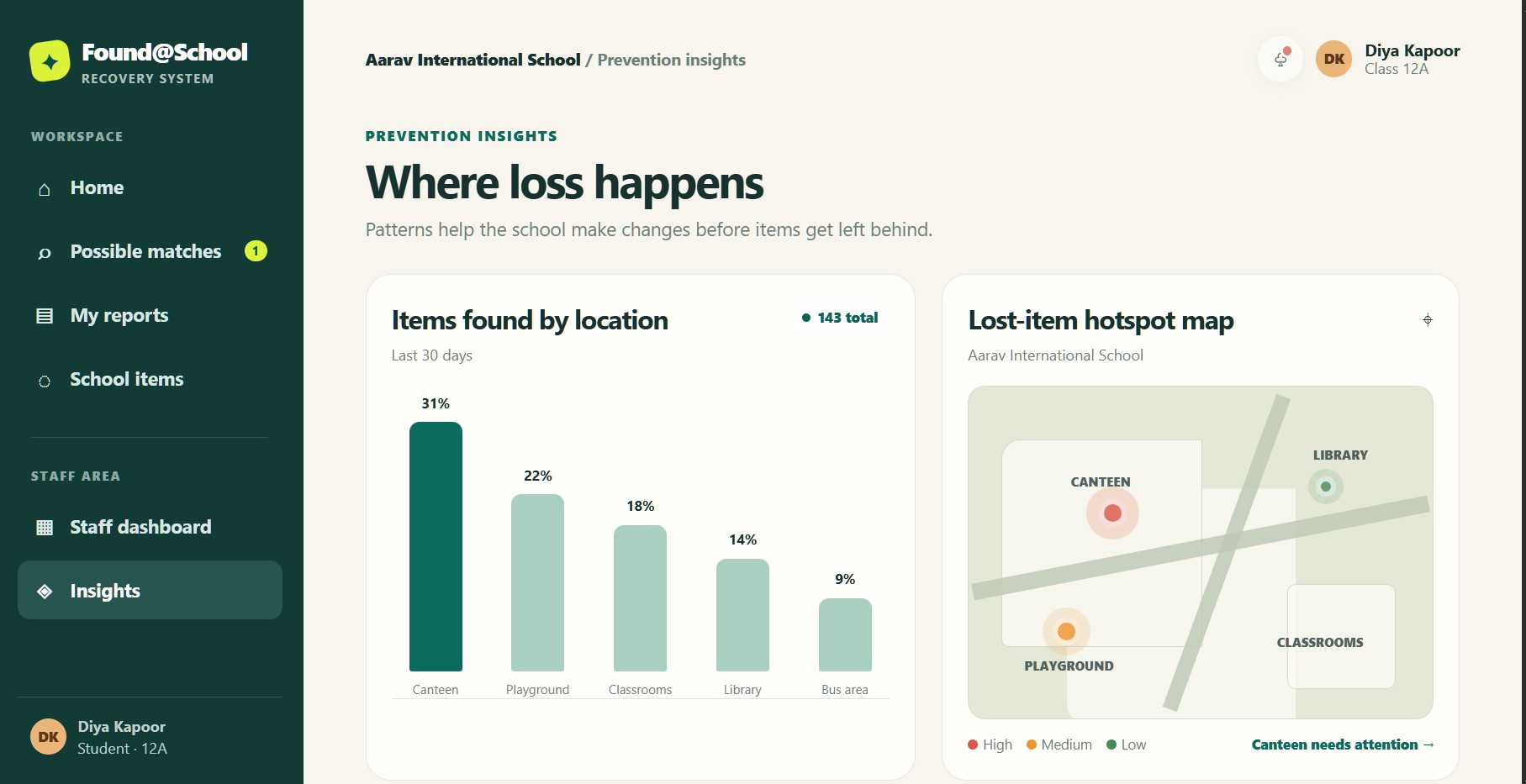
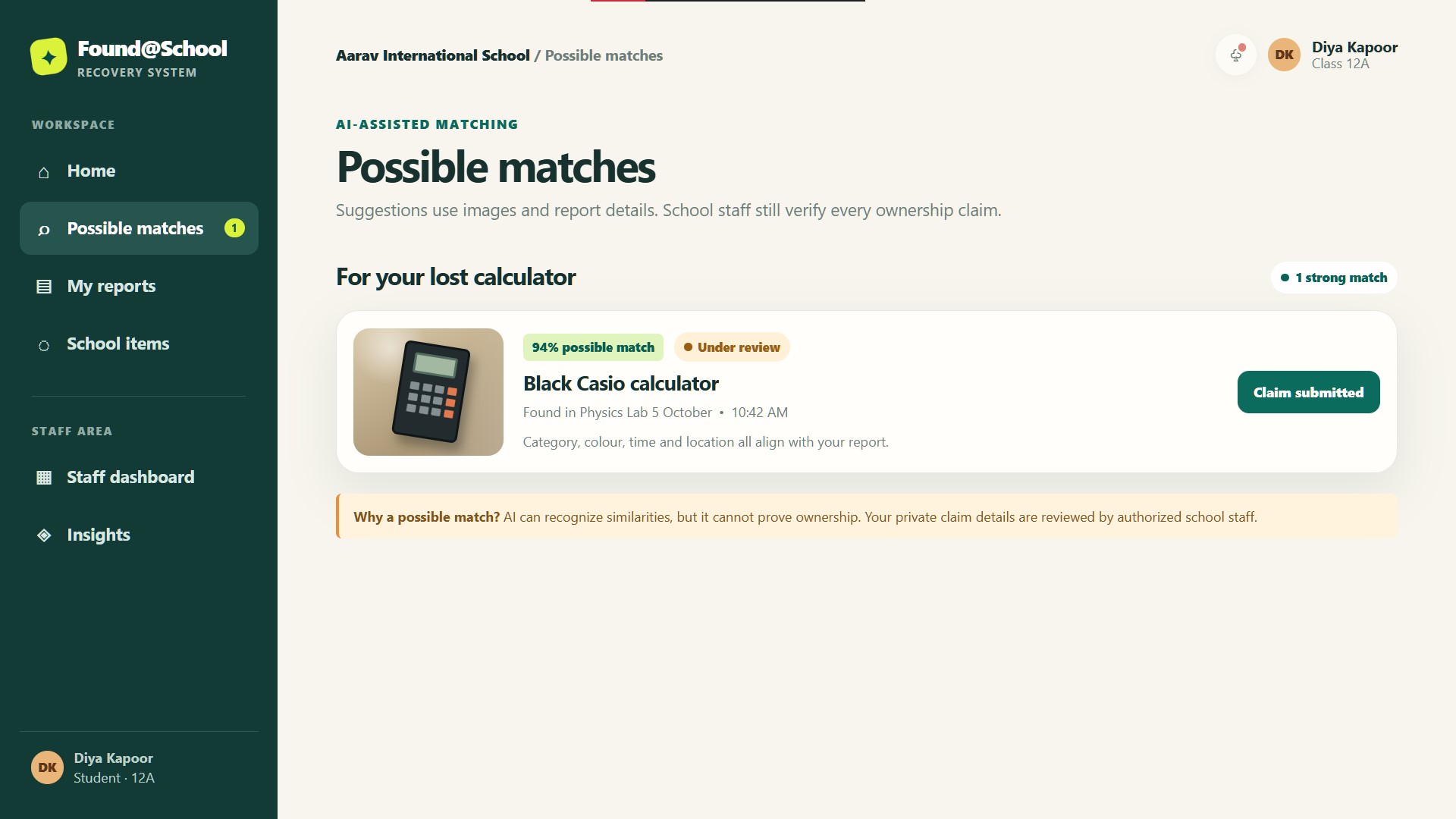
Found@School lets students report lost or found items with photos and details. The system suggests possible matches using image similarity, OCR, category, colour, location, date, and description. AI only suggests matches. It does not decide ownership. Students submit identifying details privately, and school staff verify claims before returning any item. The system tracks return status and shows analytics like common lost-item categories and hotspot locations. That data helps prevent repeat losses.
How we built it
We started by figuring out how lost and found actually works in schools and what parts of the process are usually messy or get missed. Then we built the basic reporting and matching system first and slowly added things like AI matching, verification, QR tracking and the dashboard. We used React, TypeScript, Tailwind CSS and Supabase to put everything together, while keeping the interface simple enough that students and school staff could use it without much explanation.
Challenges we ran into
One of the biggest challenges was figuring out how to make the AI matching actually useful without making it feel like the AI was deciding who an item belongs to. We also had to think about privacy and how students could prove an item was theirs without exposing personal information. Getting all the different parts like reporting, matching, verification, QR tracking and the dashboard to work together was also a bit tricky, and we had to simplify a few things along the way.
Accomplishments that we're proud of
We’re proud that FOUND@SCHOOL isn’t just a digital lost-and-found board. We designed it as a complete system that helps a school find, verify, track, and return belongings while also showing where and what students lose most often.
What we learned
We learned that solving a real problem is not just about adding a lot of features. We had to think about how students and teachers would actually use the system and what could go wrong. We also learned that AI works best as a helper rather than making the final decision, especially when it comes to something as personal as proving ownership. Most importantly, we learned how small details in a normal school process can make a big difference when you actually try to improve it.
What's next for FOUND@SCHOOL
Next, we want to make FOUND@SCHOOL more accurate and easier for schools to actually use. We want to improve the AI matching, add better notifications, and make the QR system more useful for tracking items. We also want to test it with a real school, see what students and teachers struggle with, and improve the app based on their feedback. Eventually, we’d like to expand it beyond lost and found to things like school equipment, lab items and sports equipment.
Built With
- ai
- computervision
- css
- html
- javascript
- ocr
- postgresql
- qrcode
- react
- supabase
- tailwindcss
- typescript


Log in or sign up for Devpost to join the conversation.