
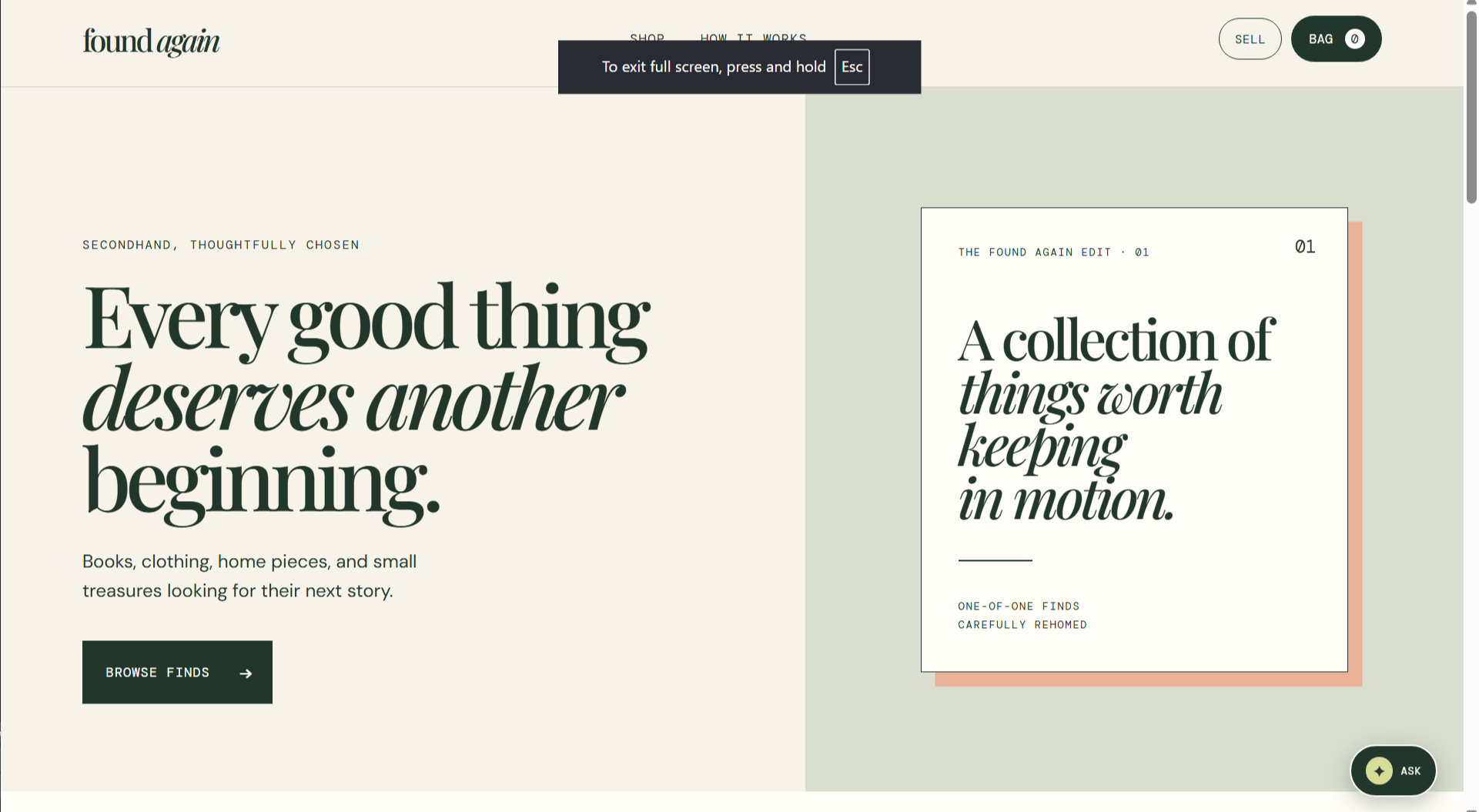
Every good thing deserves another beginning.
Found Again is an AI-assisted marketplace for one-of-one secondhand finds—books, clothing, home pieces, and small treasures looking for their next story.
Selling used goods is often more work than it should be. A seller has to photograph an item, describe its condition honestly, choose a price, manage photos, and keep up with inventory. Buyers, meanwhile, need enough information to feel confident that a one-of-a-kind item is really what it appears to be.
I built Found Again to make that process feel more thoughtful, human, and practical.
What it does
For sellers
A seller chooses a category and condition and uploads up to four photos. AI drafts a title, description, tags, condition wording, and a price range, and flags up to three clearly visible photo details for the seller to confirm. It never invents brand, material, damage, or provenance.
The seller remains in control: they can review and edit the draft, replace the cover photo, add or remove photos, publish, or remove a listing.
Seller tools are protected behind an access code in this prototype so public visitors cannot alter inventory.
For buyers
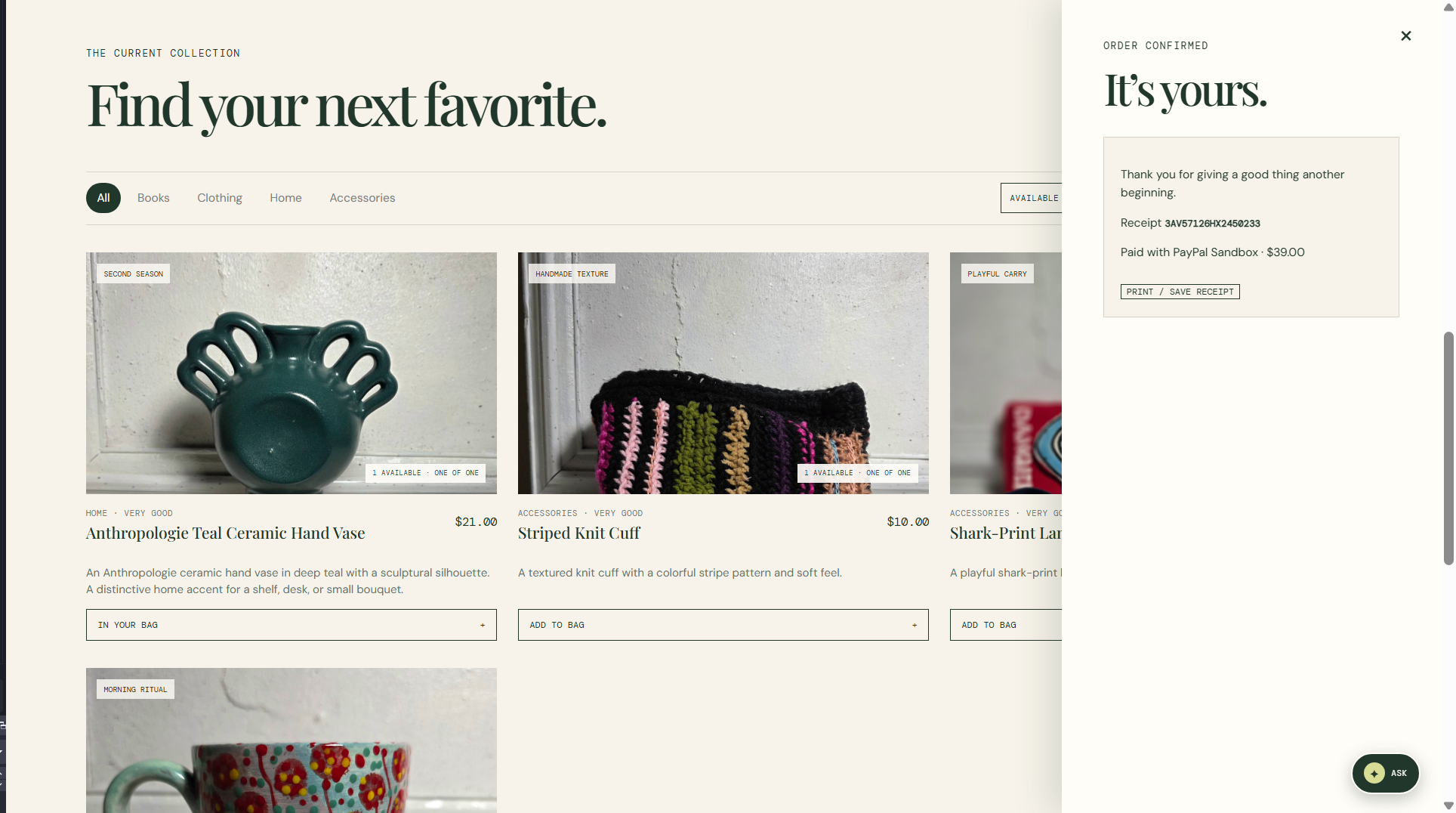
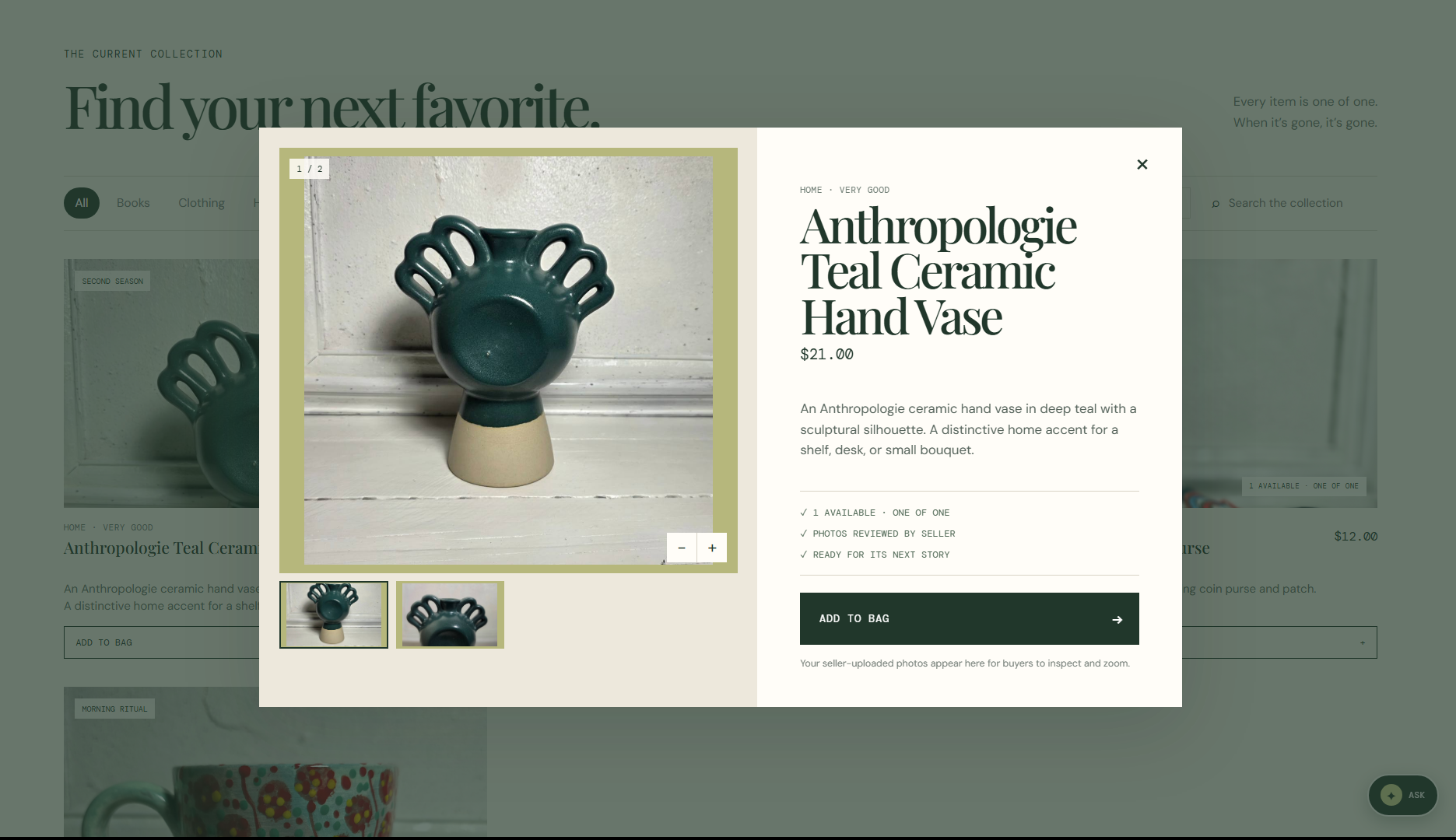
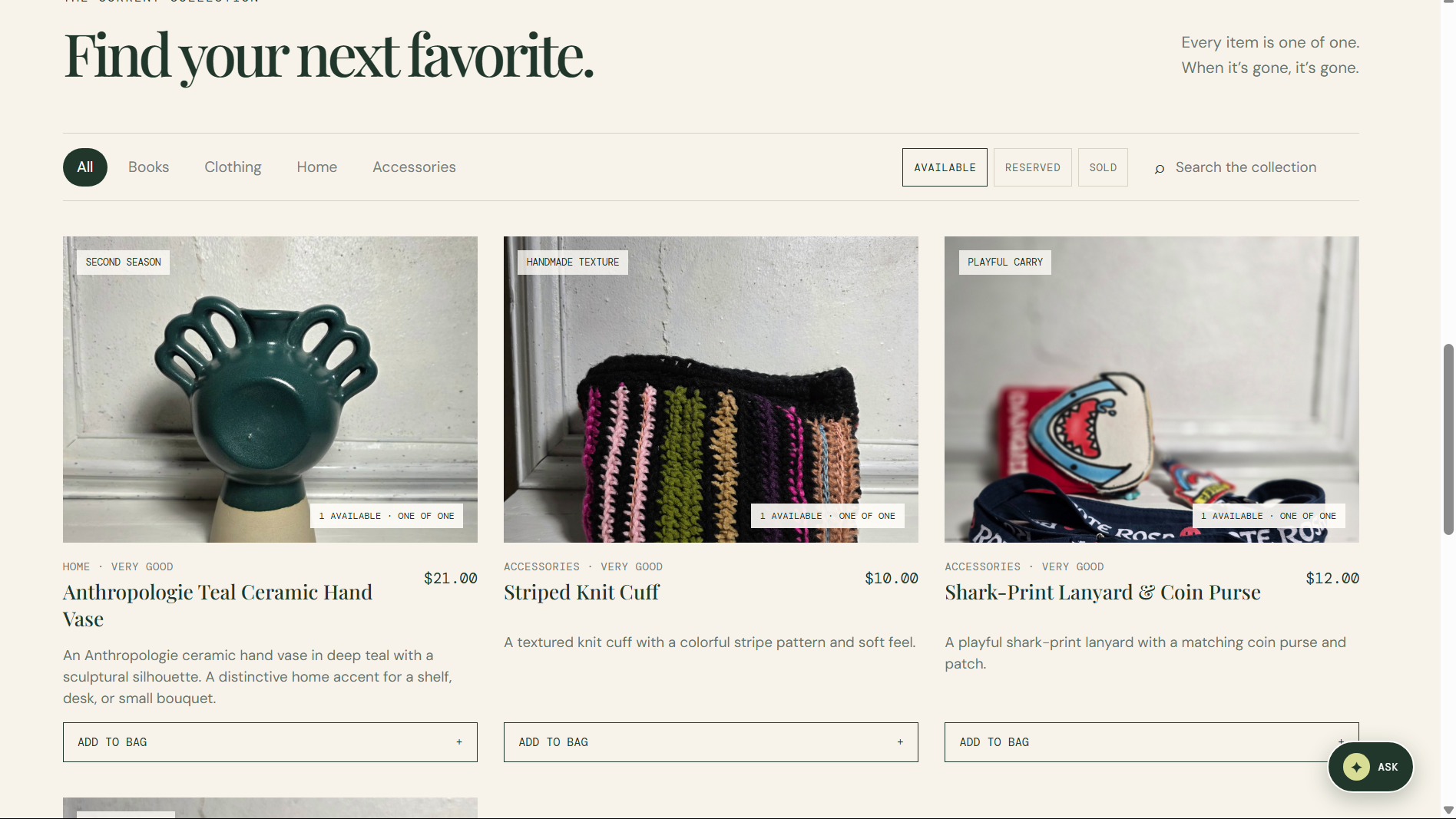
Buyers can browse the public storefront without creating an account, inspect multiple listing photos, add one-of-one finds to their bag, remove items if they change their mind, and check out through PayPal Sandbox.
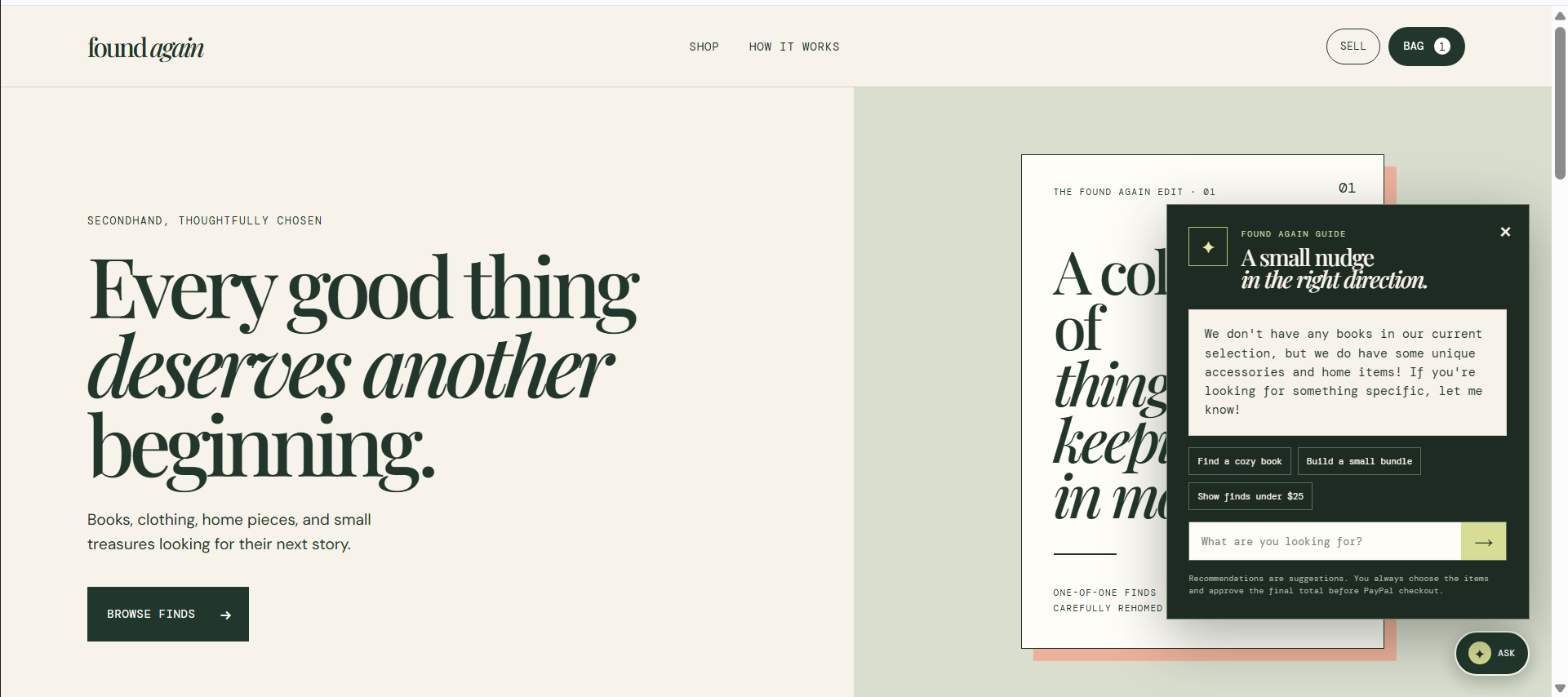
Buyers can also ask the Found Again guide for something specific, such as “a cozy gift under $30.” The guide reads only live, available inventory and proposes matching items with the total shown up front. Nothing enters the bag until the buyer clicks to add it.
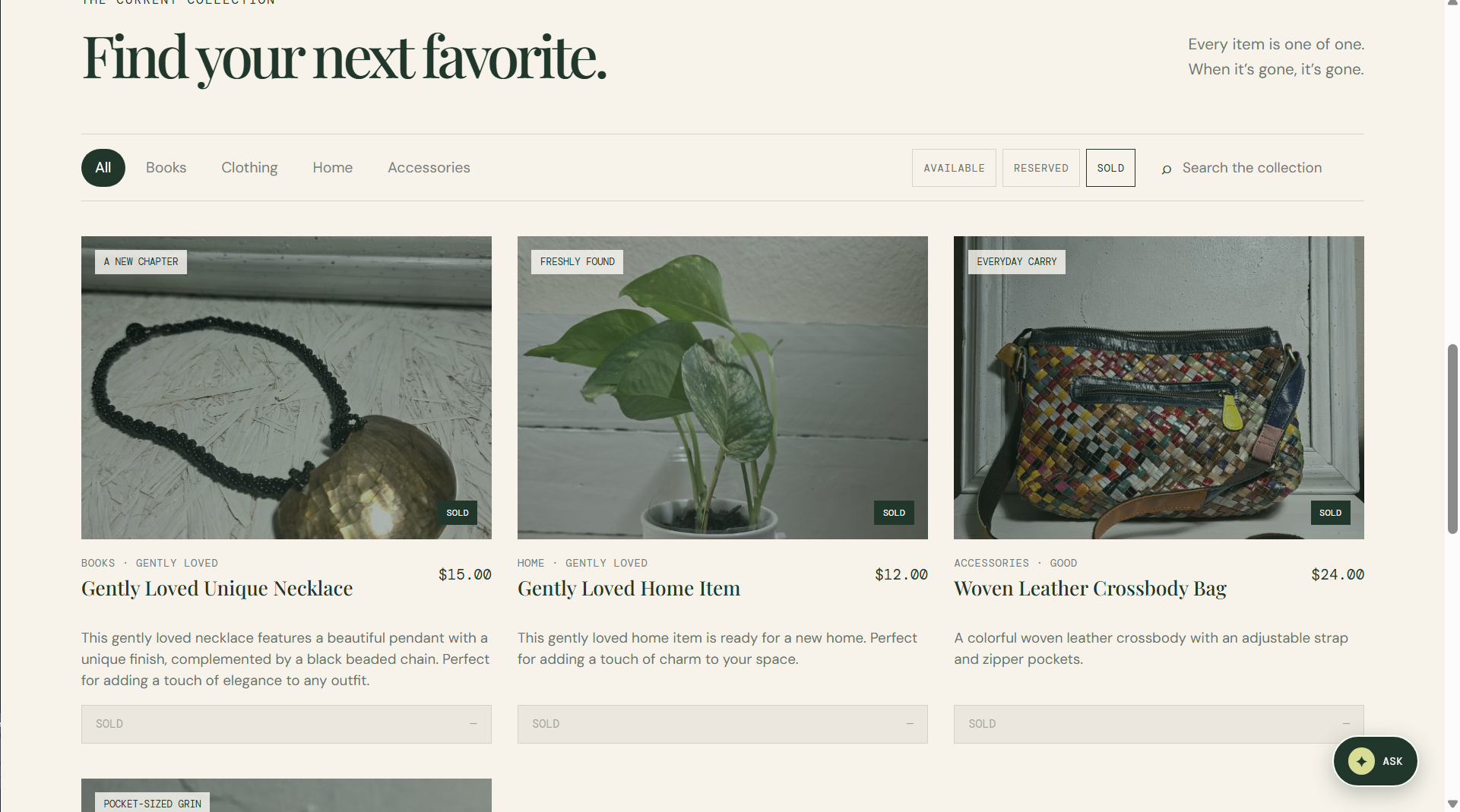
Because most secondhand finds have a quantity of one, checkout starts a temporary ten-minute reservation. This helps prevent two buyers from successfully purchasing the same item. Once purchased, an item moves into a sold state while its record remains available for future seller analytics.
Why PayPal + AI
AI reduces the friction of creating a clear, honest listing from seller photos. PayPal provides the real transaction step that turns discovery into a purchase.
The key principle is that AI assists rather than decides:
- AI drafts the listing; the seller reviews it.
- The guide suggests available items; the buyer chooses what enters their bag.
- The server calculates the trusted order total from inventory data.
- The buyer explicitly confirms payment with PayPal.
- One-of-one items are protected during checkout to reduce double-selling.
How I built it
Found Again is a responsive React and Vite web application deployed on Vercel. The public storefront, seller workspace, product detail gallery, shopping bag, checkout recovery, and printable receipt are part of one experience.
Vercel serverless functions connect the application to:
- Supabase for product records, listing photos, one-of-one inventory state, and checkout reservations tied to PayPal order IDs
- GPT-4o mini via OpenRouter for AI-generated seller listing drafts, photo observations, price guidance, and the inventory-aware shopping guide
- PayPal Orders API for Sandbox order creation, approval, capture, and receipt confirmation
The checkout flow is server-controlled. Prices are read from the database rather than trusted from the browser, and reservation logic handles expired holds, cancelled checkout, returning from PayPal, and multiple items in one order.
Challenges I faced
The hardest part was not displaying products—it was handling one-of-one inventory honestly.
A normal shopping cart can treat inventory as unlimited, but a secondhand marketplace cannot. I had to account for abandoned PayPal sessions, buyers returning from checkout, expired reservations, multiple items in one order, and the possibility that a find was claimed by someone else.
I also learned that AI needs a clear human review step. It can save a seller time, but the seller should remain responsible for the item’s condition, price, photos, and final publication.
What I learned
A useful AI marketplace is not just an AI chat box plus a payment button. Trust comes from the full workflow: clear photos, seller-reviewed descriptions, protected inventory, transparent checkout, and a reliable payment record.
Found Again is a functional prototype. Next, I would add real seller authentication, shipping workflows, moderation, buyer notifications, and analytics that help sellers understand which kinds of finds are most often rehomed.
Built With
- artificial-intelligence
- css
- design
- gpt-4o-mini
- javascript
- openrouter
- paypal
- paypal-orders-api
- paypal-sandbox
- postgresql
- react
- responsive
- rest-api
- serverless-functions
- supabase
- supabase-storage
- vercel
- vite
- web
