Inspiration
California has the nation's largest foster care population. When foster youth age out of the system, nearly one out of three of them become homeless. Foster youth advocacy has been my service passion for years now, and I knew that I wanted to create a hack that could help aging out foster youth. Through my volunteer work with foster agencies, I've heard firsthand about how in my county, there is an abundance of resources for foster youth, but yet that statistic still applies to us. Diving deeper, I realized that the issue isn't a lack of resources for foster youth, but rather a lack of accessibility and awareness about them. My hack I created, Foster Connect, aims to solve that.
What it does
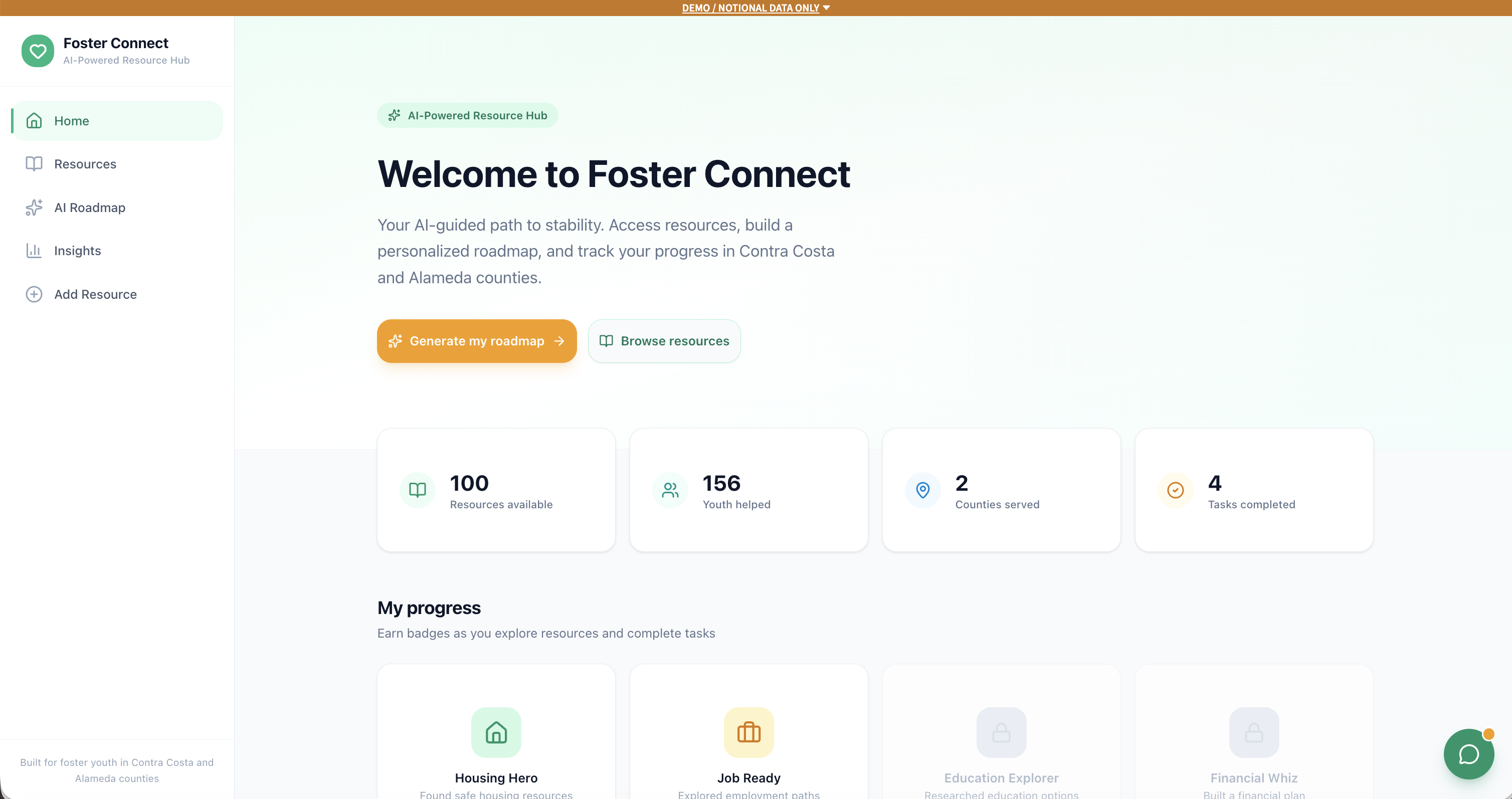
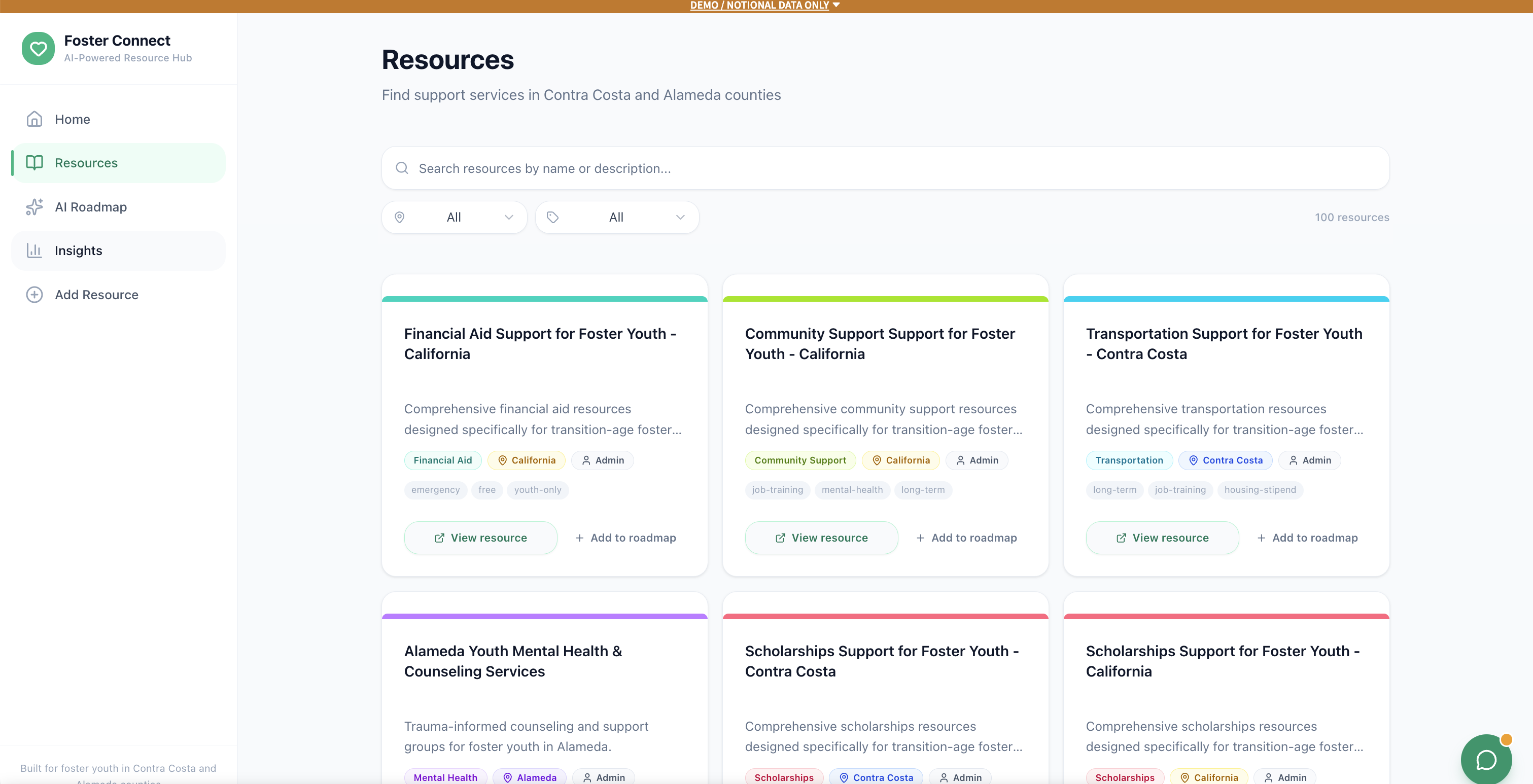
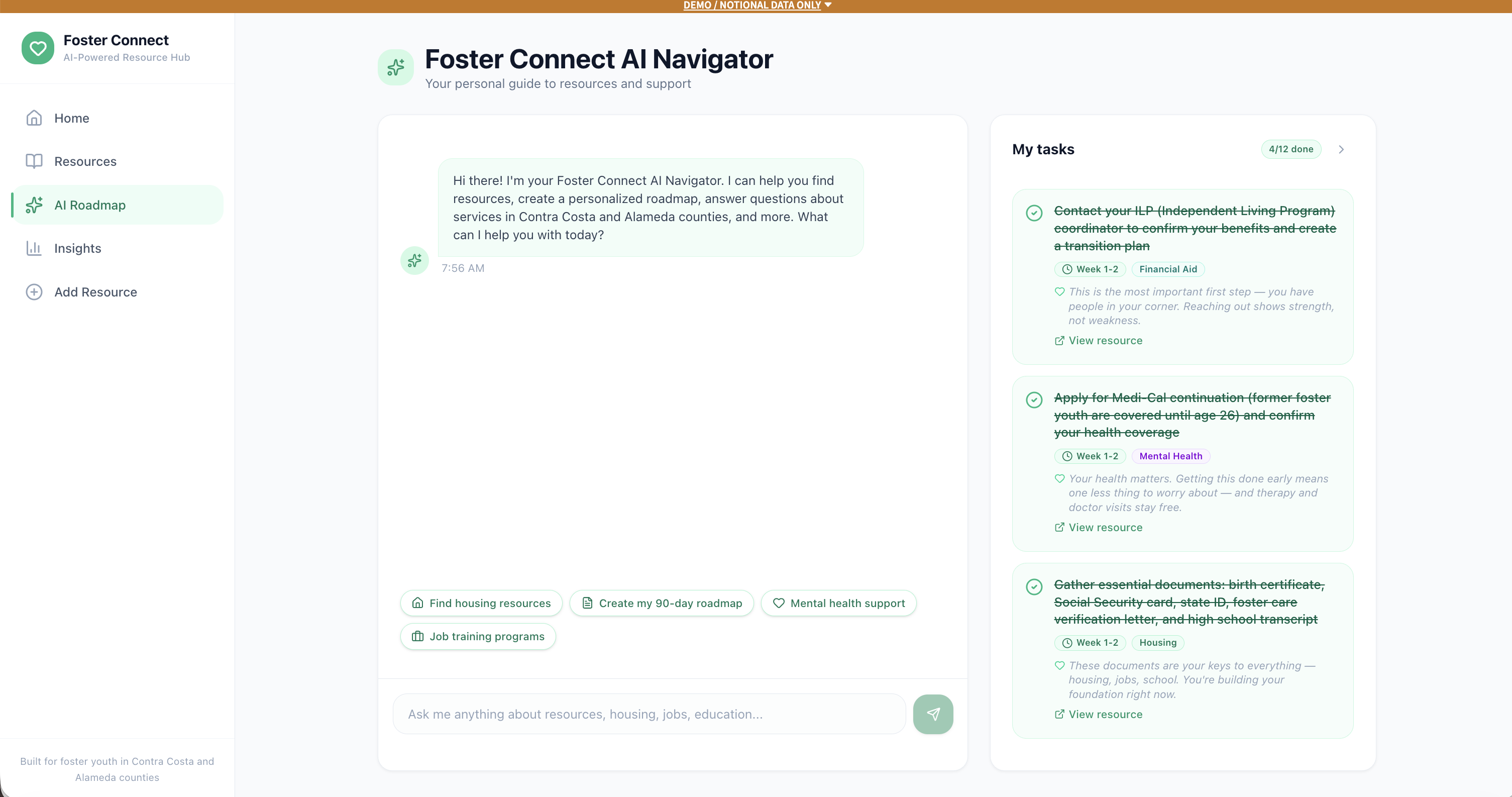
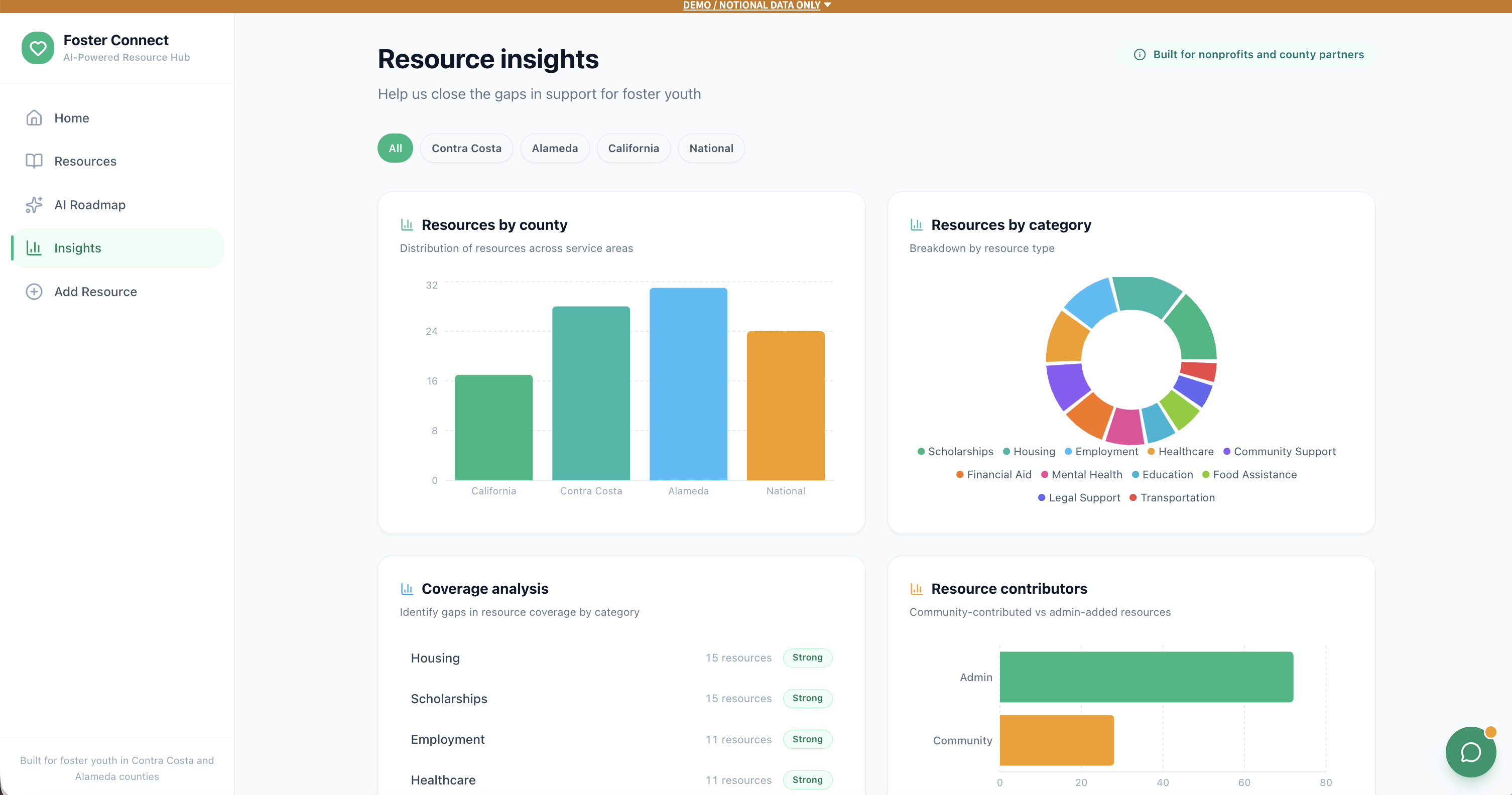
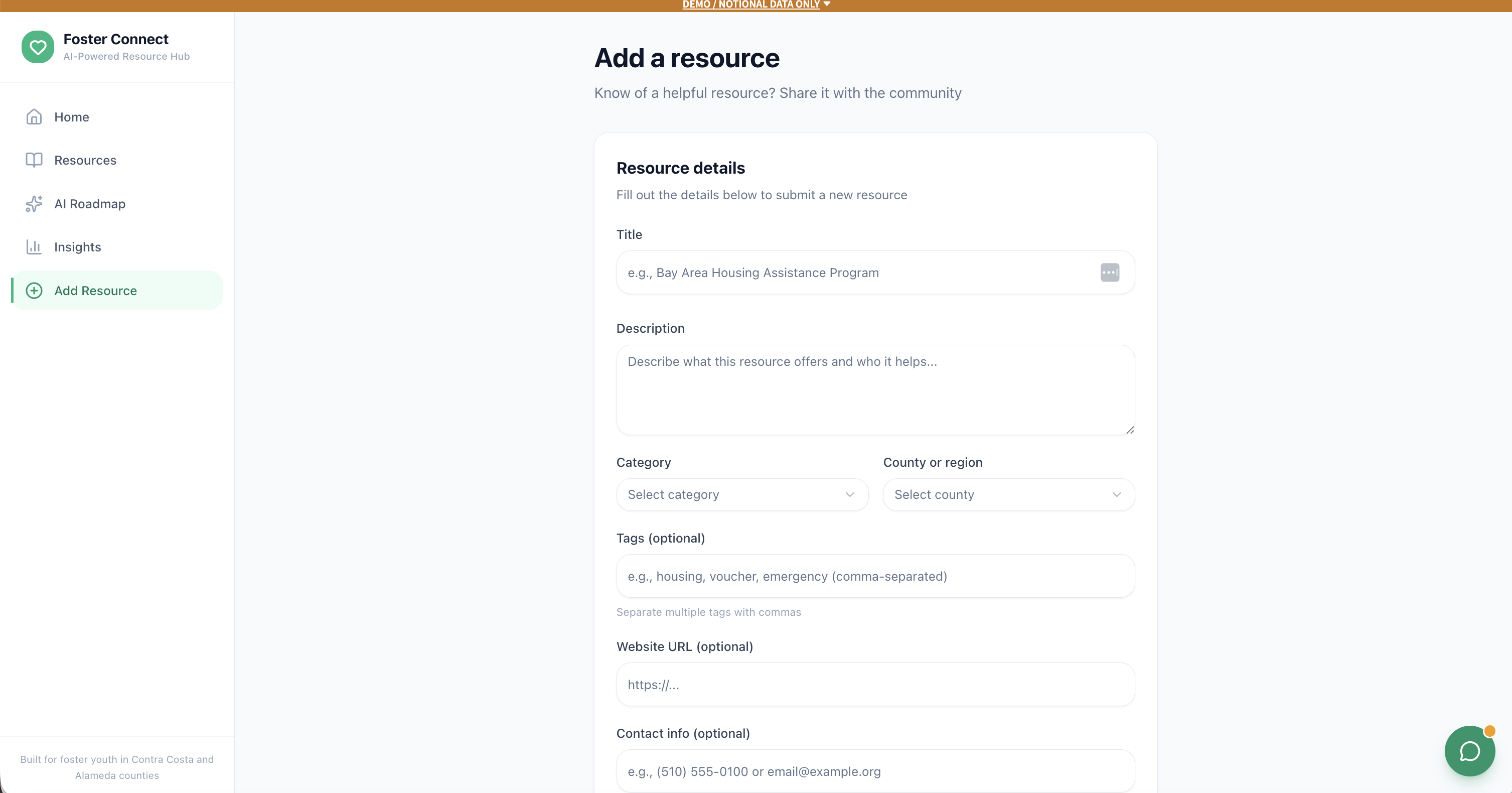
Foster Connect solves the need for a centralized, easy to access database for foster youth resources. Starting at a local level, Foster Connect logs all relevant resources for foster youth (financial aid, scholarships, housing, employment, etc) by inviting community members and nonprofits to upload up-to-date resources they find/offer. Individuals can then use the functionality of the attached AI agent to find specific information about a resource or receive a personalized future roadmap and task list for what resources they should apply for to support their needs and goals. Finally, there is also a data analysis page for local governments and nonprofits to identify and target where there's a lack of a crucial resource.
How we built it
Foster Connect is built on Palantir. I uploaded a dataset with 100 resources for foster youth (mix of synthetic and real, for training purposes) and based on that created an AI chatbot powered by Palantir AIP that creates a personalized step-by-step plan for each youth based on their age, county, and goals, using only real verified resources from our database. The AI also checks in on their progress and encourages them to keep going. Community members and nonprofits can add new resources to the database, and the AI automatically starts recommending them. We also built data analytics that show exactly which counties and categories are underserved, so advocates know where help is needed most. Everything was built on Palantir Foundry using Python data pipelines, the Ontology, and AIP Logic functions with language models.
Challenges we ran into
The biggest challenge I ran into was creating the UI. I spent multiple hours creating a UI using Palantir's workshop, but ran into an issue that I could not debug despite trying for over 2 hours. This made me have to switch gears quickly and deploy Palantir's pilot to create the UI and connect it with all the already created backend features.
Accomplishments that we're proud of
I'm really proud of being able to create a site that is usable and aids the community at my first hackathon!
What we learned
I learned how to use Palantir (and create ontology objects), create an AIP Agent using Palantir's AIP platform, how to persist with debugging, and how technology can be used to create real life solutions for vulnerable communities.
What's next for Foster Connect
I want to make Foster Connect a reality for our society to use. I'll begin by feeding real resources into the framework and sending it to foster agencies so foster youth and foster agents can test run it. Given feedback, I will make changes to the site to make it more engaging and helpful for users. In the future I would love to expand this database to help not only foster youth in my county, but in counties across the nation.
Built With
- figma
- grok
- palantir

Log in or sign up for Devpost to join the conversation.