Inspiration
Our interest in generative AI such as Midjourney and DALL-E paired with the scarcity of a universal fossil image database motivated us to create our own.
What it does
Our program synthesizes images of fossils, specifically ammonites, to fill the gap in fossil images.
How we built it
We loaded and prepared our dataset, then augmented our images to expand the data from 200 photos to 75,000. We used the TensorFlow DCGAN framework to create a model to generate new images based on our expanded data set of fossils.
Challenges we ran into
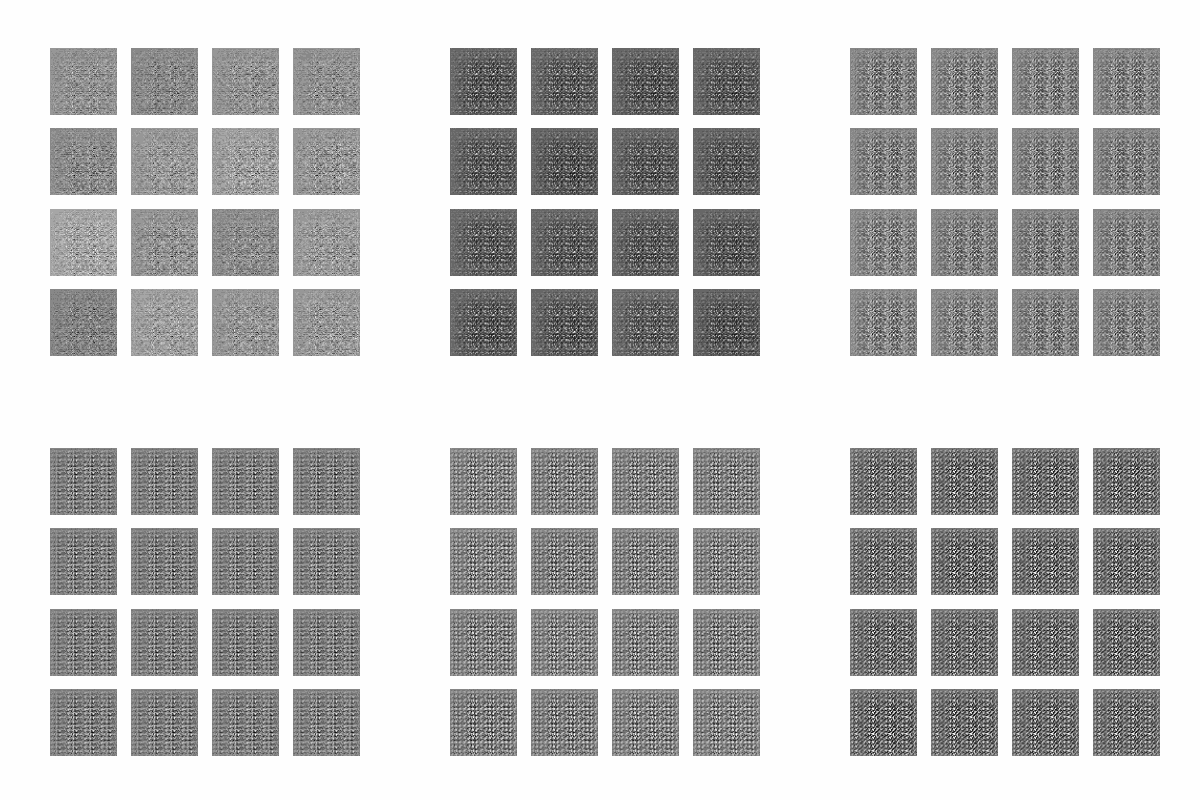
Our model had many shortcomings and limitations when it came to generating new images, stemming from a small dataset, low resolutions, and overfitting. We addressed the small dataset by expanding it using augmentation. We enlarged the resolution of our generated photos to 64x64 pixels. However, our team was unable to avoid overfitting, even after tinkering with the learning rate, batch size, kernel, and stride. Our model consistently would produce noisy images with a checkerboard artifact.
Accomplishments that we're proud of
Identified a shortcoming with data accessibility, and brainstormed an innovative solution. Created a machine learning model to address our issue. Ability to overcome some of the challenges our model faced such as implementing augmentation and higher resolution images.
What we learned
How to implement a machine learning model using two different Python packages (Pytorch and TensorFlow).
What's Next for The Generative Fossil Solution
Reworking our DCGAN model to generate accurate and recognizable images of fossils. Creating a publicly accessible database of these synthesized images fills the gap for researchers. Creating a more robust system for the identification and prediction of fossil structures.
Built With
- python
- tensorflow

Log in or sign up for Devpost to join the conversation.