-
-
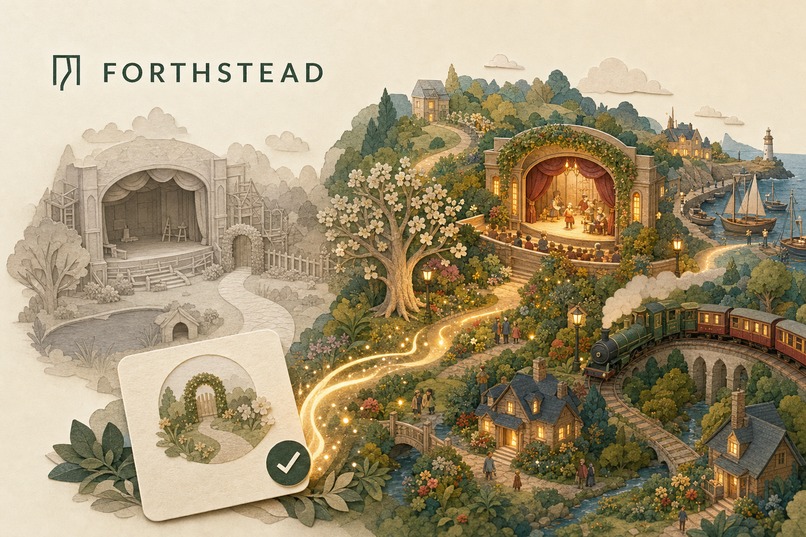
Forthstead, a feature rich task manager that brings worlds to life with the power of your achievements
-
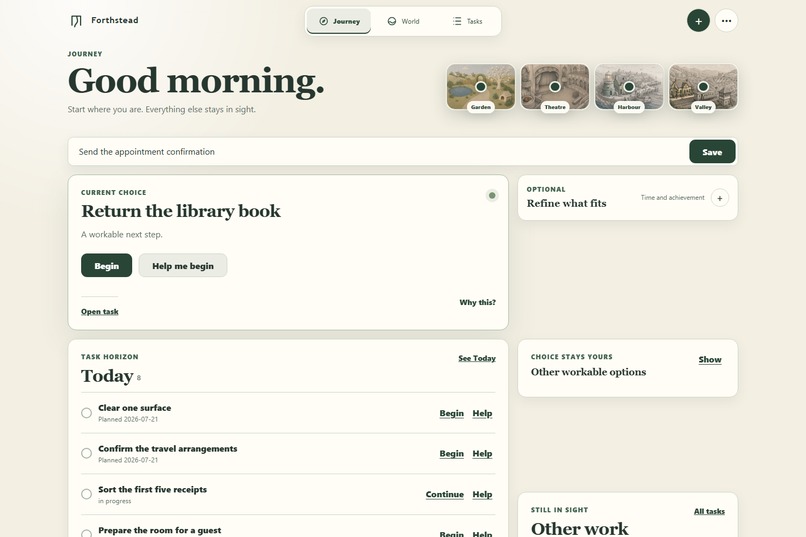
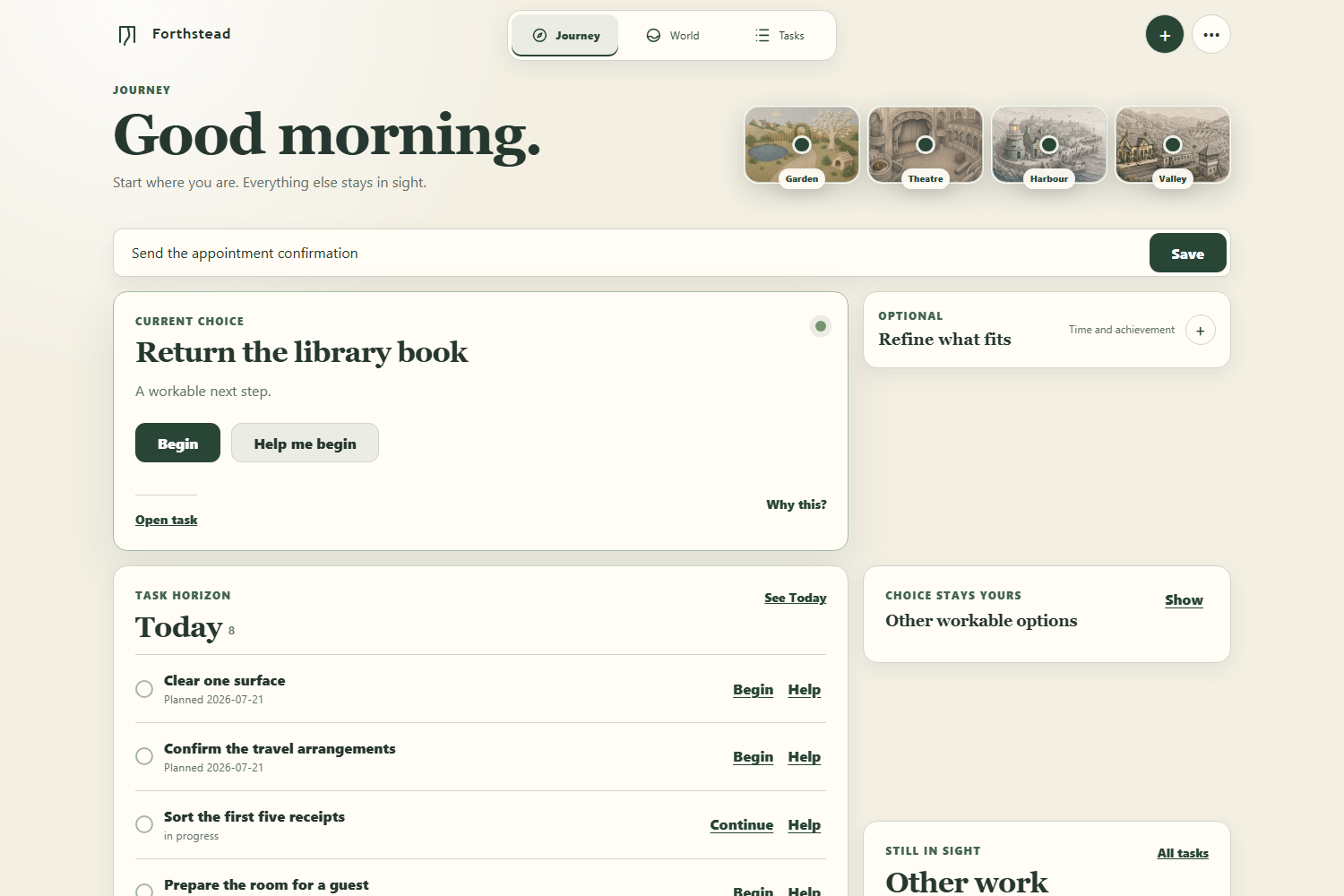
The welcome journey, an inviting start, quickly capture with a single line
-
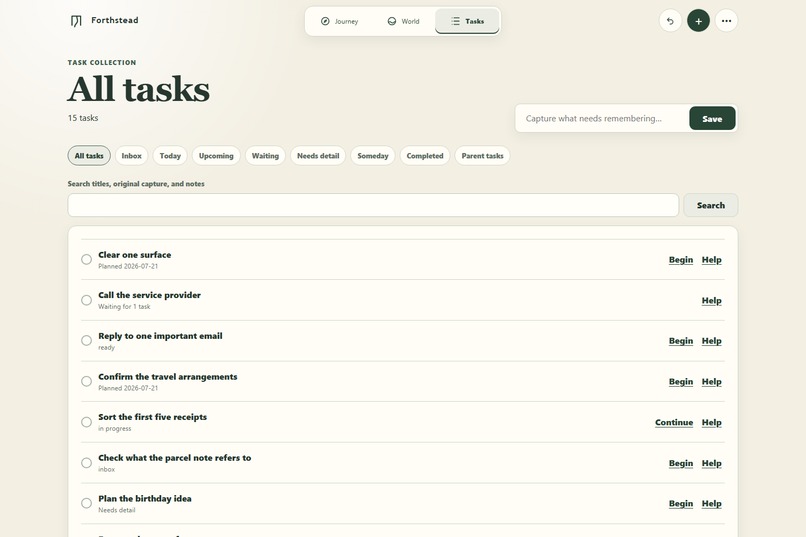
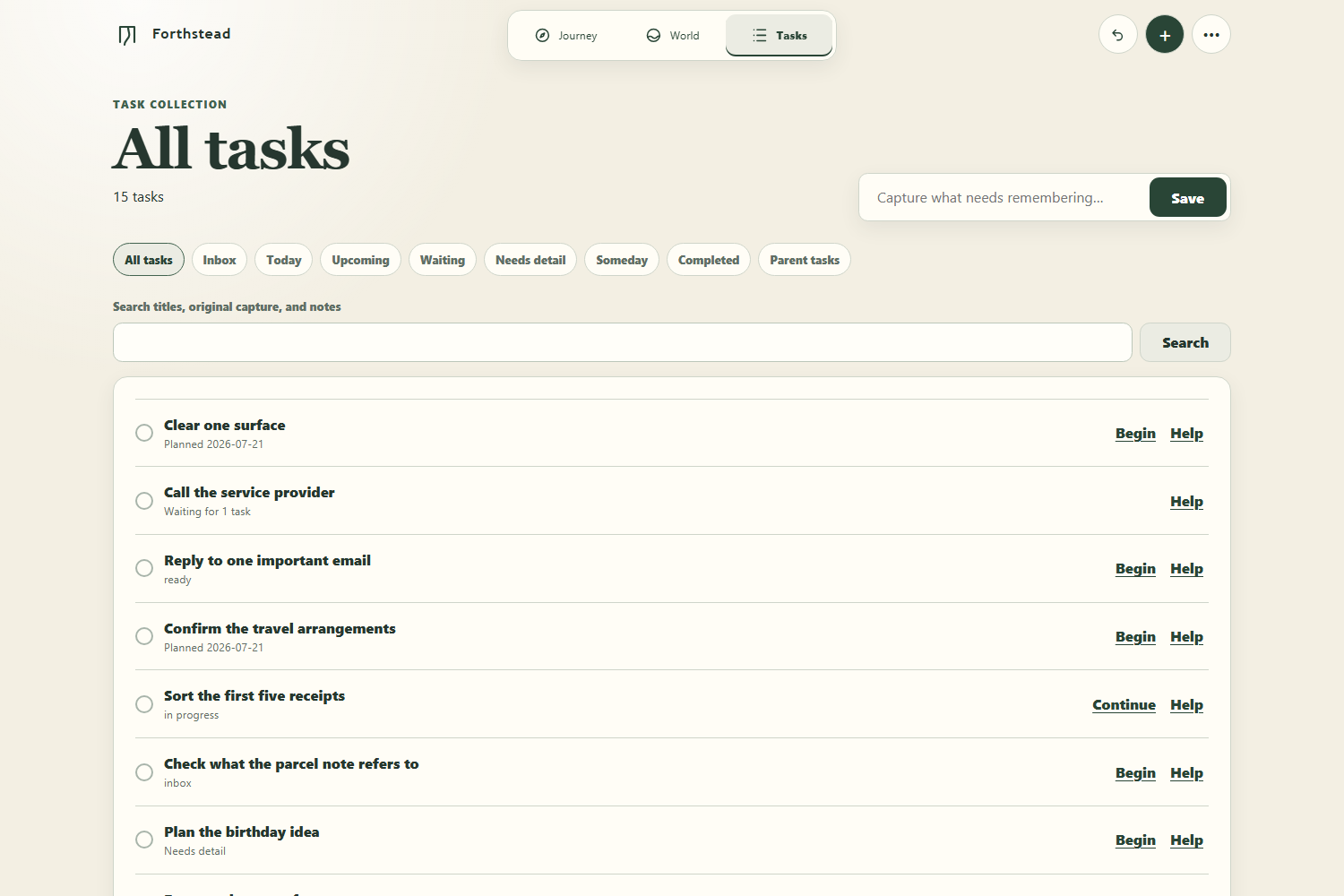
All tasks are visible when you need them to be
-
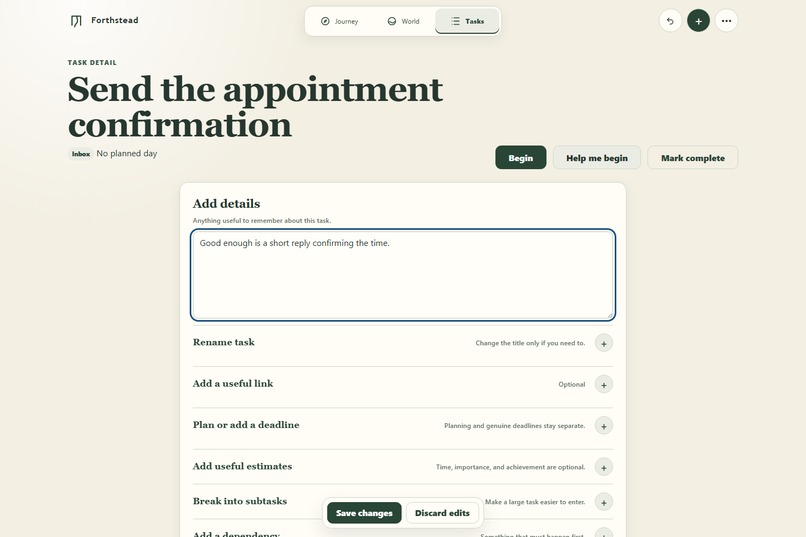
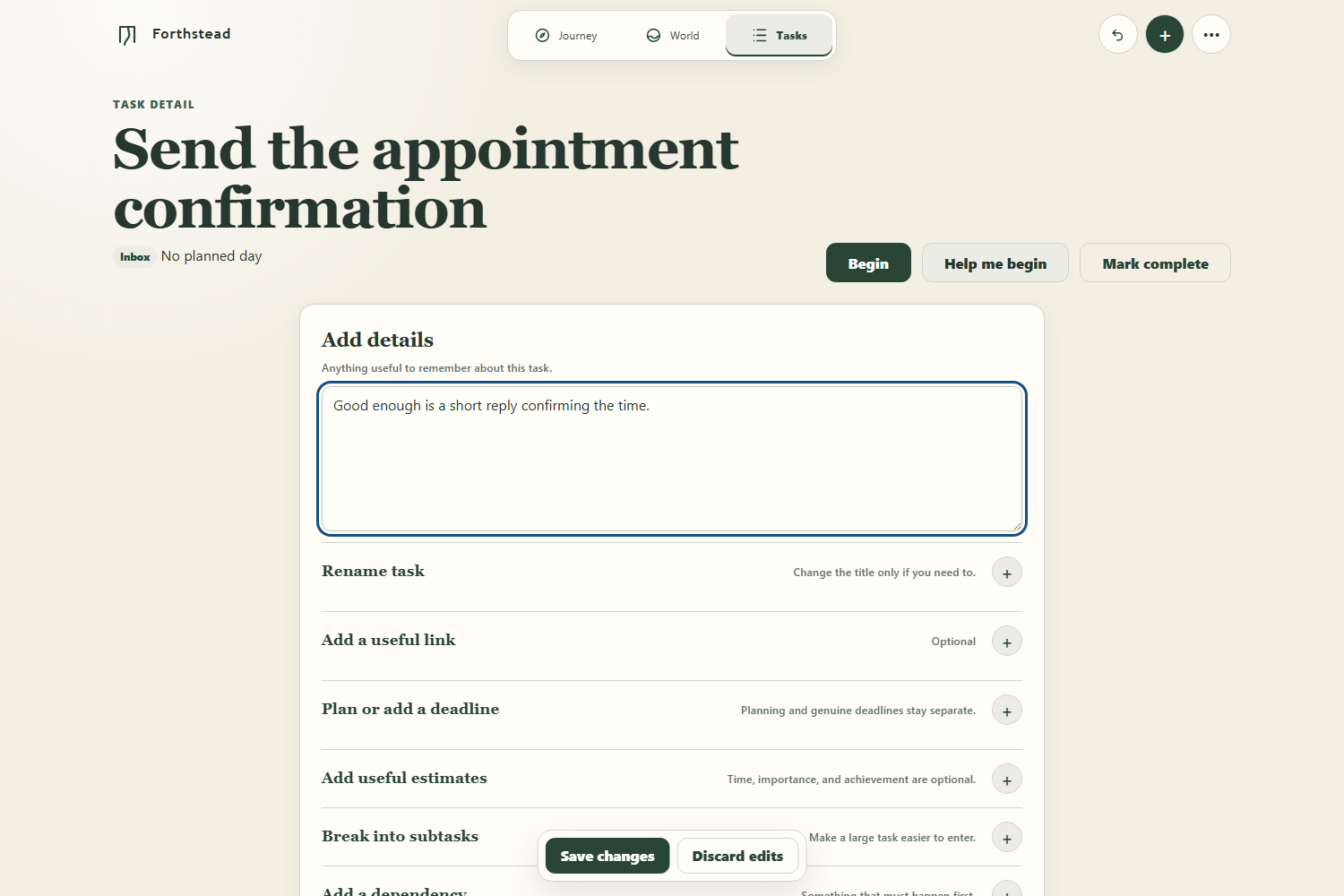
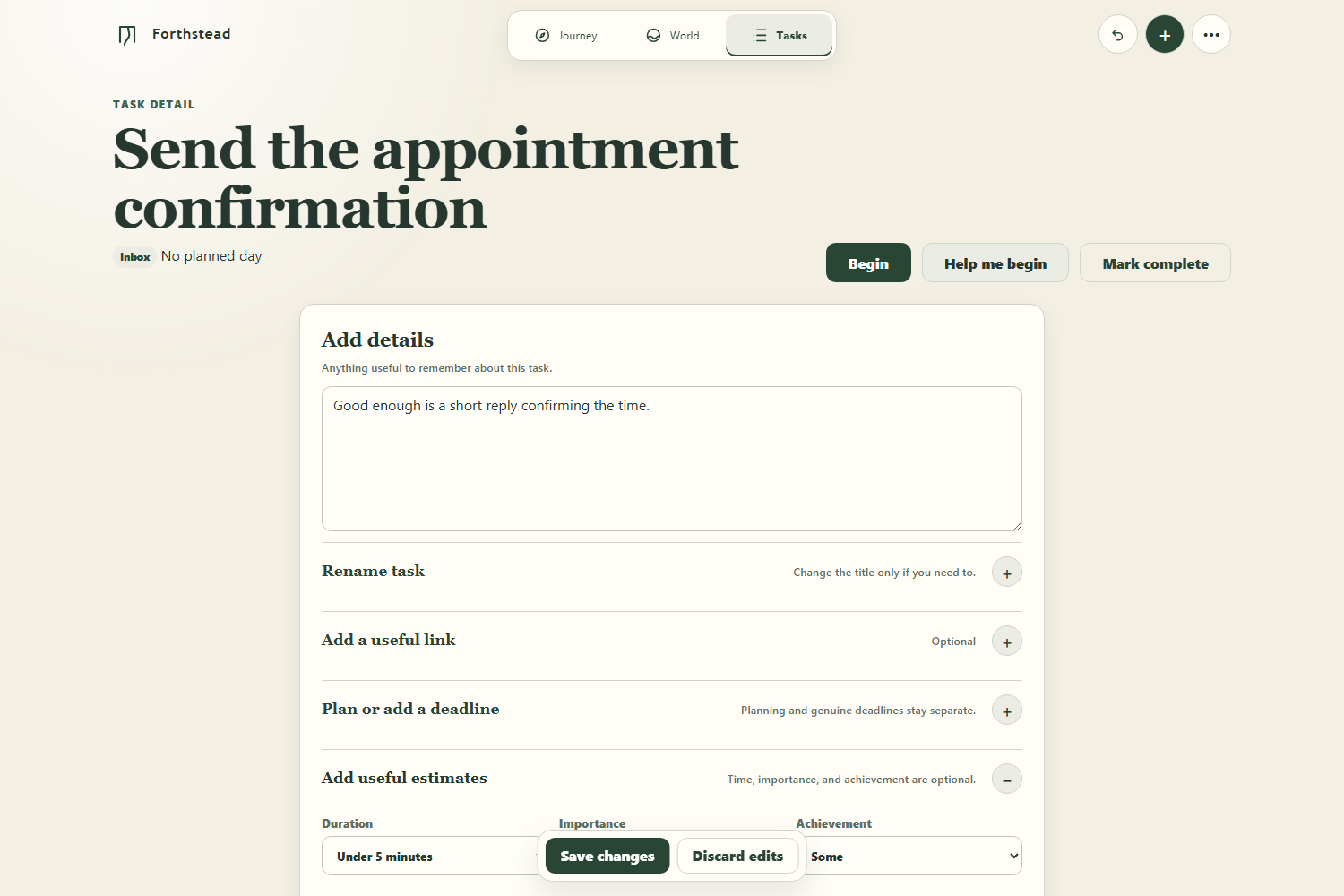
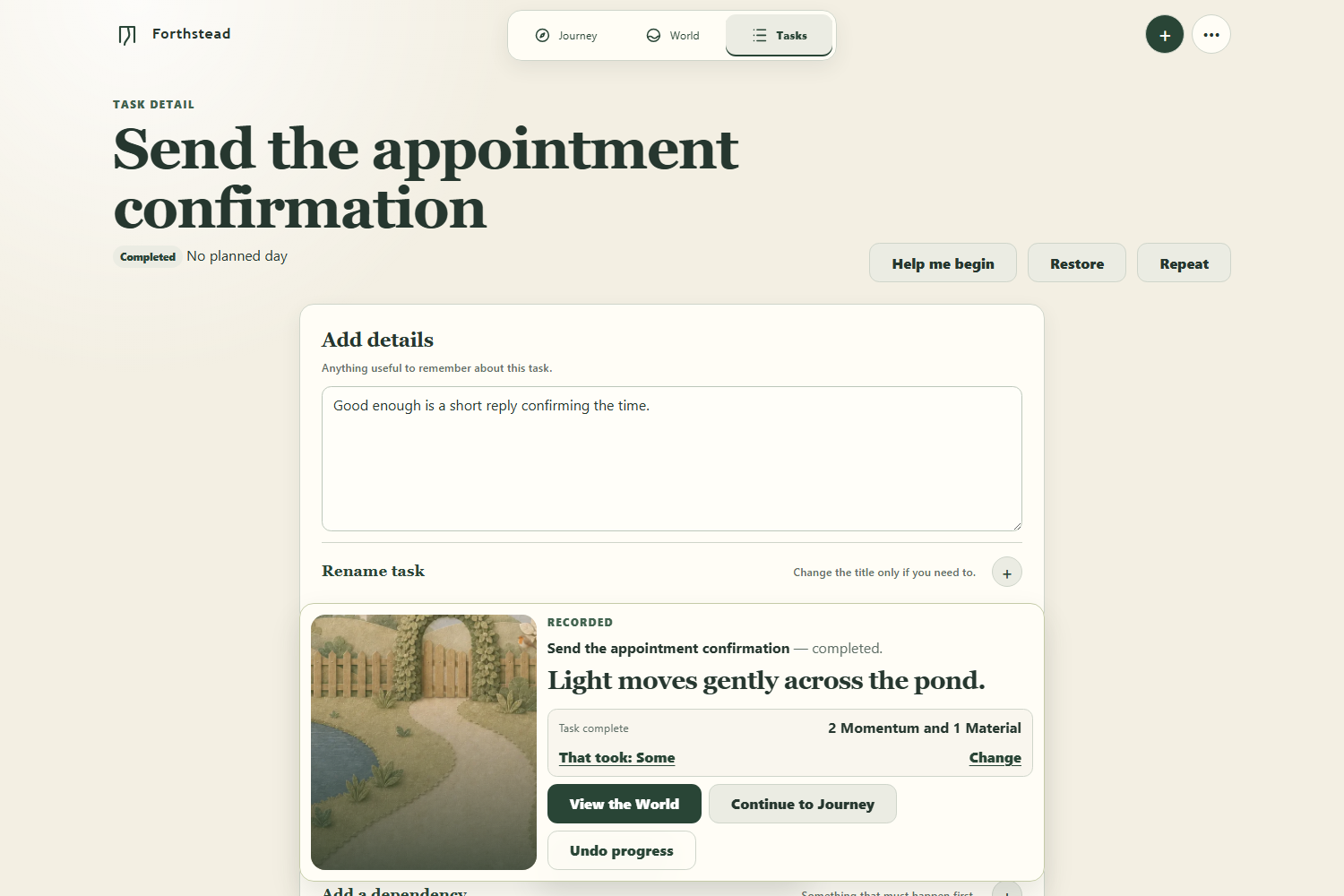
Task details are useful and complex but never confronting
-
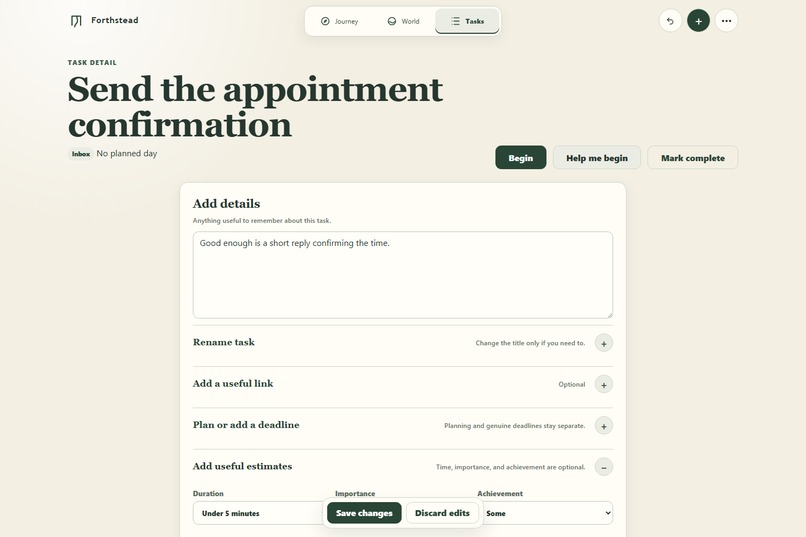
Add planning, if and when you want it.
-
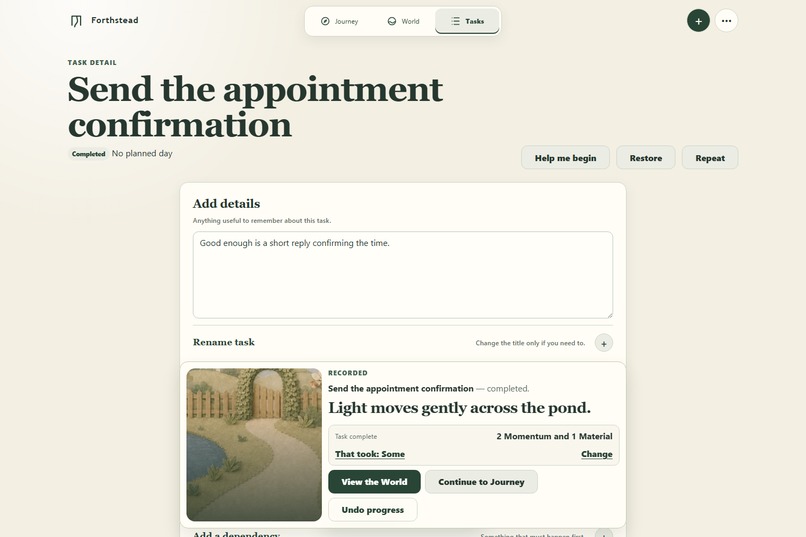
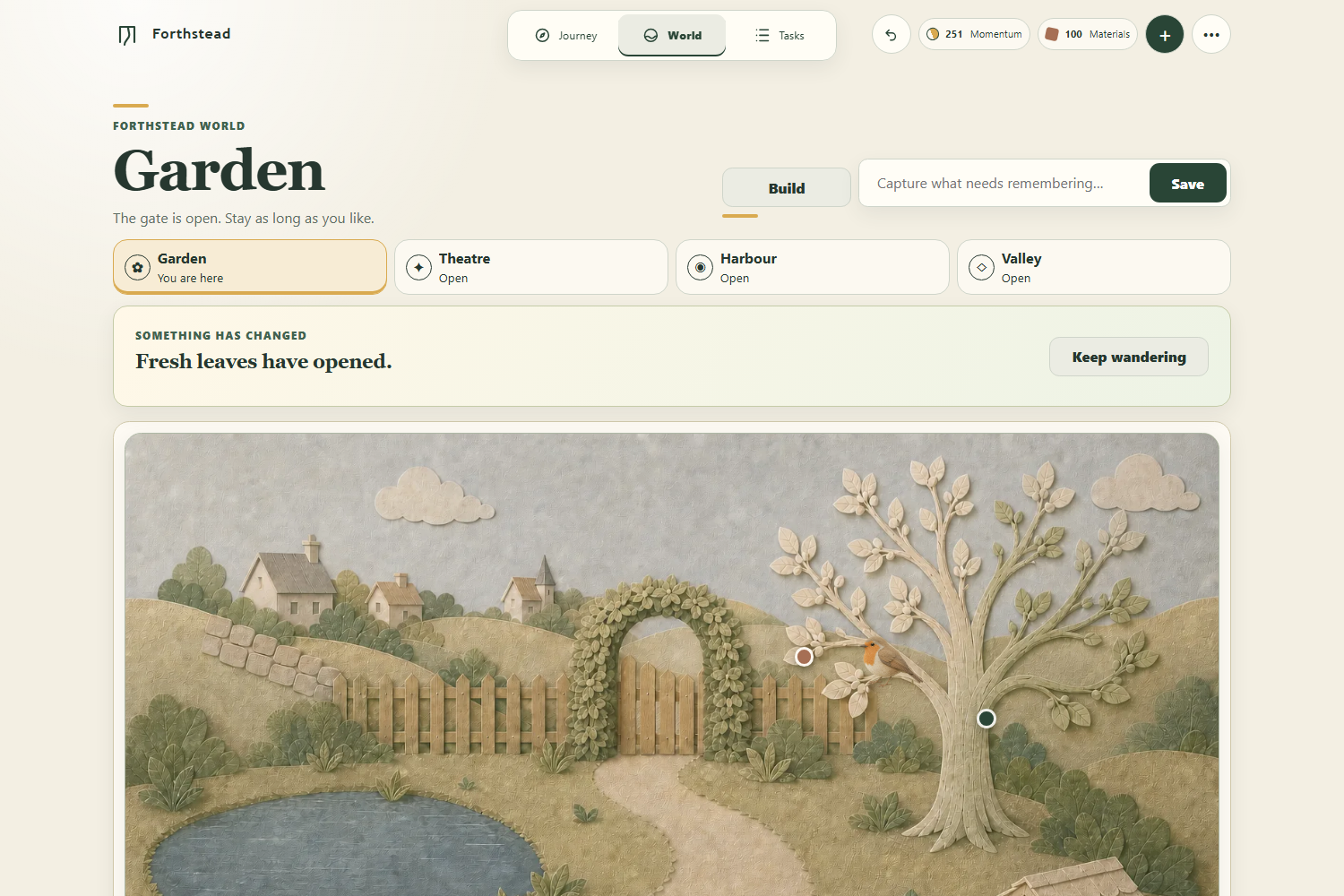
Completion brings good to the worlds, progress brings progress
-
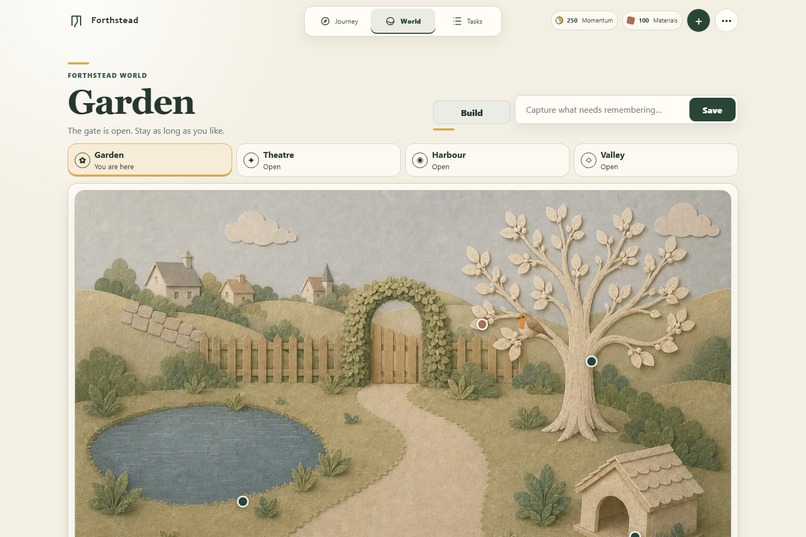
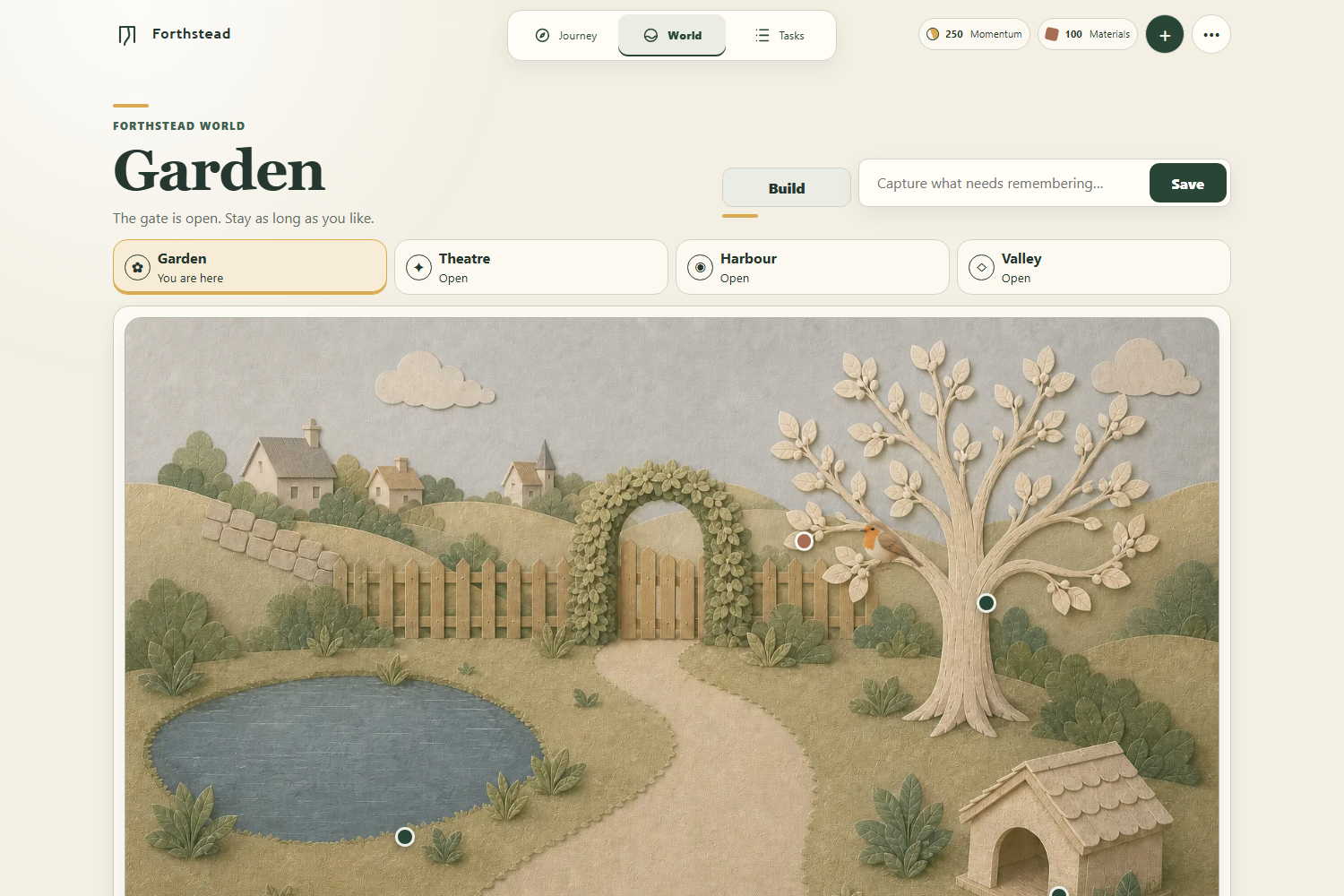
The Garden World, cosy and welcoming
-
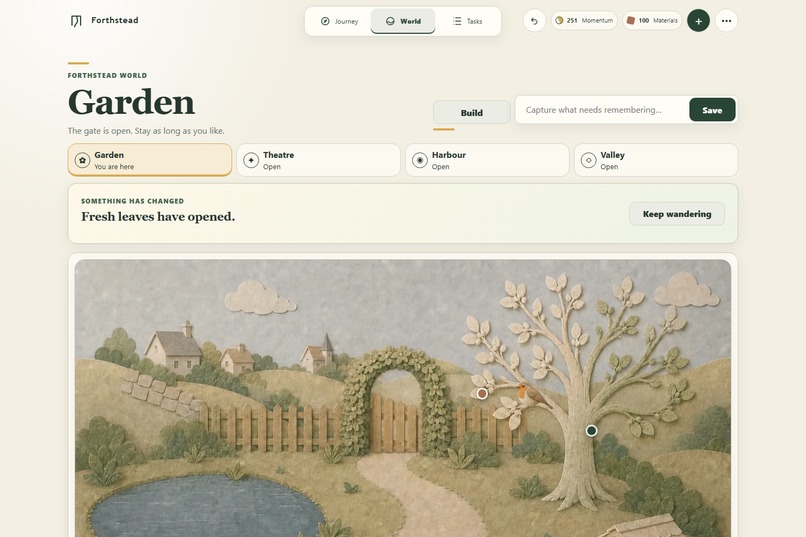
The garden responds to your task achievements
-
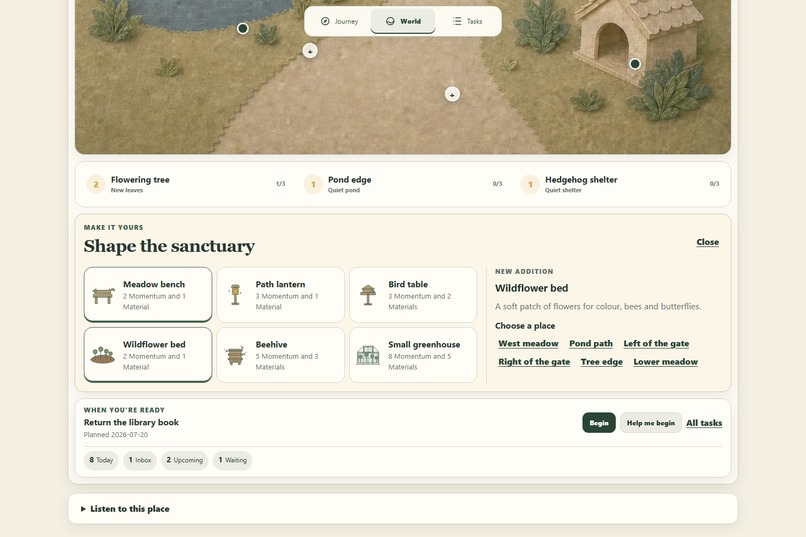
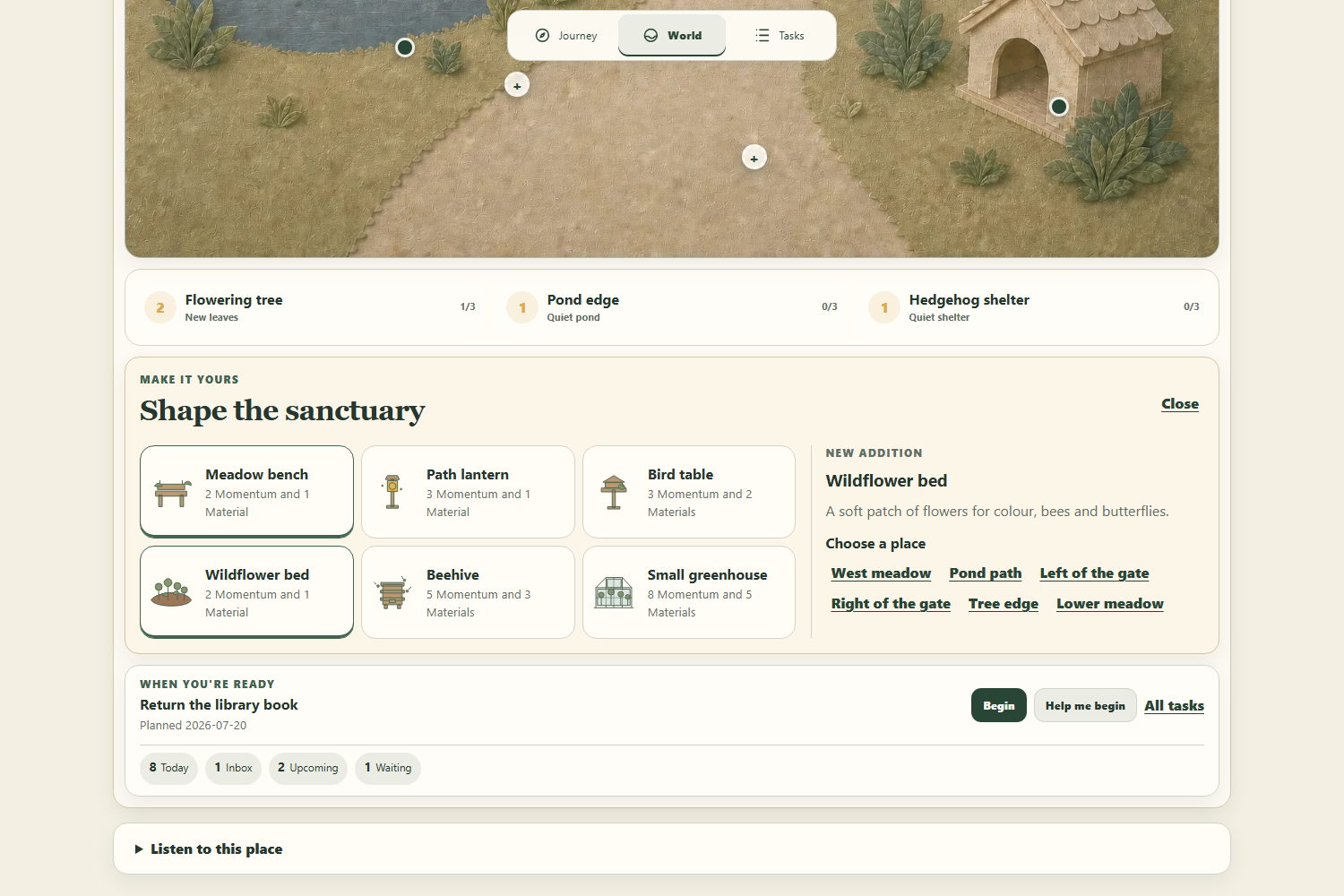
Use your rewards as you want, you've earned them
-
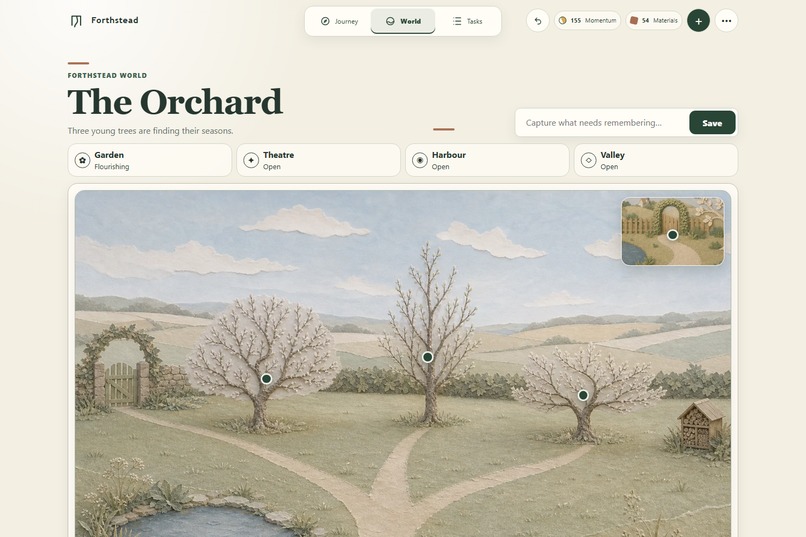
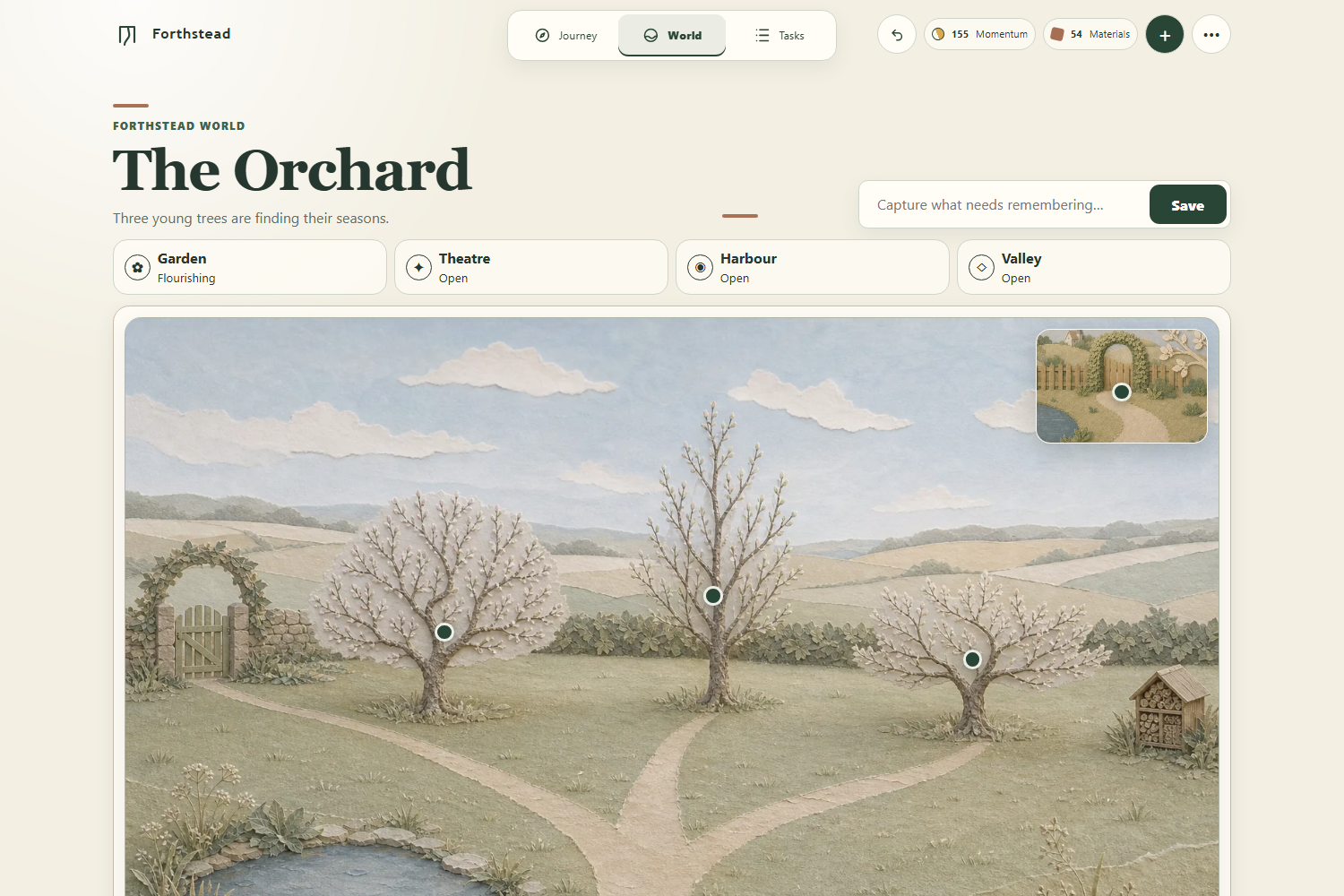
Open up further worlds, a complete garden reveals an orchard
-
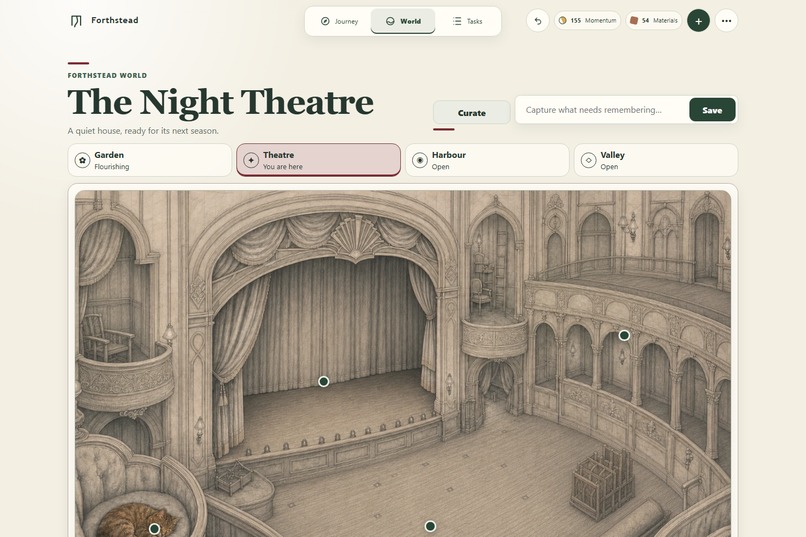
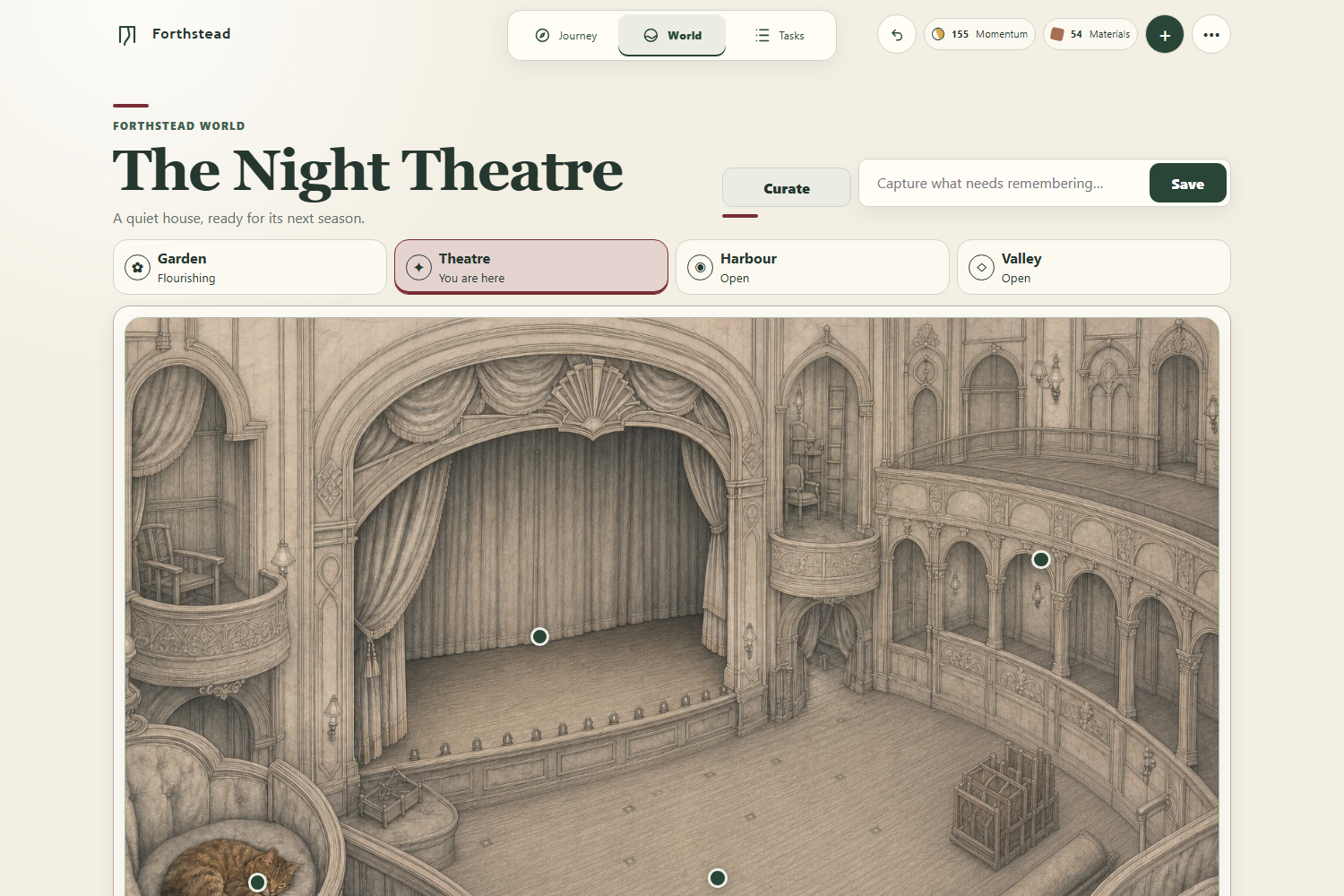
The theatre needs you r input to bring it to life
-
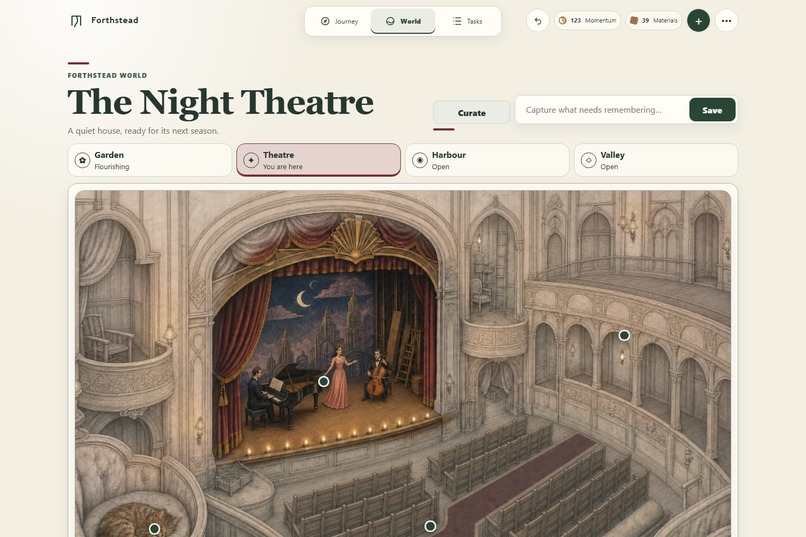
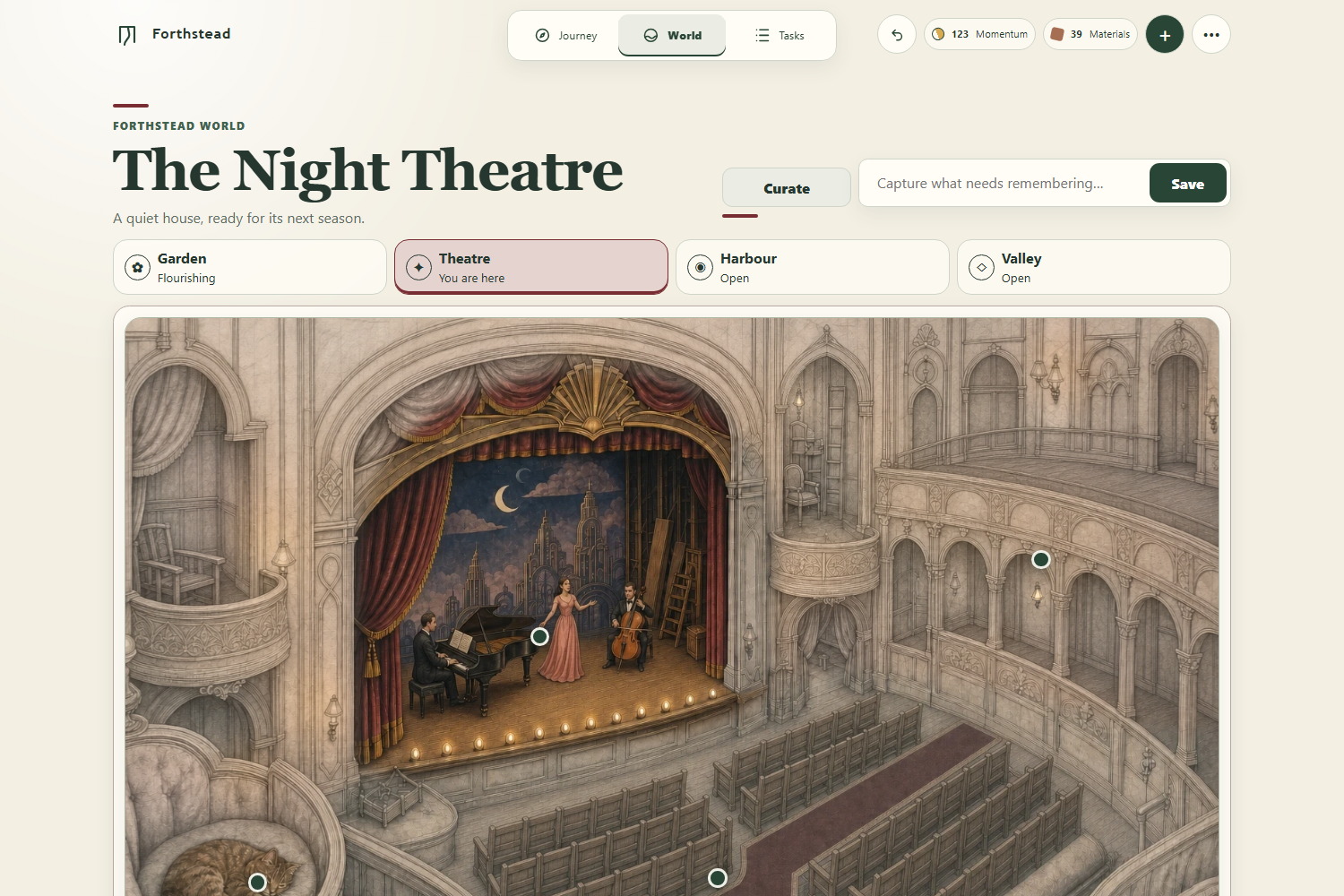
Bit by bit the theatre starts to glow
-
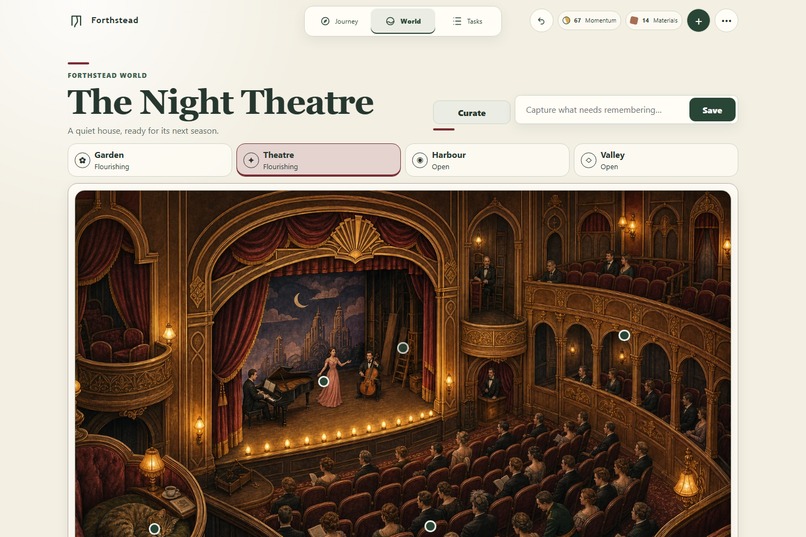
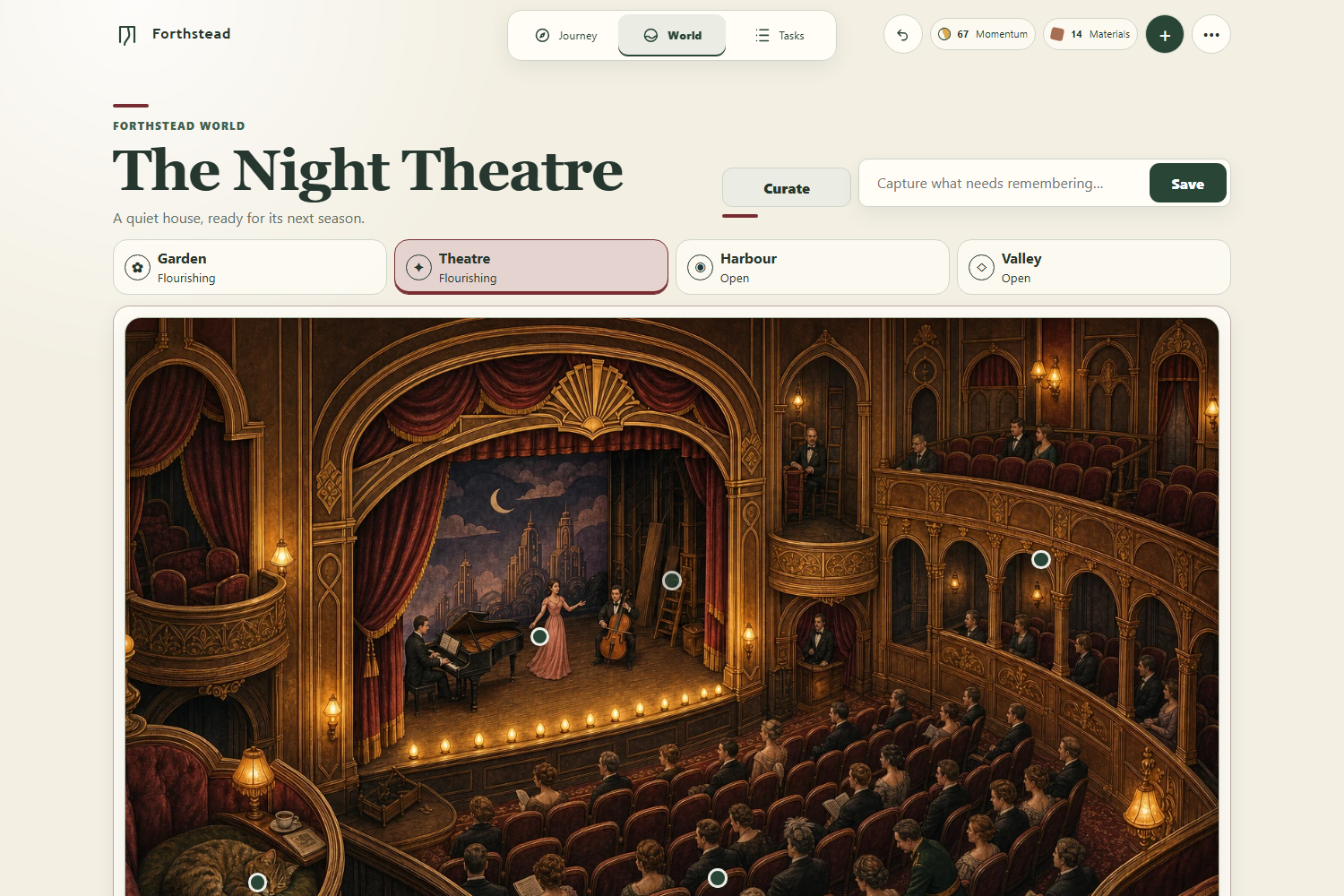
Vibrant, exciting and yours. The thetre springs to life
-
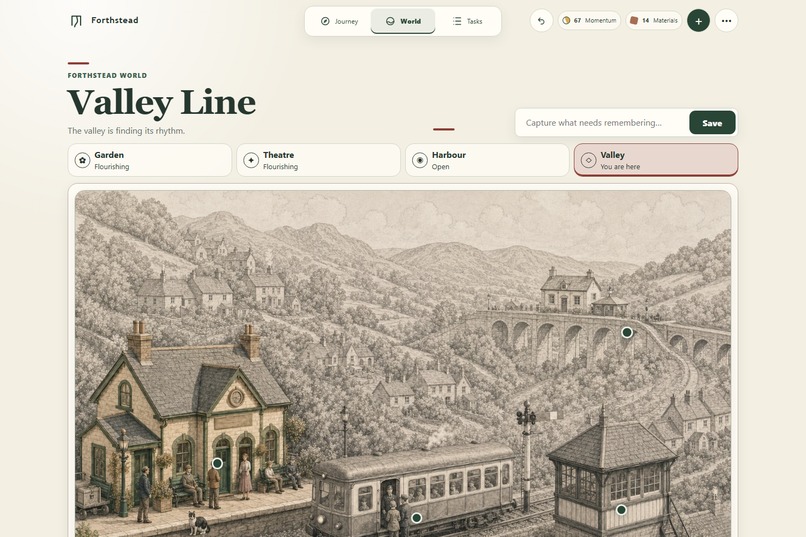
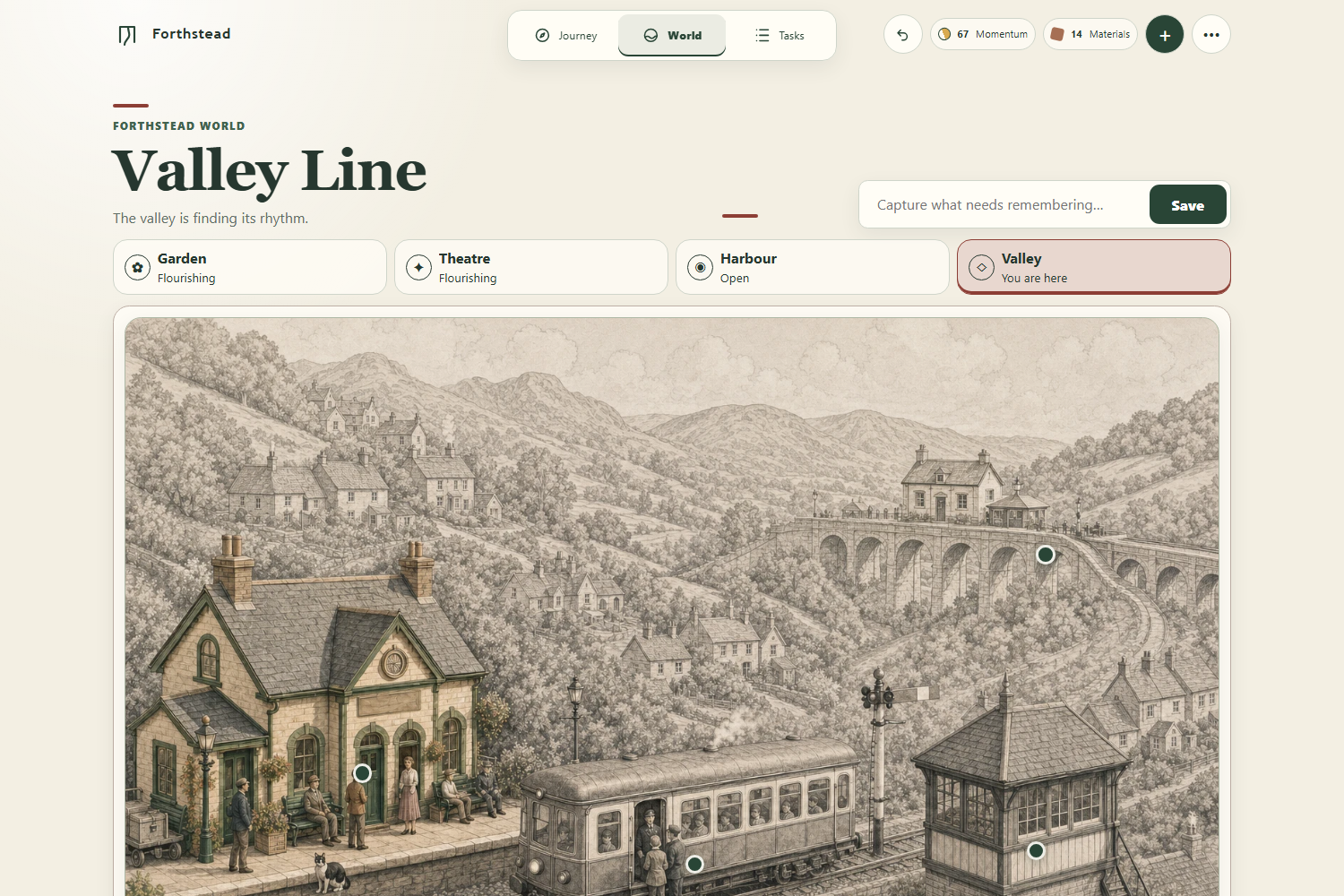
The Valley World, richly illustrated and awaiting your input
-
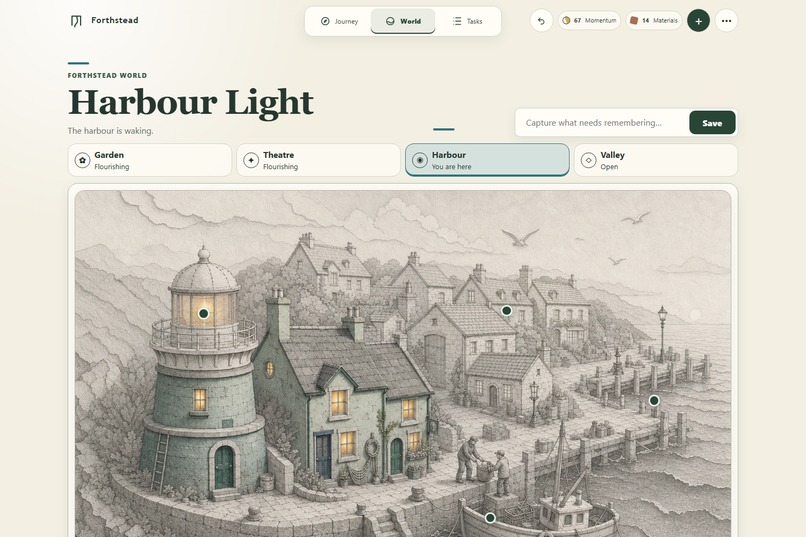
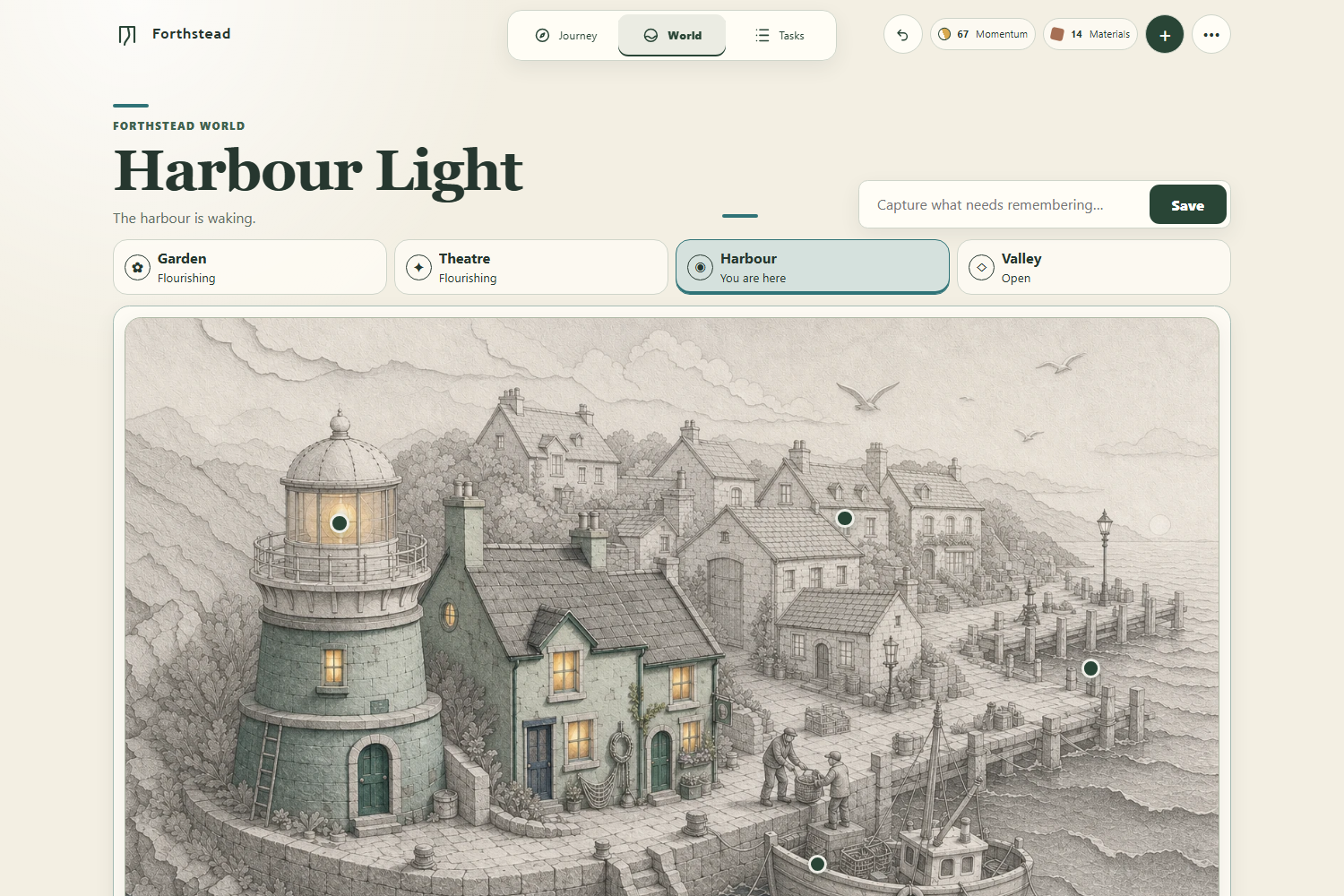
Harbour light, the next world to explore
Authors note (sort of)
Throughout this process I had poured my heart out to GPT5.6 and asked it to really challenge me in return and found that process deeply cathartic and actually productive. Whilst I know the recommendation as to write this story myself I had become so engrossed in the project and the ambitious release of a live web app and an Android app available on the play store that I simply ran out of time. Like any good deadline junkie I looked for a shortcut so I (against advice) asked GPT5.6 to write this for me. The reply actually very fulfilling as it showed the extent to which I had put myself into the project through my interaction with the new model and the extent to which it had "understood me and my project". So even though i now find myself with time to re-write this myself I'm not going to, I'm going to leave this here as the best endorsement I can give of my experience working with GPT5.6, I could not have said my own feelings, thoughts and vision better myself.... And to me, that says it all.
Inspiration
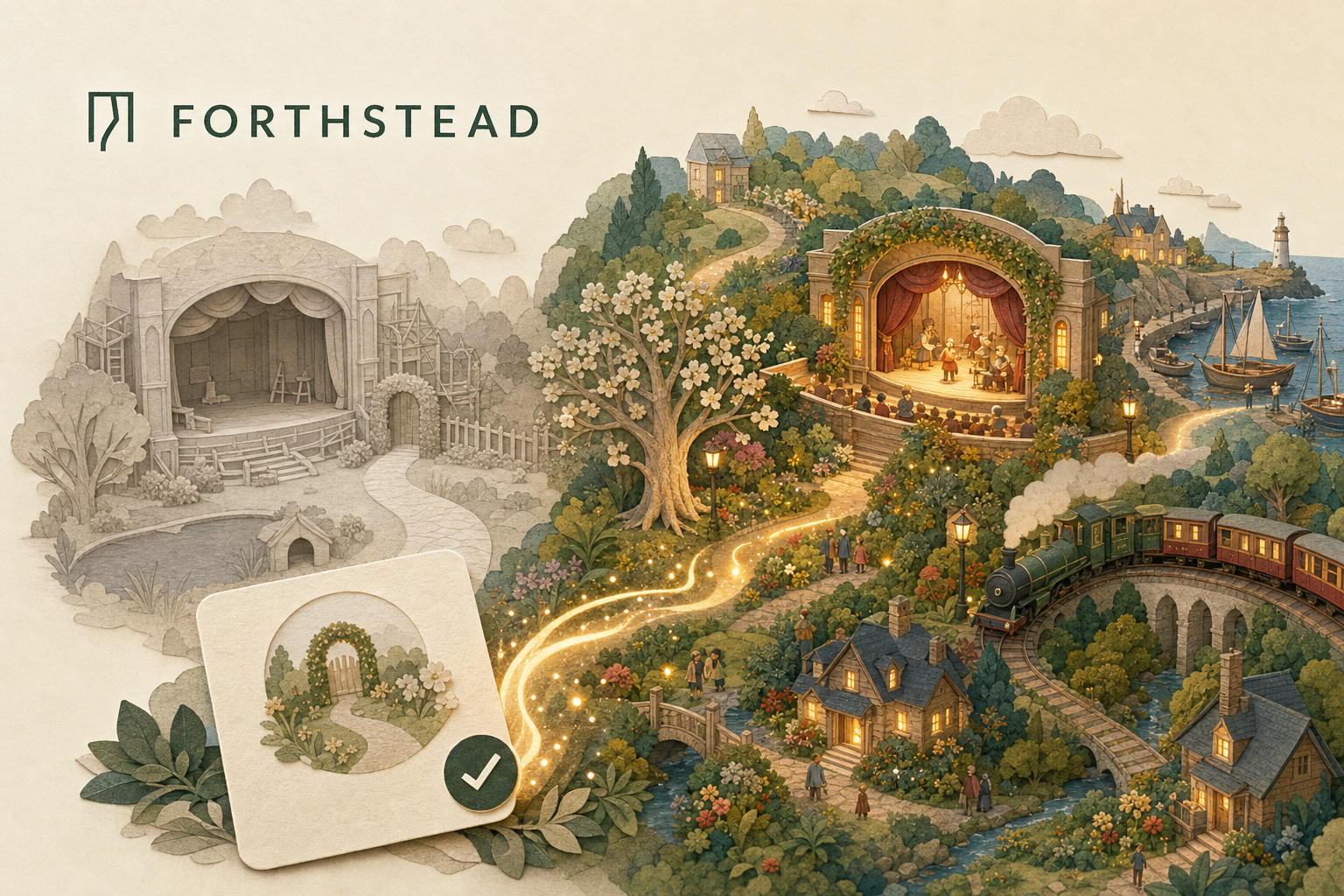
Forthstead grew out of my own experience of struggling to initiate and complete everyday tasks. The difficulty is rarely proportional to the size or complexity of the task. I have happily retiled a bathroom until 4 a.m. while avoiding a 30-second email confirming an appointment. Conventional to-do apps often fail me in two ways. If they are purely functional, I can carefully populate them and then forget they exist fifteen minutes later. At the other extreme, an engaging game can become the thing that absorbs my attention instead of the work I need to do. I wanted to explore whether those forces could be brought together. What if the engaging experience could progress only when real-world progress happened? That became Forthstead: a task companion where completing small actions restores and nourishes illustrated worlds. Tasks produce Momentum and Materials, which can be used to tend a garden, revive a theatre, restore a harbour or bring life back to a railway valley. The game is the hook, but underneath it is a capable task system with reminders, recurring work, subtasks, dependencies, planning and effort-based rewards. The emotional side of the idea is equally important. Difficulty completing tasks can create guilt, anxiety and a powerful feeling of disappointing other people. I did not want Forthstead to motivate through pressure, punishment or broken streaks. Instead, the world quietly shows that the user’s effort mattered: plants flourish, lights return, animals become comfortable and places fill with life. Nothing explicitly says “thank you.” The appreciation is expressed through a world that is living well because the user helped it. Although these decisions were informed by my own experiences, Forthstead never identifies itself as an ADHD app. I wanted it to feel naturally supportive and enjoyable to anyone who uses it, without medicalising the experience or repeatedly explaining why its design works the way it does.
How I built it
I built Forthstead almost exclusively in Codex. I began with the underlying problem rather than a fixed product specification, then used GPT-5.6 as a collaborative product, research, design and engineering partner. The early work involved exploring the concept through a long series of small decisions. Codex researched supportive task-management approaches and presented recommendations five questions at a time. This helped me discover preferences that I could recognise when presented with them, even when I could not have designed the complete system from a blank page. From there, Codex helped turn the concept into a product brief, scope, specification, implementation checklist and working application. It developed the local-first architecture, task and reward systems, responsive interface, world progression, automated tests, offline web build and Capacitor-based Android application. The app itself does not depend on an AI model. I wanted to use GPT-5.6 to refine, architect and build the product, not make an API connection a requirement for using it. Forthstead remains private, deterministic and usable offline. I stepped outside Codex only briefly, using ChatGPT to explore some additional branding directions. That work helped move the identity away from being exclusively garden-themed and towards the broader Forthstead concept: a place where everyday effort becomes visible progress.
Challenges
One of the first challenges was maintaining genuine collaboration with the model. The earliest prototype moved too quickly in a direction chosen by Codex and excluded too much of my input. We corrected that by slowing down, exploring the problem conversationally and delaying expansion until I had established the direction. That change in process significantly improved the product. Balancing capability with calmness was another recurring challenge. An early task-detail screen presented every possible field at once and felt more like applying for a mortgage than capturing a task. Progressive disclosure, collapsible sections and persistent save controls made the task system feel much less confronting. Responsive design required several passes. Controls collided with their containers, text overflowed, world scenes initially required horizontal scrolling and the Build/Curate controls consumed too much room on mobile. Playwright tests and live browser inspection became essential for checking desktop and phone layouts rather than relying on assumptions. The illustrated restoration system was the most technically and visually difficult part. Simple colour radiating from interaction points looked attractive in isolation but allowed one restored area to spill across another. Attempts to divide the theatre into overlapping restoration regions produced hard borders, partially coloured architecture and inconsistent final states. This taught me that visual progression cannot be treated as a collection of approximate rectangular overlays. Each scene needs deliberate art layers, natural boundaries and a consistent relationship between ambient colour, restored features and newly appearing inhabitants. Packaging also exposed an important gap. Synchronising the latest web assets into the Android project did not rebuild the APK, so an apparently current Android project still produced an old installed experience. Gradle’s incremental cache then created duplicate asset failures. The build pipeline now performs a clean assembly, and the APK contents are verified against the current interface. Web caching presented a similar problem: a correct source change is not useful if an installed service worker continues serving the previous stylesheet. Versioned application shells and automatic activation now ensure users receive the latest deployed interface.
What I learned
The biggest lesson was that motivation cannot simply be added to a to-do list as points, badges or streaks. The reward has to feel connected to the effort. A world becoming warmer, healthier and more alive can communicate value in a way that a rising number cannot. I also learned that supportive design is often about what a product refuses to do. Forthstead does not punish missed days, decay the world during an absence, enforce whether a task was “really” completed or use guilt to pull the user away from another activity. It pauses, keeps unfinished work visible without making it confrontational and makes returning slightly more rewarding. Finally, I learned how effective Codex can be when treated as a sustained collaborator rather than a one-shot code generator. It helped move this project from a personal frustration to a researched concept, a detailed specification, a tested web application and a functioning Android build. The strongest results came when I supplied lived experience and judgment while the model supplied breadth, structure, iteration and implementation speed.

Log in or sign up for Devpost to join the conversation.