-
-
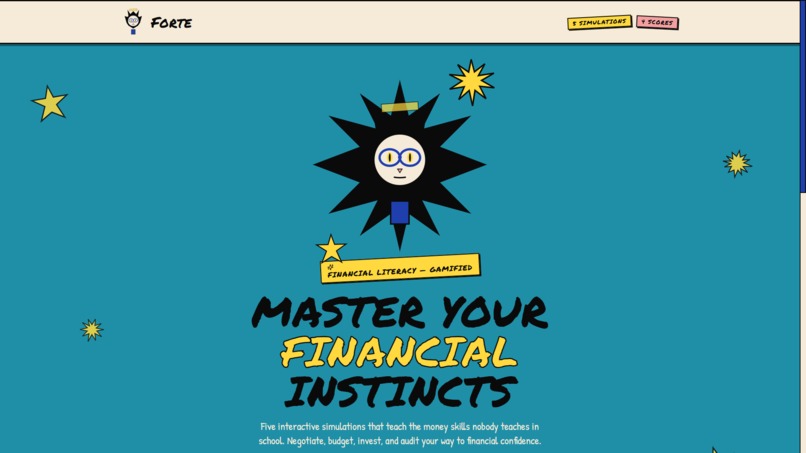
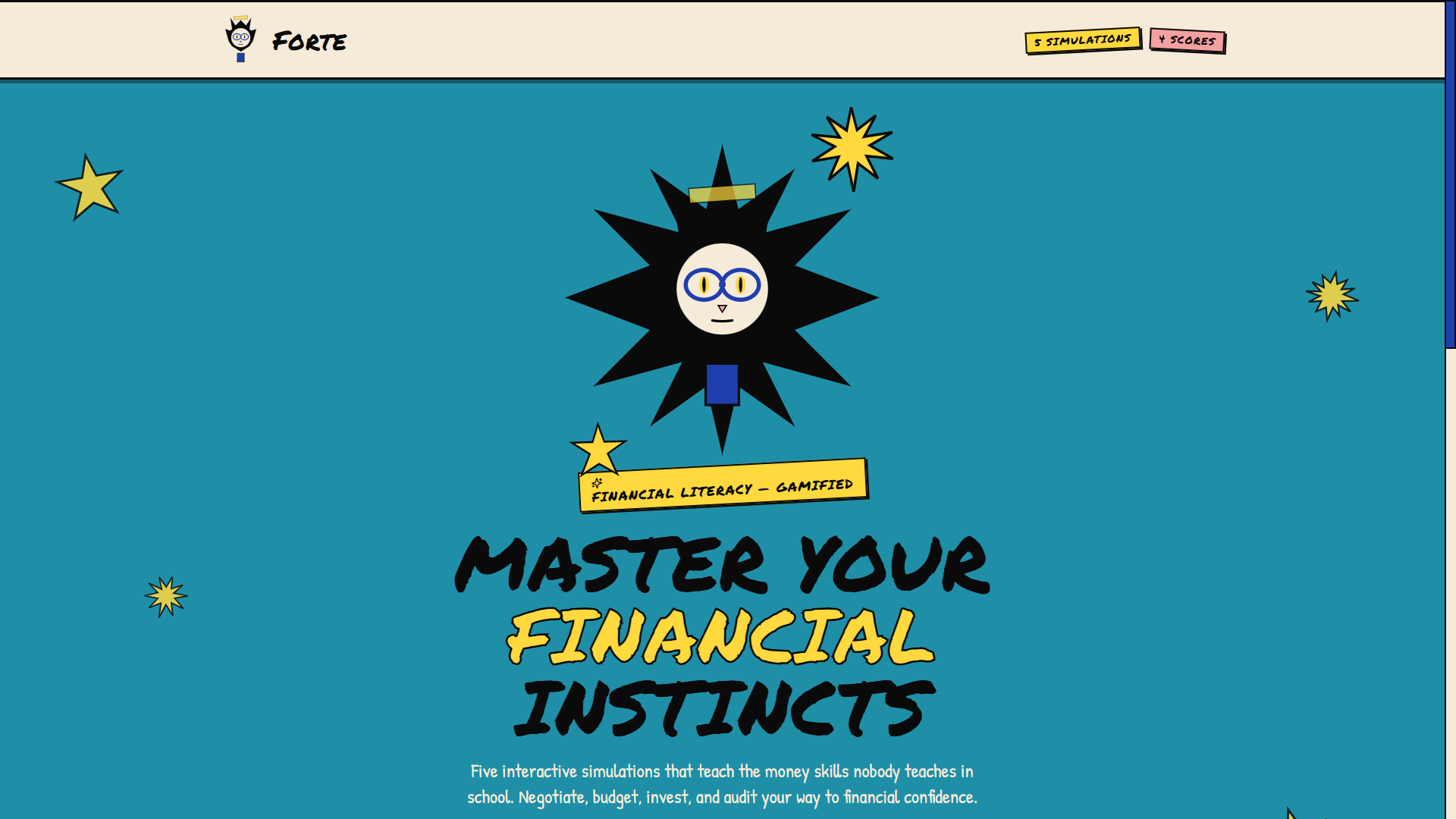
Front page
-
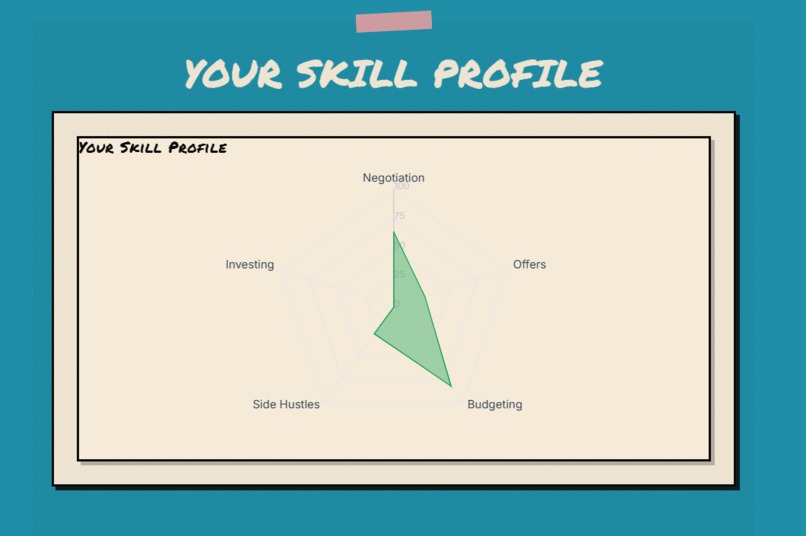
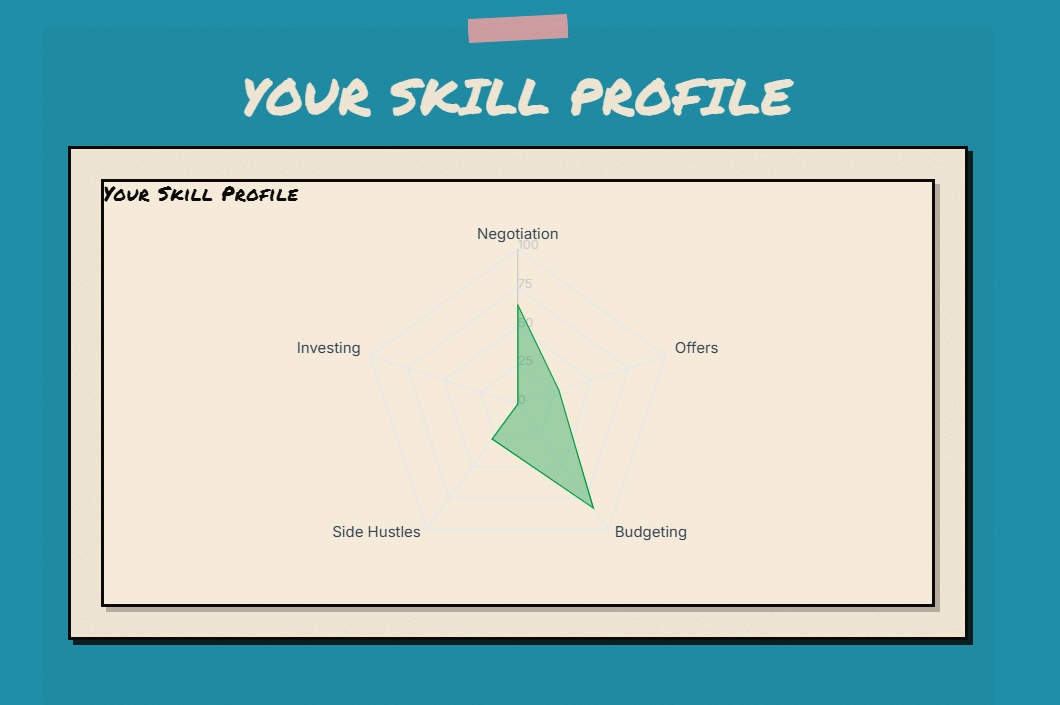
Skill profile
-

Game options
Forte: Built From Lived Experience
The foundation of Forte wasn't built on spreadsheets or textbook theories; it was born from the lived experiences of five students who were forced to master "adult" financial systems long before they were ready.
The Inspiration: A Shared Burden of Responsibility
While our backgrounds were diverse, a singular theme emerged: the weight of being a primary financial navigator.
Utsav Kafle shared how he previously developed a project to help immigrant women, the anchors of their households, manage complex financial documentation and navigate systems not built for them. He brought the vital perspective that financial literacy is a fundamental tool for independence and a necessity for those handling family affairs.
Claire Peng experienced this pressure firsthand, managing her family's most sensitive financial info and important documents from a young age. Now that she is in college, she carries the unique stress of knowing no one at home is available to manage those critical systems.
Markandeya Yalamanchi shared a striking example of early responsibility: he had to learn how to navigate and file taxes when he was just five years old.
Daylen Hicks synthesized these raw personal histories into the project's core strategy. Drawing inspiration from the team's collective resilience, Daylen formulated the concept for the different games and scenarios that mirror the real-world pressures the team members faced.
We wanted to build the "practice field" we never had, a place to fail safely before the stakes become real.
How We Built It
We developed Forte as a "LeetCode for Financial Literacy," creating a suite of interactive simulations targeting the moments that compound fastest for first-year college women.
The Core Concept
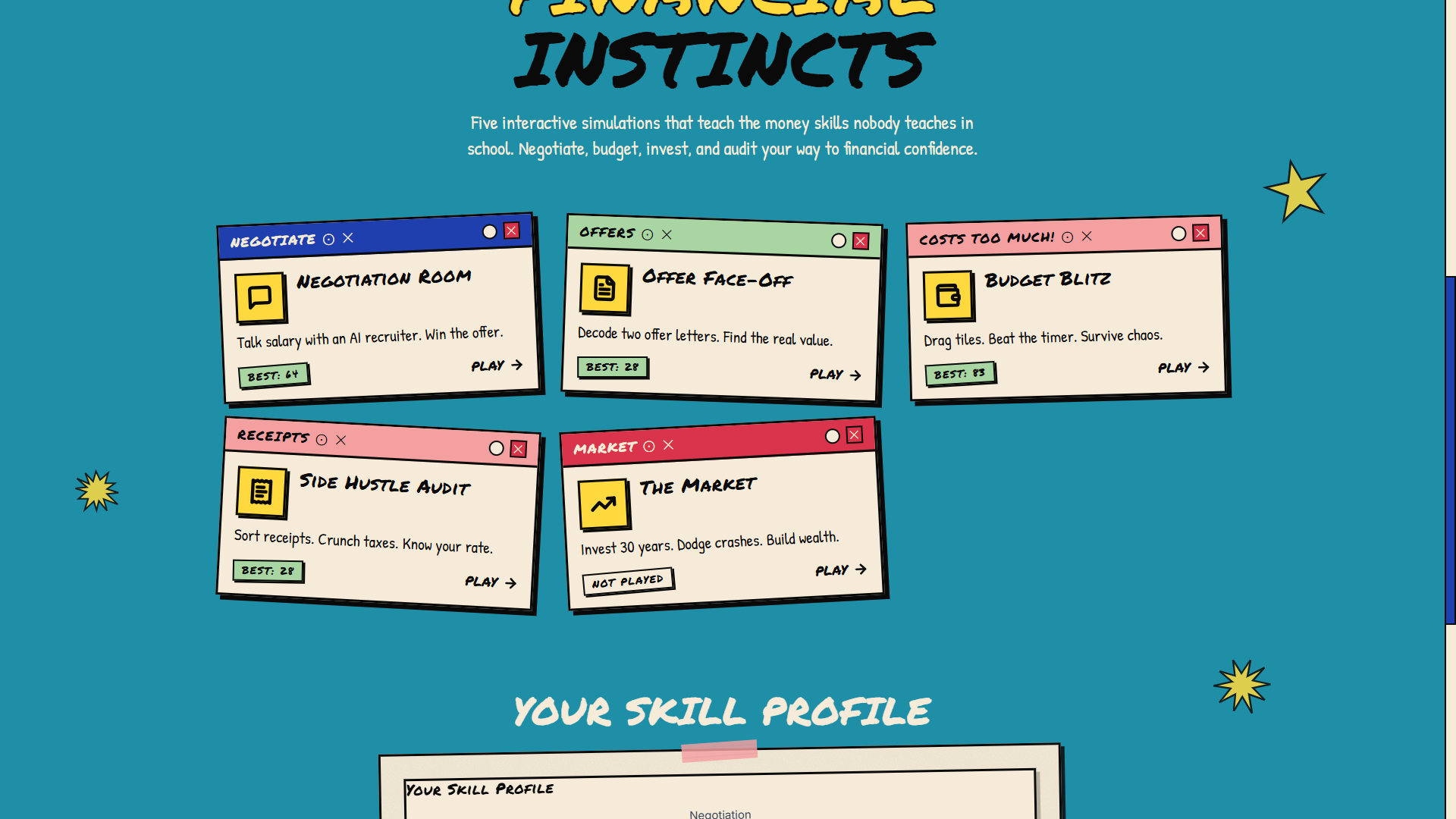
The team developed five distinct game scenarios:
- Negotiation Room
- Offer Face-Off
- Budget Blitz
- Side Hustle Audit
- The Market
Technical Implementation
We built the platform using a modern web stack (React/Next.js). To ensure the learning was effective, Israel Ford implemented a custom grading system for the games. This serves as the essential feedback loop, providing the tactical insights and scores needed to turn hesitation into repetition and growth.
The Math of Impact
We focused on the power of compounding. We wanted users to visualize how a single $3,000 negotiation gap in their first year could grow over a 40-year career ($n=40$) at an annual return ($r=7\%$).
$$FV = P \times \frac{(1 + r)^n - 1}{r}$$
Seeing that a small early win could result in over $600,000 in lost lifetime wealth was a major driving force in our design.
Challenges We Faced
The biggest challenge was moving from information to behavior. Most financial tools are passive. We struggled to create an AI recruiter in the Negotiation Room that felt realistic enough to trigger that "heart-racing" feeling without being discouraging. We also faced the technical hurdle of creating "Budget Blitz," which had to account for gendered financial realities, like the "pink tax," that standard budgeting apps often ignore.
What We Learned
We learned that confidence is a muscle built through repetition. By the end of the project, we realized that we weren't just building a simulator; we were building a transformation tool. Our goal is to ensure that when a recruiter asks, "Does that work for you?", our users have the practice and the Forte to speak their worth loudly.
Built With
- dnd-kit
- framer-motion
- google-gemini-api
- javascript
- localstorage
- lucide-react
- next.js
- node.js
- react
- recharts
- tailwind-css
- typescript
- vercel
- web-speech-api
- zod
- zustand


Log in or sign up for Devpost to join the conversation.