Inspiration
Working out at home is convenient, but staying consistent without guidance or a clear way to track progress can be difficult. I wanted to explore a simple question: what if your TV could become your personal workout coach instead of just playing workout videos?
That idea inspired FORMUP—a TV-first fitness experience that brings workout guidance, movement tracking, and personalized feedback into the living room.
What it does
FORMUP is designed to make home workouts more interactive by combining a television interface with smartphone-based movement tracking.
The vision includes:
- TV-guided workouts: Clear instructions and a large, easy-to-follow interface.
- Computer vision: Using a smartphone camera to estimate body movements and count exercise repetitions.
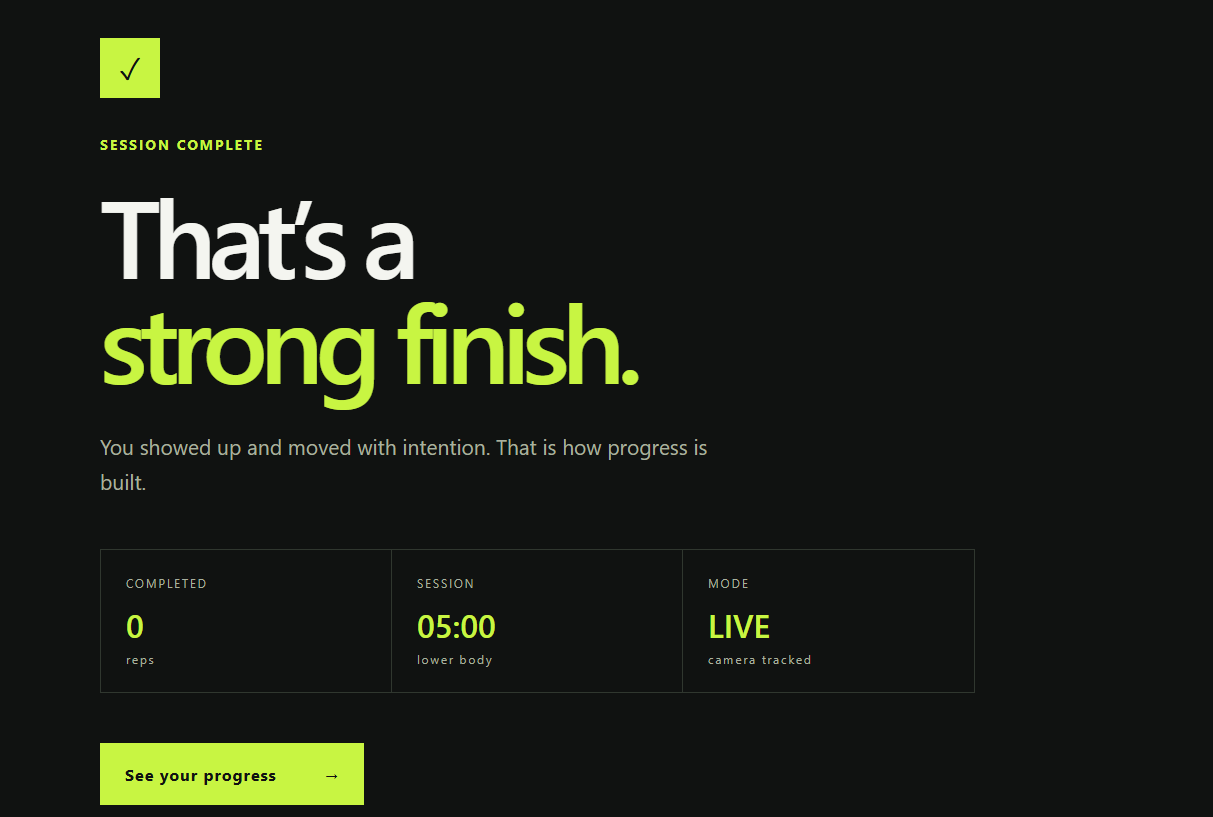
- Live progress: Displaying repetition counts and workout progress on the TV.
- AI-powered personalization: Exploring personalized workout summaries and recommendations based on session data.
How we built it
FORMUP is being developed as a TV-first application, with a separate smartphone experience for camera-based movement tracking.
The planned technology stack includes React Native for the TV interface, MediaPipe for pose estimation, and AWS services such as AWS Lambda, API Gateway, DynamoDB, and Amazon Bedrock for backend processing, workout history, and AI-generated feedback.
I used AI-assisted coding tools to help with implementation and troubleshooting while learning how the different components could work together. The focus was on keeping the architecture modular so that the TV interface, movement tracking, and backend could be developed and tested independently.
Challenges we ran into
The biggest challenge was the scope. Building a TV application, tracking human movement through a camera, connecting two devices, and introducing AI personalization involves several different technical problems.
Another challenge was balancing the ambition of the idea with the time available. Camera tracking needs real-world testing, TV interfaces must work well with remote controls, and AI-generated recommendations should be based on actual workout data rather than assumptions.
These challenges made it important to prioritize the core experience and be realistic about what could be implemented and tested within the hackathon timeline.
Accomplishments that we're proud of
We're proud of the idea of bringing together television-based interaction, computer vision, and AI-assisted fitness personalization in one accessible home-workout experience.
FORMUP also represents a personal learning milestone: taking an ambitious product idea and breaking it into smaller engineering problems, exploring unfamiliar technologies, and using AI-assisted development to move from concept toward implementation.
What we learned
We learned that building a useful AI-powered product involves much more than adding an AI model. The experience needs a clear purpose, reliable data, thoughtful interaction design, and a way to handle failures.
We also learned the importance of validating technical assumptions early, testing individual components before connecting them, and prioritizing a working core experience over an excessive number of features.
What's next for FORMUP
The next goal is to strengthen the core experience: reliable pose detection, accurate repetition counting, smooth phone-to-TV communication, and a polished interface designed for television.
From there, FORMUP can evolve toward workout history, personalized progression, and AI-generated feedback grounded in real session data.
The long-term vision is simple: make the living room a place where people don't just watch fitness—they actively participate in it.
Built With
- artificial
- fitness
- javascript
- react
- webapp
