-
-
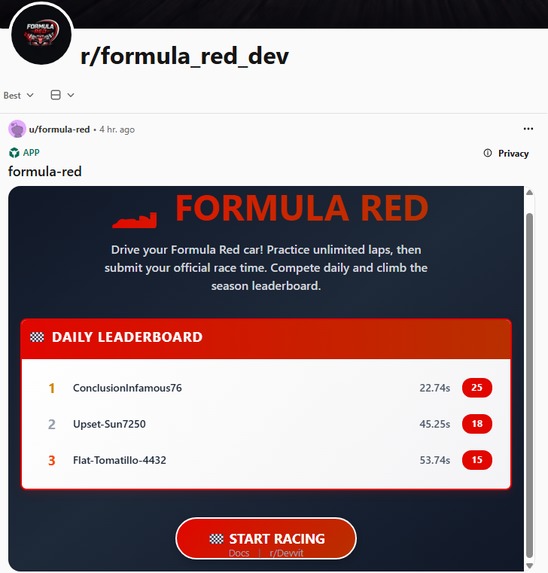
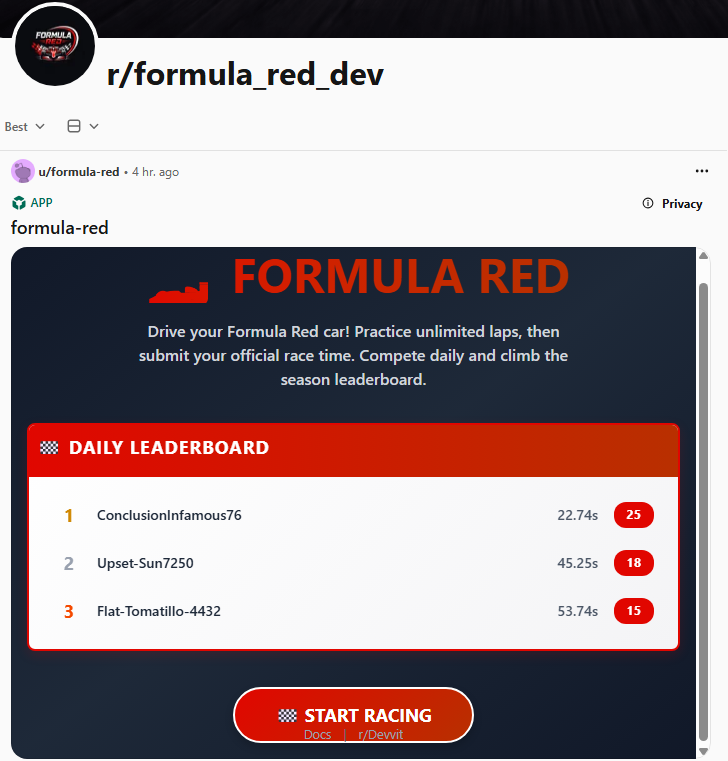
Reddit Post Screen
-
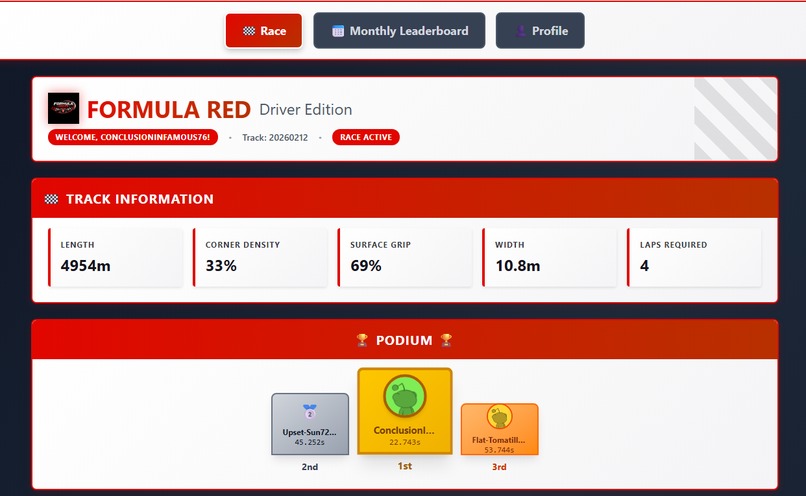
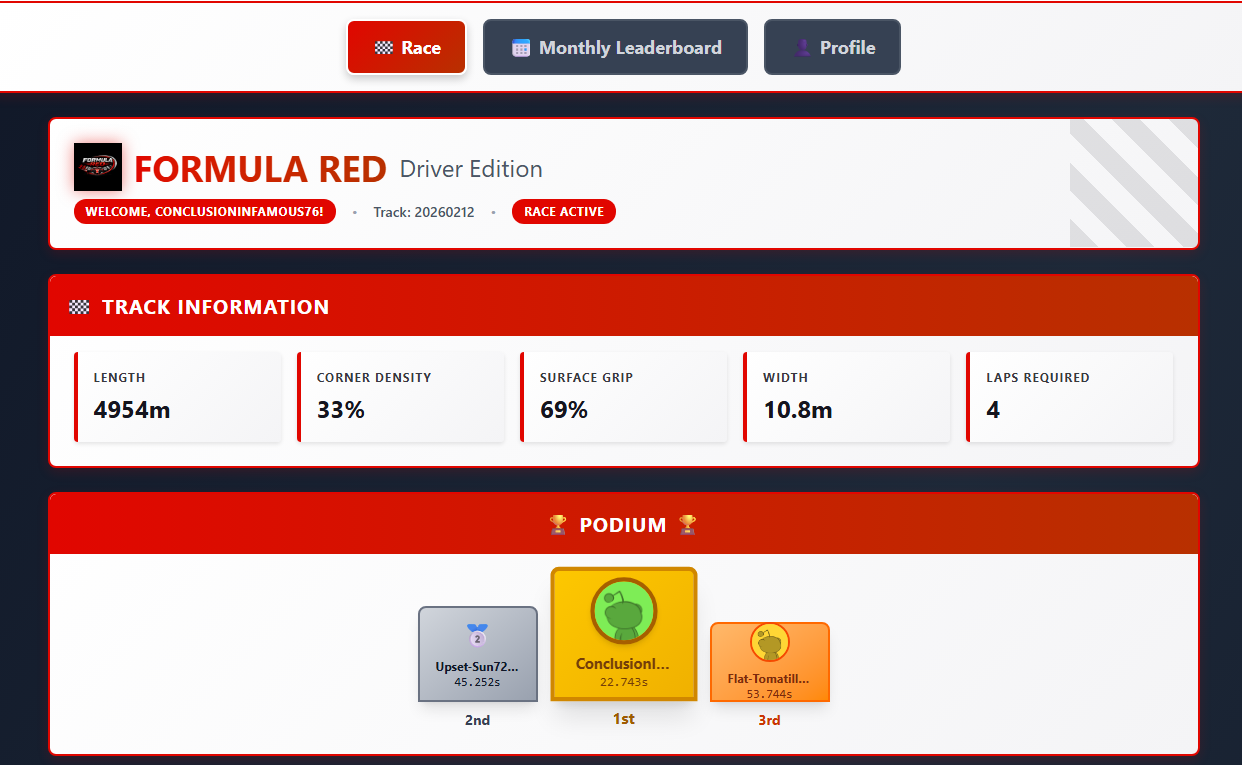
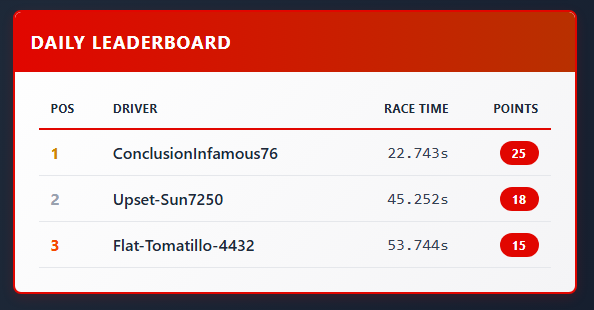
daily podium and race track
-
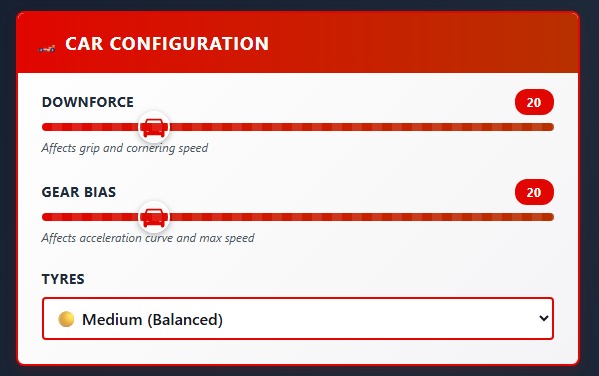
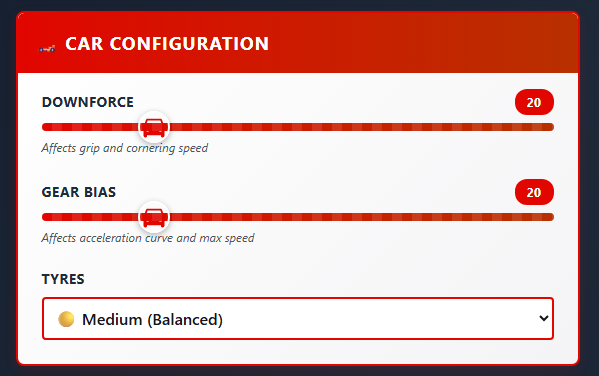
car configurations
-
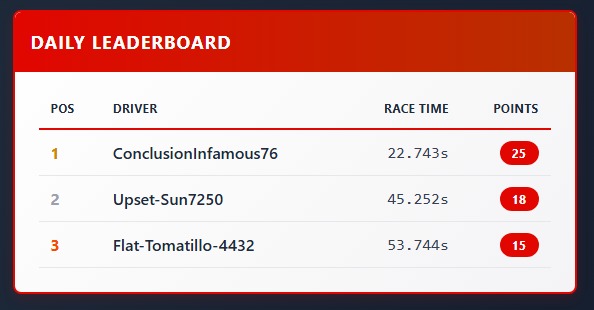
leaderboard
-
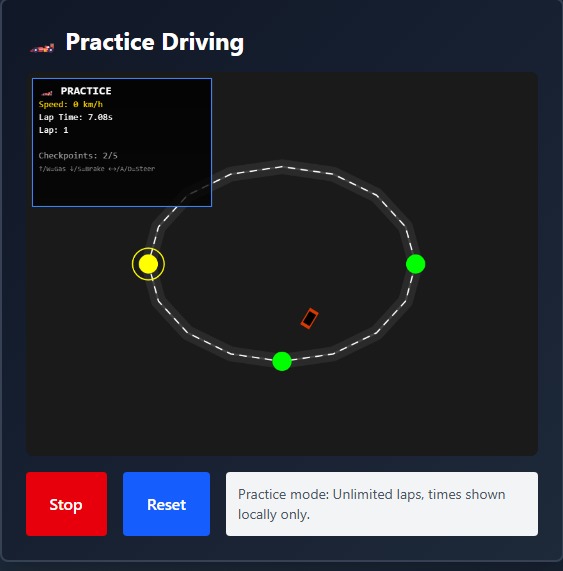
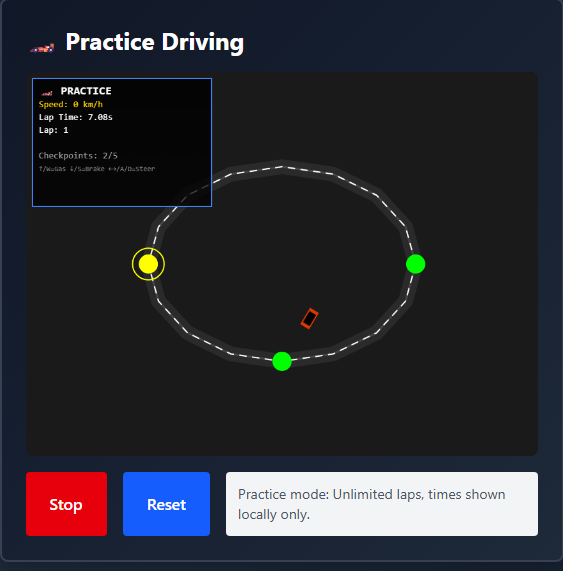
gameplay
-
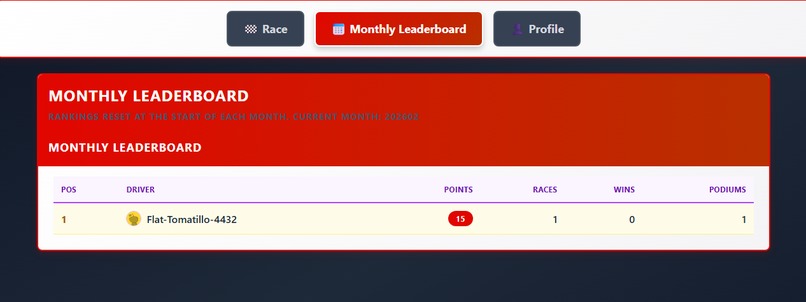
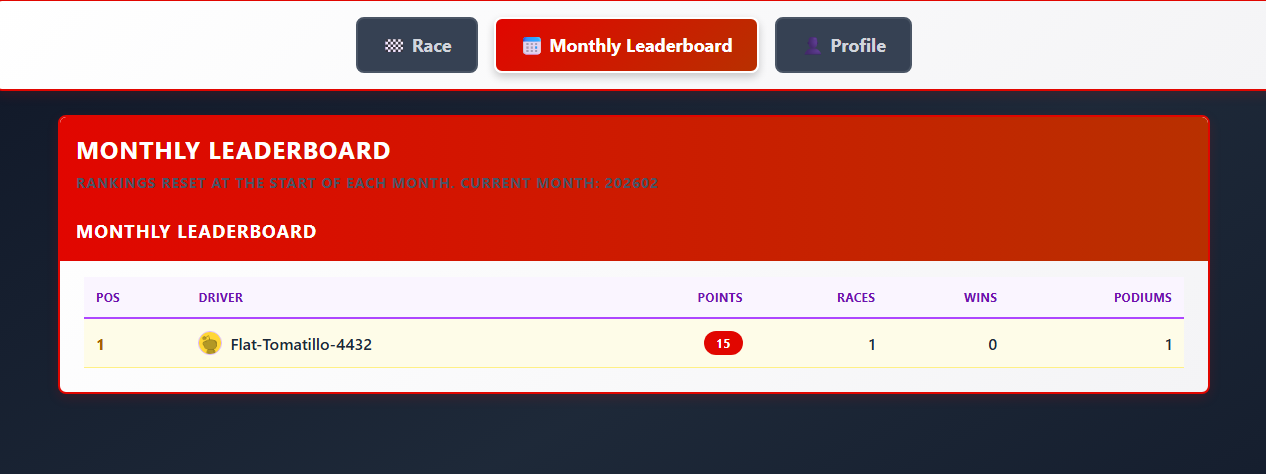
seasonal ranking
Inspiration
Formula Red was born from a simple question: What if a racing league felt real — but anyone could join, any day?
We wanted the tension of a professional motorsport season, but without requiring perfect timing, long play sessions, or expensive hardware. The idea evolved into a daily racing ritual where players return every day, face a new track, and slowly build their reputation over a season. A small myth guided us: only one lap should matter — because pressure makes legends.
What it does
Formula Red is a daily, player-driven racing league.
Each day, a new track is generated. Players configure their car, drive the track themselves, and submit one official lap. That lap is ranked on a live daily leaderboard, and the results are carried into a season-wide championship.
Players can practice freely, skip practice if they want, and go straight to the official race. Only one driven lap per day counts — just like a real race weekend.
How we built it
We split the system into two parts:
- a lightweight web racing game where players actually drive the car and record lap times
- a backend league controller that handles tracks, leaderboards, submissions, and season standings
The game client focuses only on driving, handling, and timing. The backend stores official results, enforces one submission per player per day, and updates both daily and season leaderboards automatically.
Tracks are generated deterministically from the date, so every player races the same layout on the same day.
Challenges we ran into
The biggest challenge was fairness.
Since players drive locally, we had to design a submission system that could validate laps without turning the game into a heavy anti-cheat project. We had to carefully balance trust, validation, and simplicity.
Another challenge was making car configuration feel meaningful without turning the handling model into a full simulation engine. We wanted the game to be playable and competitive, not overwhelming.
Finally, keeping the experience fast and frictionless while still supporting daily and seasonal progression required careful backend design.
Accomplishments that we're proud of
- Designing a racing league where players actually drive, not just simulate results
- Creating a clean daily track rotation system that resets competition every day
- Building a season system that rewards consistency, not only single fast laps
- Making car configuration directly affect real driving behavior instead of just numbers
Most importantly, we created a system where players feel pressure on one real lap — and that changes how they drive.
What we learned
We learned that competitive games do not always need real-time multiplayer to feel intense.
A well-designed daily loop, a single meaningful attempt, and a visible leaderboard can create strong emotional engagement. We also learned how important it is to separate game simulation from league management, so both systems can stay simple and reliable.
What's next for Formula Red
Our next steps are:
- ghost replays so players can race against top laps
- visual weather effects and surface conditions
- team championships alongside individual seasons
- deeper telemetry and post-lap analysis for players who want to improve
The long-term vision is to turn Formula Red into a persistent, community-driven racing league where every day feels like a new chapter in the same championship.
Built With
- devvit
- react

Log in or sign up for Devpost to join the conversation.