-
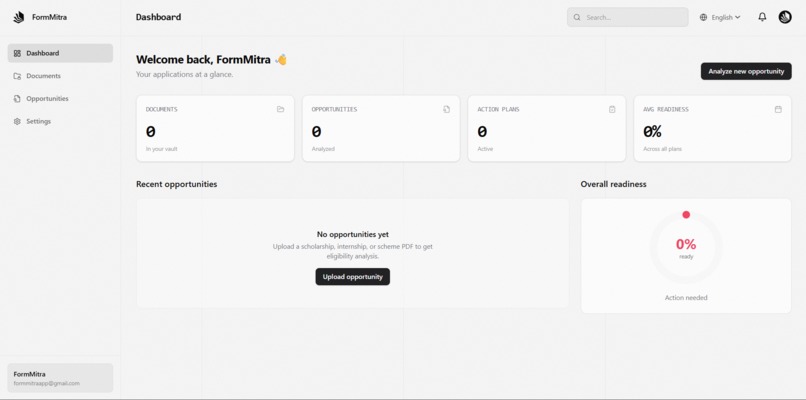
Dashboard
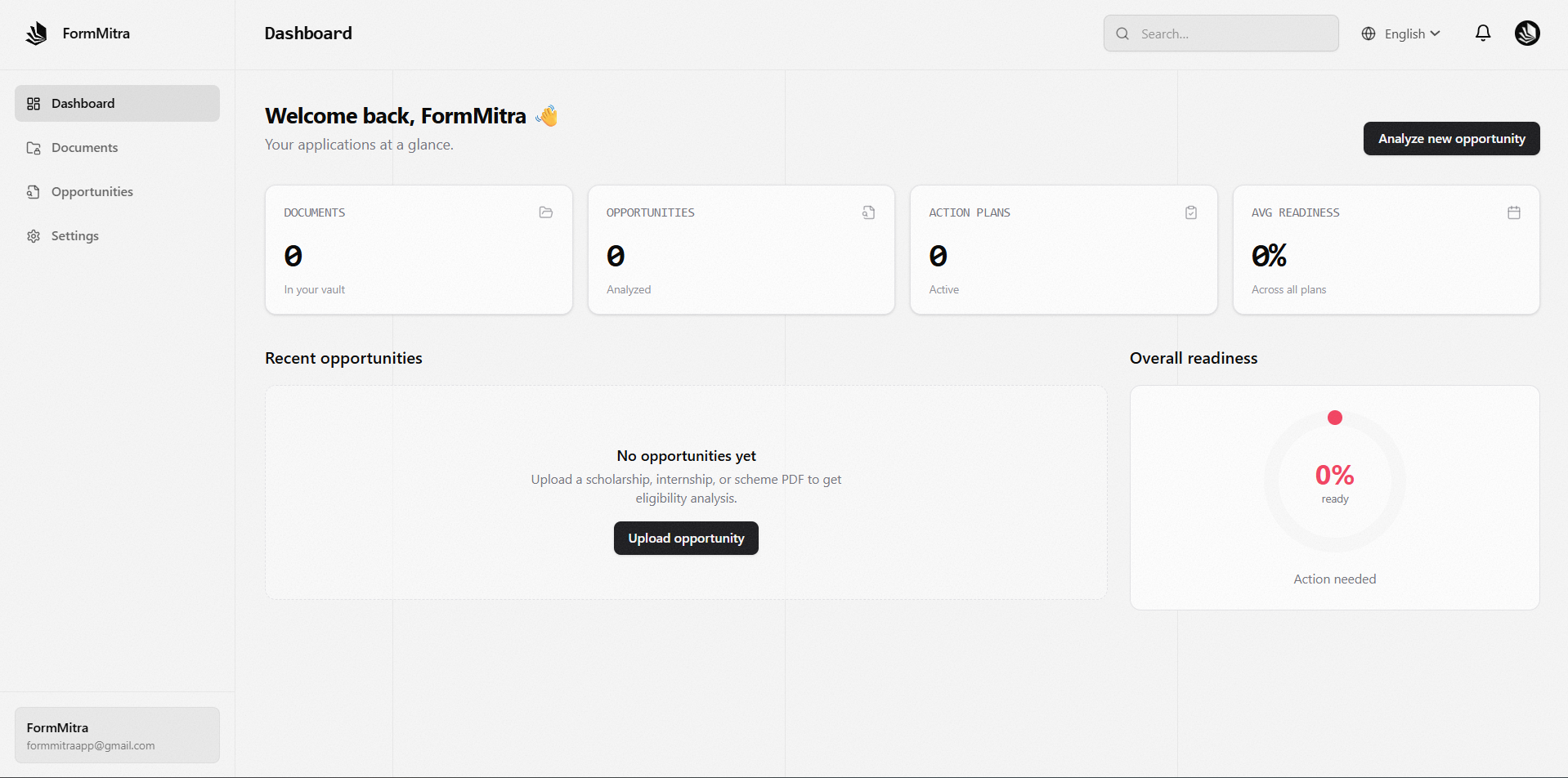
Inspiration
We realized something dark about modern bureaucracy: it is intentionally designed to make you fail. Whether it’s government agencies, corporate compliance, or healthcare red tape, the system thrives on confusing you, stealing your time, and penalizing your mistakes. We were sick of watching brilliant people lose money, miss deadlines, and suffer extreme anxiety over paperwork that belongs in the 19th century. We didn't just want to build a form filler; we wanted to build an AI unfair advantage—a weapon to fight back against a rigged system.
What it does
FormMitra (Bureaucracy Copilot) is your personal defense mechanism against red tape. It uses advanced AI to instantly decipher intentionally confusing legal jargon, automatically extract data, and fill out soul-crushing paperwork with zero errors.
- The Decoder: Translates terrifying government or corporate forms into plain, actionable English.
- The Auto-Filler: Intelligently maps your personal/business data to complex PDFs and web forms in seconds.
- The Shield: Actively checks for missing signatures, conflicting information, and trap questions that could cost you money or legal trouble.
How we built it
We engineered FormMitra for extreme reliability, because in the world of bureaucracy, a single hallucination can be catastrophic.
- Frontend/Backend: We built a blazing-fast, responsive web app using Next.js, TypeScript, and TailwindCSS to keep the user experience as frictionless as possible (the exact opposite of the forms they are filling out).
- Database: Prisma paired with a secure PostgreSQL database to handle sensitive user data safely.
- AI & Processing: We leveraged state-of-the-art LLMs combined with high-precision OCR to parse, understand, and map data onto complex PDF coordinates and structured formats.
- Infrastructure: Hosted and deployed seamlessly via Vercel, with automated CI/CD pipelines to iterate rapidly.
Challenges we ran into
- The Chaos of Human Forms: Government forms are notoriously unstructured. Training the AI to understand that a checkbox on a 1998 IRS form means the same thing as a radio button on a modern state portal was a nightmare.
- Zero-Tolerance for Hallucinations: When you're dealing with legal documents, 99% accuracy isn't good enough. We had to build intense validation layers and human-in-the-loop fallback mechanisms to ensure the AI never guessed a critical field like a Social Security Number or tax bracket.
- Security & Trust: Convincing users to hand over sensitive data requires military-grade security and a UI that exudes extreme trust and competence.
Accomplishments that we're proud of
- Anxiety to Empowerment: We took the most stressful experience—staring at a 14-page legal form—and reduced it to a single click. Watching beta testers physically exhale in relief when the form was instantly completed was our biggest win.
- The Mapping Engine: We successfully built a robust pipeline that can ingest a completely unseen, horribly formatted government PDF and accurately map structured user data into its fields without manual intervention.
What we learned
We learned that the administrative burden on the average person is even worse than we thought. People are genuinely traumatized by forms. We also learned that LLMs, when tightly constrained and prompted for exact data extraction rather than creative generation, are the ultimate equalizer for navigating bureaucratic mazes.
What's next for FormMitra
This is just the beginning of dismantling the administrative state.
- Proactive Filing: FormMitra will soon integrate with your calendar and financials to automatically draft and file necessary paperwork before you even know the deadline is approaching.
- Deep Legal Analysis: Expanding our AI models to not just fill out forms, but analyze contracts and terms of service to warn you if you're signing away your rights.
- Global Expansion: Bureaucracy is a global disease. We plan to localize our compliance and form engines to tackle EU, UK, and Asian bureaucratic systems.
Built With
- nextjs

Log in or sign up for Devpost to join the conversation.