-
-
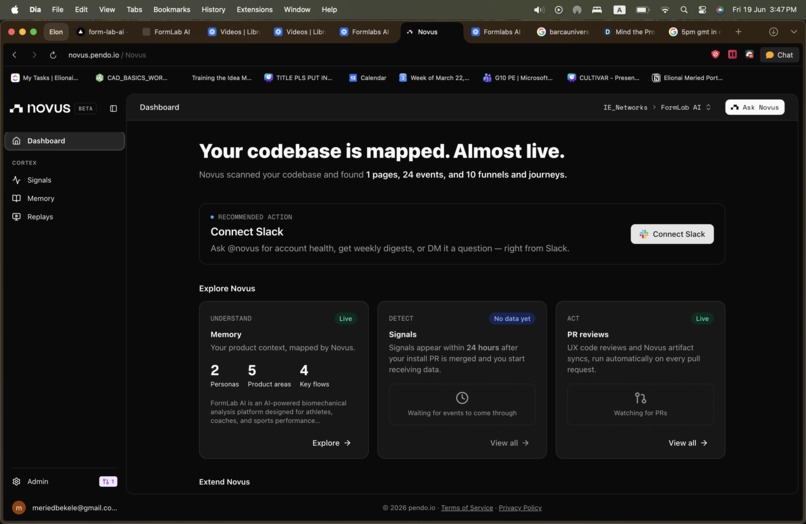
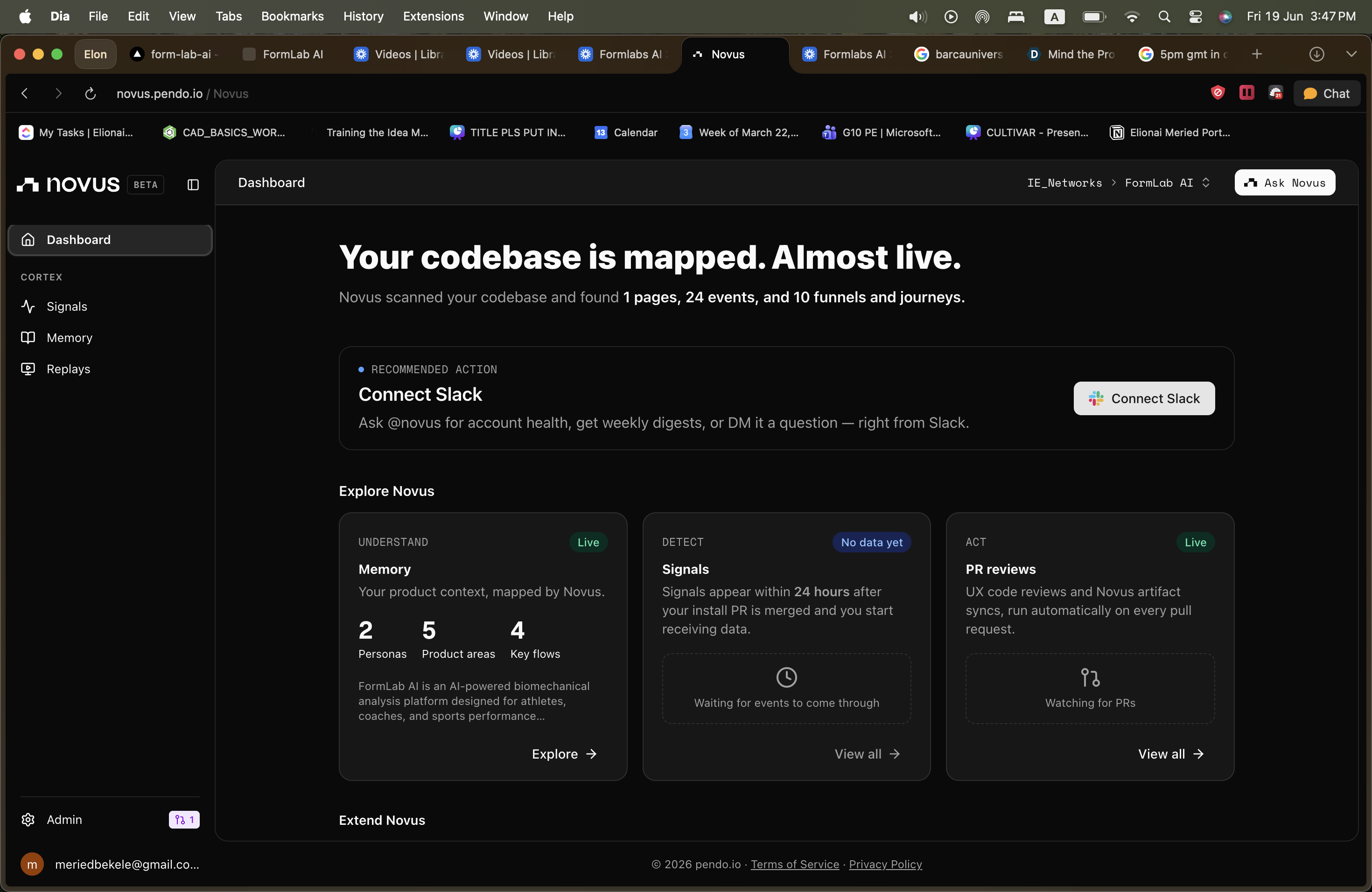
Novus Dashboard
-
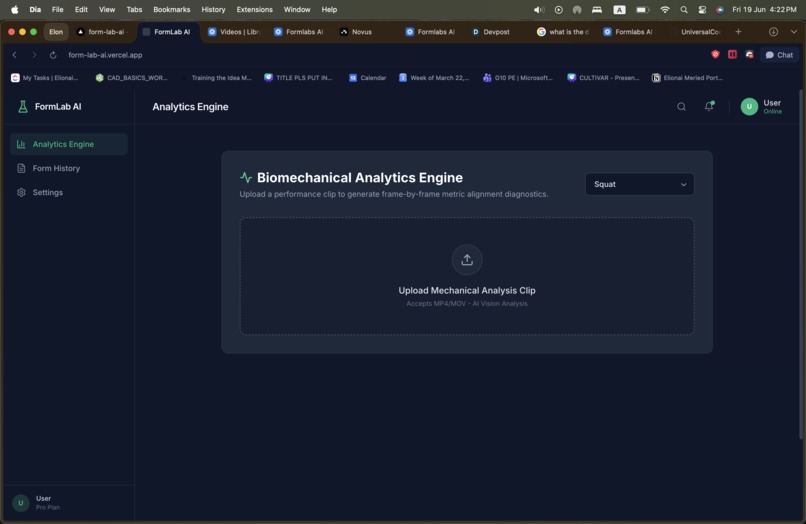
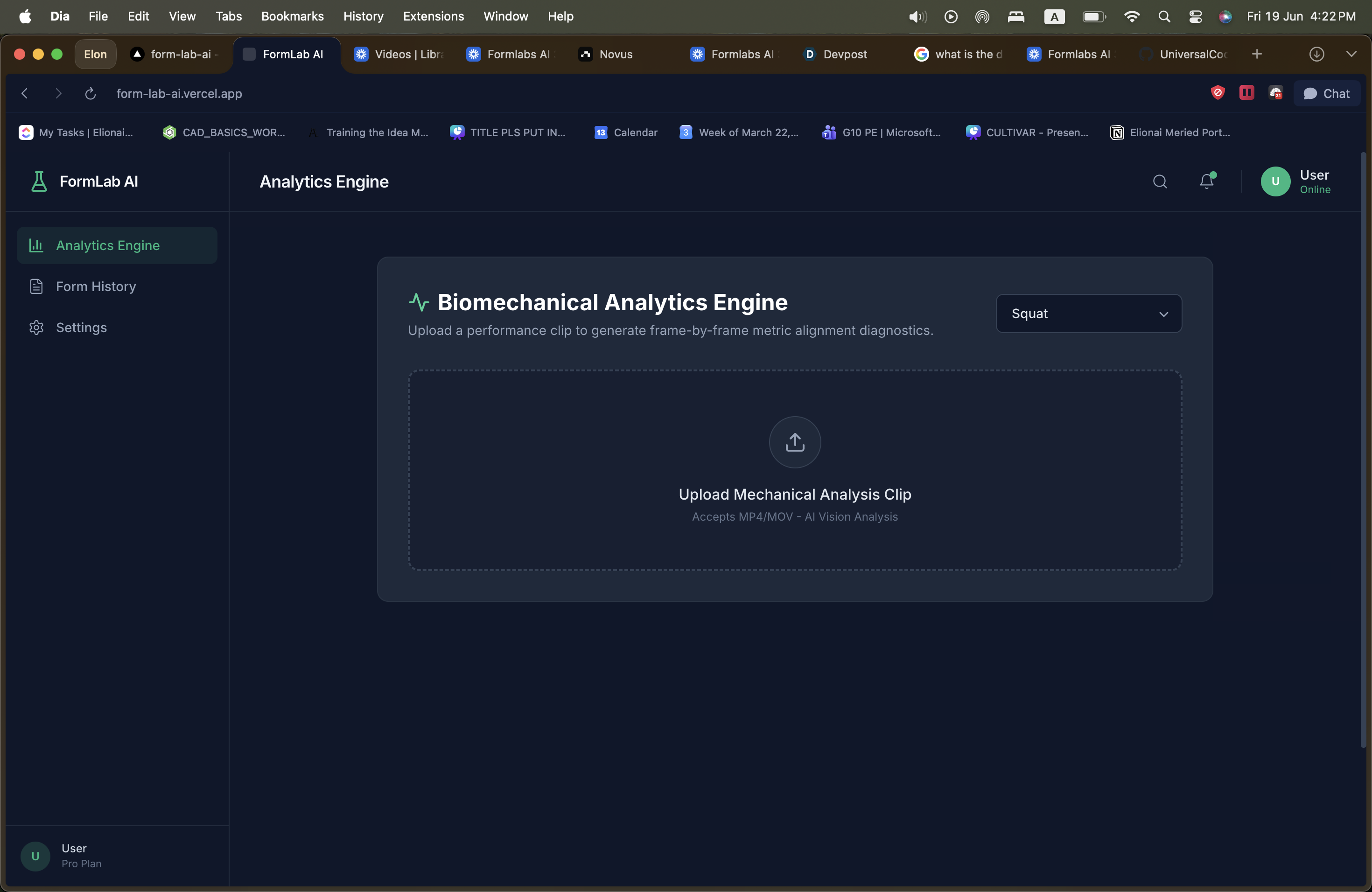
Main analytics dashboard featuring drag-and-drop video upload zone and multi-sport movement profile selection dropdown.
-
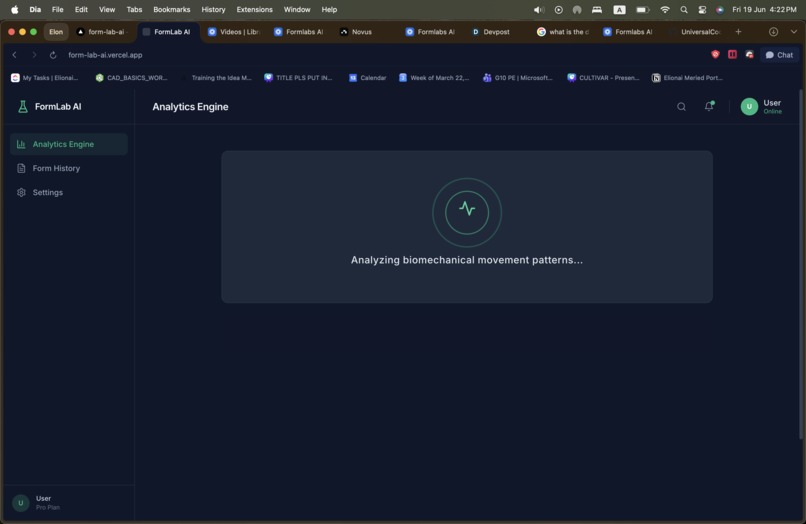
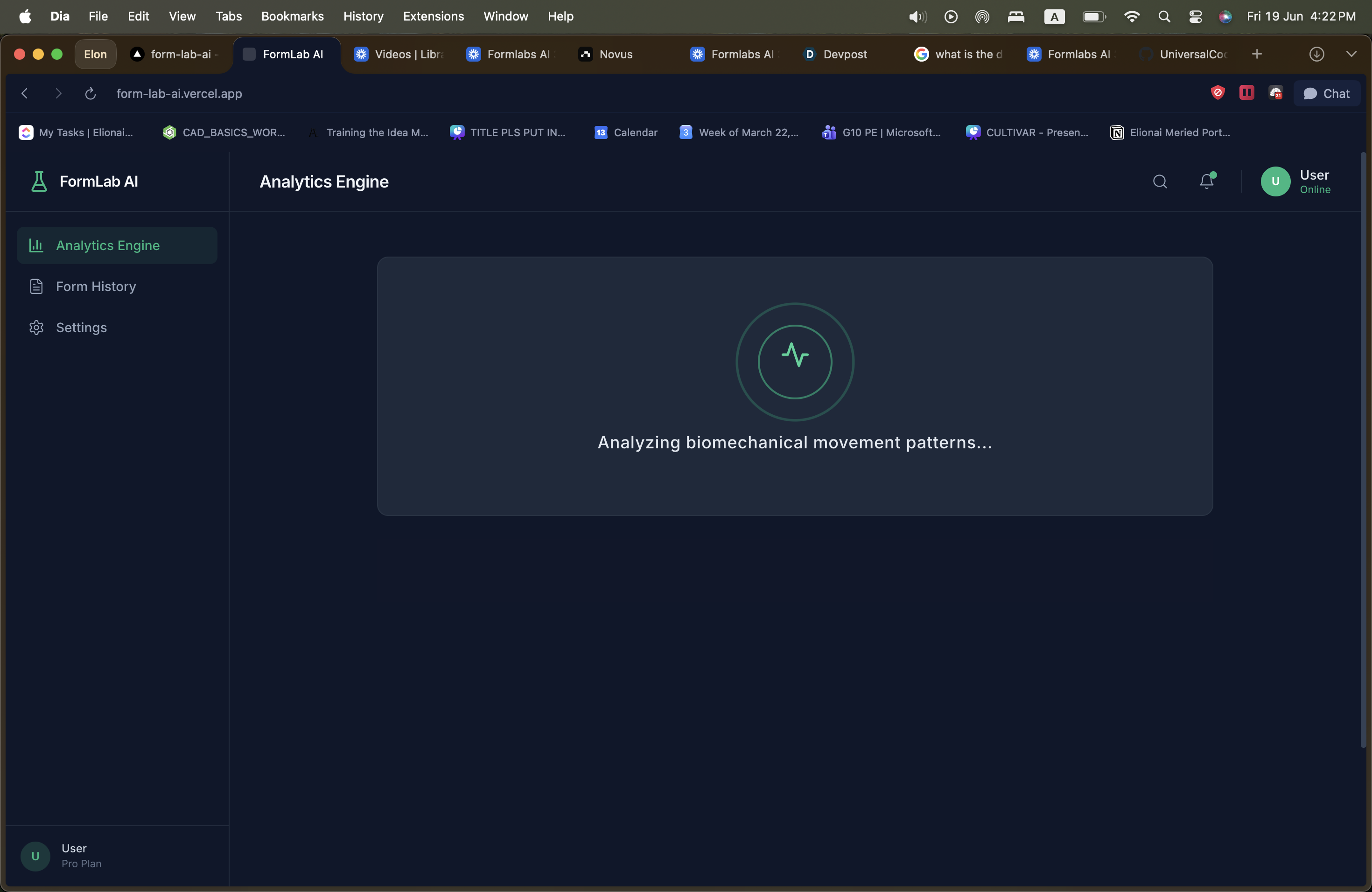
Biomechanical analytics engine processing uploaded video frames to extract coordinate orientation vectors.creen
-
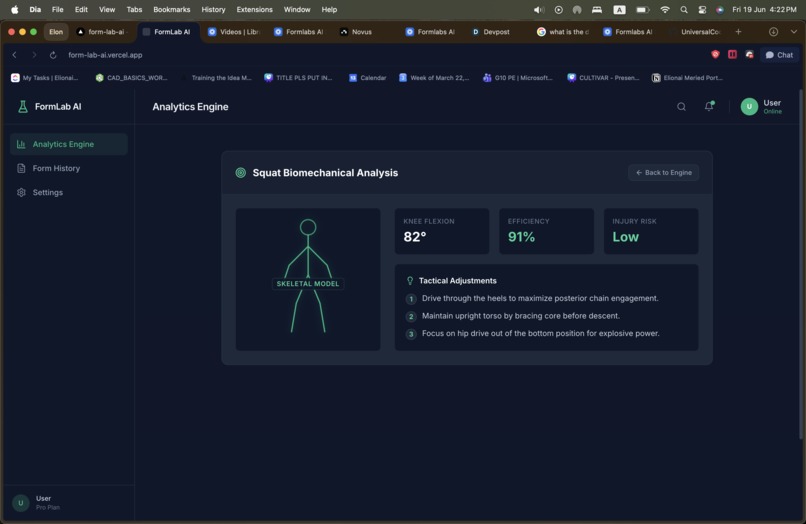
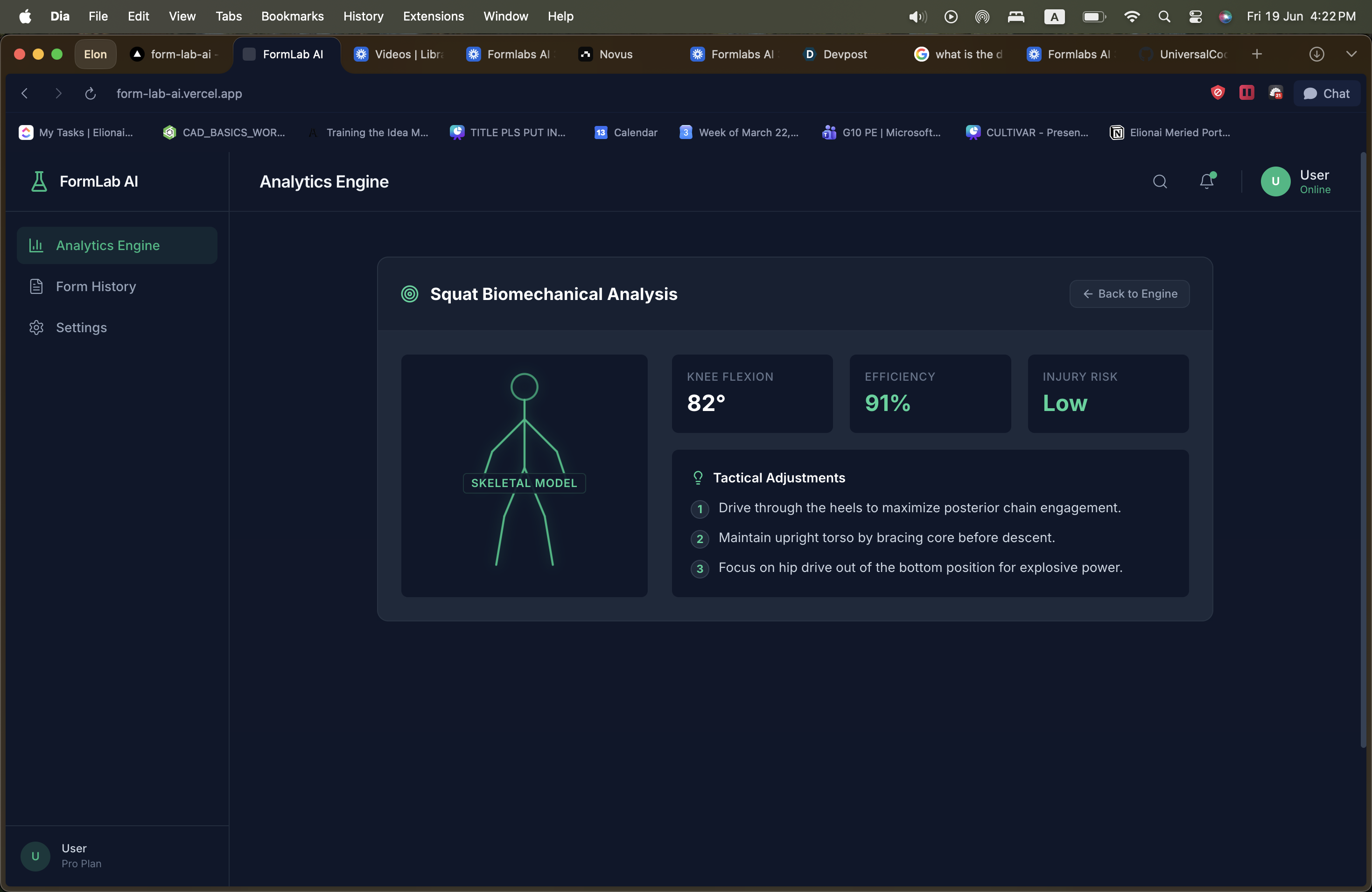
Emerald diagnostics layout displaying live skeletal posture mapping, angle calculations, efficiency scoring, and tactical form adjustments.
Inspiration
Elite, data-driven athletic coaching and professional biomechanical analysis tools are strictly locked behind expensive corporate paywalls, making them inaccessible to youth athletes and grass-roots trainers. Furthermore, standard 2D mobile video reviews suffer from severe perspective distortions and parallax camera errors, rendering manual angle estimates highly inaccurate. We built FormLab AI to level the playing field, creating an accessible, intelligent computer vision tracking framework designed to bring high-fidelity joint metrics and real-time tactical adjustments directly to every young athlete's pocket.
What it does
FormLab AI serves as an elite dark-mode performance analysis workspace. Users can select an athletic action—such as a Jump Shot, Sprint Start, or Deadlift—and drop a raw mobile video file directly into a seamless drag-and-drop web container. The platform triggers an animated AI-processing telemetry sequence before rendering an immersive Emerald diagnostics layout. The system dynamically populates specific skeletal performance variables, calculates absolute joint extension angles, evaluates movement posture efficiency percentages, evaluates localized structural injury risk factors, and lists three highly targeted tactical adjustments to optimize athletic execution and maximize physical output safely.
How we built it
The application's structural skeleton and layout styling were entirely scaffolded, structured, and compiled utilizing the in-browser sandbox container on Bolt.new. The frontend architecture leverages React 18, TypeScript for rigid type safety, and Tailwind CSS for optimized utility layouts, using custom Lucide vector components for visual accents. The operational codebase was exported via GitHub and seamlessly wired into a global continuous deployment pipeline hosted on the Vercel Edge Network. To integrate enterprise-level product intelligence, we mapped full background client script tracking elements using Pendo and Novus.ai telemetry lines.
Challenges we ran into
Building an intelligent application under severe timeline constraints and sandbox token boundaries introduced several heavy development friction points. Our primary technical wall occurred during the continuous deployment phase on Vercel, where strict TypeScript compiler rule checks repeatedly crashed our production builds due to incomplete structural closing tags and clipped element definitions inside our custom components sheet. We had to dive deep into raw esbuild CLI crash streams, map the precise file coordinate breaklines manually on GitHub, and rebuild our closing tag arrays to achieve a clean compilation pass.
Accomplishments that we're proud of
- Successfully balancing intense high school exam weeks while architecting, validating, and launching a production-grade software utility.
- Transitioning our frontend layout from an isolated development sandbox into a globally accessible live build hosted on Vercel.
- Mapping out full enterprise telemetry tracking trees with Pendo/Novus to securely log 24 distinct behavioral signals across 10 independent user journeys, successfully capturing active user session replays lasting over 20 minutes during launch week.
What I learned
Shipping a live MVP to production taught me how to connect high-fidelity interactive user experiences directly with enterprise product intelligence software pipelines. I learned how to wire up background telemetry loops to evaluate user behavioral data, manage remote Git repository branch synchronization states manually, work around type-safety configuration constraints, and maintain absolute execution velocity under heavy environmental pressure.
What's next for FormLab AI
Our immediate roadmap is focused on upgrading this high-fidelity interactive prototype into an autonomous, cloud-hosted Python computer vision model using open-source pose estimation libraries like MediaPipe and OpenPose. This will allow the application backend to dynamically extract structural coordinates directly from uploaded video frame pixels, completely eliminate 2D perspective errors, and scale our sport database to support advanced high-skill actions like football finesse curls.
Built With
- and-compiled-using-bolt.new's-browser-based-sandbox-container
- bolt.new
- github
- pendo
- react
- structured
- tailwind-css
- typescript
- utilizing-react
- vercel

Log in or sign up for Devpost to join the conversation.