-
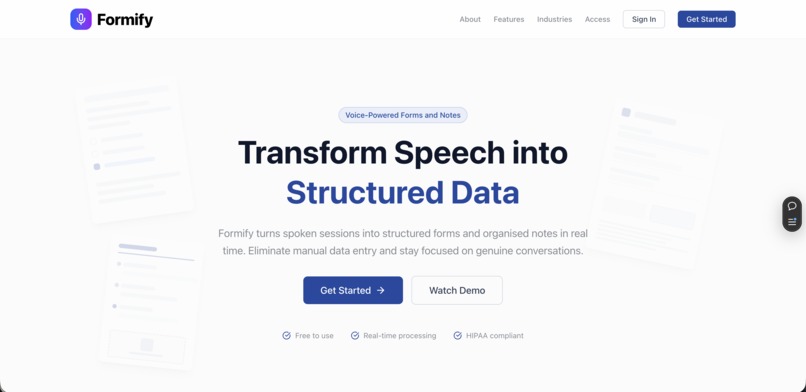
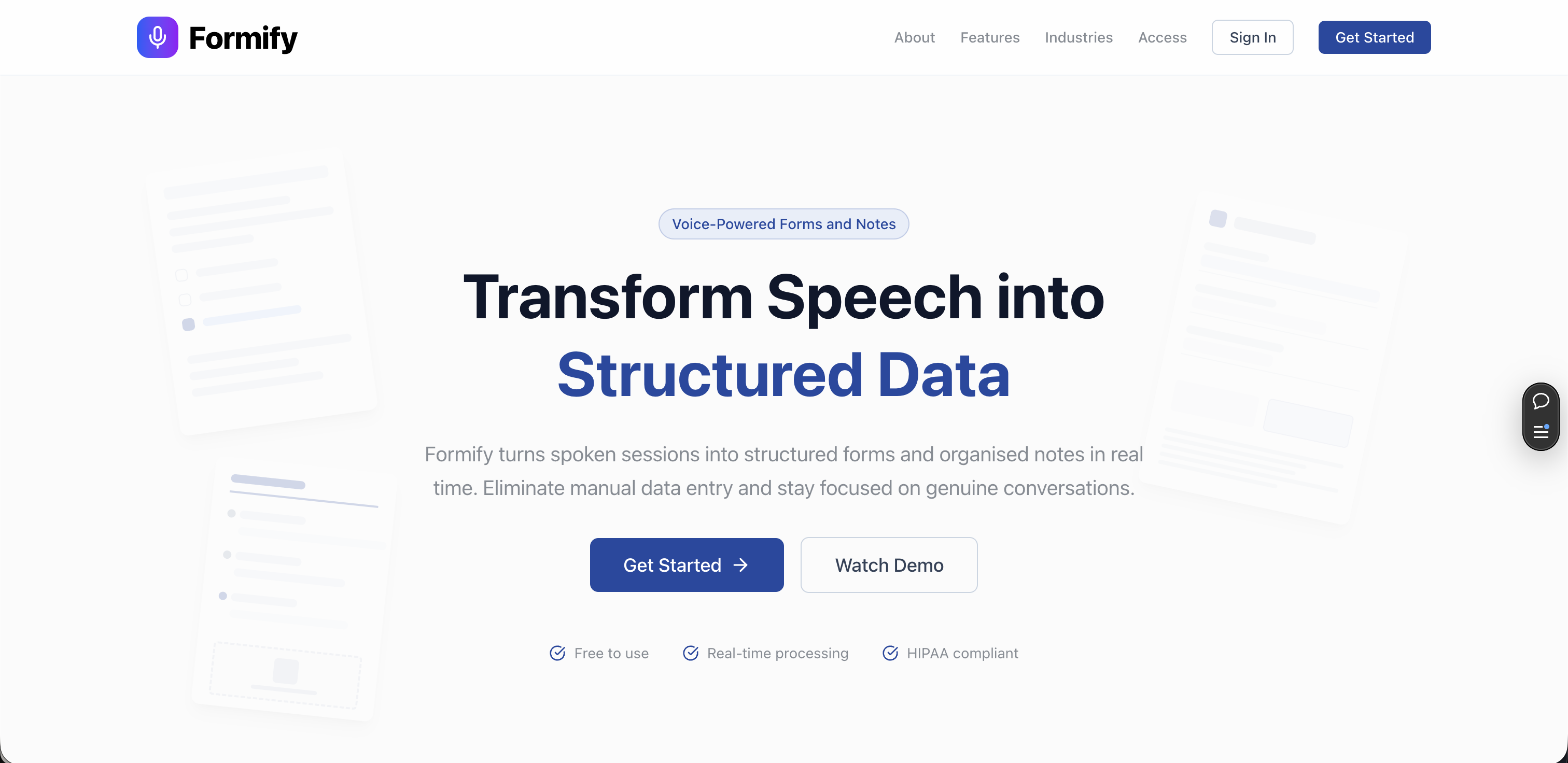
Landing Page
-
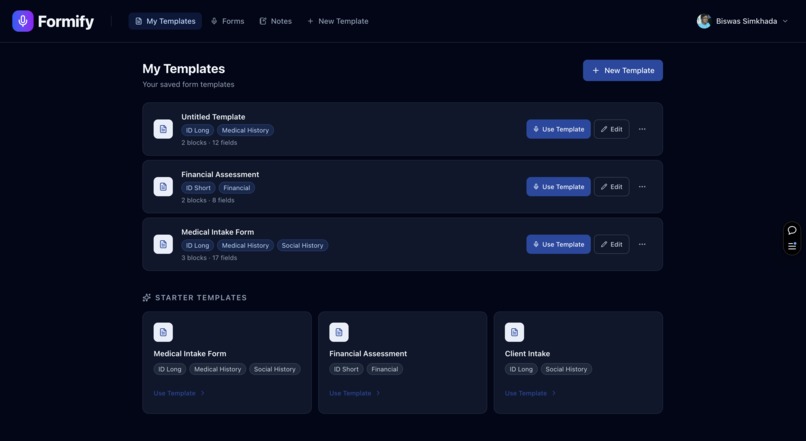
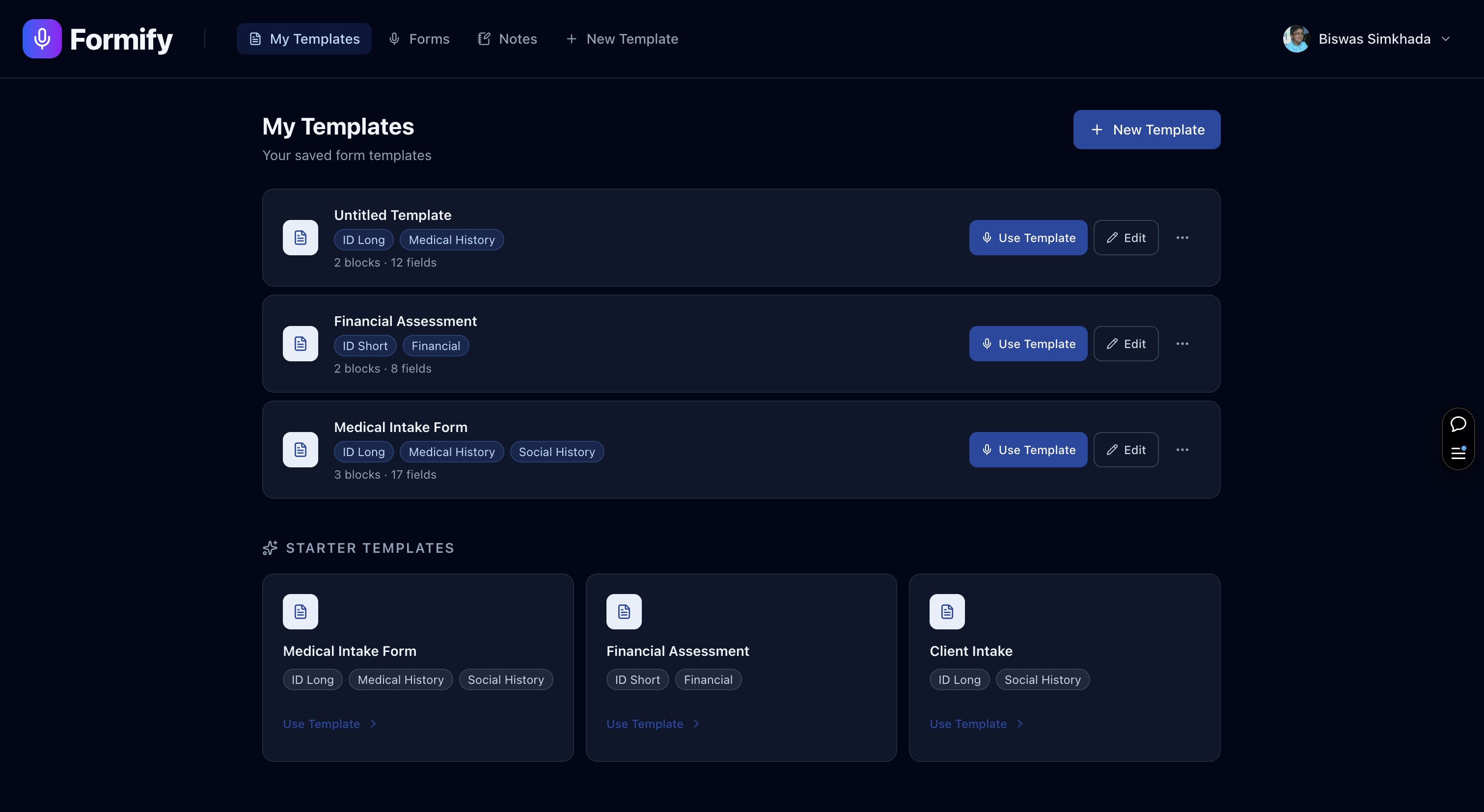
My Templates Page Dark mode
-
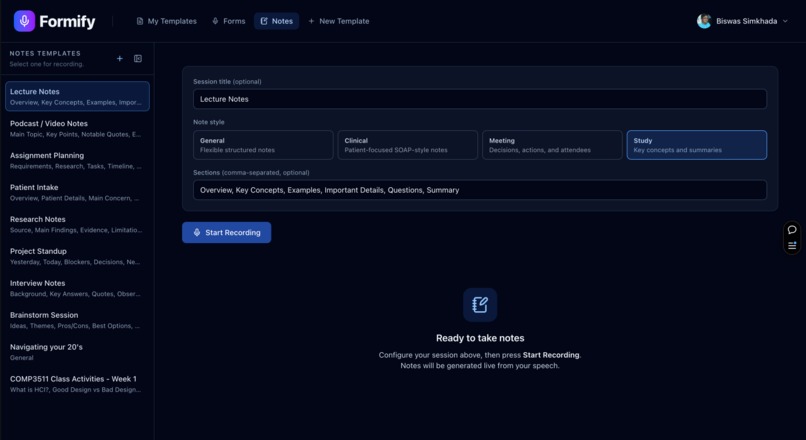
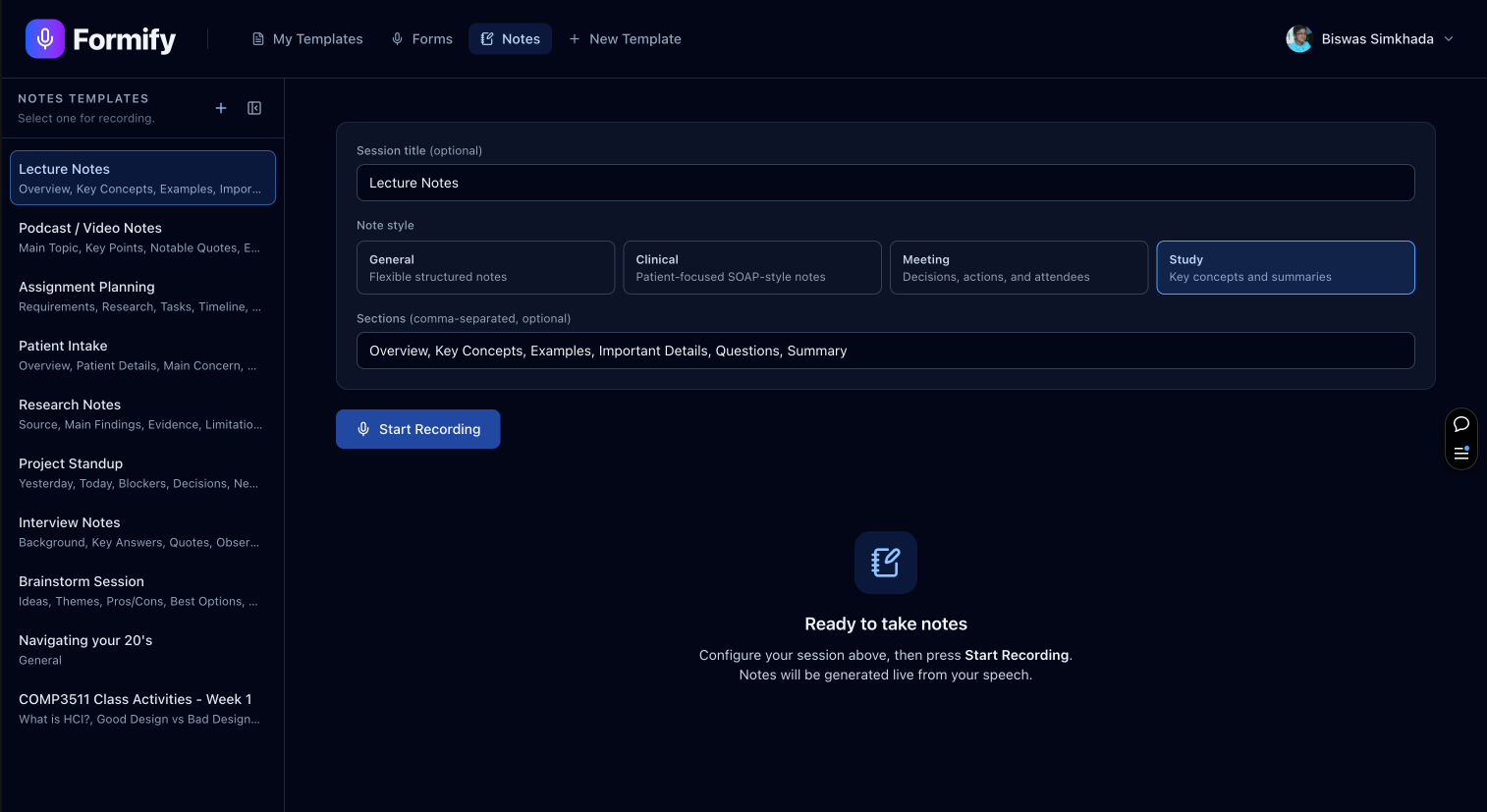
Notes Capture - Template Structure Darkmode
-
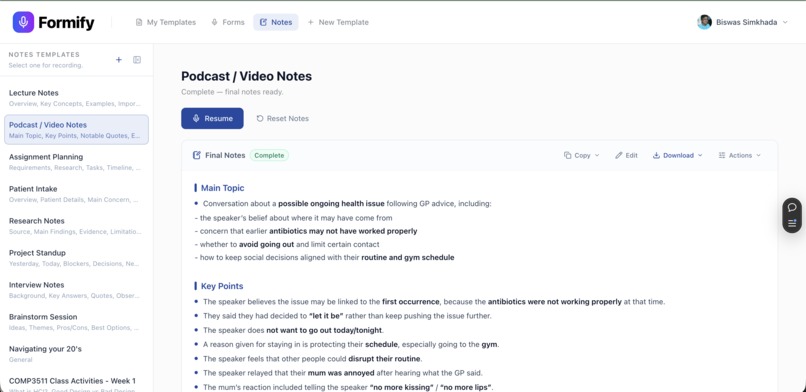
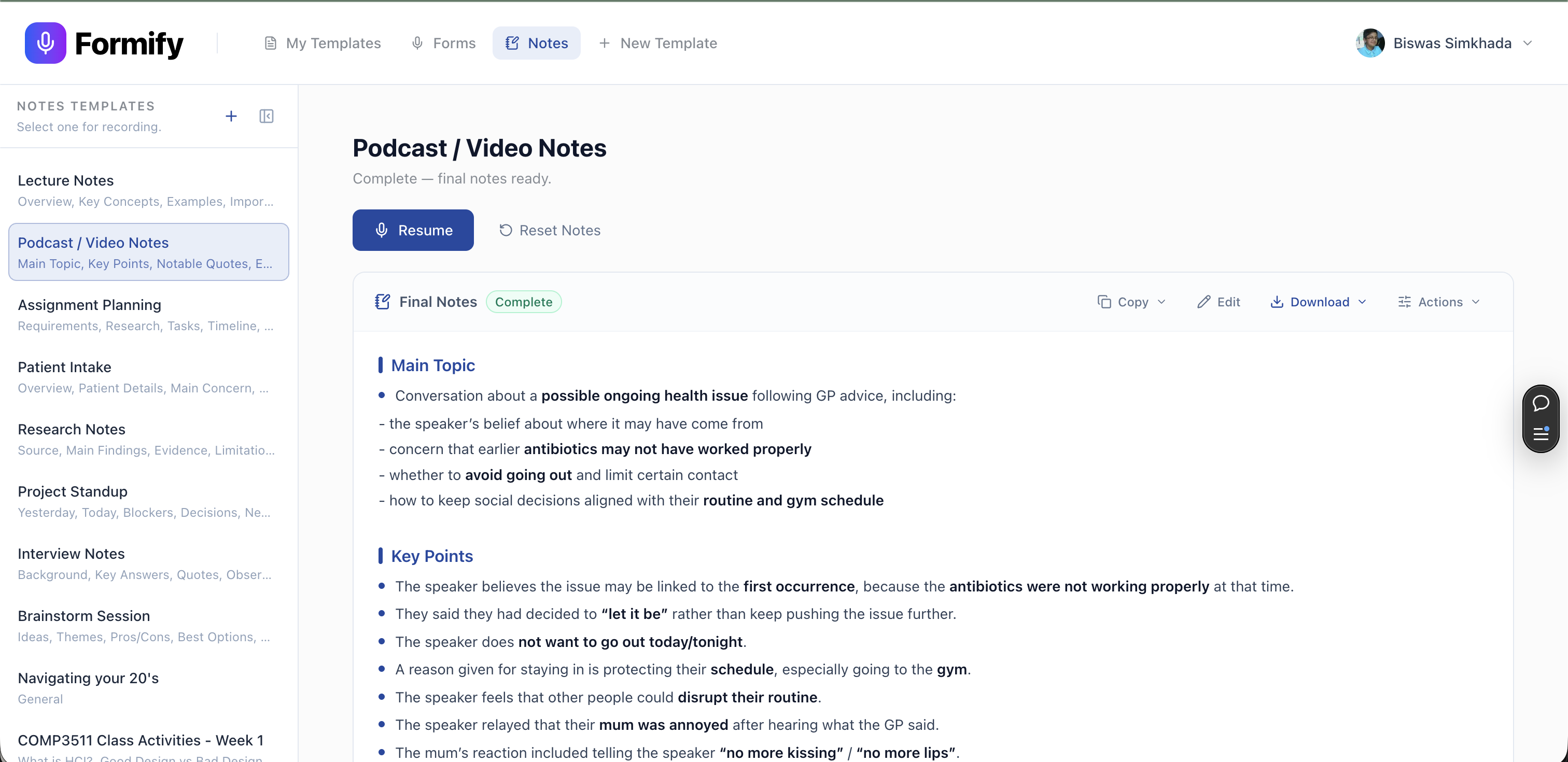
Notes Capture - Finalised Notes
-
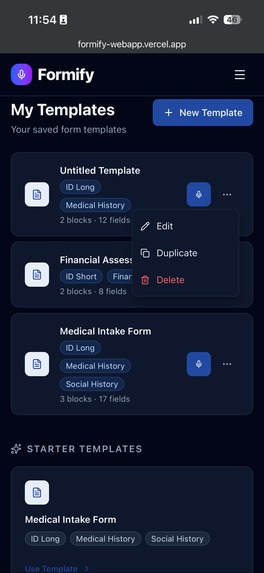
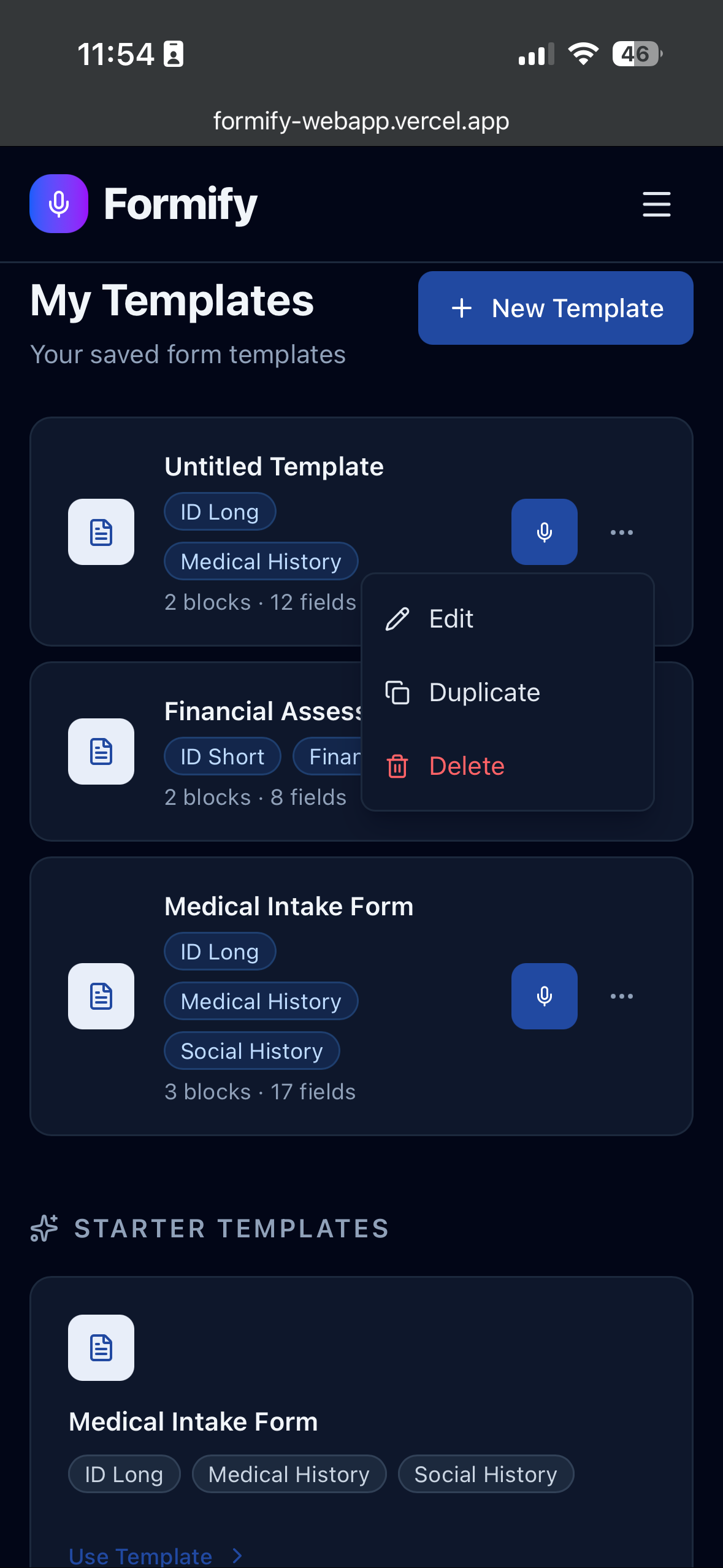
Mobile UI My Templates
-
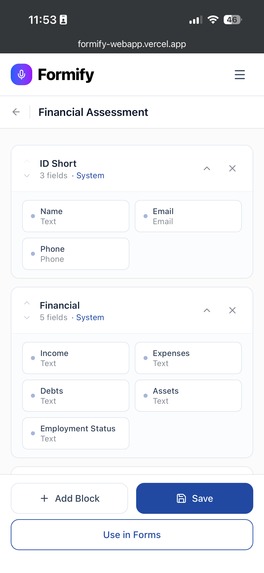
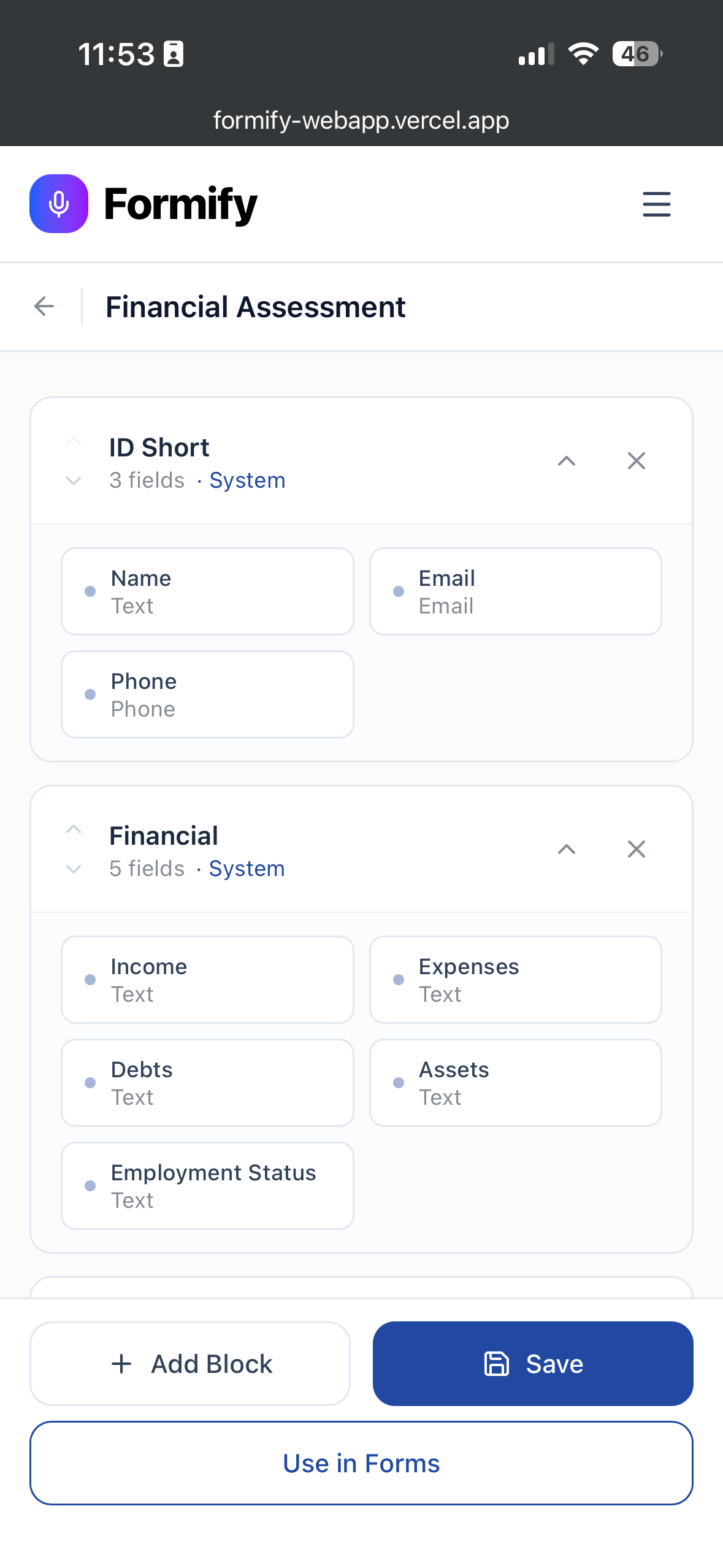
Mobile UI Form Template Creation
About Formify
Formify was inspired by a simple idea: people should not have to manually turn messy information into structured work.
Whether it is a lecture, meeting, interview, brainstorm, or spoken explanation, valuable information often starts as natural conversation. The problem is that the output people need afterwards is usually much more organised: notes, summaries, forms, templates, documents, or action items.
Formify is built to bridge that gap. It is an AI-powered workspace that helps users capture information naturally and turn it into something structured and useful. Users can record live sessions, generate organised notes, transform those notes into cleaner summaries, and create form-style outputs without having to start from a blank page.
The goal is simple:
Speak naturally, capture the important details, and let Formify organise the structure around you.
The project started as a way to make forms easier to generate, but it grew into a broader productivity tool around structured information. I wanted Formify to be useful for students, teams, creators, and anyone who needs to collect, organise, or reuse information quickly. A major design goal was making it feel like a genuinely free and lightweight tool rather than a restricted freemium product.
I built Formify using a TypeScript-based full-stack architecture with the T3 Stack. The frontend focuses on a clean and responsive user experience for recording, editing, templates, note actions, and form workflows. The backend handles real-time transcription, AI generation, note finalisation, transformations, and recovery flows.
I also worked on making the system privacy-conscious by keeping Formify’s canonical state owned by the app rather than relying on provider-owned conversation state.
While building Formify, I learned a lot about:
- full-stack product engineering;
- real-time systems;
- AI prompt design;
- WebSocket reliability;
- frontend state management;
- database-backed templates;
- user experience design.
One of the biggest lessons was that building an AI product is not just about calling a model. The difficult part is making the output reliable, editable, recoverable, and useful inside a real interface.
Some of the biggest challenges were around turning unpredictable speech into structured outputs, keeping live notes useful without becoming noisy, designing flexible form and note templates, and making the app feel reliable across long sessions, reconnects, final generation, and user edits.
I also had to balance product simplicity with more complex engineering concerns like canonical state, local persistence, exports, undo/redo, and safe recovery after interruptions.
Overall, Formify taught me how much work goes into making an AI tool feel effortless. The final goal is for users to focus on their ideas, classes, meetings, or workflows while Formify quietly handles the structure around them.
Built With
- live-audio-transcription
- next.js
- node.js
- openai-apis
- postgresql
- prisma
- react
- render
- t3-stack
- tailwind-css
- trpc
- typescript
- vercel
- websockets

Log in or sign up for Devpost to join the conversation.