Inspiration
I have always been fascinated by both machine learning and ants. Ant colonies can forage, communicate, build, defend territory, and adapt without a central leader. I wanted to explore whether neural networks could produce similar intelligence while remaining limited by realistic ant biology.
What I Built
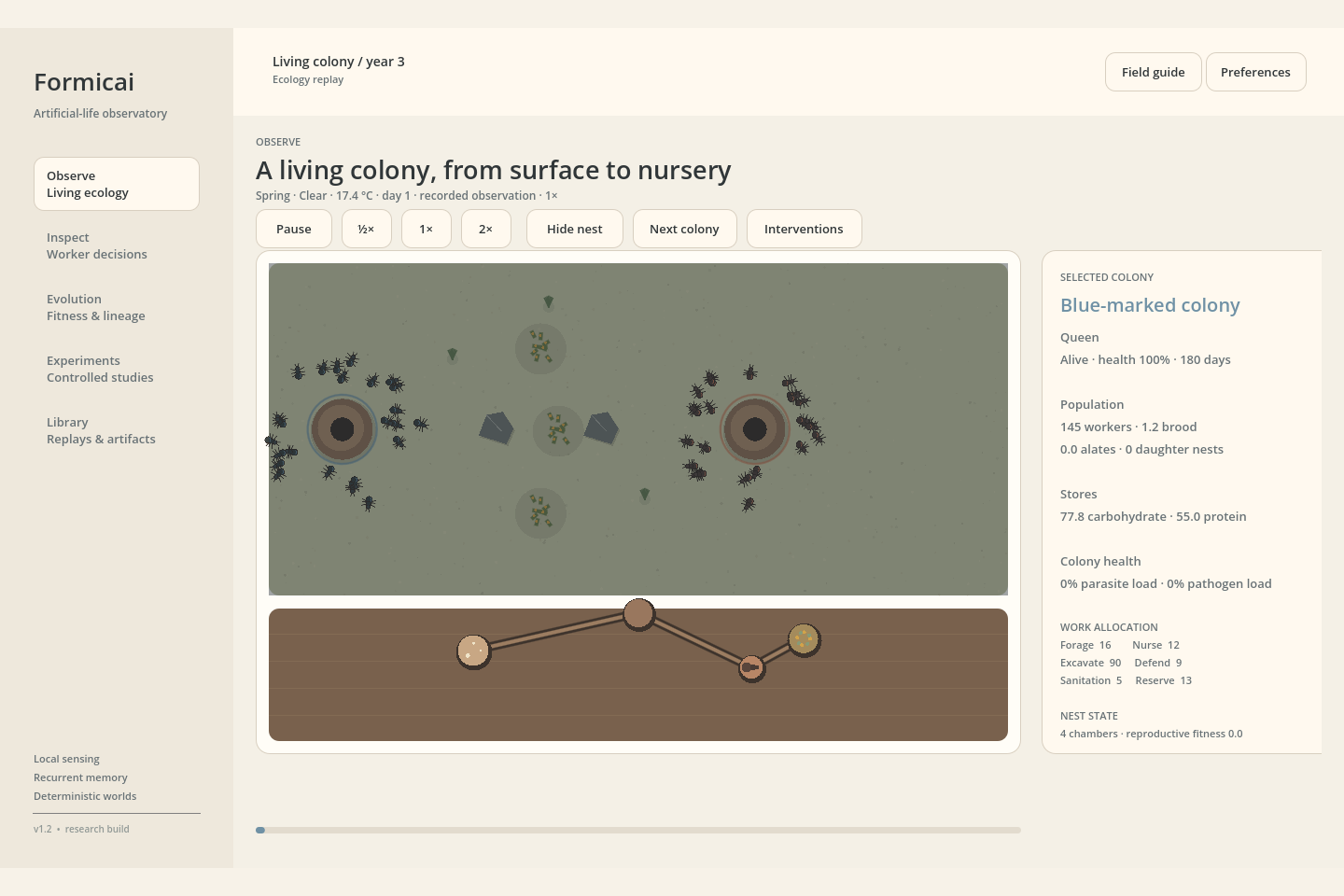
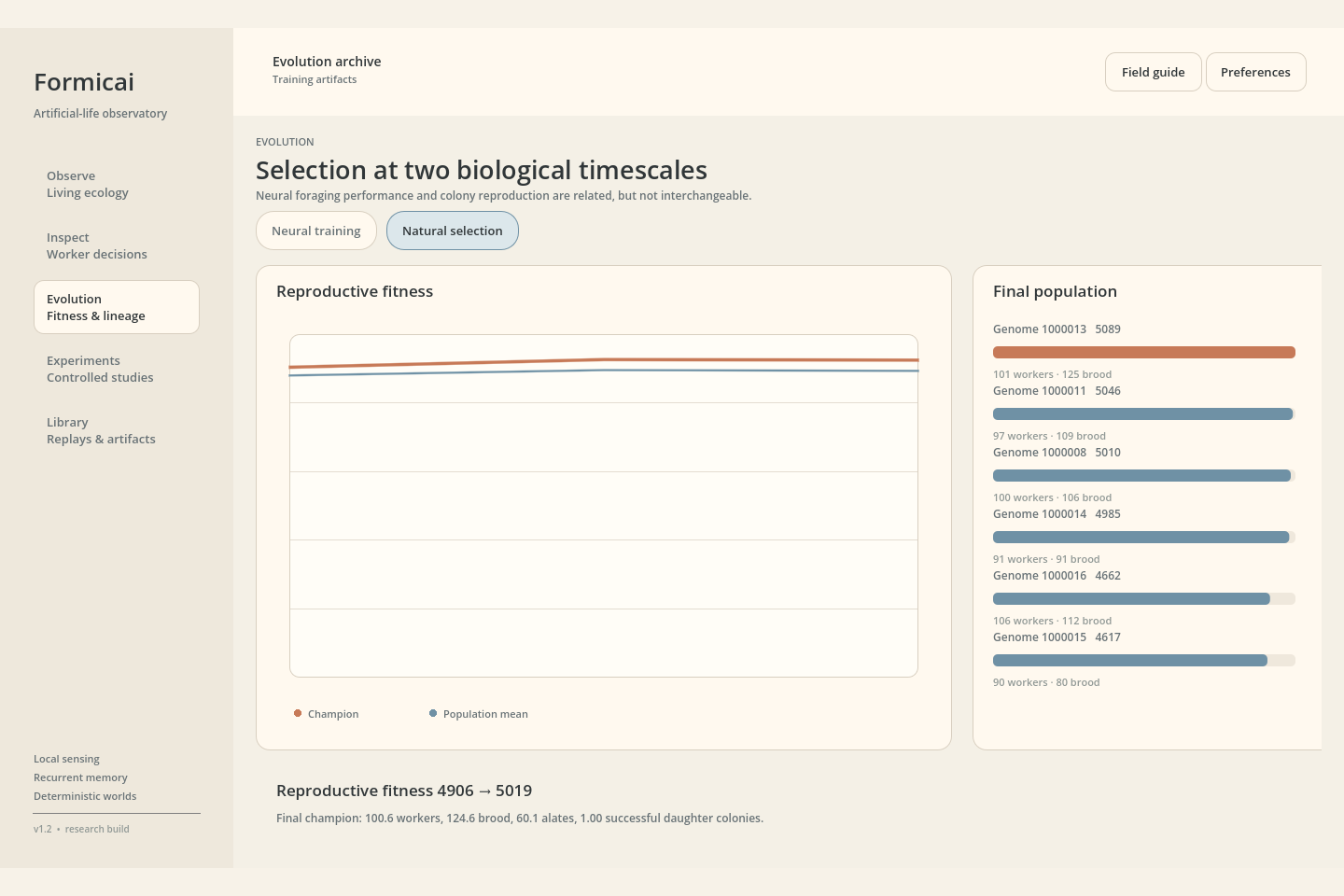
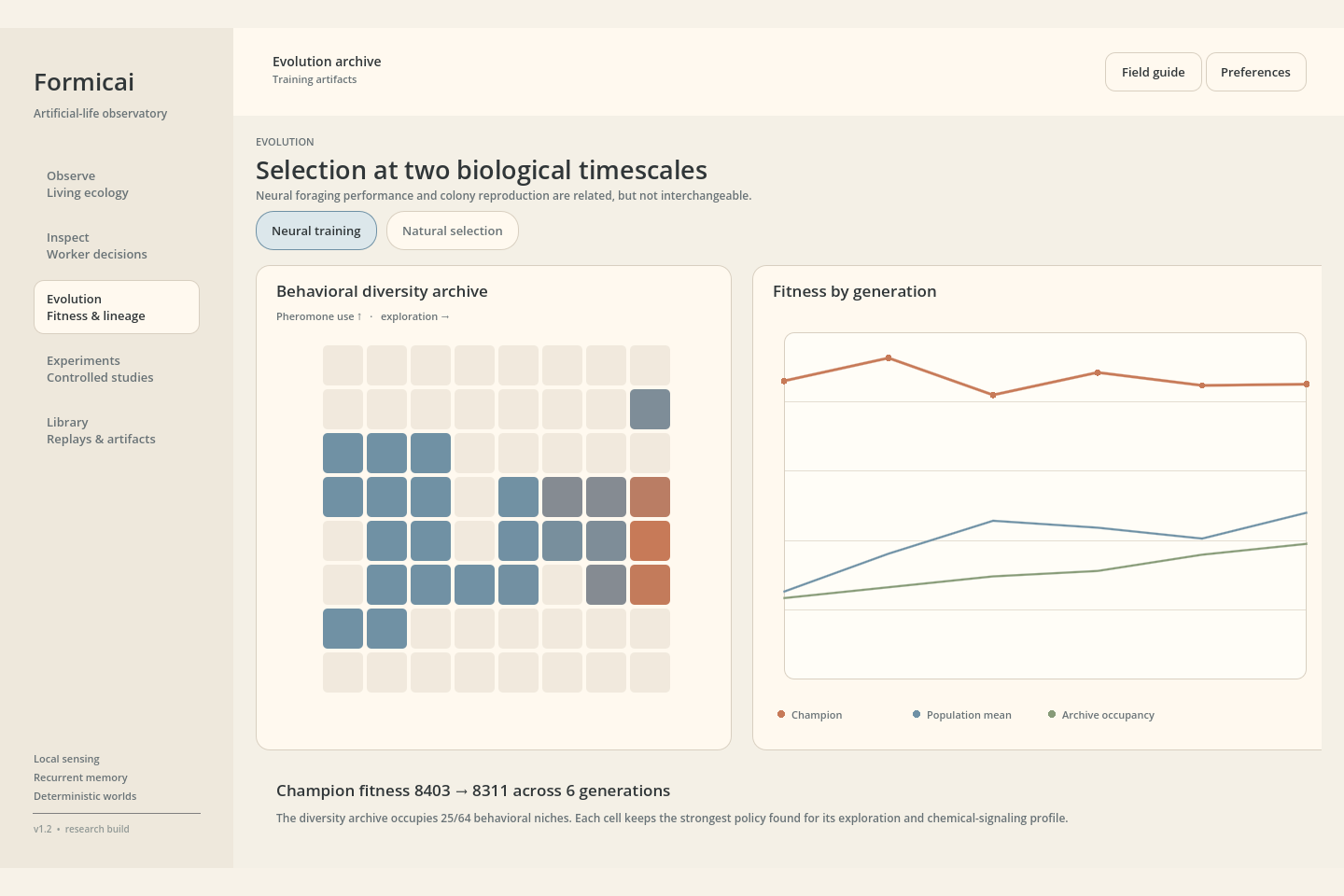
Formicai is a visual artificial-life laboratory where neural ants evolve, gather resources, communicate through pheromones, fight, build nests, respond to weather and disease, and reproduce.
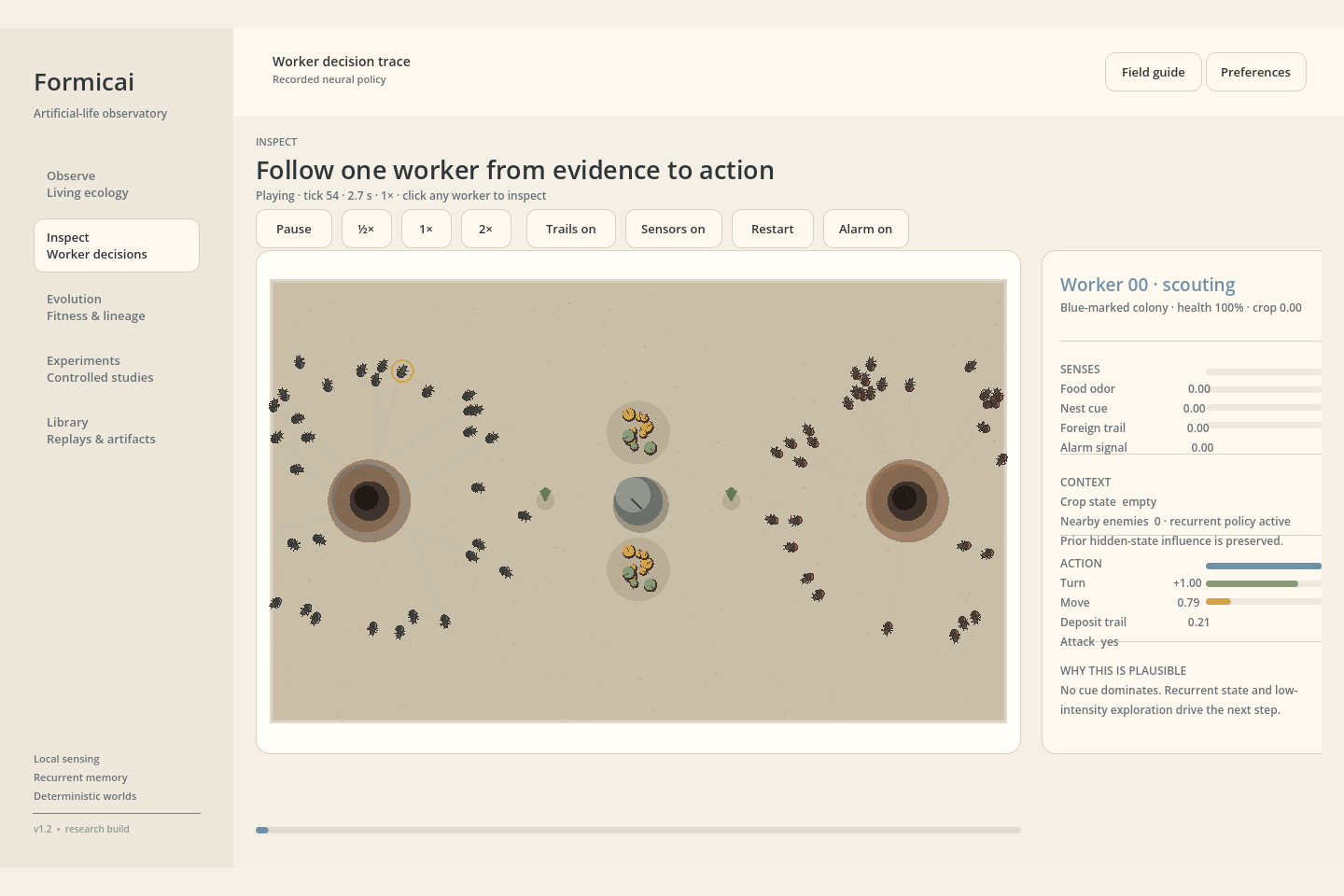
Every ant makes decisions using only local information—there is no global map or colony commander. The project includes evolution, deterministic replays, individual neural-decision inspection, ecosystem simulation, and controlled research experiments.
What I Learned
I learned that complex behavior does not always require complex individual agents. Memory, environmental feedback, communication, and selection can create colony-level patterns from many small decisions.
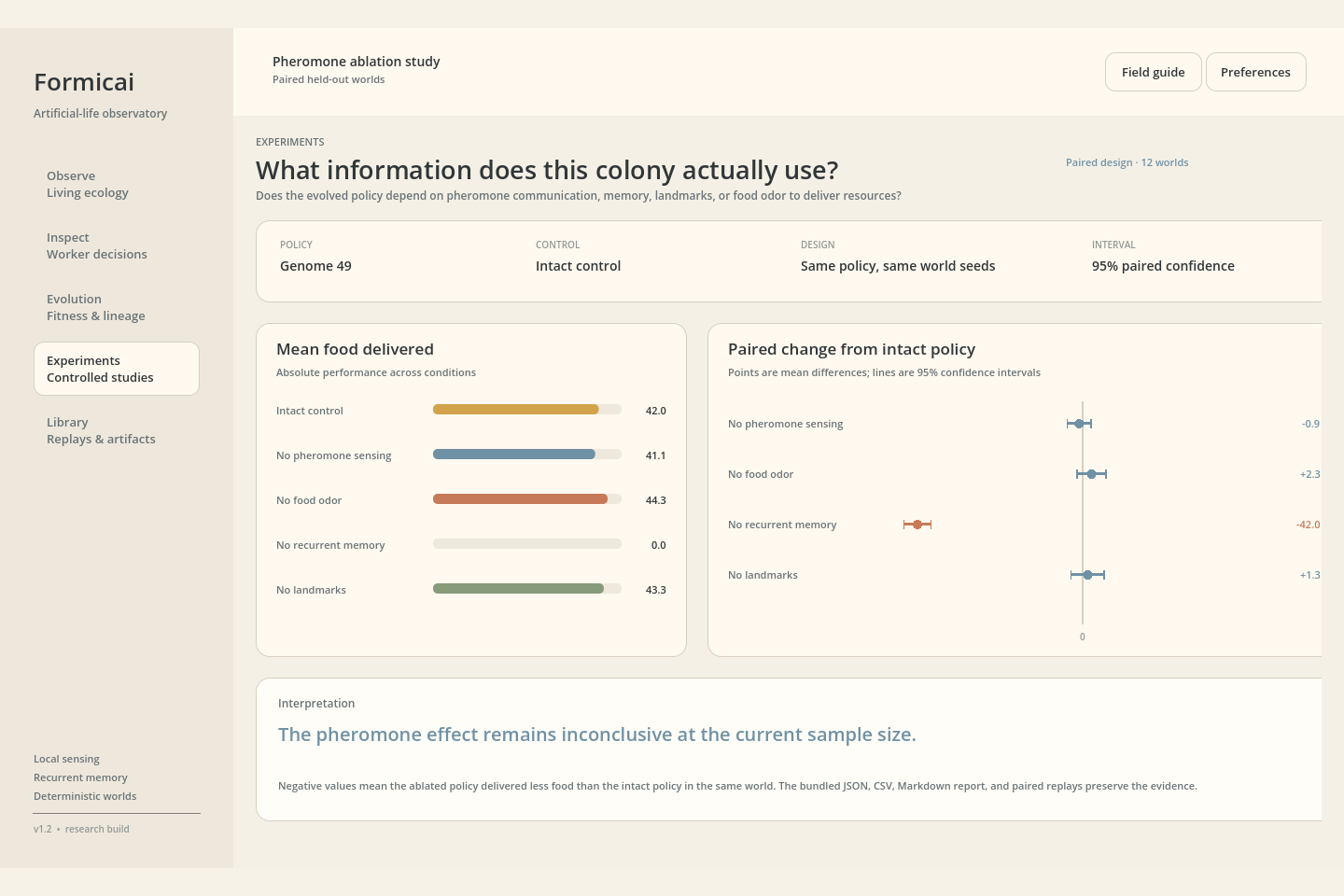
One experiment showed that recurrent memory was essential to the evolved policy, while the benefit of pheromone sensing remained inconclusive. Reporting uncertain results honestly became an important part of the project.
Challenges
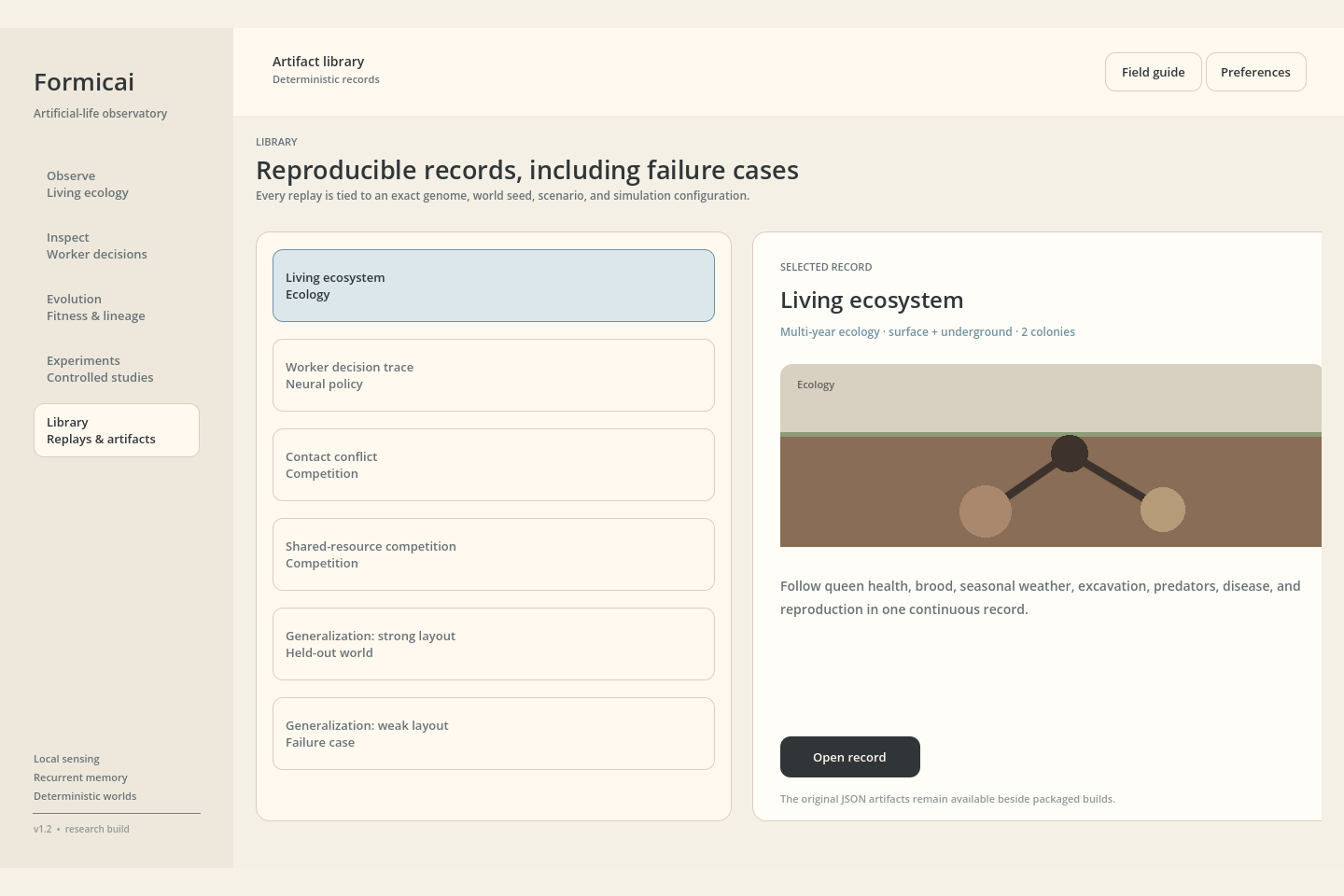
The biggest challenge was balancing biological realism, visual quality, and performance. I also had to make the simulation deterministic so experiments could be repeated exactly.
Formicai grew from simple moving rectangles into a complete visual research platform that lets me watch, test, and better understand emergent intelligence.
What’s Next?
Next, I want to simulate individual underground workers, physically spawn daughter colonies, support larger multi-colony ecosystems, and improve the experiment builder. I also hope to publish Formicai as an open-source educational and research tool.
Built With
- codex


Log in or sign up for Devpost to join the conversation.