-
-
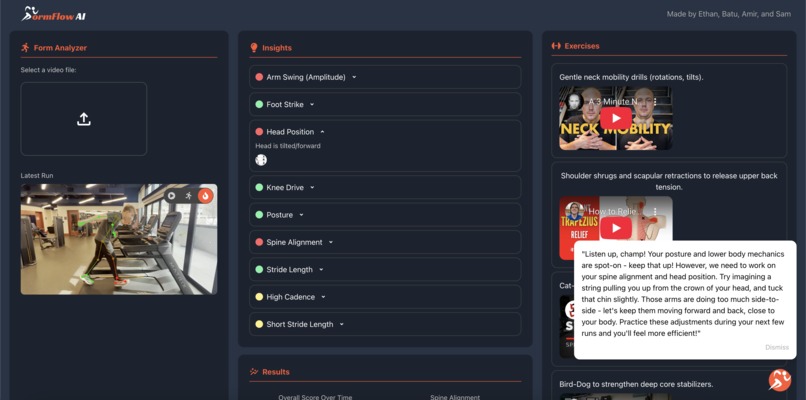
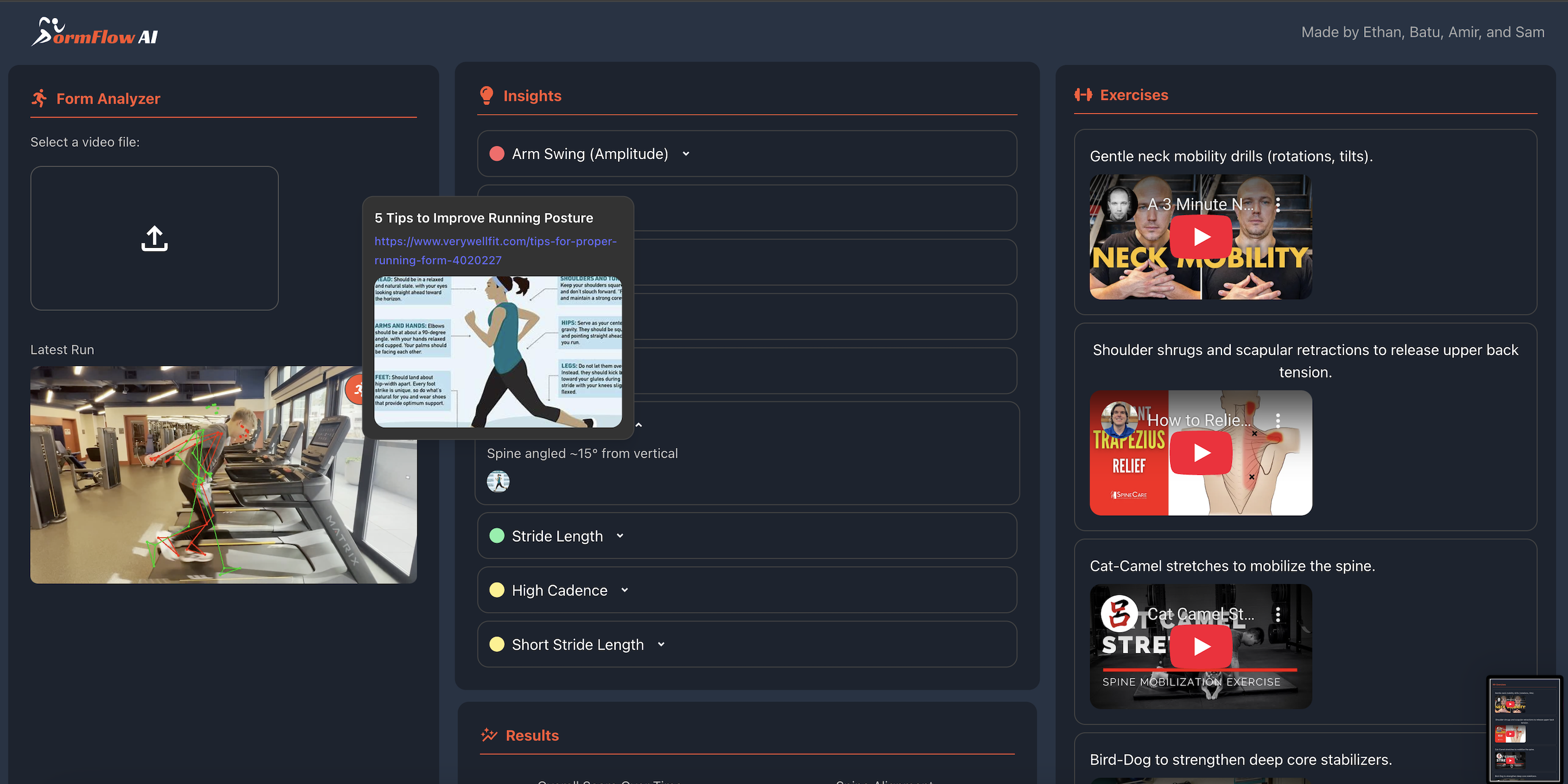
Bad Running Form Example
-
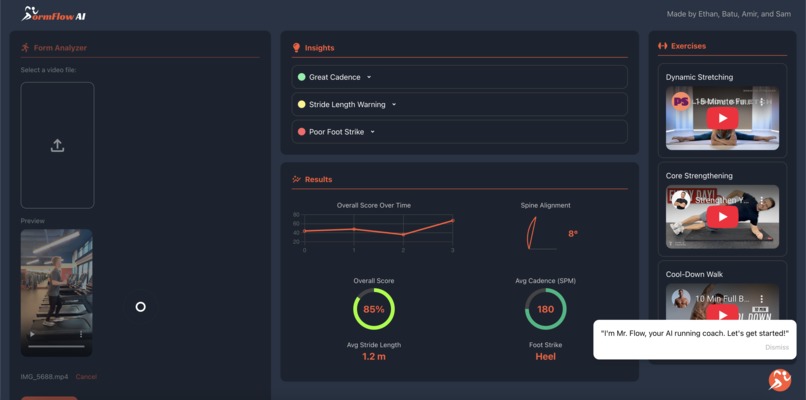
Uploading Running Video
-
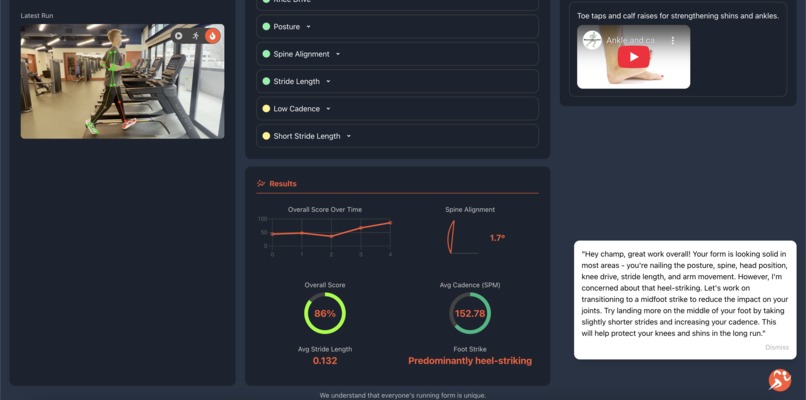
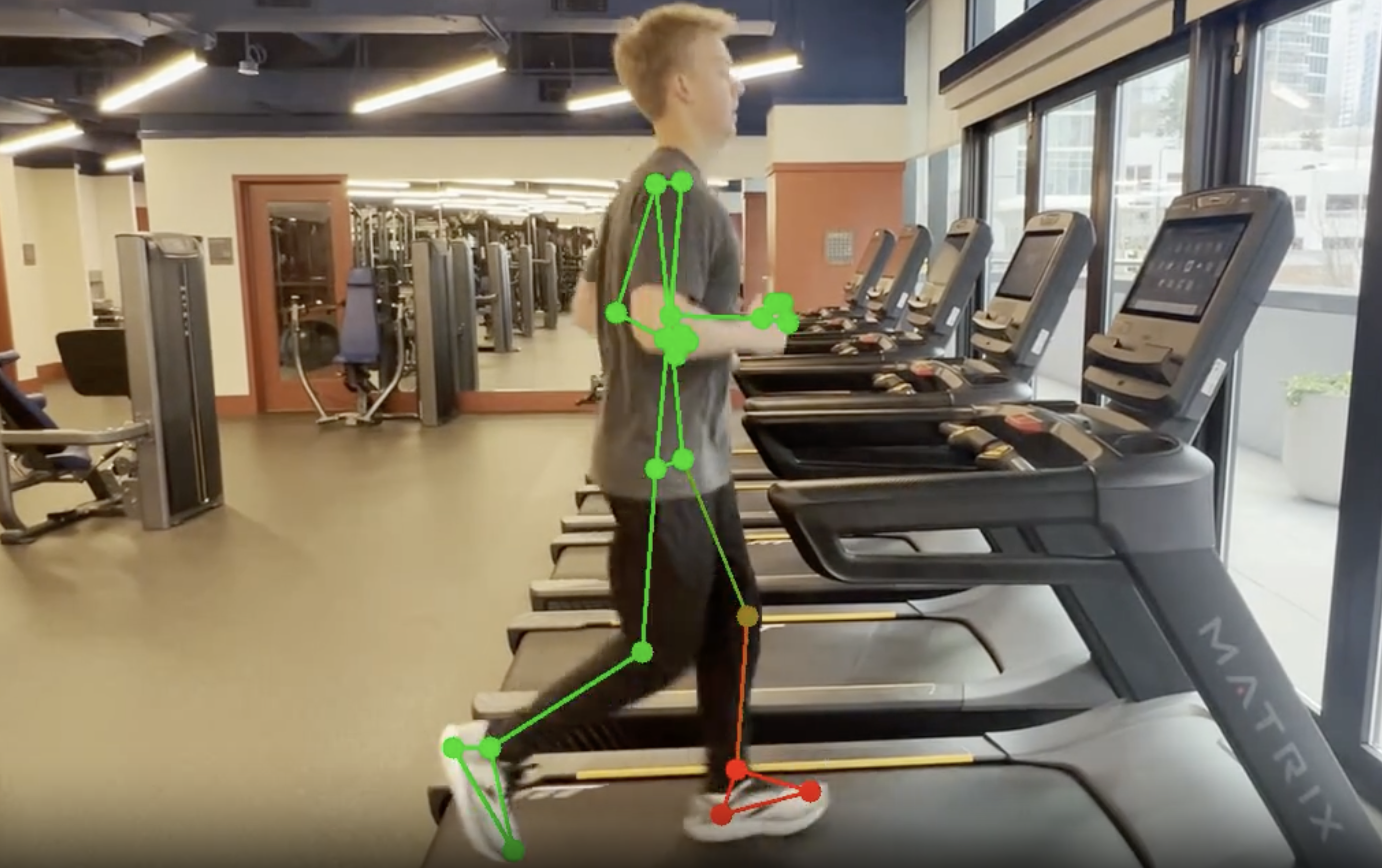
Heel-Striking Example
-
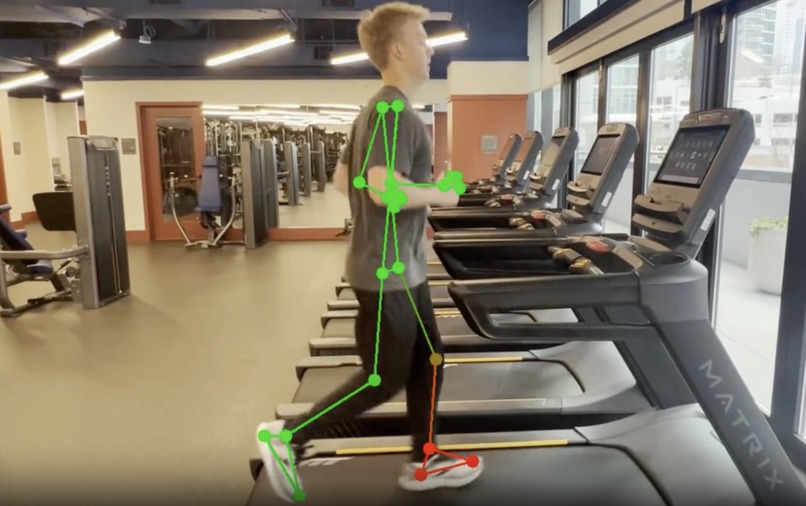
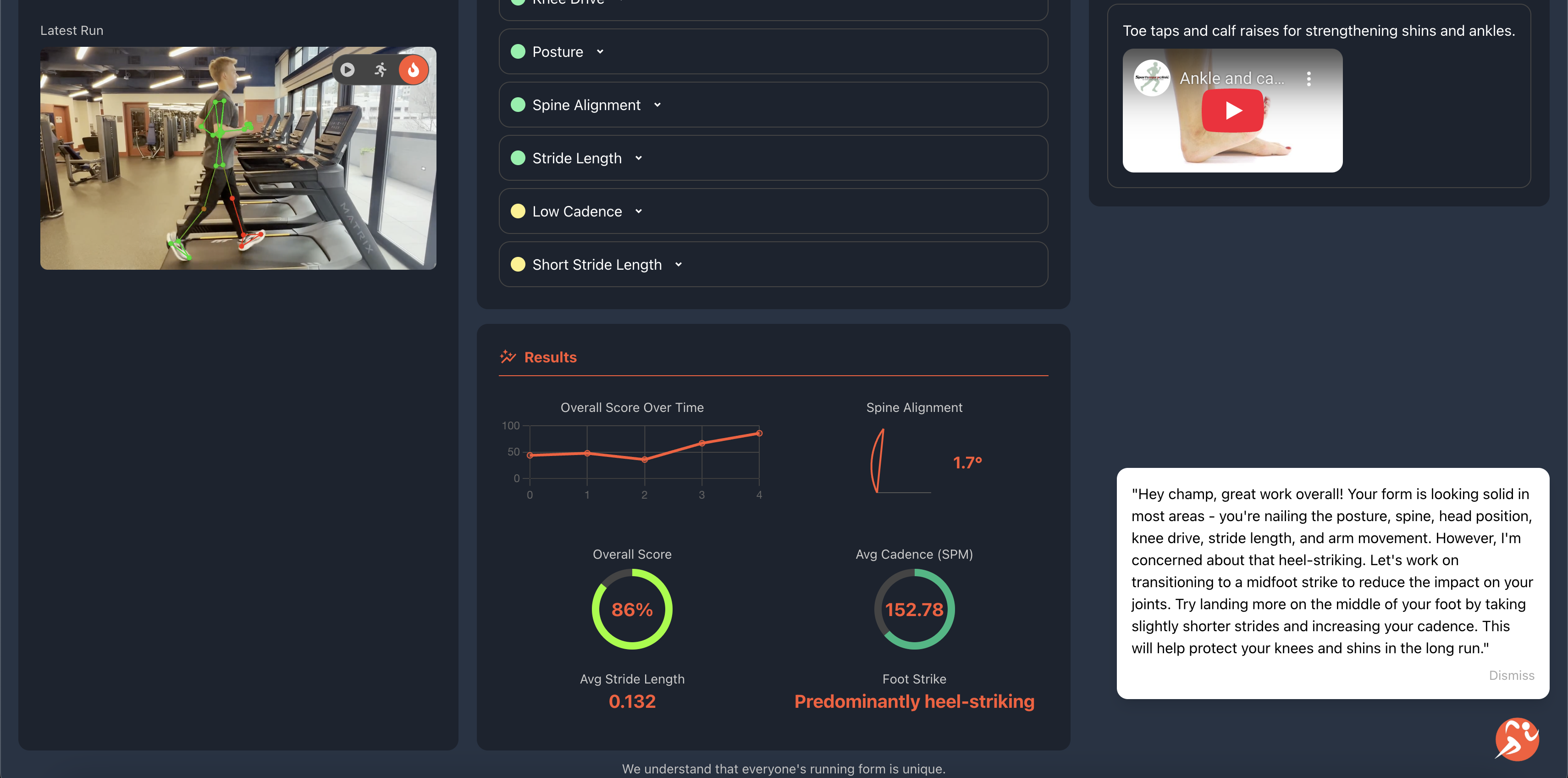
Stress-Map
-
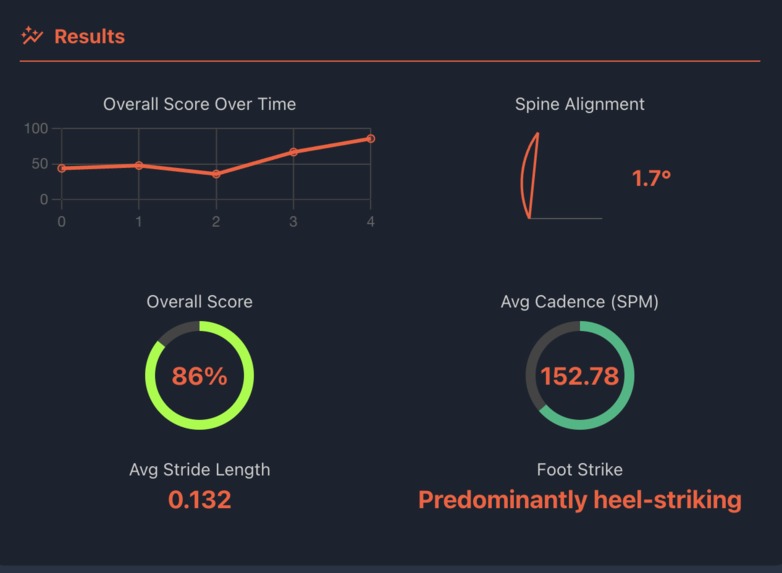
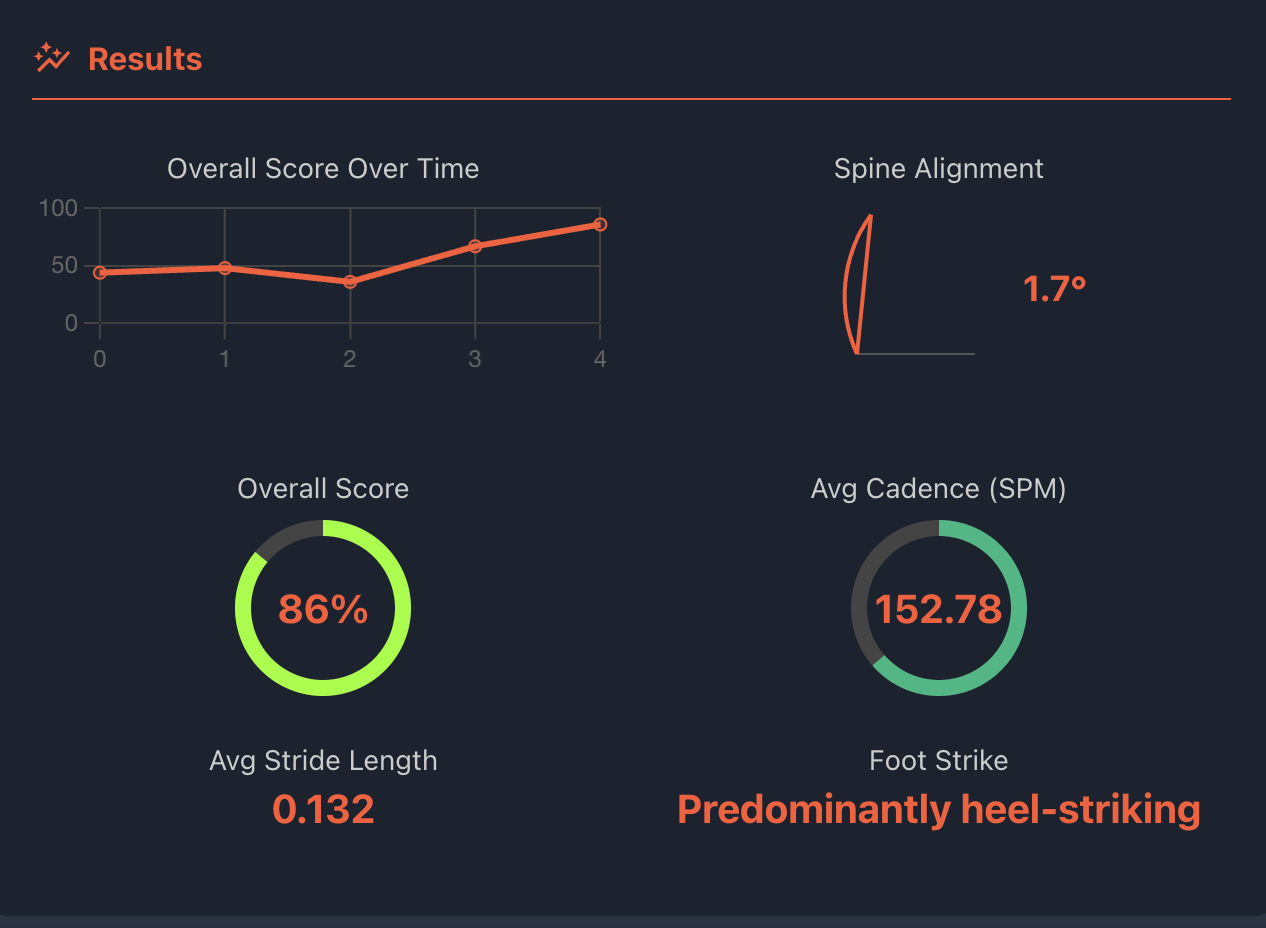
Results/Graphs
-
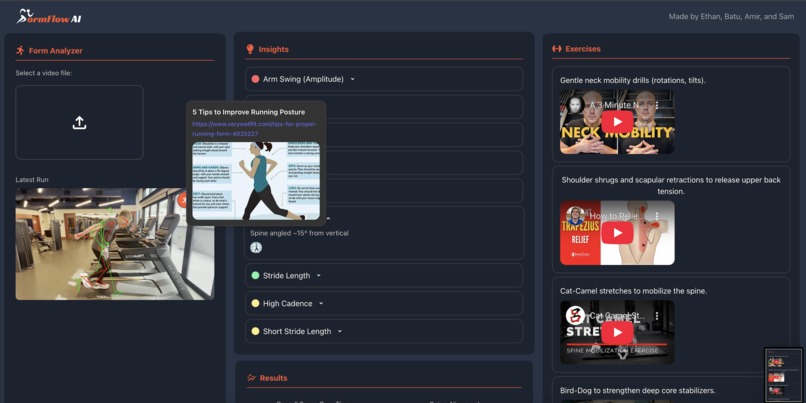
Tips
About the Project
Inspiration
As athletes and health enthusiasts, we recognized that improper running form leads to joint deterioration, muscular strain, and reduced performance. Rather than treating injuries after they occur, we wanted to take a preventative approach that enhances both health and athletic performance.
This led to FormFlow, an AI-powered running coach that provides real-time, conversational feedback to optimize form, prevent injuries, and improve efficiency. Whether you're a casual runner or a competitive athlete, FormFlow helps you run smarter, stay injury-free, and maximize performance.
What it does
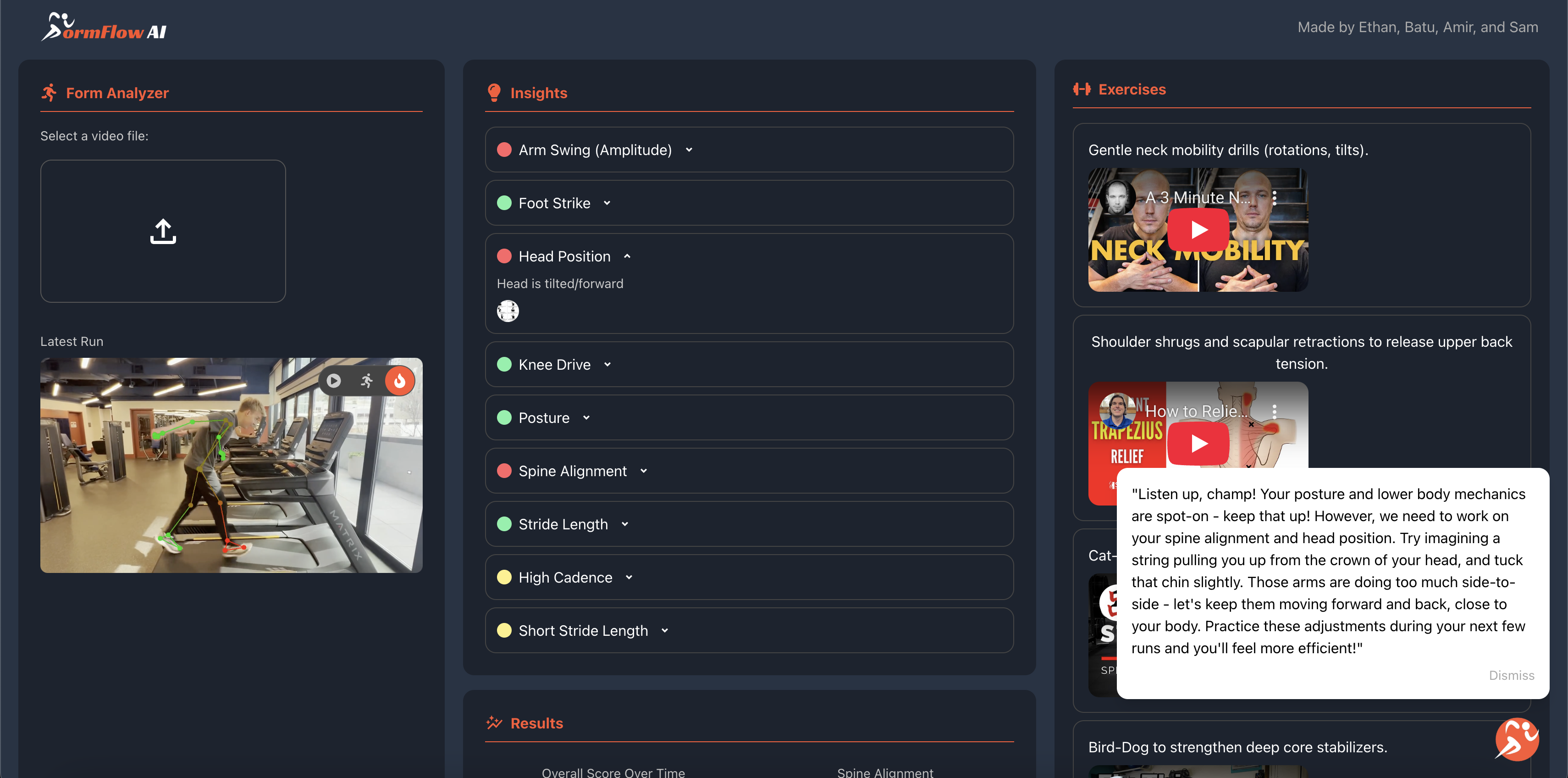
FormFlow tracks and analyzes musculoskeletal movements from uploaded running videos, evaluating:
- Posture and spine position
- Head alignment
- Knee drive height
- Foot striking angle (heel vs. toe strike)
- Stride length and arm swing
Based on these insights, FormFlow provides:
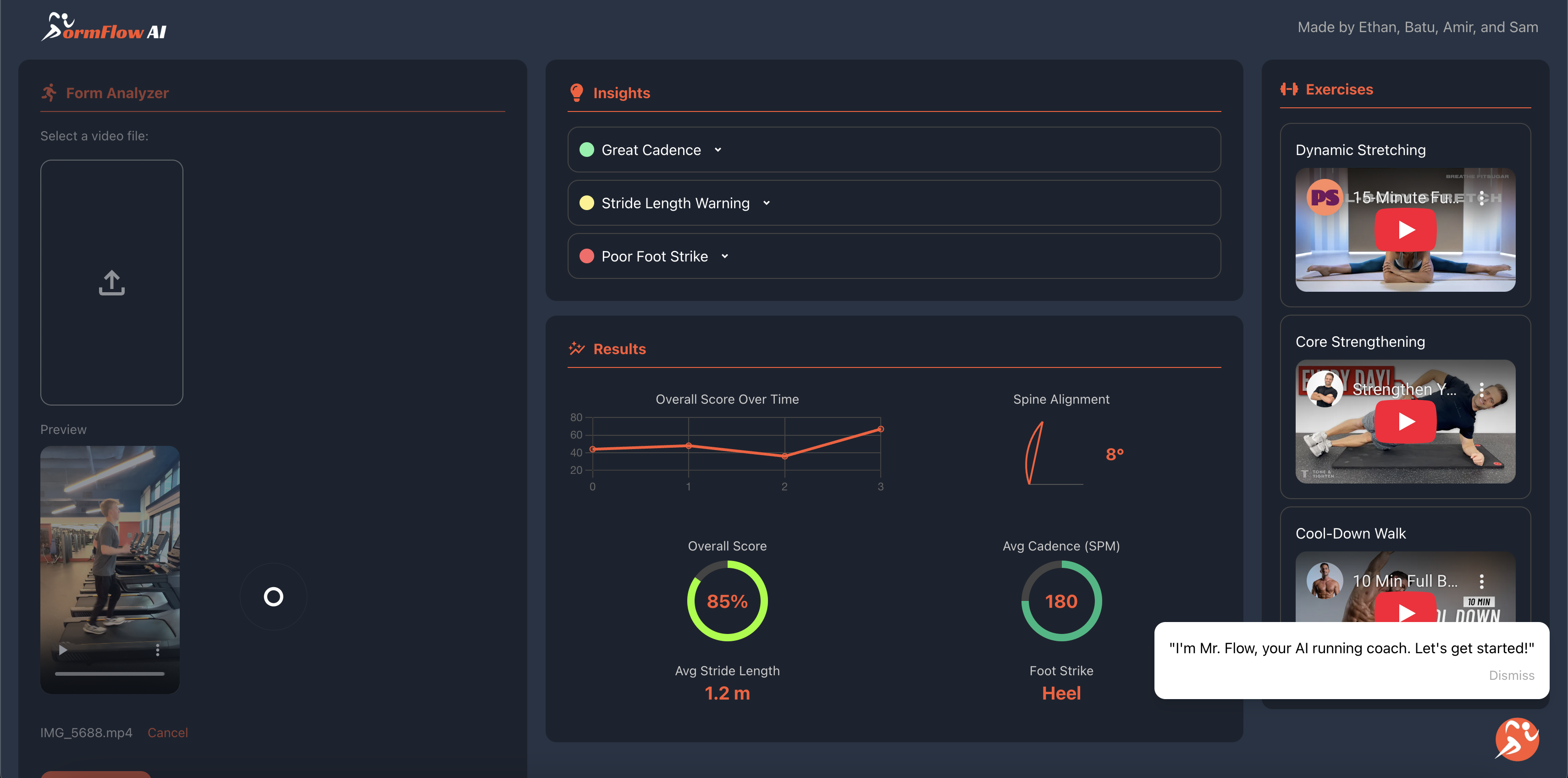
- A form score to assess running efficiency
- Visual overlays comparing form to an optimal model
- Progress tracking graphs for long-term improvement
- Personalized exercises to correct deficiencies
- Conversational AI insights to deliver engaging, easy-to-understand coaching
For athletes, FormFlow fine-tunes running mechanics, reducing energy waste, improving stride efficiency, and preventing injuries that could impact long-term performance.
How we built it
We developed FormFlow as a web application with a React frontend and a Flask backend. Key components include:
Backend (Flask Python Server)
- Motion Tracking & Analysis – Extracts skeletal movement data using MediaPipe.
- Custom Form Assessment Algorithm – Evaluates biomechanics to assign a form score.
- AI-Powered Coaching – Uses Claude AI to generate conversational, engaging feedback that turns raw data into actionable insights.
- Video Processing & Storage – Generates output videos with form overlays, securely stored in AWS S3.
Frontend (React)
- User-Friendly Dashboard – Upload videos and receive instant feedback.
- Progress Visualization – Graphs tracking stride length, form score, and key metrics.
- Real-Time Overlays – Compares musculoskeletal positioning to optimal form.
- Historical Performance Tracking – Helps users monitor improvement over multiple runs.
Challenges we faced
- Ensuring precise motion tracking – Required calibrating skeletal detection for accuracy.
- Making feedback actionable – Translating complex biomechanics into easy-to-follow coaching.
- Balancing fitness and healthcare applications – Ensuring FormFlow benefits both injury prevention and performance optimization.
- Enhancing AI-driven insights – Crafting engaging, natural coaching feedback instead of just raw data.
- Creating a seamless experience – Designing a simple, intuitive interface for all runners.
Accomplishments we're proud of
FormFlow bridges sports performance and healthcare, giving runners at all levels AI-driven coaching based on real biomechanics. By combining motion tracking, form analysis, and personalized insights, we empower users to avoid injuries, improve running efficiency, and reach their peak potential.
What we learned
- Biomechanics plays a key role in preventing injuries and improving efficiency.
- AI makes feedback more engaging by converting raw data into clear, conversational coaching.
- Balancing injury prevention with athletic performance ensures broad appeal.
- Optimizing the user experience makes advanced biomechanics accessible to all runners.
What’s next for FormFlow
We plan to expand FormFlow’s analytics capabilities and introduce customized training programs to enhance injury prevention and performance coaching.
Future updates will include:
- Advanced performance metrics for speed, endurance, and efficiency.
- AI-driven training programs for strength and mobility.
- Real-time feedback via wearable integration for live coaching.
Our goal is to make FormFlow the ultimate AI running coach, helping runners at every level train smarter, stay injury-free, and perform at their best.

Log in or sign up for Devpost to join the conversation.