-
-
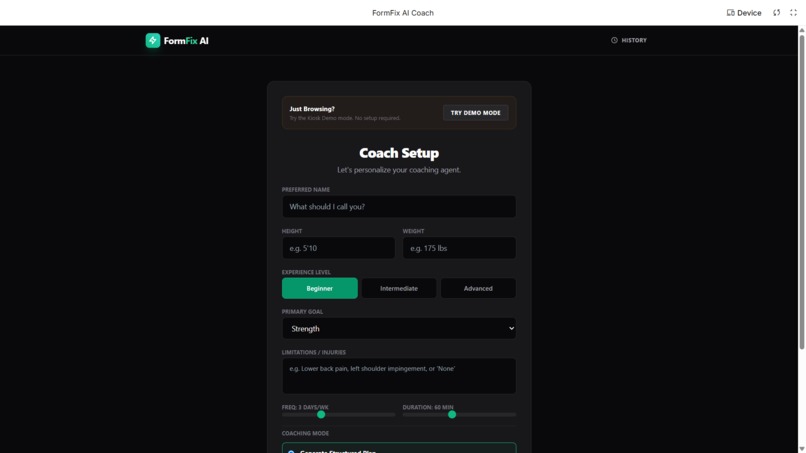
home page
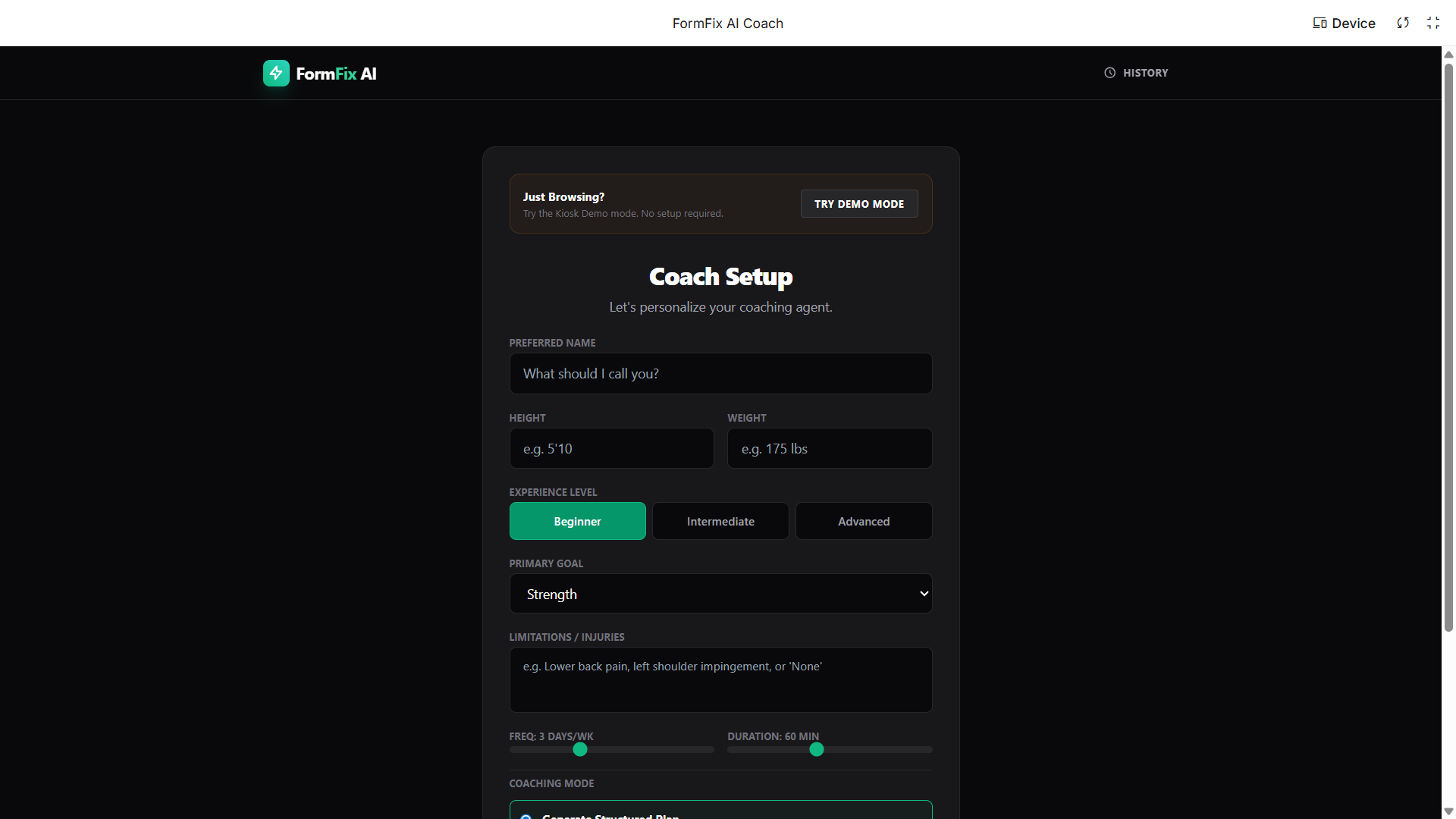
Inspiration
Many people(including me) work out without access to a personal trainer and rely on mirrors or generic online advice to judge their exercise form. Most fitness apps track sets or reps, but very few actually help users understand how their movement changes across repetitions.
I wanted to build a system that behaves more like a real coach—watching movement over time, identifying patterns, and giving focused, practical cues instead of overwhelming feedback.
I was also inspired by the idea of using large multimodal models not just for recognition, but for temporal reasoning and teaching, which is closer to how humans learn physical skills.
What it does
The project is an AI-powered movement coach that analyzes short workout videos and provides specific, structured feedback on exercise technique.
The system: Identifies the exercise being performed Segments repetitions and observes movement over time Detects technique changes between early and later reps Provides one high-impact coaching cue to improve execution Guides the user on what to focus on in the next attempt
In addition, the application includes a training plan generator that creates structured workout plans based on user inputs such as: Experience level Height and weight Training goals Available workout days The plans focus on exercise structure and progression rather than medical or health advice.
How we built it
The system was built using Google AI Studio and the Gemini multimodal API to analyze workout videos and reason over motion across time. The architecture includes: A video input pipeline for short exercise clips Prompt-structured temporal reasoning to analyze repetitions and movement patterns A feedback generator that enforces a structured coaching format A planning module that generates structured gym programs from user inputs The focus was on designing the system as a reasoning workflow rather than a simple video description tool.
Challenges we ran into
One of the biggest challenges was ensuring the model: Focused on movement patterns over time instead of static posture Gave one actionable correction instead of multiple generic tips Avoided medical or anatomical claims while still giving useful coaching Another challenge was designing prompts and constraints so feedback remained: Consistent Structured Practical for real users Balancing clarity, usefulness, and safety required multiple iterations.
Accomplishments that we're proud of
We are proud that the system: Performs temporal analysis across repetitions, not just frame-based observation Provides focused, coach-style cues rather than overwhelming feedback Generates structured training plans tailored to user inputs Maintains a consistent teaching format that helps users improve step by step We were also able to build a working demo that clearly shows the reasoning process and feedback cycle. Also I got a place where I could actually check my workout form.
What we learned
Through this project we learned: How multimodal models can reason about motion and sequences, not just images The importance of structured prompting to guide consistent outputs How limiting feedback can actually improve usability How to design AI systems that assist users without making medical or unsafe claims.
What's next for formfix ai
Next, we plan to: Provide visual overlays or annotated frames to highlight key moments in movement Build a rep counter and consistency score Improve the training planner with progression tracking and adaptive updates
Our long-term goal is to build an AI system that helps people learn movement skills safely, efficiently, and independently.
Built With
- gemini3
- googleaistudio
- react

Log in or sign up for Devpost to join the conversation.