-
-
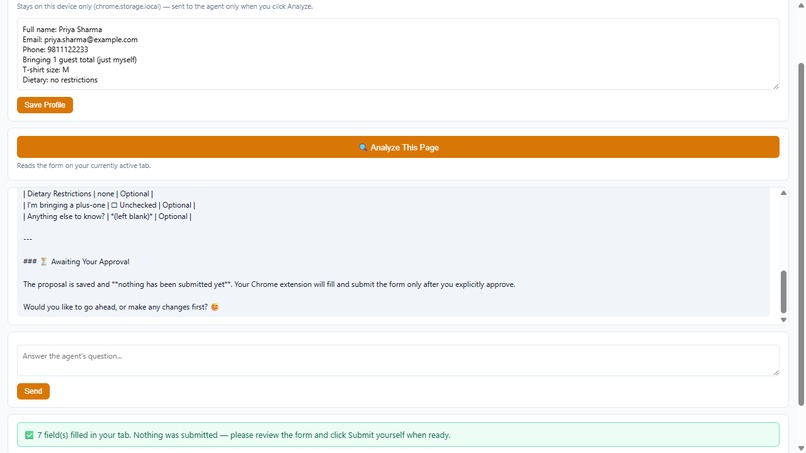
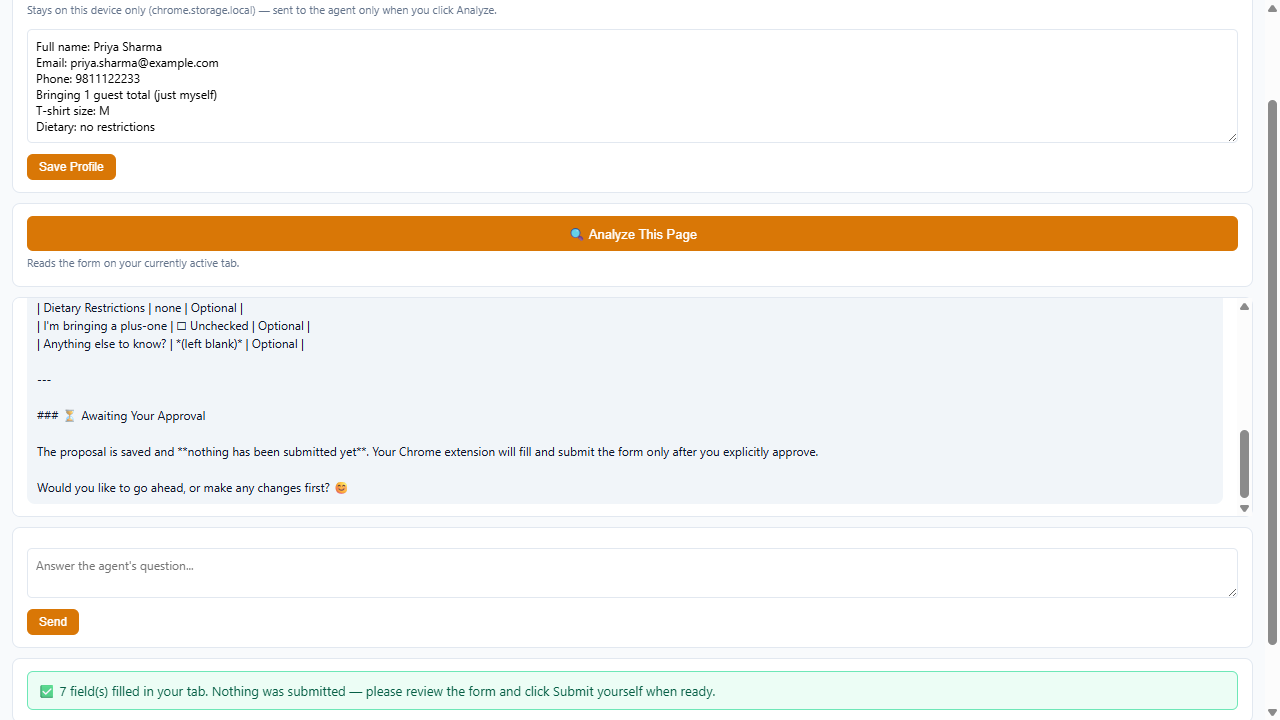
Extension side panel: profile vault + Analyze This Page
-
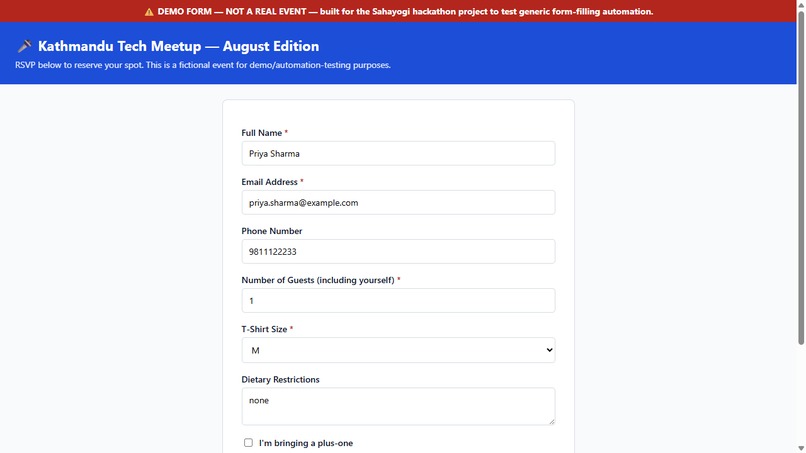
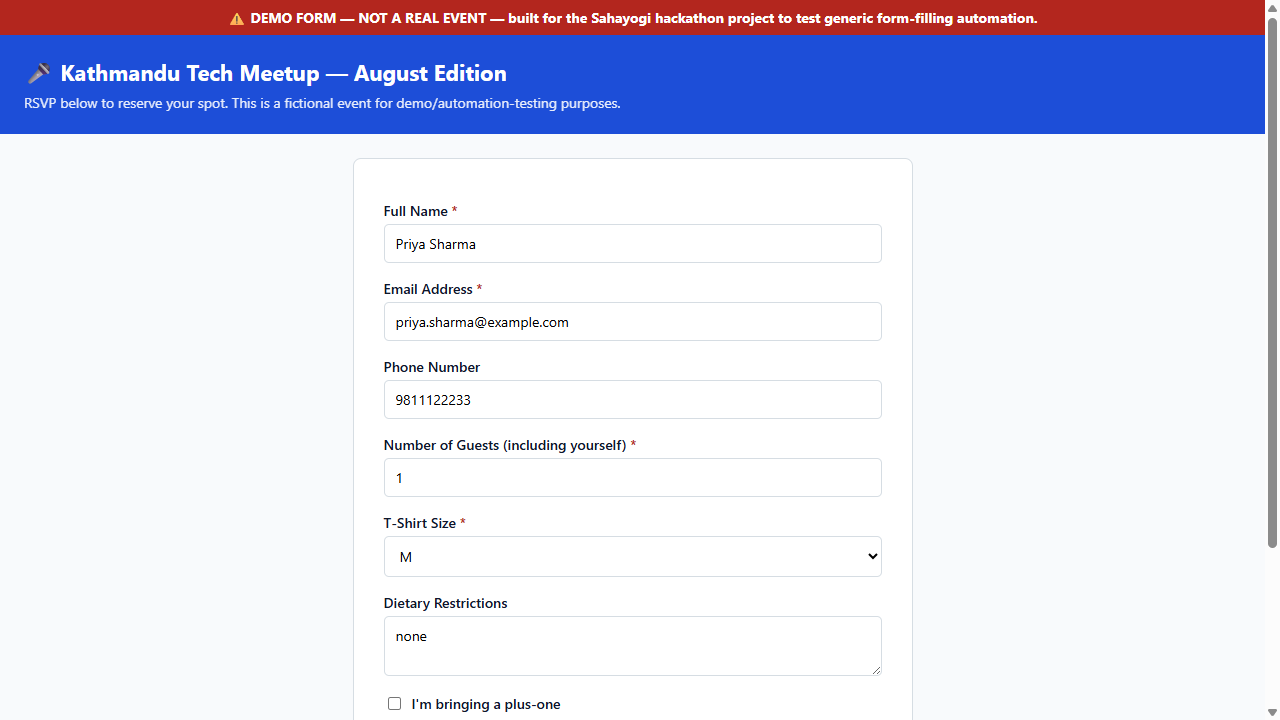
Authorize & Fill result: fields filled in-tab, user clicks Submit
-
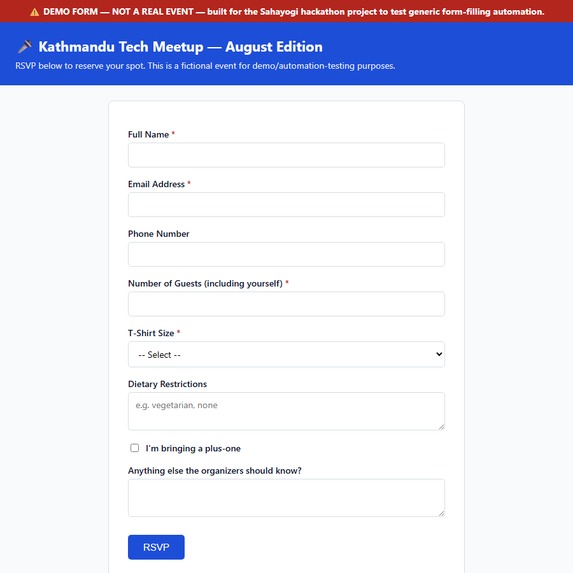
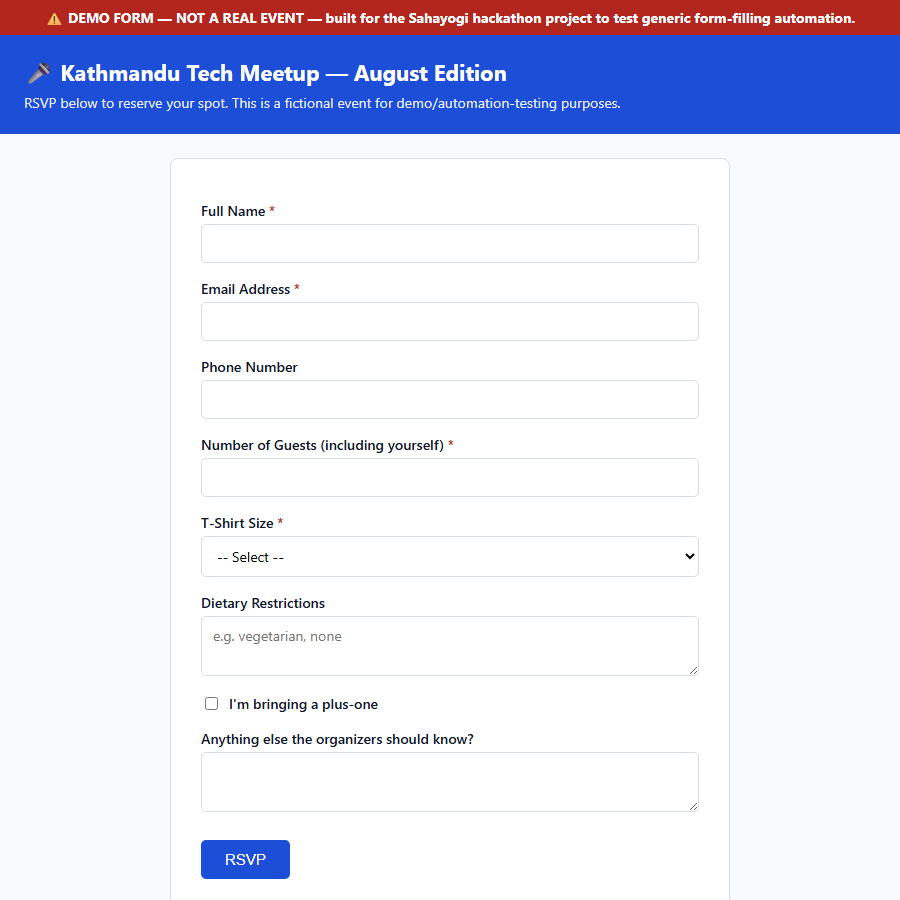
Demo RSVP form covering all field types
-
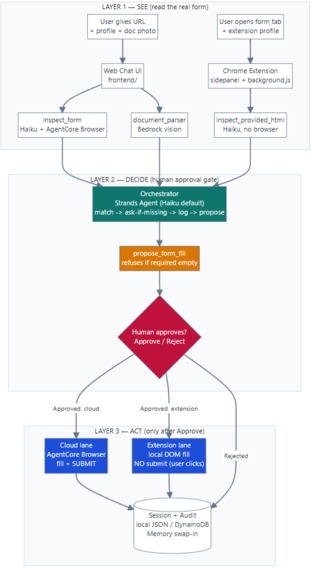
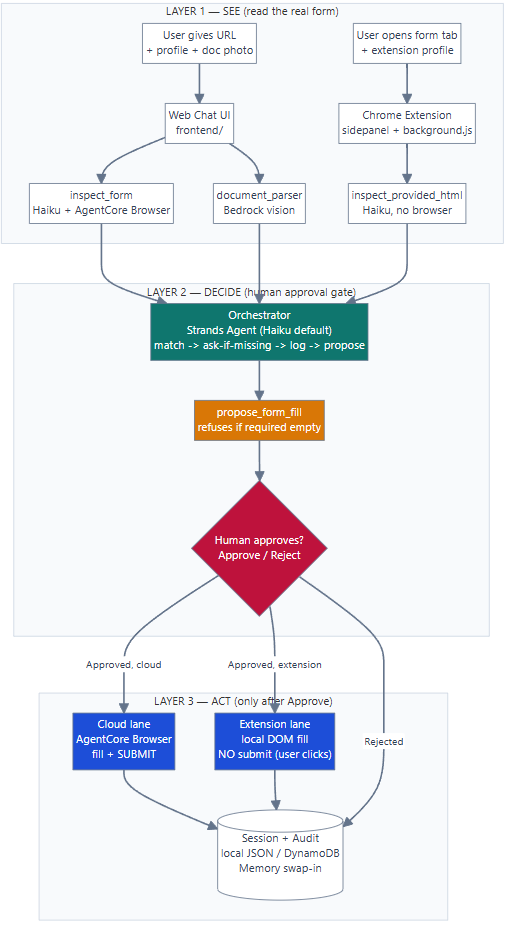
SEE → DECIDE → ACT architecture with human approval gate
-
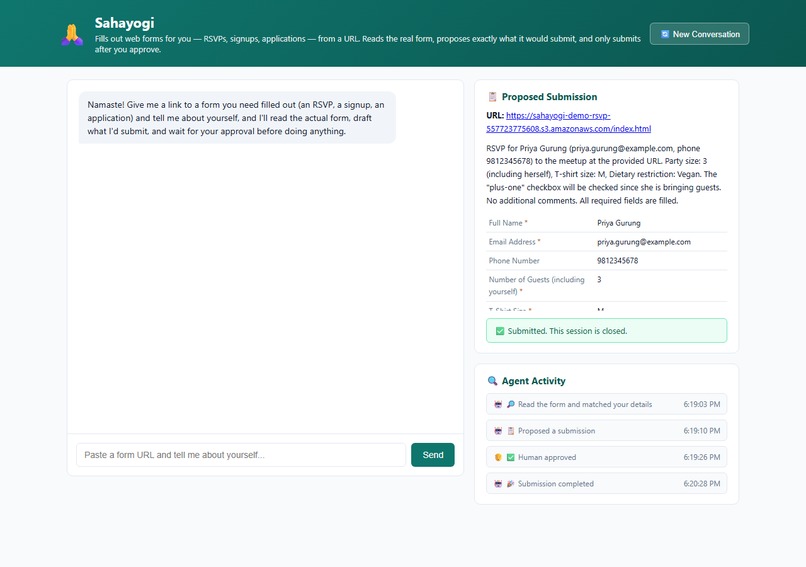
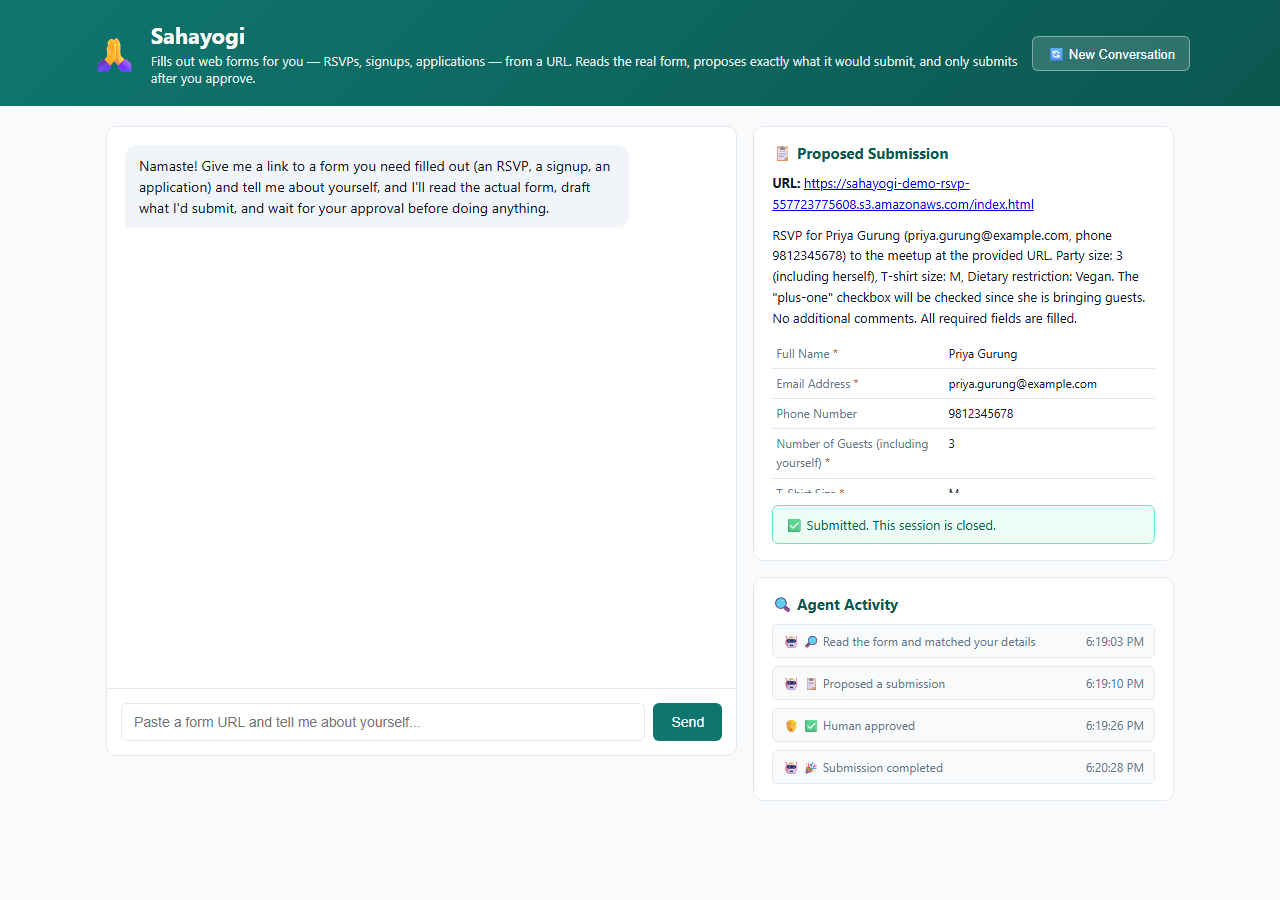
Web chat UI with proposal card awaiting approval
Inspiration
In Nepal, a student like Maya (20, Hetauda) fills the same personal details into 10–15 forms a year: ward residency letters, campus scholarships, exam registrations. Each form asks for the same name, citizenship, ward number — in slightly different wording, on different sites. A local cooperative helping 30 families faces this ×30: ~150 minutes of repetitive paperwork per batch, and one guessed field gets the application rejected.
Existing autofill pastes blindly and submits. We wanted the opposite: an agent that reads the real form live, admits what it doesn't know, and never submits without explicit human approval.
What it does
FormBuddy is a Good Neighbor agent with two modes, one brain:
- Cloud mode — paste any form URL. FormBuddy drives a managed AgentCore Browser to discover fields, matches them against your profile (or a photo of your citizenship/SEE certificate via Bedrock vision), drafts the exact fill plan, and submits only after you click Approve & Submit.
- Extension mode — open any form in Chrome, click Analyze This Page. The extension reads your tab's HTML (free, no cloud fetch), FormBuddy proposes the plan, Authorize & Fill fills your tab — and you click Submit yourself. Files from the Document Vault auto-attach.
Safety properties: propose_form_fill refuses to save a plan with empty required fields; the agent owns no submission tool; every step (matched → proposed → approved → completed/failed) lands in a durable audit trail; chat "yes" can never approve — only the button click counts.
How we built it
- Agent: Strands Agents SDK orchestrator + isolated Haiku sub-agents (
inspect_form,inspect_provided_html,document_parser,fill_and_submit_form) — structured extraction on cheap models, reasoning where it matters. - Approval boundary:
propose_form_fill→pending_approval→ human decision →resume_after_approval/record_extension_fill_result, with idempotency guards and a Retry path so users never hang onsubmission_failed. - Backend: FastAPI thin wrapper over
agent/(no duplicated logic), serves the web UI from the same origin; session/audit stores are dual-backend (local JSON ↔ DynamoDB) behind env vars. - Frontend: zero-build web chat UI + Manifest V3 Chrome extension (side panel,
chrome.storage.localprofile vault). - Cost engineering: Haiku everywhere by default (~$0.25/1M, Sonnet opt-in via env), extension-first demoing ($0 Browser), max 3 live Browser runs, ephemeral Runtime (<30 min, ~$1–2 video day), 48 local tests at $0.
Challenges we ran into
- Cloud fill flakiness: a Google Forms checkbox click crashed the Playwright context mid-fill. Fixed with selector unescaping, safe single-click + re-init-and-continue prompts, and one fresh retry.
- Email validation failures: typed values weren't recognized ("This is a required question"). Fixed by always dispatching
input+changeevents and verifying values stuck before submitting. - Agent hallucination: the orchestrator forged human approval entries when users typed "yes" in chat. Fixed by refusing
actor="human"in the agent's log tool, grounding chat with real session state, and making the button the only approval path. - Live Server wipes: demoing on VS Code Live Server (:5500) reloaded the tab on every backend write. Switched to plain
http.server+ added reload detection in the extension. - Terminal UX: 1–2 min synchronous fills looked hung. Moved fills to background threads with live progress polling.
Accomplishments that we're proud of
- Real end-to-end cloud submission to a live Google Form, verified in Form Responses.
- Extension fill with vault file auto-attach via DataTransfer — no manual upload clicks.
- A genuine autonomy boundary: incomplete plans are structurally unproposable, not just politely declined.
- Full audit trail a cooperative could actually hold accountable.
What we learned
Cost is a design constraint, not an afterthought: model tiering, $0 paths first, and ephemeral cloud shaped every architecture decision. And approval UX is safety UX — every "stuck" state we removed (retry, progress polling, reload warnings) was a trust bug, not a cosmetic one.
What's next for FormBuddy
Nepali-language replies, multi-form batch mode for cooperatives (one profile → 30 submissions with per-family review), AgentCore Memory for cross-device profiles, and allow-listed CORS + rate limiting for production.
Built With
- agentcore
- amazon-bedrock
- chrome
- claude-haiku
- css
- dynamodb
- fastapi
- html
- javascript
- python
- strands-agents

Log in or sign up for Devpost to join the conversation.