-
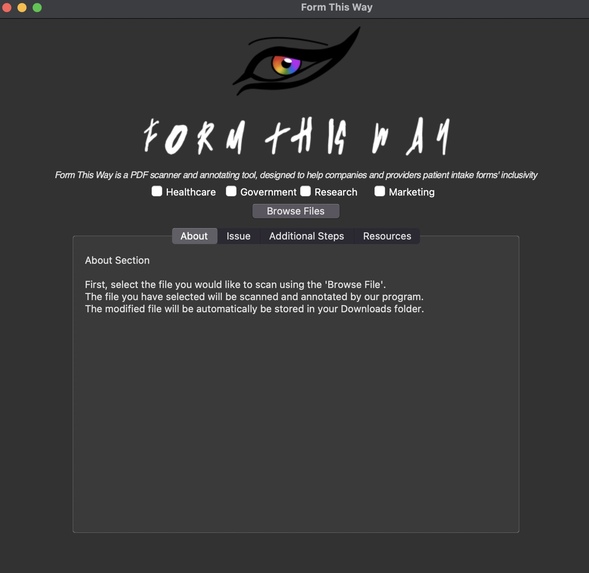
App Interface
-
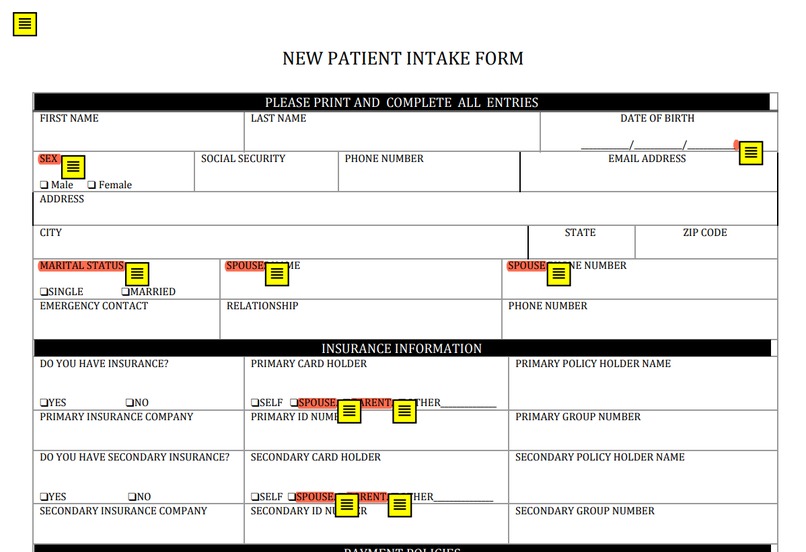
Example of annotated health form


Inspiration
The LGBTQ+ population is at disproportionate risk for numerous medical risks including chronic diseases such as asthma, diabetes, and heart disease; mental health conditions; and substance abuse. At the same time, they have lower rates of healthcare access and utilization. This may be attributed to fear of discrimination from healthcare providers and the stigmas surrounding the LGBTQ+ community in the medical setting.
For many, microaggressions begin even before meeting with the physician. Patient intake forms being used in modern clinical practice use outdated and non inclusive terms that prevent medical practitioners from gathering important patient information and can make patients hesitant to share personal information. Historically, this has led to worse outcomes for patients of sexual and gender minority.
Adopting inclusive medical practices at all levels will promote feelings of security and acceptance for members of the LGBTQ+ community, foster stronger patient-physician relationships, and improve overall quality and continuity of care. Our application serves as a tool to aid the implementation of inclusive language and educate on the importance of this language in the medical setting.
What it does
Form This Way is a GUI-based PDF processor that scans and annotates medical intake forms for non-inclusive language. Users can select any PDF file from their machine, and the app will suggest potential corrections (e.g. replacing 'spouse' with 'partner') or omissions (e.g. pronouns, sexuality fields).
How we built it
We built the entire app using Python. On the frontend, we used Tkinter and prioritized a simple UI to allow healthcare professionals to understand the app easily. On the backend, we used PyMuPDF to scan and annotate the PDF files. We used a list of 'bad words' and 'missing words' based on best practices as a basis for all suggestions.
Challenges we ran into
- One of the challenges in the backend was our original choice for PDF library,
pypdfwasn't capable of highlighting text, which we thought was an important feature. We had to pivot toPyMuPDFand re-learn an entirely new API to implement the algorithm. - One challenge on the frontend was the Python GUI API. Python GUI libraries are very limited compared to JavaScript/CSS, and this was an unfamiliar technology for our team. The UI took several iterations before we reached something we were happy with, and we're proud of the result.
Accomplishments that we're proud of
- We're proud of the easy-to-use UI. We think it would reach the target audience of healthcare professionals well and there would be no problem using the app.
- We're also proud of the backend algorithm we developed. It's hard to pinpoint how to approach a typical intake form, since there are so many formats and terms, but we found a general approach that successfully processes any PDF intake form.
What we learned
- We learned several new Python libraries
- We learned how to resolve Git merge conflicts
- We learned how to brainstorm ideas way before we started coding. It helped us gauge the feasibility of this project.
What's next for Form This Way
- The PDF reader could be applied to forms of all kinds such as research, finance, government, job applications, and more. The language could be specially tuned for each type of form.
- Some people might not be comfortable installing a program just to scan a couple PDFs. While we thought a Python-based app was most achievable for our team, we would like to develop a web-based application for improved accessibility.

Log in or sign up for Devpost to join the conversation.