-
-
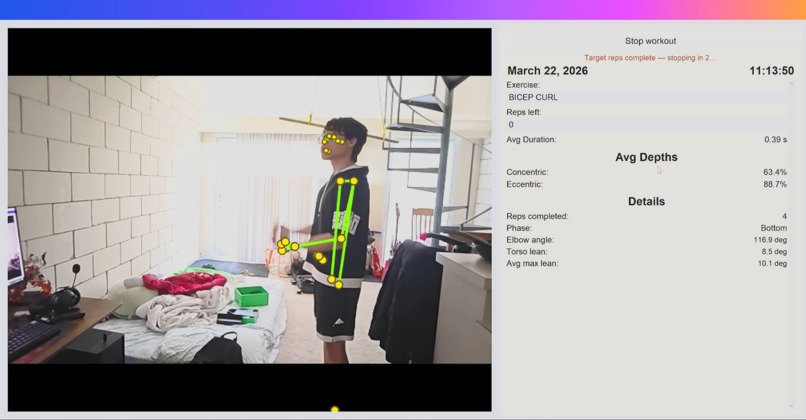
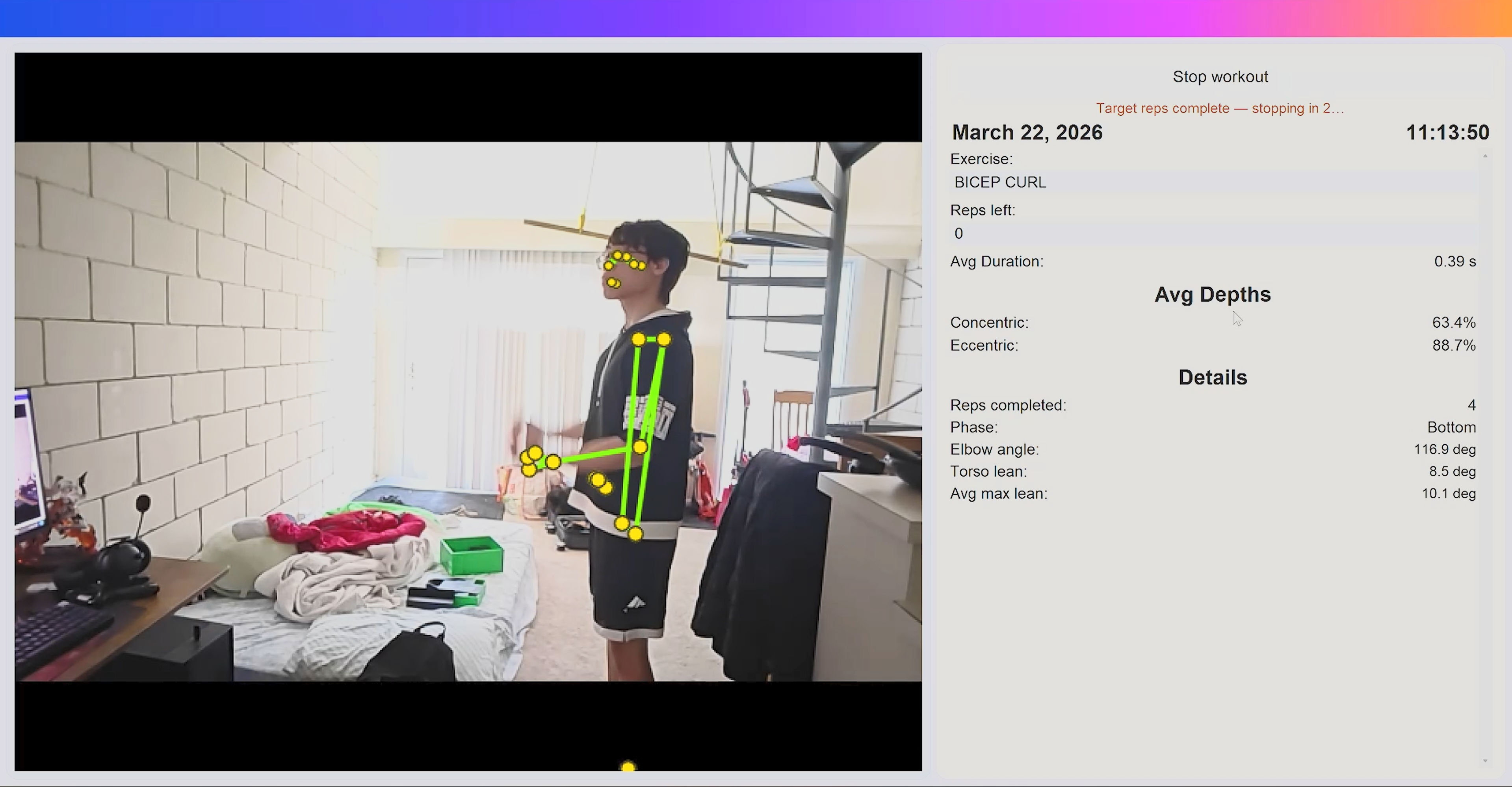
Demo Bicep Curl Tracking
-
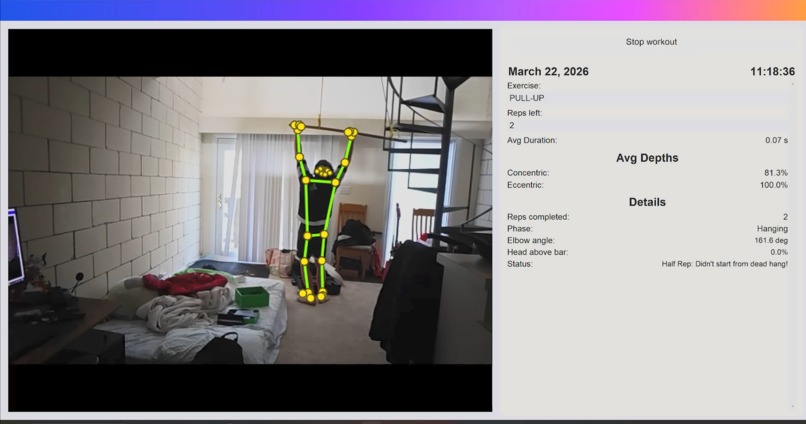
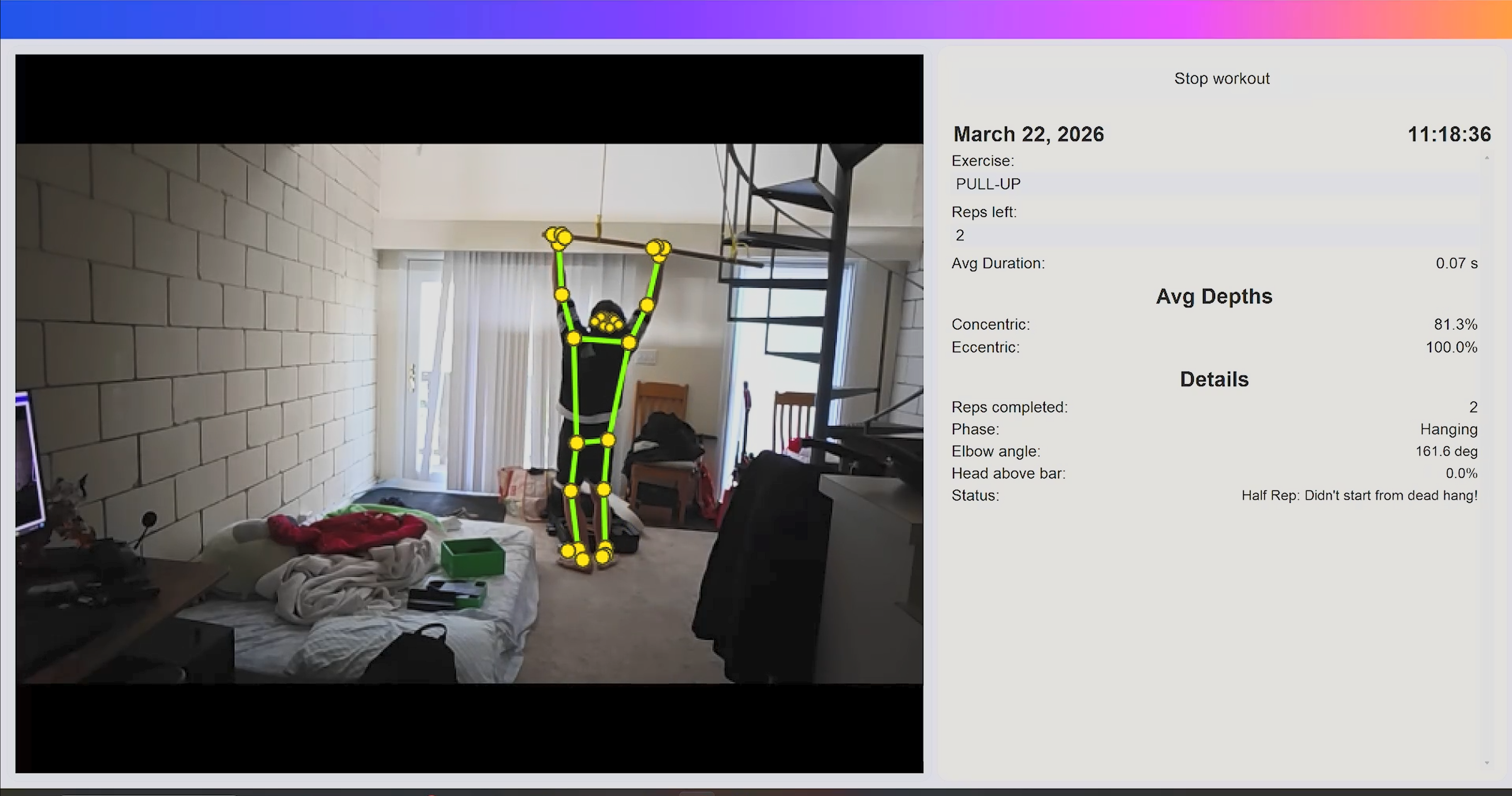
Demo Pullup Tracking
-
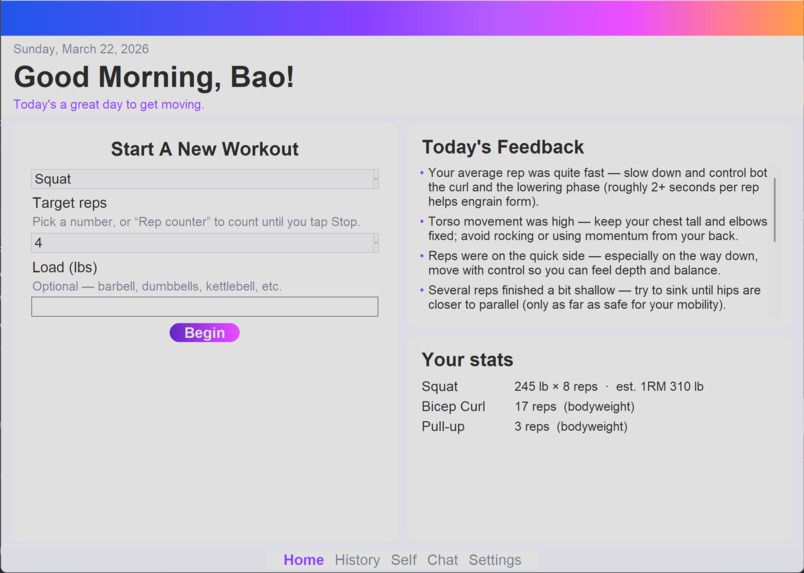
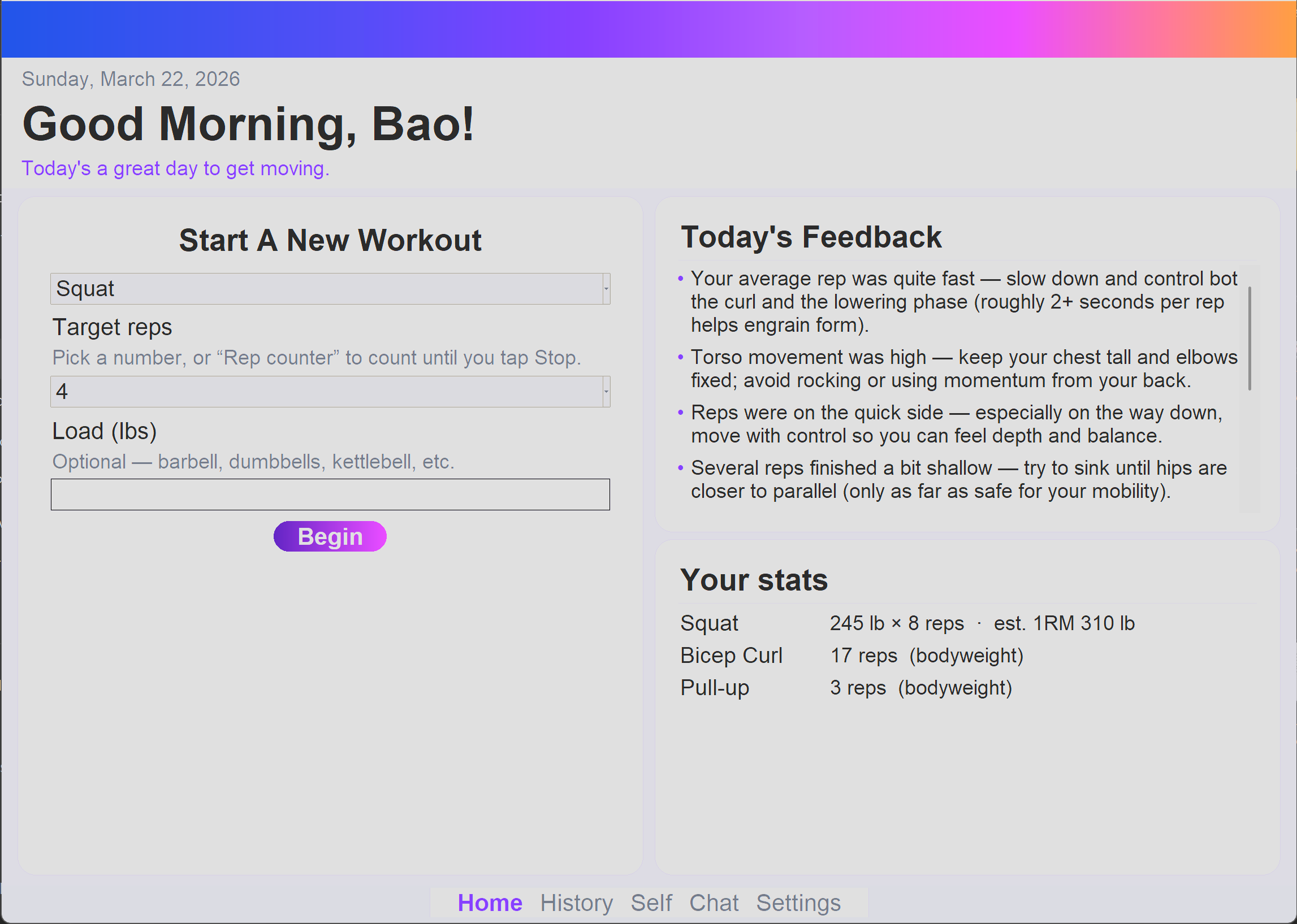
Home Page
-
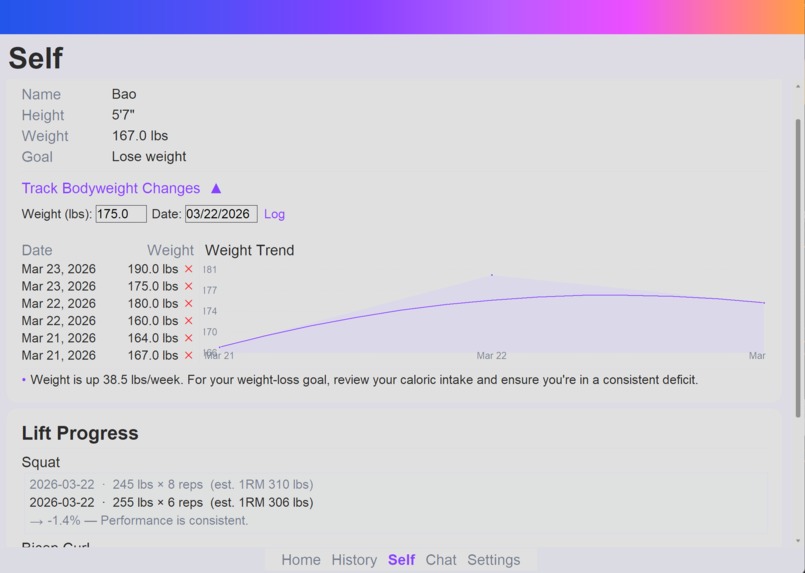
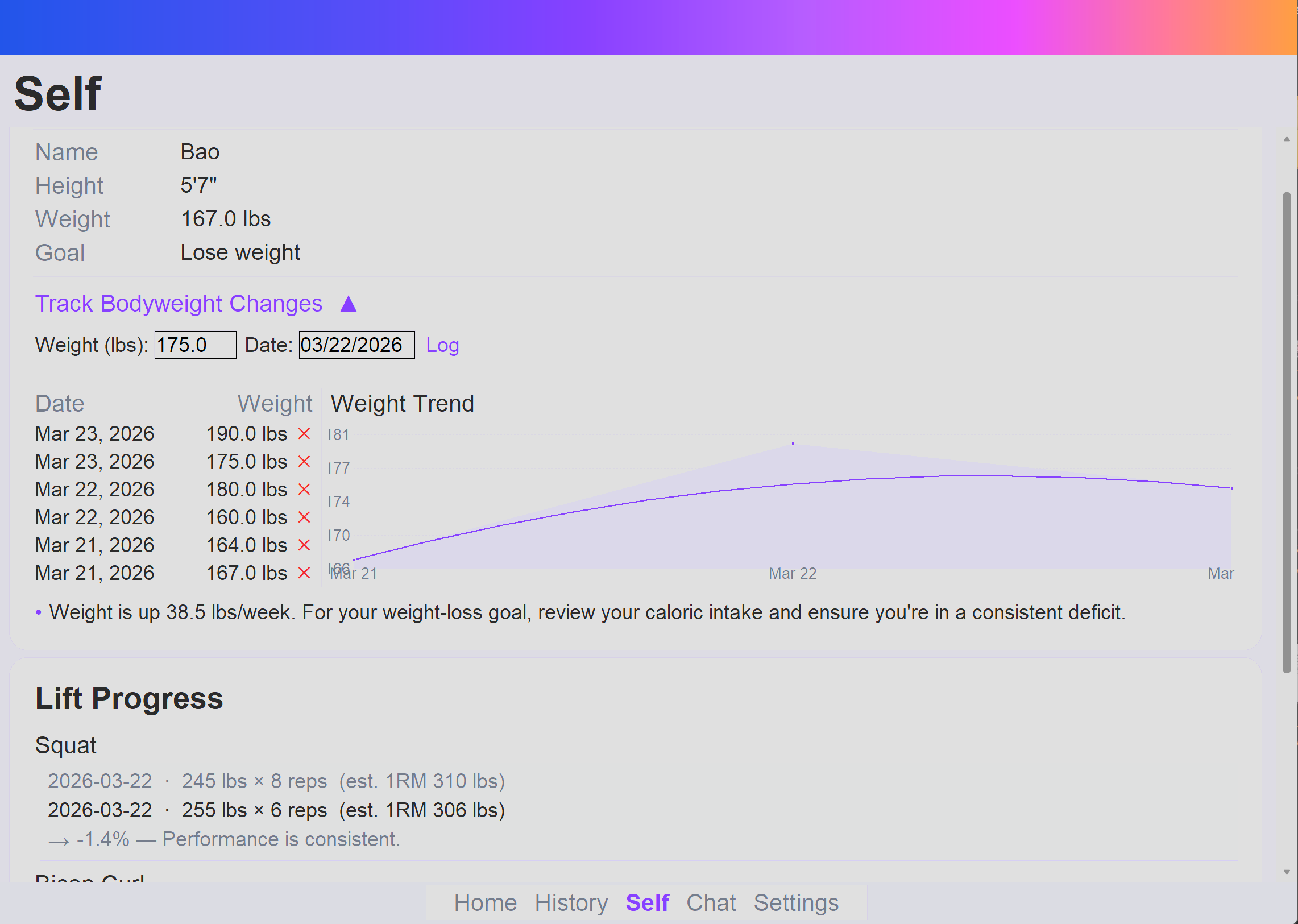
Progress Tracking
Inspiration
We have all been there, grinding through workouts and unsure if our form is actually right. As a team passionate about fitness, we kept running back to the question of if quality feedback on our workouts is a luxury that only some people can afford. Personal trainers are expensive, gym time is limited, and when working out at home, you're on your own. Most people unknowingly repeat the same bad habits, plateau, and eventually get hurt. Overexertion and improper technique are the leading causes of gym injuries, and only 1 in 4 gym-goers ever work with a coach. We built FormLogic because that gap shouldn't exist
Sources: https://zipdo.co/gym-injuries-statistics/ https://www.healthandfitness.org/how-77-million-fitness-members-work-out-new-hfa-data-reveals-shifting-equipment-training-and-membership-trends/
What it does
Point your camera towards your body, pick an exercise, and go. Our AI tracks your skeleton in real time, counting reps, measuring squat depth, flagging form breaks, and coaching you after every set.
How we built it
The core of the app uses MediaPipe's Pose Landmarker API. We chose this over other models because it allows us to achieve high-frequency landmark tracking (33 3D points) directly using the CPU, ensuring the app remains accessible to users without high-end GPUs in these troubling times. We tuned each exercise with certain criteria and angles between certain landmarks to check the form.
Challenges we ran into
One of the biggest challenges was turning pose data into feedback that actually works in real time. Tracking and counting reps required handling inconsistencies in detection, partial reps, pauses, and natural variation in movement. We also spent a lot of time tuning the criteria for form suggestions, since setting thresholds for angles, depth, and alignment that work across different users and camera setups was difficult, and small changes could make feedback too strict or too lenient. On the frontend, building a UI that scaled across different screen sizes while staying aligned with the camera feed was harder than expected. We also ran into differences between macOS and Windows, especially with display scaling and camera behavior, which required extra debugging.
Accomplishments that we're proud of
We're proud that FormLogic actually works. Real time skeleton tracking, automatic rep counting, and depth measurement all run without a server and without delay. Beyond the technical side, we put serious care into the design with the dashboard and workout flow feeling polished and intentional. Pulling all of that together, we created a functional AI coaching system with a clean UI in a single hackathon which is something we're genuinely proud of as a team.
What we learned
We learned how quickly computer vision complexity scales when you move from detecting a pose to interpreting movement over time. Counting a rep sounds simple until you're handling partial reps, pauses, and variation in how different people move. We also learned that UX matters as much as the algorithm, since a technically accurate system that's confusing to use helps no one. Designing the interface to get out of the user's way while still surfacing meaningful feedback was its own challenge, and one that sharpened how we think about building health tools.
What's next for FormLogic
We want to grow FormLogic's exercise library beyond what we already have, covering the full range of compound movements, stretches, and rehab exercises. On the hardware side, we thought it would be interesting to create a wearable integration, which would pair camera based form tracking with heart rate and HRV data from devices like Apple Watch. This could unlock a much richer picture of recovery, readiness, and long-term progress. Ultimately, we want FormLogic to be the coaching layer that sits on top of however you already train.
Built With
- chatgpt
- mediapipeposelandmarkerapi
- python

Log in or sign up for Devpost to join the conversation.